Tracy L. Tuten, Social Media Marketing, 4e
SAGE Publishing, 2021
in 2016. It allowed users to create a page to solicit donations, generate engagement and provide
a traceable link that could be shared in other channels.
Owned tactics: Videos, Webinars, Newsletters, Direct mail
Communication goals: Awareness, Identify new audiences, Donations
Prioritised analytics: Number of new audiences, Library of content, Audience Reach
The team created a variety of owned elements for the Project. Even though some were non–
digital, all were formatted with Facebook sharing in mind. This allowed for ‘cross-pollination’
between traditional and digital channels. Two of the most successful elements were a Historical
Society newsletter article announcing the project, and a direct mail appeal to attendees of the
state’s annual cancer fundraiser, the Cattlemen’s Ball. In addition to its placement in the
organisation’s newsletter, the announcement article was also attached to social media posts
along with a call to donate via the Facebook fundraiser page. For the Cattlemen’s Ball, the
team sponsored a booth at the event and followed with a direct mail appeal to attendees with
information on the Marker Project and a call to donate. This single letter generated about
$7,000 for the campaign.
Paid tactics: Facebook Paid Placement
Communication Goals: Awareness, Identify new audiences
Tracy L. Tuten, Social Media Marketing, 4e
SAGE Publishing, 2021
the project and encourage further support to continue the work. Metrics also tell the story of
the launch’s success. Facebook followers increased from 103 to more than 1,500. These
additional followers provide exponential impact as they can be remarketed to, and they gain
exposure as they share content. The campaign raised more than $37,000, close to half of the
established goal. It received donations from 19 states and two foreign countries, and from other
Discussion questions
1. Describe the initial targeted segments. What other segments could have been targeted
and what social media channels could have been used?
2. What social media zones were used? What others could be used going forward, and in
what ways?
3. When is it a good idea to combine traditional (direct mail, etc.) and digital channels to
increase traffic?
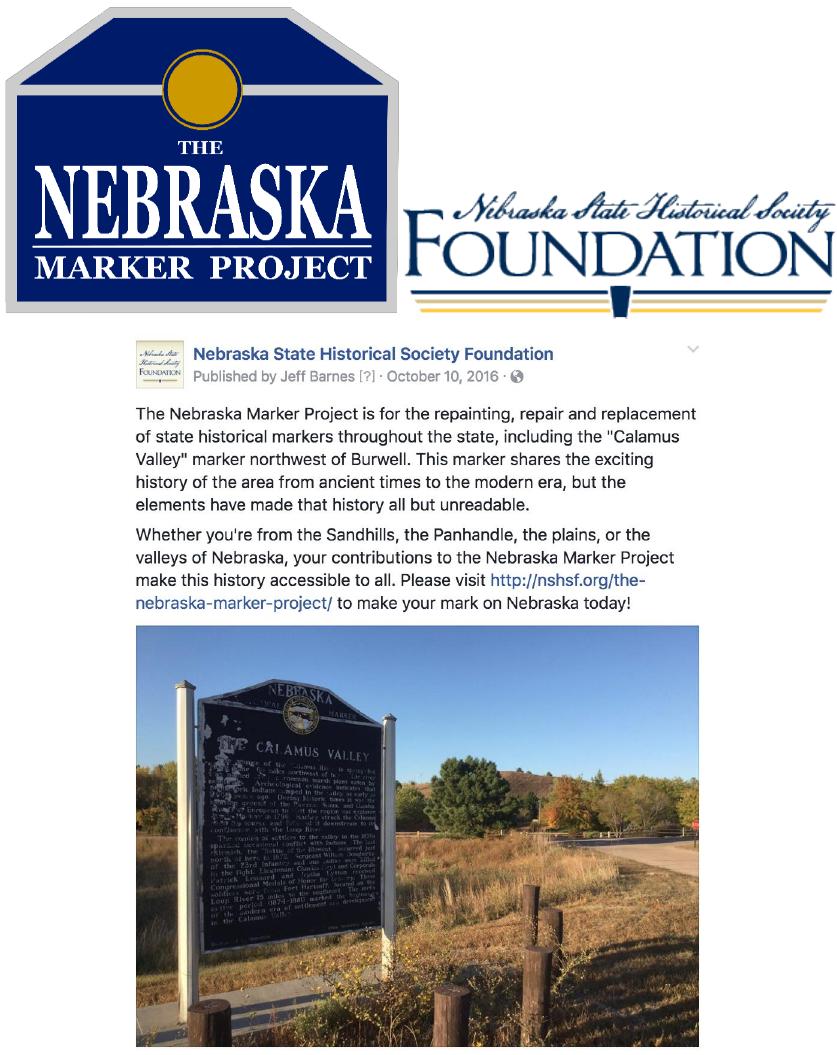
Images:
Tracy L. Tuten, Social Media Marketing, 4e
SAGE Publishing, 2021
References
Online and Residential Course Supplemental Material:
Tracy L. Tuten, Social Media Marketing, 4e
SAGE Publishing, 2021
o The Nebraska State Historical Society website: http://nshsf.org/
Tracy L. Tuten, Social Media Marketing, 4e
SAGE Publishing, 2021
Denny’s millennial strategy
By Kristen Smirnov, Assistant Professor of Marketing, Whittier College
Case
Denny’s is a traditional American diner chain with more than 1,600 locations nationwide, and
additional overseas operations in more than a dozen countries. They’re well known for their
bottomless cups of coffee, Grand Slam breakfasts and other staples of the greasy spoon.
However, in recent years, Denny’s identified a positioning problem facing the company: lack
of appeal among millennial consumers. Though Denny’s has strong national brand awareness,
it was associated with visits of convenience or habit: the driver on a road trip, the long-time
customer powered by inertia, or someone whose 3 a.m. hunger had them on the lookout for
any open restaurant.
The boomer customer base they did have was aging, leading to a decline in sales, and they
were not attracting new consumers to their booths to compensate (Usitalo, 2015). Fortunately
for Denny’s, this was about to change. In late 2014, John Dillon became the new Chief
Marketing Officer of the company, taking over from a predecessor who had already begun to
Tracy L. Tuten, Social Media Marketing, 4e
SAGE Publishing, 2021
marketing hotspot on the platform. Following the Tumblr account doesn’t put traditional
advertisements on someone’s dashboard. Instead, followers see a steady feed of bizarre
question-and-answer sessions with the company representative, where they suggest that only
a chicken can make a ‘perfect egg’, or humorously edited gifs and photographs, where a man
might juggle three burgers above an animation of a smiling pancake face.
Denny’s had become a strange, intriguing and enjoyable destination for millennials on
social media, and their Twitter soon began garnering similar amounts of attention. In the first
months of 2017, it was rare for any post (whether on Twitter or Tumblr) to earn below one
thousand direct interactions. More commonly, each new piece of content had several thousand
interactions, and a few viral posts earned tens of thousands of likes, reblogs or retweets.
Denny’s had become a destination visit online, but did this translate to increases in sales?
Yes. Their end-of-year financial results for 2016 reported 6.7% domestic two-year growth
(Denny’s, 2017). Their deliberate outreach to millennials was timed to coincide with
Tracy L. Tuten, Social Media Marketing, 4e
SAGE Publishing, 2021
Discussion questions
1. Why might content marketing like this appeal to consumers who dislike traditional
promotional strategies?
2. Why were Tumblr, Twitter and Instagram good platforms to use for Denny’s surreal and
absurd content marketing? Would you recommend any others?
3. As noted, relatively few companies have a real marketing presence on Tumblr. Why do you
think that might be? What is one company that you feel could benefit from an expanded
presence on the platform, and why?
References
“Denny’s Corporation Releases Preliminary Financial Results for Fourth Quarter and Fiscal
Year 2016.” Dennys.com. Last modified January 9, 2017.
http://investor.dennys.com/investor-relations/press-releases/press-release-
details/2017/Dennys-Corporation-Releases-Preliminary-Financial-Results-for-Fourth-
Quarter-and-Fiscal-Year-2016/default.aspx.
Giammona, Craig. “Denny’s Revival Provides Blueprint for McDonald’s Turnaround.”
Tracy L. Tuten, Social Media Marketing, 4e
SAGE Publishing, 2021
AcademLink – information before socialisation
By Dr. Jelena Filipović, Faculty of Economics, University of Belgrade
Acknowledgement: I would like to thank Top Class for sharing their business information
and thoughts relevant for the creation of this case study. All impressions, advice and
conclusions regarding discussion questions provided by the case study participants will be
appreciated and received with gratitude on akademci@academlink.com.
Case
Science has always required international collaboration and it appears as the social media
provided a long-awaited answer to the research community. It started modestly with blogs and
forums, followed by profiles and discussions on social networks, but slowly, researchers
realised they needed something bigger – their own online social networks! And here they came
to global arena in 2008. However, was this segmentation criterion (scientists vs. world)
enough? Not according to AcademLink. The keyword was localisation and in 2012, Ivana,
entrepreneur running a language centre, and Yelena, university lecturer in marketing, started a
social network aimed at researchers of the Southeast Europe (hereinafter: SEE). Years after –
Tracy L. Tuten, Social Media Marketing, 4e
SAGE Publishing, 2021
or to present their work and therefore contribute to their scientific field to a greater extent.
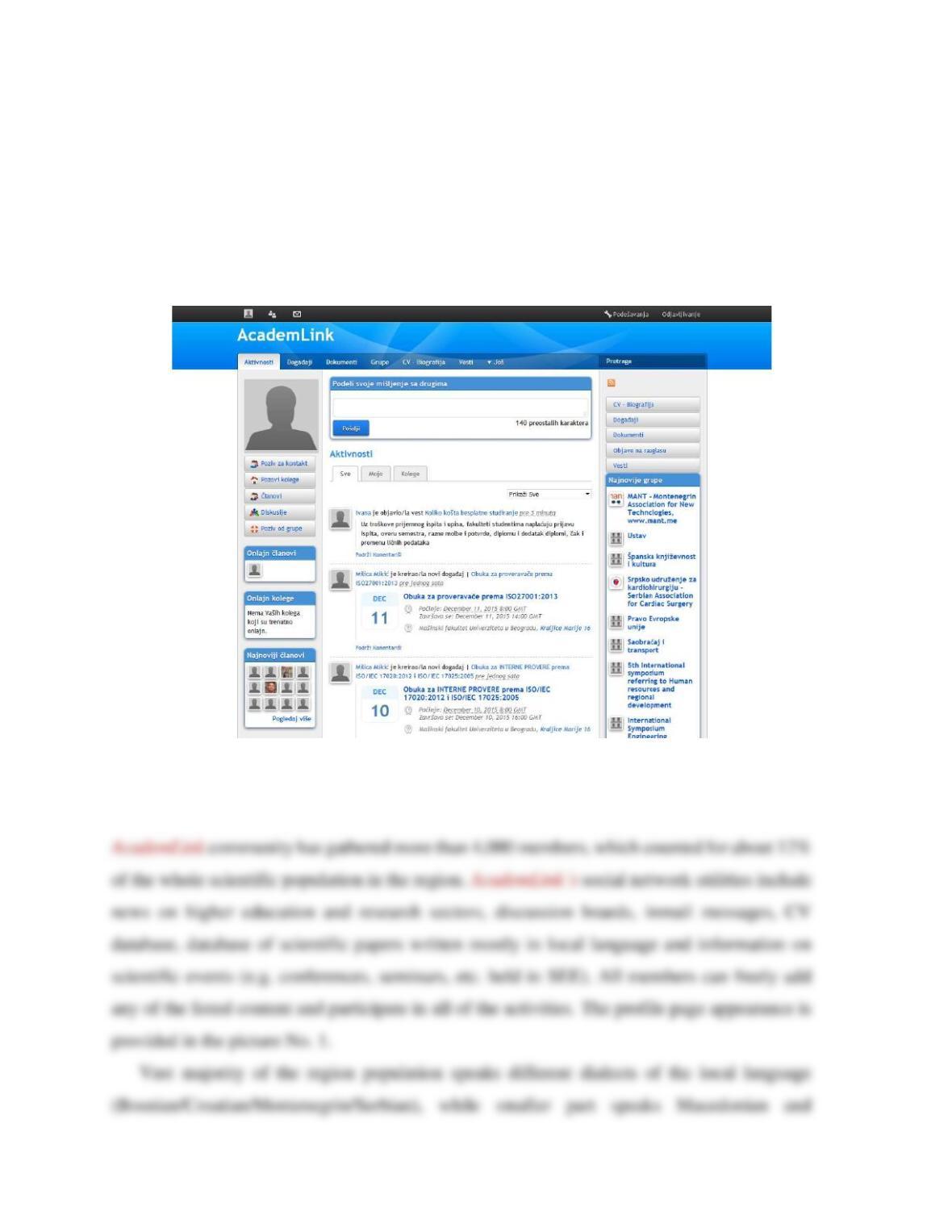
AcademLink noticed this gap and tried to address that unfulfilled need in the SEE market.
Picture no. 1: Profile page of an AcademLink member
Source: Author
AcademLink (www.AcademLink.com) is a social network for researchers, university
lecturers and post-graduates from SEE (encompassing: Serbia, Croatia, Bosnia and
Herzegovina, Montenegro, Slovenia and FYR Macedonia). During the period of four years,
Tracy L. Tuten, Social Media Marketing, 4e
SAGE Publishing, 2021
Slovenian. All regional languages are highly understandable to all nations from the SEE
territory. Therefore, AcademLink website and a great part of the content are provided in local
languages, while only some of the news are offered in English.
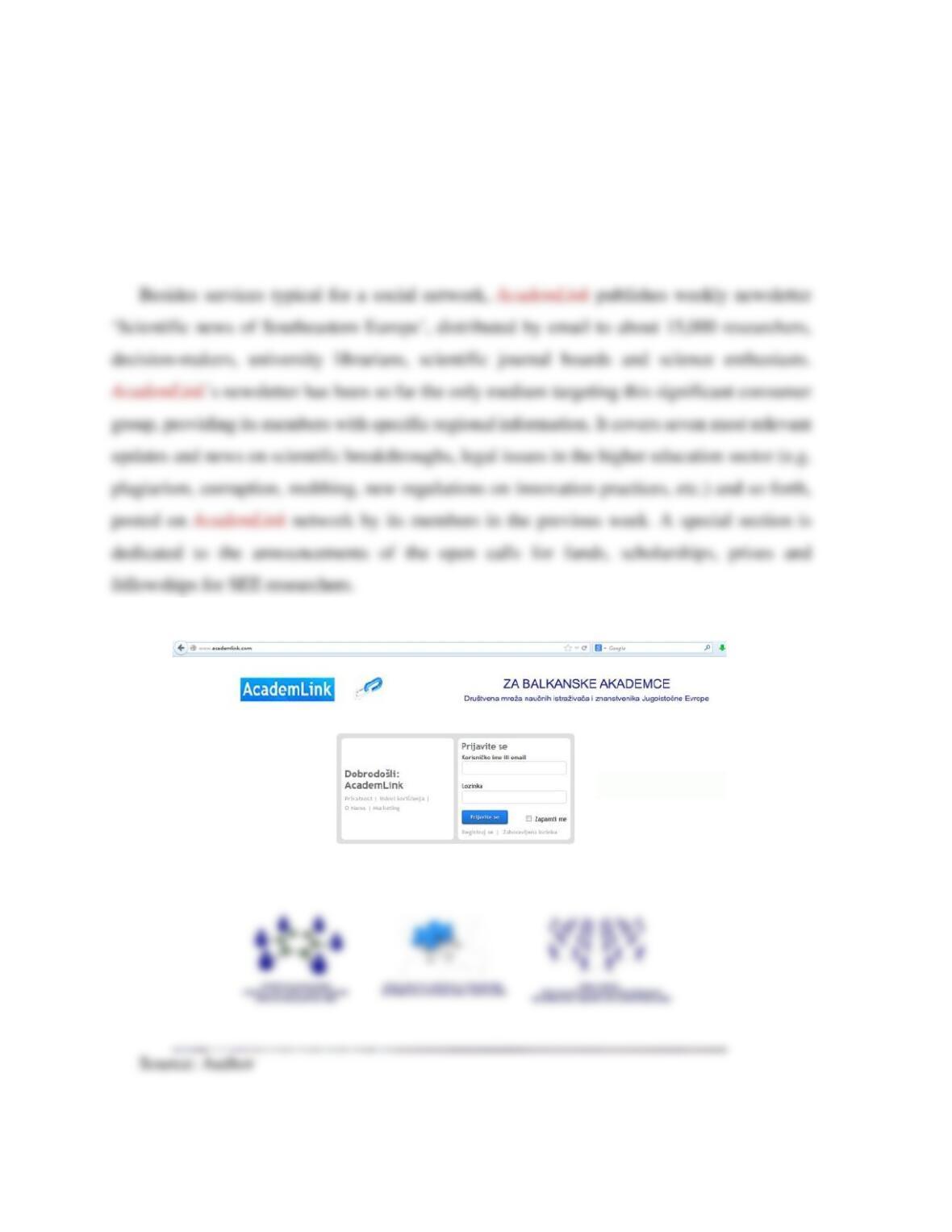
Picture no. 2: AcademLink login page
Tracy L. Tuten, Social Media Marketing, 4e
SAGE Publishing, 2021
Ivana, one of the founders, stated that: ‘From the very start, AcademLink faced various
difficulties. Firstly, Internet penetration in the region in question is lower than average in
Europe, amounting to approximately 50% of households. Secondly, average age of university
staff in SEE is quite high, implying lower level of innovation acceptance and use of
information-communication technologies. Furthermore, from the marketing communications
point of view, there is a problem in reaching SEE research community, bearing in mind that
no medium addresses them specifically. Finally, political and social burden from the recent
past (civil war in Yugoslavia in the ‘90s of the 20th century) caused the unwillingness of
neighbouring countries in the region to collaborate, e.g. some of the newsletter subscribers
kept sending us emails complaining about us using some words in certain dialect and not in
another; why the sequence of news in the newsletter is as it is – why news from some countries
are positioned lower than others; or why researchers from some countries seem to have more
space in our newsletter and more network posts than others’.
Tracy L. Tuten, Social Media Marketing, 4e
SAGE Publishing, 2021
Discussion questions:
1. Why does the science ask for cooperation in the international arena?
2. What are the special utilities of social networks required by scientists compared to other
public groups?
3. What other social media, besides social networks for researchers, are especially useful
for scientists? For what purposes?
4. What socio-political challenges AcademLink faced with in the international context?
5. List the advantages and flaws of AcademLink and explain how those reflect on its
business success.
Additional readings:
Collins, Kimberley, David Shiffman, and Jenny Rock. “How Are Scientists Using Social
Media in the Workplace?” PloS one 11, no. 10 (2016): e0162680.
Harseim, Tina and Goodey, Gregory (2016), How do researchers use social media and
scholarly collaboration networks (SCNs)?, http://blogs.nature.com/ofschemesandmemes
/2017/06/15/how-do-researchers-use-social-media-and-scholarly-collaboration-networks-
scns
Tracy L. Tuten, Social Media Marketing, 4e
SAGE Publishing, 2021
technology/single-view-sc–
policy/news/international_scientific_collaboration_has_become_a_must_sa/
Natural Sciences Sector UNESCO (2017), Table S10: Scientific publications in international
collaboration, 2008-2014,
https://en.unesco.org/sites/default/files/tab_usr15_s10_publications _collaboration_en.pdf
Rikken, Maarten (2016), Insights into international research collaboration,