
Copyright © 2014 Pearson Education, Inc.
9-1
Management Information Systems, 13E, Global Edition
Laudon & Laudon
Lecture Notes by Barbara J. Ellestad
Chapter 9 Achieving Operational Excellence and Customer
Intimacy: Enterprise Applications
Over the last decade businesses have come to realize how important it is to totally
integrate business processes across the enterprise. We’ve spoken about “islands of
9.1 Enterprise Systems
We’ve look at enterprise resource planning systems in previous chapters and also
discovered the importance of efficiently and effectively maintaining data that businesses
can develop into useful information. As we’ve seen, it can be disastrous for an
What Are Enterprise Systems?
Enterprise systems aim to correct the problem of firms not having integrated
information. Also known as enterprise resource planning (ERP) systems, their main goal
is to bridge the communication gap among all departments and all information users
Copyright © 2014 Pearson Education, Inc.
9-2
Enterprise Software
Many businesses assume that their operations are totally integrated across functional
lines. After all, Manufacturing responds to an order from Sales and produces a product
for which Accounting and Finance sends an invoice. A Production manager sends an
email to the Human Resources Department requesting five new employees. When the
What’s the solution? Enterprise software allows every functional area to share every
process and every piece of data. A business can select specific processes in specific areas
but eventually everything the company does will be shared across all lines. The software
uses predefined processes and requires the company to adapt itself to the software. While
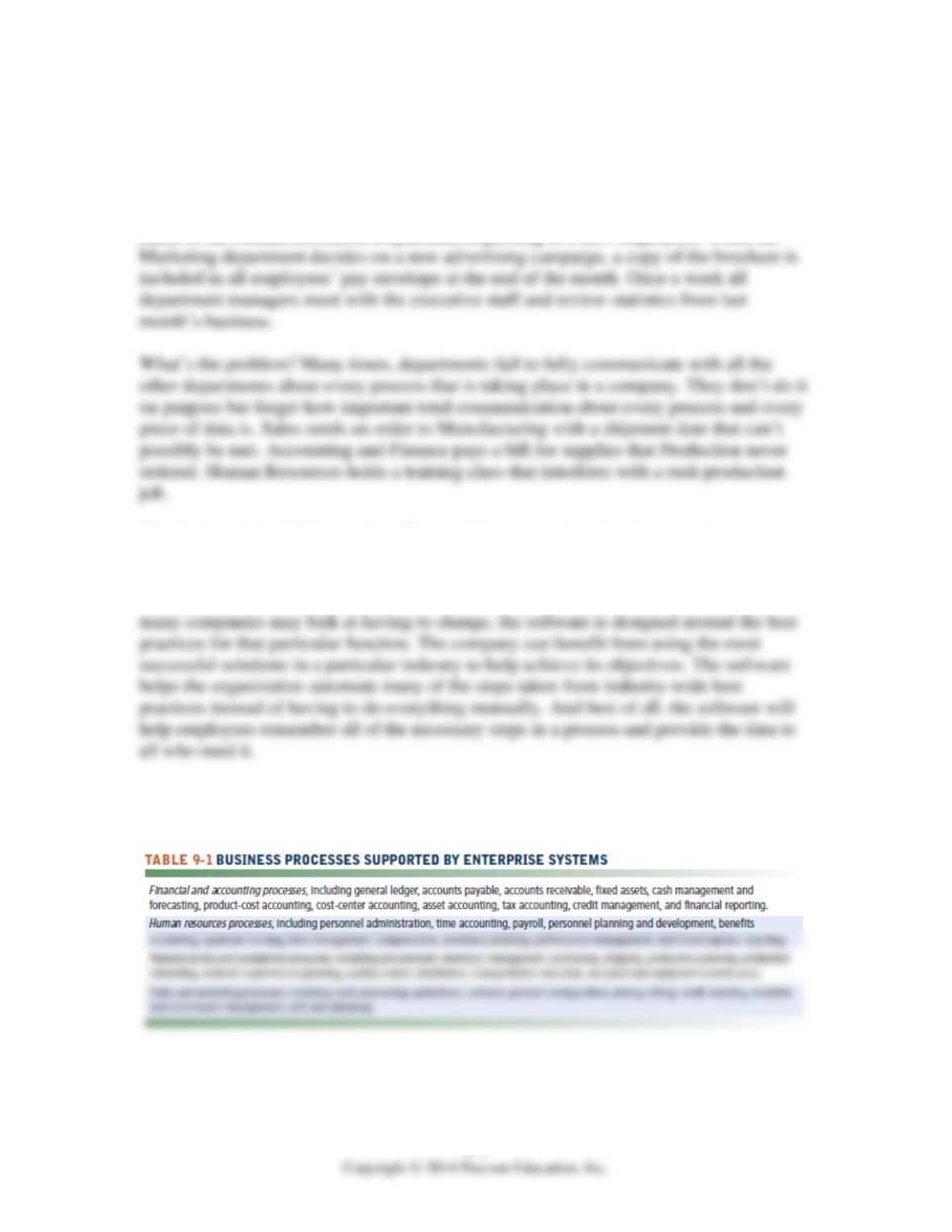
Table 9-1 is a list of the most common, most popular business processes that are
automatically included in a typical enterprise system.

Although enterprise software can be somewhat modified, it is very expensive and very
difficult to do so. Because the software is so complex, changing just one of the processes
Business Value of Enterprise Systems
Done correctly, enterprise systems can offer big rewards. Conversely, done incorrectly
can cause a firm huge headaches, loss of business, employee turmoil, and wasted dollars.
The changes in the enterprise will be tremendous:
• Management: Improved management decision making, with a comprehensive
view of performance across all functional areas.
Bottom Line: Enterprise systems force a company to fully integrate all business
processes. These systems usually require massive changes in the structure and
organization of a business and are difficult to implement. However, the changes can
make a tremendous improvement in a firm by using the best practices of the
industry and requiring all functional areas to focus more on the customer.
9.2 Supply Chain Management Systems
Oh, for the days when the old saying “the customer is king” was just a catch phrase.
The Supply Chain
A supply chain is similar to a spider’s web. It includes all of the internal functions of an
organization, along with suppliers, distributors, retailers, and customers. They are all
intertwined and rely on information from each other to effectively meet the business’s
objectives.
Copyright © 2014 Pearson Education, Inc.
9-4
Exactly what are all the activities involved in getting a product from conception to
delivery? There are probably many more than you can easily think of. And there are
many more people involved than you might imagine. It may be helpful to break the
supply chain into three distinct groups:
• Upstream: Suppliers that deal directly with a manufacturer and their suppliers.
Information Systems and Supply Chain Management
As with other functional areas, information is the glue that holds the supply chain
together. Lack of or faulty information can wreak havoc on the entire chain from getting
supplies into the manufacturing process and getting the final product to the customer.
The bull-whip effect on the supply chain is more natural than you might think and
happens in virtually every industry.
“PC makers insist their inventories are in good shape. But there are signs
of trouble further down the supply chain. Analysts were taken aback to
learn that the Taiwan companies that make the guts of notebooks for
market leaders Hewlett-Packard Co. and Dell Inc. saw February sales
plunge 10% to 15%.
What’s going on? PC makers, encouraged by robust 35% growth in third-
Copyright © 2014 Pearson Education, Inc.
9-5
Supply Chain Management Software
Supply chain planning systems can provide information up and down the chain and
help everyone involved do a better forecasting job. In the example above, the information
Supply chain planning systems enable firms to:
• Generate demand forecasts.
• Develop sourcing and manufacturing plans.
Interactive Session: Organizations: DP World Takes Port Management to the Next
Level with RFID (see page 377 of the text) shows how accurate tracking and logistics
has helped Dubai Ports World become one of the leading terminal operators in the
world and recude costs by operating on ‘just–in–time’ principles.
Global Supply Chains and the Internet
The islands of information that we’ve frequently mentioned don’t exist just inside the
corporation but also exist all up and down the supply chain. Adapting the supply chain
software to the Internet and opening up information to suppliers, logistical experts, and
Copyright © 2014 Pearson Education, Inc.
9-6
Global Supply Chain Issues
Some of the issues businesses will face if they choose to use global supply chains are:
• Greater geographic distances and time differences.
• Additional costs for transportation, inventory, and local taxes and fees.
Demand-Driven Supply Chains: From Push to Pull Manufacturing and Efficient
Customer Response
Traditionally, customers purchase whatever products are available. Although colors,
sizes, and prices may vary somewhat, generally a manufacturer decides what to produce
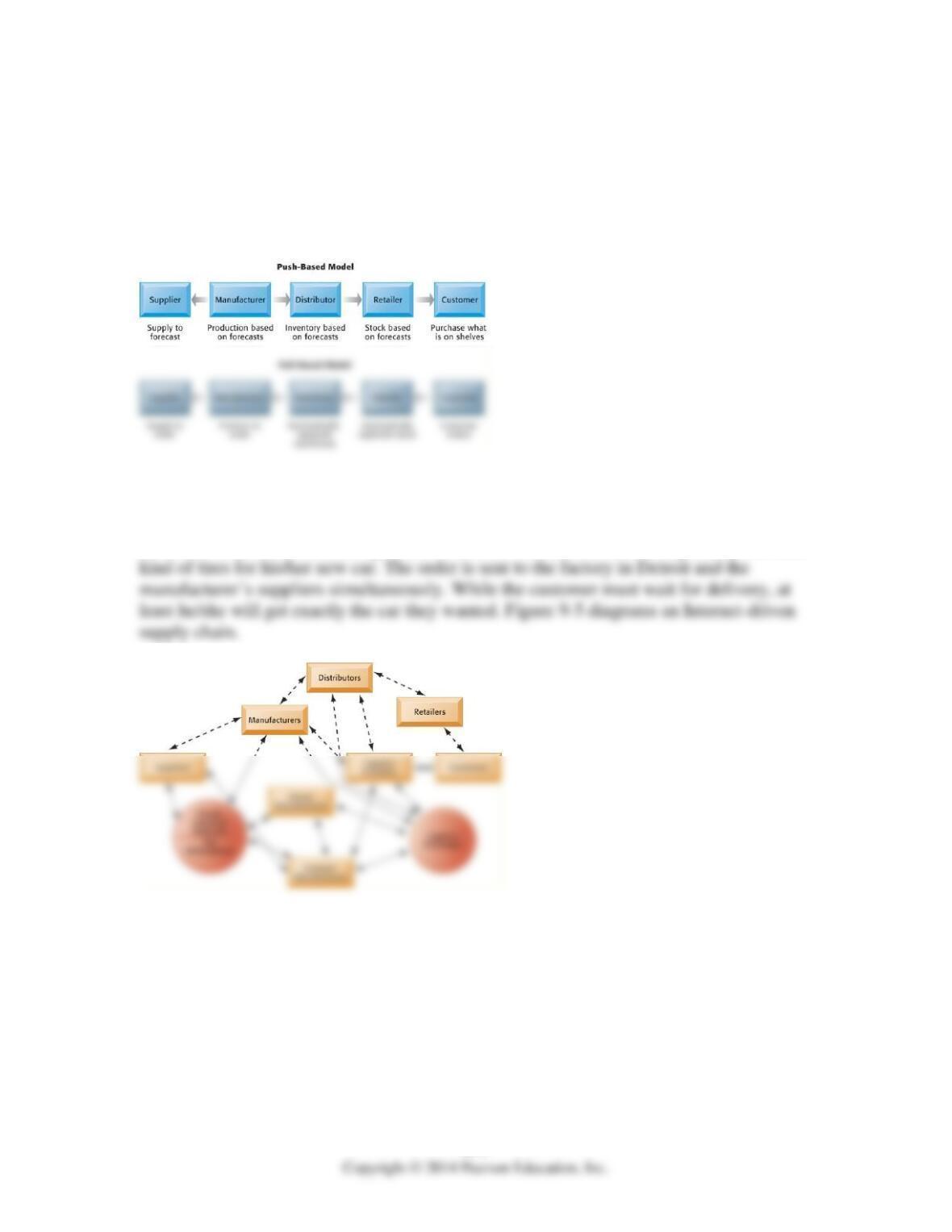
by forecasting what the potential demand might be through a push-based model. That is
Copyright © 2014 Pearson Education, Inc.
9-7
specifications. Granted, the customer must choose from a pre-determined list of options,
but Dell doesn’t have a huge stock of unsold inventory that no one wants based on faulty
demand forecasting.
Figure 9-4 below shows the differences between the push-based and pull-based supply
chain models.
Figure 9-4: Push- vs. Pull-based Supply Chain Models
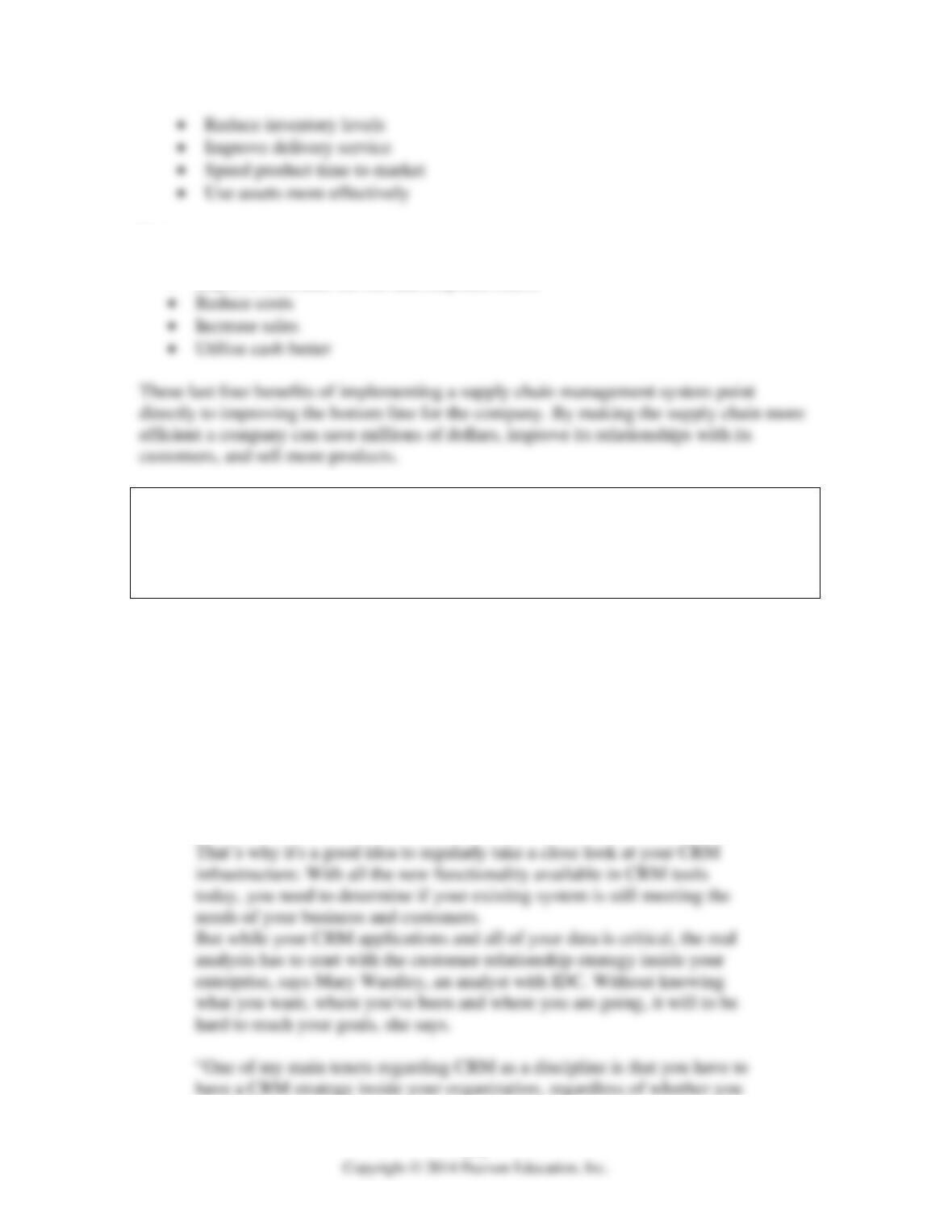
Automobile manufacturers are also adopting pull-based modeling for their customers. A
customer in Des Moines can log onto a Web site and select the color, engine, options and
Figure 9-5: The Future Internet Driven Supply Chain
Business Value of Supply Chain Management Systems
The benefits of implementing an integrated, networked supply chain management system
include:
• Match supply to demand
Copyright © 2014 Pearson Education, Inc.
9-8
In turn a company can:
• Improve customer service and responsiveness
Bottom Line: Supply chain management systems integrate all of the processes by
supplying information to all entities involved in the chain. More precise, current
information allows organizations to improve demand forecasting and better
measure the performance effectiveness of a supply chain. Better information also
allows a firm to move from push-based to pull-based modeling.
9.3 Customer Relationship Management Systems
“In the past, CRM served a simple purpose inside your enterprise: It kept
track of your customers, their addresses and their orders. Now, though,
there’s far more that comes under the CRM umbrella, from connecting
with your customers through social media to being able to instantly
transmit customer data to a call center agent when customers call in for
help.

Copyright © 2014 Pearson Education, Inc.
9-9
While many companies strive to be “customer–centric” very few have been able to
completely focus every functional area of the organization on the customer. Largely due
to new avenues of information customers have through the Internet, organizations must
fight harder to keep the customers they work so hard to get in the first place.
What Is Customer Relationship Management?
The goals of customer relationship management systems are to optimize customer
satisfaction and customer retention which in turn will maximize revenue and profitability
Many companies are overloaded with data about customers. Unfortunately, too many
companies don’t have any useful information that can help them increase customer
CRM Software
CRM application software ranges in size and complexity making it possible for an
organization to select the type of software it needs the most. Modules focusing on partner
relationship management or employee relationship management can be integrated into the
customer relationship management software at a later date.
Partner relationship management systems are a reflection of internal customer
relationship management systems but extend past the immediate borders of a firm to its
Employee relationship management modules associated with CRM focus more on how
employees perform and interact with customers.
These modules help a company manage:
• Employee objectives
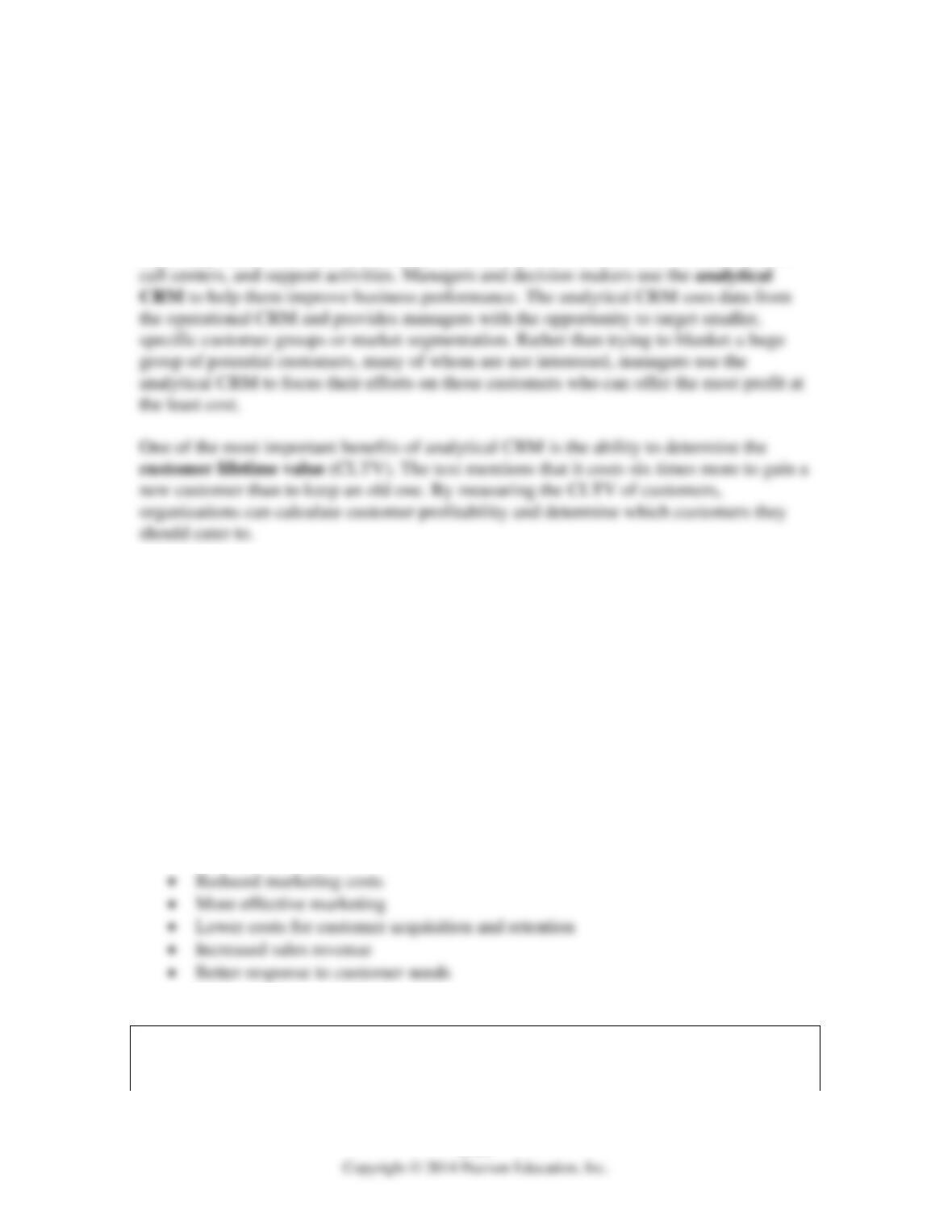
Some of the more common capabilities of CRM software are:
• Sales force automation: Allows the sales force to focus on the most profitable
customer. It also reduces the cost per sale for acquiring new customers and
Figure 9-8 shows how customer data feeds into these three functions.
Figure 9.8 CRM Software Capabilities
Copyright © 2014 Pearson Education, Inc.
9-11
Operational and Analytical CRM
It’s important to understand the difference between the operational and analytical aspects
of CRM systems. Operational CRM includes everything a company should provide
those employees who interface directly or indirectly with the customer: the sales force,
Business Value of Customer Relationship Management Systems
As the old saying goes, “We’re wasting half of our advertising budget; we just don’t
know which half.” CRM software will help managers better understand their customers
thereby helping them make better decisions about product lines and marketing
campaigns. CRM systems can also help reduce the customer churn rate and identify
which customers are most profitable. Hopefully, CRM will help them discover which half
of the ad budget is wasted.
Once again, the benefits of using CRM systems are worth the challenges you’ll face.
Benefits:
• Increased customer satisfaction
Bottom Line: Customer relationship management systems allow a firm to focus all
of their energy and attention to developing profitable customers and foregoing
unprofitable ones. Useful information produced by CRM systems allow firms to
Copyright © 2014 Pearson Education, Inc.
9-12
improve business performance while reducing costs associated with gaining and
retaining customers. Information can be shared internally and externally.
9.4 Enterprise Applications: New Opportunities and Challenges
Before implementing enterprise application systems, organizations need a very clear
picture of where they are now and where they want to go. Organizations must decide
Enterprise Application Challenges
The return on investment to companies that implement enterprise systems can be
enormous in terms of enhanced information between suppliers, employees, customers,
and business partners. The better the information is, the better the decisions. The better
the information is, the better the products and services are for the customer. More
customers lead to higher profits for the company (hopefully).
Hang on for a rough ride:
• Daunting Implementation: Technological and fundamental changes will
pervade every corner of the organization. The organizational structure and culture
will change. The most daunting task will be retraining thousands of workers and
Next-Generation Enterprise Applications
As companies get more comfortable with supply chain management and customer
relationship management programs they realize the importance of branching out to
enterprise solutions, enterprise suites, or e-business suites. Software manufacturers are

Copyright © 2014 Pearson Education, Inc.
9-13
“DreamFace 2.0 is an open-source Web 2.0 Application Creation Platform
for authoring, publishing, and sharing Web 2.0 applications. DreamFace
combines Social Networking, Rich Internet Application, and Web 2.0
personalization and customization technologies in a disciplined approach
to help businesses create a new class of Enterprise Social Applications.

Interactive Session: Technology: Customer Relationship Management Heads to the
Cloud (see page 390 of the text) describes how businesses are switching to cloud
computing because it offers customizable applications, excellent customer service,
and a robust infrastructure for less money than it would take for in-house
application development.
Social CRM and Business Intelligence
“Consumers check in on Foursquare. Your employees chat with customers
on Facebook. Everyone tweets. Social media is everywhere, right? Not
quite.
CIOs want to bridge the gap between social media and enterprise CRM to
give marketing and sales richer, more complete information about
customers. Just as important: avoiding CRM silos, says Todd Michaud,
vice president of IT at Focus Brands, the franchisor of specialty
restaurants, including Cinnabon and Moe’s Southwest Grill. ‘I don’t want
to worry about maintaining all these separate systems that really just talk
about the same customers,’ Michaud says.
Business Intelligence in Enterprise Applications
Being able to generate ad hoc analyses, use interactive dashboards, ask “what-if”
Discussion Questions:
1. How does enterprise software enable a business to use industry-proven best practices?
2. Explain the bull-whip effect on a supply chain and how it can be avoided.
Answers to Discussion Questions:
1. Enterprise software uses predefined processes that require a business to adapt itself to
the software. The processes have been created by the software manufacturer based on
2. Information about the demand for a product may be distorted between suppliers and
businesses. Each entity in the supply chain alters its decisions about product demand
and could cause an over- or under-supply of products. By providing immediate and

Copyright © 2014 Pearson Education, Inc.
9-16
3. Push-based supply models depend on the forecasts or best guesses of demand for
products and are pushed to the customer by the manufacturer. Pull-based supply
4. Operational CRM are customer-facing applications, such as sales force automation,
call center and customer service support, and marketing automation. Analytical CRM
5. Next generation enterprise applications will incorporate aspects of open source
software and cloud computing because it reduces the overall licensing fees. As