
Hitt 13e Case Teaching Notes
Case 9: MatchMove: Business Model Evolution
Case Synopsis
Drawing upon his experience in B2B technology services and the online gaming industry,
Shailesh Naik—along with his colleague, Leow Hsueh Huah—decided to found a new company
in 2009. Naik recognized several emerging trends and needs in the Asian market, and he
conceived of a digital solution that became MatchMove. But in just 10 short years, even more
trends in the rapidly changing digital world have created additional opportunities for the
company, causing its business model to evolve.
In the early years, MatchMove grew extremely rapidly, so much so that Naik and his team
realized the company’s platform could not keep pace with demand. Thus, AppKungfu was born.
This modular, API-based platform allowed customers of all sizes to convert their own websites
into a full Internet and mobile experience. MatchMove continued to build custom websites for
large, high-profile clients, but AppKungfu allowed a much larger pool of customers to take
advantage of MatchMove’s integration of gaming, social networking, and e-commerce.
different Asian countries. No doubt, MatchMove will continue to seek out ways to add even
more value to customers through digital solutions.
Learning Objectives
• Describe the competitive landscape and explain how globalization and technological
changes shape it. (Chapter 1)
• Describe the work of strategic leaders. (Chapter 1)
• Explain the differences among five types of business-level strategies. (Chapter 4)
• Use the five forces of competition model to explain how firms can earn above-average
returns when using each business-level strategy. (Chapter 4)
• Explain awareness, motivation, and ability as drivers of competitive behavior. (Chapter
5)
• Describe how strategic actions and tactical actions drive competitive rivalry between
firms. (Chapter 5)

Strategic Issues and Suggested Discussion Questions & Answers
1. In what ways did globalization and technological change lead to the creation of
MatchMove? Which do you think had the bigger impact?
MatchMove’s founder, Shailesh Naik, observed several key trends in the global marketplace,
among them that gaming and e-commerce were both growth industries worldwide. Firms such
2. Describe some of MatchMove’s tangible resources, intangible resources, and core
competencies. How do they provide the firm with a competitive advantage?
As a technology-based start-up, MatchMove was able to secure much-needed investments in
its early years. In the years since then, the firm’s rapid growth has generated even more
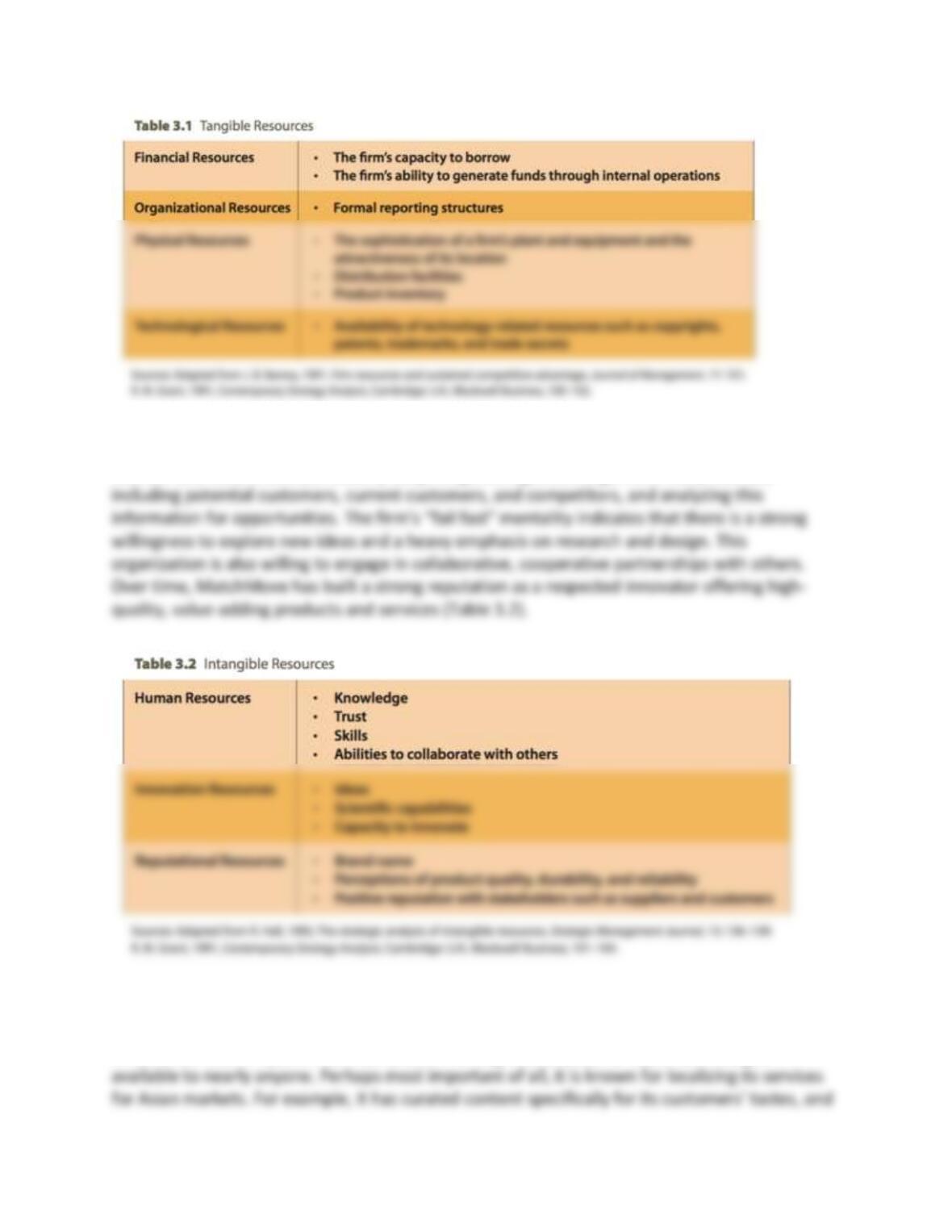
The ability to innovate is one of MatchMove’s most valuable intangible resources. Naik, its
founder and CEO, is also particularly adept at gathering knowledge from many sources,
Among MatchMove’s capabilities are its ability to envision the future and create products and
services that capitalize and exploit entrepreneurial opportunities. It is known for the speed at
which it can deliver specific services and for making formerly out-of-reach technologies
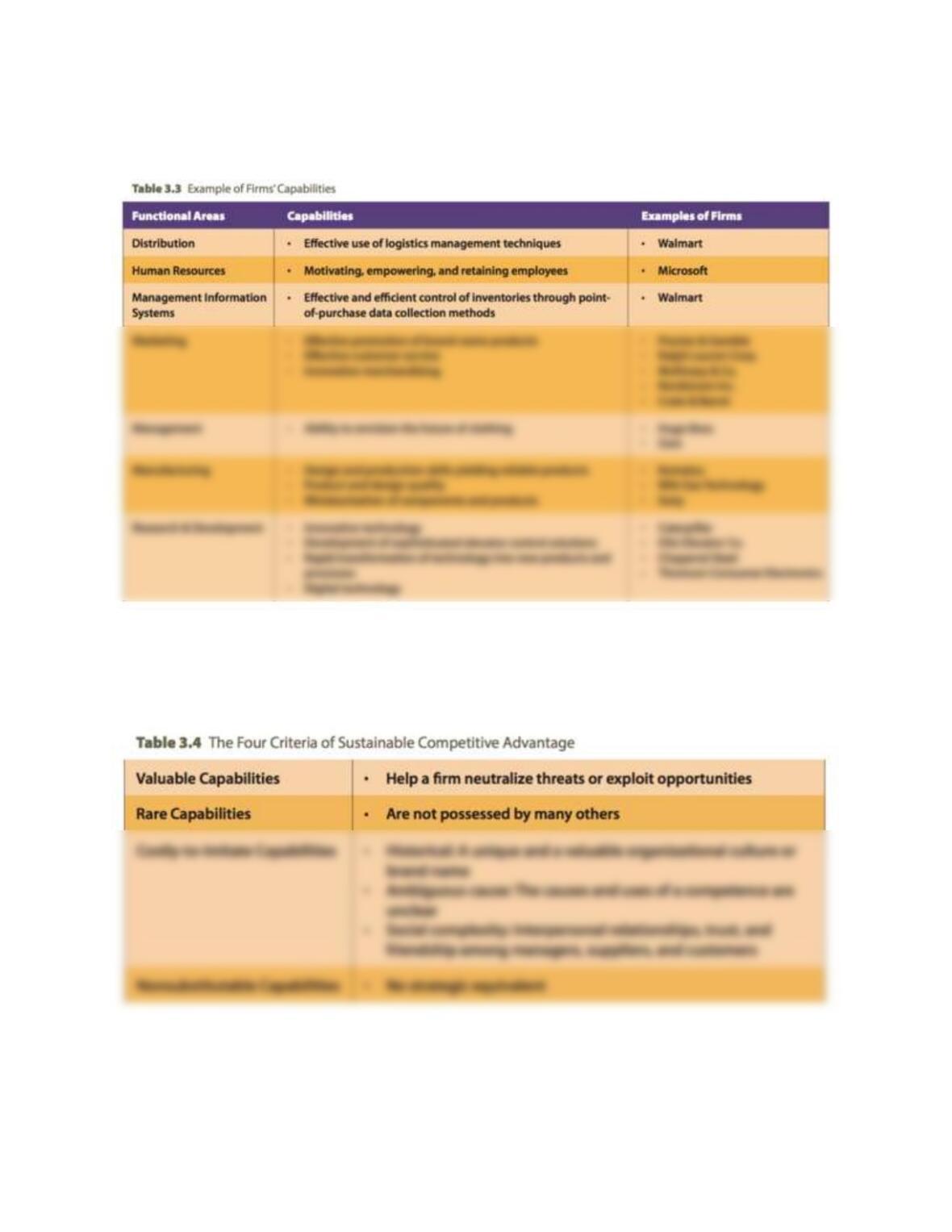
it has enabled its e-commerce platform to work with a wide range of currencies for a
demographic that has distinct preferences in how they use money (Table 3.3).
Speed and localization are both strong core competencies, but disruptive innovation is perhaps
the most powerful of all. It is valuable, rare, and nonsubstitutable and would be very costly for
competitors to imitate (Table 3.4).
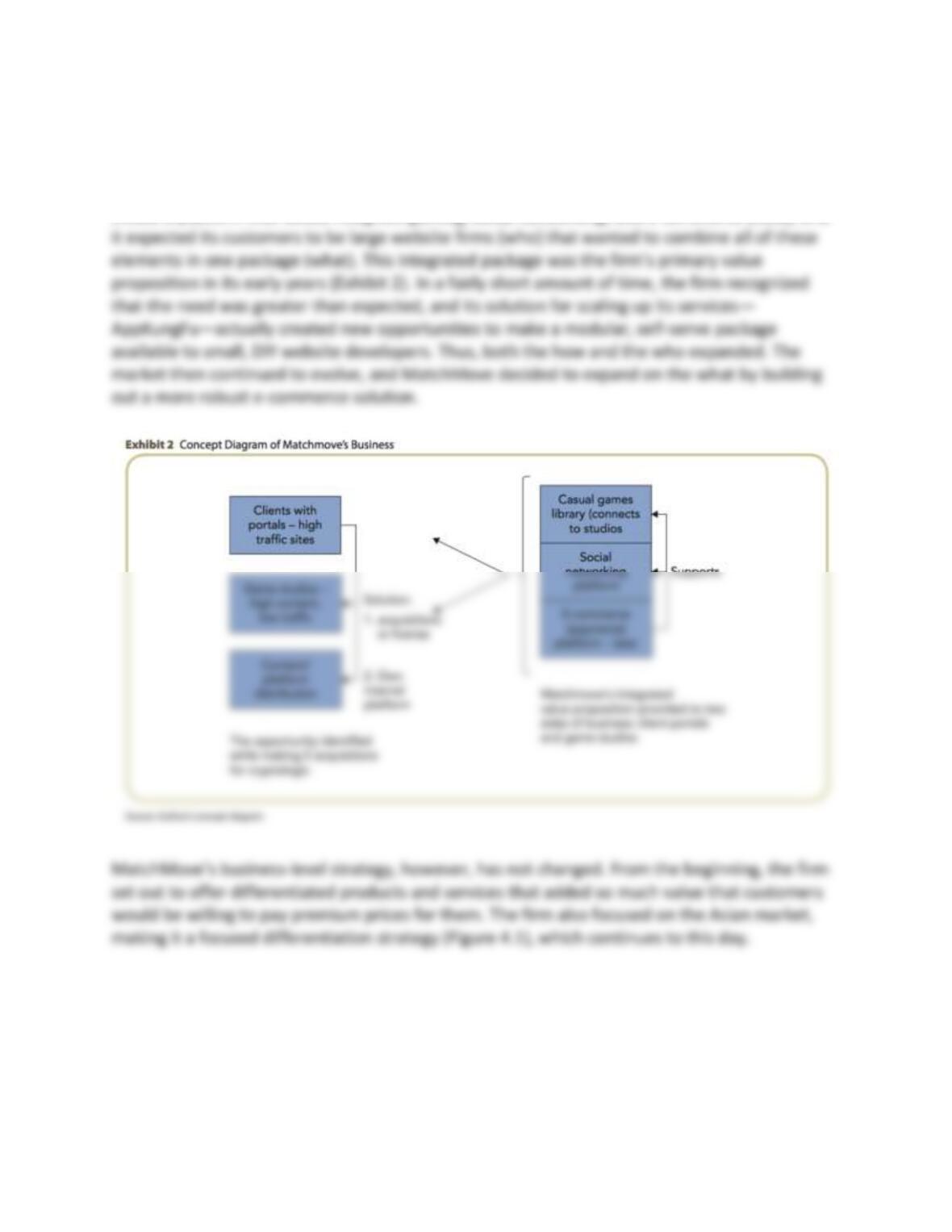
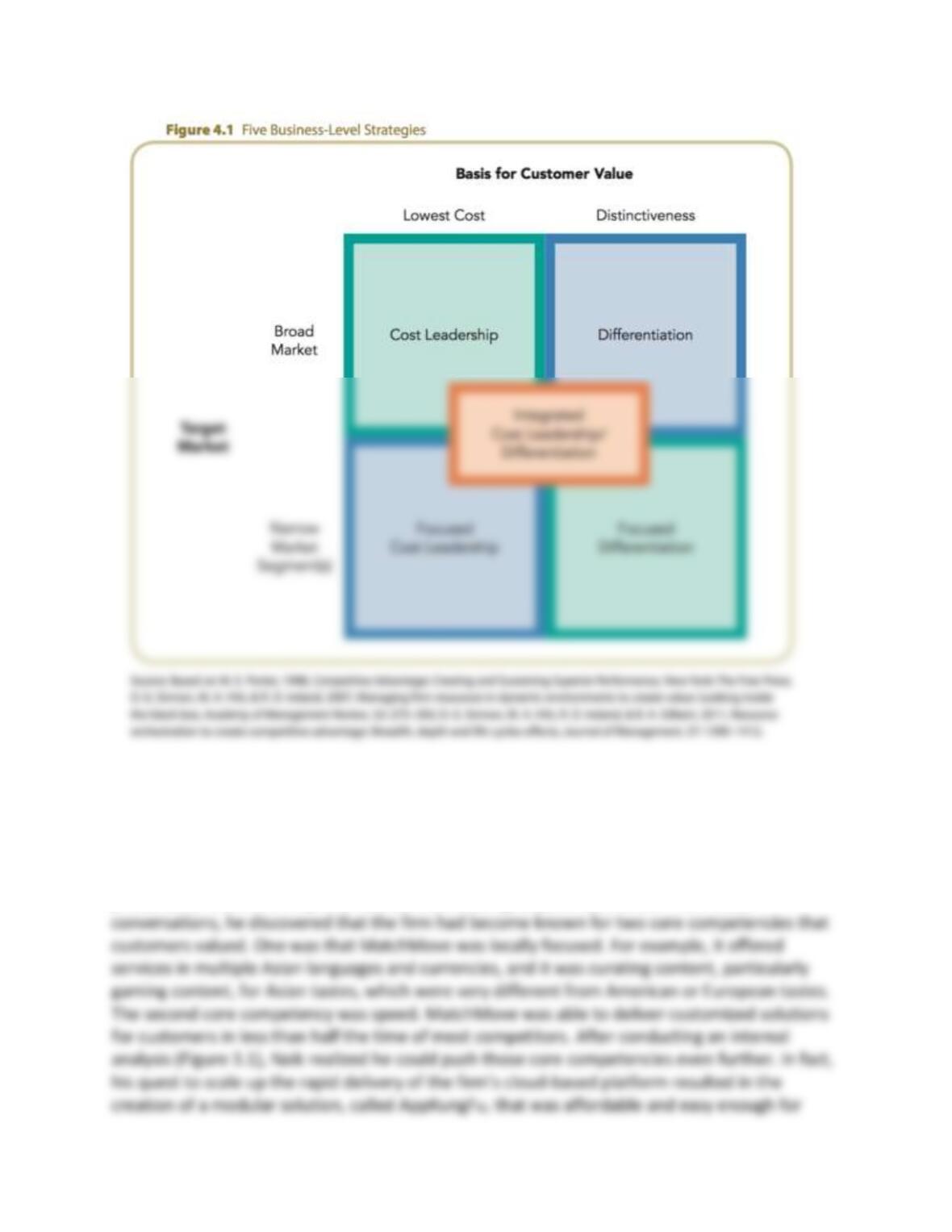
3. Since its inception, how have the “who, what, and how” of MatchMove’s business
model changed? How has its business-level strategy changed?
MatchMove’s business model has grown and expanded over time. Initially, the firm planned to
create a platform that would integrate gaming, social networking, and e-commerce (how), and
4. In MatchMove’s early years, Naik focused on leveraging two key core competencies to
grow his business. What were they, and how was he able to recognize them? How did
competitors respond?
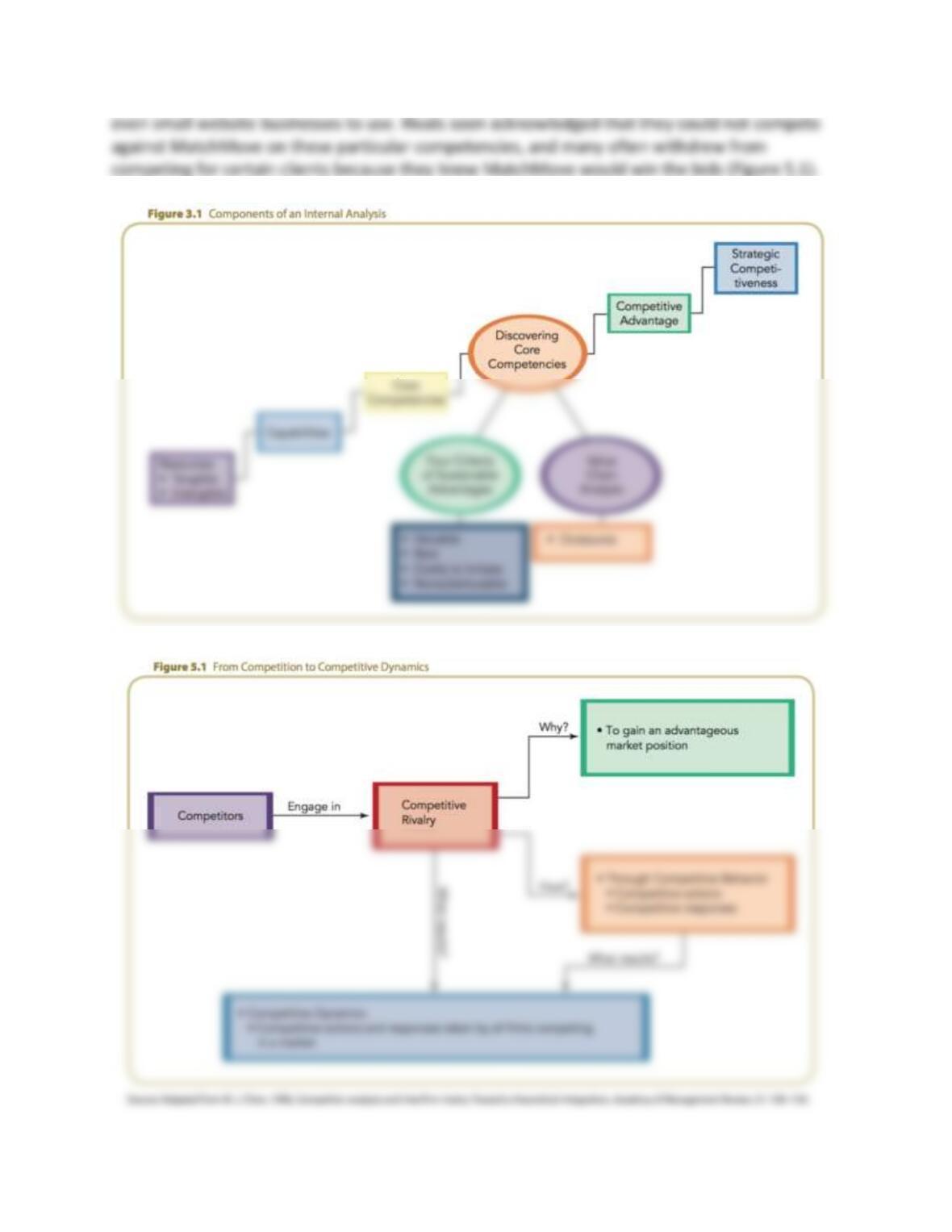
In the early days of MatchMove, Naik was directly involved in the sales pitches and
presentations that firm representatives were making to potential clients. From these

5. Naik’s mantra is “fail fast.” What does this mean? What does this suggest about his
character in terms of being an entrepreneur?
The mantra of “fail fast” is popular among technology companies. It represents the practice of
exploring and investing in new ideas quickly, but letting them go just as quickly if they prove to
Additional Resources
Owler provides up-to-date info on MatchMove, a privately owned company:
Finextra described another innovation from MatchMove in this May 2018 article:
MatchMove’s CEO Shailesh Naik spoke on a panel about financial inclusion at the Money 20/20
Asia conference in 2018: