9-52 CHAPTER 9: LIMITS AND THE DERIVATIVE
52. y = f(x) = 8x2 – 4x + 1
53. y = f(x) = –5x2 + 16x + 3
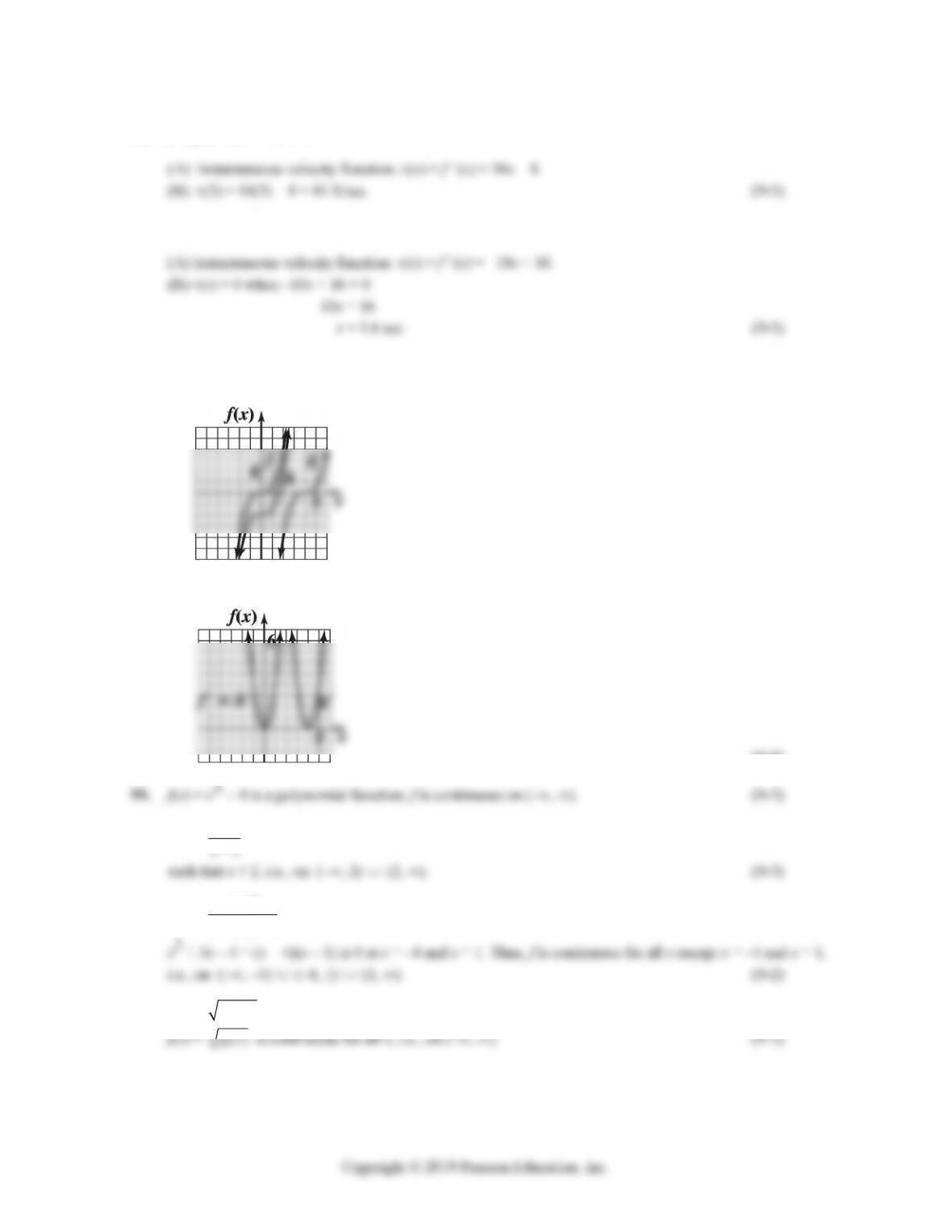
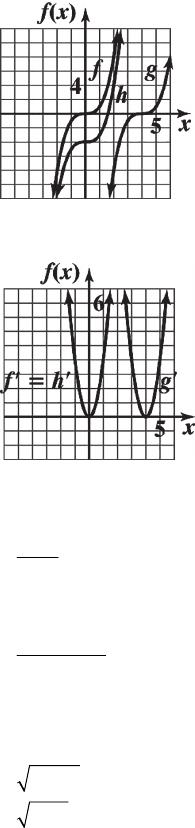
54. (A) The graph of g is the graph of f shifted 4 units to the right, and the graph of h is the graph of f shifted
4 units down.
(B) The graph of
g
is the graph of
f
shifted 4 units to the right, and the graph of
h is the graph of
f
.
(9-4)
56. f(x) = 1
x
57. f(x) = 2
4
34
x
xx
is a rational function and the denominator
58. f(x) = 32
4
x
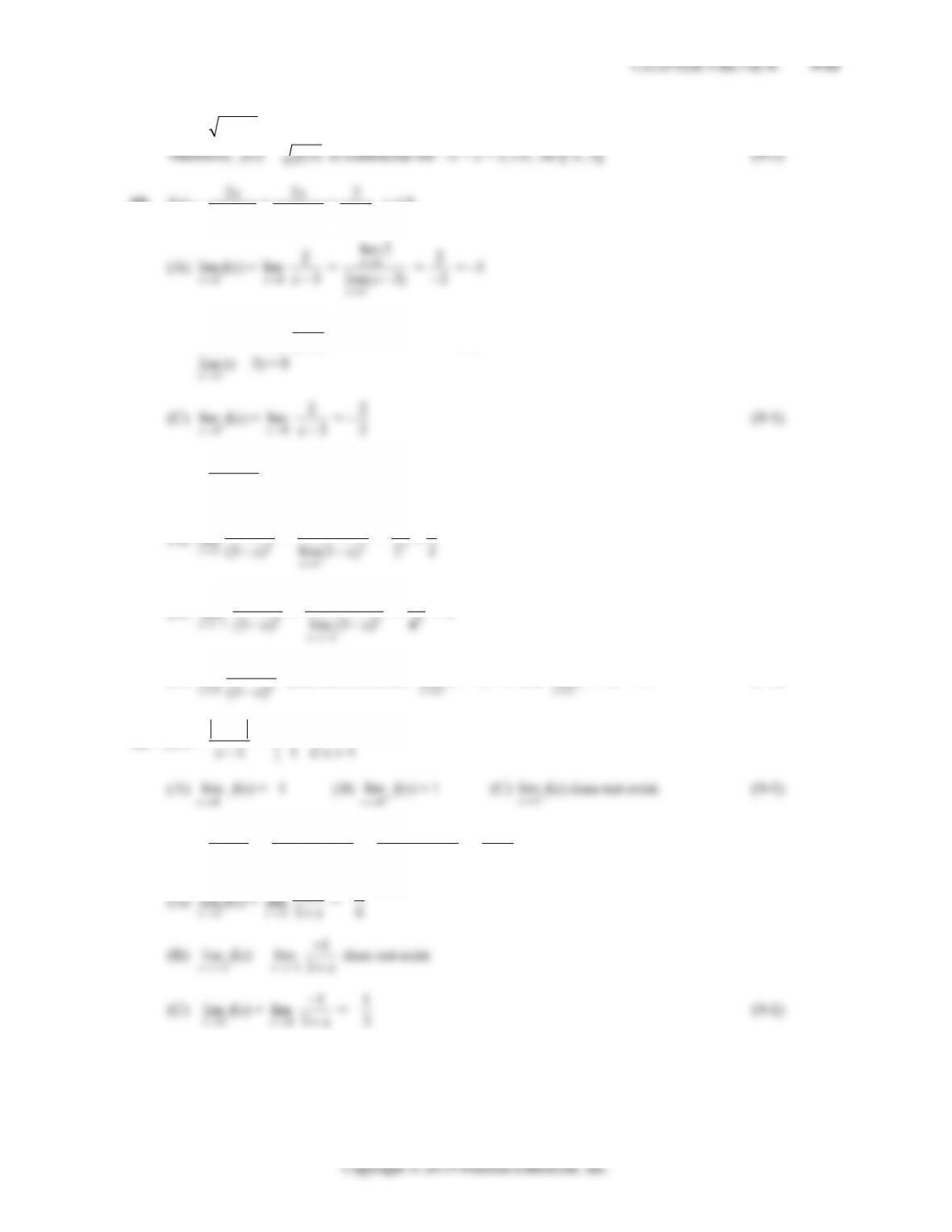
; g(x) = 4 – x2 is continuous for all x since it is a polynomial function. Therefore,
g
59. f(x) = 2
4
x
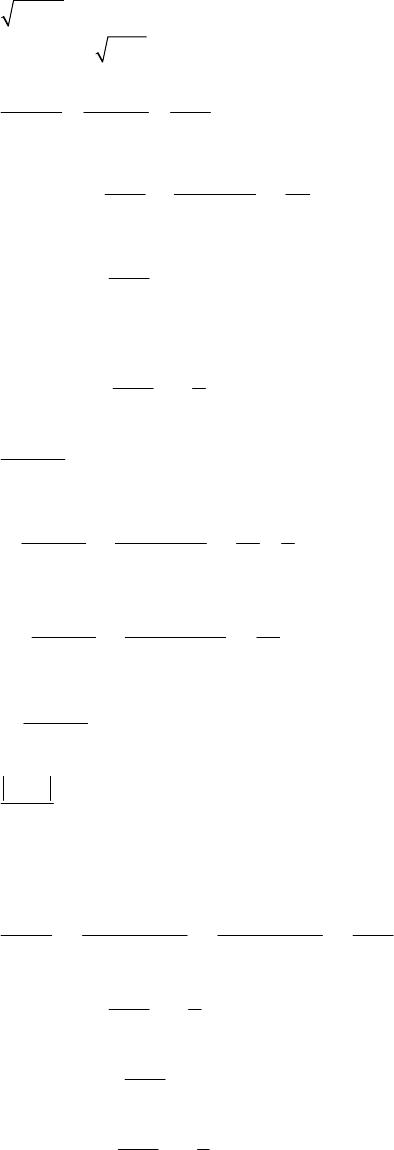
; g(x) = 4 – x2 is continuous for all x and g(x) is nonnegative for –2 ≤ x ≤ 2.
g
60. f(x) = 2
(3) 3
3
xx x
xx
, x ≠ 0
(B) 3
lim
xf(x) = 3
lim
x
2
3x does not exist since 3
lim
x2 = 2 and
61. f(x) = 2
1
(3 )
x
x
(A) 1
lim
1
x
x
lim( 1)
x
x
x
21
(B) 1
lim
1
x
x
lim ( 1)
x
x
x
0
(C) 3
lim
1
x
x
lim
lim
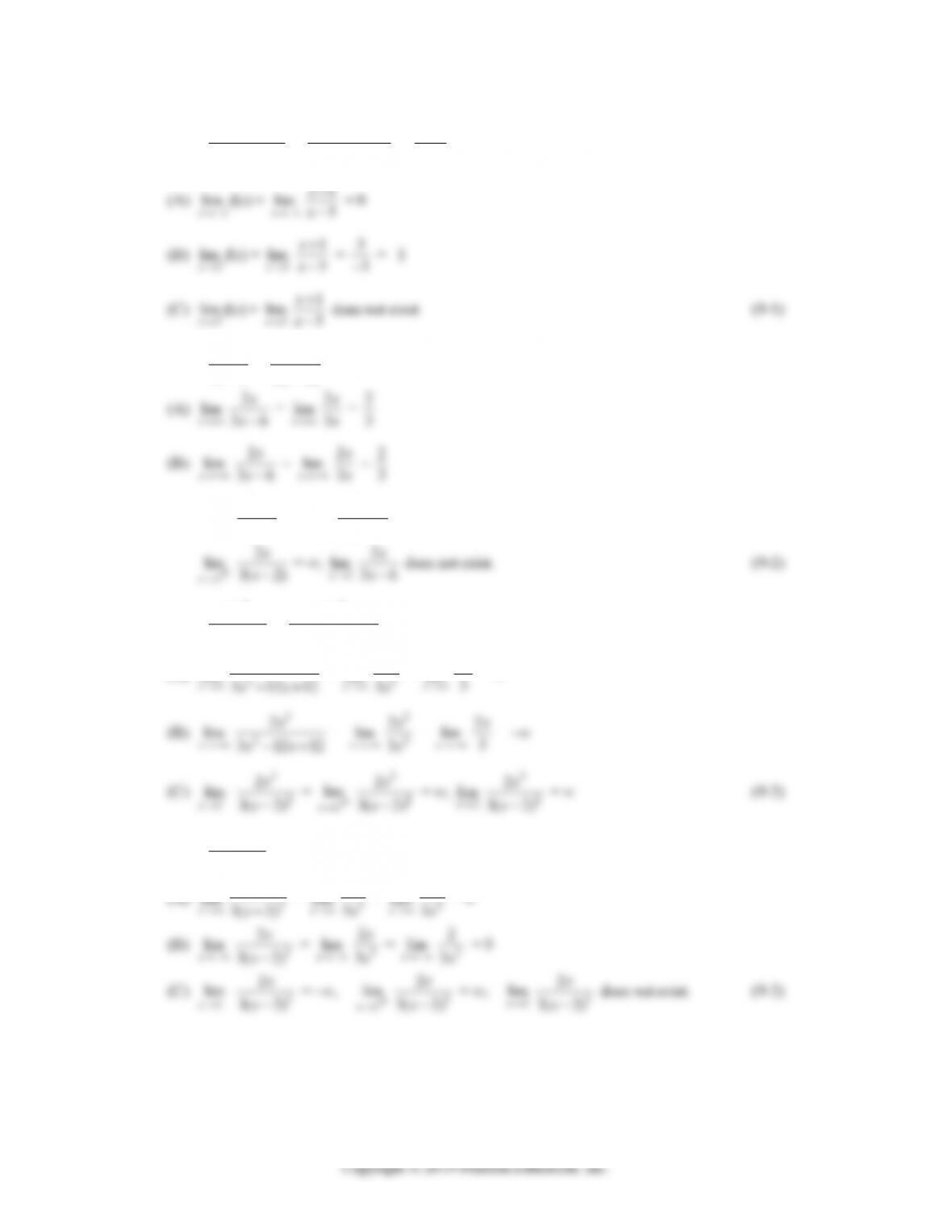
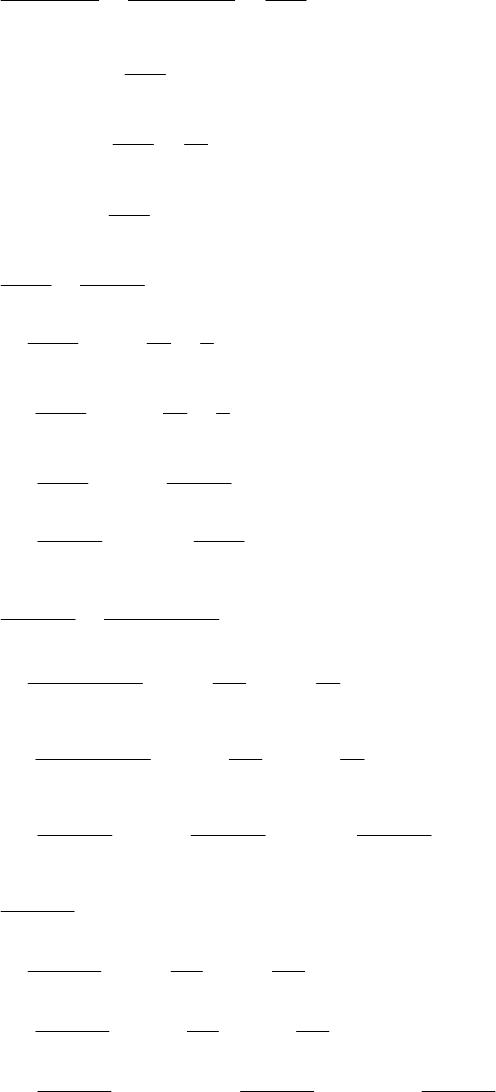
62. f(x) = 4
x
x
63. f(x) = 2
3
9
x
x
= 3
(3 )(3 )
x
x
x
= (3 )
(3 )(3 )
x
x
x
= 1
3
x
, x ≠ 3
1
x
x
x
9-54 CHAPTER 9: LIMITS AND THE DERIVATIVE
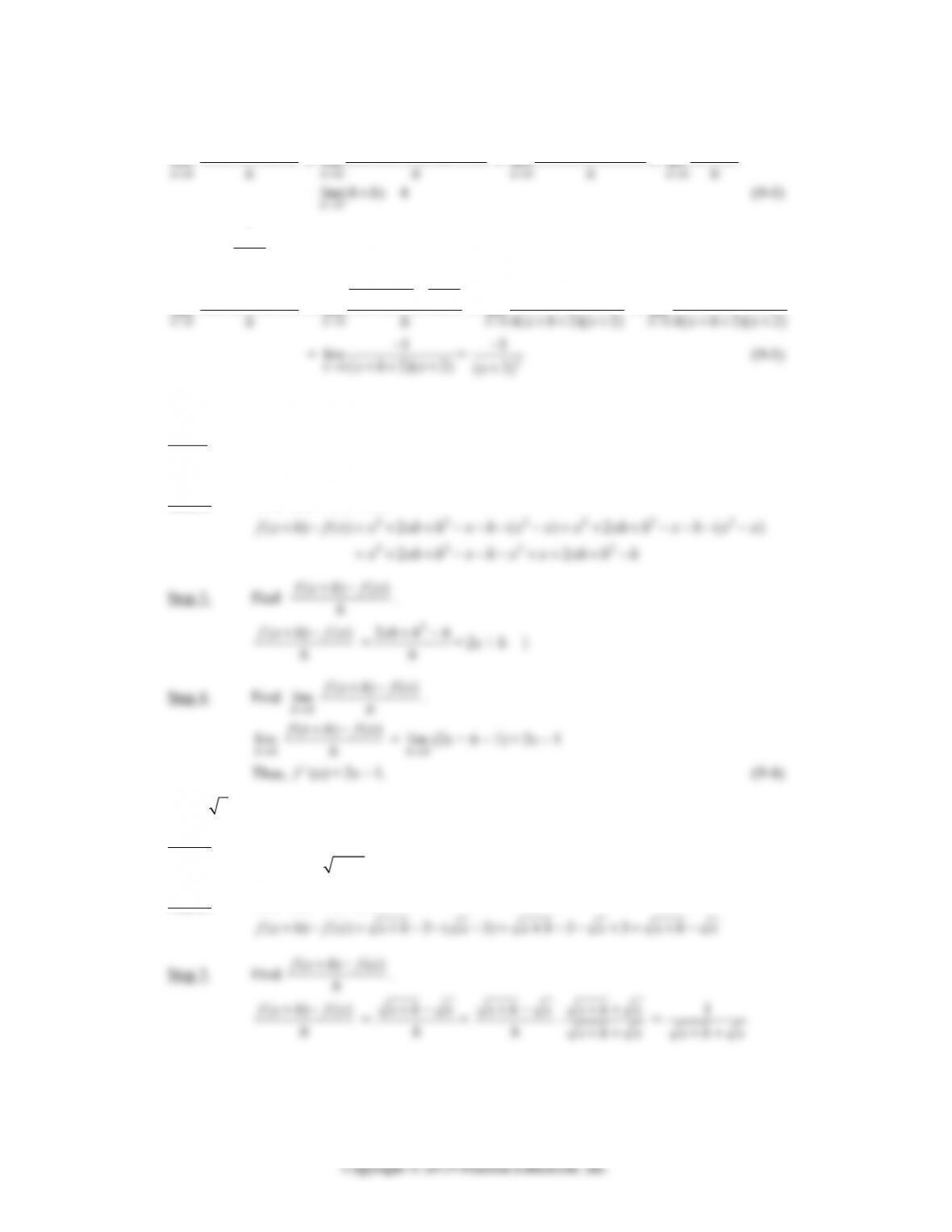
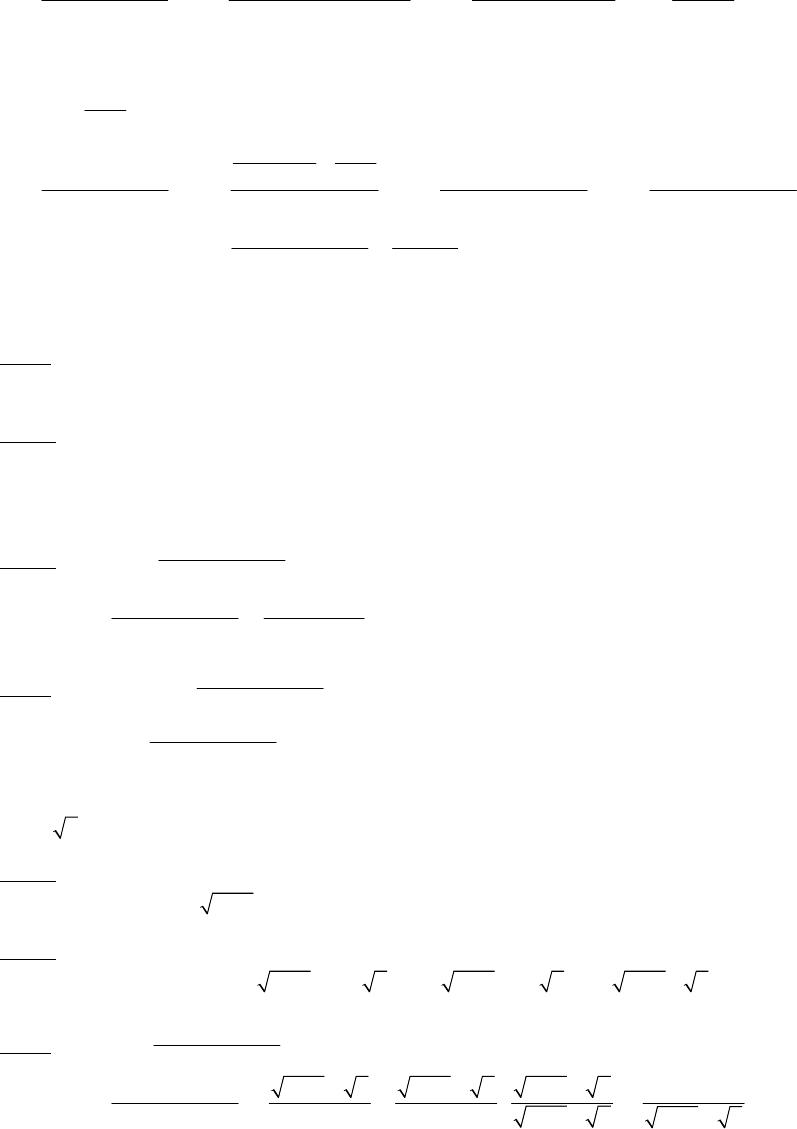
64. f(x) =
2
2
2
710
xx
xx
= (2)(1)
(2)(5)
xx
xx
= 1
5
x
x
, x ≠ 2
65. f(x) = 2
36
x
x = 2
3( 2)
x
x
x
x
x
x
x
x
(C) —
2
lim
x
2
36
x
x = —
2
lim
x
2
3( 2)
x
x = –∞
x
x
66. f(x) =
3
2
2
3( 2)
x
x
=
3
2
2
31212
x
xx
(A) lim
3
2
x
= lim
3
2
x
x
= lim
2
x
= ∞
x
x
x
67. f(x) = 3
2
3( 2)
x
x
2
x
2
x
x
2
x
CHAPTER 9 REVIEW 9-55
68. f(x) = x2 + 4
(2 ) (2)fhf
=
22
[(2 ) 4] [2 4]
h
2
44 48
hh
2
4
hh
69. Let f(x) = 1
2x
lim
()()fx h fx
= 0
11
()2 2
lim
xh x
= 0
2( 2)
lim (2)(2)
xxh
lim (2)(2)
h
70. f(x) = x2 – x
Step 1. Find ()
f
xh.
222
()()() 2
f
xh xh xh x xhh xh
Step 2. Find ()()
f
xh fx
71. f(x) =
x
– 3
Step 1. Find ()
f
xh.
() 3fx h x h
Step 2. Find ()()
f
xh fx
f
9-56 CHAPTER 9: LIMITS AND THE DERIVATIVE
Step 4. Find 0
lim
()()fx h fx
.
x
x
73. No. f is not differentiable at x = 0 since it is not continuous at x = 0. (9-4)
75. No. f is not differentiable at x = 2; the curve has a “corner” at this point. (9-4)
77. Yes. f is differentiable at x = 4. (9-4)
78. f(x) = 5
7
x
x; f is discontinuous at x = 7
x
x
x
x
x
79. f(x) = 2
25
(4)
x
x
; f is discontinuous at x = 4.
x
x
80. f(x) =
29
3
x
x
; f is discontinuous at x = 3.
x
x
81. f(x) =
2
2
9
2
x
xx
=
29
(2)(1)
x
xx
; f is discontinuous at x = –2, x = 1.
CHAPTER 9 REVIEW 9-57
x
x
82. f(x) =
3
32
1
1
x
x
xx
=
2
2
(1)( 1)
(1)( 1)
xxx
xx
=
2
2
(1)( 1)
(1)(1)
xxx
xx
=
21
(1)(1)
xx
xx
, x ≠ 1.
x
x
x
83. f(x) = x1/3; f ‘ (x) = 1
1
x
84. f(x) =
2
2
if 1
if 1
xm x
xm x
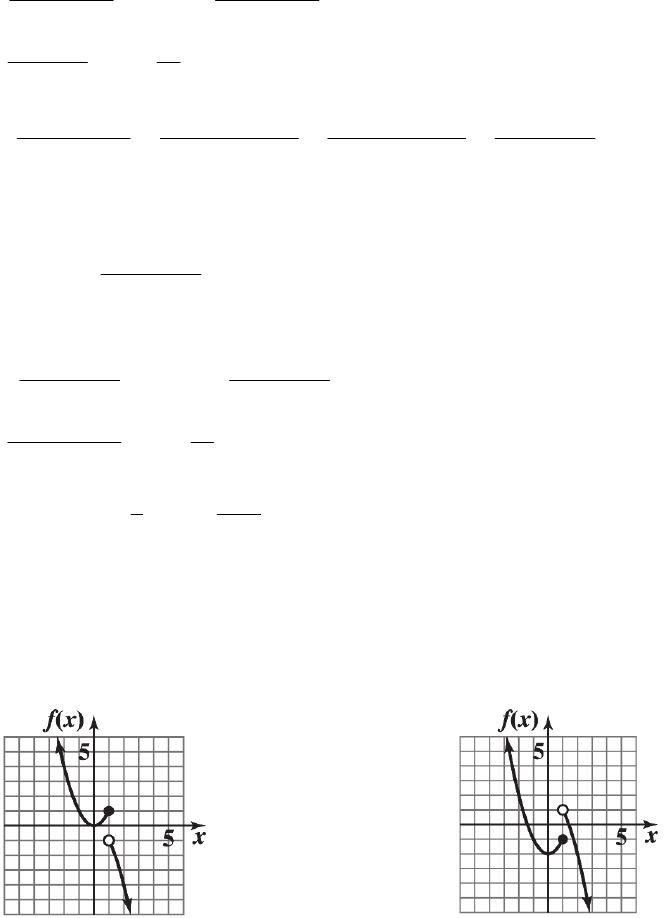
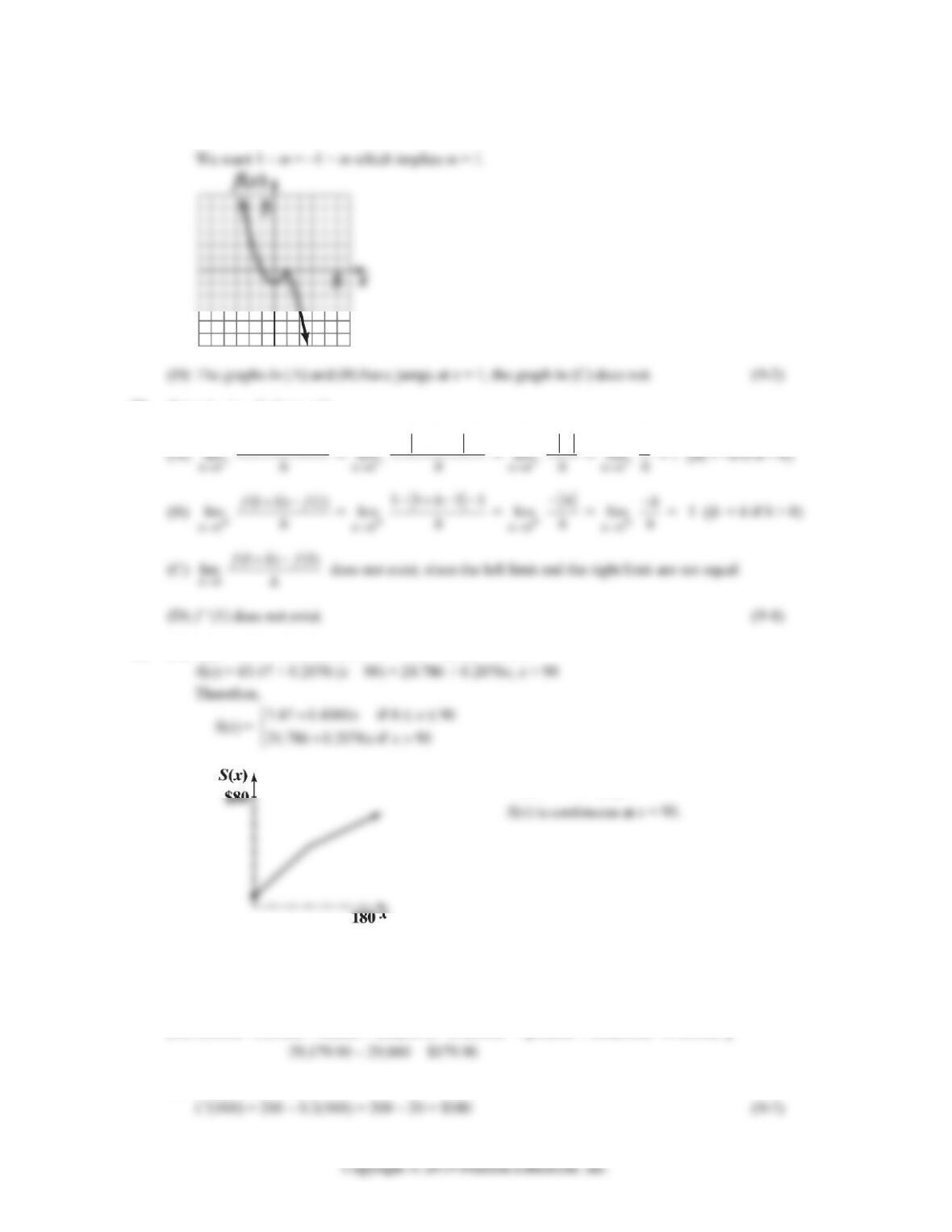
(A)
(B)
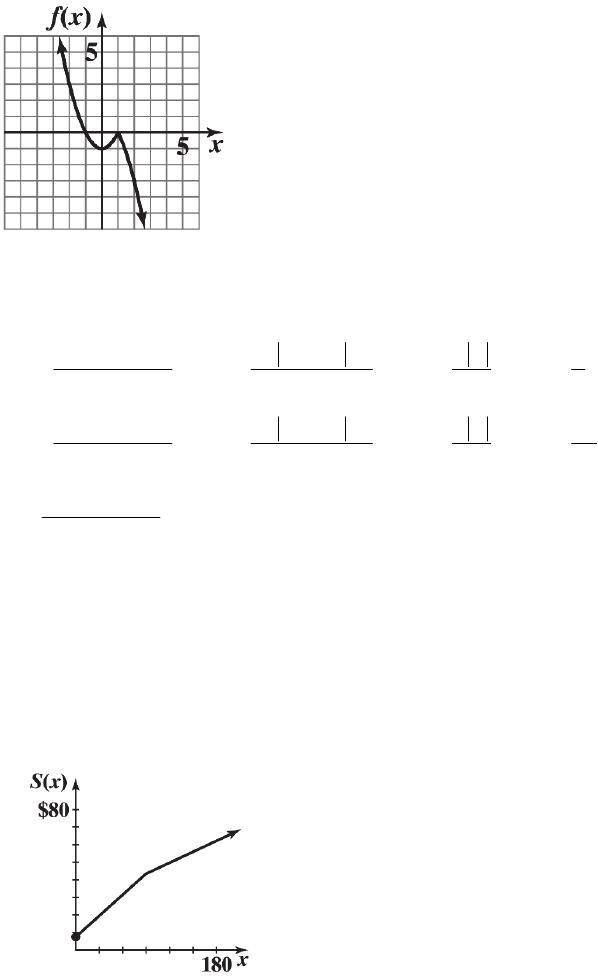
9-58 CHAPTER 9: LIMITS AND THE DERIVATIVE
(C)
1
lim
xf(x) = 1 – m,
1
lim
xf(x) = –1 + m
85. f(x) = 1 – |x – 1|, 0 ≤ x ≤ 2
=
11 11h
=
h
=
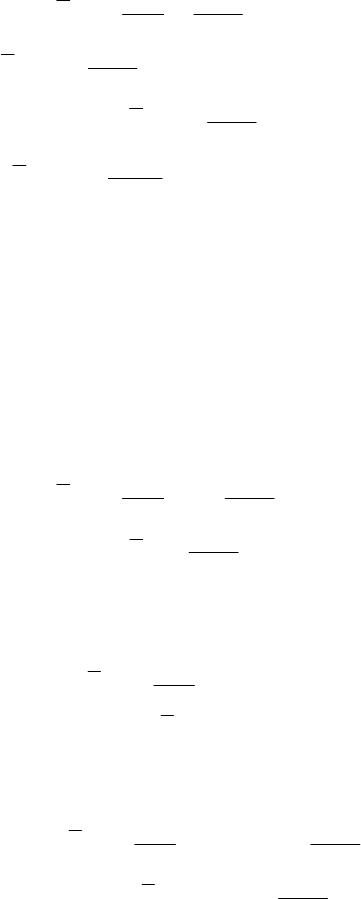
86. (A) S(x) = 7.47 + 0.4000x for 0 ≤ x ≤ 90; S(90) = 43.47;
(B)
(C) 90
lim
xS(x) =
90
lim
xS(x) = 43.47 = S(90);
(9-2)
87. C(x) = 10,000 + 200x – 0.1x2
(A) C(101) – C(100) = 10,000 + 200(101) – 0.1(101)2 – [10,000 + 200(100) – 0.1(100)2]
(B) C′(x) = 200 – 0.2x
CHAPTER 9 REVIEW 9-59
88. C(x) = 5,000 + 40x + 0.05x2
(A) Cost of producing 100 bicycles:
(B) Average cost: C(x) = ()Cx
x
= 5,000
x
+ 40 + 0.05x
89. The approximate cost of producing the 201st printer is greater than that of producing the 601st printer (the
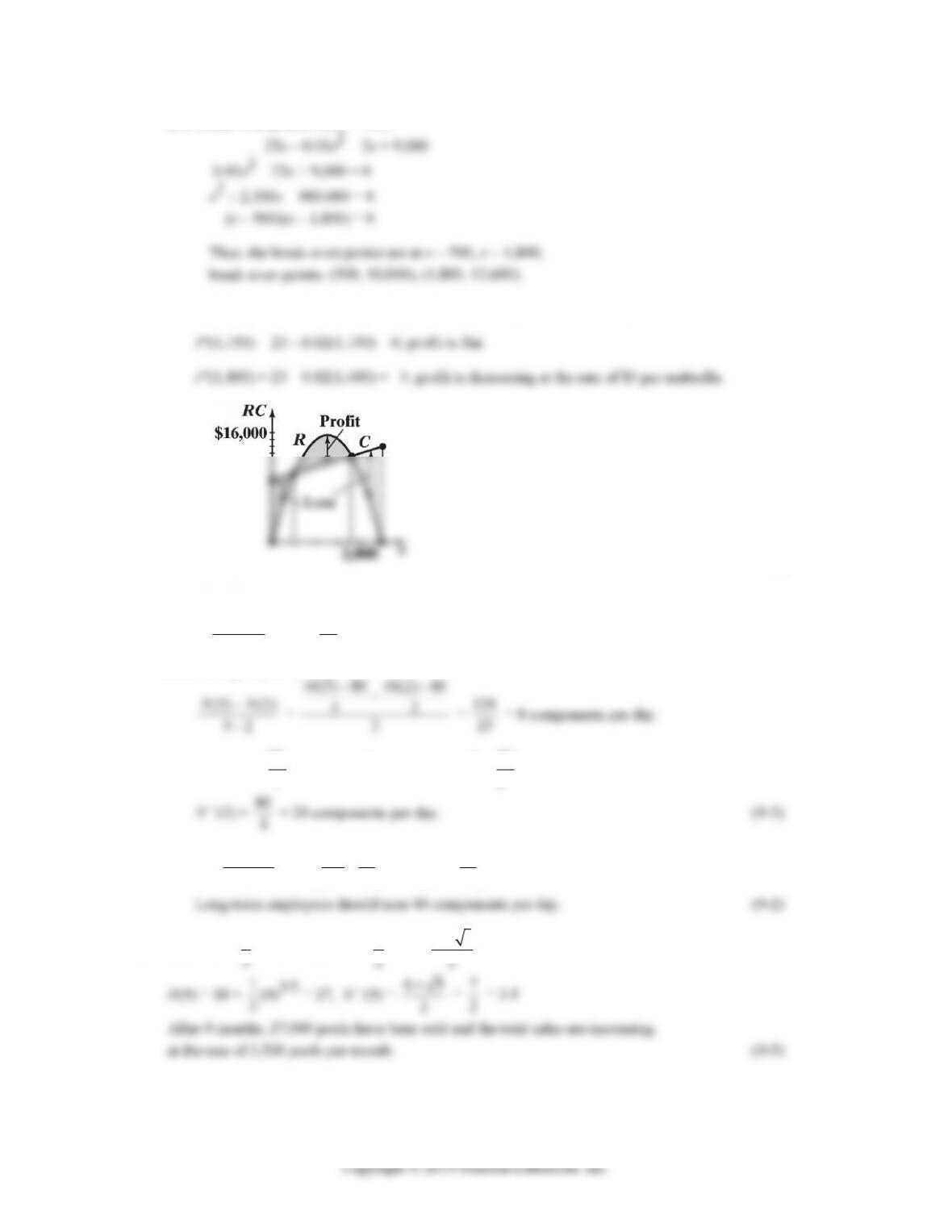
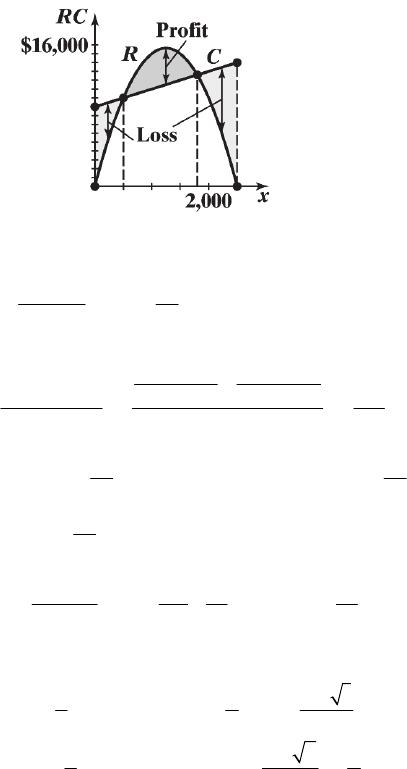
90. p = 25 – 0.01x, C(x) = 2x + 9,000
(A) Marginal cost: C′(x) = 2
x
x
(B) Revenue: R(x) = xp = 25x – 0.01x2
x
(C) Profit: P(x) = R(x) – C(x) = 25x – 0.01x2 – (2x + 9,000) = 23x – 0.01x2 – 9,000
x
x
9-60 CHAPTER 9: LIMITS AND THE DERIVATIVE
(D) Break-even points: R(x) = C(x)
(E) P′(1,000) = 23 – 0.02(1000) = 3; profit is increasing at the rate of $3 per umbrella.
(F)
(9-7)
91. N(t) = 40 80t
t
= 40 – 80
t, t ≥ 2
(A) Average rate of change from t = 2 to t = 5:
(B) N(t) = 40 – 80
t = 40 – 80t–1; N ‘ (t) = 80t–2 = 2
80
(C) 40 80 40 80 80
lim lim lim 40 40
tt t
tt
ttt t
92. N(t) = 2t + 1
t
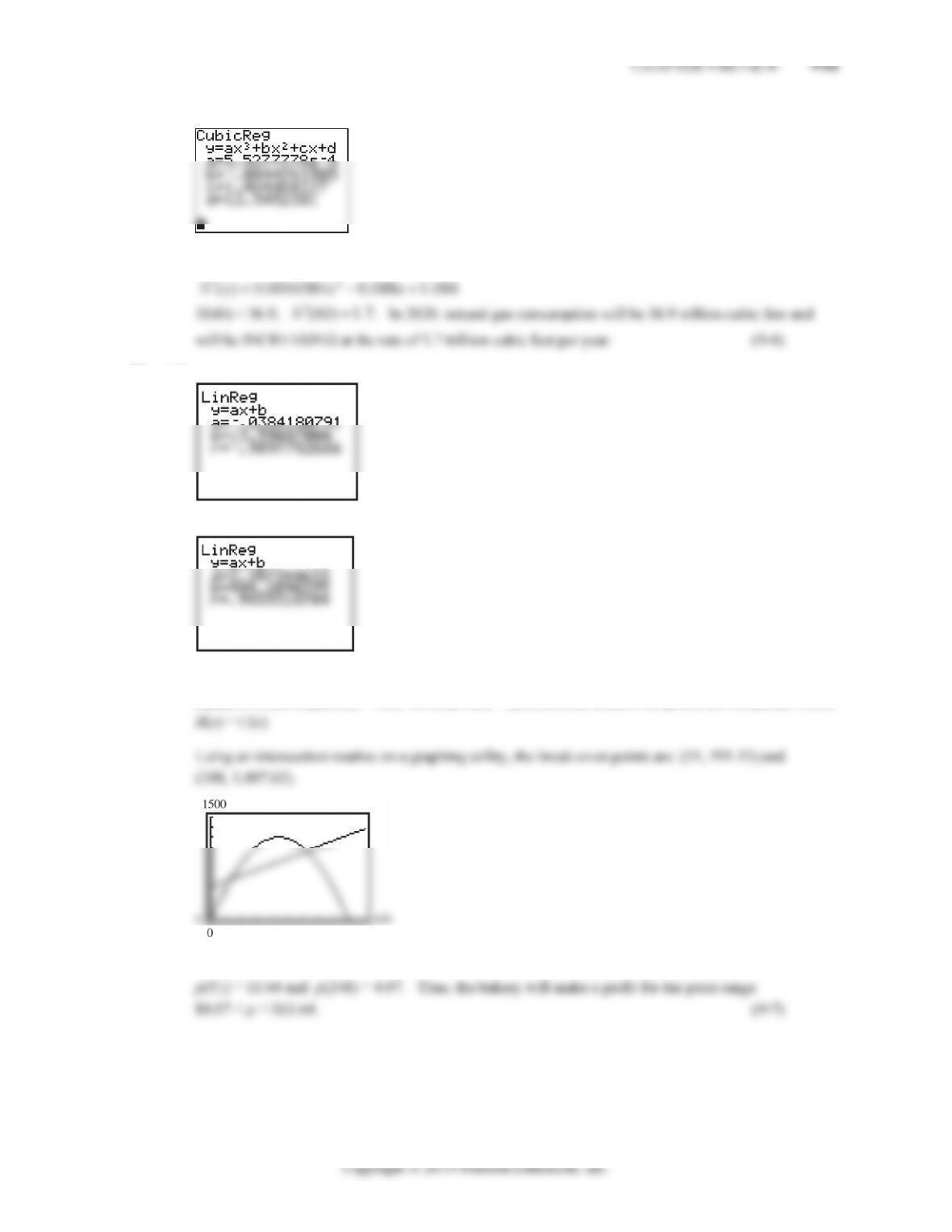
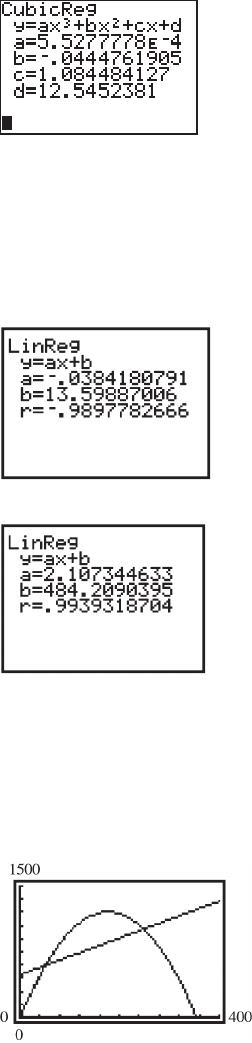
93. (A)
(B) 32
( ) 0.0005528 0.044 1.084 12.545Nx x x x
94. (A)
(B) Fixed costs: $484.21; variable cost per kringle: $2.11.
(C) Let p(x) be the linear regression equation found in part (A) and let C(x) be the linear regression
equation found in part (B). Then revenue R(x) = xp(x) and the break-even points are the points where
(D) The bakery will make a profit when 51 < x < 248. From the regression equation in part (A),
9-62 CHAPTER 9: LIMITS AND THE DERIVATIVE
95. C(x) = 2
500
x
= 500x–2, x ≥ 1.
96. F(t) = 0.16t2 – 1.6t + 102, F ‘(t) = 0.32t – 1.6
97. N(t) = 20 t = 20t1/2
The rate of learning is N ‘(t) = 20 1
t–1/2 = 10t–1/2 = 10
98. (A)
T
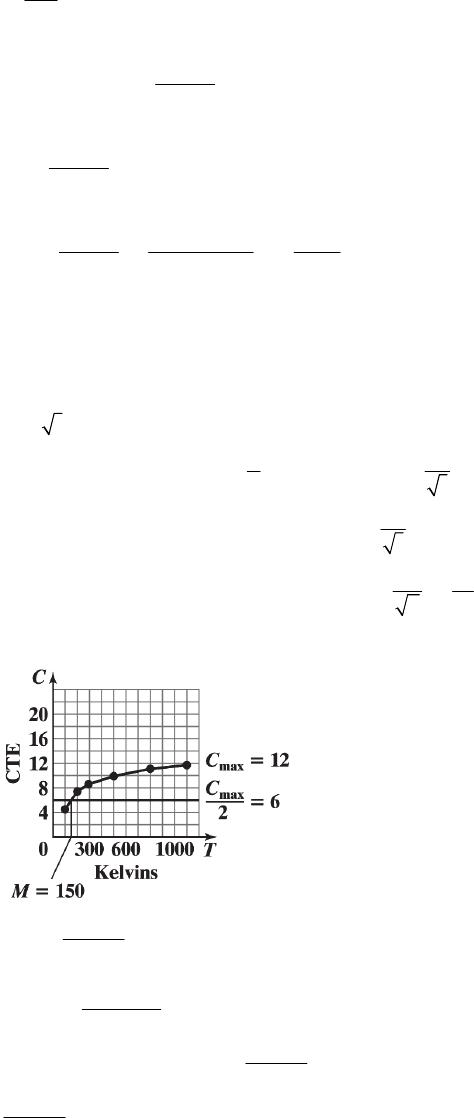
(C) C(600) = 12(600)