
9 LIMITS AND THE DERIVATIVE
EXERCISE 9-1
2. 264 ( 8)( 8)xxx 4. 2536(9)(4)xx x x
10. (0.5) 2f 12. (2.25) 2.25f
16. (A)
4
lim
x
f(x) = 4 (B)
4
lim
x
f(x) = 4 (C) 4
lim
x
f(x) = 4 (D) f (4) does not exist
22. (A)
2
lim
x
g(x) = 2 (B)
2
lim
x
g(x) = 2 (C) 2
lim
x
g(x) = 2 (D) g(2) = 2
x
26. (A)
2
lim
x
f(x) = 3 (B)
2
lim
x
f(x) = –3
28. (A)
2
lim
x
f(x) = –3 (B)
2
lim
x
f(x) = 3
30. 3x → –6 as x → –2; thus 2
lim
x 3x = –6
x
x
2x
x
= 2
38. 16 7
x
→ 16 7(0) = 16 = 4 as x → 0; thus 0
lim
x
16 7
x
= 4
42. 1
lim
x[g(x) – 3f(x)] = 1
lim
xg(x) – 3 1
lim
xf(x) = 4 – 3(–5) = 19
9-2 CHAPTER 9: LIMITS AND THE DERIVATIVE
3()
f
x
lim[3 ( )]
f
x
g
3lim()
f
x
g
46. 1
lim
x
322()
x
fx = 3
1
lim[2 2 ( )]
x
x
fx
x
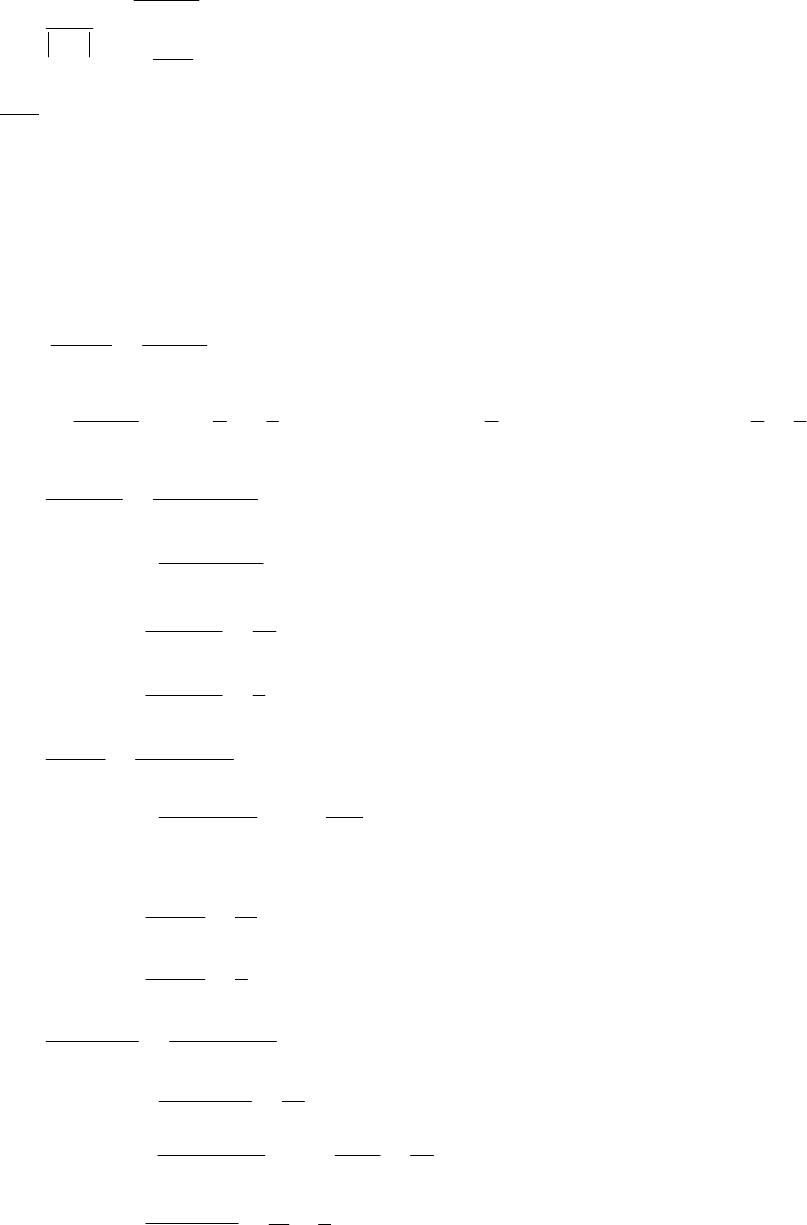
48.
50.
52. f(x) = 2if 0
2if 0
xx
xx
54. f(x) = 3if 2
2if 2
xx
xx
56. f(x) =
if 0
3
if 0
xx
x
xx
EXERCISE 9-1 9-3
58. f(x) = 3
3
x
x
=
(3)
31if 3
x
xx
60. f(x) = 2
3
3
x
x
x
= 3
(3)
x
xx
62. f(x) =
26
3
xx
x
= (3)(2)
(3)
xx
x
(3)(2)
xx
26
x
x
64. f(x) =
2
2
1
x
(1)(1)
xx
(1)(1)
xx
1
x
1
lim
lim
2
66. f(x) =
2
32
xx
= (3 1)( 1)
(2)(1)
xx
(3 1)( 1)
xx
31
x
= –4
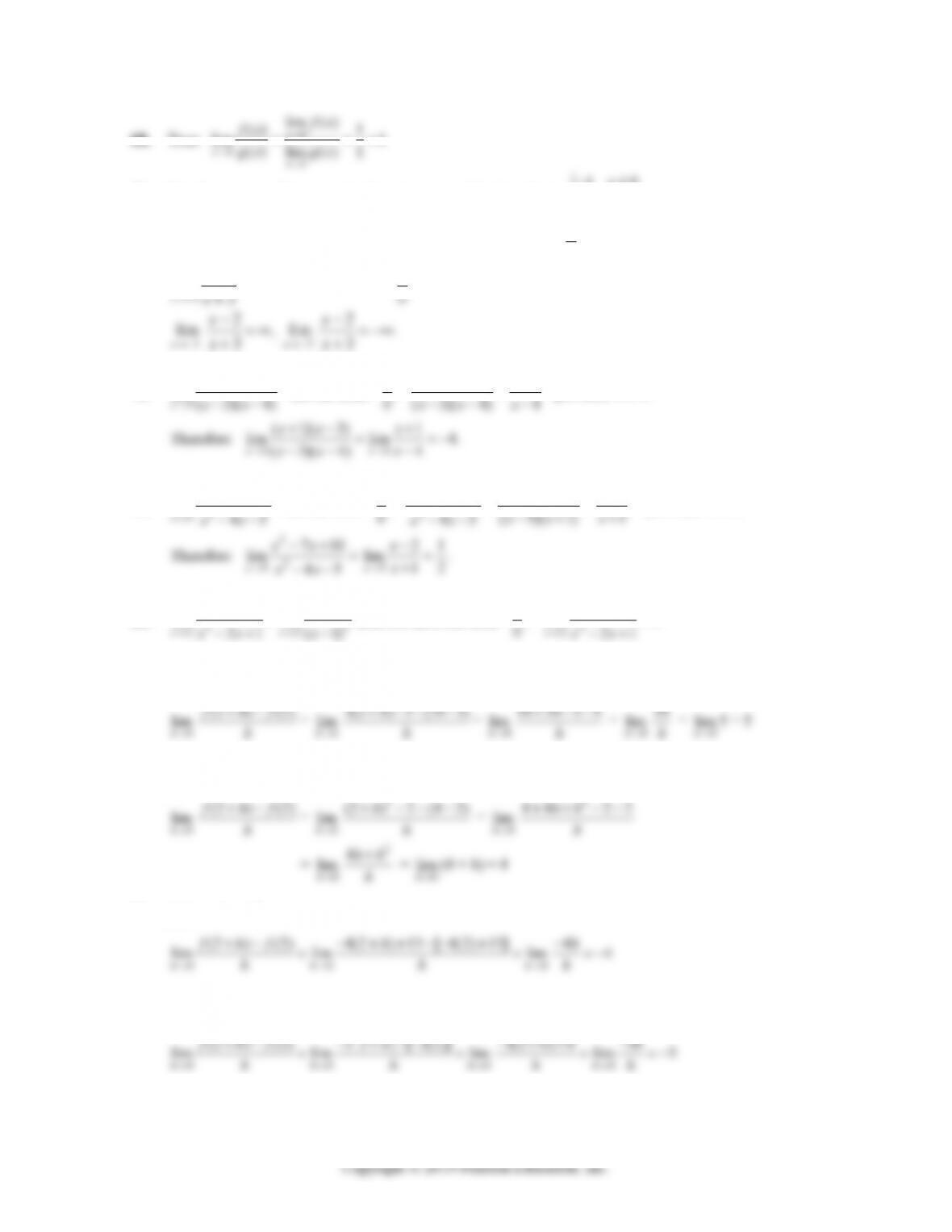
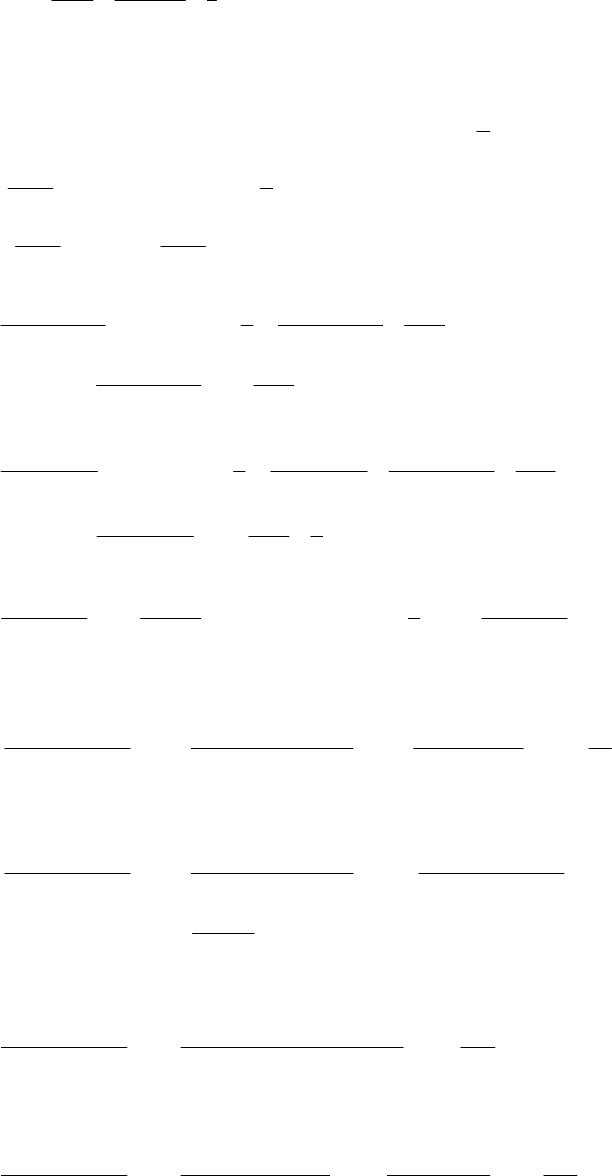
2
9-4 CHAPTER 9: LIMITS AND THE DERIVATIVE
68. True: 1
lim 1
x
70. Not always true. For example, the statement is false for 1
() 10
0
x
fx x
72. Not always true. For example, the statement is false for 1
()fx
x
.
74.
2
lim 3
x
does not have the form 0;
76. 3
(1)(3) 0(1)(3) 1
lim has the form ; provided 3.
xx xx x x
78.
22
710 0 710(5)( 2) 5
lim has the form ; , provided 5.
xx xx x x x x
80.
22 2
21 (1) 0 21
lim lim does not have the form ; lim 9.
xx x xx
82. f(x) = 5x – 1
84. f(x) = x2 – 2
86. f (x) = –4x + 13
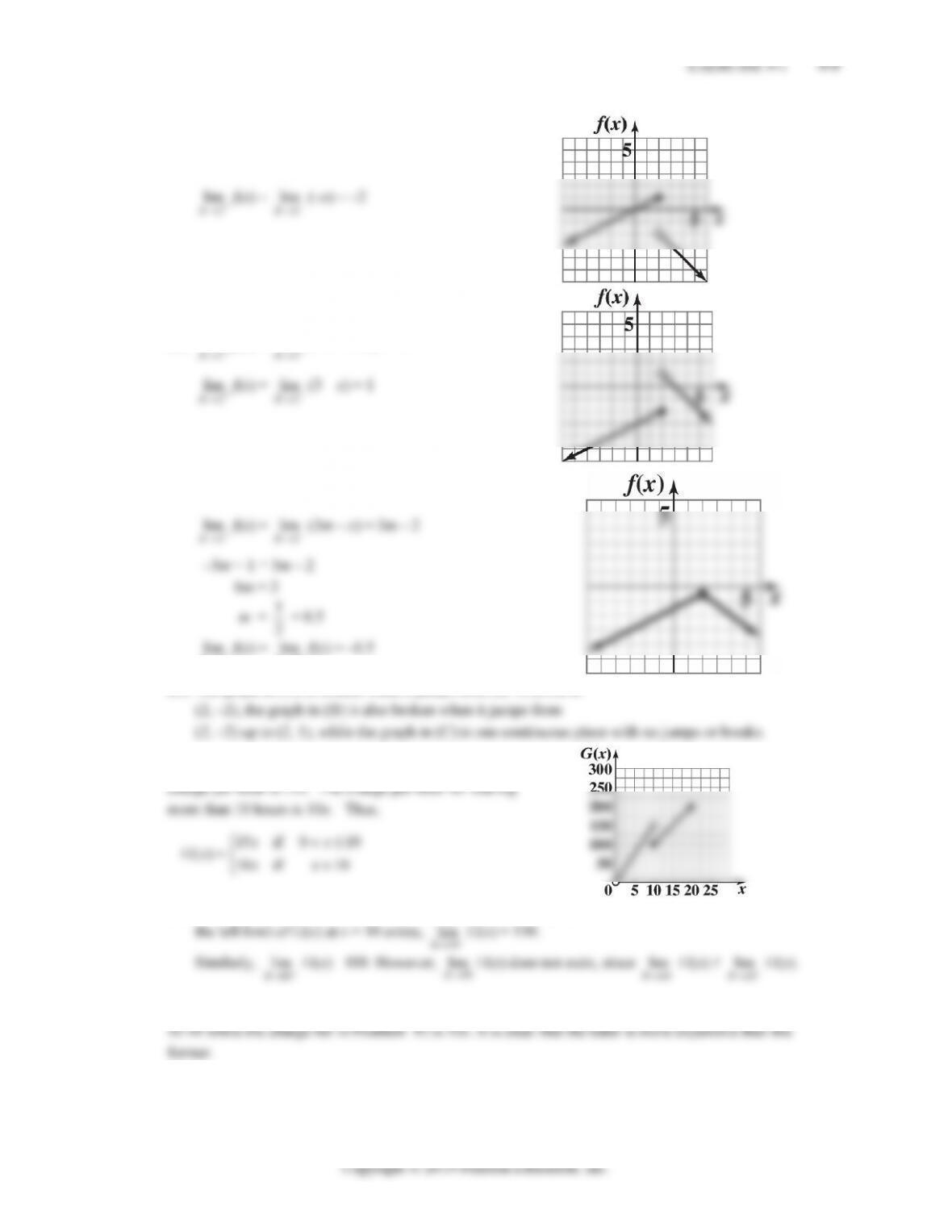
88. f (x) = –3| x|
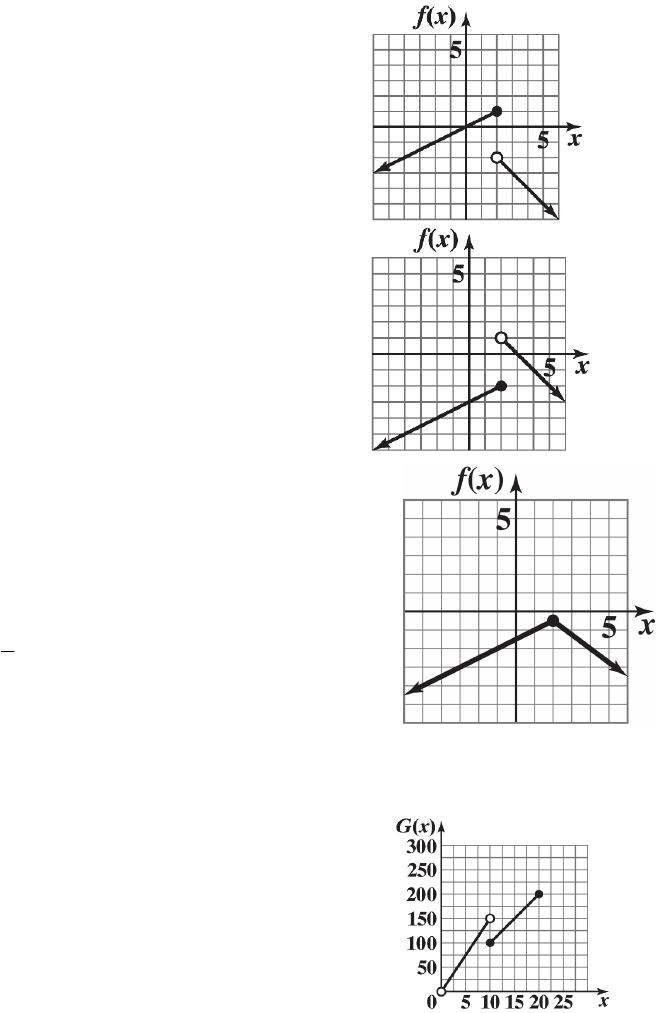
90. (A)
2
lim
x
f(x) =
2
lim
x
(0.5x) = 1
(B)
lim
f(x) =
lim
(–3 + 0.5x) = –2
(C)
2
lim
x
f(x) =
2
lim
x
(–3m + 0.5x) = –3m + 1
2
x
2
x
(D) The graph in (A) is broken when it jumps from (2, 1) down to
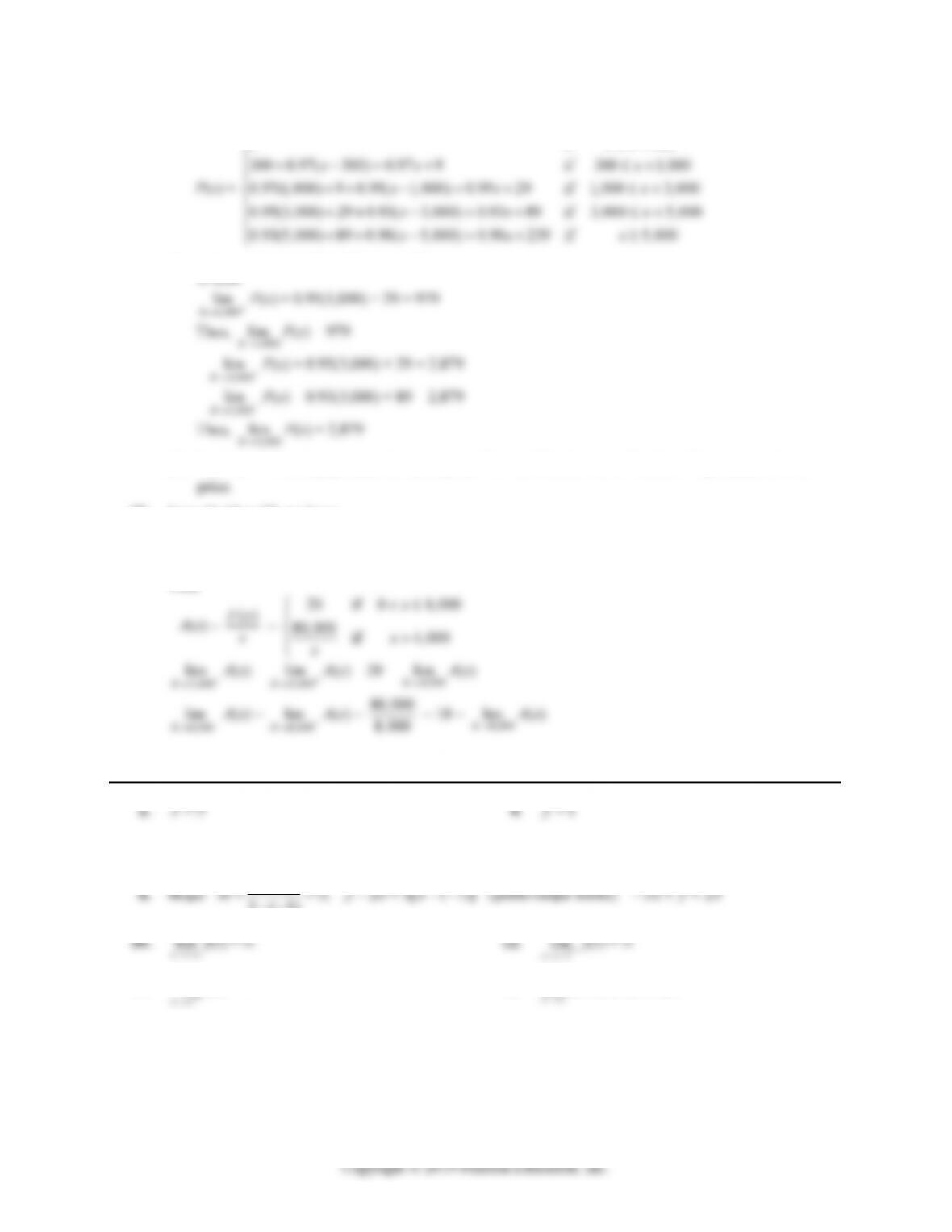
92. (A) For car sharing of not more than 10 hours, the
(B)
(C) As x approaches 10 from the left, G(x) approaches 150, thus,
94. For car sharing of more more than 10 hours per month, the charge for the service given in Problem 91 is
9-6 CHAPTER 9: LIMITS AND THE DERIVATIVE
96. (A) Let x be the volume of a purchase before the discount is applied. Then P(x) is given by:
if 0 300
xx
(B)
lim
P(x) = 0.97(1,000) + 9 = 979
(C) For 0 ≤ x < 300, they produce the same price. For x ≥ 300, the one in Problem 95 produces a lower
98. From Problem 97, we have:
F(x) = 20 if 0 4,000
80,000 if 4,000
xx
x
Thus
EXERCISE 9-2
6. 4 3( 8) (point-slope form); 3 20yx xy
1(1)
14.
lim
lim

EXERCISE 9-2 9-7
18. f(x) =
2
3
x
x
(A)
lim
2
x
(B)
3
lim
x
2
3
x
x = ∞; numerator approaches (–3)2 = 9 and denominator
(C) Since left and right limits at –3 are not equal,
20. f(x) = 2
22
(2)
x
x
(A)
2
lim
x 2
22
x
(B)
2
lim
x 2
22
(2)
x
x
= –∞; as x approaches –2 from the right, the denominator is positively approaching 0
22. f(x) =
22
1
xx
x
(A)
1
lim
x
22
1
xx
x
= –∞; as x approaches 1, the numerator approaches 4 and the denominator negatively
1
x
does not exist.
24. f(x) =
22
(2)
xx
x
f(x) = (1)( 2)
xx
26. 63 63
( ) 10 7 7 10px x x x x
28. 53
() 2 9
p
xxxx
30. 3232
() 5 8 8 5
p
xxxxxxx
32. 24 42
() 1 4 4 4 4 1px xxxx
34. (A)
3
3
23(5) 373
(5) 507
74(5) 0.736f
23
36. (A) 3
5( 8) 11 29 29
(8) 3,586 3,586
7( 8) 0.0
208f
74
7( 16) 2
511
38. (A)
7
42
4( 3) 8( 3) 8, 724
(3) 567
63
6
93
15.38f
EXERCISE 9-2 9-9
3
8
40. (A) 3(50) 47
(50) 5 4( 50) 0.2 1
19 4
5
f
2
x
44. 2
( ) the denominator has no zeros; no vertical asymptotes.
2,
fx x
46. 244
() 55
; lim () , lim () ,
16 ( 4)( 4)
xx
fx xx fx fx
xxx
48.
lim ( ) , lim ( ) , lim ( ) 2, lim ( ) , lim ( ) ;
fx fx fx fx fx
50.
lim ( ) , lim ( ) , lim ( ) , lim ( ) ;
fx fx fx fx
52. f(x) = 32
4
x
x
x
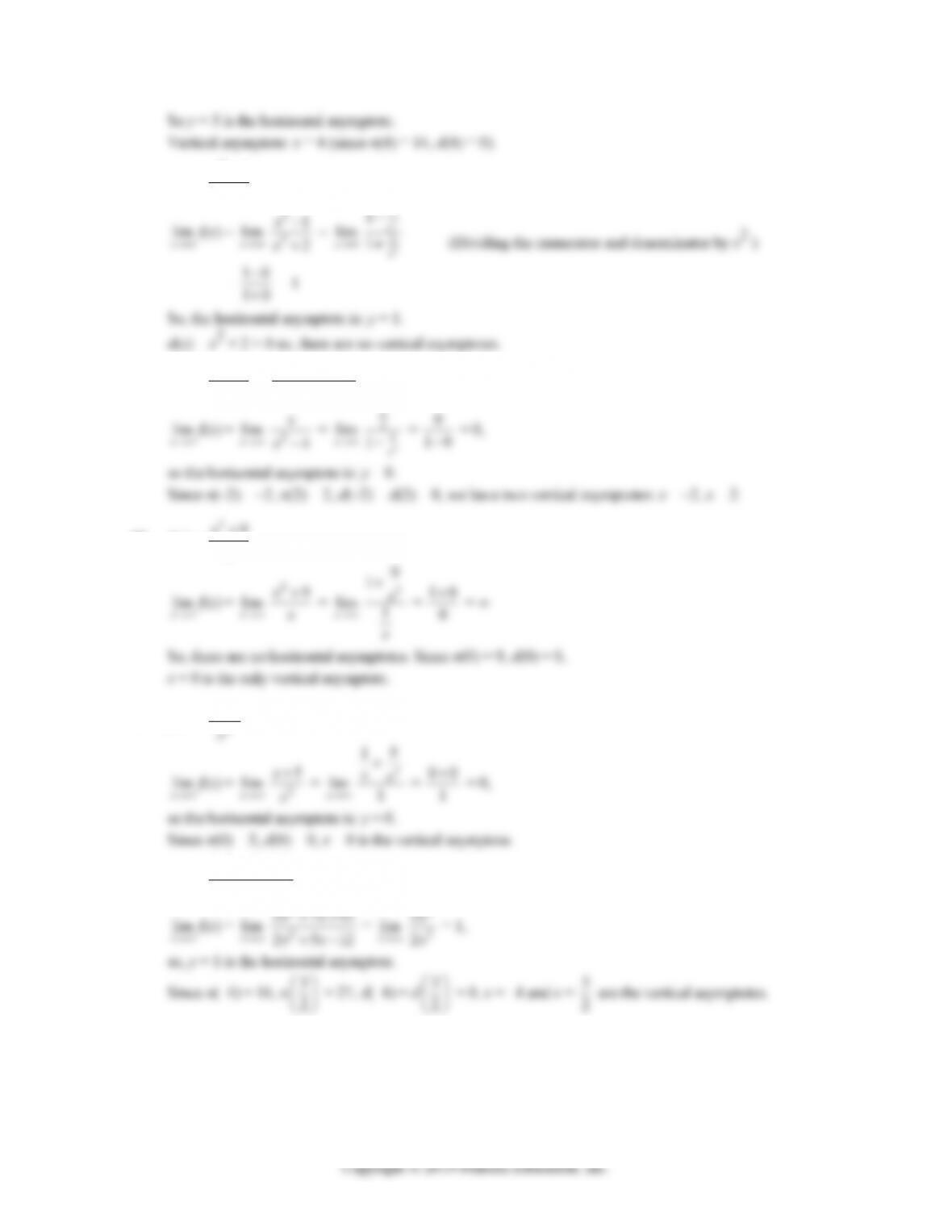
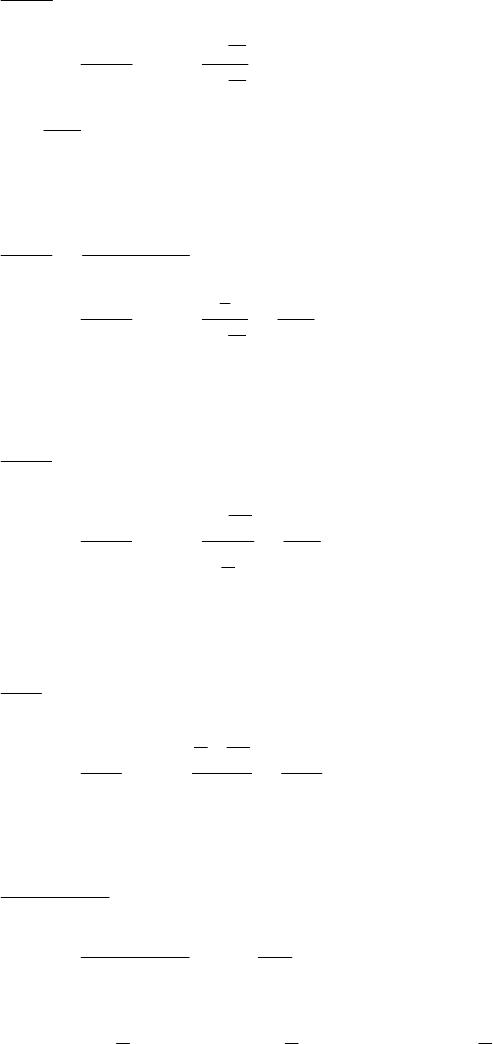
9-10 CHAPTER 9: LIMITS AND THE DERIVATIVE
54. f(x) =
2
2
1
2
x
x
.
x
56. f(x) = 24
x
x
= (2)(2)
x
xx
58. f(x) =
x
x
60. f(x) = 2
5x
x
.
x
62. f(x) =
2
2
2712
2512
xx
x
x
.
2
x
2
x
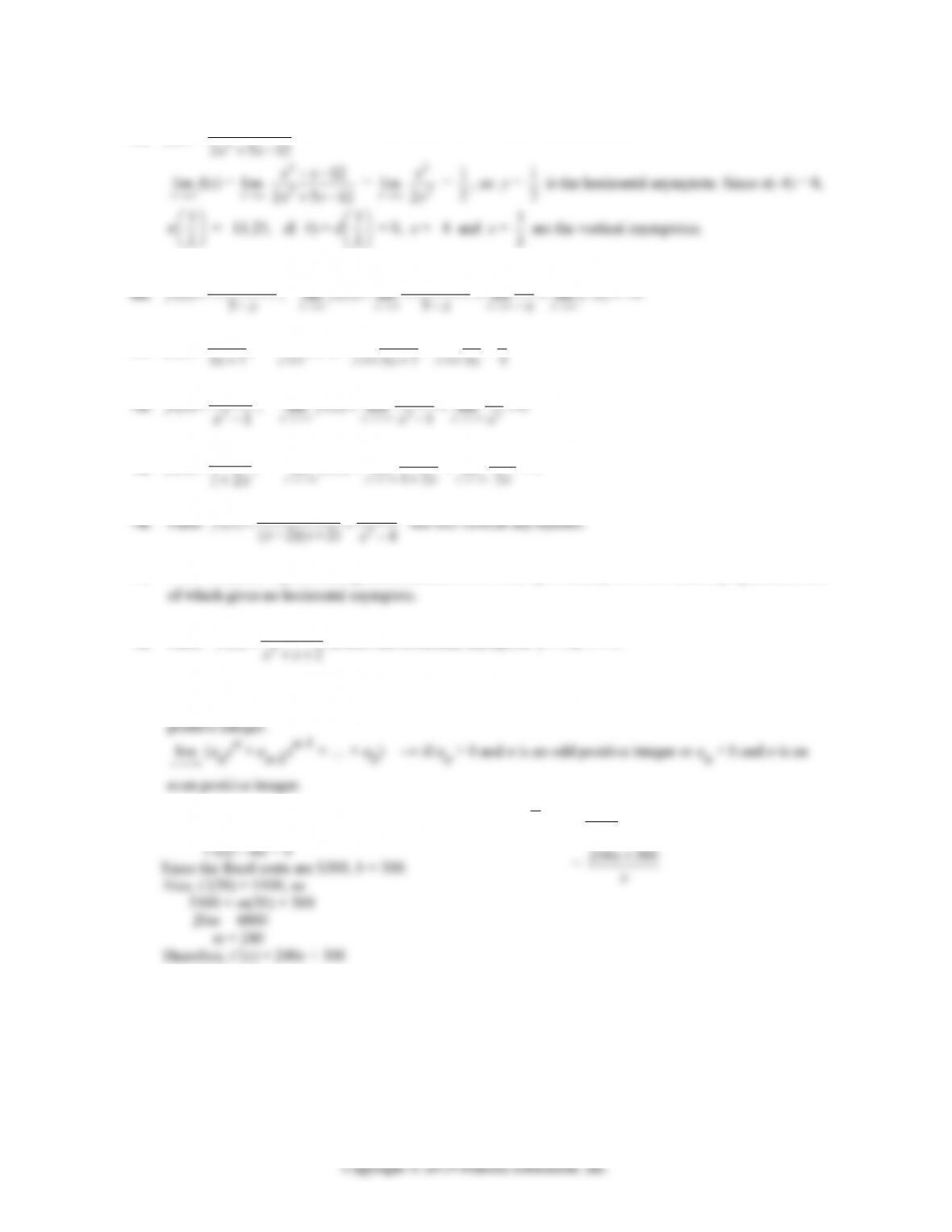
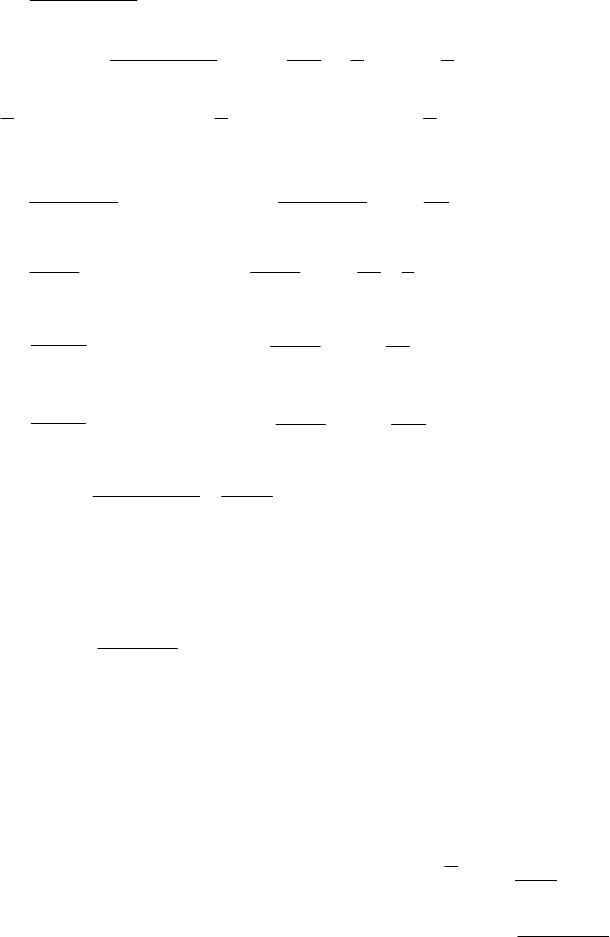
EXERCISE 9-2 9-11
64. f(x) =
2
12
xx
x
2
34
x
x
22
34
xx x
68. f (x)41
x
; 41 4 4
lim ( ) lim lim
xx
fx xx
23
x
23 2
xx
72. f (x)
4
6;
x
x
44
6
lim ( ) lim lim
xx
fx xx
11
76. True: Theorem 4 gives three possible cases, two of which give exactly one horizontal asymptote and one
78. False:
2
2
() 2
x
x
fx
crosses the horizontal asymptote 1yat 2x.
80.
lim
x (anxn + an-1xn-1 + … + a0) = ∞ if an > 0 and n an even positive integer, or an < 0 and n an odd
82. (A) Since C(x) is a linear function
of x, it can be written in the form
(B) C(x) = ()Cx
x
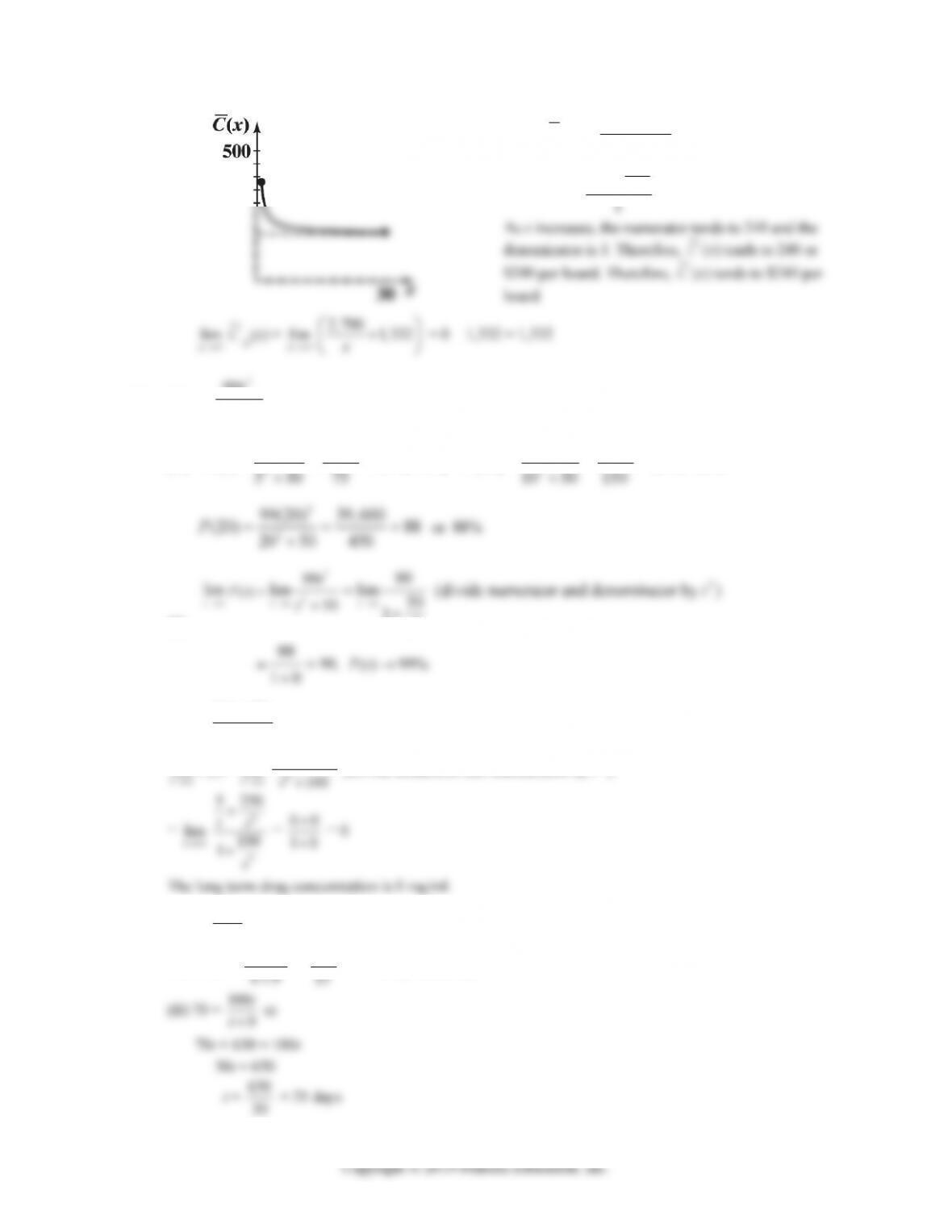
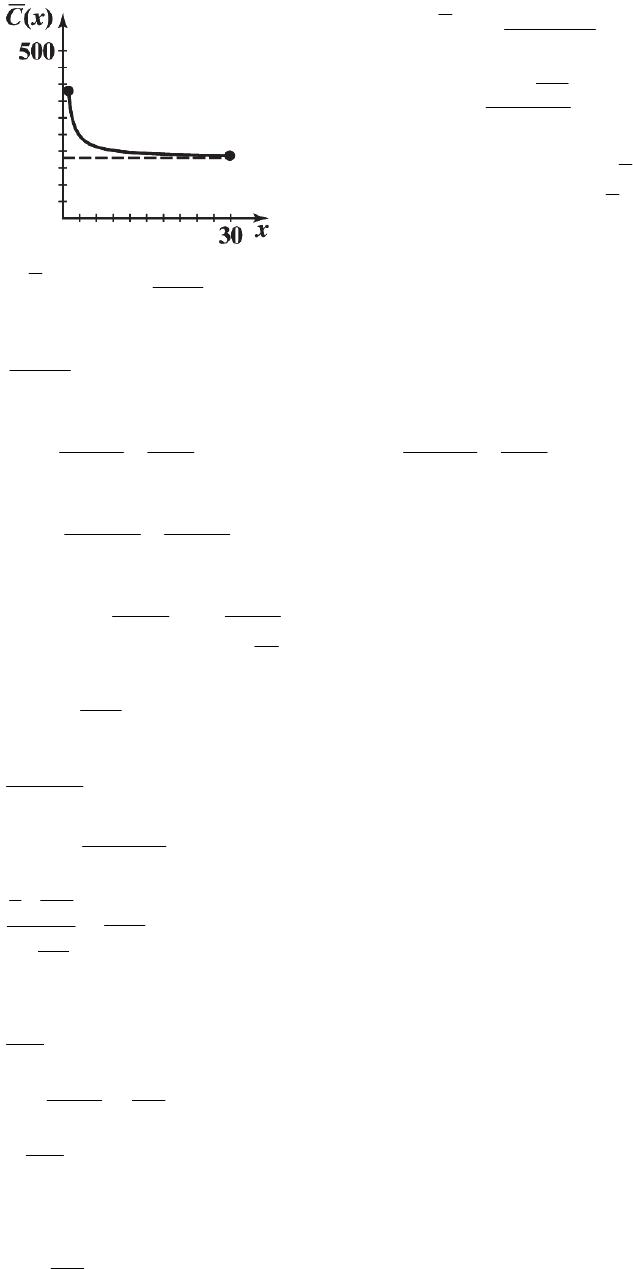
9-12 CHAPTER 9: LIMITS AND THE DERIVATIVE
(C)
(D) C(x) = 240 300x
x
=
300
240
x
84.
2
() 99
50
Pt t
t
(A)
2
99(5) 2475
(5) 33
P
2
99(10) 9900
(10) 66
P
(B)
2
1
t
86. C(t) = 3
5( 50)
100
tt
t
lim
2
5250
tt
88. N(t) = 100
9
t
t, t ≥ 0
(A) N(6) = 100(6)
EXERCISE 9-3 9-13
100
t
100
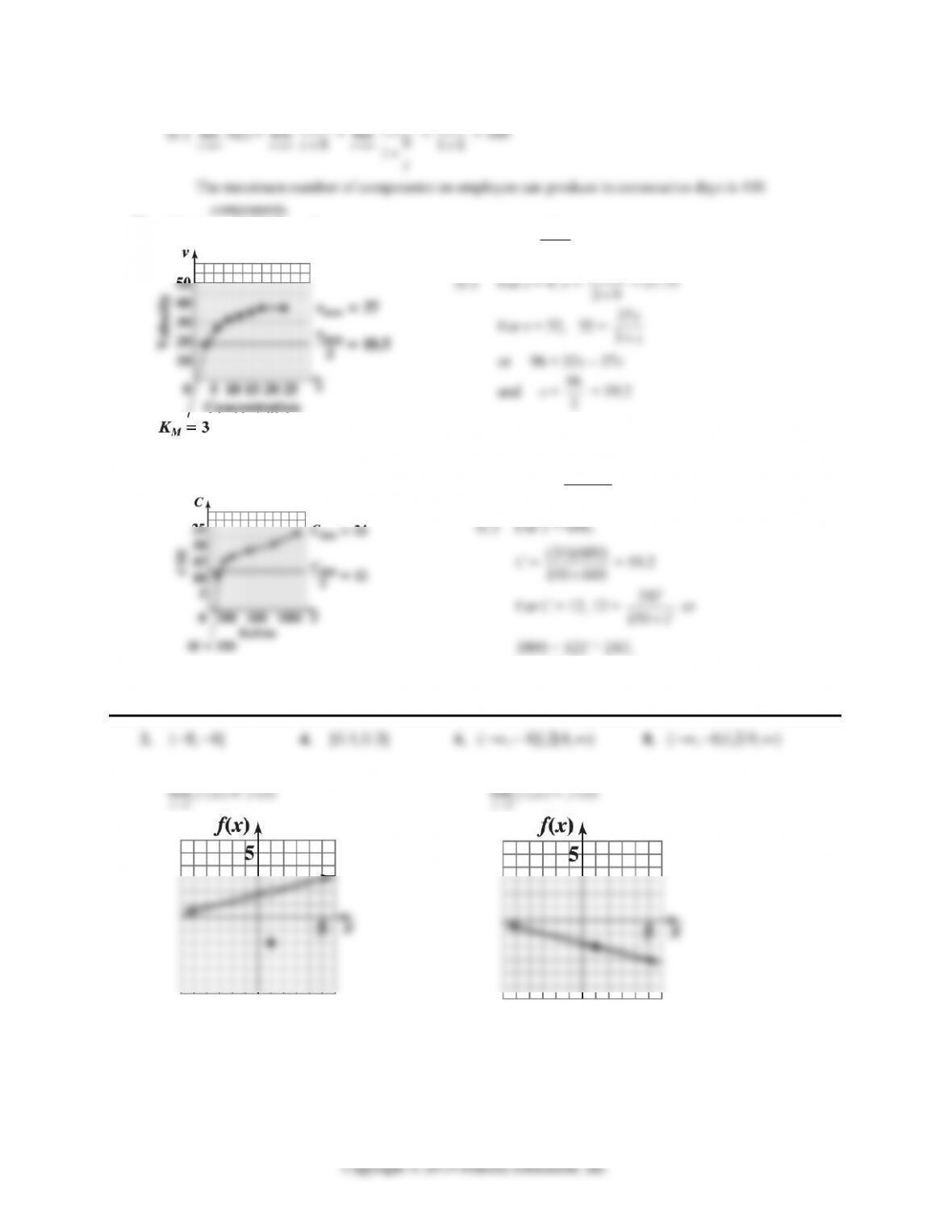
90. (A) vmax = 37, KM = 3
(B) v(s) = 37
3
s
s
92. (A) Cmax = 24, M = 150
(B) C(T) = 24
150
T
T
T = 150.
EXERCISE 9-3
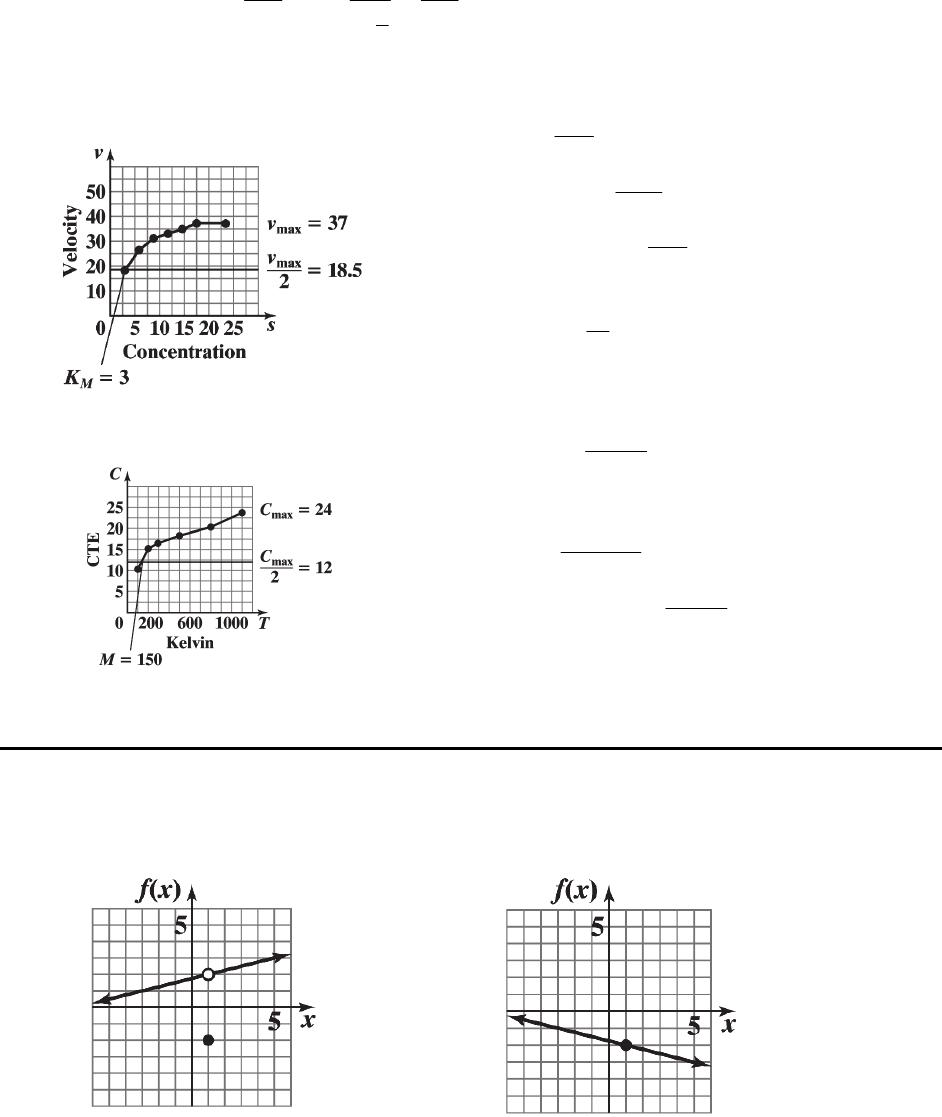
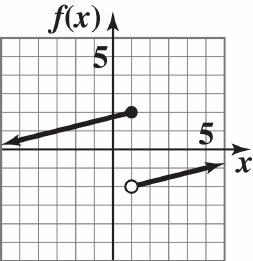
10. f is discontinuous at x = 1 since
12. f is discontinuous at x = 1 since
9-14 CHAPTER 9: LIMITS AND THE DERIVATIVE
14. f is discontinuous at x = 1,
16. (2.1) 1f
20. (A)
2
lim
x
f(x) = 2 (B)
2
lim
x
f(x) = 2 (C) 2
lim
xf(x) = 2
22. (A)
1
lim
x
f(x) = 0
24. ( 2.1) 0.9g
28. (A)
2
lim
x
g(x) = 1
30. (A)
4
lim
x
g(x) = 0 (B)
4
lim
x
g(x) = 0 (C) 4
lim
xg(x) = 0
32. h(x) = 4 – 2x is a polynomial function. Therefore, f is continuous for all x [Theorem 1(C)].
34. k(x) = 2
x
36. n(x) = 2
x
is a rational function and the denominator
38. G(x) =
2
1
x
40. N(x) =
2
4
x
42. f (x)27
x
; f is discontinuous at 1;
x 7
( ) 0 at 2
fx x
. Partition numbers 17
,
.
46. f (x)
32
(1)
;
xx xx
48. x2 – 2x – 8 < 0
Let f(x) = x2 – 2x – 8 = (x – 4)(x + 2).
x
50. x2 + 7x > –10 or x2 + 7x + 10 > 0
9-16 CHAPTER 9: LIMITS AND THE DERIVATIVE
Thus, x = –5 and x = –2 are partition numbers.
52. x4 – 9x2 > 0
54. 2
4
2
x
x
x
< 0
Let f(x) = 2
4
x
x
56. (A) g(x) > 0 for x < –4 or x > 4; (–∞, –4) (4, ∞).
58. f(x) = x4 – 4x2 – 2x + 2. Partition numbers: x1 ≈ 0.5113, x2 ≈ 2.1209
60. f(x) =
3
2
51
xx
62. 7
x
64. 38x
66. 2
4
x
68. 322x
70. The graph of f is shown at the right. This function is
discontinuous at x = 1.
72. The graph of f is shown at the right.
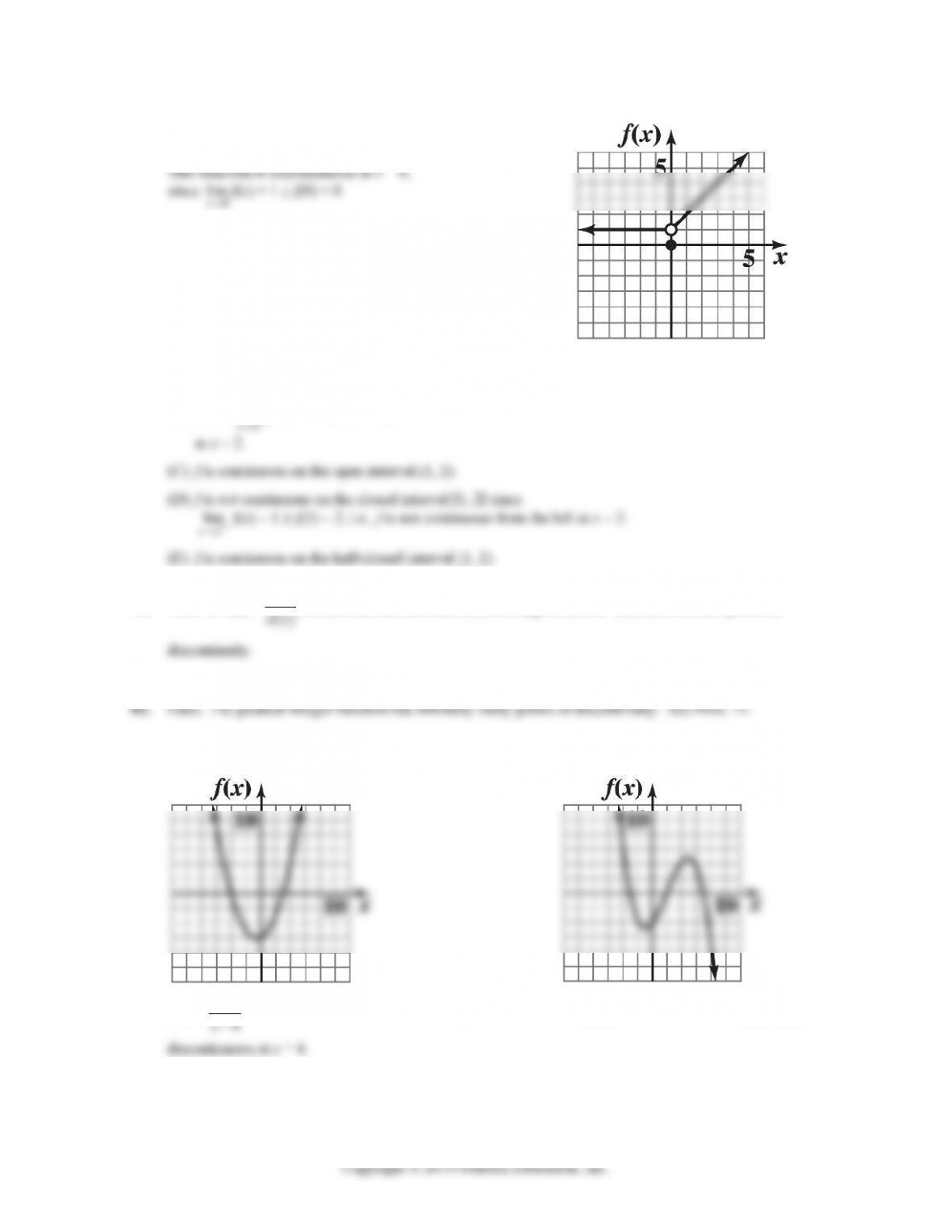
9-18 CHAPTER 9: LIMITS AND THE DERIVATIVE
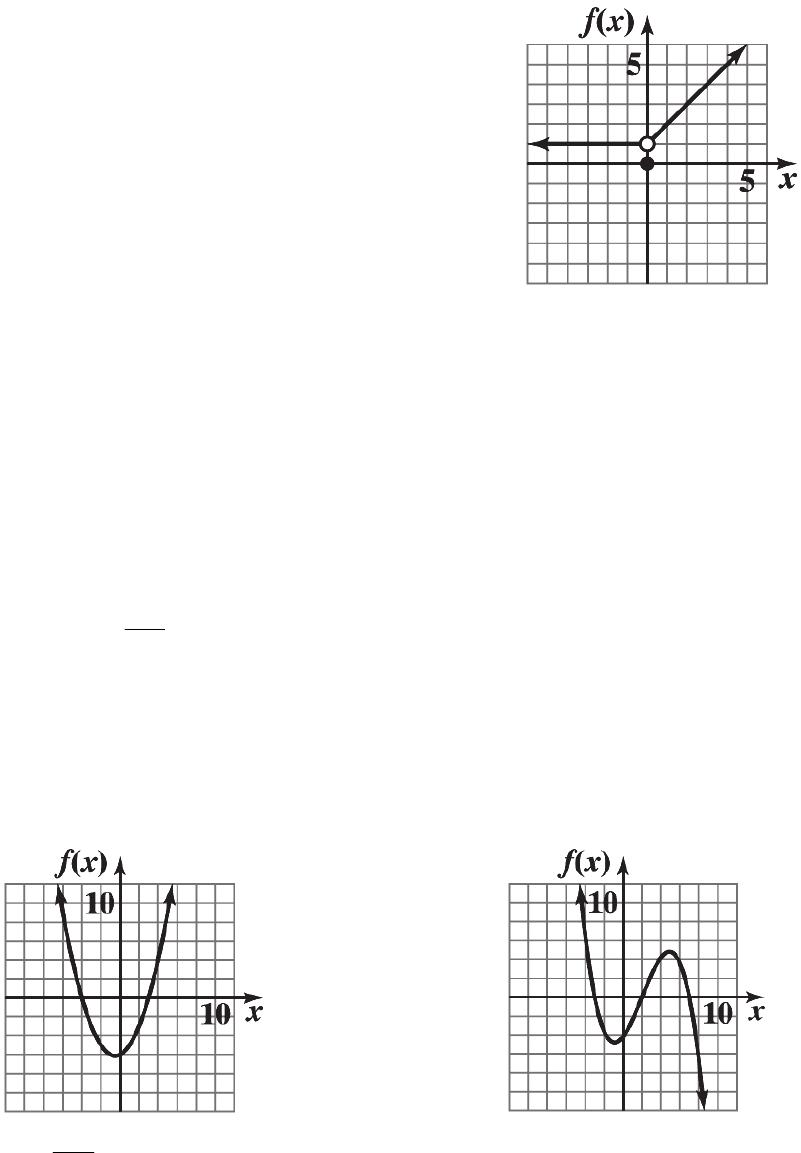
74. The graph of f is shown at the right.
76. (A) Since
2
lim
xf(x) = f(2) = 2, f is continuous from the right at x = 2.
(B) Since
lim
78. True: If ()
() ()
nx
rx dx
is a rational function and ()dxhas degree n, then ()rx has at most n points of
80. True: Continuous on (0, 2) means continuous at every real number x in (0, 2), including x = 1.
84. x intercepts: x = –4, 3
86. x intercepts: x = –3, 2, 7
88. f(x) = 6
90. (A)
15, 0 1
x
(B)
(C) 3.5
lim
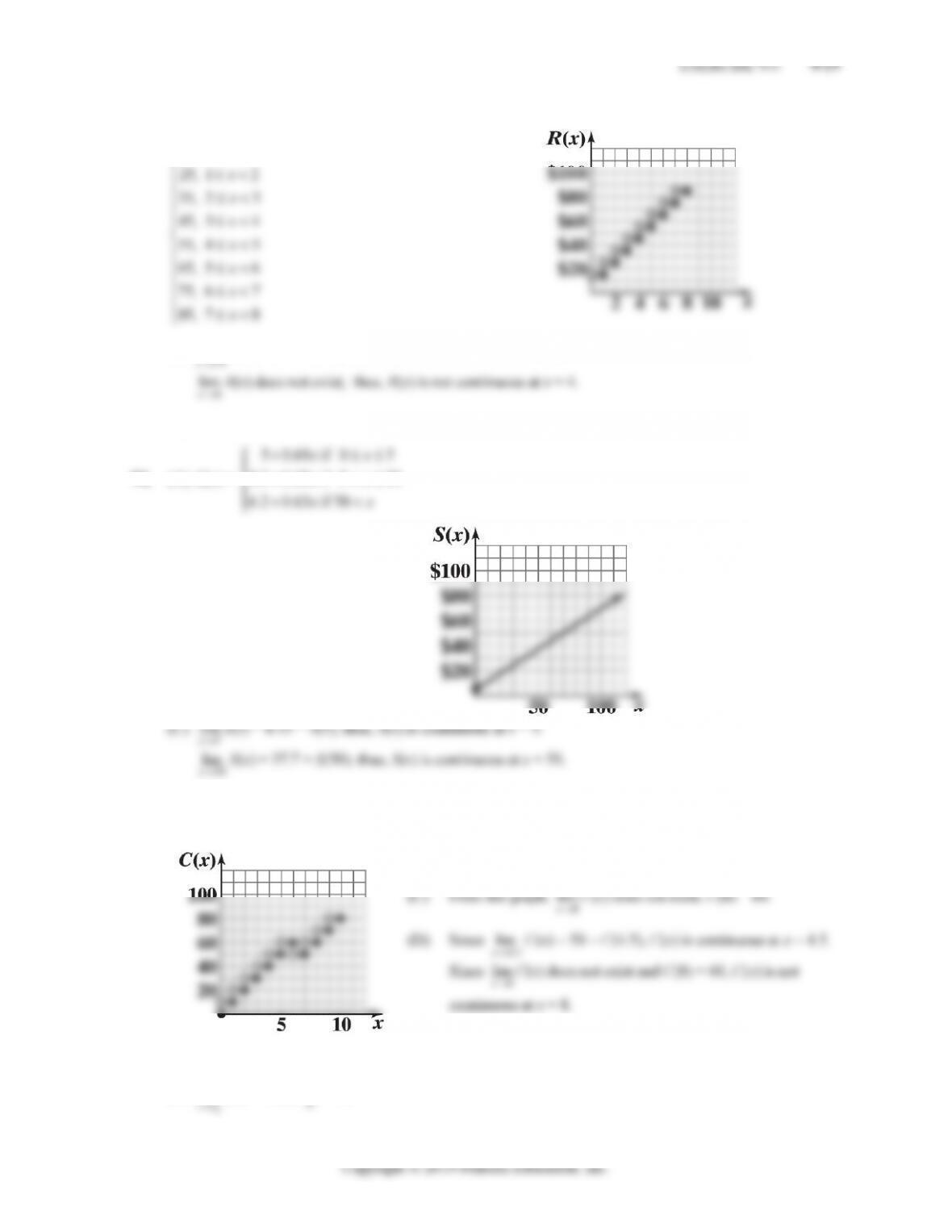
92. S(x) = R(x).
94. (A) S(x) =
5.2 0.65 if 5 50
xx
(B) The graph of S is:
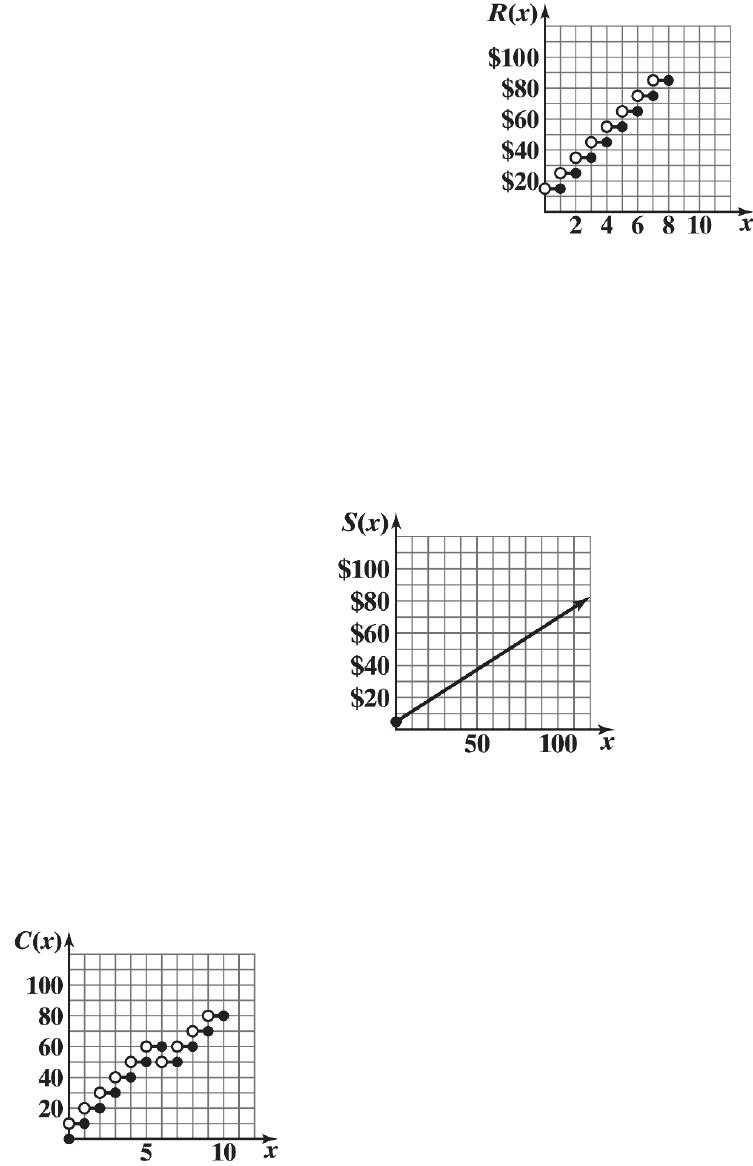
96. (A) The graph of C(x) is:
(B) From the graph, 4.5
lim
xC(x) = 50 and C(4.5) = 50.
98. (A) From the graph, p is discontinuous at t = t2, and t = t4.
(B)
lim
9-20 CHAPTER 9: LIMITS AND THE DERIVATIVE
(C)
lim
ttp(t) = 30, p(t2) = 10.
EXERCISE 9-4
2. Slope 811 3
,1.5
m
;0.375
m
ff
= 3 is the slope of the secant line through
=
2
5(2 ) 1h
=
2
5[44 ]1hh
(C) 0
lim
(2 ) (2)fhf
= 0
lim
12. f(x) = 3x2
(A) Slope of secant line through (2,(2))and(5,(5)):ff
(B) Slope of secant line through (2, (2)) and (2 , (2 )) :
f
hf h
14. (A) Distance traveled for 04t : 528
352(1.5) 528; average velocity: 132 mph
4
v.