Process Improvement and Six Sigma 36
SUGGESTIONS FOR PROJECTS, ETC.
1. Three popular websites for Six Sigma are http://www.ge.com/sixsigma,
http://www.isixsigma.com, and http://asq.org/sixsigma. Explore these sites and consider the
following questions. a. How does GE use Six Sigma to enhance customer perception of its
products and services?
b. What is the apparent purpose of the isixsigma website?
c. Who are the customers of the sixsigmaforum website?
d. Do the three websites reach basic agreement about the concept of Six Sigma? How do
they differ?
This project is designed to help the student to find how Six Sigma is viewed by various
2. Identify an important problem around your school or in some related function, such as a
student organization, and apply the DMAIC process to develop an improved solution. Use
whatever process improvement tools are appropriate.
4
5
6
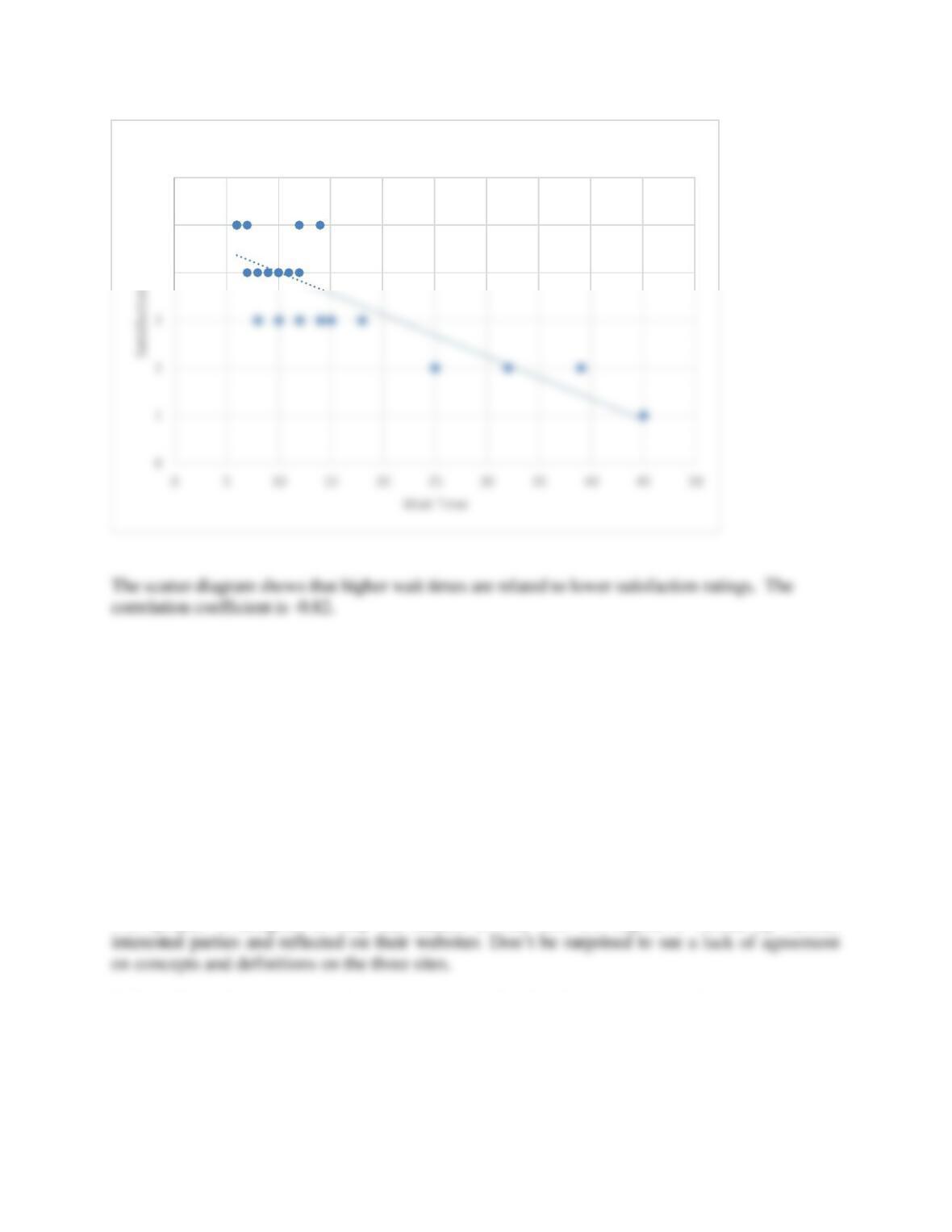
Scatter Chart
Process Improvement and Six Sigma 37
This project will take significant time to develop, but can pay tremendous dividends in learning
3. Find a local company that is using Six Sigma or lean principles. Write a case study of
their experiences, focusing on the challenges they faced during their implementation
efforts.
This project is designed to help the student to find which Six Sigma or lean techniques are used
in businesses to improve their processes. Results will vary, but often are related to the quality
4. Develop a flowchart of the process you use to study for an exam. How might you
improve this process?
I love this question, as it forces students to think about their process. Class discussion can be
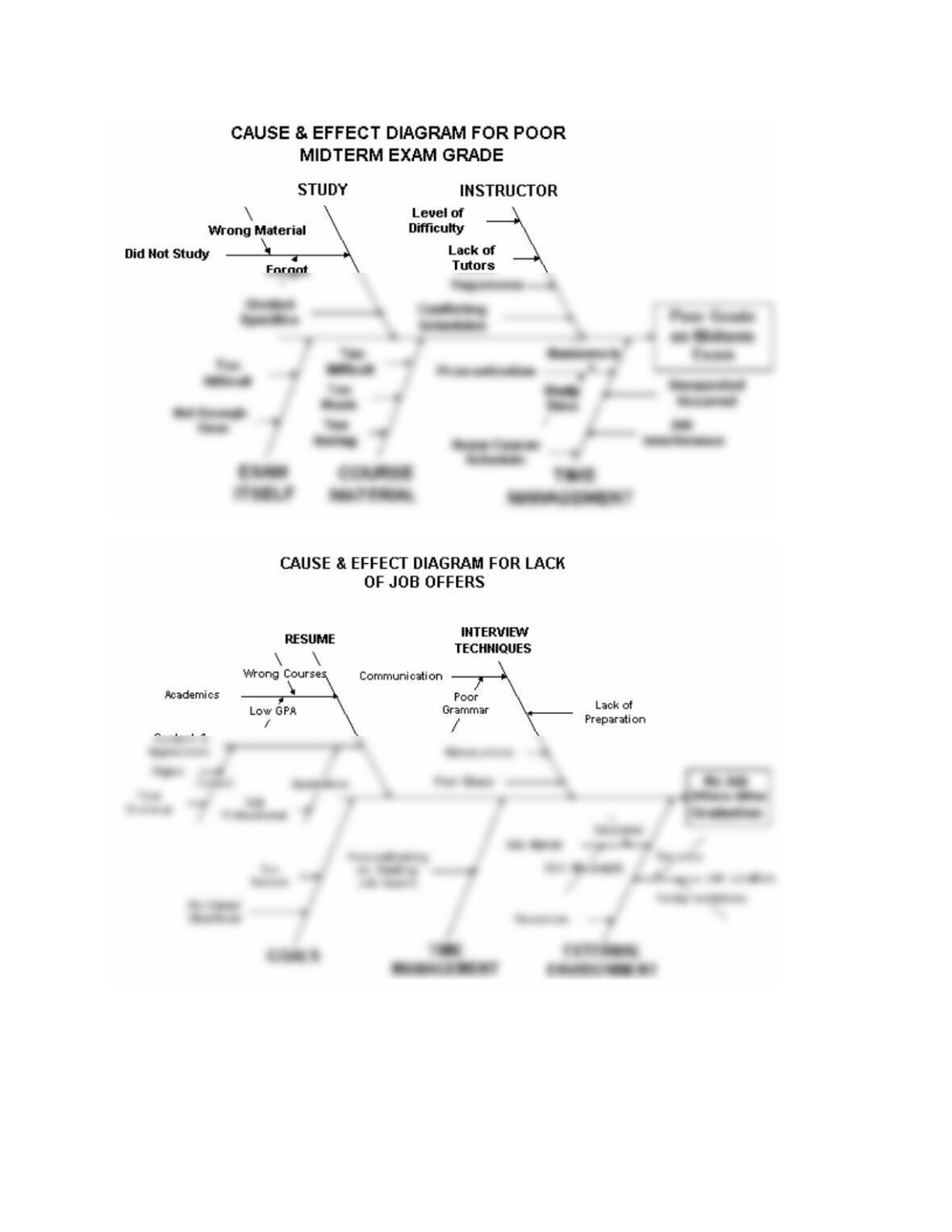
5. In small teams, develop cause-and-effect diagrams for the following problems:
a. Poor exam grade
b. No job offers
c. Late for work or school
See the diagrams for a and b below, based on student exercises. I tell them now that they
Process Improvement and Six Sigma 38
6. Search the Internet for websites that contain descriptions and examples of quality
improvement methodologies. How do they compare with the ones described in this
chapter?
Process Improvement and Six Sigma 39
7. Work with teachers at a local high school or grade school to identify some students who
are having difficulties in school. Apply quality tools to help find the source of the problems
and create an improvement plan.
ANSWERS TO CASE QUESTIONS
LT, Inc.
Using the information provided, outline specific steps that you would recommend to
improve the process. Include a list of performance metrics that you would recommend that
the company monitor in the future to track the efficiency and effectiveness of the process.
Summarize your results in a formal report the company’s management.
There are a number of steps that could be taken to improve the process. The Six Sigma team
involved in this study recommended, and then carried out, the following improvement steps.
They included:
• Replaced the existing batch and queue system with a flow system. Customer orders
were processed one at a time as they arrived. Individuals in each step were trained to do
all activities in that step.
Process Improvement and Six Sigma 40
• Simplified the chaotic pricing structure and computerized it. Any deviations from the
posted prices were immediately communicated to the necessary parties.
• Suggested blanket agreements be negotiated and invoices sent on a monthly basis via
the internet when possible. The free time that resulted would be used for training, to
pursue value adding activities and to perform further kaizens.
Final actions – development of metrics and next steps. The Six Sigma team developed a set of
relevant performance measurements to track the efficiency and effectiveness of the billing
process. The metrics selected were:
• Total number of billing documents processed divided by the number processed per day.
• Lead time to process customer order.
The team was fully aware of the powerful nature of working in cells and the success of just–in–
time in manufacturing. For the next level of improvement, the Six Sigma team suggested that LT
consolidate all activities into one cell manned by a team of personnel from sales (covering order
ROCKSTONE TIRES
You have been assigned as a Lean Six Sigma project manager to improve this process.
Write a project charter and discuss what information you would need to collect in order to
perform the improvement project. How might the DMAIC process be used to
systematically tackle this project? Also, discuss what tools you would most likely use in the
project.
The project in Rockstone’s warehouse illustrates the power of Six Sigma in the workplace. The
project involved the selecting process required to bring products (tires) from storage locations in
Process Improvement and Six Sigma 41
interference when waiting to load orders on the trucks, impacting personnel, equipment, and
customer service.
The charter might look like the following:
PROJECT CHARTER
Project Name:
Rockstone Tire Warehouse
Project Sponsor:
J. Rocker, Warehouse Manager
PROJECT SCOPE
Business Problem/ Objectives
(Business reasons for the project)
Problem: Need to optimize dock space and to minimize congestion
and interference when waiting to load orders on the trucks, impacting
personnel, equipment, and customer service. Objectives: to reduce
operating costs, cycle times, and improve delivery times.
Final Deliverable(s)
(The end product, service, process,
or plan that will be created for the
customer)
Improved process that reduces congestion/delays on shipping dock
PROJECT RESOURCES
Project Lead:
M. Statistico, SSBB
Team Members:
Smith, Jones, Brown, Green
Customers
L. Stoner, V.P. of Logistics
Process Improvement and Six Sigma 42
Team Assignments
(People assigned to the project
team)
M. Statistico – Lead – SSBB; J.P. Smith, Suprv – order fulfillment; L.P.
Jones – IS programmer-analyst; M.P. Brown – shipping & receiving
director; N.P. Green – Acct & financial analyst
Six Sigma team members would have to study the numbers and weights of product being
handled, average numbers of pallets on the docks, travel times, order picking times, and time on
the docks, including loading and delays. They would need to know the average cost per order,
before and after improvements are implemented.
The DMAIC process would provide for defining the problem, as shown in the project
charter; determining the measurement process and what measures currently exist (also shown in
Janson Medical Clinic2
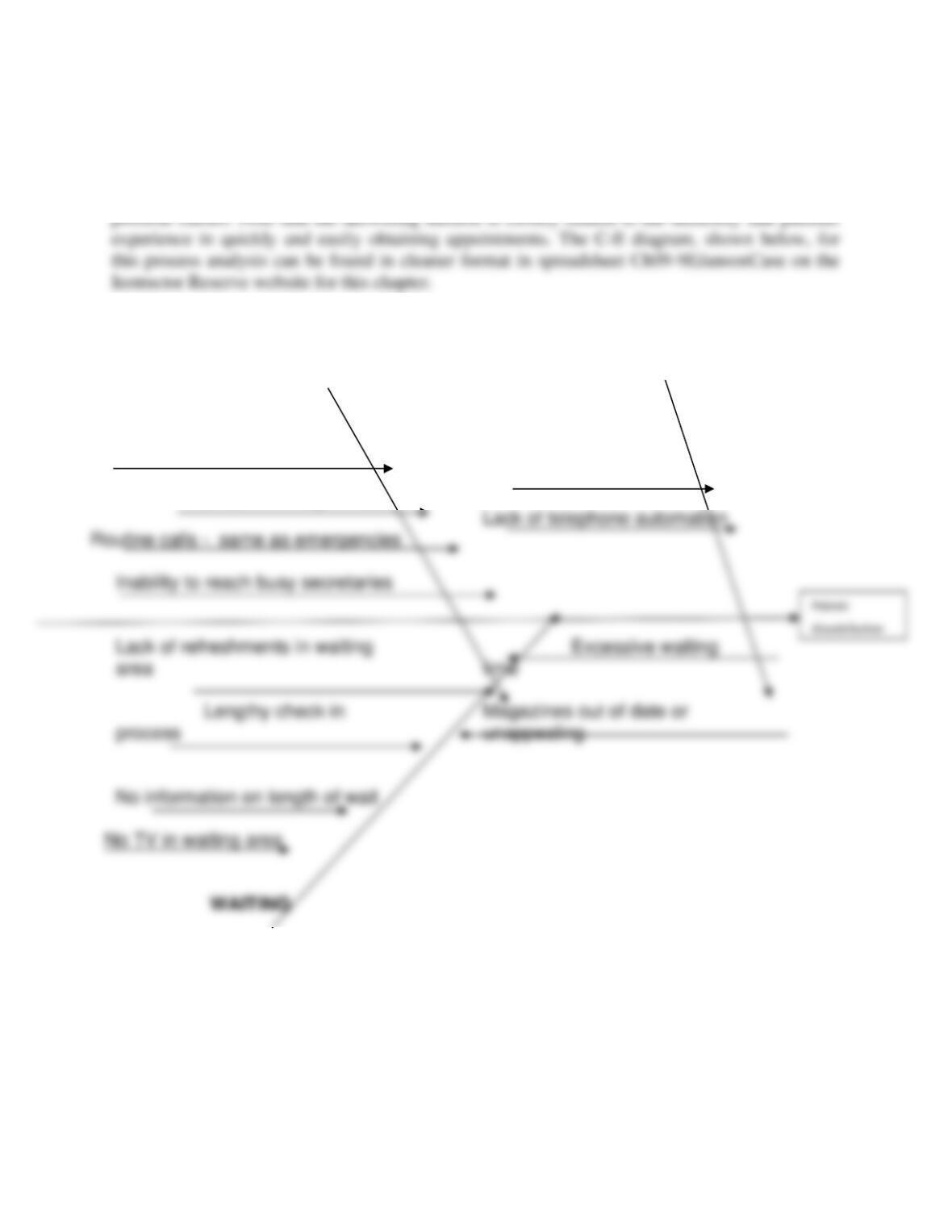
1. Construct a Pareto diagram for the causes of dissatisfaction. What conclusions do you
reach?
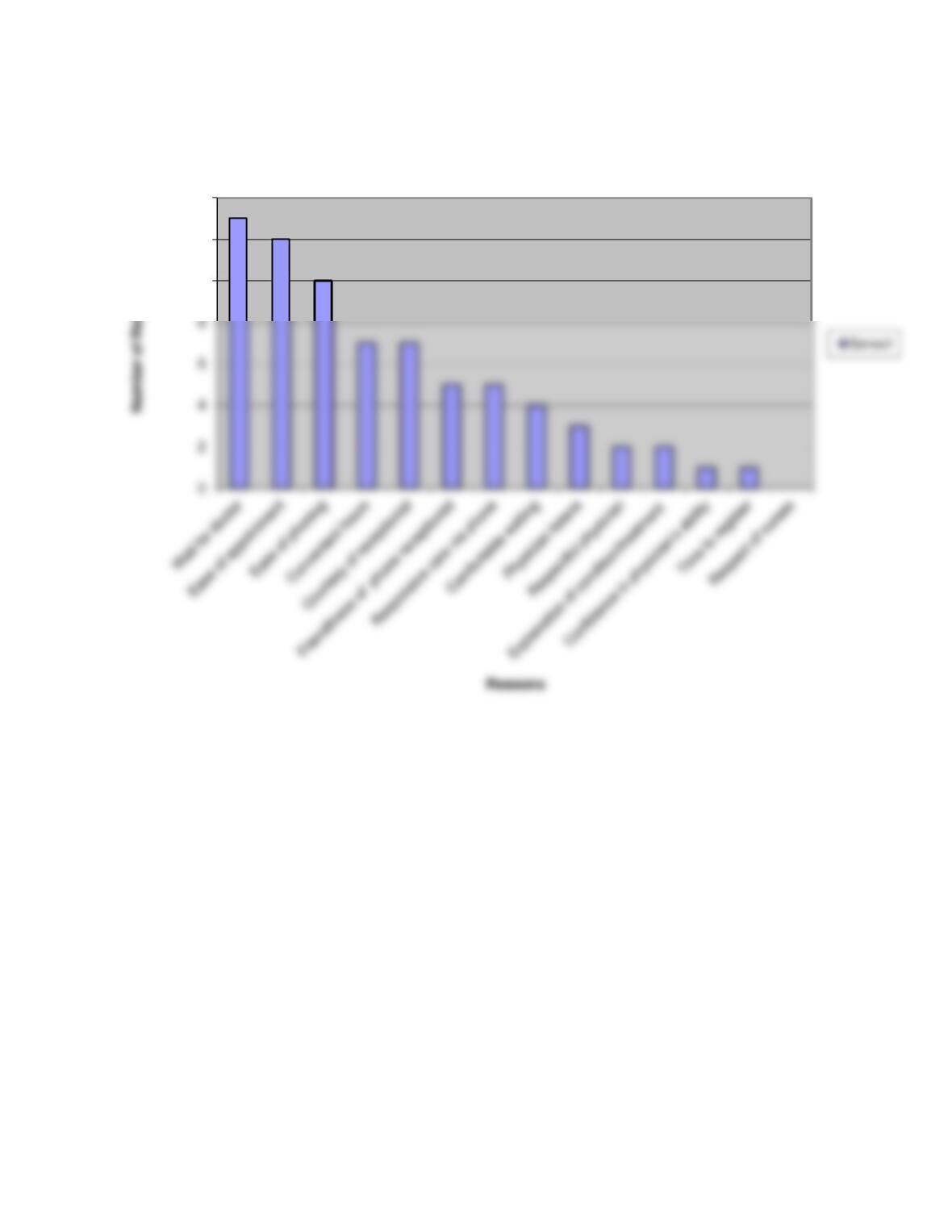
Analysis of the patient complaint data reveals that the three top complaint categories are “wait
for doctor,” “ease of appointment,” and “ease of phoning.” All three of these are complicated to
handle because of the nature of the business. It does appear that the telephone process is overly
Process Improvement and Six Sigma 43
date,” “ask about making an appointment,” and “billing questions.” See Pareto charts, cause–
effect diagram, and flowcharts, below. Also see spreadsheet C11JansonCase in the instructor
materials for more details.
The data, for the Pareto Diagram, in order, from highest complaint level to lowest are:
Wait for doctor 13
Ease of appointment 12
Ease of phoning 10
Wait for doctor
13
Ease of appointment
12
Ease of phoning
10
Convenient hours
7
Courtesy of receptionist
7
Friendliness of phone receptionist
5
Responsive care via phone
5
Comfortable waiting
4
Physician listens
3
Respectful physician
2
condition/treatment
1
Time to register
1
Respect of nurses
0
Process Improvement and Six Sigma 44
10
12
14
Pareto Chart – Dissatisfied Patients
Process Improvement and Six Sigma 45
2. Select the top three sources of patient dissatisfaction and propose cause-and-effect
diagrams for the possible reasons behind them.
For the top three sources of patient dissatisfaction, the following C-E diagram shows some
TELEPHONE ANSWERING
METHOD
TELEPHONE EQUIPMENT
Lack of receptionist empowerment
Number of phone lines
Number of receptionists
Lack of telephone automation
Inability to reach busy secretaries
Lengthy check-in
process
Magazines out of date or
unappealing
No information on length of wait
No TV in waiting area
WAITING
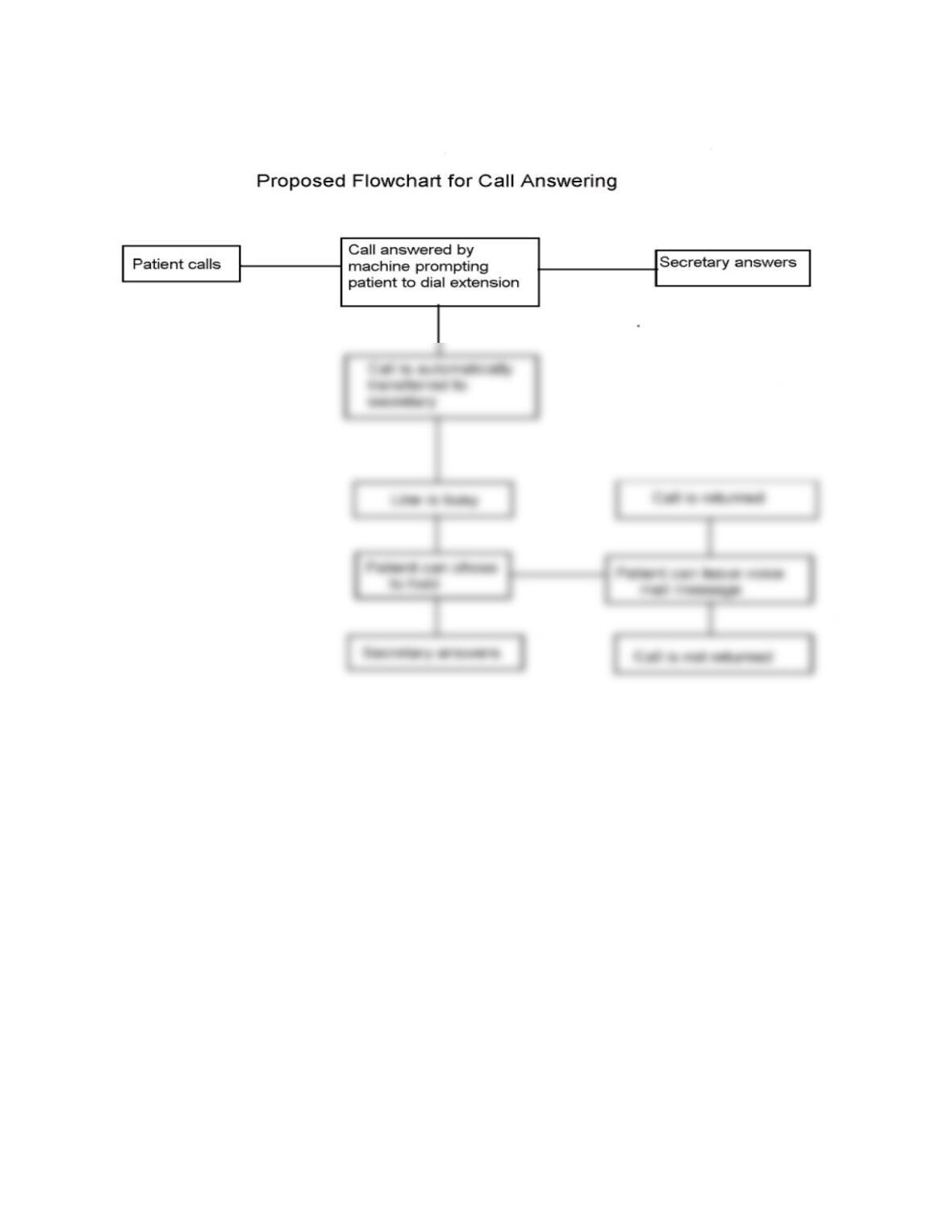
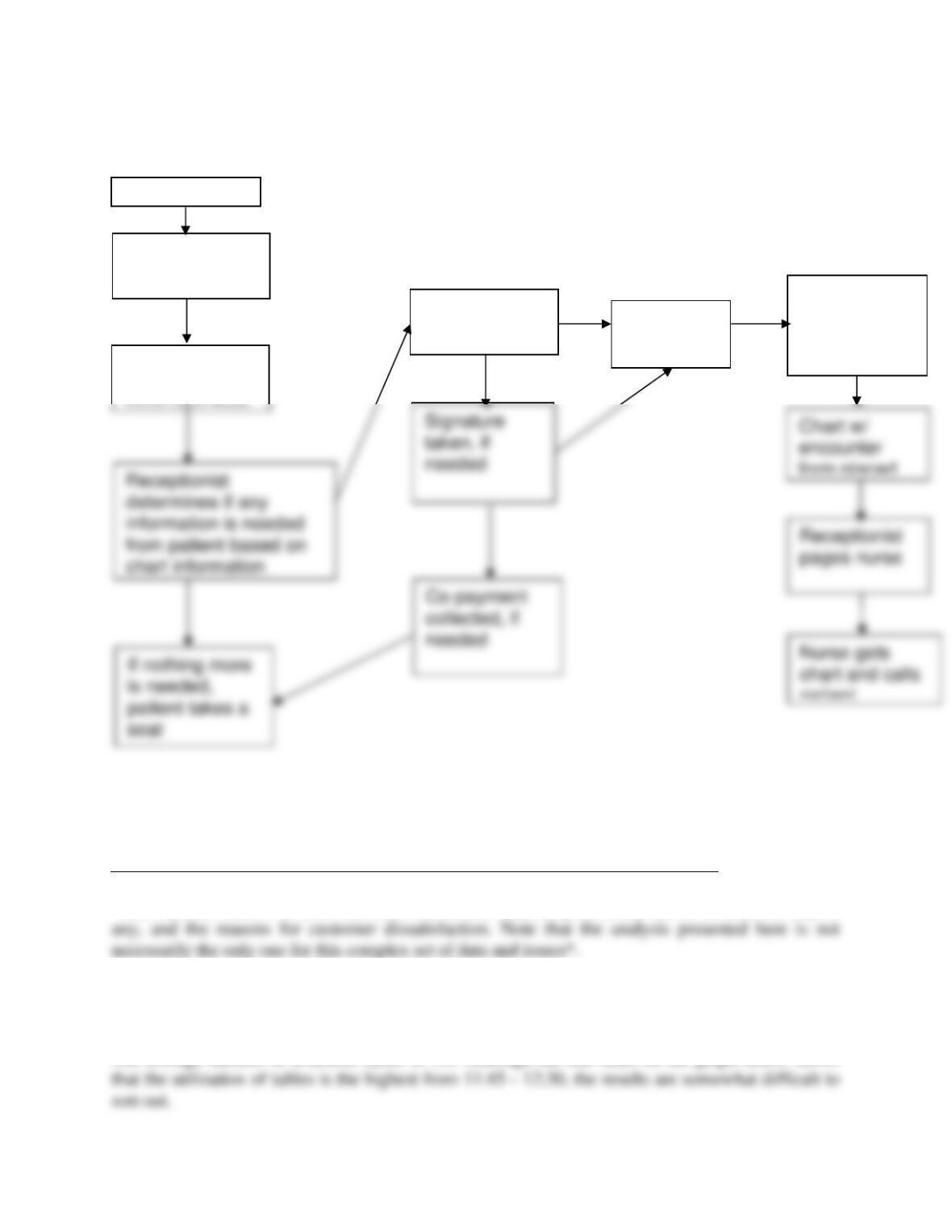
3. Propose some process improvements to the flowcharts in Figure 9.28 and develop
redesigned processes along with new flowcharts. How will your suggestions address the
sources of dissatisfaction in Table 9.6?
Below are flowcharts that address some of the problems being experienced with the current call
answering and check-in process at the clinic.
Process Improvement and Six Sigma 46
Process Improvement and Six Sigma 47
Proposed Patient Registration Process
IV. Freadilunch Restaurant
See the Excel folder Ch 09 Freadilunch Restaurant Case in the Instructor materials.
What Fred has here, is a mess. He must sort out the demand pattern, the effects of time and day, if
1. Plot the average number of empty tables on a run chart, computing the average value
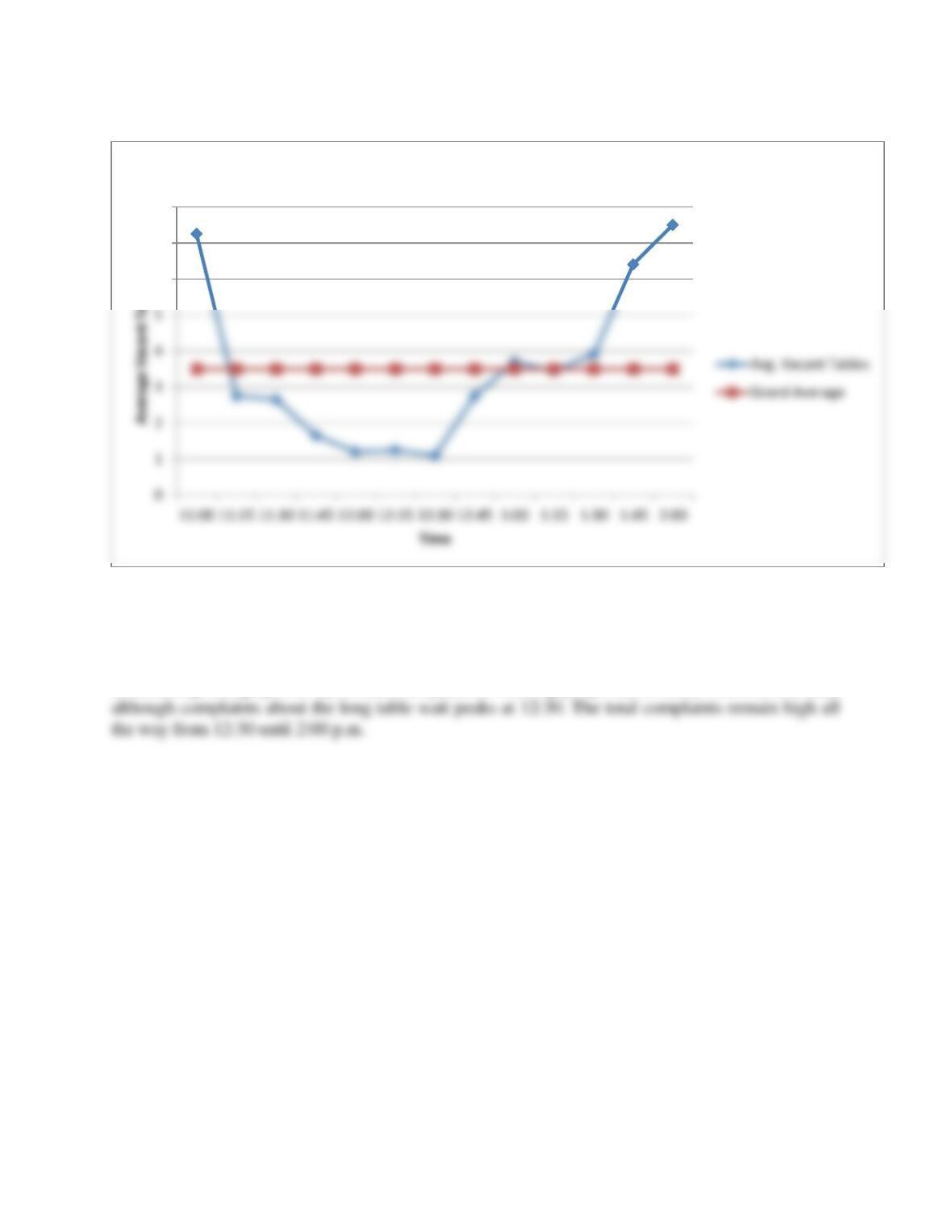
(center line), but ignoring the control limits. What do these data show?
The average number of available tables is 3.5. Although the line chart on the graph below shows
Patient signs
Receptionist
offers to
validate parking
Receptionist
finds proper
Copy of
insurance card
made if
Papers
embedded in
chart form
Information
input
into
Process Improvement and Six Sigma 48
2. Use one or more of the seven Tools to come up with possible causes to explain customer
dissatisfaction, based on the reasons described in the case.
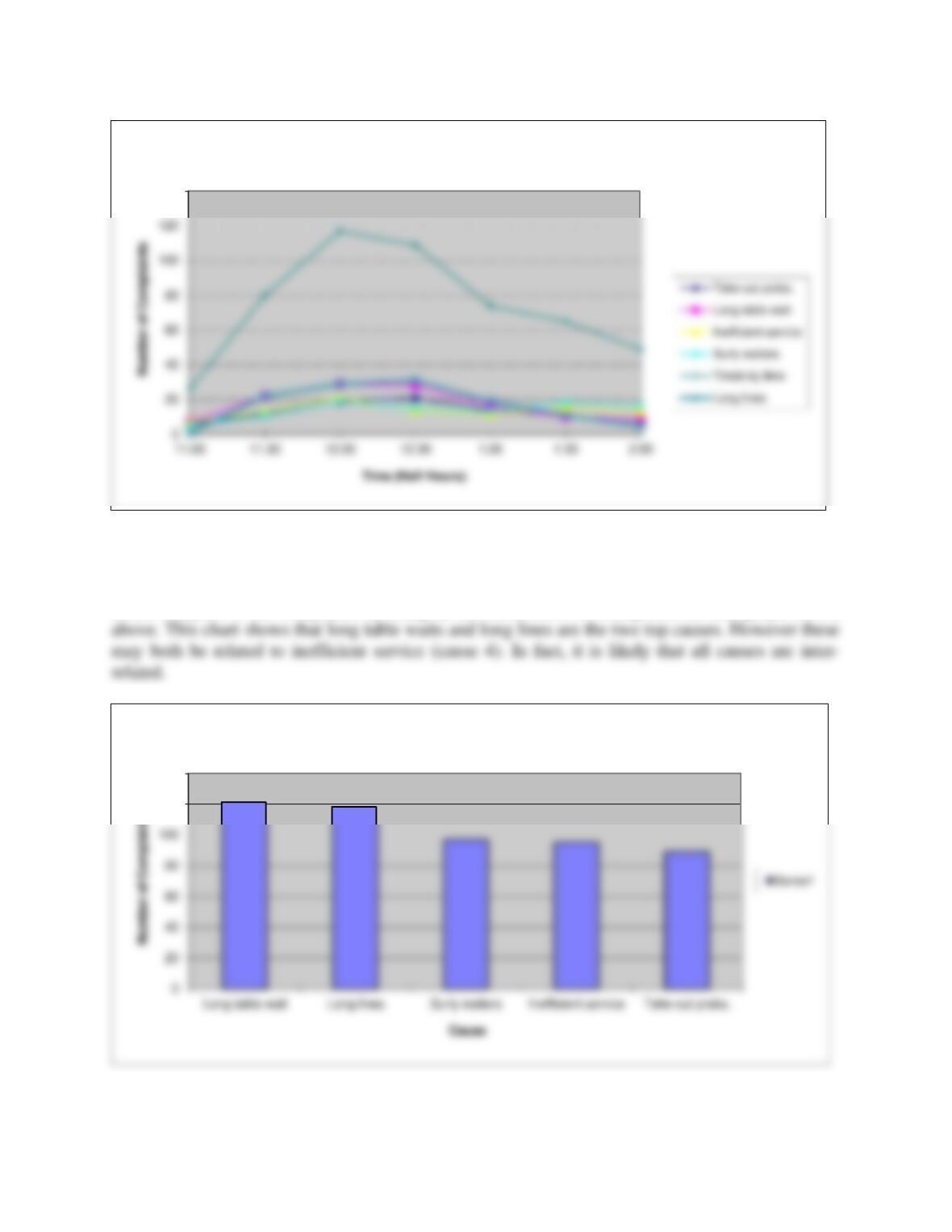
Analysis of the check sheet data on Complaints by Time may be done by looking at totals and
constructing line graphs to try to discover patterns. Nothing jumps out of these views of the data,
6
7
8
Average Vacant Tables by Time
Process Improvement and Six Sigma 49
3. Analyze the check sheet data in the C09 Freadilunch Case Data workbook. What
conclusions do you reach?
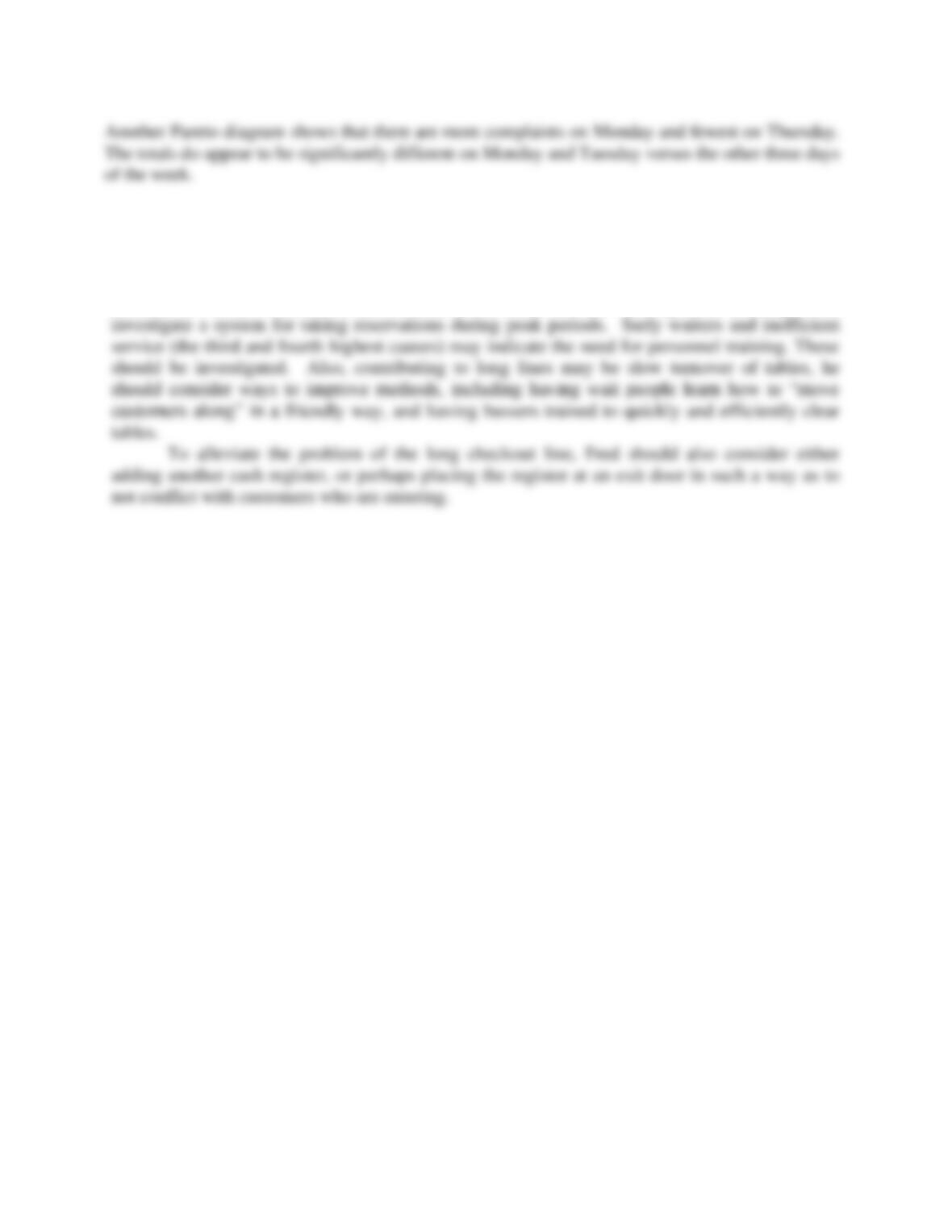
Pareto analyses of the complaints by category are much more revealing than the line graph shown
140
Complaints by Time
120
140
Complaints by Cause
Process Improvement and Six Sigma 50
4. What do you recommend that Fred do to overcome these problems?
Based on the Pareto analysis it appears that the long wait for tables is the most critical problem,
followed closely by long lines. Fred should investigate expanding the restaurant. If that is not
feasible, he should at least consider the number of tables and their arrangement. He might also