
7 LOGIC, SETS, AND COUNTING
EXERCISE 7-1
6. 11, 13, 17, 19
8. An odd integer has the form 2k +1. If 2k +1 and 2n +1 are odd integers, then
10. Either 91 is prime or 91 is odd; true.
16. r s: the moon is a cube and rain is wet; false. 18. ¬ r: the moon is not a cube; true.
24. Negation: (3 0) . True.
28. Conditional; False.
30. p: “Triangle ABC is isosceles”
q: “The base angles of triangle ABC are congruent.”
32. p: “g(x) is a quadratic function”
q: “g(x) is a function that is neither increasing nor decreasing”
34. p: “n is an integer that is a multiple of 6″
q: “n is an integer that is a multiple of 2 and a multiple of 3″

7-2 CHAPTER 7: LOGIC, SETS, AND COUNTING
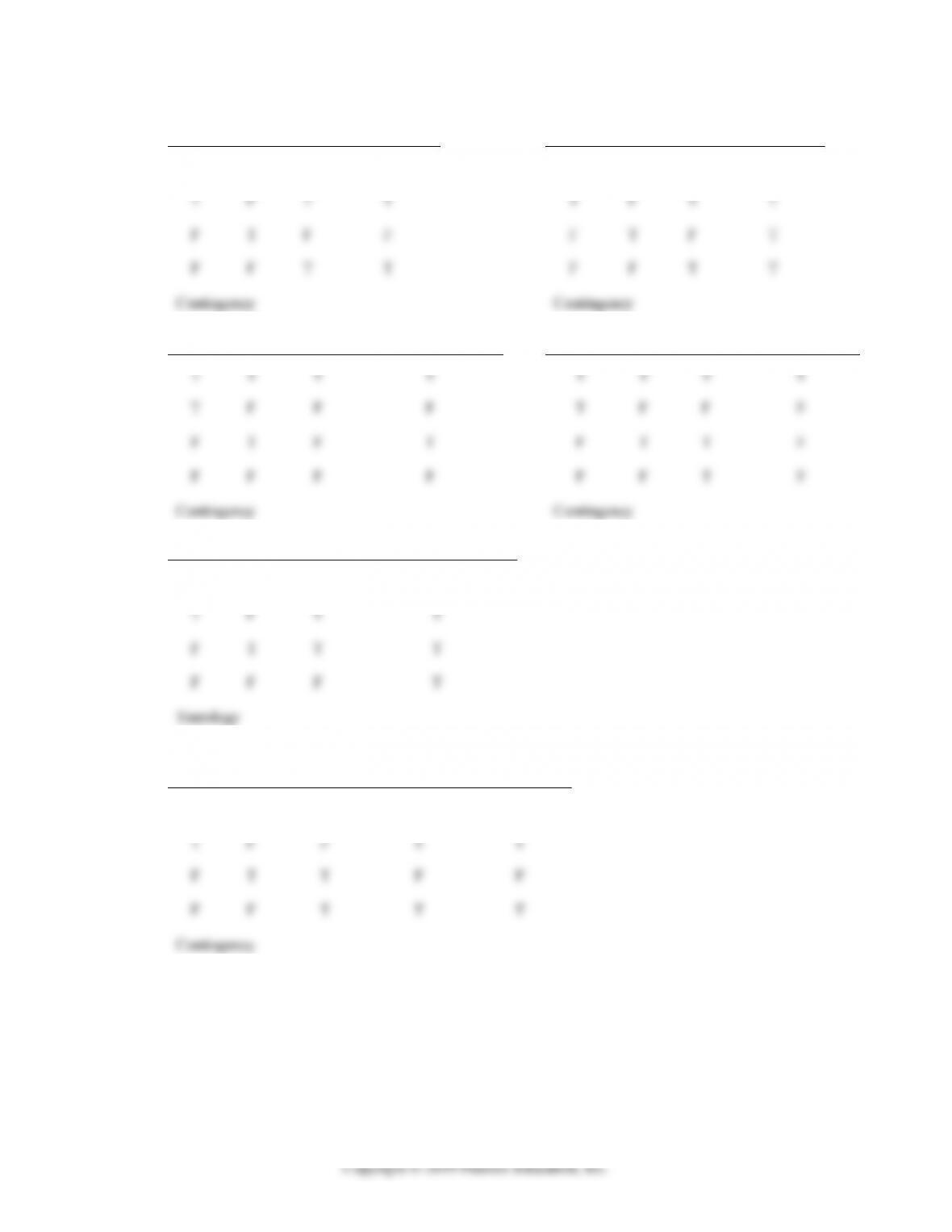
36. p q ¬q p ¬q 38. p q ¬q p → ¬q
T T F T T T F F
40. p q
p q q (p q) 42. p q p → q p (p → q)
44. p q p q p → (p q)
T T T T
46. p q p → q ¬q (p → q) →
¬q
T T T F F
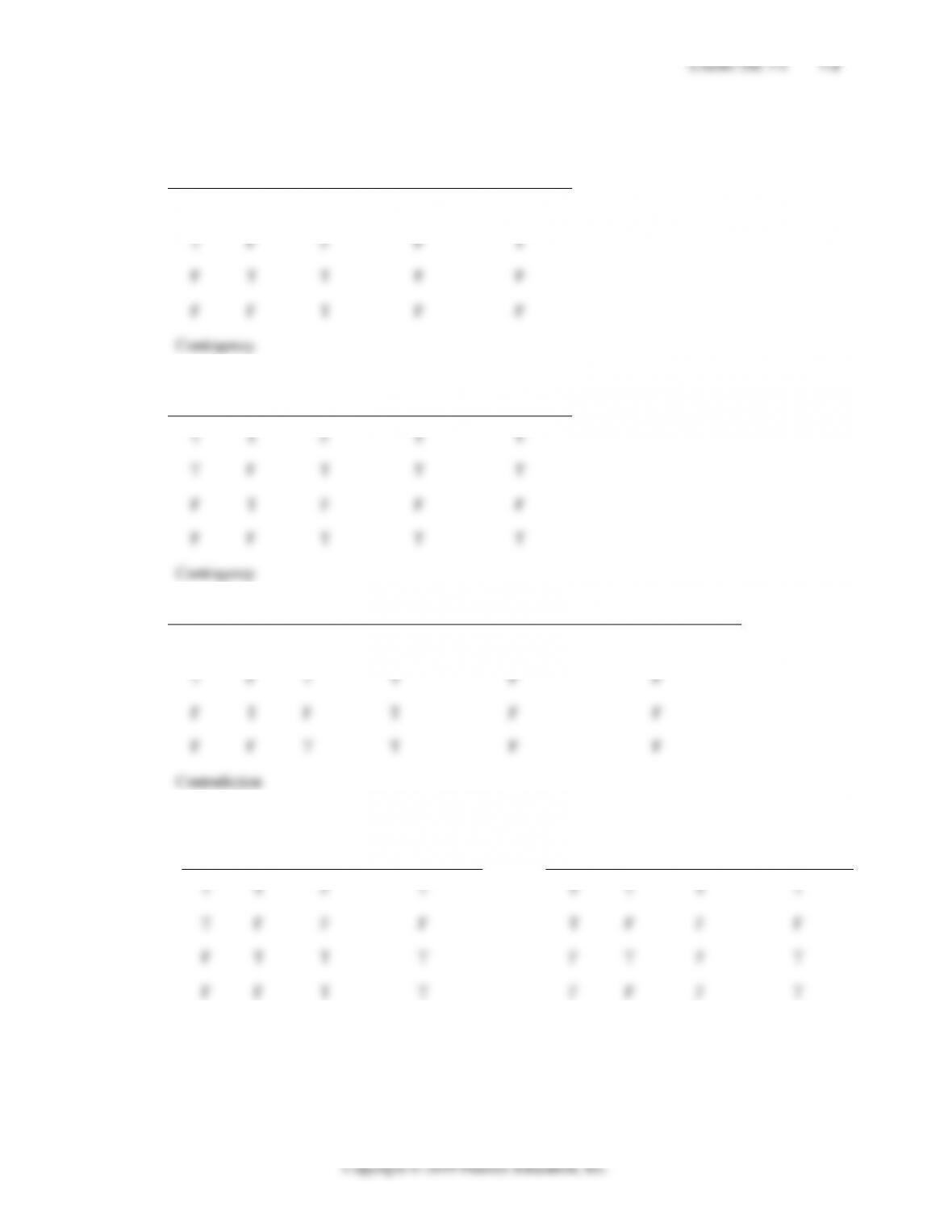

48. p q ¬p p q ¬p → (p
q)
T T F T T
50. p q ¬q p ¬q q → (p
¬q)
52. p q ¬q p → ¬q p q (p → ¬q) (p q)
T T F F T F
54. ¬p p → q 56. p q p → q
p q ¬p p → q p q p q p → q

7-4 CHAPTER 7: LOGIC, SETS, AND COUNTING
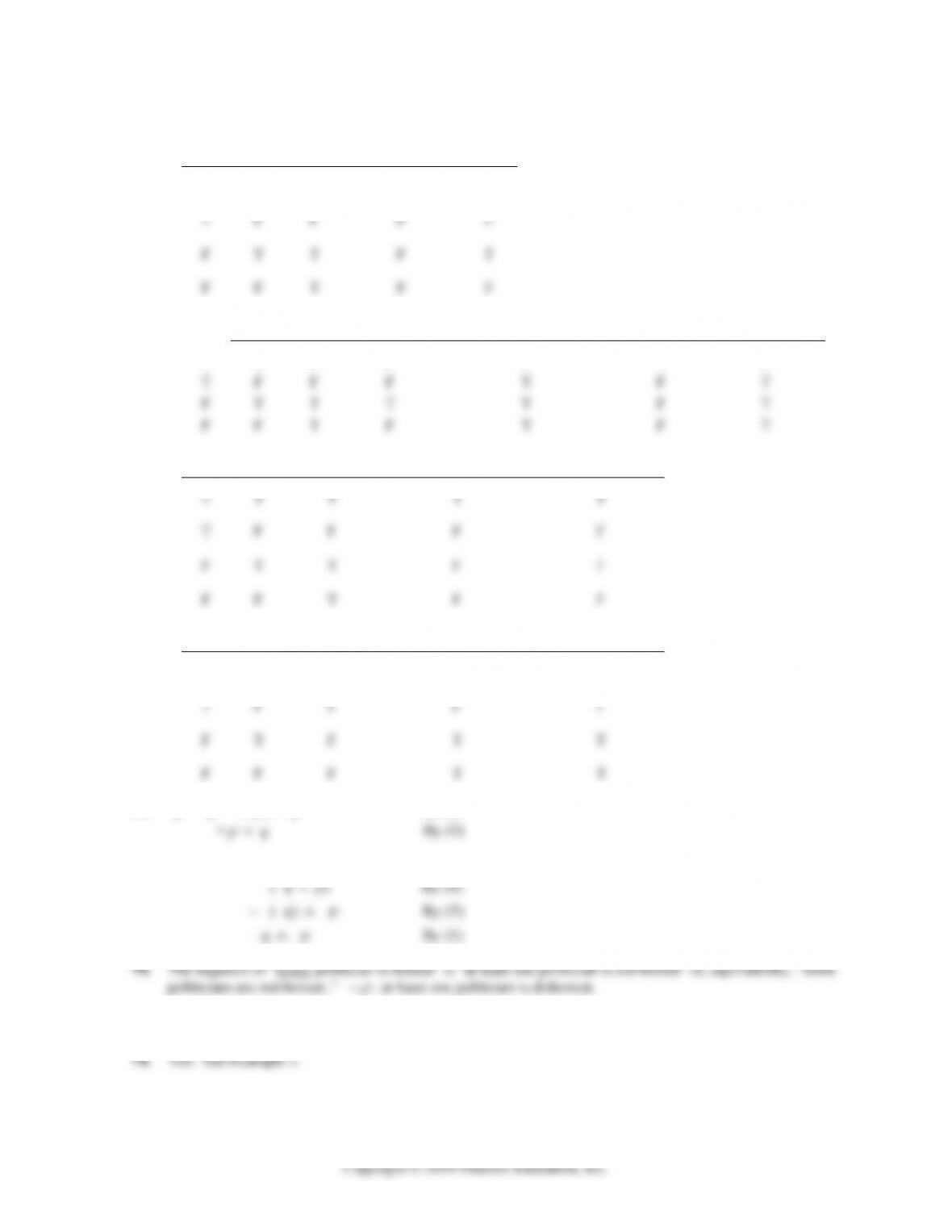
58. p q ¬p (p ¬p) q
T T F F T
60. p q ¬p ¬p q q → (¬p q) p
q ¬(p q)
T
T
F
F
F
T
F
62. p q p → q p (p → q) p
q
64. p q p q p → (p q) p → q
T T T T T
66. ¬p → q = ¬(¬p) q By (4)
68. ¬(¬p → ¬q) = ¬(q → p) By (7)
72. Tautology
EXERCISE 7-2 7-5
2. No 4. Yes
8. T; In a set the order of listing elements is not important; set equality definition.
14. T; Subset definition. 16. {4,8,16{1,2,4} {1,2,4,8 }},16
22. {1, 3}{{3,1,133, 1} , } 24. 2
{| 36} {6,6}xx
28. {x|x is a month starting with M} = {March, May}
32. ( ) 21 42 63nA. 34. ()42nA B
40. [( ) ‘] 21 18 19 58nA B 42. (‘ ‘) [( )‘]19nA B n A B
46. (A) {x|x R and x T} = R T (“and” translated as , intersection) = {1, 3, 4} {2, 4, 6} = {4}
50. {n N | n < 1,000}; finite.
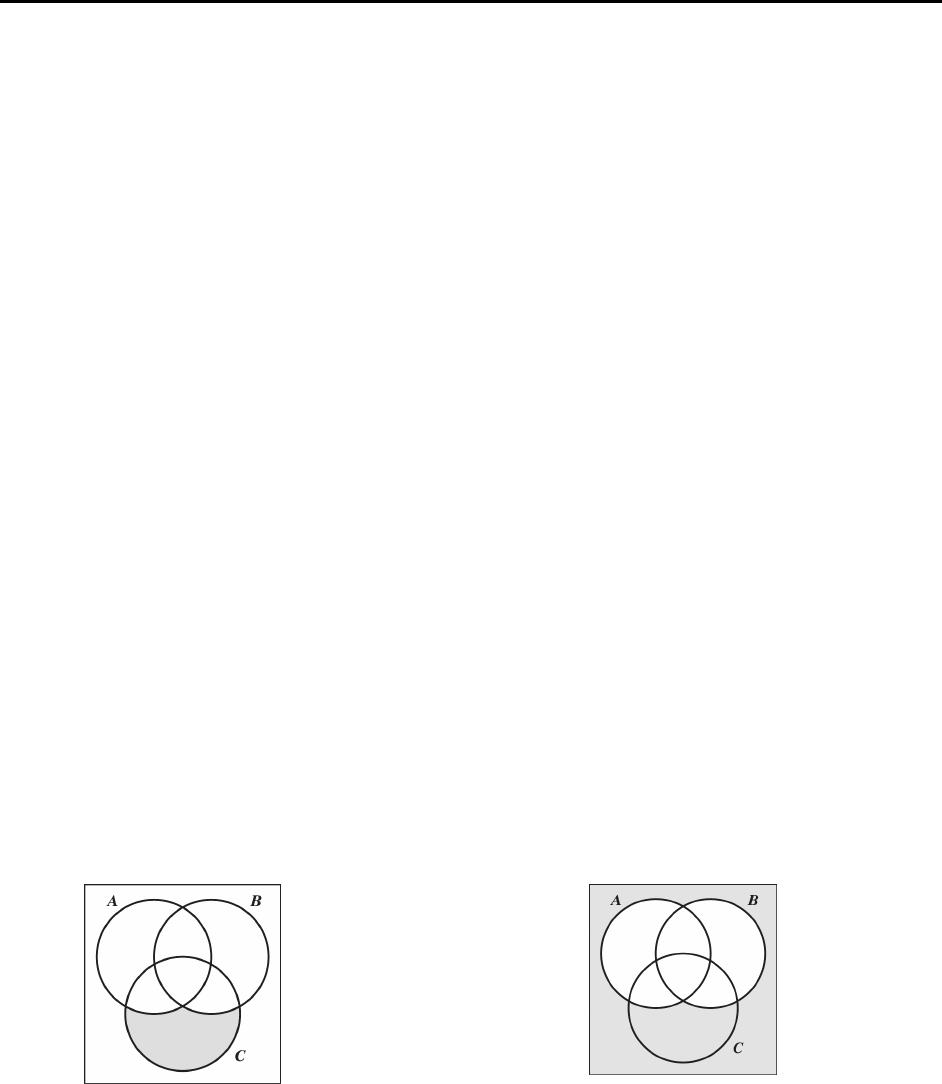
54.
56.
58.
62. E and E’ are disjoint since by definition of E’, E and E’ cannot have common elements.
66. True. A B = A can be represented by the Venn
70. True. Since
A
B, if xB
, then x
A
, which implies ‘
x
A, so ‘B
A
.
74. Let A = {a1, a2, …, an}, and let B A. We like to find out how many subsets B exist.
For a1, we have a1 B or a1 B;
76. ( ) 14 21 35nS 78. ( ) 66 21 87nB
84. ( ) ( ) ( ) ( ) 33 85 19 99nA F nA nF nA F
EXERCISE 7-3 7-7
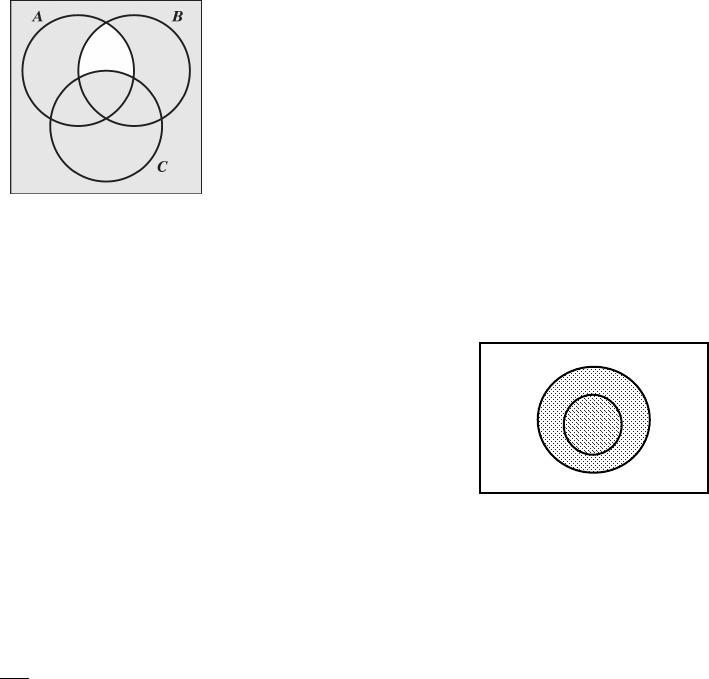
96. From the given Venn diagram: 98. From the given Venn diagram:
EXERCISE 7-3
2. 124 73 87 , 160 124, 36xx x 4. 75145,896, 12xxxx
8. (A)
(B) Multiplication Principle
O1: 1st letter
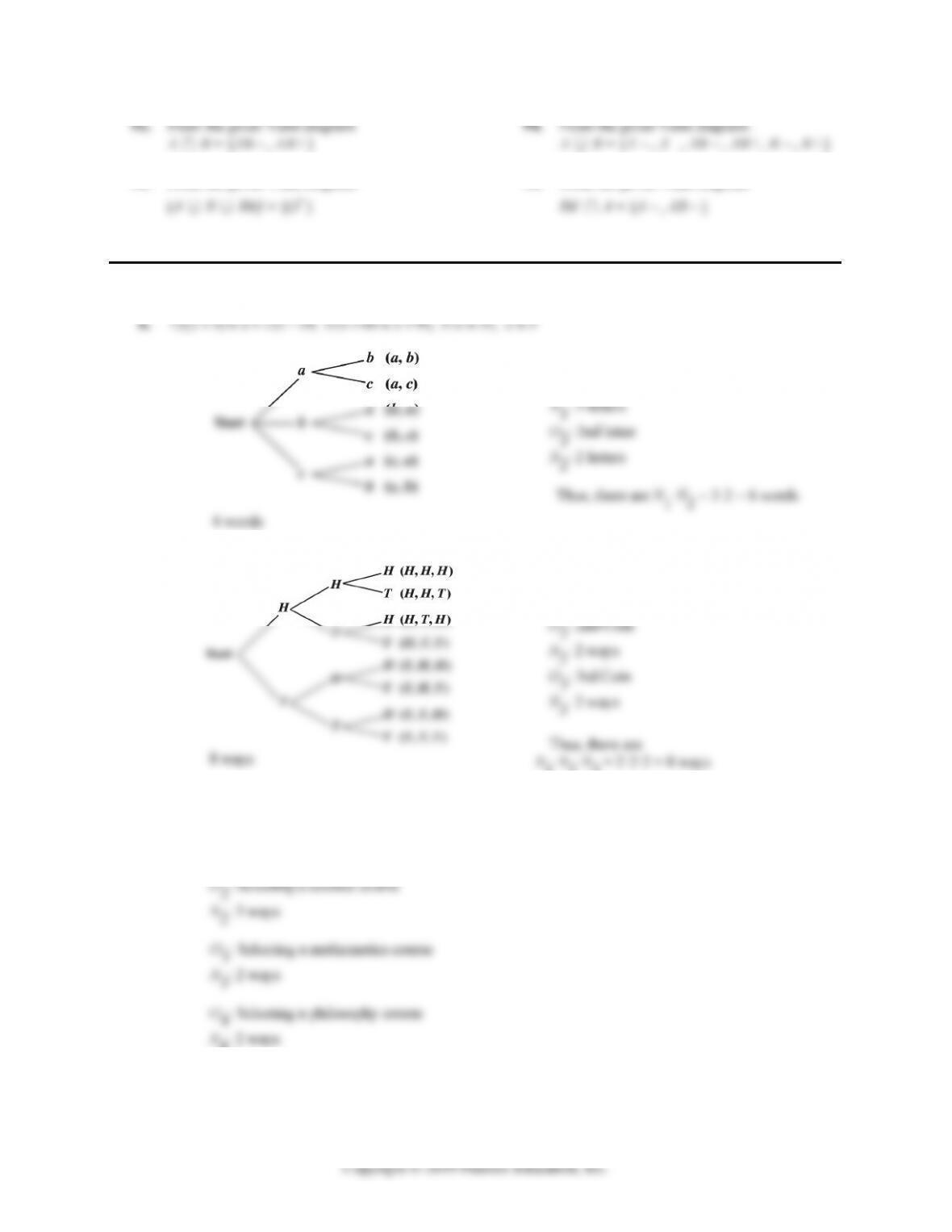
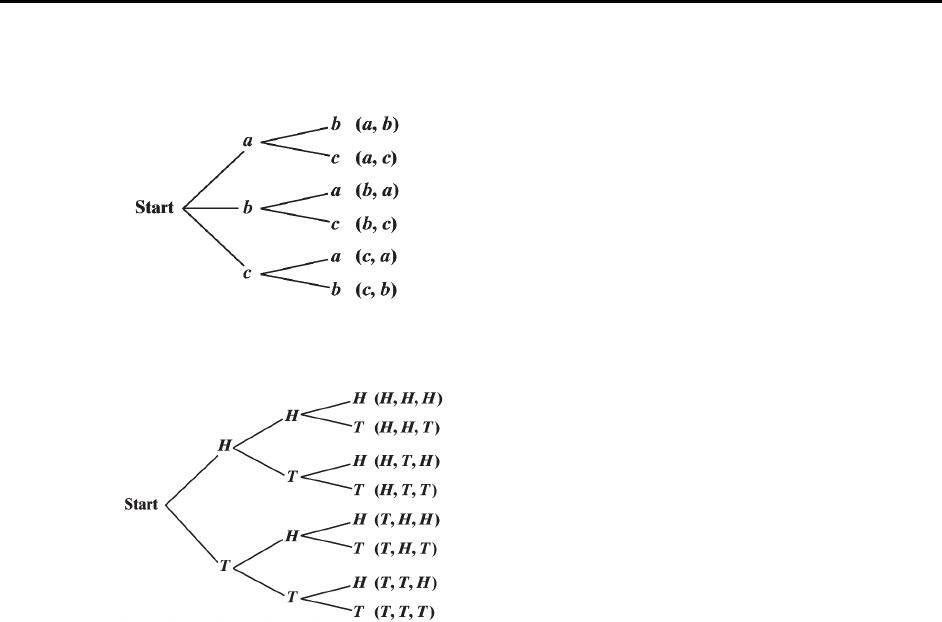
10. (A) Tree Diagram
(B) Multiplication Principle
O1: 1st Coin
N1: 2 ways
12. (A) Multiplication Principle (B) Addition Principle
O1: Selecting a history course N1 + N2 + N3 + N4 + N5 = 10 ways
N1: 2 ways
7-8 CHAPTER 7: LOGIC, SETS, AND COUNTING
14.
No letter repeated:
11
: select first letter; : 7 ways
ON
Letters repeated
11
: select first letter; : 7 ways
ON
16. Let A = set of “expensive” colleges,
B = set of “far from home” colleges.
Then n(A) = 6, n(B) = 7, n(A B) = 2
18. ( ) 40, ( ) 60, ( ) 20, ( ) 100nA nB nA B nU
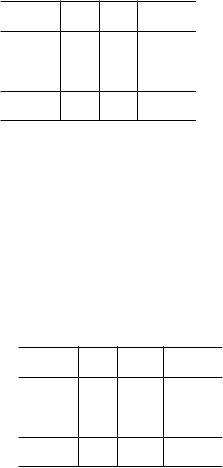
(‘)()()402020nA B nA nA B
20. ()65,()150,( )175,()200nA nB nA B nU
(‘)()()654025nA B nA nA B
EXERCISE 7-3 7-9
22. (‘) 70, (‘) 170, (‘ ‘) ( )‘ 40, () 300nA nB nA B nA B nU
Therefore, ( ) 300 70 230, ( ) 300 170 130, ( ) 300 40 260 nA nB nA B
24. (‘) 30, (‘) 10, (‘ ‘) ( )‘ 35, () 60nA nB nA B nA B nU
Therefore, ( ) 60 30 30, ( ) 60 10 50, and ( ) 60 35 25 nA nB nA B
26. n(A B) = 35, n(A B‘) = n(A) – n(A B) = 55 – 35 = 20
n(A‘ B) = n(B) – n(A B) = 65 – 35 = 30
28. n(A B) = n(A) + n(B) – n(A B)
110 = 80 + 70 – n(A B)
Thus, n(A B) = 150 – 110 = 40
n(A‘ B) = n(B) – n(A B) = 70 – 40 = 30
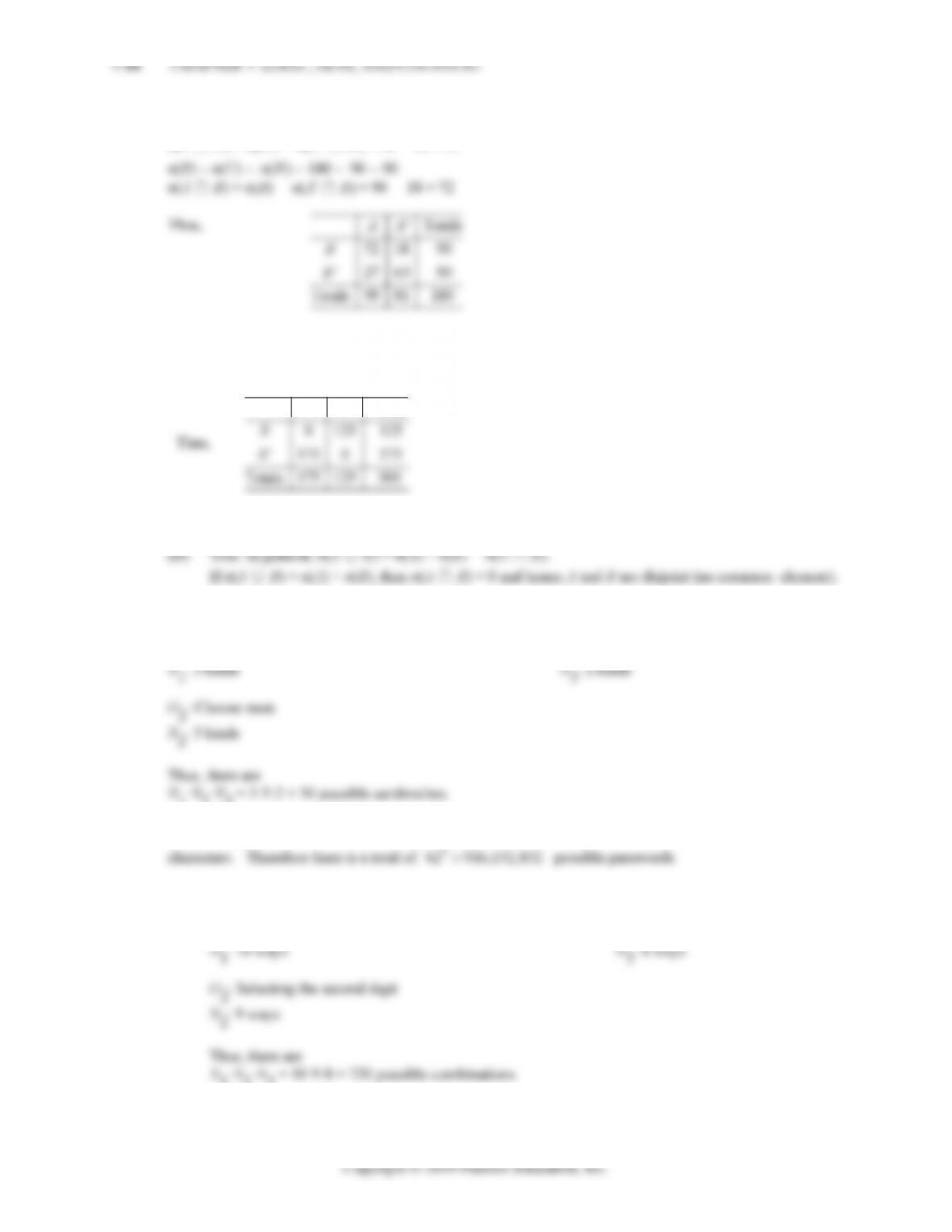
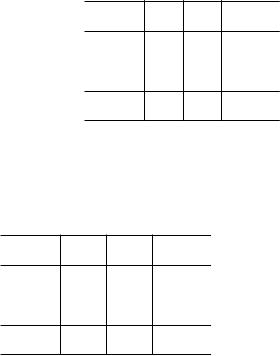
30. n(A‘ B) = n(A‘) – n(A‘ B‘) = 81 – 63 = 18
n(A B‘) = n(B‘) – n(A‘ B‘) = 90 – 63 = 27
32. n(A B) = n(A ) + n(B ) – n(A B) = 175+125 – 300 = 0
‘Totals
AA
34. (A) False. If A and B are non-empty, disjoint sets, then ()0()().nA B nA nB
36. Using the Multiplication Principle:
O1: Choose bread O3: Choose vegetable
38. Counting upper and lower case letters and ten digits, there are 62 possible choices for each of the five
40. (A) Number of three-digit combinations, no digit repeated.
O1: Selecting the first digit O3: Selecting the third digit
EXERCISE 7-3 7-11
(B) Number of three-digit combinations, allowing repetition.
O1: Selecting the first digit O3: Selecting the third digit
(C) Number of three-digit combinations, if successive digits must be
different.
O1: Selecting the first digit O3: Selecting the third digit
N1: 10 ways N3: 9 ways
42. (A) 5-digit ZIP code numbers.
O1: Selecting the first digit O4: Selecting the fourth digit
N1: 10 ways N4: 10 ways
(B) No repeated digits are allowed.
In this case, N1 = 10, N2 = 9, N3 = 8, N4 = 7, and N5 = 6.
44. In general n(A B C) = n(A) + n(B) + n(C) – n(A B) – n(B C) – n(A C) + n(A B C).
50. Let P = the number of students who play piano, and
G = the number of students who play guitar.
52. Let O = the number of players who played offense last year, and
D = the number of players who played defense last year.
54. O1: Selecting from plant A O2: Selecting from plant B
N1: 6 ways N2: 8 ways
56. Here we have O1 = choose one of the four cities and N1= 4; 02 = choose one of the remaining three cities,
58. Let V = the number of small businesses that own a video-conferencing system, and
P = the number of small businesses that own projection equipment.
60. Let I = the number of customers who use high speed internet;
P = the number of customers who use digital phone.
EXERCISE 7-4 7-13
62. (A) 367,000 people
(B) 118 + 102 = 220, so 220,000 people
(C) Let A1 = number of workers age 20-24,
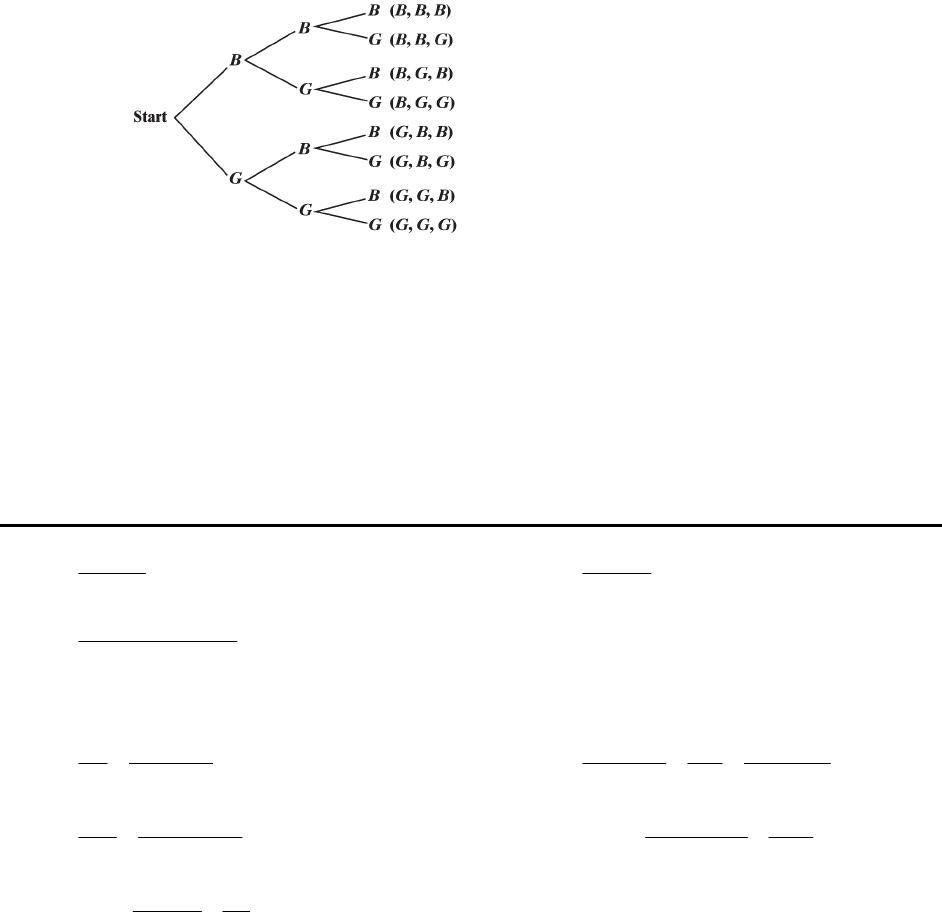
64. (A) Tree Diagram
(B) Multiplication Principle
O1: first child
N1: 2 ways
66. Let A = number of people who voted for him in his first election; and
EXERCISE 7-4
12 10 8 210 20