Markov Processes
The slack for constraint 1 is $10,000. This indicates that investing all $50,000 in the Blue Chip fund
is still too risky for the conservative investor. $40,000 can be invested in the Blue Chip fund. The
remaining $10,000 could be invested in low-risk bonds or certificates of deposit.
28. a. Let W = number of jars of Western Foods Salsa produced
M = number of jars of Mexico City Salsa produced
Max
1W
+
1.25M
s.t.
5W
4480
3W
+
2080
2W
+
1600
Note: units for constraints are ounces
b. Optimal solution: W = 560, M = 240
Value of optimal solution is 860
29. a. Let B = proportion of Buffalo’s time used to produce component 1
D = proportion of Dayton’s time used to produce component 1
Maximum Daily Production
Component 1
Component 2
Buffalo
2000
1000
Dayton
600
1400
For assembly of the ignition systems, the number of units of component 1 produced must equal the
number of units of component 2 produced.
Therefore,
2000B + 600D = 1000(1 – B) + 1400(1 – D)
2000B + 600D = 1000 – 1000B + 1400 – 1400D
3000B + 2000D = 2400
Chapter 17
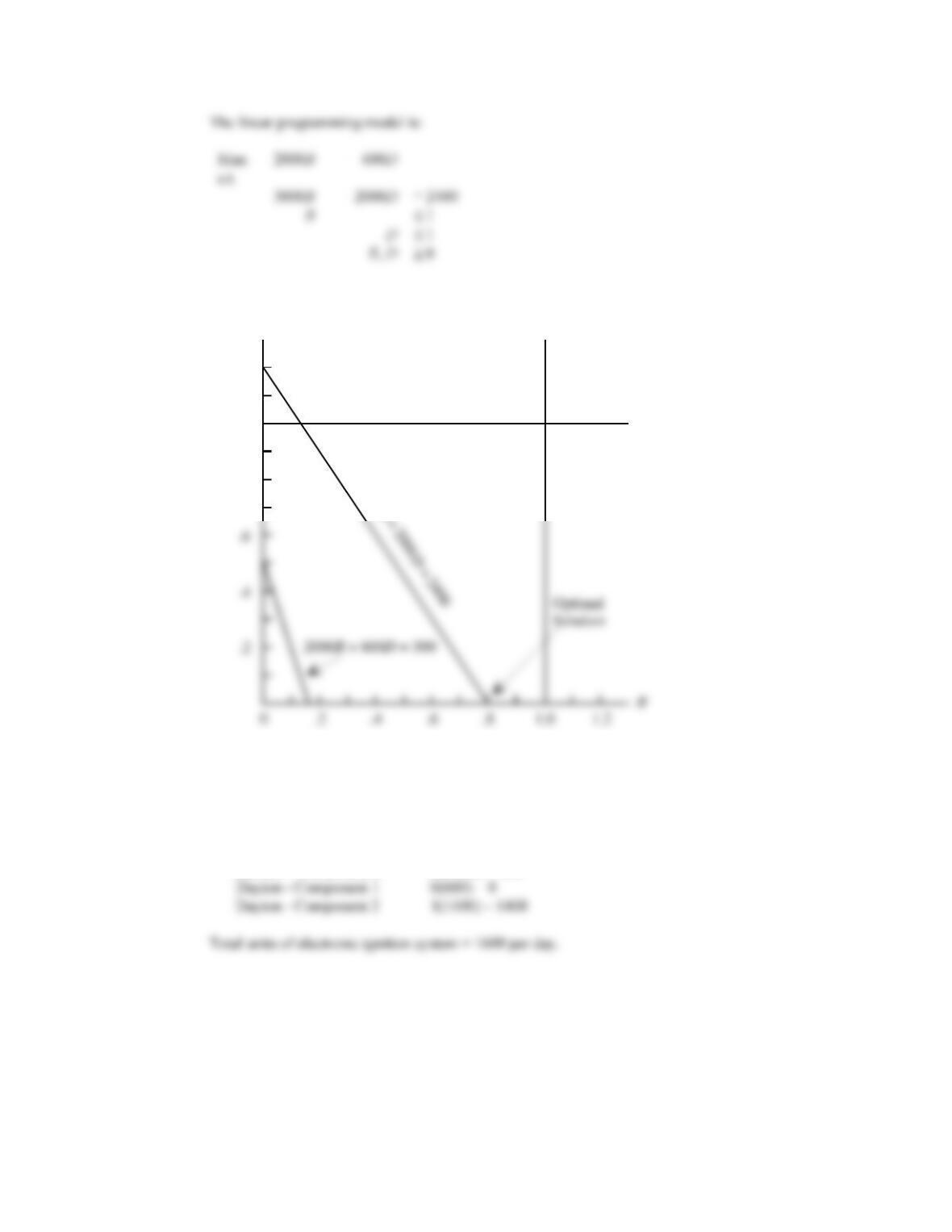
The graphical solution is shown below.
Optimal Solution: B = .8, D = 0
Optimal Production Plan
Buffalo – Component 1 .8(2000) = 1600
Buffalo – Component 2 .2(1000) = 200
D
.8
1.0
1.2
3000B + 2000D = 2400
Max
s.t.
Markov Processes
30. a. Let E = number of shares of Eastern Cable
C = number of shares of ComSwitch
Max
15E
+
18C
b.
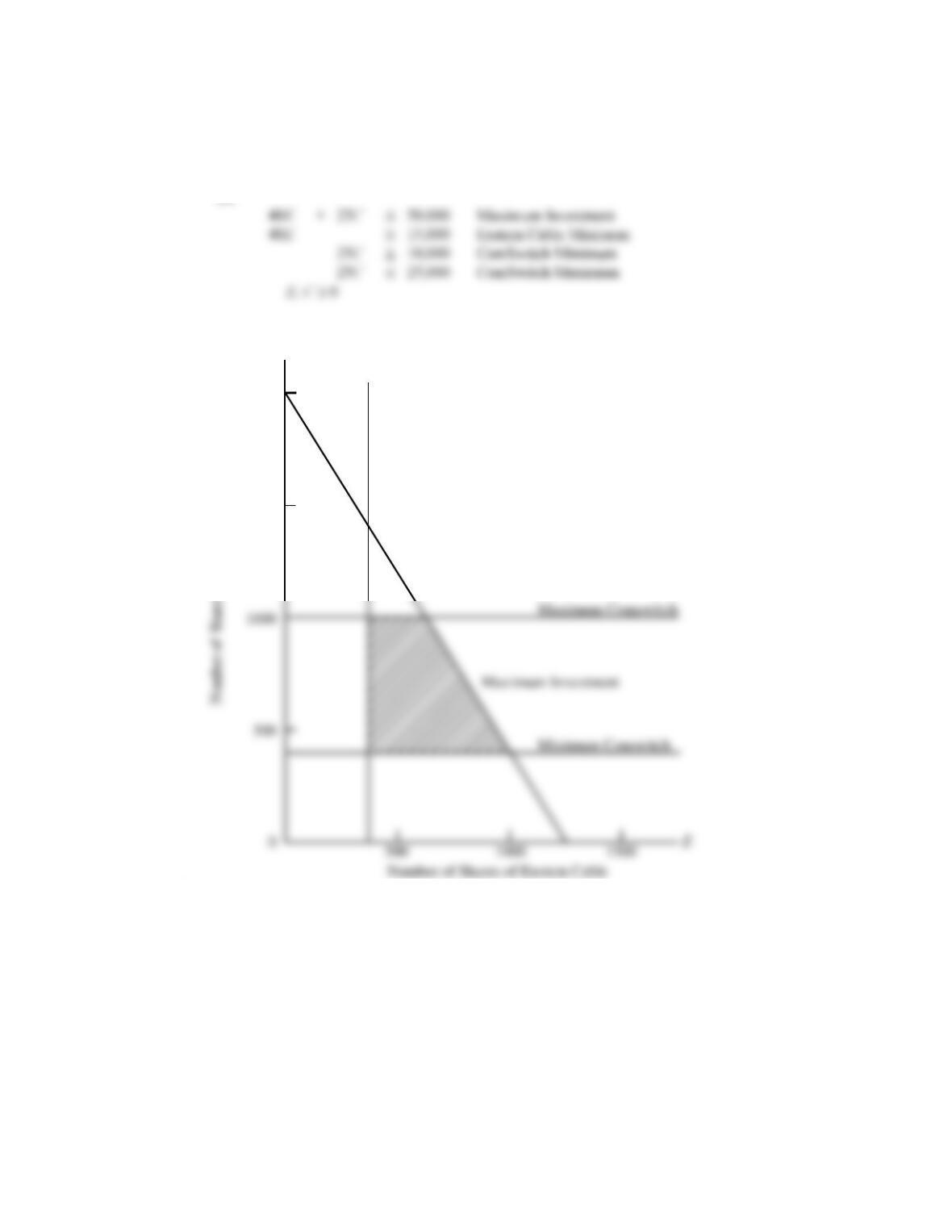
c. There are four extreme points: (375,400); (1000,400);(625,1000); (375,1000)
d. Optimal solution is E = 625, C = 1000
Total return = $27,375
C
1500
2000Minimum Eastern Cable
Chapter 17
31.
B
6
Feasible
Objective Function Value = 13
32.
A
A
B
A
B
Markov Processes
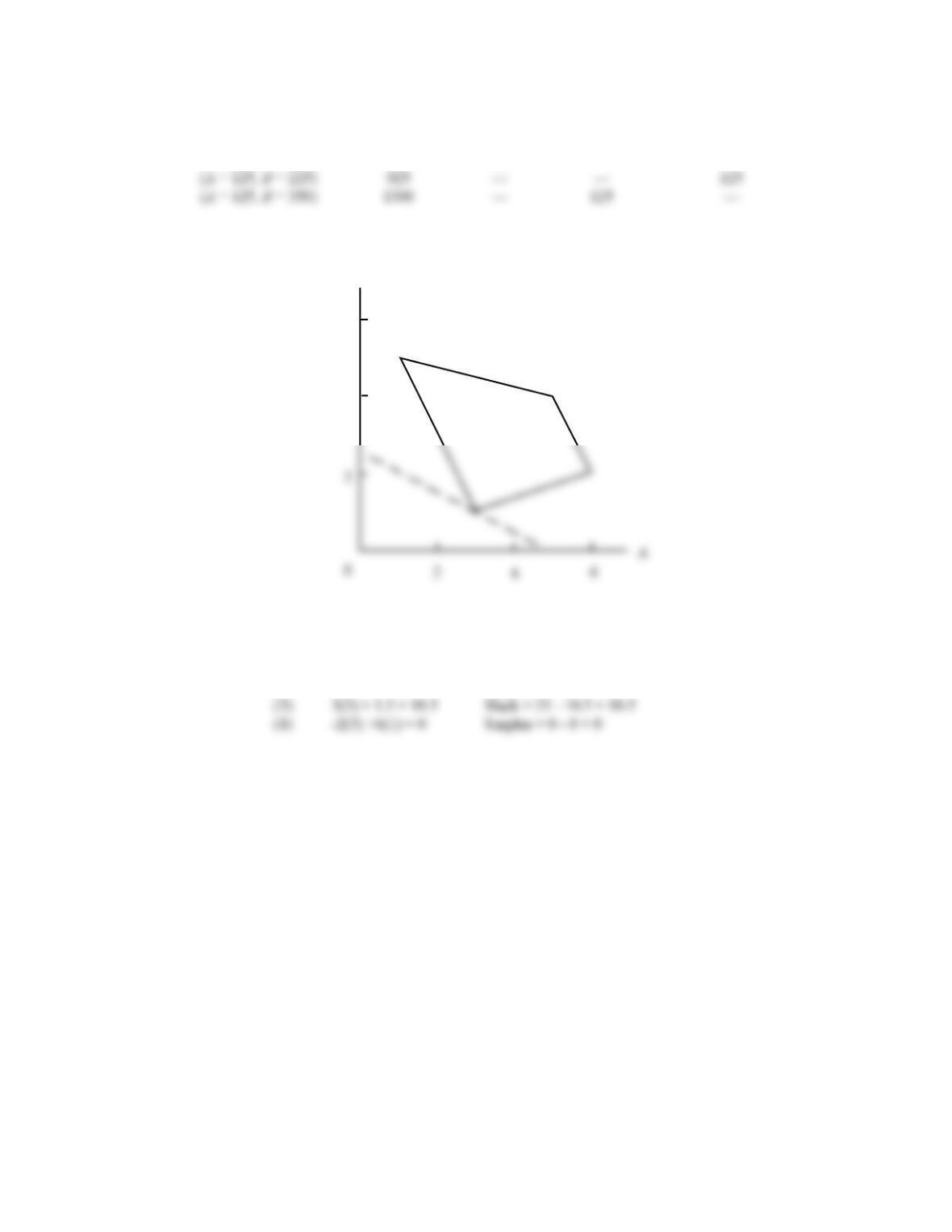
Extreme Points
Objective
Function Value
Surplus
Demand
Surplus
Total Production
Slack
Processing Time
(A = 250, B = 100)
800
125
—
—
(A = 125, B = 225)
925
—
33. a.
x2
A
4
6
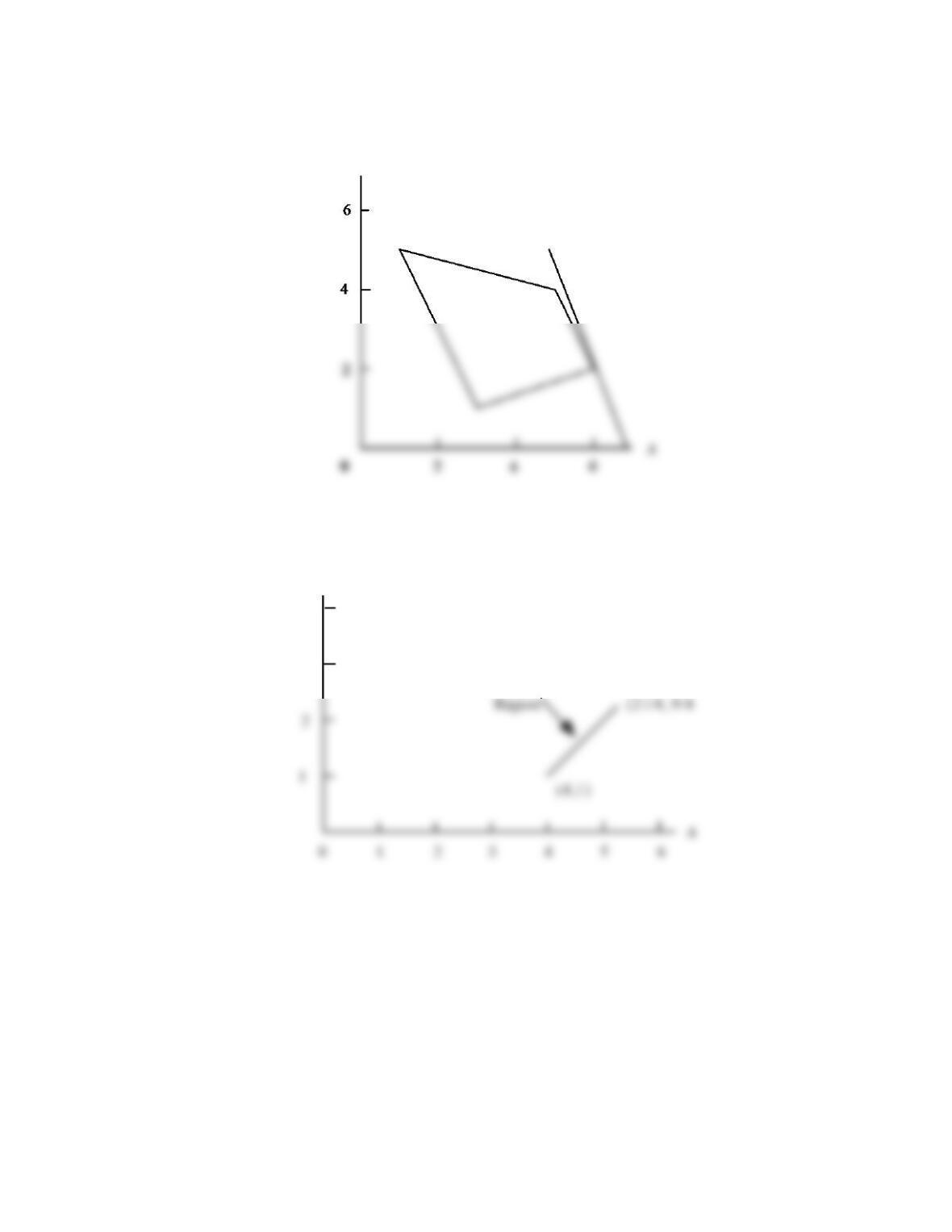
Optimal Solution: A = 3, B = 1, value = 5
b.
(1)
3 + 4(1) = 7
Slack = 21 – 7 = 14
(2)
2(3) + 1 = 7
Surplus = 7 – 7 = 0
(3)
3(3) + 1.5 = 10.5
Slack = 21 – 10.5 = 10.5
(4)
-2(3) +6(1) = 0
Surplus = 0 – 0 = 0
B
Chapter 17
c.
Optimal Solution: A = 6, B = 2, value = 34
34. a.
3
4
x2
Feasible
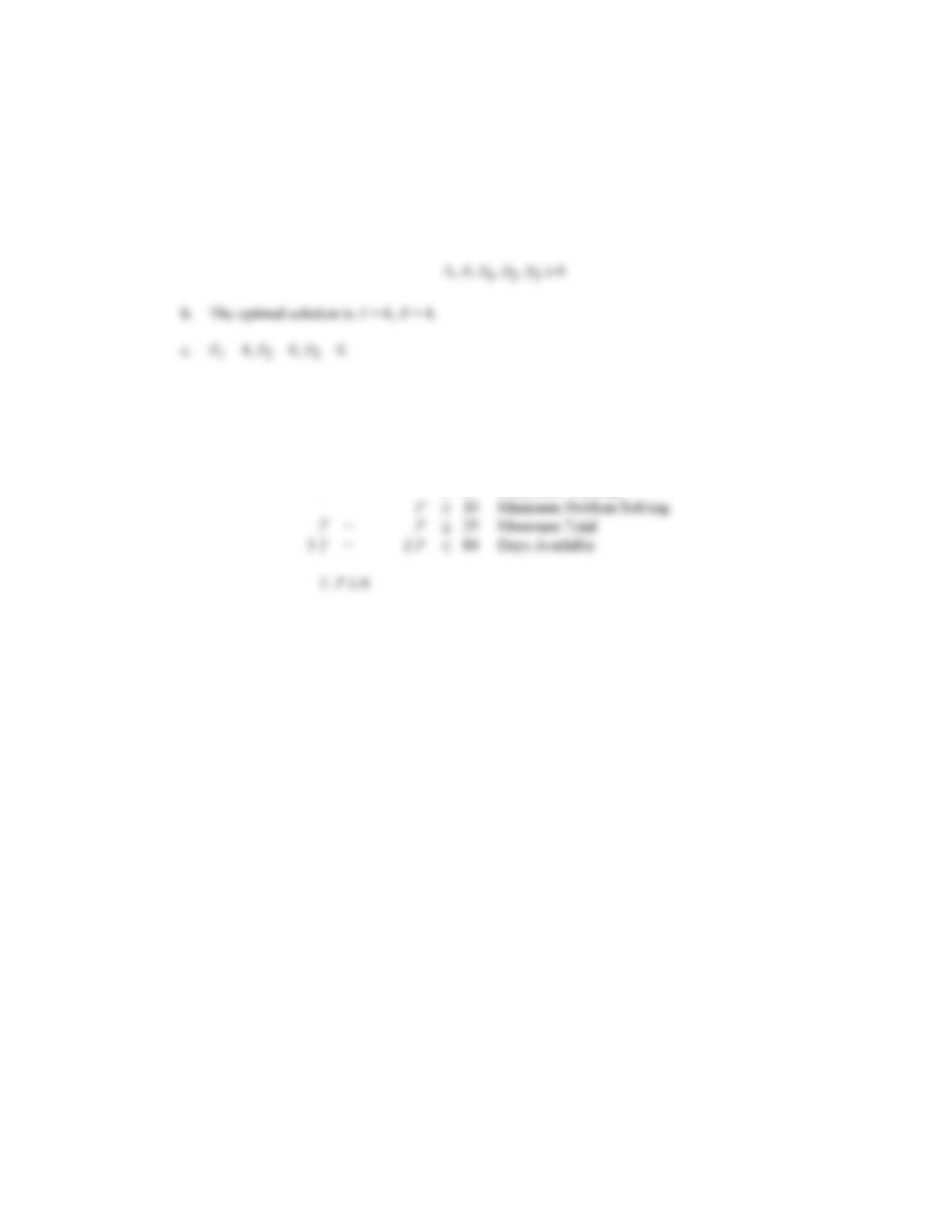
b. There are two extreme points: (A = 4, B = 1) and (A = 21/4, B = 9/4)
c. The optimal solution is A = 4, B = 1
B
B
A
Markov Processes
35. a.
Min
6A
+
4B
+
0S1
+
0S2
+
0S3
s.t.
2A
+
1B
–
S1
=
12
1A
+
1B
–
S2
=
10
1B
+
S3
=
4
36. a. Let T = number of training programs on teaming
P = number of training programs on problem solving
Max
10,000T
+
8,000P
s.t.
T
Minimum Problem Solving
T
+
Minimum Total
8
Minimum Teaming
Chapter 17
b.
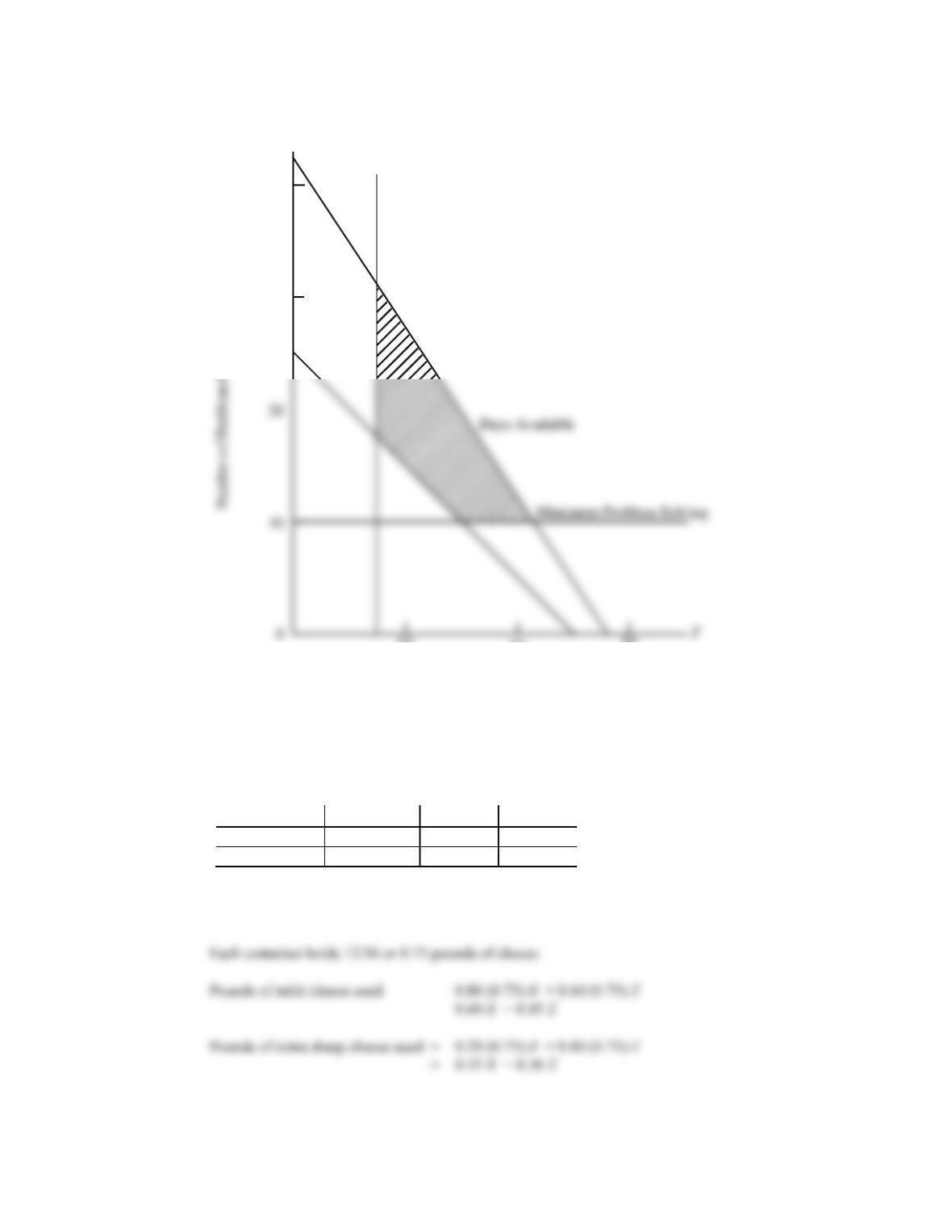
c. There are four extreme points: (15,10); (21.33,10); (8,30); (8,17)
d. The minimum cost solution is T = 8, P = 17
Total cost = $216,000
37.
Regular
Zesty
Mild
80%
60%
8100
Extra Sharp
20%
40%
3000
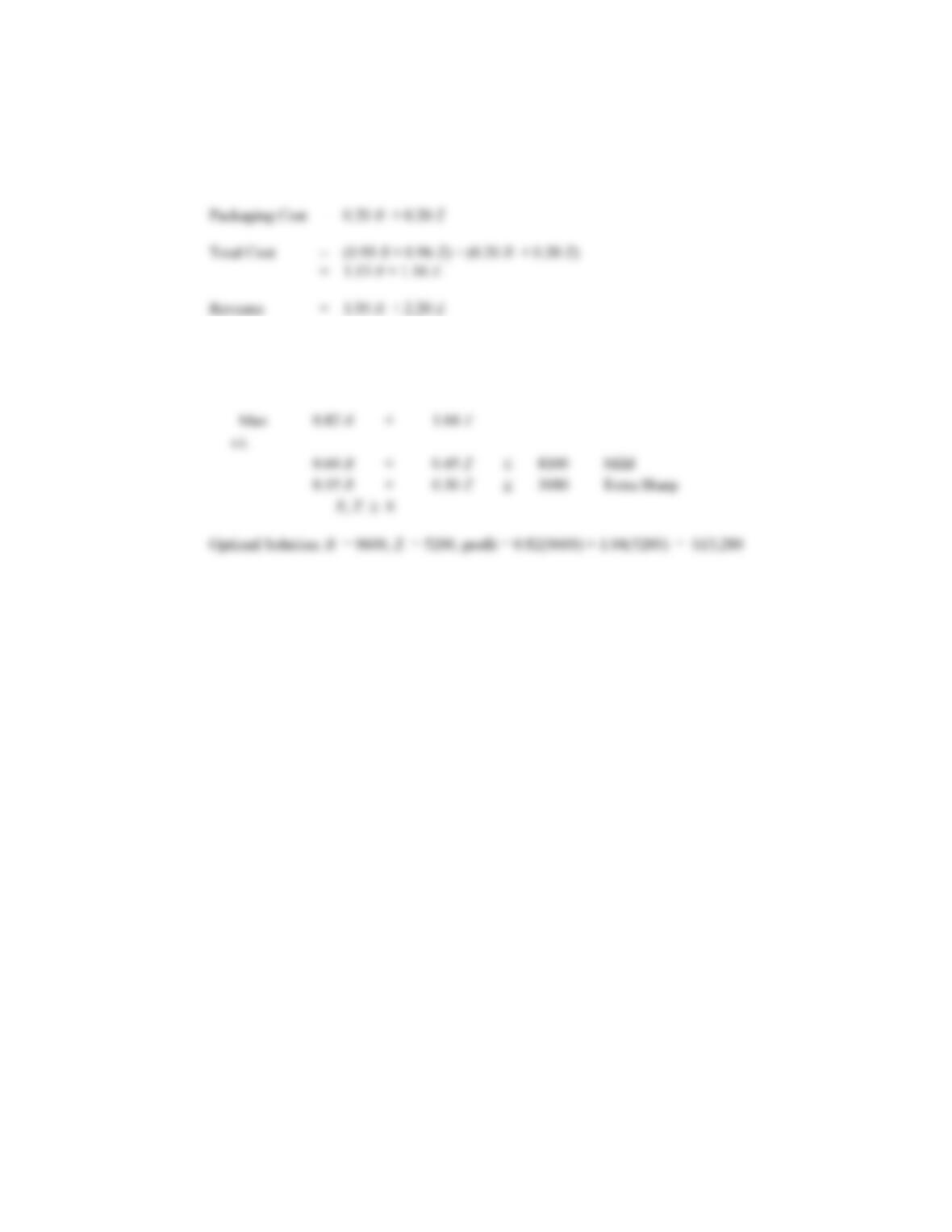
Let R = number of containers of Regular
Z = number of containers of Zesty
P
30
30
40 Minimum Teaming
Minimum
Total
Number of Teaming Programs
Markov Processes
Cost of Cheese = Cost of mild + Cost of extra sharp
= 1.20 (0.60 R + 0.45 Z) + 1.40 (0.15 R + 0.30 Z)
= 0.72 R + 0.54 Z + 0.21 R + 0.42 Z
= 0.93 R + 0.96 Z
Profit Contribution = Revenue – Total Cost
= (1.95 R + 2.20 Z) – (1.13 R + 1.16 Z)
= 0.82 R + 1.04 Z
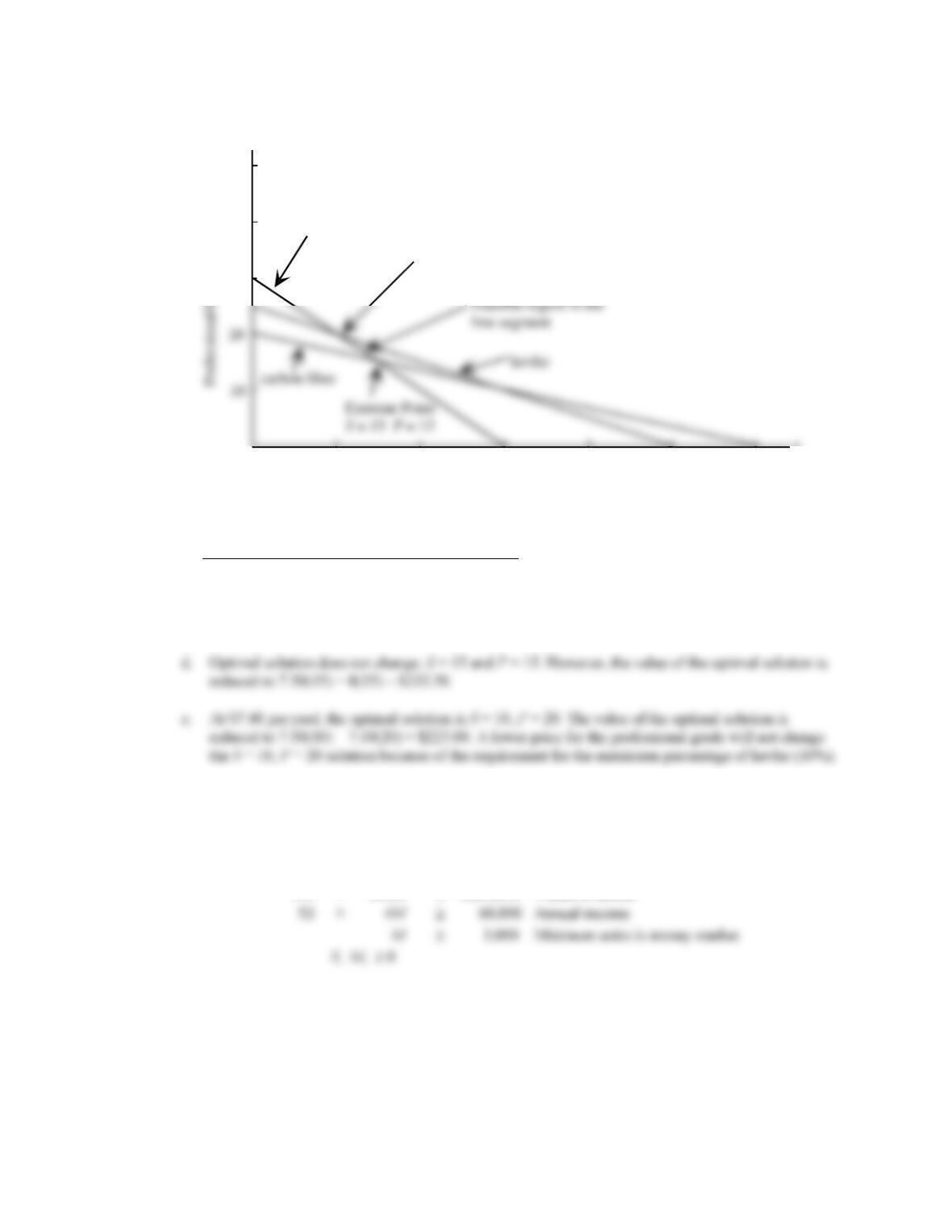
38. a. Let S = yards of the standard grade material per frame
P = yards of the professional grade material per frame
Min
7.50S
+
9.00P
s.t.
0.10S
+
0.30P
6
carbon fiber (at least 20% of 30 yards)
0.06S
+
0.12P
3
kevlar (no more than 10% of 30 yards)
S
+
P
=
30
total (30 yards)
S, P 0
Chapter 17
b.
c.
Extreme Point
Cost
(15, 15)
7.50(15) + 9.00(15) = 247.50
(10, 20)
7.50(10) + 9.00(20) = 255.00
The optimal solution is S = 15, P = 15
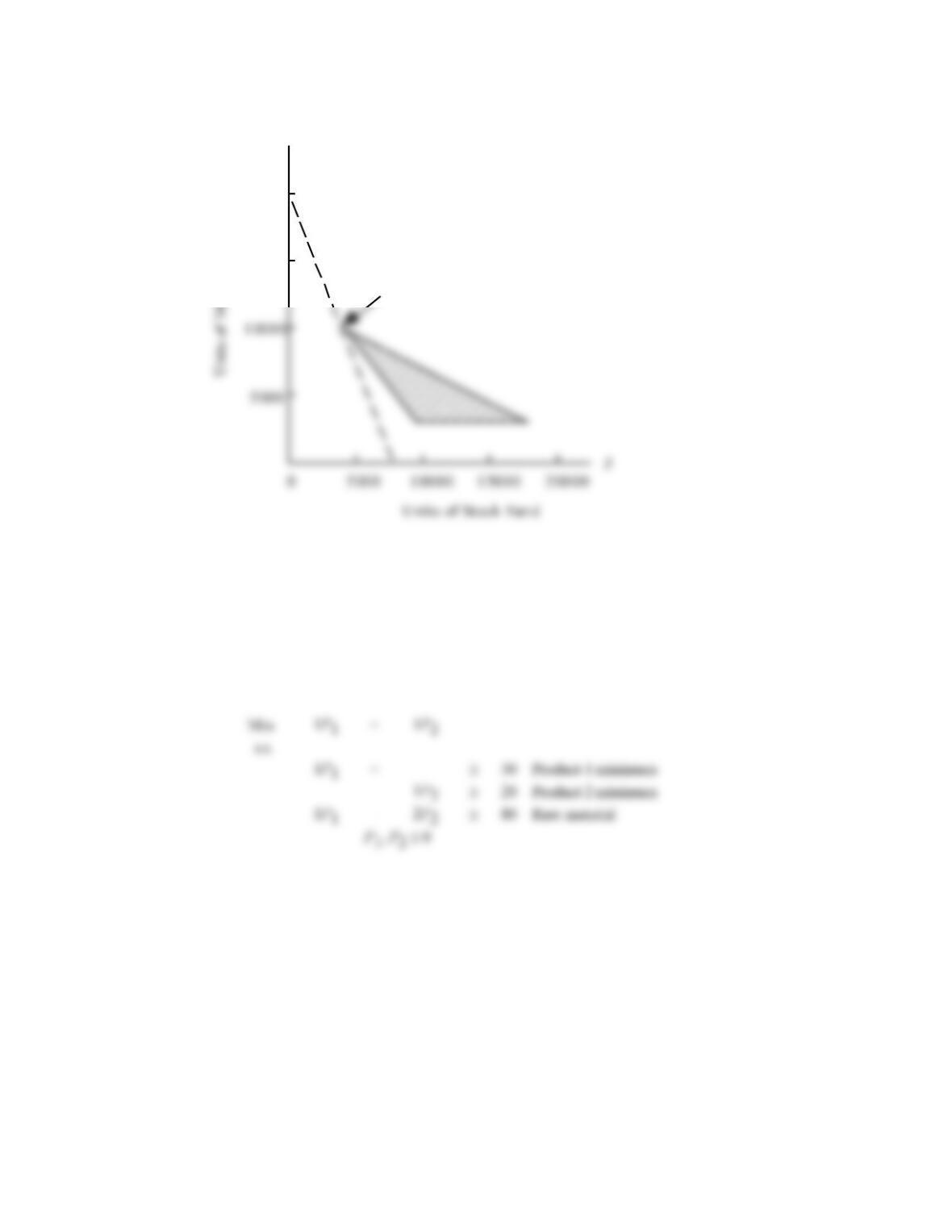
39. a. Let S = number of units purchased in the stock fund
M = number of units purchased in the money market fund
Min
8S
+
3M
s.t.
+
5S
+
4M
P
S
Standard Grade (yards)
010 20 30 40 50 60
30
40
50
total
Extreme Point
S = 10 P = 20
Markov Processes
x2
8x1 + 3x2 = 62,00 0
2000 0
1500 0
Optim al Solut ion
Optimal Solution: S = 4000, M = 10000, value = 62000
b. Annual income = 5(4000) + 4(10000) = 60,000
c. Invest everything in the stock fund.
40. Let P1 = gallons of product 1
P2 = gallons of product 2
M
8S + 3M = 62,000
Chapter 17
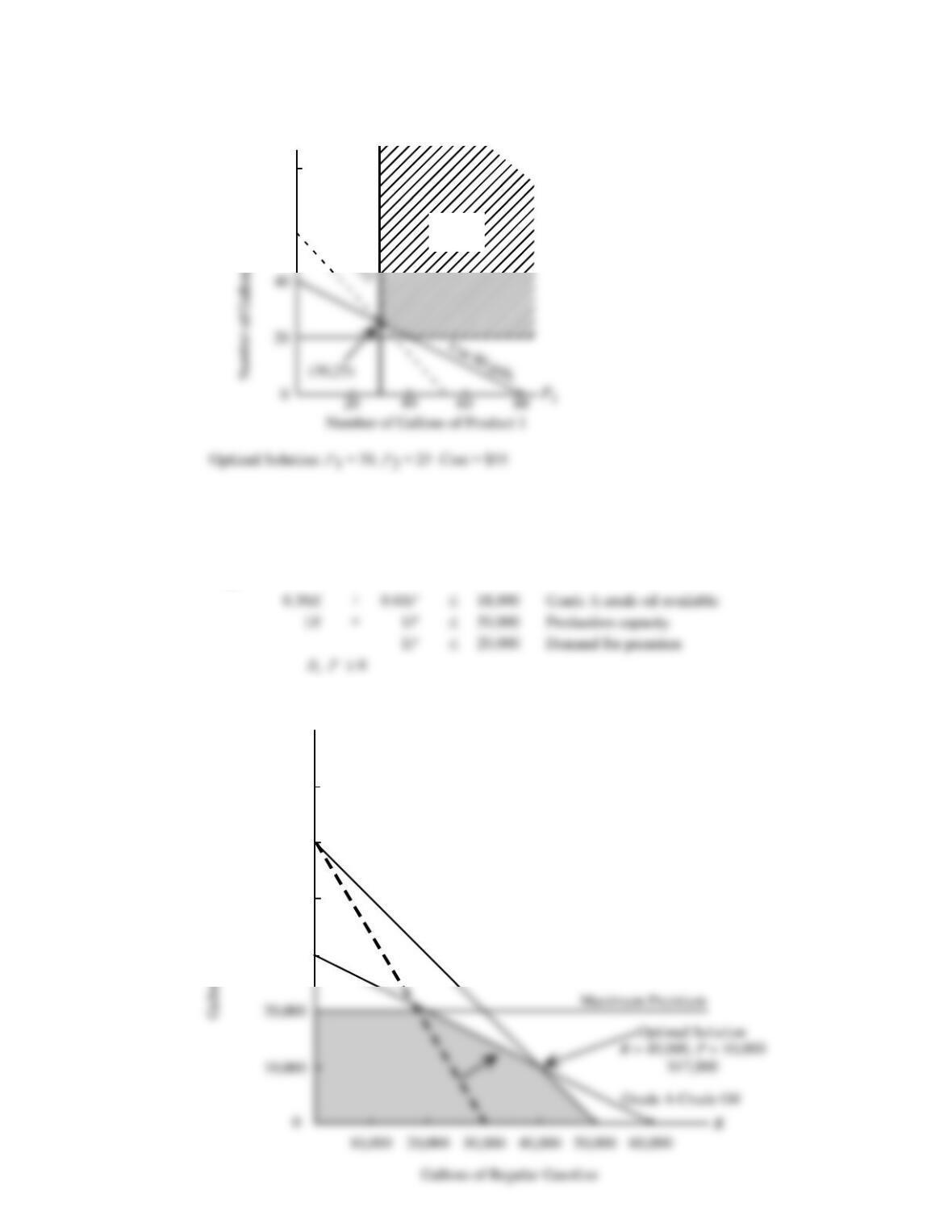
41. a. Let R = number of gallons of regular gasoline produced
P = number of gallons of premium gasoline produced
Max
0.30R
+
0.50P
s.t.
0.30R
+
0.60P
+
b.
60
80
P2
1P1 +1P2 = 55
Feasible
Region
P
30,000
40,000
50,000
60,000
Production Capacity