6-1
Management Information Systems, 13E, Global Edition
Laudon & Laudon
Lecture Files by Barbara J. Ellestad
Chapter 6 Foundations of Business Intelligence: Databases and
Information Management
Information is becoming as important a business resource as money, material, and
6.1 Organizing Data in a Traditional File Environment
Why should you learn about organizing data? Because it’s almost inevitable that someday
File Organization Terms and Concepts
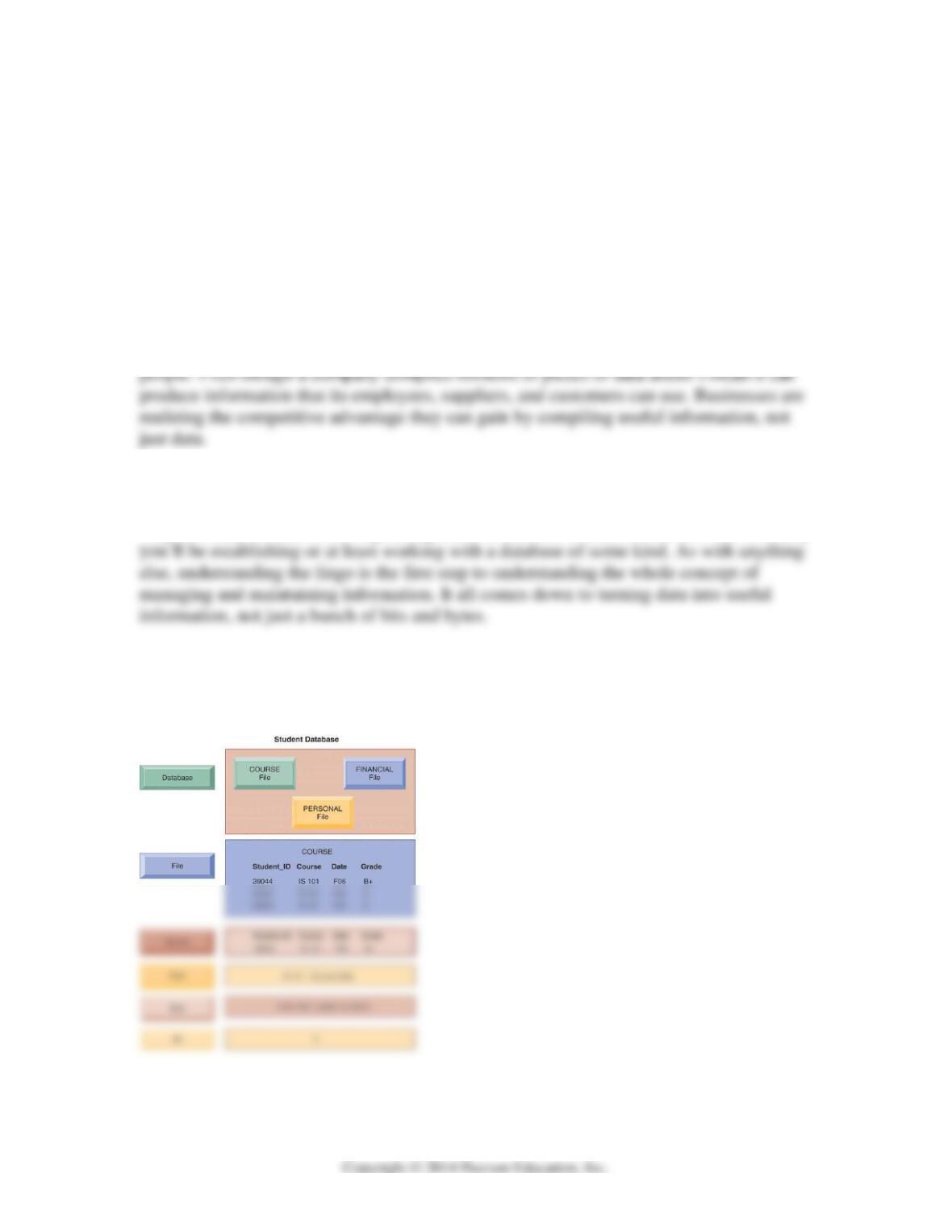
Figure 6-1: The Data Hierarchy

6-2
The first few terms, field, record, file, and database, are depicted in Figure 6-1, which
shows the relationship between them.
An entity is basically the person, place, thing, or event on which you maintain
information. Each characteristic or quality describing an entity is called an attribute. In
Problems with the Traditional File Environment
Building and maintaining separate databases within an organization is usually the main
cause of “islands of information.” It may begin in all innocence, but it can quickly grow
to monstrous proportions. Let’s look at some of the problems traditional file
environments have caused.
Data Redundancy and Inconsistency: Have you ever gotten two pieces of mail from the
same organization? For instance, you get two promotional flyers from your friendly
neighborhood grocery store every month. It may not necessarily be that you’re a popular
Program-Data Dependence: Some computer software programs, mainly those written
for large, mainframe computers, require data to be constructed in a particular way.

6-3
Lack of Flexibility: The Sales and Marketing manager needs information about his
company’s new production schedule. However, he doesn’t need all of the data in the
Poor Security: Traditional file environments have little or no security controls that limit
who receives data or how they use it. With all the data captured and stored in a typical
business, that’s unacceptable.
Lack of Data Share and Availability: What if the CEO of a business wants to compare
sales of Widget A with production schedules? That might be difficult if production data
6.2 The Database Approach to Data Management
The key to establishing an effective, efficient database is to involve the entire
organization as much as possible, even if everyone will not immediately be connected to
it or use it. Perhaps they won’t be a part of it in the beginning, but they very well could be
later on. Database management systems make it easy, fast, and efficient to relate pieces
of data together to compile useful information.
Database Management Systems
You’ve heard the old saying, “Don’t put all your eggs in one basket.” When it comes to
A Database Management System (DBMS) is basically another software program like
Word or Excel or email. This type of software is more complicated; it permits an

6-4
The physical view of data focuses on where the data are actually stored in the record or in
a file. The physical view is important to programmers who must manipulate the data as
they are physically stored in the database.
Does it really matter to the user that the customer address is physically stored on the disk
before the customer name? Probably not. However, when users create a report of
How a DBMS Solves the Problems of the Traditional File Environment
If you have just one database that serves the entire organization, you eliminate the islands
of information and, in turn, most of the problems we discussed earlier. If you only have
Relational DBMS
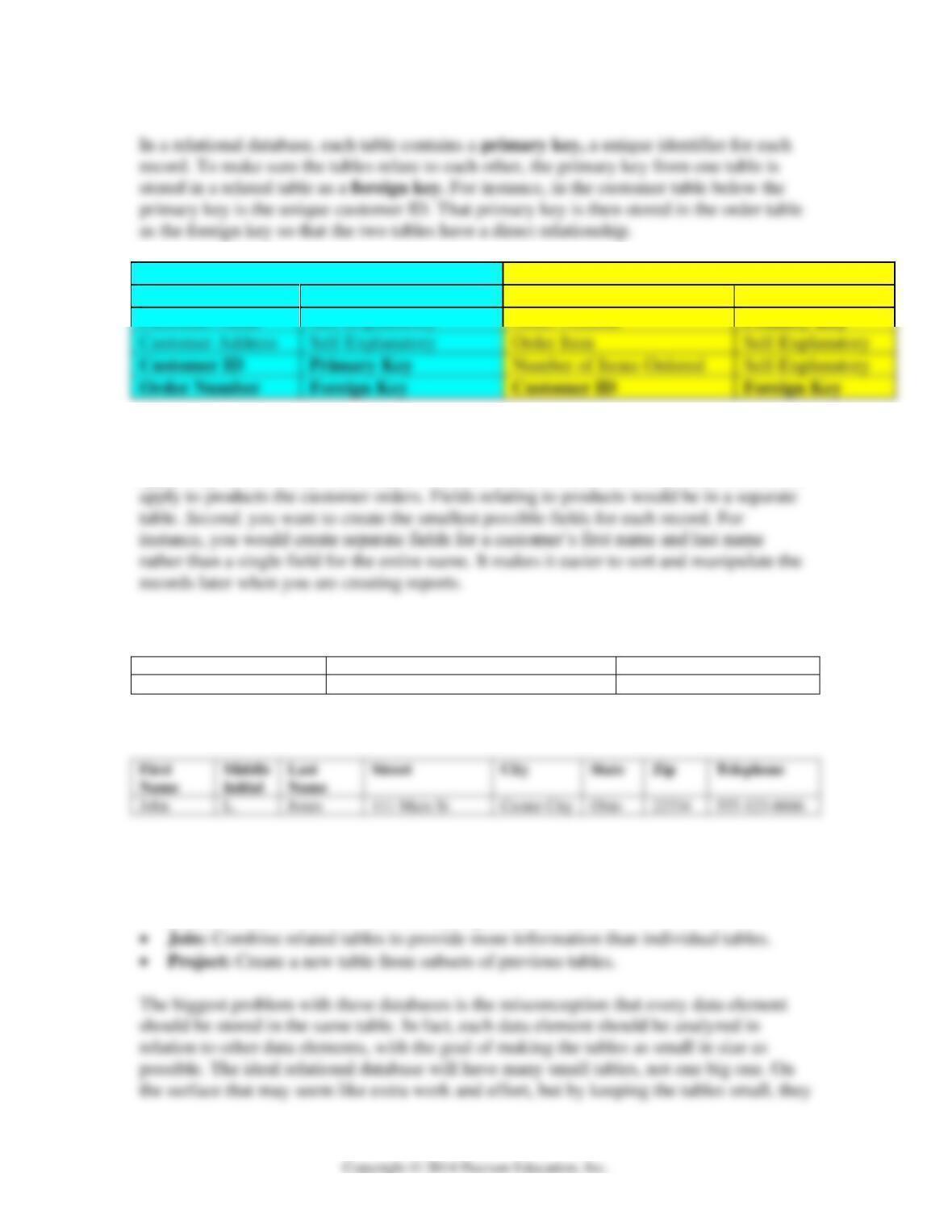
A relational database stores data in tables. The data are then extracted and combined
into whatever form or format the user needs. The tables are sometimes called files,
although that is actually a misnomer, since you can have multiple tables in one file.
6-5
Customer Table
Order Table
Field Name
Description
Field Name
Description
Customer Name
Self-Explanatory
Order Number
Primary Key
Customer Address
Self-Explanatory
Order Item
Self-Explanatory
Customer ID
Primary Key
Number of Items Ordered
Self-Explanatory
Order Number
Foreign Key
Customer ID
Foreign Key
There are two important points you should remember about creating and maintaining
relational database tables. First, you should ensure that attributes for a particular entity
apply only to that entity. That is, you would not include fields in the customer record that
Wrong way:
Name
Address
Telephone number
John L. Jones
111 Main St Center City Ohio 22334
555–123-6666
Name
Initial
Name
John
Jones
111 Main St
Center City
Ohio
22334
555–123-6666
Right way:
Operations of a Relational DBMS
Use these three basic operations to develop relational databases:
• Select: Create a subset of records meeting the stated criteria.

6-6
Non-Relational Databases and Databases in the Cloud
Relational databases will serve your company well if all your data can be neatly tucked
into rows and columns. Unfortunately, much of the data a business wants to access aren’t
Cloud computing service companies provide a way for you to manage your company’s
data through Internet access using a Web browser. At the present time you may not be
able to create a sophisticated relational database management system but it won’t be long
before it’s a standard service for organizations of all sizes. Pricing for cloud-based
database services are predicated upon:
• Usage—small databases cost less than larger ones
Capabilities of Database Management Systems
There are three important capabilities of DBMS that traditional file environments lack—
data definition, data dictionary, and a data manipulation language.
Data definition: Marketing looks at customer addresses differently from Shipping, so
you must make sure that all database users are speaking the same language. Think of it
Data dictionary: Each data element or field should be carefully analyzed when the
database is first built or as the elements are later added. Determine what each element
will be used for, who will be the primary user, and how it fits into the overall scheme of

6-7
Why is it so important to document the data dictionary? Let’s say Suzy, who was in on
the initial design and building of the database, moves on and Joe takes her place. It may
not be so apparent to him what all the data elements really mean, and he can easily make
Querying and Reporting
Data manipulation language: This is the third important capability of a DBMS. It’s a
formal language used to manipulate the data in the database and make sure they are
Designing Databases
Don’t start pounding on the keyboard just yet! That’s a common mistake that may cause
you many headaches later on. You have a lot of work to do to design a database before
you touch the computer.
First, you should think long and hard about how you use information in your current
Normalization and Entity-Relationship Diagrams
We mentioned before that you want to create the smallest data fields possible. You also
want to avoid redundancy between tables and not allow a relationship to contain

6-8
Your goals for creating a good data model are:
• Including all entities and the relationships among them
Whichever relationship type you use, you need to make sure the relationship remains
consistent by enforcing referential integrity. That is, if you create a table that points to
another table, you must add corresponding records to both tables.
Figure 6-11 An Entity-Relationship Diagram
Determine which data elements work best together and how you will organize them in

6-9
Bottom Line: Relational databases solve many of the problems inherent with
traditional file environments. Database Management Systems have three critical
components: the data definition, the data dictionary, and the data manipulation
6.3 Using Databases to Improve Business Performance and
Decision Making
Corporations and businesses go to great lengths to collect and store information about
their suppliers and customers. What they haven’t done a good job of in the past is fully
using the data to take advantage of new products or markets. They’re trying, though, as
we see in this section.
The Challenge of Big Data
Just a bit ago, we talked about how much of the data businesses want to collect, store,
process, and use are no longer sorted neatly and easily into rows, columns, and tables.
Email messages, text messages, tweets, and even output from large mainframe computers
Business Intelligence Infrastructure
Businesses collect millions of pieces of data. Using the right tools, a business can use its
data to develop effective competitive strategies that we discussed in previous chapters.

6-10
Data Warehouses and Data Marts
As organizations want and need more information about their company, their products,
and their customers, the concept of data warehousing has become very popular.
Remember those islands of information we keep talking about? Unfortunately, too many
Because a data warehouse can be cumbersome because of its size and sheer volume of
data, a company can break the information into smaller groups called data marts. It’s
easier and cheaper to sort through data marts that tend to be more focused on a particular
subject. It’s still useful to have a huge data warehouse, though, so that information is
available to everyone who wants or needs it. You can let the user determine how the data
will be manipulated and used.
Hadoop
For the kinds of data we discussed earlier that don’t fit neatly into rows, columns, and
tables, a new technology called Hadoop is better for handling unstructured and semi-
6-11
In-Memory Computing
Typically, database management systems rely on disk-based storage. When it comes
times to process the data, they are accessed from the disk storage, brought into the
computer’s main memory (RAM), and then moved back again. Not only does it take a
Analytic Platforms
Preconfigured hardware-software systems specifically designed for query processing and
analytics are now available for both relational and non-relational datasets. These analytic
platforms include in-memory systems and non-relational database management systems.
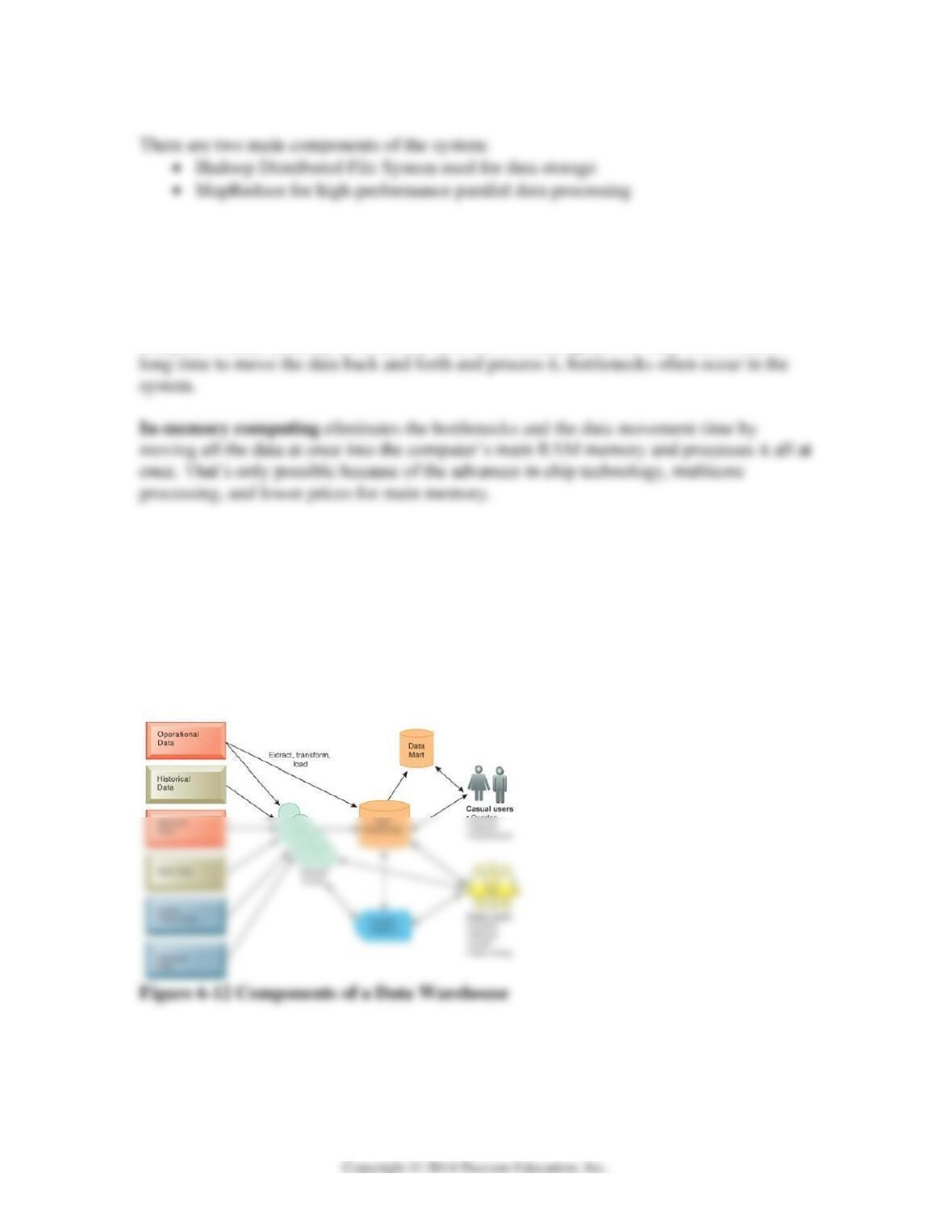
They are just one part of the overall business intelligence infrastructure shown in Figure
6-12 below
Analytical Tools: Relationships, Patterns, Trends

6-12
Online Analytical Processing (OLAP)
As technology improves, so does our ability to manipulate information maintained in
databases. Have you ever played with a Rubik’s Cube—one of those little multicolored
Figure 6-13: Multidimensional Data Model
Data Mining
Data mining technology allows a digital firm to get more information than ever before
from its data. One danger in data mining is the problem of getting information that on the
surface may seem meaningful, but when put into context of the organization’s needs,
simply doesn’t provide any useful information.
These are the five types of information managers can obtain from data mining:
• Associations: Determine occurrences linked to a single event
• Sequences: Determine events that are linked over time

6-13
Many companies collect lots of data about their business and customers. The most
difficult part has been to turn that data into useful information. Firms are using better data
mining techniques to target customers and suppliers with just the right information at the
right time.
Text Mining and Web Mining
Much of the data created that might be useful to businesses is stored not in databases but
in text-based documents. Word files, emails, call center transcripts and services reports
It’s quite possible you’ve read comments left by others on Facebook pages, at the end of
news stories, and even entire Web sites dedicated to specific causes. Sometimes those
comments and postings are favorable to a business and sometimes they aren’t. Either
Because so much business is taking place over the Web, businesses are trying to mine
data from it also. There are three categories of Web mining processes:
• Web content mining: Extract knowledge from the content of Web pages—text,
images, audio, and video
One Web site, Gilt.com, sells designer clothes and other high-end items online to
“members only.” It showcases overstocked inventory from major brands at 60 to 70
percent discounts. Here’s what the CEO, Susan Lyne says about the company’s Web
mining efforts:
6-14
“We have an enormous amount of data about our customers. We know not
only what you buy, we know every sale you visited, every item you
clicked on, anything you tried to add to your cart, anything you wait-
Interactive Session: Technology: Big Data, Big Rewards (see page 261 of the text)
describes how businesses are discovering customer sentiments, preferences, and
requests in unstructured data and addressing negative and positive trends and
patterns using big data processing technologies.
Databases and the Web
Web browsers are far easier to use than most of the query languages associated with the
other programs on mainframe computer systems. Companies realize how easy it is to
provide employees, customers, and suppliers with Web-based access to databases rather
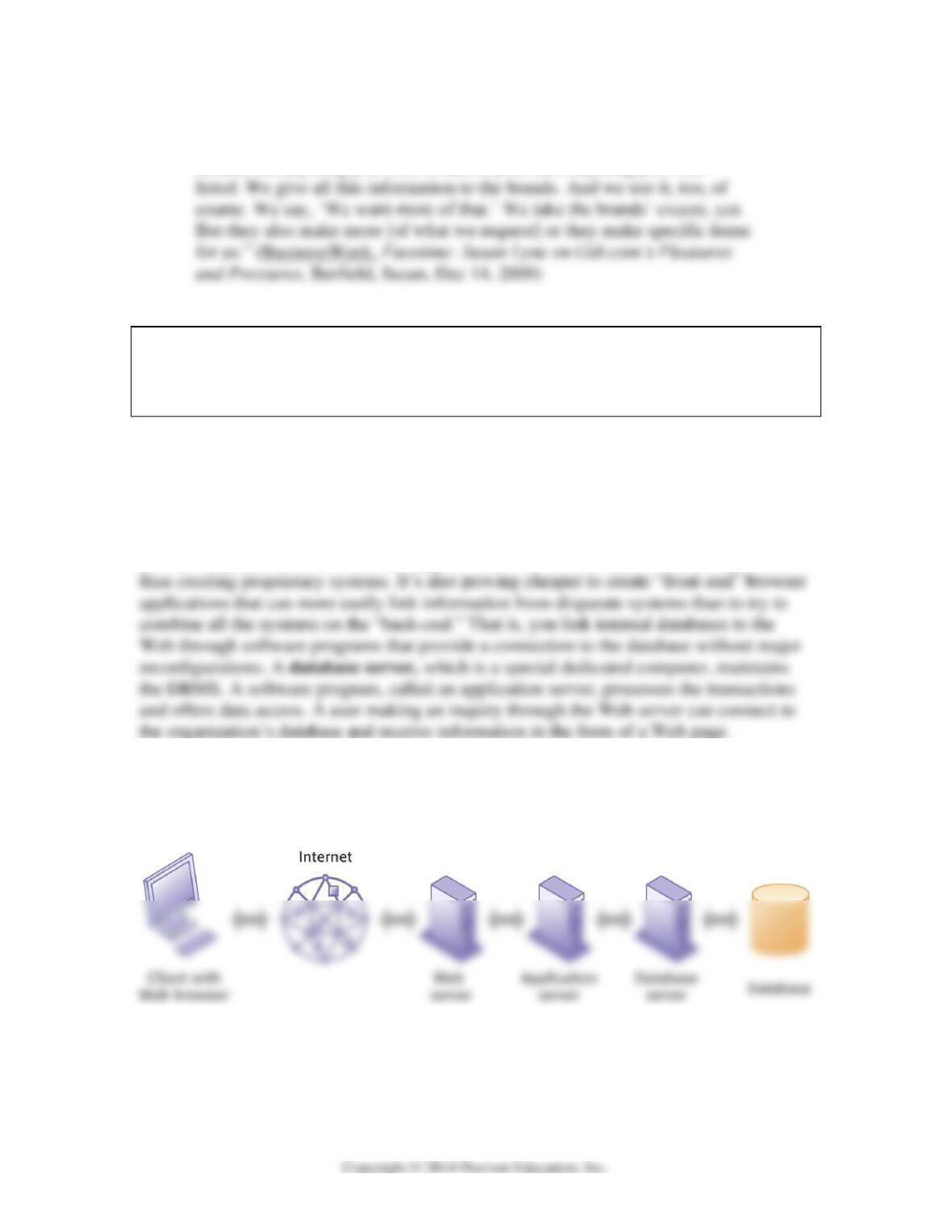
Figure 6-14 shows how servers provide the interface between the database and the
Web.
Figure 6-14 Linking Internal Databases to the Web
The benefits of using a Web browser to access a database include:
• Ease-of-use

6-15
• Less training for users
Interactive Session: Organizations: Controversy Whirls Around the Consumer
Product Safety Database (see page 264 of the text) discusses the benefits a readily
Bottom Line: There are many ways to manipulate databases so that an organization
can save money and still have useful information. With technological improvements
6.4 Managing Data Resources
At the beginning we said that as many users as possible should be brought together to
plan the database. We believed it so much then that we’ll say it again here. By excluding
groups of users in the planning stages, no matter how insignificant that group may seem,
a company courts trouble.
Establishing an Information Policy
No one part of the organization should feel that it owns information to the exclusivity of
other departments or people in the organization. A certain department may have the

6-16
Data administration is responsible for:
• Developing information policies
Data governance describes the importance of creating policies and processes for
employing data in organizations. Making sure data are available and usable, have
integrity, and are secure is one part. Promoting data privacy, security, quality, and
complying with government regulations like the Sarbanes-Oxley Act is the second part.
front. It will pay off in the long run.
Ensuring Data Quality
Let’s bring the problem of poor data quality close to home. What if the person updating
your college records fails to record your grade correctly for this course and gives you a D
instead of a B or an A? What if your completion of this course isn’t even recorded?
Because of the bad data, you could lose your financial aid or perhaps get a rather nasty
email from Mom and Dad. Think of the time and difficulty getting the data corrected.
Data quality audits verify data accuracy in one of three ways:
• Survey entire data files

6-17
Bottom Line: As with any other resource, managers must administer their data,
Discussion Questions:
1. Describe the three capabilities of database management systems: data definition, data
dictionary, and data manipulation language. Discuss the importance of creating and
using a data dictionary with a large corporate database.
2. Discuss the importance of business intelligence as it relates to databases.
Answers to Discussion Questions:
1. A DBMS has three capabilities: 1) data definition is the capability to specify the
structure of the content of the data. It’s used to create database tables and define the
characteristics of the fields in each table; 2) the data dictionary stores definitions of
2. The tools available for business intelligence include database query software,
multidimensional data analysis, and data mining. Business intelligence provides firms
with the capability to amass information (data warehouses), develop knowledge about

6-18
3. Web browsers are easier to use than most database query languages for accessing and
compiling information. An organization can build a Web-based “front–end” to the
4. New types of data that don’t fit neatly into rows, columns, and tables exist in many
different forms. Non-relational databases use a more flexible data model and are
5. Managers should focus on four issues regarding data resources: information policies,
data administration, data governance, and data quality. Information policies are
important management tools because they specify rules for sharing, disseminating,