6-1
6 SIMPLEX METHOD
EXERCISE 6-1
10. Set
12
0.xs Then 2
3
x
= 8
1212
12. Set
21
0.xs Then 1
2
x
= 10
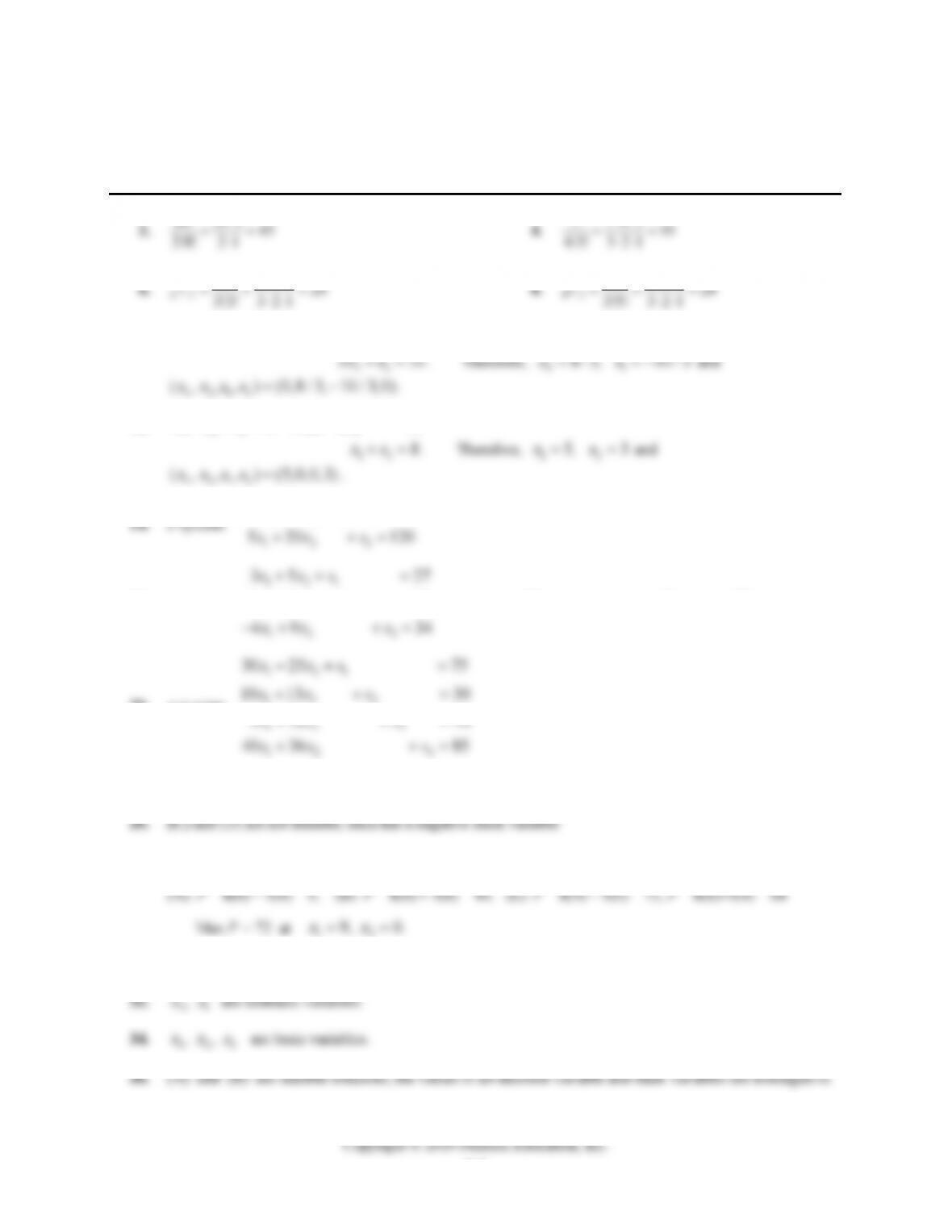
16. e-system:
12 2
12 3
35 27
83 19
xxs
xx s
18. e-system: 121
220xxs
20. e-system:
12 2
12 3
12 4
30 25 75
10 13 30
518 40
xxs
xx s
xx s
22. 11
,
x
sare nonbasic variables. 24. 12
,
x
s are basic variables.
28. 12
85Px x:
30. The set of points above the line 12
43 36.xx
x
x
6-2 CHAPTER 6: SIMPLEX METHOD
38. Set
12
0.ss Then
12
123
24
230
xx
xx
Therefore, 12 3
6, 18, 6xx s
and
40. Set
23
0.ss Then
12
12
24
230
xxs
xx
Therefore, 12 3
9, 12, 3xx s
and
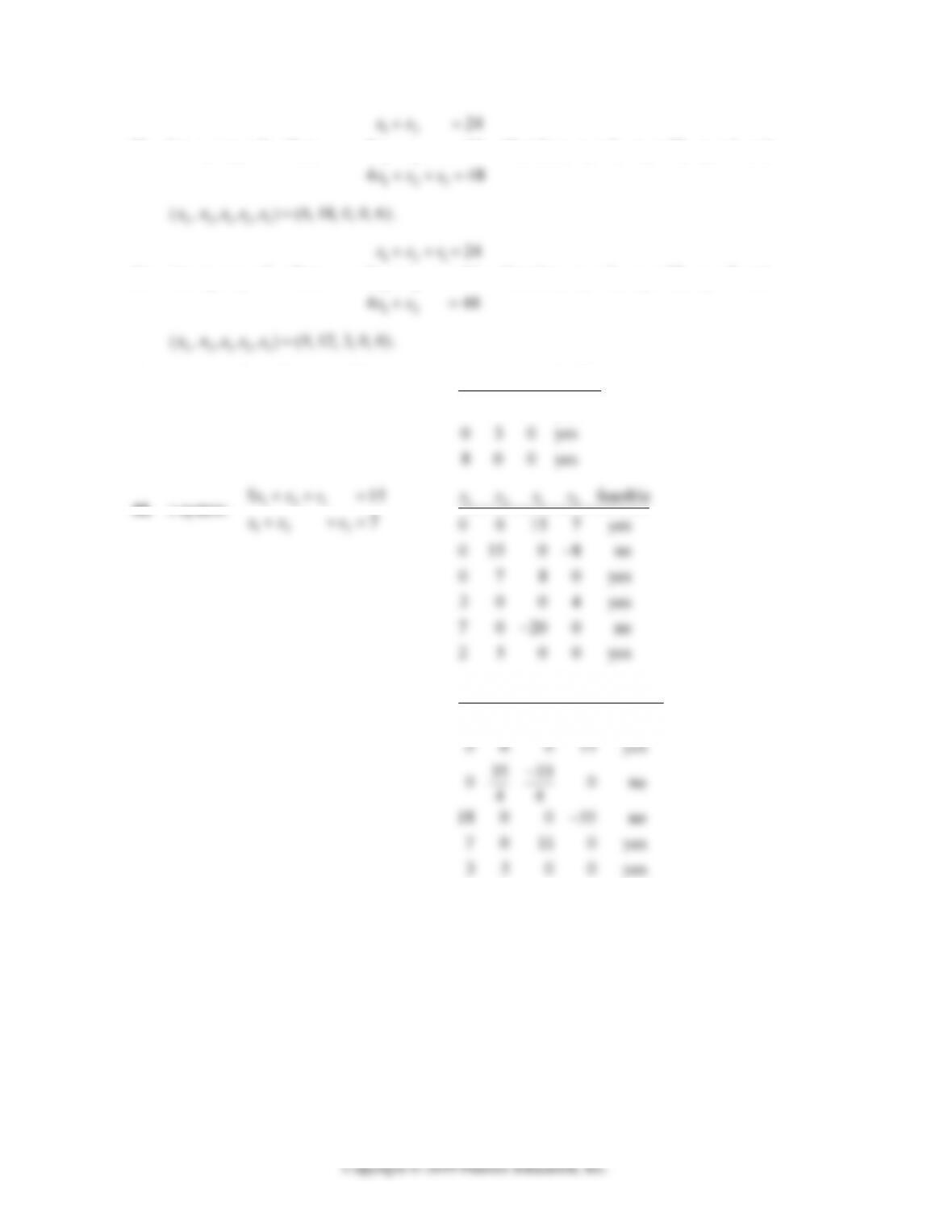
42. e-system: 121
38 24xxs
121
feasible
0024yes
xxs
30 04yes
70200 no
25 00yes
46. e-systems: 121
12 2
318
54 35
xxs
xx s
1212
feasible
0 0 18 35 yes
xx s s
EXERCISE 6-1 6-3
48. e-system:
12 2
52 150
xx s
feasible
0 0 240 150 120 yes
30 0 90 0 30 no
24 0 120 30 0 yes
12 45 0 0 15 yes
16 40 0 10 0 no
18 30 30 0 0 yes
xx ss s
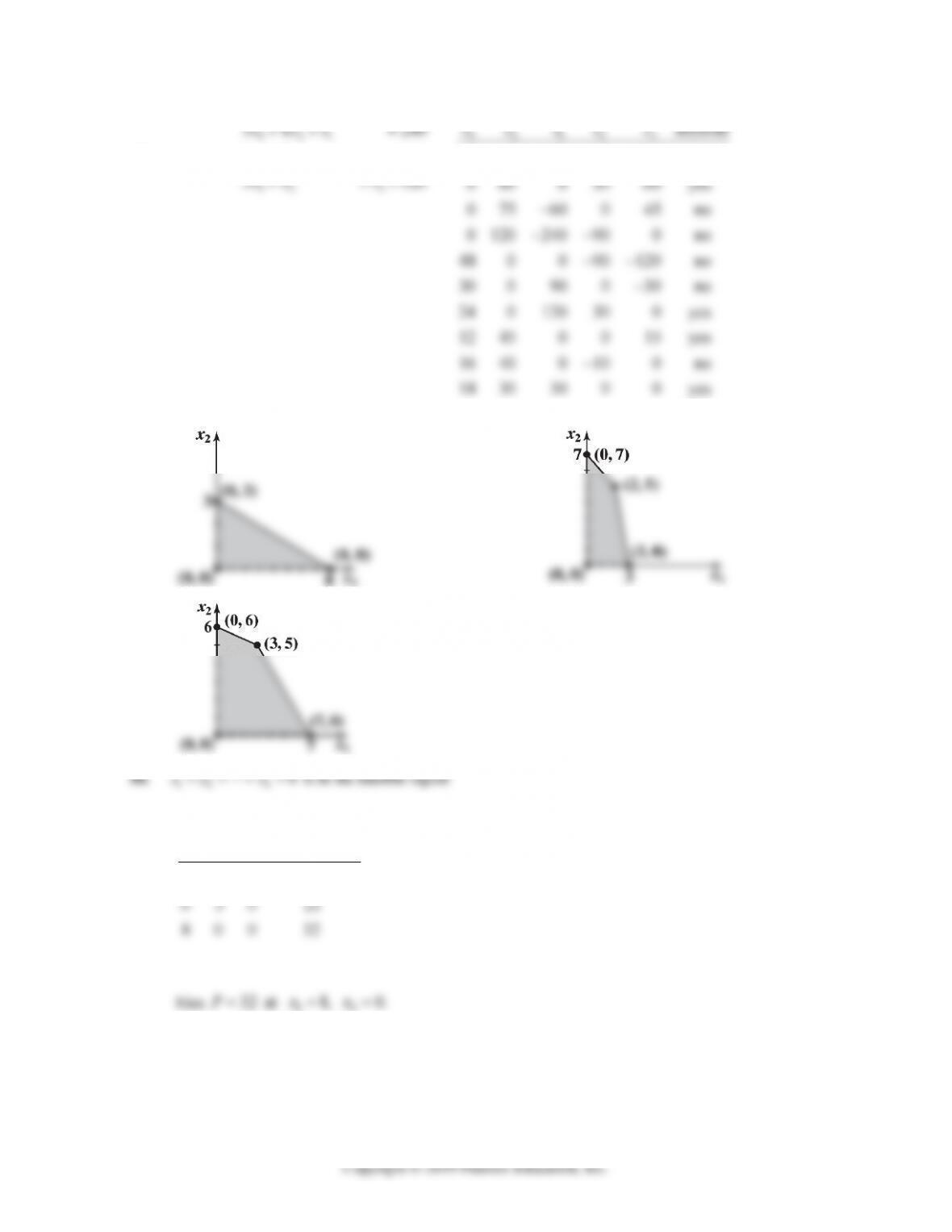
50.
52.
54.
58. The feasible region is bounded.
60. 121 1 2
47
0024 0
x
xsP x x
6-4 CHAPTER 6: SIMPLEX METHOD
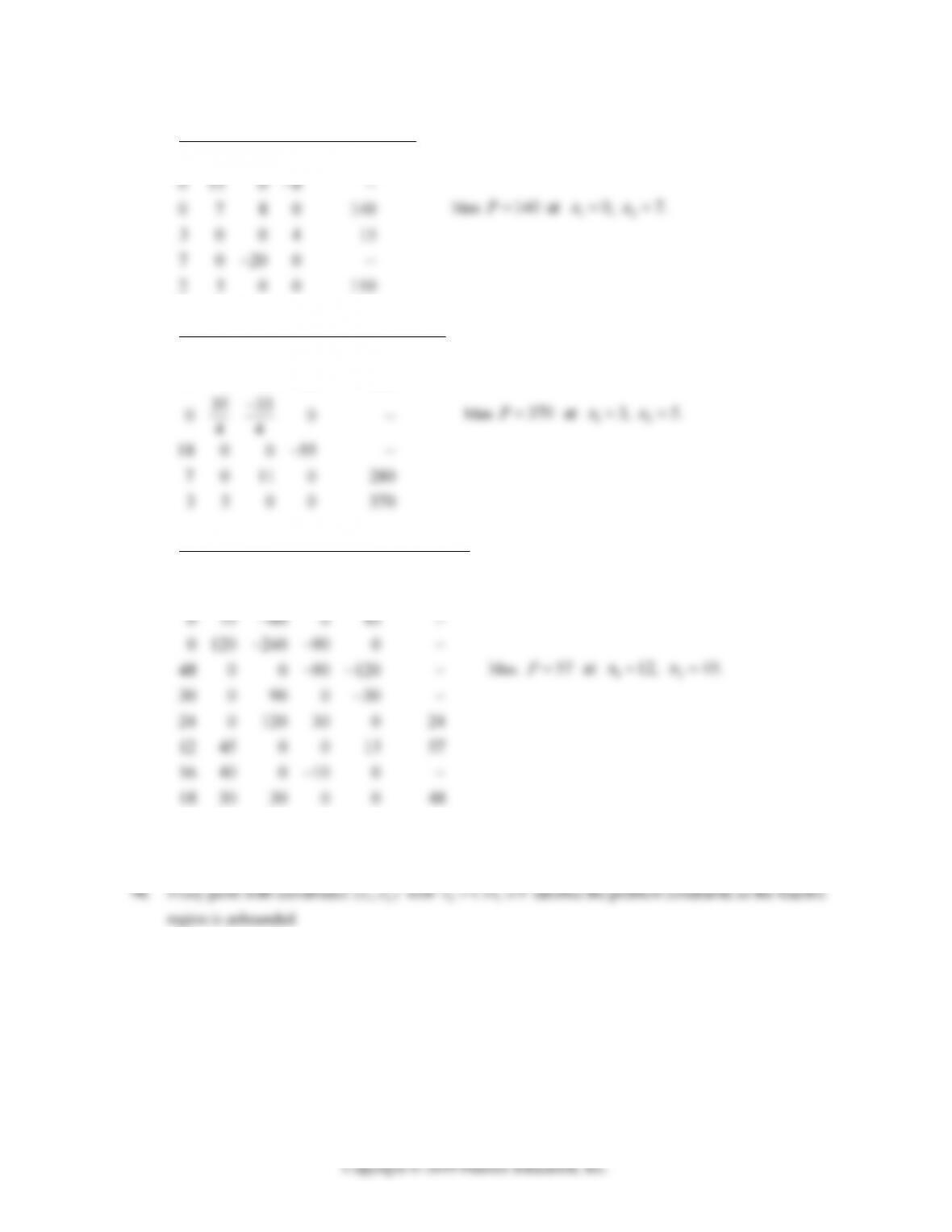
62. 1212 1 2
520
00157 0
x
xssPx x
64. 1212 1 2
40 50
0 0 18 35 0
0 6 0 11 300
x
xssPx x
66. 12 12 3 12
0 0 240 150 120 0
0 60 0 30 60 60
x
xss sPxx
68. Every point with coordinates 11
( , 0), where 0xx, satisfies the problem constrain so the feasible region is
unbounded.
EXERCISE 6-2 6-5
72. If 12
(, )
x
x is a point in the feasible region, then, adding the problem constraints, 04x from which it
follows that 05.x Thus, the feasible region is bounded. The corner points are (0,0), (0, 2), (5, 4) and
(3,0).
1212 1 2
15 12
00106 0
x
xssP x x
74. 11 5
11! 11! 462
C
EXERCISE 6-2
2. Given the simplex tableau:
which corresponds to the system of equations:
121
42 10
xx s
x1x2s1s2P
14–20010
023 1025
(A) The basic variables are x1, s2, and P, and the nonbasic variables are x2 and s1.
(B) The corresponding basic feasible solution is found by setting the nonbasic variables equal to 0 in
system (I). This yields:
4. Given the simplex tableau:
which corresponds to the system of equations:
2312
245
xxss
x1x2x3s1s2s3P
02–11400 5
6-6 CHAPTER 6: SIMPLEX METHOD
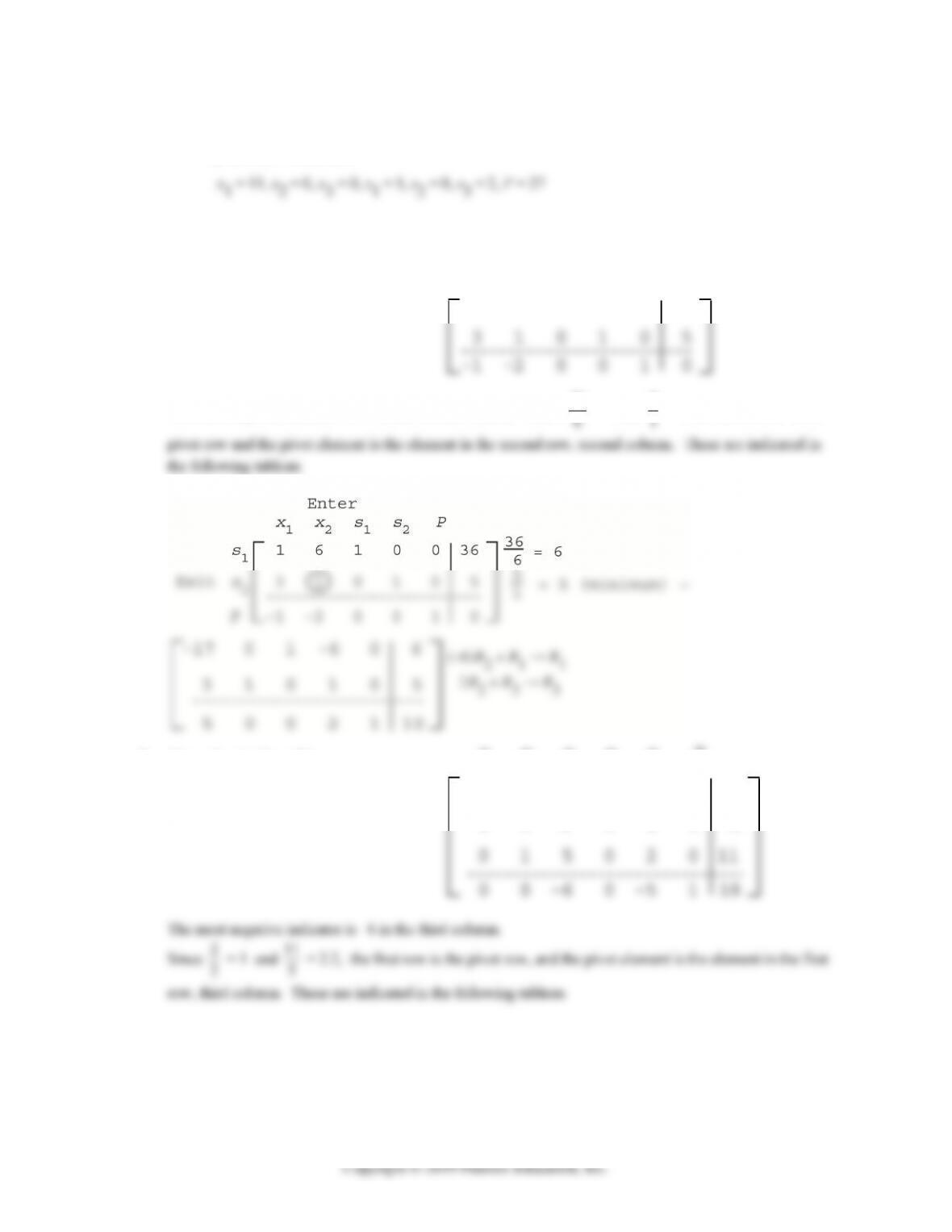
(B) The corresponding basic feasible solution is found by setting the nonbasic variables equal to 0 in
system (I). This yields:
(C) An additional pivot is required, since the last row of the tableau has a negative indicator, the –5 in
the second column.
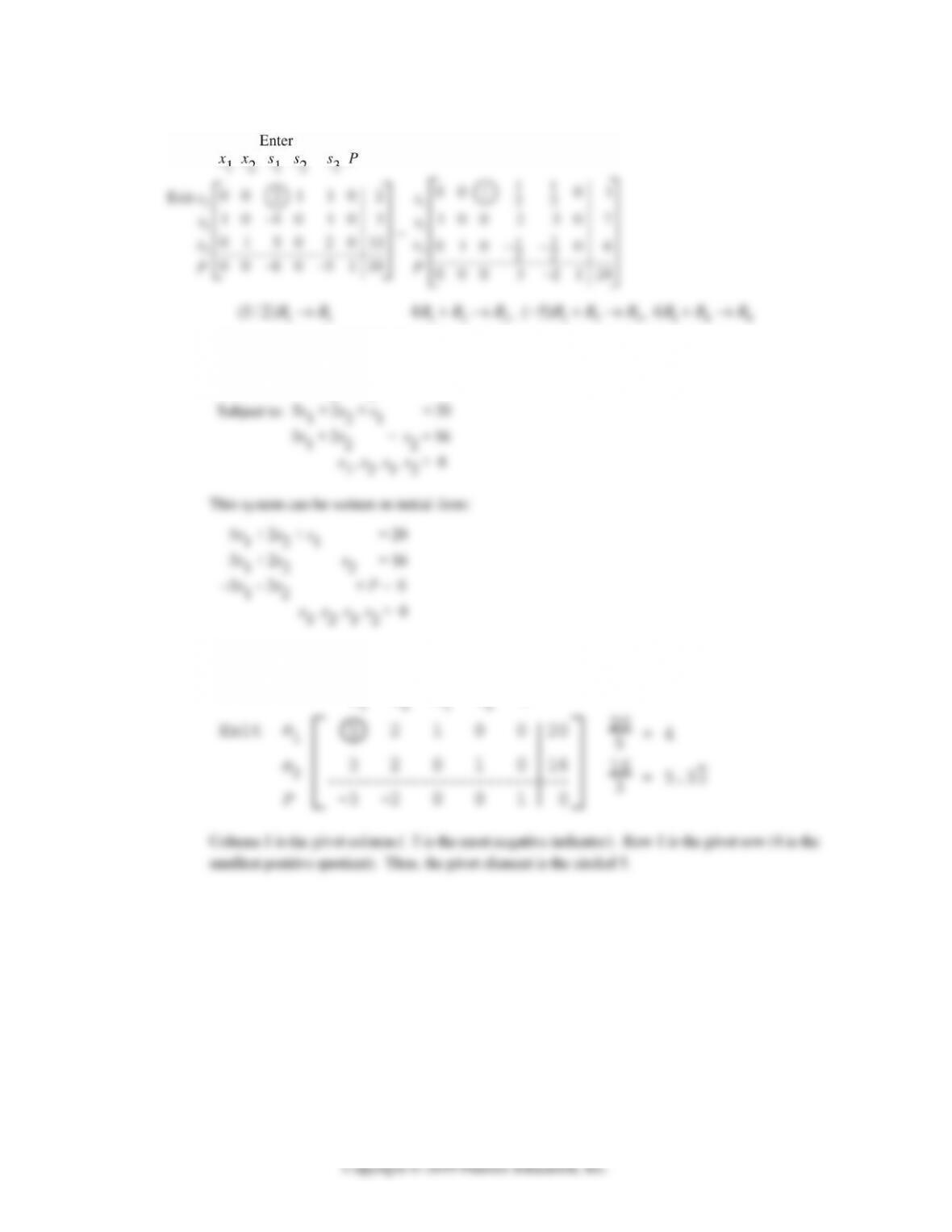
6. Given the simplex tableau: x1x2s1s2P
1610036
The most negative indicator is –2 in the second column. Since 36
8. Given the simplex tableau:
x
1
x
2
s
1
s
2
s
3
P
0021102
10–40103
EXERCISE 6-2 6-7
10. (A) Introduce slack variables s1 and s2 to obtain:
Maximize P = 3x1 + 2x2
(B) The simplex tableau for this problem is:
x1x2s1s2P
20
Enter
6-8 CHAPTER 6: SIMPLEX METHOD
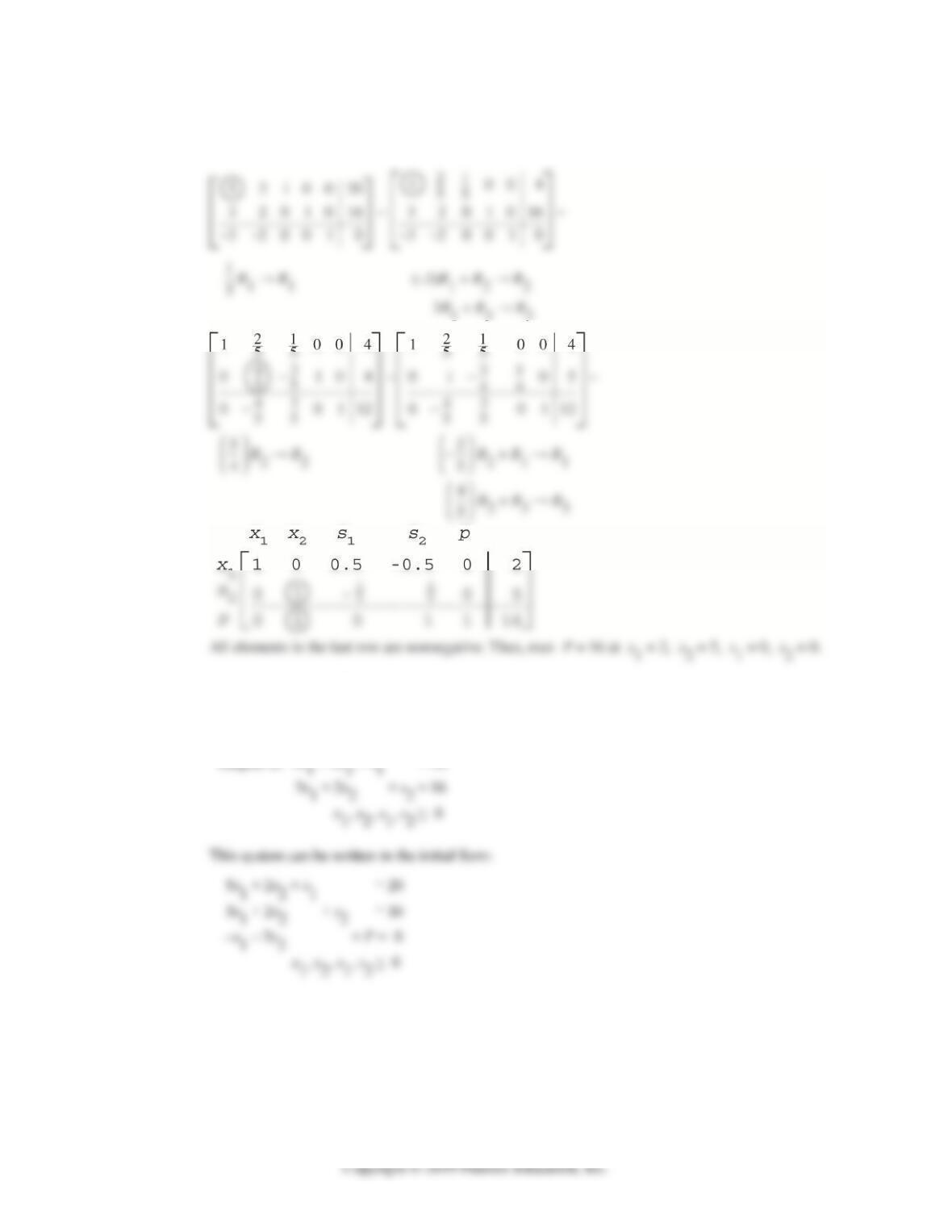
(C) We use the simplex method as outlined above. The pivot elements
are circled.
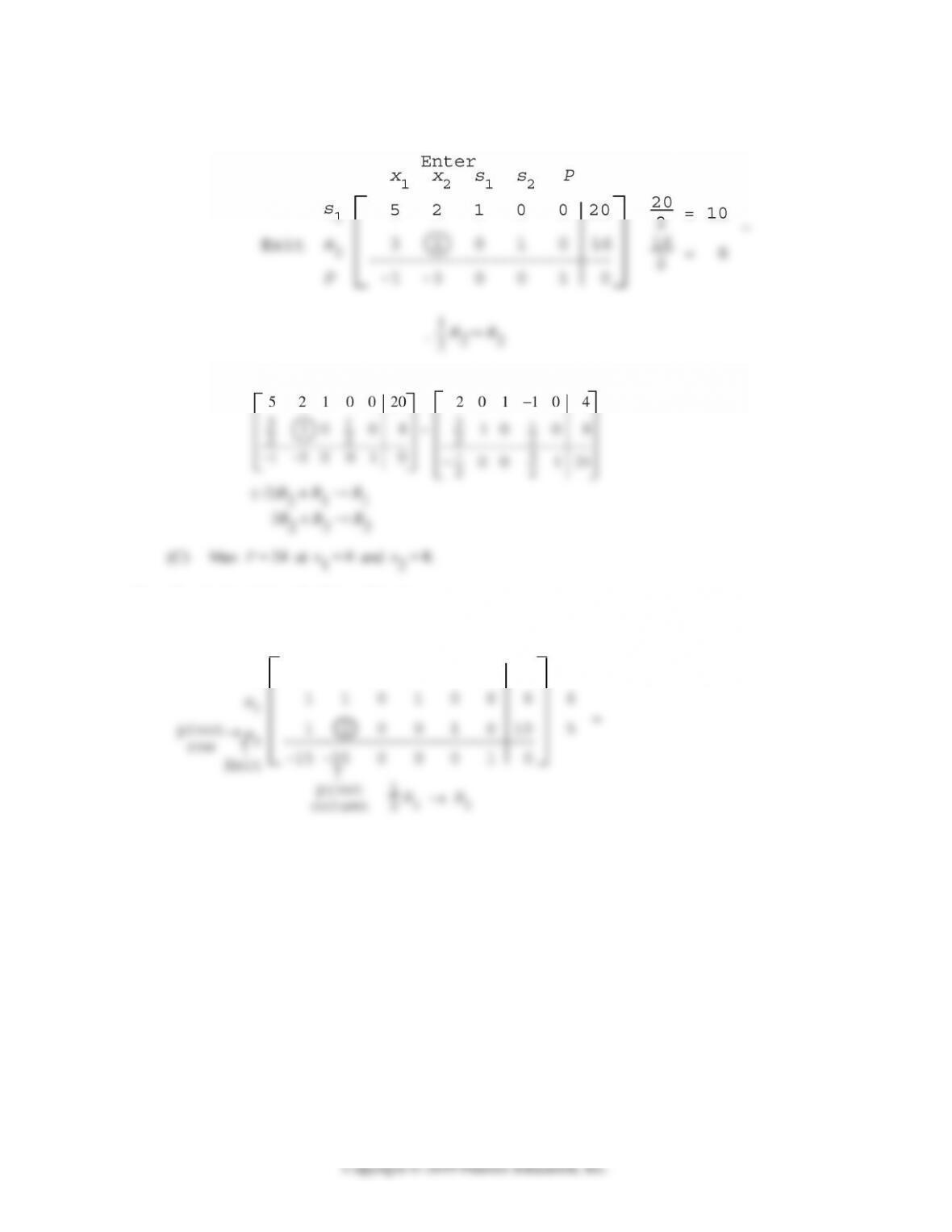
12. (A) Introduce slack variables s1 and s2 to obtain:
Maximize P = x1 + 3x2
Subject to: 5x1 + 2x2 + s1 = 20
EXERCISE 6-2 6-9
(B) The simplex tableau for this problem is:
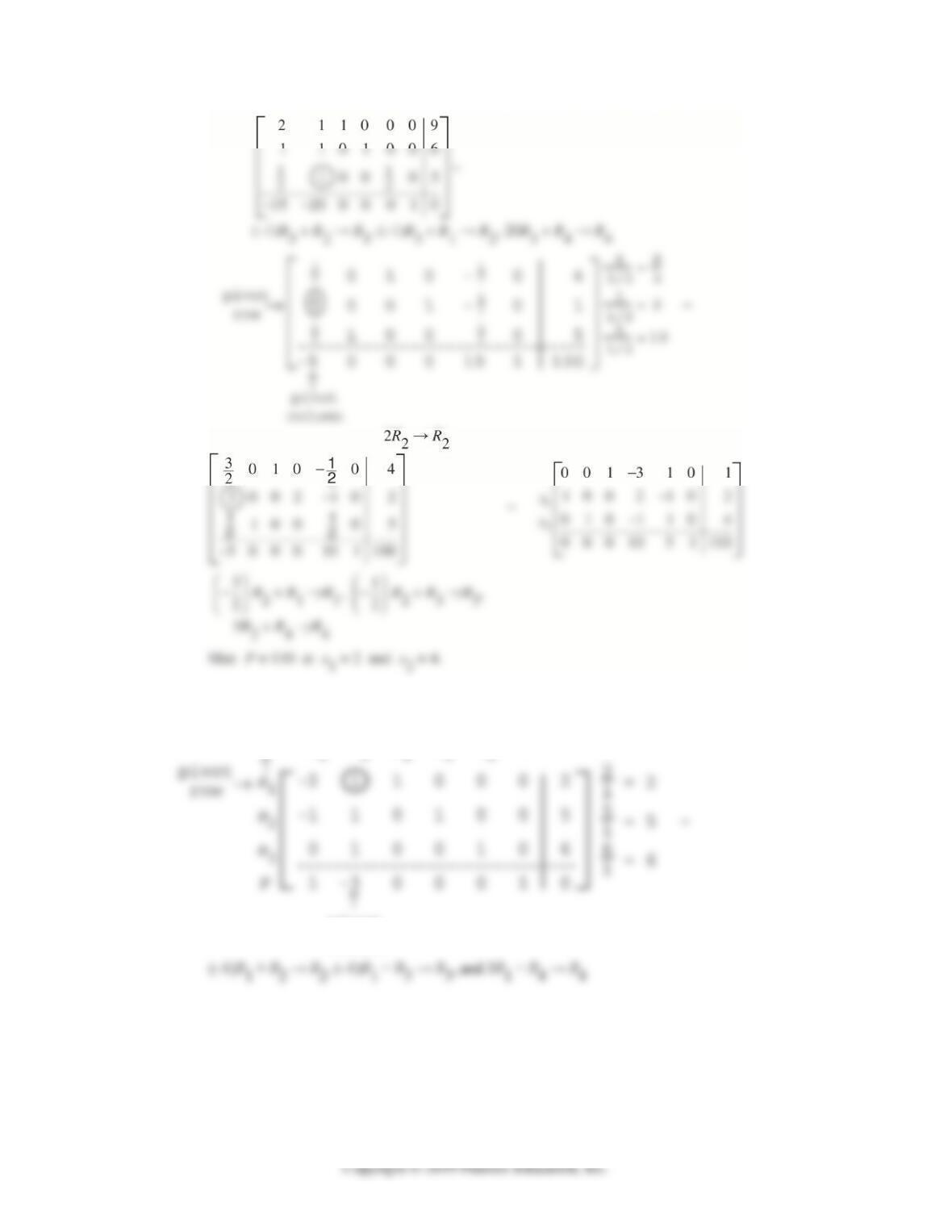
14. The simplex tableau for this problem is:
x1x2s1s2s3P
211000 9
Enter
s1
9
6-10 CHAPTER 6: SIMPLEX METHOD
Copyright © 2019 Pearson Education, Inc.
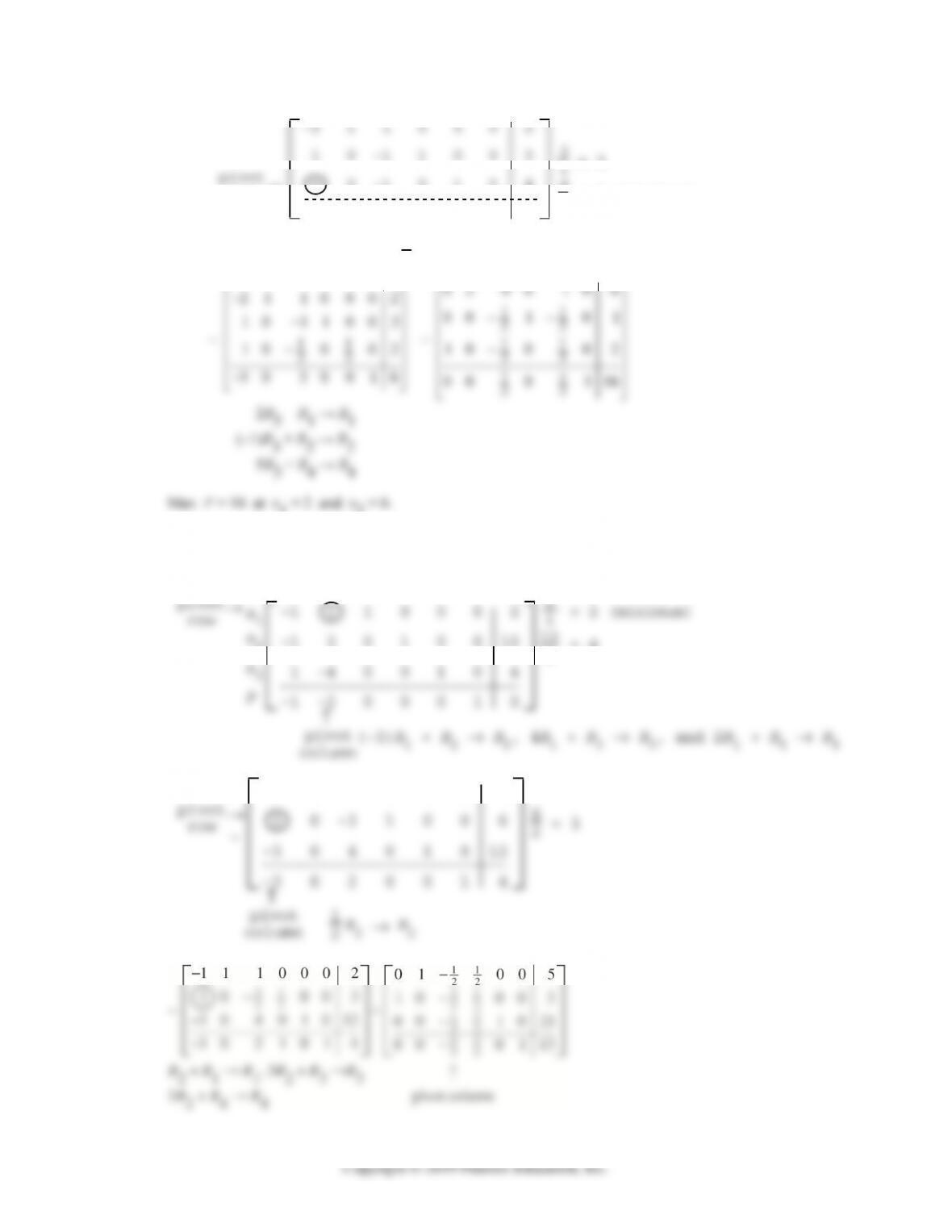
16. The simplex tableau for the problem is:
x1x2s1s2s3P
Enter
Exit
EXERCISE 6-2 6-11
Copyright © 2019 Pearson Education, Inc.
pivot
row
20–10104
–5 030016
4
2 = 2 (minimum)
pivot
column
1
2R3 R3
21 10 002
10 11 003
02 00 10 6
11
00 1 0 1
22
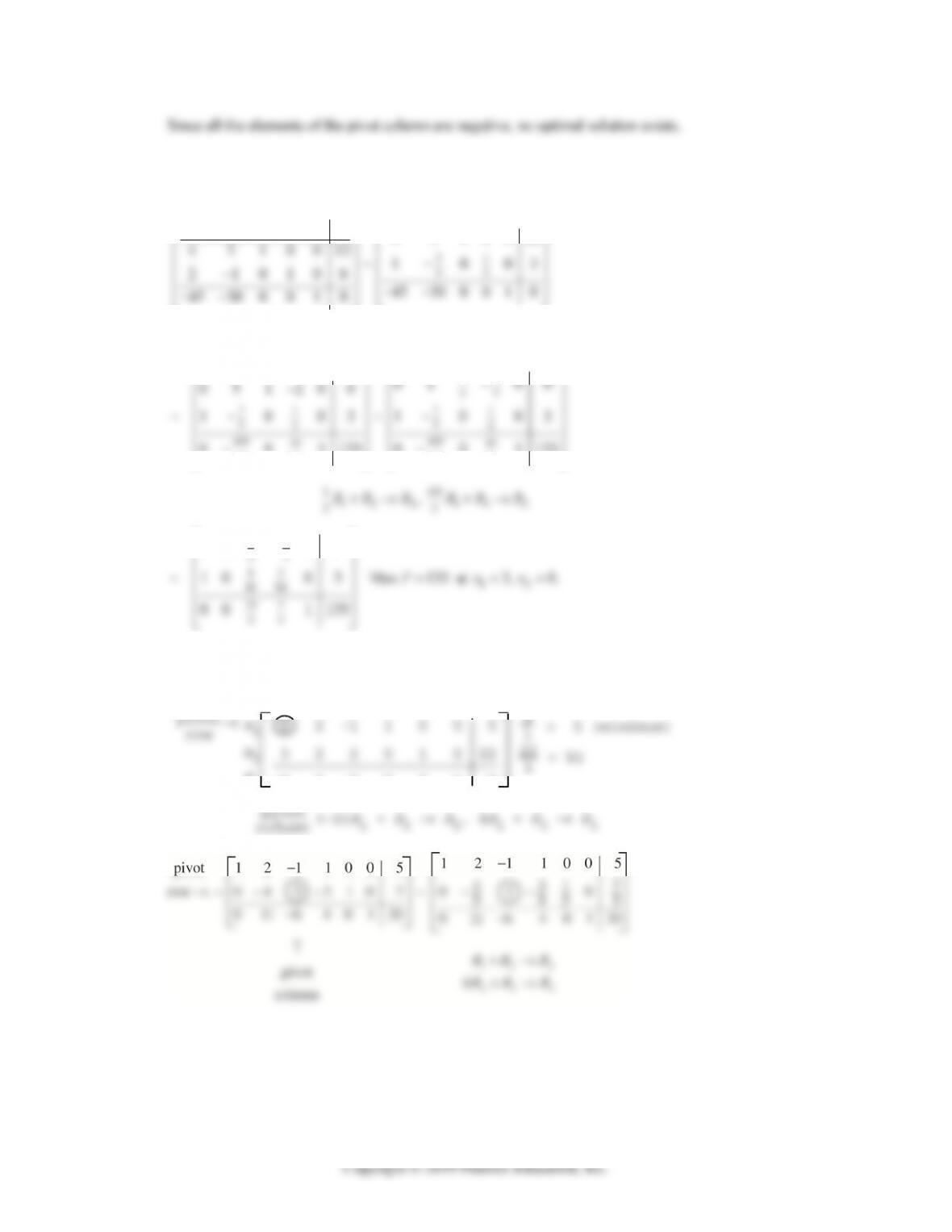
18. The simplex tableau for this problem is:
x
1
x
2
s
1
s
2
s
3
P
pivot
column
2
–1110002
–30401012
–3020014
pivot
pivot
column
1
2R2 R2
6
6-12 CHAPTER 6: SIMPLEX METHOD
Copyright © 2019 Pearson Education, Inc.
Since all the elements of the pivot column are negative, no optimal solution exists.
20.The feasible region is unbounded, no optimal solution exists.
22.The simplex tableau for the problem is:
1212
4310012
xxssP
21 1 23 3
4,45RR R RR R
2
1
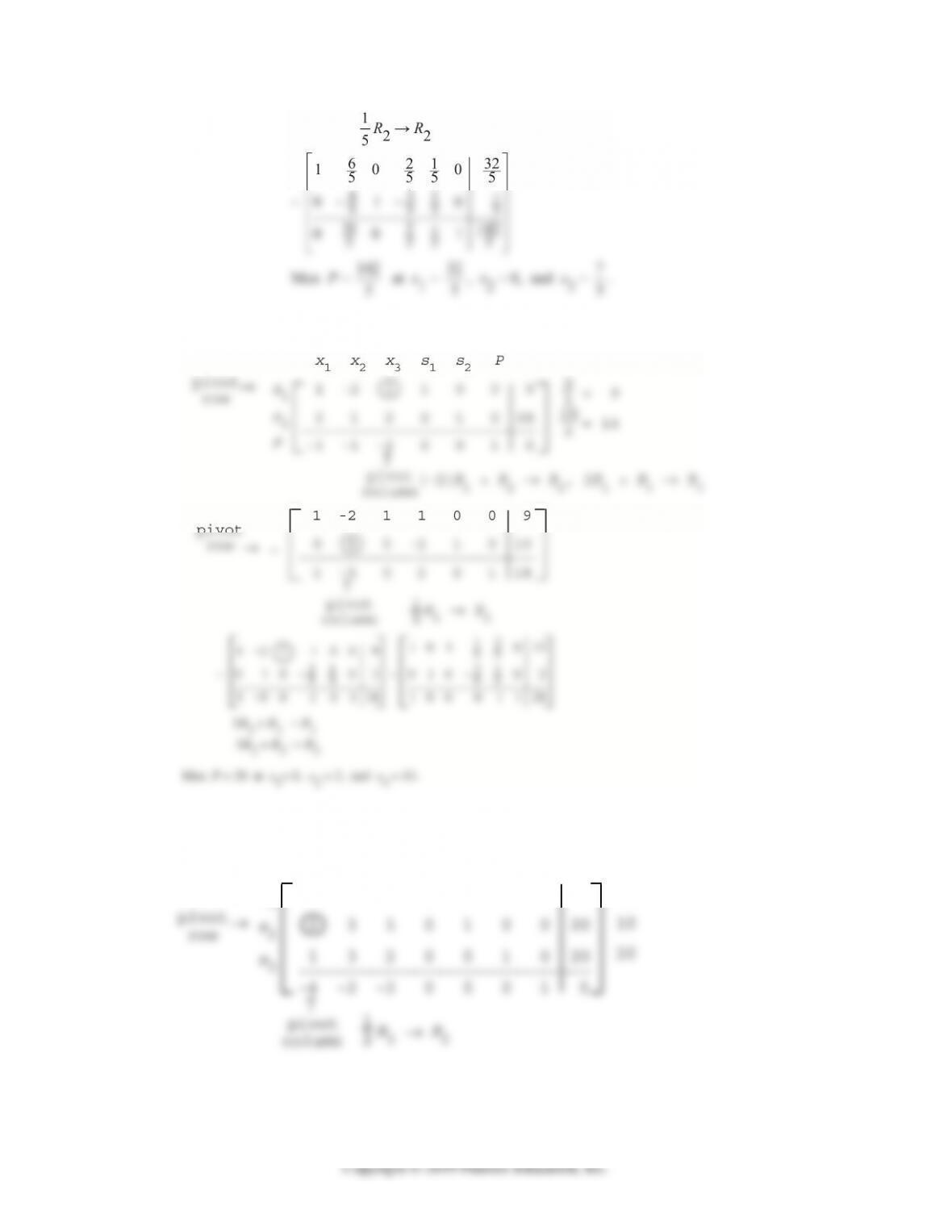
24.The simplex tableau for the problem is:
x1x2x3s1s2P
–4 3–20010
pivot
column
3= 15
(-3)R1+ R2 R2, 4R1 + R3 R3
P
EXERCISE 6-2 6-13
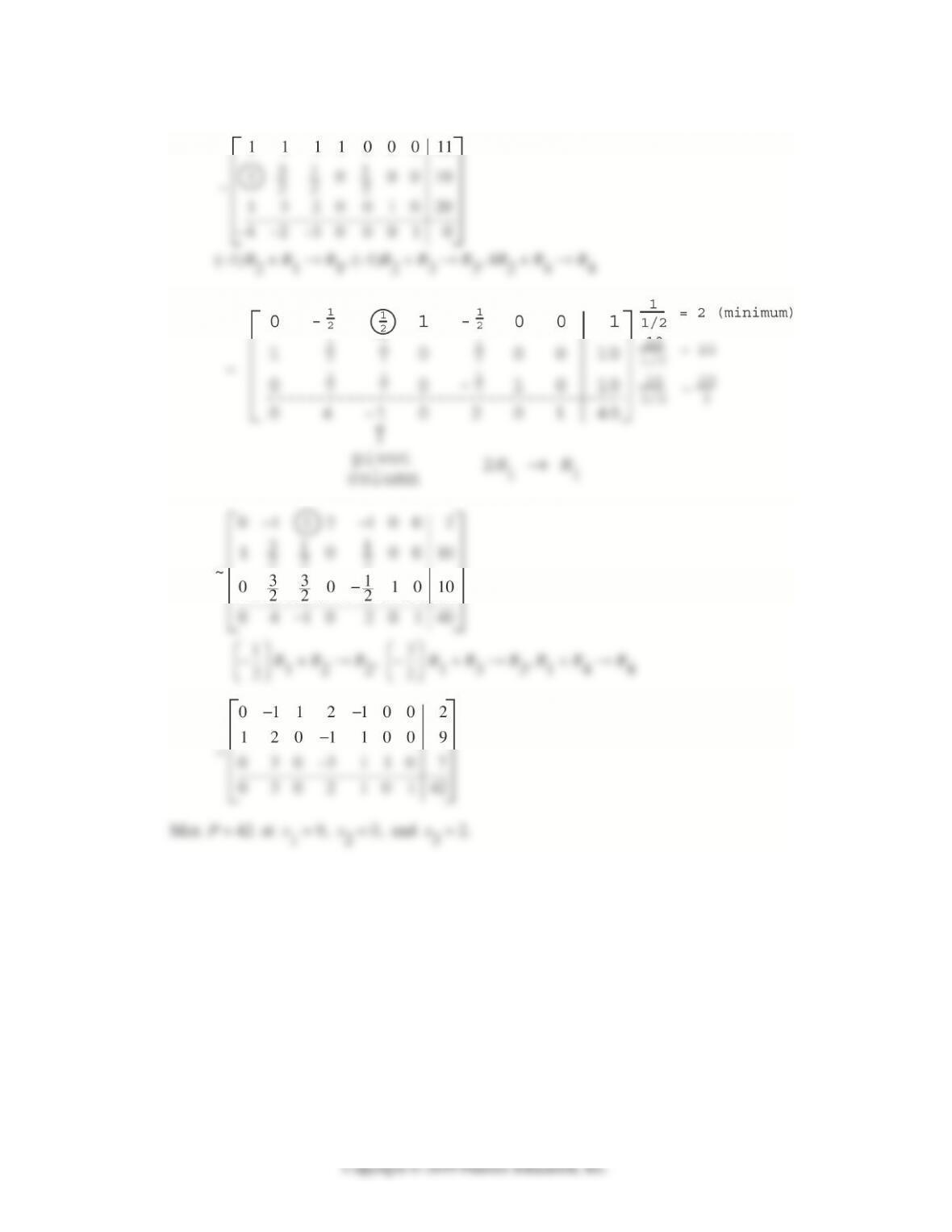
26. The simplex tableau for this problem is:
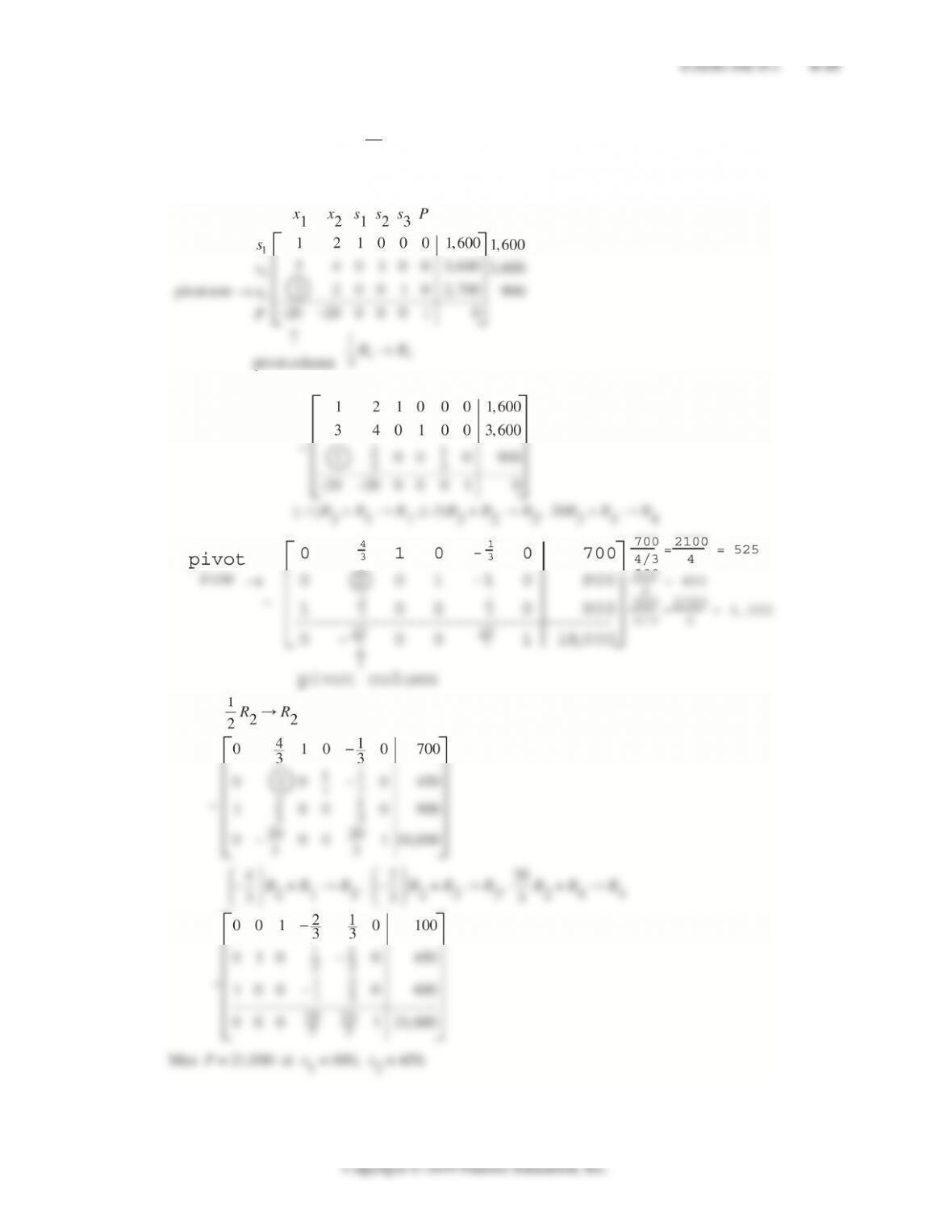
28. The simplex tableau for this problem is:
x1x2x3s1s2s3P
111100011
s1
11
6-14 CHAPTER 6: SIMPLEX METHOD
6-16 CHAPTER 6: SIMPLEX METHOD
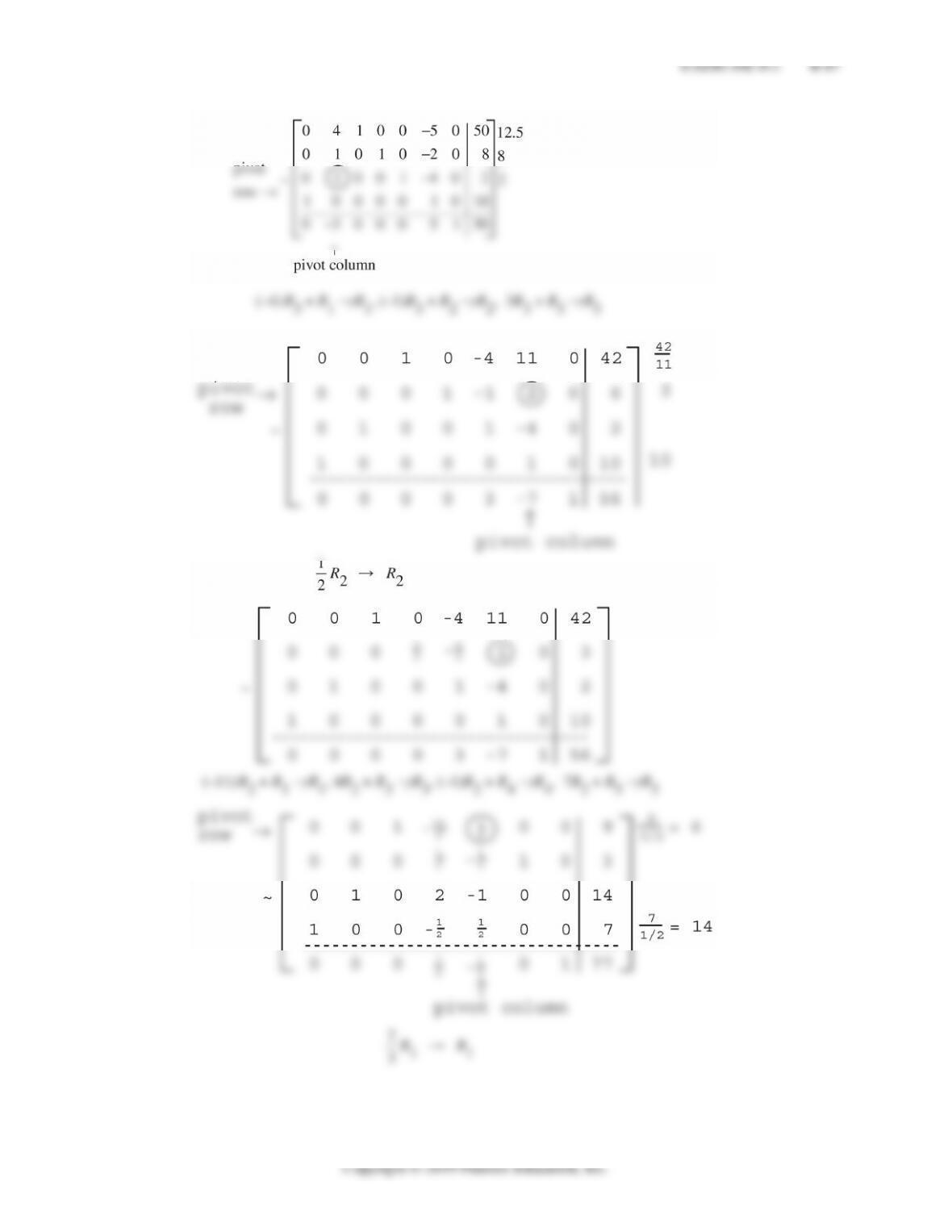
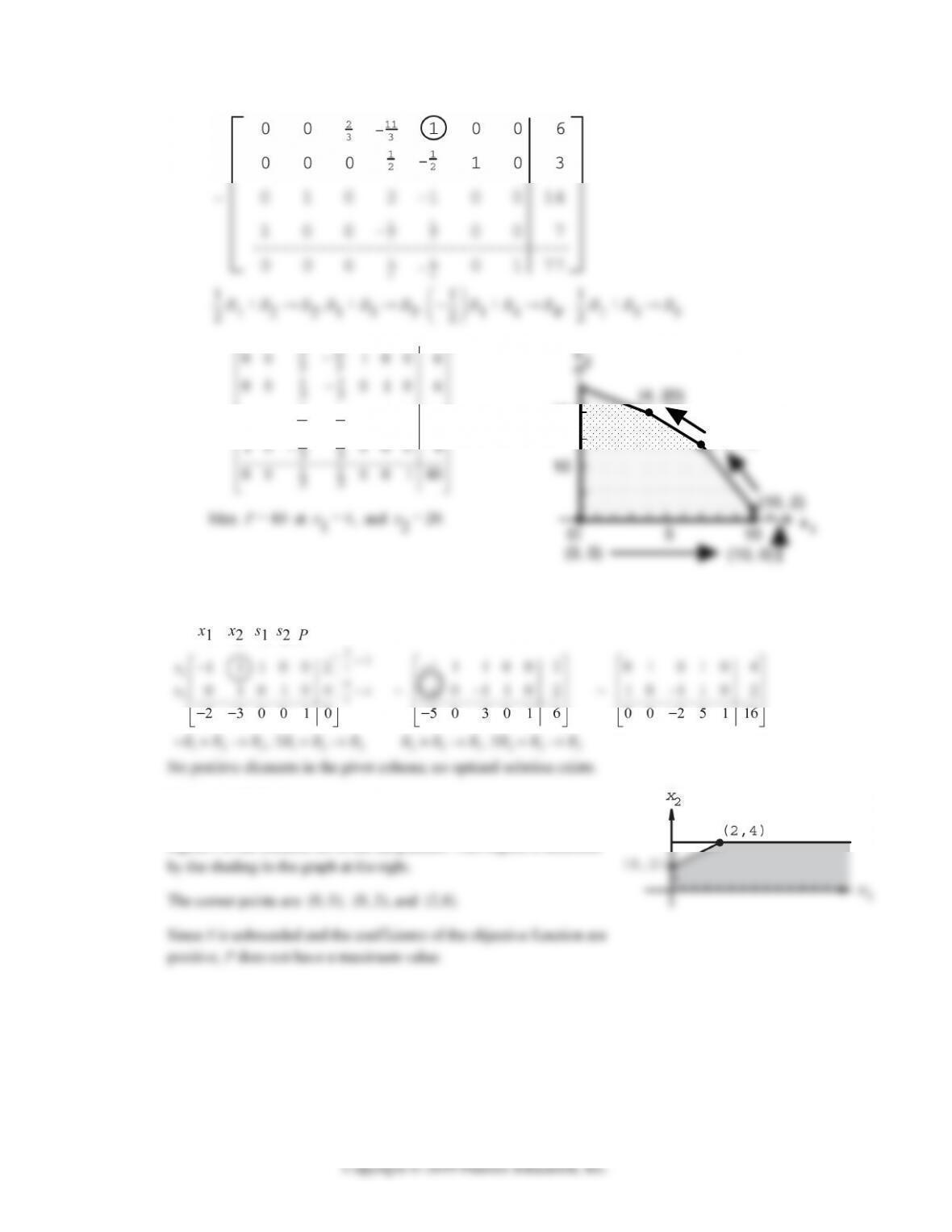
32. The simplex tableau for this problem is:
34. The simplex tableau for this problem is:
6-18 CHAPTER 6: SIMPLEX METHOD
Copyright © 2019 Pearson Education, Inc.
1
2
R1 + R2 → R2, R1 + R3 → R3,1
2
R1 + R4 → R4, 1
2
R1 + R5 → R5
~
5
00 010 6
33
2
01 00020
33
00 00180
33
Max P = 80 at x1 = 4, and x2 = 20.
5100
20
(10, 2)
(7, 14)
(4, 20)
1
x
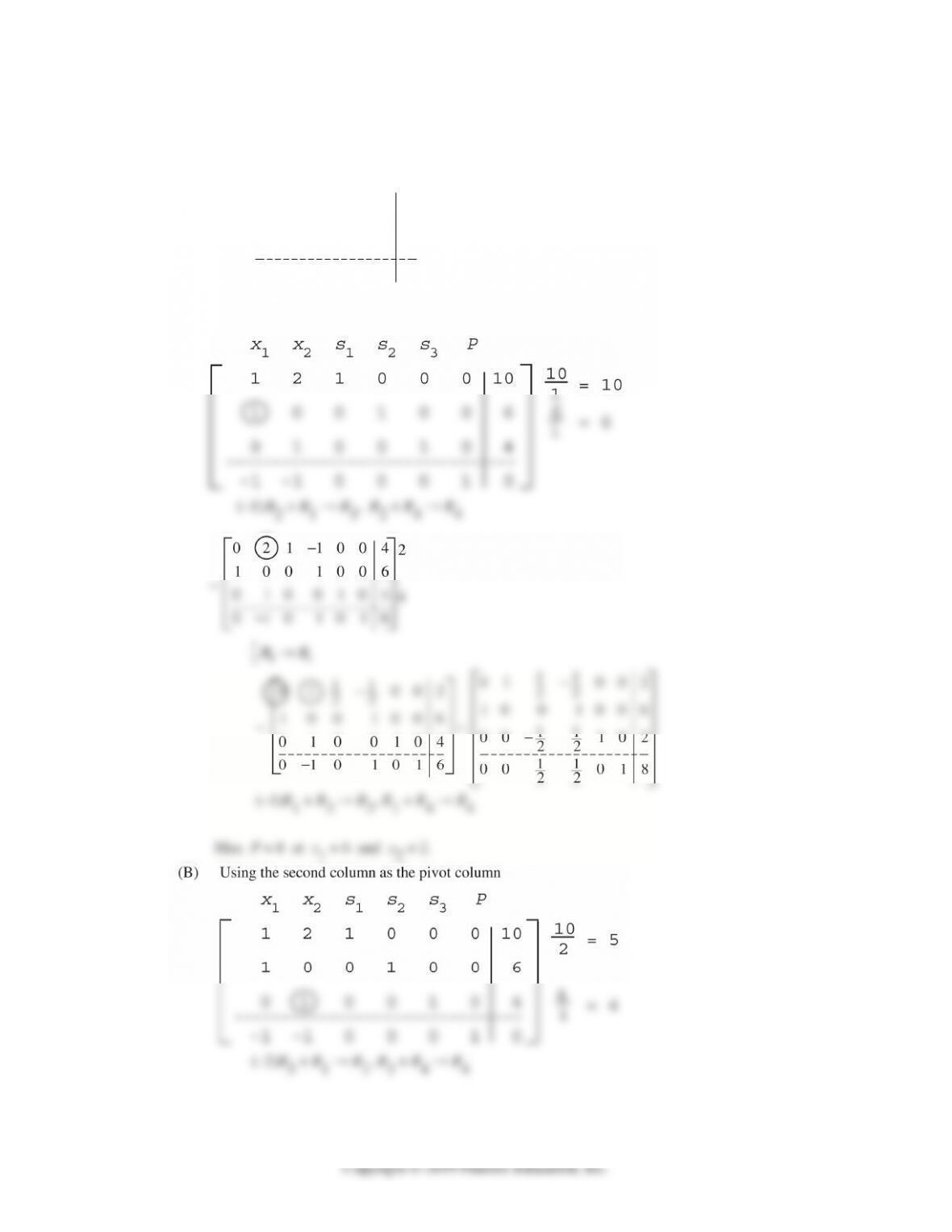
36. The simplex tableau for the problem is:
Geometric Method:
Graph the feasible region and find the corner points. The feasible
region S is the solution set of the inequalities. This region is indicated
EXERCISE 6-2 6-19
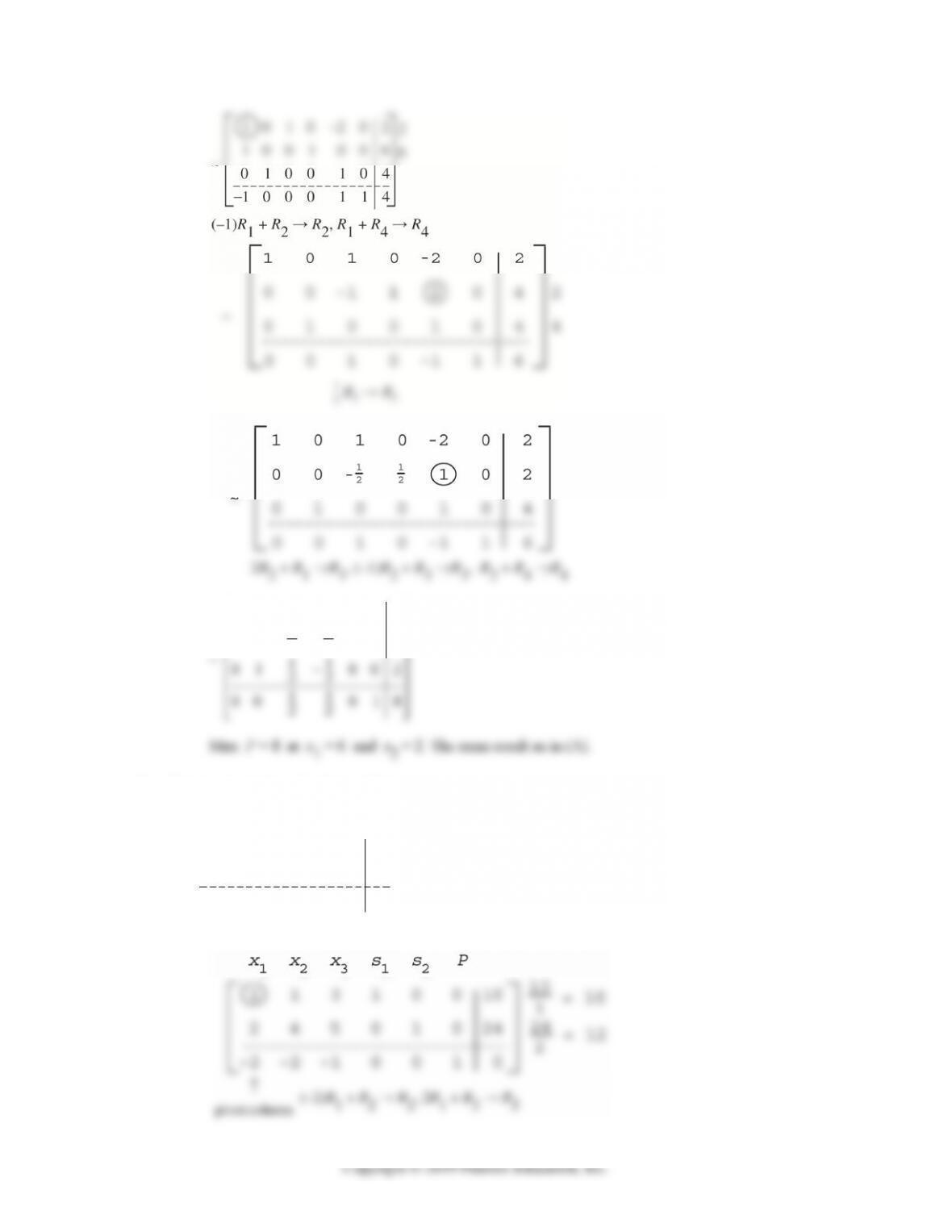
38. The simplex tableau for the problem is:
x1 x2 s1 s2 s3 P
1
2
3
12100010
1001006
0100104
1100010
s
s
s
P
(A) Solution using the first column as the pivot column
6-20 CHAPTER 6: SIMPLEX METHOD
Copyright © 2019 Pearson Education, Inc.
10 0 1006
11
00 102
22
40. The simplex tableau for this problem is:
x1 x2 x3 s1 s2 P
1
2
11310010
24501024
2210010
x
x
P
(A) Solution using the first column as the pivot column: