Hitt 13e Case Teaching Notes
Case 6: New Business Models for Heise Medien:
Heading for the Digital Transformation
Case Synopsis
The Heise Media Group, a family-owned company, dates back to 1949. In its early days, the
company specialized in telephone directories and other reference books, but it added
magazines to its product offerings in 1977. Today, third-generation Ansgar Heise is still a top-
level executive, and Dr. Alfons Schräder is the general manager. Under their guidance, the
company has diversified into both fiction and nonfiction publications in print and digital.
For the past several decades, publishing industry experts have been predicting the demise of
print media, and in fact, statistics show decreases in magazine subscriptions and advertising.
Although print isn’t obsolete yet, publishers like Heise have had to develop new strategies for
attracting younger customers who are accustomed to doing everything—including accessing
content—online. One of the debates in the industry, however, is how to monetize the content
that is delivered digitally. In an age when most content is free, will consumers be willing to pay
Learning Objectives
• Explain the importance of analyzing and understanding the firm’s external environment.
(Chapter 2)
• Identify the five competitive forces and explain how they determine an industry’s
profitability potential. (Chapter 2)
• Describe how strategic actions and tactical actions drive competitive rivalry between
firms. (Chapter 5)
• Discuss factors affecting the likelihood a firm will take actions to attack its competitors.
(Chapter 5)
• Explain factors affecting the likelihood a firm will respond to actions its competitors
take. (Chapter 5)
Strategic Issues and Suggested Discussion Questions & Answers
1. Using the five forces model, conduct an analysis of the magazine publishing industry in
Germany. Based on your analysis, how would you characterize the potential for profit
in this industry?
The threat of new entrants in the German publishing industry is very high, especially now as
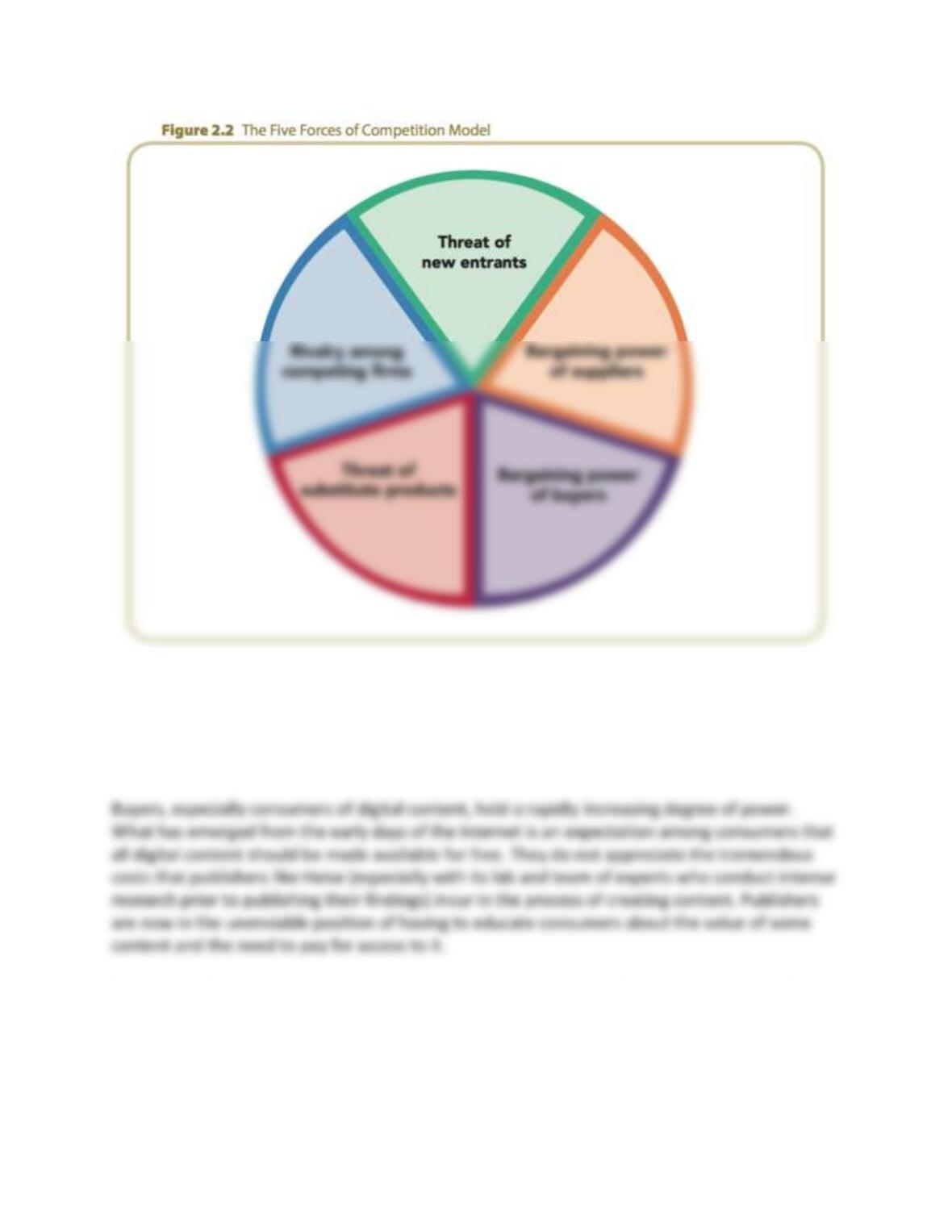
While suppliers related to the digital publishing side of the business hold little sway, suppliers
for the traditional print side of the business possess a great deal of power. As the demand for
printing declines, resources such as paper suppliers and printers become more scarce, and
there are no product substitutes available. Thus, these suppliers can demand higher prices for
their products and services.
The threat of substitute products is an interesting aspect of the publishing industry overall.
Some see digital content as a substitute, and in some cases a superior alternative, to print
products. After all, digital content can be enhanced and experienced or consumed in a variety
of ways, all at the customer’s convenience and according to individual preferences. However,
others feel there is no substitute for the printed word or for the experience of holding an object
2. Evaluate Heise’s relationship with its customers through the lens of reach, richness,
and affiliation. What recommendations do you have for improving this relationship,
especially in light of disruptions in the industry?
Heise’s magazine c’t is its premier product. At one time, this magazine and several other related
publications gave Heise tremendous reach, enabling the firm to connect with countless
3. Which business-level strategy has Heise been using? Do you think it should continue to
pursue this strategy or change to a different one? Explain your answer.
Heise Medien, or the Heise Media Group, has clearly been using a differentiation strategy
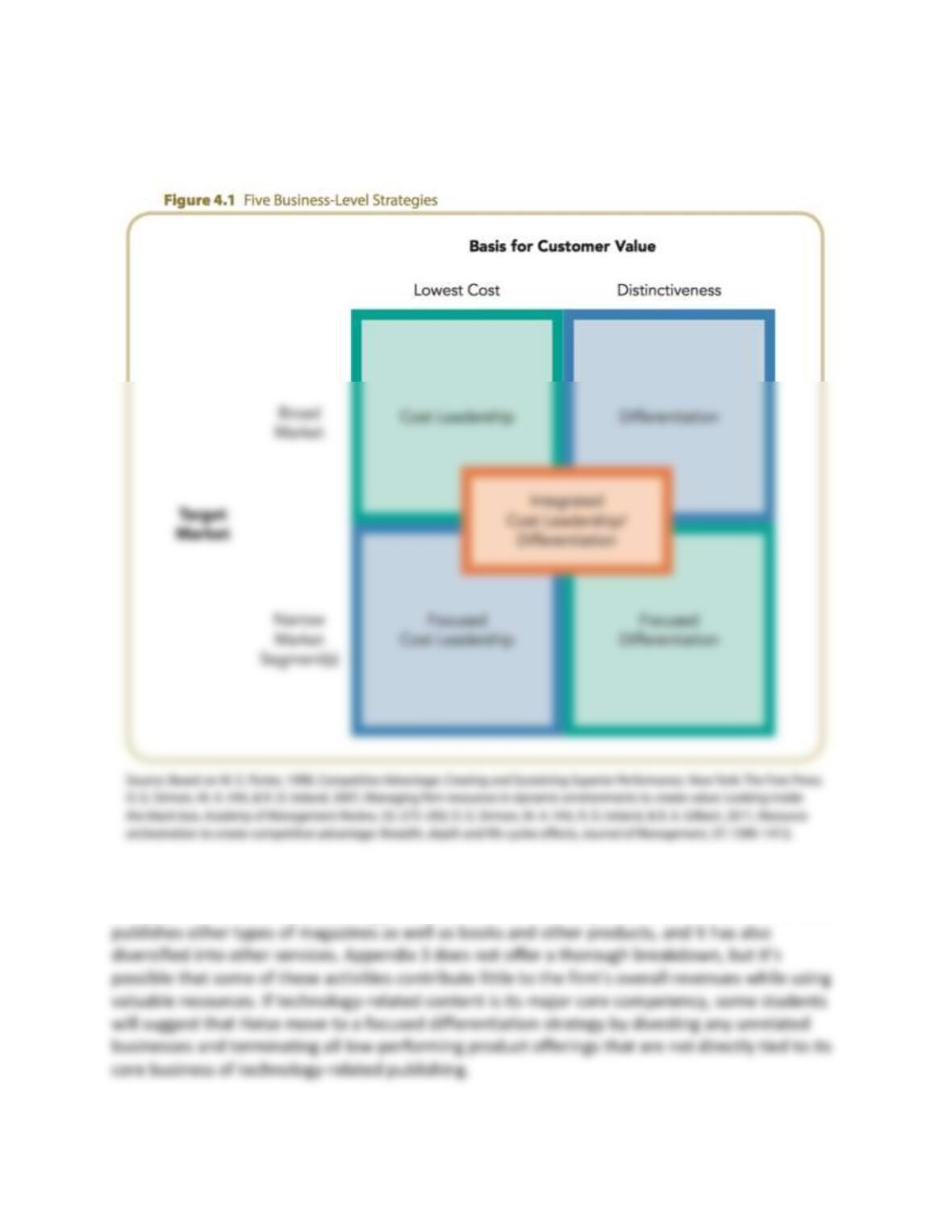
These qualities have distinguished Heise from competitors and allowed the company to charge
a premium for its print and digital products.
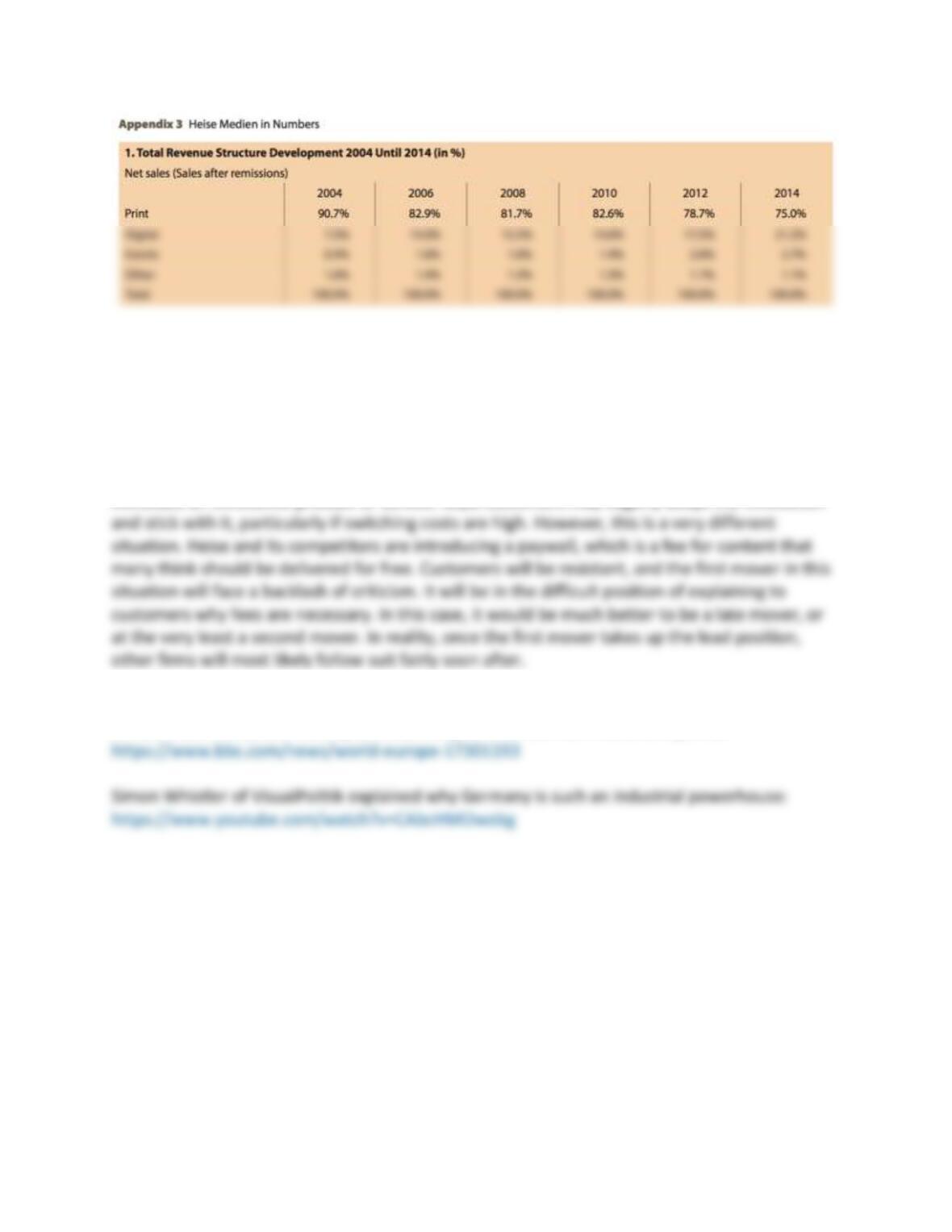
Although the differentiation strategy has been working well for the firm, uncertainties and
disruptions in the industry may suggest that it’s time for a change. The case indicates that Heise
4. Assume that you are a top-level manager at Heise, and you are considering setting up
paywalls to charge customers to view your digital content. None of your competitors
have done this yet, but you’re sure they are considering the same tactic. Do you think
it would be best to be a first mover, second mover, or late mover in this situation?
Explain your answer.
Students should understand that first-mover benefits only appear when a firm is the first to
introduce an innovative product or service. Loyal customers may eagerly adopt the innovation
Additional Resources
In November 2018, BBC News published this profile of German media companies: