Chapter 5
5 – 3
Chapter 5
Utility and Game Theory
Case Problem: Utility, Game Theory, and Product Line Extension Decisions
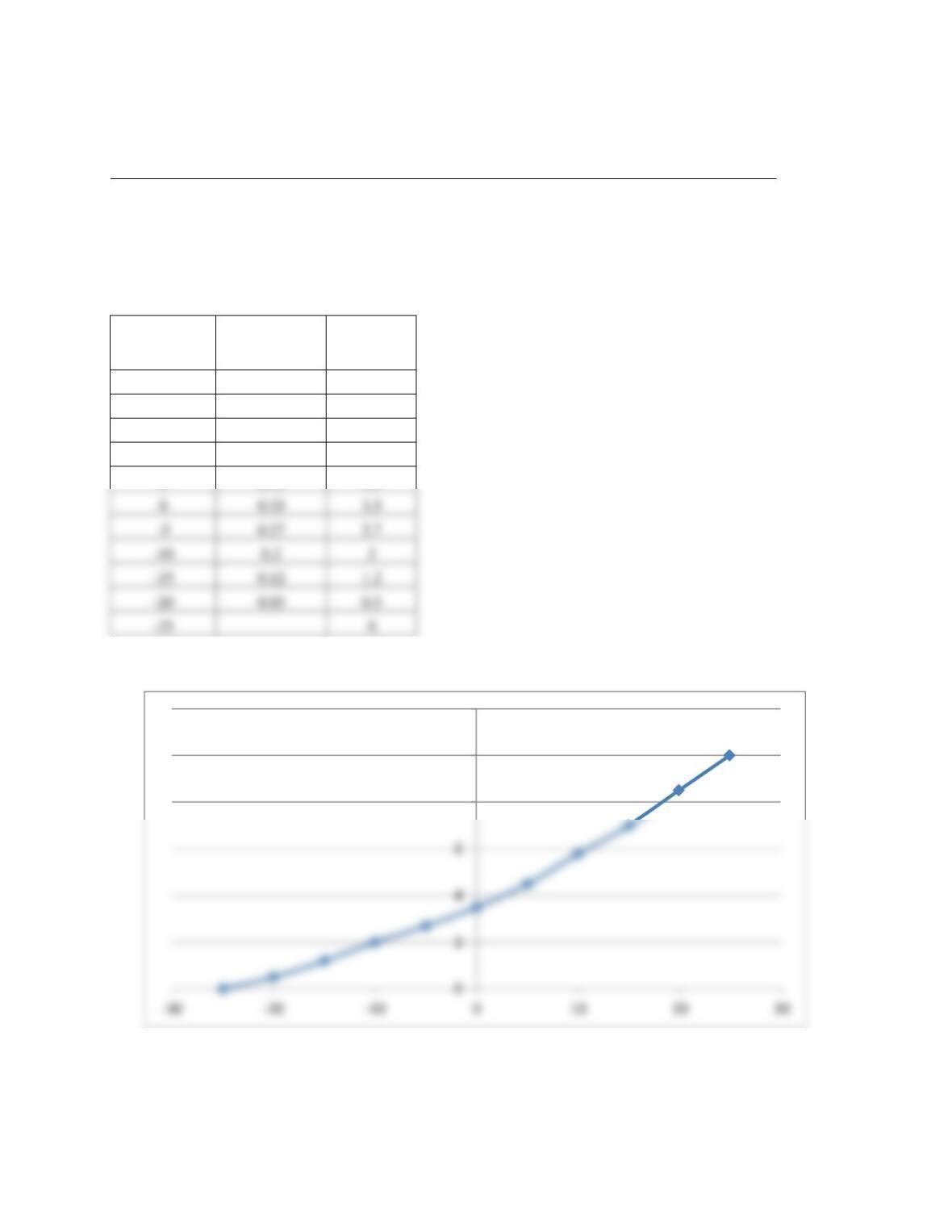
The utility values and a graph of the utility function for ABC, Inc. appear below.
Indifference Values and Utility Values for Jack Webster of ABC, Inc.
Market
Share
Gain/Loss
Indiff Value
Utility
25
10
20
0.85
8.5
15
0.7
7
10
0.58
5.8
0.45
4.5
0.35
3.5
-5
0.27
2.7
0.2
2
0.12
1.2
0.05
0.5
0
Utility Function for Jack Webster of ABC, Inc.
The graph shows an increasing marginal return for market share. Therefore, the utility function shows that Jack
Webster is a risk taker.
8
10
12
Chapter 5
5 –
2
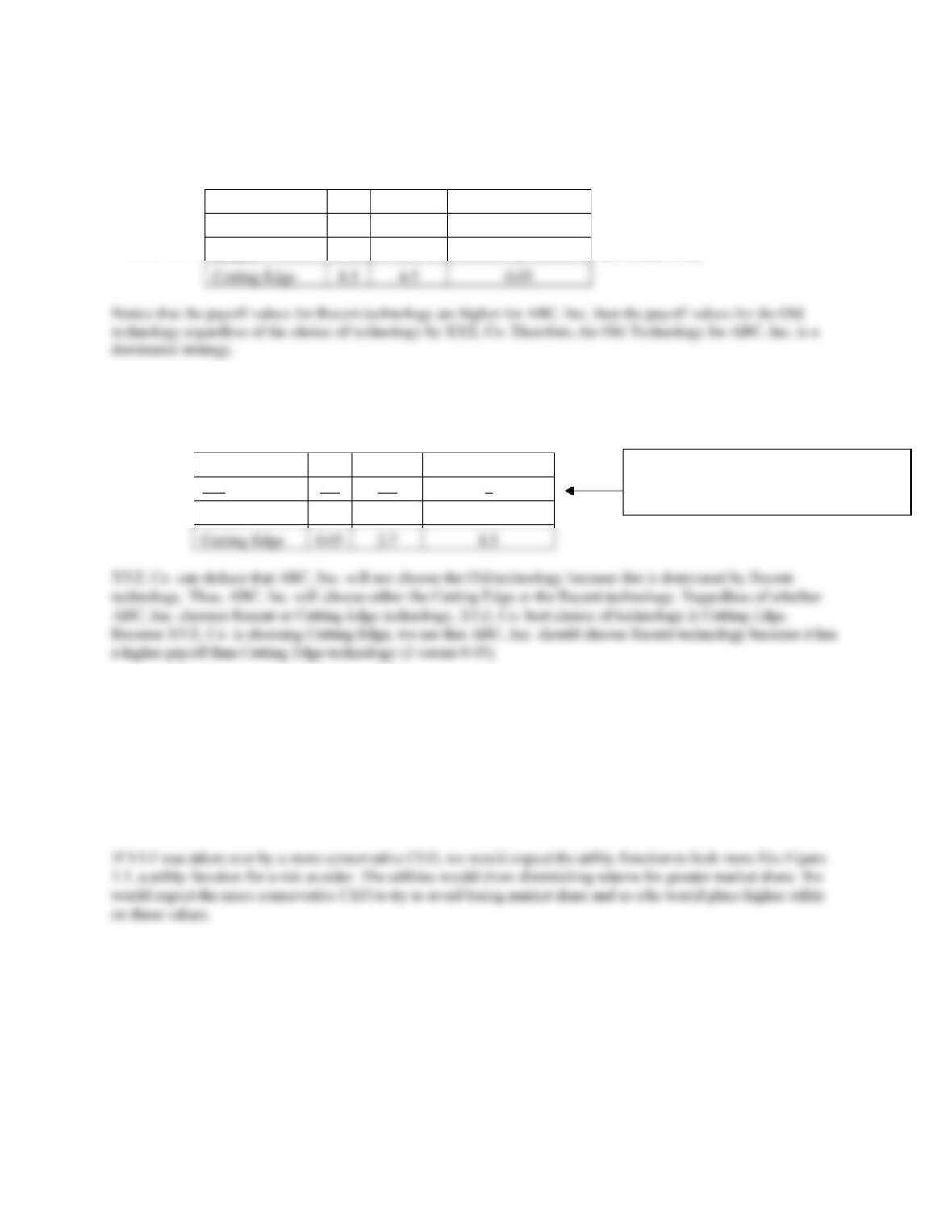
The Payoff Table for ABC, Inc. is shown below:
Payoff Table for ABC, Inc.
XYZ, Co.
Old
Recent
Cutting Edge
ABC, Inc.
Old
4.5
2
1.2
Recent
5.8
(dominates Old)
Cutting Edge
8.5
It’s important to note here that the payoff table for XYZ, Co. is different than just simply taking the negative of the
payoff values for ABC, Inc. The Payoff Table (considering utilities) for XYZ, Co. is shown below:
Payoff Table for XYZ, Co.
XYZ, Co.
Old
Recent
Cutting Edge
ABC, Inc.
Old
2.7
5.8
7
Recent
2
4.5
5.8
Cutting Edge
0.05
2.7
8.5
No this is not a zero-sum game. Because of the utility function considerations, even though the market share gained
by ABC, Inc. is equal to the market share lost by XYZ, Co., the non-linear utility function means that the payoff
matrices are not symmetric (the payoff values for XYZ, Co. are not the negative of the payoff values for ABC, Inc.).
*Note: Because this is not a zero-sum game, we cannot use the simple analysis techniques presented in the chapter
using minimax and maximin strategies. However, the basic thought process is still correct. Notice also that had we
started this analysis from XYZ, Co.’s point–of-view we could have seen that Cutting Edge technology dominates
both Recent and Old technologies, but our final answer would not change.
XYZ, Co. can deduce that ABC, Inc. will
not choose Old technology because this is
a dominated strategy for ABC, Inc.
Markov Processes
5 – 3