Chapter 04 – Power and Influence
4-1
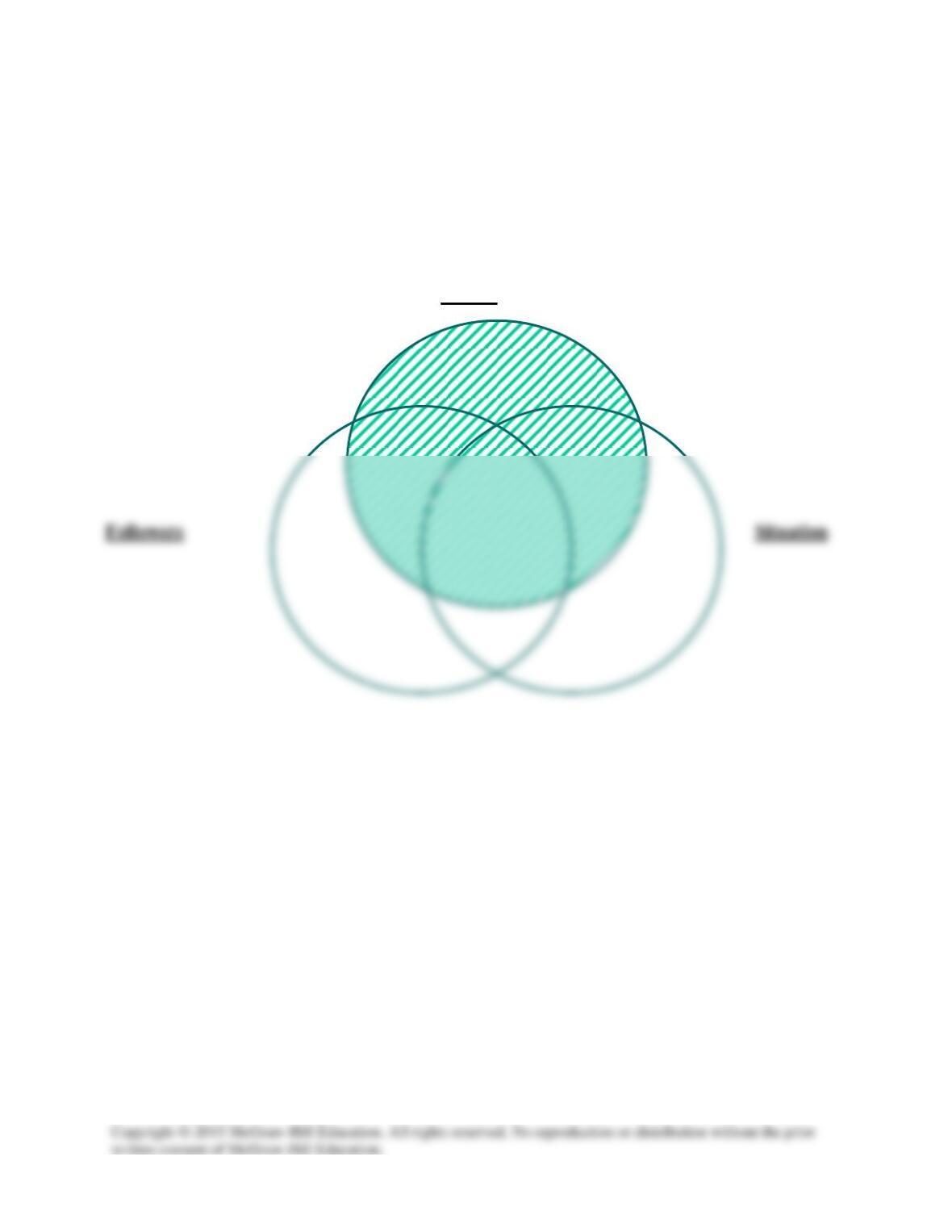
Followers
Situation
Leader
Part 2: Focus on the Leader
Chapter 4: Power and Influence
Chapter 04 – Power and Influence
4-2
Chapter 4 Outline
Power and Influence
Introduction
Some Important Distinctions
Power and Leadership
Sources of leader power
A taxonomy of social power
Influence Tactics
Types of influence tactics
Summary
Chapter 04 – Power and Influence
4-3
Key Learning Points
Introduction
This chapter is the beginning of Part 2, Focus on the Leader, and it explores the phenomena of power
and influence. The chapter focuses on understanding the distinctions between power, influence, and
Some Important Distinctions
Power is the capacity or potential to exert influence; influence tactics are the behaviors used by one
person to modify the attitudes and behaviors of another; influence is the degree of change in a
person’s attitudes, values, or behaviors as a result of another’s influence tactics. Although all of these
concepts are routinely thought of as under the purview of the leader, this is only partially true. In
Power and Leadership
Power and leadership can be organized around two distinct areas: sources of leader power and
leader motives. Sources of Leader Power. Addressing the question where does a leader’s power
comes from provides two broad answers about the source of an individual’s power. On the one hand,
this source can be completely physical. By physical, we mean any of the following: the arrangement
of furniture in an office; who has an office with a door versus a cubicle; seating arrangements; the
clothes people wear (i.e., uniforms); presence of a crisis situation; and the displaying of symbols,
awards, or trophies. All of these physical attributes can convey a specific level of status or position
Chapter 04 – Power and Influence
4-4
impulsively exercise power merely to satisfy their own selfish needs will probably be ineffective in the
long term.
Influence Tactics
The actual behaviors used to influence others can be described by nine separate influence tactics (as
assessed by the Influence Behavior Questionnaire—IBQ). The effective use of these tactics requires
Brief Definitions of the Key Terms for Chapter 4
Power: The capacity to produce effects on others or the potential to influence others (and it is a
function of leader, follower, and situation).
Influence: Change in a target’s attitudes, values, beliefs, or behaviors as a result of influence
tactics.
Influence tactics: One person’s actual behavior designed to change another person’s attitudes,
beliefs, values, or behavior (followers can also wield influence).
Legitimate power: Formal or official authority that is based on one’s organizational role (i.e., the
boss can assign projects).
Reward power: Power that is derived from a person’s control over desired resources (i.e., giving
raises, bonuses, and promotions).
Coercive power: Opposite of reward power, this source of power is linked to influencing others
through the use of negative sanctions or the removal of positive events.
Chapter 04 – Power and Influence
4-5
Projective personality test: Generally, these tests (i.e., TAT) consist of an ambiguous set of
pictures where subjects make up a story about the picture and from the story different “need
strengths” are interpreted.
Motivation to manage: Like need for power, it is defined in terms of 6 composites: 1)
maintaining good relationships with authority figures, 2) wanting to compete for recognition and
advancement, 3) being active and assertive, 4) wanting to exercise influence, 5) being visibly
different from followers, and 6) being willing to do routine admin tasks.
Chapter 04 – Power and Influence
4-6
Overview of the Learning Resources for Chapter 4
Exercise 4-1: Influencing Others. This 20-minute exercise begins with students writing down an
Exercise 4-2: Power Charades. In this 20-minute exercise, students are broken into five groups,
Exercise 4-3: Television Commercials and Influence Tactics. Student teams are given a
homework assignment of recording two television commercials to share with the rest of the
Exercise 4-4: Too Hot. This 45-minute exercise begins with students forming three smaller
Exercise 4-5: Bases of Power Inventory. This self-assessment provides students with feedback
about their own bases of power and can be given as a homework assignment. The assessment
takes about 10 minutes to complete and score, and students can also spend 15 minutes in class
discussing the results.
Chapter 04 – Power and Influence
4-7
Sample Lesson Plans for Chapter 4
Lesson 1: 60 minutes
Pre-work: Exercise 4-5, Bases of Power Inventory and Exercise 4-3, Television Commercials and
Influence Tactics. Prior to class, students will need to accomplish two tasks: 1) individual students
complete and score the inventory as well as review the improvement strategies for each base of power and
2) assigned groups prepare their videotapes and presentation of the selected television commercials.
Lesson Plan: The overall goal for this lesson is for students to develop a more robust understanding of
the bases of power and how they relate to the influence tactics.
• Discuss French and Raven’s five bases of power as well as the implications for low and high
scores on each of the scales (i.e., what does it mean to be high on some and low on others). It
Lesson 2: 75 minutes
Pre-work: Prior to the lesson, students will need to be assigned to small groups (4-6 students, time for
this lesson plan is based on 4 group presentations), and instructed to find a clip from a current movie or
television show to serve as the basis for this assignment about power and influence (The Apprentice or
MTV’s Real World Road Rules are two examples of shows that would work well for this lesson). Students
will need to bring a 3–5 minute video clip of their selected show as well as a 10-minute presentation of
their analysis of the selected clip. The presentation should address the following areas:
• What are the main bases of power being used?
Chapter 04 – Power and Influence
4-8
Lesson Plan: This lesson plan uses the LFS model as the basis for analyzing a leadership situation
focused on power, influence, and influence tactics—students will need to integrate previous lesson
Chapter 04 – Power and Influence
Minicase, “The Prime Minister’s Powerful Better Half,” Sample Answers
Question 1: We have described power as the capacity to cause change and influence as the
degree of actual change in a target’s behaviors. Ho Ching’s power as a leader has been
recognized by many, but would you describe Ho Ching as an influential leader? Why?
Based on the small amount of information presented in the case, it is difficult to make a
definitive statement for this question. One might reason that her selection and ranking on two
Question 2: Based on the excerpt from Ho Ching’s speech, what types of tactics does she
use to influence the behavior of others?
Generally, the tactics used in the speech would fall in to the “soft” tactics category. In particular,
two tactics emerge clearly:
Question 3: Ho Ching has been named one of the most powerful leaders in Asia. What are
her major sources of power?
• Expert: She is well educated as an engineer and has experience in industry.
4-10
Chapter 04 – Power and Influence
4-11
Chapter 4 Exercises & Instructions
Exercise 4-1
Exercise Title: Influencing Others
Purpose: Allows participants to review their own use of power and influence with personal examples.
Summary: On 5” x 8” cards have students anonymously write a brief story of a time when they
successfully influenced another person or group of people. Upon completion, shuffle and redistribute the
– Which sources of power (or influence tactics) are used most frequently? Why might this be the
case? What conclusions can be drawn from this? Just because they are the most often used bases and
tactics, does this necessarily mean they are the most effective? How would we measure effectiveness?
Chapter 04 – Power and Influence
Exercise 4-2
Exercise Title: Power Charades
Purpose: To demonstrate how the five bases of power are manifested in an individual’s behavior.
Summary: Write the five bases of power on the blackboard or put them on an overhead. Break students
into five groups, and give each group a 3 x 5 card which lists one of the five bases of power. Give the
This exercise takes approximately 20 minutes.
Chapter 04 – Power and Influence
4-13
Exercise 4-3
Exercise Title: Television Commercials and Influence Tactics
Purpose: To demonstrate how often influence tactics are used in everyday life.
Summary: Break students into small groups of 4–6 people, and task each group with recording two
television commercials to bring back to class. The students should play each commercial one at a time
This exercise will take 20–60 minutes to complete, depending on the size of the class.
Chapter 04 – Power and Influence
4-14
Exercise 4-4
Exercise Title: Too Hot
Purpose: To demonstrate power, influence, and negotiation strategies.
Summary: Before conducting this exercise, it is important to divide the class into three groups. Have one
group bring at least two layers of extra warm clothes and have another bring shorts and a tee-shirt or a
light top to class. Have the groups get into their summer clothes or put on their extra warm clothes, and
Such a Square, Inc., or SASI, is a paper container manufacturing company that makes packaging
materials and boxes for many Fortune 500 companies, particularly those companies with transportation
and freight subsidiaries. SASI‘s Alabama plant consists of three units, the Production Unit, the
Administration and Support Unit, and the Sales Unit. The plant was built in the 1950s and the units are
located in three different areas within the plant. Because the plant was built over 40 years ago, the plant’s
heating and cooling is centrally controlled. In other words, the temperature in the plant can increase or
decrease, but the temperature will be constant throughout the plant. Management has yet to install zone
heating and cooling, and recent cost reduction initiatives will make it impossible to do so for at least the
next three years.
To make matters worse, this summer has been particularly sweltering, with average daily temperatures
and humidity indices hovering around 100. People are frustrated, exhausted, and irritated because of the
Chapter 04 – Power and Influence
workers milling around the plant in the afternoon, and many of them were quite angry. The production
workers did not want to go outside and work in the heat, especially if they were only going to come back
to a plant that felt like an oven. Some administrative staff members were so cold that they were wearing