
CHAPTER 4
Workforce Focus
Teaching Notes
This chapter provides an overview of one of the most important sub-systems in TQ – Workforce
Focus – which is called the human resources area in many organizations. The workforce area
continues to undergo wrenching change as organizations try to recruit people who possess scarce
technical skills, improve their performance while still keeping them motivated, enhance
organizational quality and productivity, and downsize the organization to remain competitive and
profitable. Students may have had prior courses in management, organization behavior, or personnel
and human resources management, and may thus feel that they are experts in this area. You should
point out that companies that embrace the TQ philosophy are now adopting a unique workforce
focus. In some ways, this perspective “goes against the grain” of the traditional human resources
approaches, while taking advantage of much of the behavioral research that has never been well
implemented in business organizational practices.
The chapter also develops the important workforce management-related topic of employee
involvement (EI) and participative management. It covers the history of quality circles, employee
participation, and involvement for two reasons. 1) Students should know that the team concept,
Key objectives for this chapter include:
• To define Workforce as the term which refers to everyone who is actively involved in
accomplishing the work of an organization. This includes paid employees as well as
volunteers and contract employees, and includes all team leaders, supervisors, and managers
at all levels.
• To develop and reinforce the concept that the human resource in an organization is the only one
that competitors cannot copy. Students can be led to discover that employee satisfaction has a
strong correlation with customer satisfaction, so organizations must learn how to satisfy the

2
support high performance and workforce engagement; assessing engagement, satisfaction,
capability, and capacity needs; and using the results for improvement, recruitment, investment in
training and development, career progression, and succession planning for management and
other positions.
• To establish the differences between traditional workforce management practices, under theories
first developed by Frederick W. Taylor, that have tended to focus primarily on tasks and duties
of HR personnel, as opposed to quality–related individual and team development and
enhancement of employee involvement in problem-solving and decision-making activities.
• To build on the basic definition of workforce management: Human resource management
(called workforce management, here) consists of activities designed to provide for and
performance workplace and maintain an environment for quality excellence.
• To introduce the concept of Strategic human resource management, which is concerned
with the contributions HR strategies make to organizational effectiveness, and how these
contributions are accomplished.
• To define and explore high performance work, which refers to work approaches used to
systematically pursue ever-higher levels of overall organizational and human performance;
work design, a concept that refers to how employees are organized in formal and informal
units, such as departments and teams; and job design, a concept that refers to responsibilities
• To provide an understanding of the concept of workforce engagement which refers to the extent
of workforce commitment, both emotional and intellectual, to accomplishing the work, mission
and vision of the organization.
• To introduce leading concepts and practices including employee involvement (EI), suggestion
systems, motivation theories and models as bases for a sound understanding of workforce
management.
• To define a team as a small number of people with complementary skills who are committed
to a common purpose, set of performance goals, and approach for which they hold
themselves mutually accountable.

3
• To touch on other aspects of workforce management systems, including topics of:
empowerment; recruitment, and career development; training and education; health, safety,
and well-being; motivation; performance appraisal; compensation and recognition; team-
based pay and gainsharing; and measuring and evaluating workforce effectiveness.
• To develop an understanding of why traditional performance appraisal processes often are at
• To assess the linkages with strategy and to provide a foundation for improvement,
measurement of employee satisfaction and workforce effectiveness using typical measures of
outcomes such as productivity improvement, defect reduction, employee turnover, and
perceptions of behavioral performance; and process measures, such as suggestion rates and
problem-solving effectiveness.
• To help students appreciate that workforce management practices in the Internet Age often
require employers to take non-traditional approaches to attract and retain high-skilled
employees. They must understand workforce capability, which encompasses the
ANSWERS TO QUALITY IN PRACTICE FEATURES
Training for Improving Service Quality at Honda
1. Why did Honda use a blended learning approach rather than, for example, a pure virtual
online learning approach?
Honda used a blended approach, rather than a pure virtual online learning approach because it
appeared to meet the criteria of a) improving and extending the delivery of training for employees;
2. What were the benefits of the three-phase learning model? How does it support the
achievement of high performance?
There were several benefits of the approach including meeting the criteria listed above, as well as
enabling Honda to capture and measure detailed data about one program (problem-solving and

4
decision-making) about how the techniques continue to be used to affect and improve quality in
critical service and support areas. The approach supports the achievement of high performance by
providing for:
• Increased learner readiness for workshop learning
3. What lessons might other organizations learn from Honda’s experience?
Other organizations might learn from Honda’s experience by practicing management support, using
the blended approach to enhance motivation, making use of technology to improve efficiency of
Improving Employee Retention through Six Sigma
1. Explain the importance and benefit of using data-driven analytical tools, such as Six Sigma
methodology, to address a human resource management issue.
The bold proposal made by the HR department at Hewitt Associates, to justify increases in
compensation based on ROI from calculated savings in productivity, helped management to see
2. Discuss how the solutions that the company identified support its employee engagement
framework and should improve engagement and ultimately retention.
Hewitt Associates identified several solutions to high employee turnover of trained customer
service personnel at that the company, including:
• Improving tangible rewards. After a review of market data revealed that Hewitt’s total
compensation rates had dropped slightly below market average, a targeted group of
• Developing a realistic job profile targeted at explicitly showing candidates up front what
the first few months of the role—when turnover is highest—entailed. Additionally, HR
5
• (3) Redesigning technical training to ensure associates become productive more quickly
and better understood the link between performance and growth opportunity, which is
• (4) Developing a formal manager effectiveness curriculum for managers and local
leaders, focusing this training on interaction management, team leading, and conflict
resolution. Manager interaction sessions also would be delivered to improve one-on-one
coaching opportunities between managers and CS representatives.
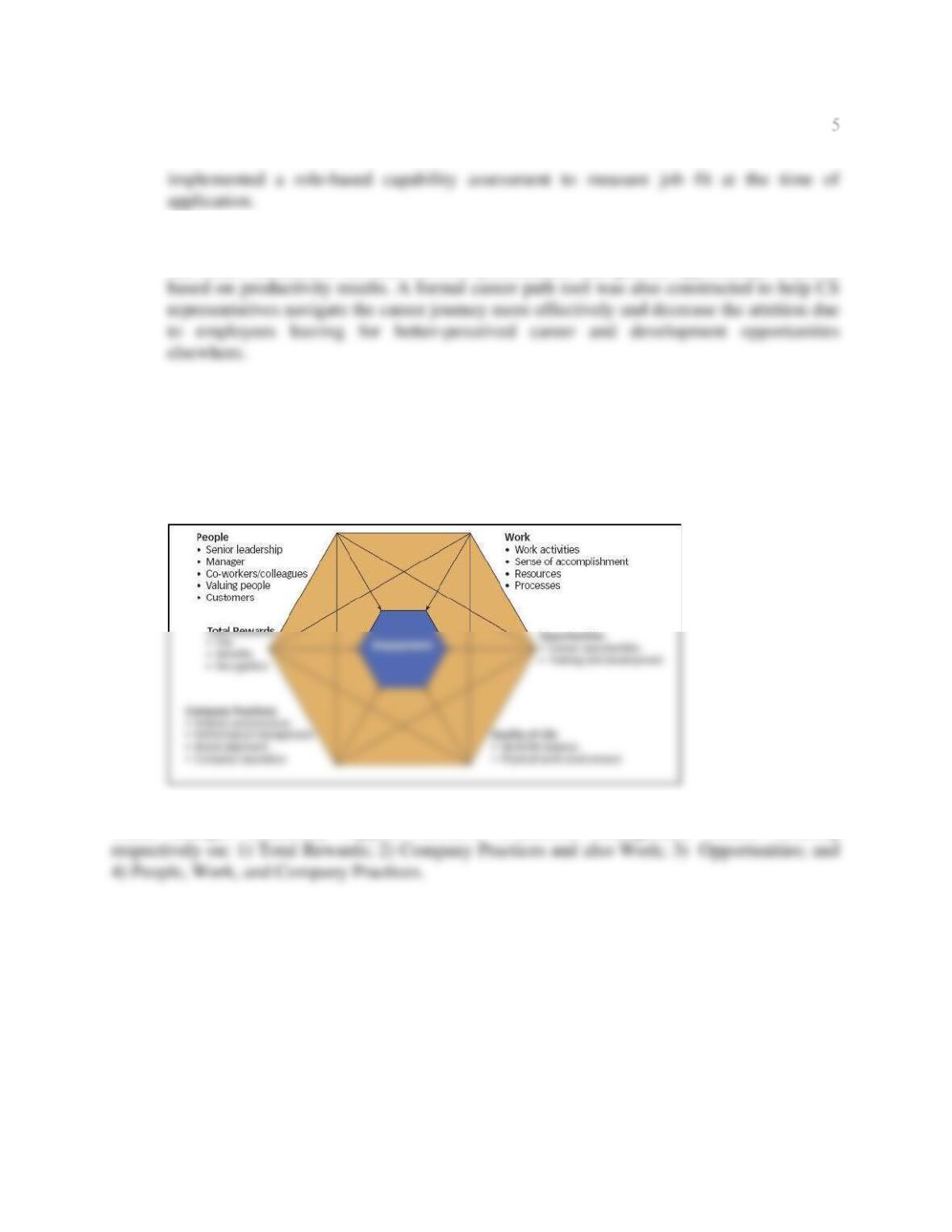
Figure 4.8 Hewitt’s Employee Engagement Framework
These changes effectively support Hewitt’s Workforce Management model, focusing
ANSWERS TO REVIEW QUESTIONS
1. Explain why there is a logical relationship between customer satisfaction and employee
satisfaction.
There is a logical relationship between customer satisfaction and employee satisfaction because
research has shown that as workforce satisfaction increased, so did customer satisfaction and
loyalty to the organization. If people were satisfied with their working conditions and jobs, they
stayed with the company, became familiar with customers and their needs, had the opportunity to

6
correct errors because the customers knew and trusted them, and had outcomes of higher
productivity and high service quality. Customers of these firms became more loyal, thus
providing more repeat business, were willing to complain about service problems so that
2. Describe the impact of the Taylor system on quality, productivity, and workforce
management. How do TQ principles differ from the Taylor system?
The impact of F.W. Taylor on quality and productivity has been profound. Taylor developed his
system, called the “scientific management approach” primarily to improve efficiency and
productivity of manual workers. Taylor separated planning from execution, concluding that
foremen and workers of those days lacked the education necessary to plan their work. The
3. Summarize the key workforce-focused practices for performance excellence.
The key workforce-focused practices for performance excellence include:
• Understand the key factors that drive workforce engagement, satisfaction, and
motivation.
• Design and manage work and jobs to promote effective communication, cooperation,
skill sharing, empowerment, innovation, and the ability to benefit from diverse ideas and
thinking of employees and develop an organizational culture conducive to high
performance and motivation.
• Create an environment that ensures and improves workplace health, safety, and security,
and supports the workforce via policies, services, and benefits.
• Develop a performance management system based on compensation, recognition, reward,

7
4. Define workforce management. Explain its role from a strategic perspective.
Workforce management consists of those activities designed to provide for and coordinate the
people of an organization. These activities include determining the organization’s workforce
needs; assisting in the design of work systems; recruiting, selecting, training and developing,
counseling, motivating, and rewarding employees; acting as a liaison with unions and
government organizations; and handling other matters of employee well-being.
5. Explain the concept of workforce engagement. What advantages does it provide to an
organization?
Workforce engagement refers to the extent of workforce commitment, both emotional and
intellectual, to accomplishing the work, mission, and vision of the organization. Organizations
with high levels of workforce engagement are often characterized by high-performing work
environments in which people are motivated to do their utmost for the benefit of their customers
and for the success of the organization.
Engagement is manifested in Deming’s concept of “pride and joy” in work that was
reflected in his 14 Points. Engagement means that workers find personal meaning and
motivation in their work, have a strong emotional bond to their organization, are actively
involved in and committed to their work, feel that their jobs are important, know that their
opinions and ideas have value, and often go beyond their immediate job responsibilities for the
good of the organization. Employee engagement offers many advantages over traditional
management practices as it:
• Replaces the adversarial mentality with trust and cooperation
• Develops the skills and leadership capability of individuals, creating a sense of mission
and fostering trust

8
6. What is employee involvement? Discuss different approaches to employee involvement.
Employee Involvement (EI) refers to participative team approaches currently being applied to
problem solving and decision-making in various organizations. These approaches involve
transforming the culture of the entire organization to tap the creative energies of all employees. EI
allows individuals “to discover their own potential, and to put that potential to work in more creative
ways....People develop in themselves pride in workmanship, self-respect, self-reliance, and a
heightened sense of responsibility.”
7. Define the term motivation. Why is motivation critical for performance excellence?
A simple definition of motivation is response to a felt need. Thus, there are three components of
motivation: 1) the felt need, 2) the stimulus that produced that felt need, 3) and the response to the
8. List the key factors that characterize high performance work.
High performance work refers to work approaches used to systematically pursue ever-higher levels
of overall organizational and human performance. Flexibility, innovation, knowledge and skill
sharing, alignment with organizational directions, customer focus, and rapid response to changing
business needs and marketplace requirements characterize high performance work. Organizations
may be viewed at three levels: the individual level, the process level, and the organizational level.

9
9. Explain the difference between work design and job design. How does the Hackman and
Oldham model enhance understanding of how job design affects motivation, satisfaction, and
organizational effectiveness?
Work design refers to how employees are organized in formal and informal units, such as
department and teams. Job design refers to the responsibilities and task assigned to individuals. Both
are vital to organizational effectiveness and job satisfaction.
The Hackman and Oldham job characteristics model, described in the text, can be used to
design motivating potential into a job, thus enhancing quality. Their approach to task design help to
explain the motivational properties of tasks by tying together human and technical components of
jobs. In the model, the five core job characteristics of task significance, task identity, skill variety,
10. Contrast job enlargement with job enrichment. How do they support the Hackman
and Oldham model?
Job enlargement, expands worker’s jobs to include several tasks rather than one single, low–level
task. This approach reduces fragmentation of jobs and generally results in lower production
costs, greater worker satisfaction, and higher quality, but it requires higher wage rates and the
11. What is empowerment? How does it benefit both the organization and employees?
Empowerment simply means giving people authority and power to make decisions, gain greater
control over their work, and thus more easily satisfy customers. Successful empowerment of
employees requires that:

10
• Employees are provided education, resources and encouragement.
• Policies and procedures are examined for needless restrictions on the ability of employees to
serve customers.
12. Explain the concept of self-determination and how it differs from empowerment.
According to management theorist, David Geisler, self-determination differs from empowerment
in that what traditionally passes for empowerment does not allow employees to use their skills
and talents to the maximum. He maintains that self-determination is an extension of
13. What is a team? Define the major types of teams found in organizations today.
A team is defined as: a small number of people with complementary skills who are committed to a
common purpose, set of performance goals, and approach for which they hold themselves mutually
accountable. Teams provide opportunities to individuals to solve problems that they may not be able
to solve on their own. Teams may perform a variety of problem-solving activities, and may also
assume many traditional managerial functions. Effective teams are goal-centered, independent,
open, supportive, and empowered.
The most common types of teams are:
• Management teams: Teams consisting mainly of managers from various functions, such as
sales and production that coordinate work among teams

11
• Virtual teams: A relatively new format in which team members communicate by computer,
take turns as leaders, and jump in and out as necessary. These types of teams use a
combination of Internet, e-mail, phone, fax, video conferencing, PC-to-PC connections,
and shared computer screen technologies to get their jobs done.
• Quality circles: Teams of workers and supervisors that meet regularly to address work-
related problems involving quality and productivity.
14. Contrast the differences between quality circles and self-managed teams. What are the
key characteristics of self–managed teams not found in quality circles?
A quality circle is a small group of employees from the same work area who meet regularly and
voluntarily to identify, solve, and implement solutions to work-related problems. Characteristics of
quality circles include:
• Quality circles are small groups, ranging from 4 to 15 members. Eight members are
considered the norm.
• All members come from the same shop or work area. This gives the circle its identity.
• The members work under the same supervisor, who is a member of the circle.
• The supervisor is usually, though not always, the leader of the circle. As leader, he or she
• Circle members receive training in the rules of quality circle participation, the mechanics of
running a meeting and making management presentations, and techniques of group problem
solving.
• Circle members, not management, choose the problems and projects that they will work on,
collect all information, analyze the problems, and develop solutions.

12
Self-managed teams, management teams, natural work teams, and virtual teams typically
work on routine business activities—managing an organization, building a product, or designing
an electronic system—and are an integral part of how work is organized and designed. Quality
circles, and other such problem-solving teams, generally work more on an ad-hoc basis to
15. Discuss the five phases that teams typically go through during their life cycle.
Teams go through several very predictable phases of development called forming, storming,
norming and performing. Forming is when the team is introduced, meets together, and explores
issues of their new assignment. Storming occurs when team members disagree on team roles and
16. Explain the important issues an organization must consider in developing successful
teams.
Issues must be considered, and pitfalls must be avoided, if teams are to be successful. As stated in
the chapter, the team structure depends heavily on cooperation, communication, and clarity.
Eckes estimates that 60 percent of failures of Six Sigma teams are due to failures in the
mechanics of team operations, as opposed to poor project selection or improper use of tools. He
cites contributing factors such as lack of application of meeting skills, improper use of agendas,
failure to determine meeting roles and responsibilities, lack of setting and keeping ground rules,
and lack of appropriate facilitative behaviors. Electronic communications, virtual teams, and
Team implementation should always begin with a period of investigation, reflection, and
soul searching. Many companies rush out and form the wrong kind of teams for a specific job.

13
For example, quality circle-type teams cannot achieve the same type of results as a cross-
functional problem-solving team or a self-managed team. Managers should examine their
organization’s goals, objectives, and culture to evaluate its readiness to develop and support
team-based initiatives. This step may be the most difficult portion of the process, because it
17. What issues must organizations consider with respect to health, safety, and employee
well-being in the work environment?
The organization must consider a number of issues relating to employee well–being in today’s
work environment. These include: health and safety factors, accommodations for workers with
disabilities, protection of employees from sexual harassment, and quality of worklife factors. The
18. List and describe the tools needed for running an effective meeting.
According to Scholtes, the tools needed for running an effective meeting include:
• Use agendas.
• Have a facilitator.
• Take minutes.
• Draft the next agenda.
• Evaluate the meeting.
• Adhere to the “100–mile” rule.
Scholtes suggests the use of detailed agendas that include topics, a sentence about the
importance of each, who will present them, the estimated time for each topic, and the type of
item, such as discussion, decision, or information topics. A facilitator can keep the discussion on
time and on target, prevent anyone from dominating or being overlooked, and help bring the

14
19. What are the steps required to perform the nominal group technique (NGT)?
The nominal group technique (NGT) was developed to provide a way to prioritize and focus on
important project objectives in the project definition stage. One of the major advantages of the
technique is that it balances the power of each individual involved in the decision process. Key
steps in the process include the following:
1. Request that all participants (usually 5–10 persons) write or say which problem or issue
they feel is most important.
2. Record all problems or issues.
3. Develop a master list of problems or issues.
4. Generate and distribute to each participant a form that numbers the problems or issues in
no particular order.
20. What types of compensation practices support a performance excellence philosophy?
Without willing, sustained, individual effort and coordinated teamwork focused on meeting
organizational goals, TQ is an impossible dream. However, when organizations ask employees to
assume new challenges and responsibilities, the question “What’s in it for me?” ultimately gets
asked. Extrinsic and intrinsic rewards are the key to sustained individual efforts. Compensation
and recognition refer to all aspects of pay and reward, including promotions, bonuses, and
recognition, either monetary and non-monetary or individual and group.

15
progressive organizations use quality measures such as customer satisfaction, defect prevention,
and cycle time reduction to make compensation decisions.
Many TQ-focused companies now base compensation on the market rate for an
individual with proven capabilities, and then make adjustments as capabilities are increased,
21. Explain the key practices that lead to effective recognition and reward approaches?
Key practices that lead to effective employee recognition and rewards include:
• Giving both individual and team awards.
• Involving everyone, including both front-line employees and senior management.
• Tying rewards to quality based on measurement objectives, rewarding for behavior,
not just results.
• Allowing peers and customers to nominate and recognize superior performance.
• Publicizing team and individual recognition extensively.
• Making recognition fun.
22. Briefly summarize traditional performance appraisal processes. From a performance
excellence perspective, what objections have been raised concerning these processes? Describe
some modern practices.
Performance appraisal is an exceedingly difficult workforce management activity to perform.
Dissatisfaction with conventional performance appraisal systems is common between both
16
managers, who are the appraisers, and workers, who are the appraised. Literally dozens of research
studies and analyses by experts have pointed out the problems and pitfalls of performance appraisal.
The controversy is over whether the conventional approach can be improved, or whether a radical
approach, such as suggested by Deming is the right answer.
performance appraisal because it is statistically unsound.
There is no one right answer to the question of whether conventional performance reviews
should be eliminated, or not. Obviously, a TQ-oriented organization must face the question of what
they reward and how they will do so. Performance appraisals are most effective in a TQ
environment when they are based on the objectives of the work teams that support the organization.
In this respect, they act as a diagnostic tool and review process for individual, team, and
23. What is 360–degree feedback? How does it differ from traditional performance appraisal
approaches? How does it address the major criticisms of traditional performance appraisal
processes and support TQ efforts?
360-degree feedback is a method whereby a group of individuals who frequently interact with an
employee or team participate in both the goal setting process and the performance appraisal process.
The group may include suppliers, clients, peers, internal customers, managers, and subordinates.
The process requires two-way communication on customer client needs and often results in a
24. Why is it important to assess workforce engagement and satisfaction? Describe some
common approaches.