*** Problem Set Key — Do Not Post or Distribute ***
Chapter 4: Business Processes
Introduction to Operations & Supply Chain Management (Bozarth & Handfield, 3rd Edition)
DIRECTIONS 1. Put your name and the four-digit number provided by your instructor in the
space below,and hit enter. This will customize the assignment for you.
2. Print out the entire workbook and put your answers in the space provided.
Name: *** KEY ***
4-digit number: 1500
20
Consider the output and machine and machine hour figures shown below.
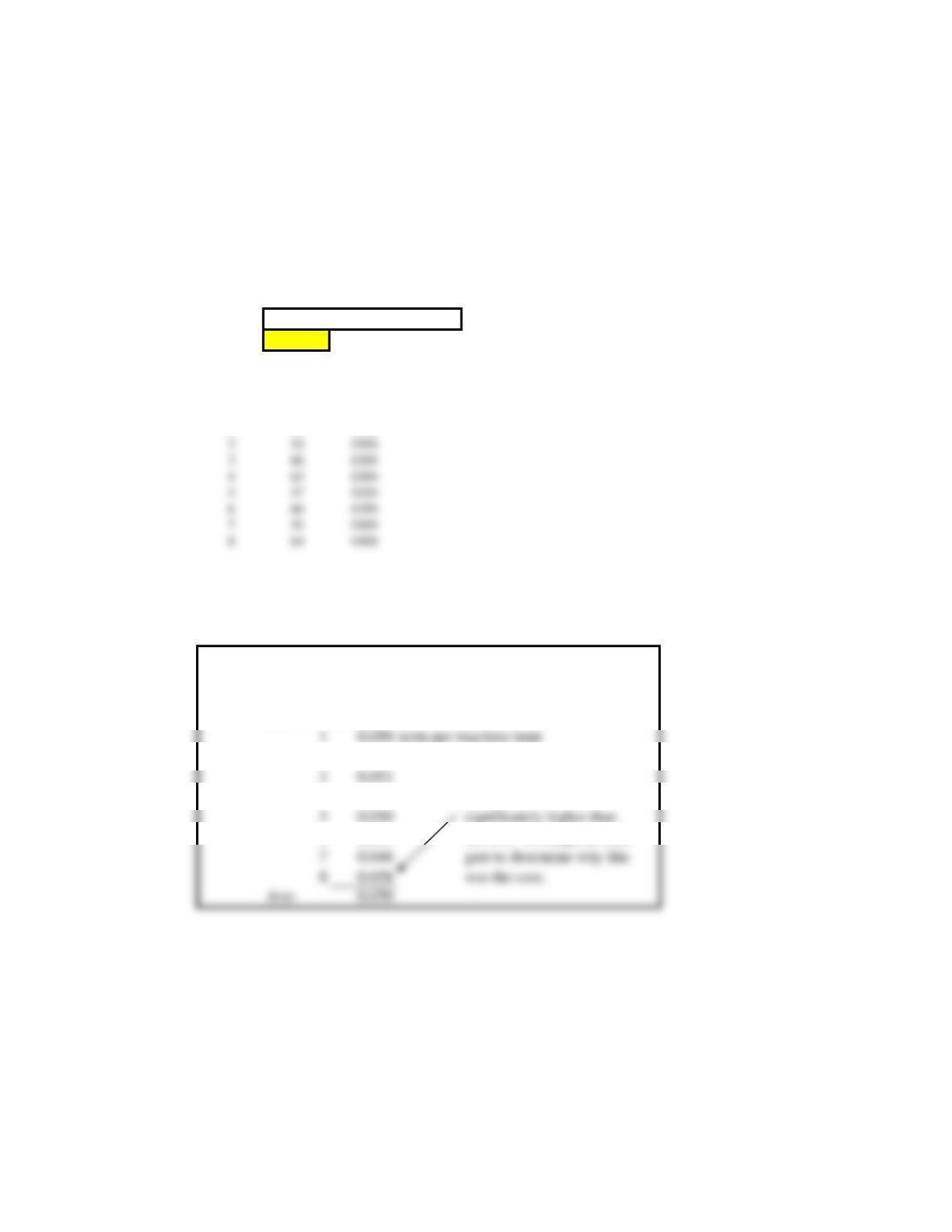
Month Output Mach. Hrs.
1 60 1200
Problem 1 In the space below, calculate the machine productivity for
each month, as well as the average machine productivity for
all 8 months. Do any of the months seem “unusual” to you? Explain.
Productivity = Outputs / Inputs
Month Productivity
2 0.049
4 0.048 This last month seems
6 0.049 the rest. We might investi-
1
Chapter 3: Business Processes
*** KEY ***
In 2013, Gibison’s Auto Repair invested in a computer diagnostic machine
that reads codes on a car’s computer, thereby shortening the time it takes to
determine what is wrong with a car. Consider the figures below:
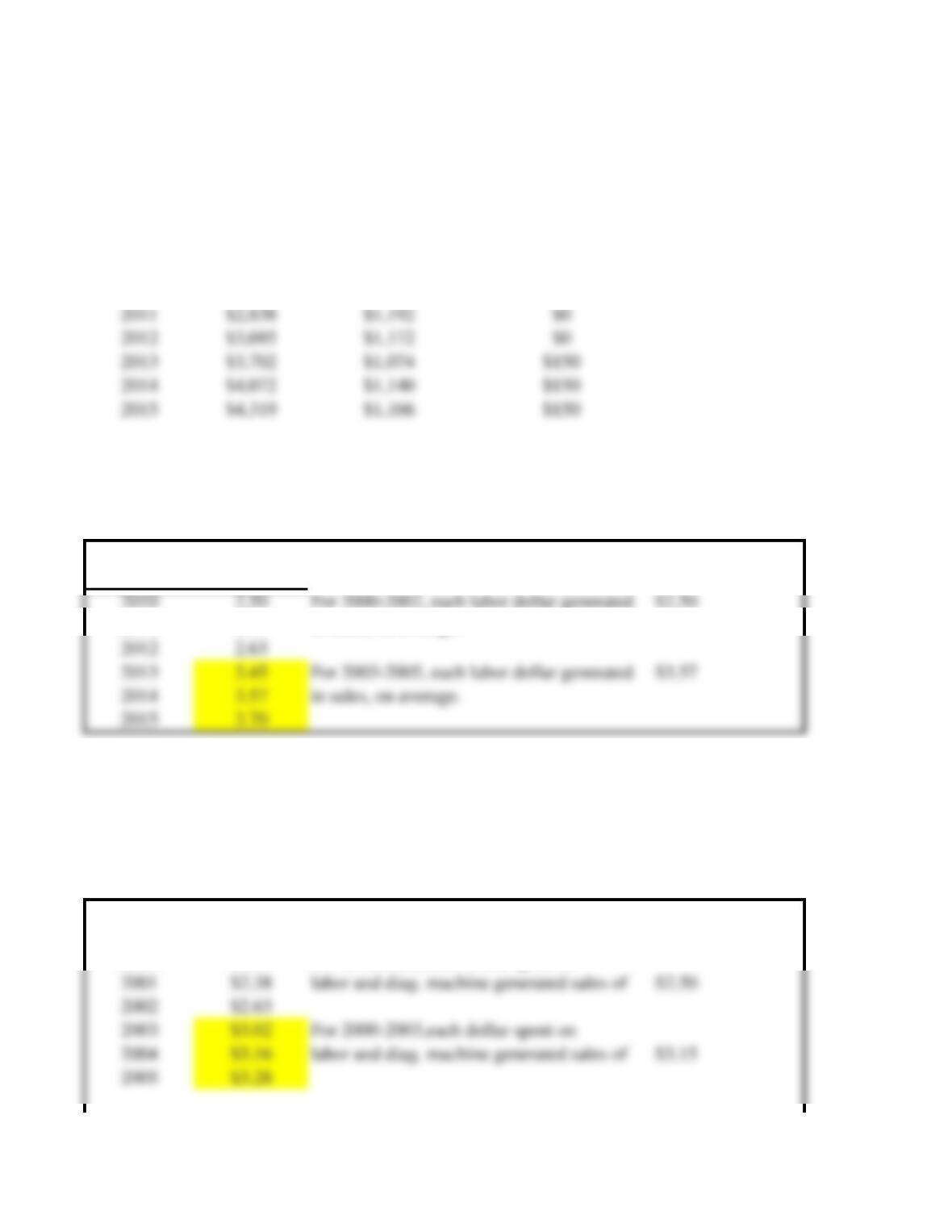
Year Sales ($000s) Labor costs ($000s) Machine costs ($000s)
2010 $2,468 $987 $0
Problem 2 In the space below, calculate the labor productivity for each of the six years.
How much has labor productivity improved since the diagnostic machine was
brought in?
Year Labor prod.
2011 2.38 in sales, on average.
Problem 3 In the space below, calculate the multi-factor productivity score for each year,
where the “input” is the total amount spent on labor and the diagnostic machine.
Next, calculate the average multi-factor productivity score for years 2000 – 2002,
and years 2003 – 2005. According to the results, was it worthwhile for
Gibson to invest in the diagnostic machine? Why or why not?
Multi-factor
Year productivity
2000 $2.50 For 2000-2002,each dollar spent on
2

Chapter 3: Business Processes
3
Chapter 3: Business Processes
*** KEY ***
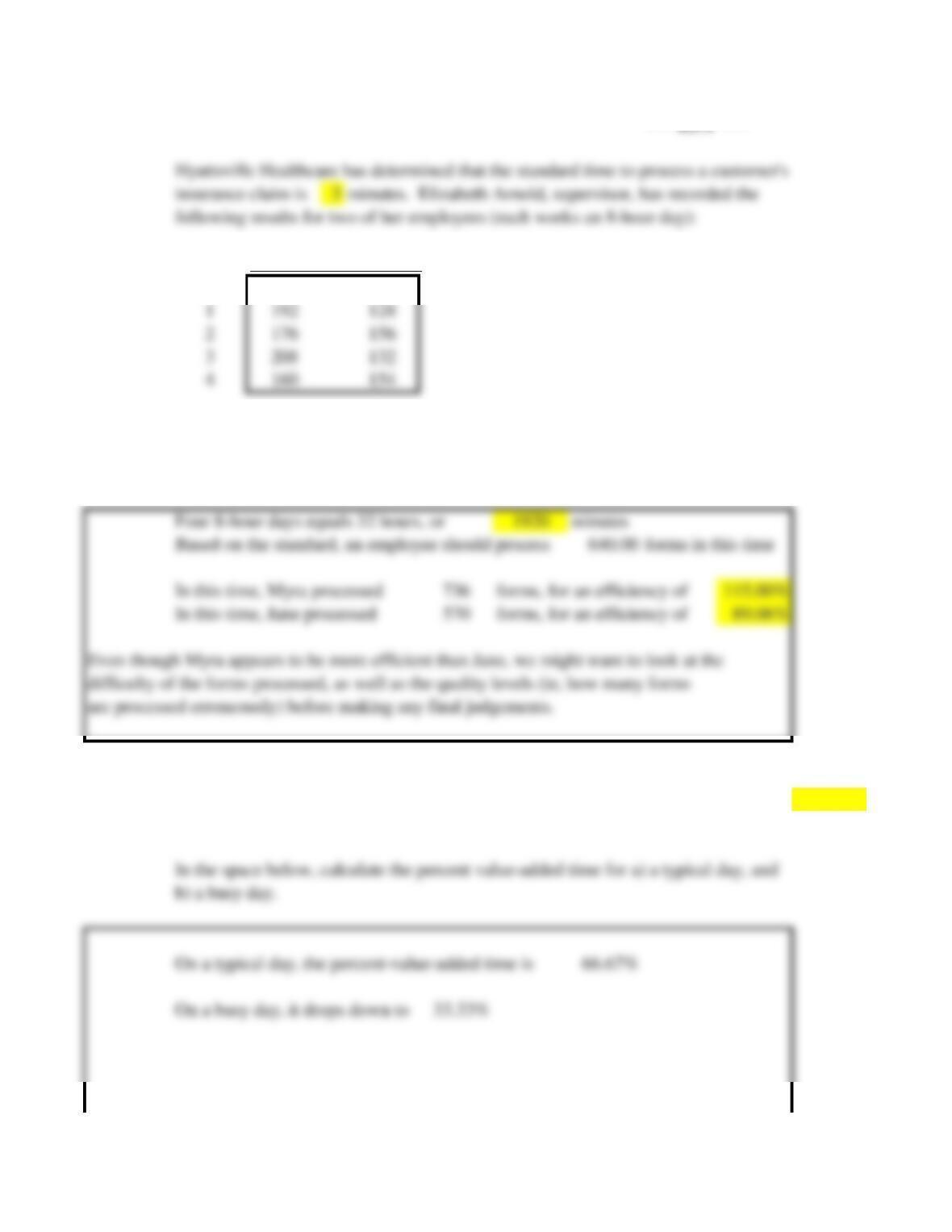
Total claims processed:
Day Myra Jane
Problem 4
In the space below, calculate the efficiency for Myra, and then for Jane. Interpet the
results. What other factors might we want to consider, besides efficiency, when
evaluating the performance of Myra and Jane?
Problem 5 Barbers at the ManMur Barber Shop take, on average, 10 minutes to cut a customer‘s
hair. The average wait time is 5 minutes on a typical day, but can stretch as long as 20
minutes on a busy day.
4

5