Instructor Resource
Rowe, Cases in Leadership 5e
SAGE Publications, Inc., 2019
Case Notes
Case 4.1: Leadership Crisis at Steelworks’ Xiamen Plant
Hwee Hoon Tan and Flocy Joseph wrote this teaching note as an aid to instructors in the
classroom use of the case Leadership Crisis at Steelworks’ Xiamen Plant, No. 9B16C005. This
teaching note should not be used in any way that would prejudice the future use of the case.
This publication may not be transmitted, photocopied, digitized or otherwise reproduced in any
form or by any means without the permission of the copyright holder. Reproduction of this
Teaching Note
Synopsis
This case describes the leadership of Rajesh Kumar, an Indian national transferred to Steelworks,
a metals company with headquarters in Singapore. In April 2010, Kumar was the second chief
executive officer (CEO) to be seconded to Steelworks by parent firm Southern Metals, an Indian
company that had acquired Steelworks five years before. One of Kumar’s initial tasks as the
CEO was to embark upon realigning and restructuring the organizational structure and processes.
The case captures Kumar’s difficulty in getting the general manager (GM) of the Xiamen plant,
Instructor Resource
Rowe, Cases in Leadership 5e
SAGE Publications, Inc., 2019
Even in 2015, Kumar is unsure why Chan, a long-time veteran and high-potential employee of
Steelworks, behaved the way he did.
Case Objectives
• Understand how trust is built and how Kumar and Chan’s relationship played out.
Students will be taught to use the seminal trust framework from Mayer, Davis, and
Schoorman
1
to systematically examine how Kumar could have built trust with Chan in
the different phases of their relationship and how Chan could have also built trust with
Kumar.
Position in Course
This case can be used in both undergraduate and MBA classes on cross-cultural management and
trust building.
Relevant Readings
• House, R. J., Hanges, P. J., Javidan, M., Dorfman, P. W., & Gupta, V. (2004). Culture,
leadership and organizations: The GLOBE Study of 62 Nations. Thousand Oaks, CA:
Sage Publications.
Instructor Resource
Rowe, Cases in Leadership 5e
SAGE Publications, Inc., 2019
Lesson Plan
Activity
Instructional
Strategy
Duration
(min.)
Reading of the case and questions
Individual reading
20
Discussion of Steelworks (company background, change
of management, current state of the merger, position of
the protagonist in the company, etc.)
Class discussion
10
Discussion on the challenges faced by Kumar
Class discussion
15
Group discussion; each group (between 3–5 students)
gets together to address the questions posed
Break-out group
15
Round-robin presentations and discussions
Presentations and
discussion
20
Wrap-up of the case (discuss the key learning points and
the epilogue)
Lecture
10
90
Assignment Questions
1. Taking the perspective of C.H. Chan, what do you think happened?
2. How would you describe the relationship between Kumar and Chan? To what extent was
there trust between them?
Analysis
1. Taking the perspective of C.H. Chan, what do you think happened?
From Chan’s perspective, the following might have been contributing reasons for his behaviour
towards Project C3 and his relationship with Kumar:
• There was the potential for the erosion of his power in the Xiamen plant due to Project
C3, where he would have had to share information (and hence power) with those from
headquarters who formed the senior management team that would run Steelworks as one
2. How would you describe the relationship between Kumar and Chan? To what extent was
there trust between them?
The relationship between Kumar and Chan started off cordial and, from Kumar’s perspective,
Instructor Resource
Rowe, Cases in Leadership 5e
SAGE Publications, Inc., 2019
It appeared that Chan might not have perceived the relationship the same way. In fact, once
the conflict unfolded, Kumar recalled body language and behaviours that Chan had exhibited
during the C3 meetings that had signalled a different set of dynamics.
Instructor Resource
Rowe, Cases in Leadership 5e
From a leadership perspective, leadership expert Rebecca Siow found the following
characteristics to be salient to Indian leaders:
• Great problem solvers amidst uncertainty and chaos. In fact, they thrive in such an
environment.
Instructor Resource
Rowe, Cases in Leadership 5e
SAGE Publications, Inc., 2019
3. To what extent did the cultural differences between (a) Kumar and Chan, and (b)
Southern Metals and Steelworks play a role in this episode?
Cultural Differences between Kumar and Chan
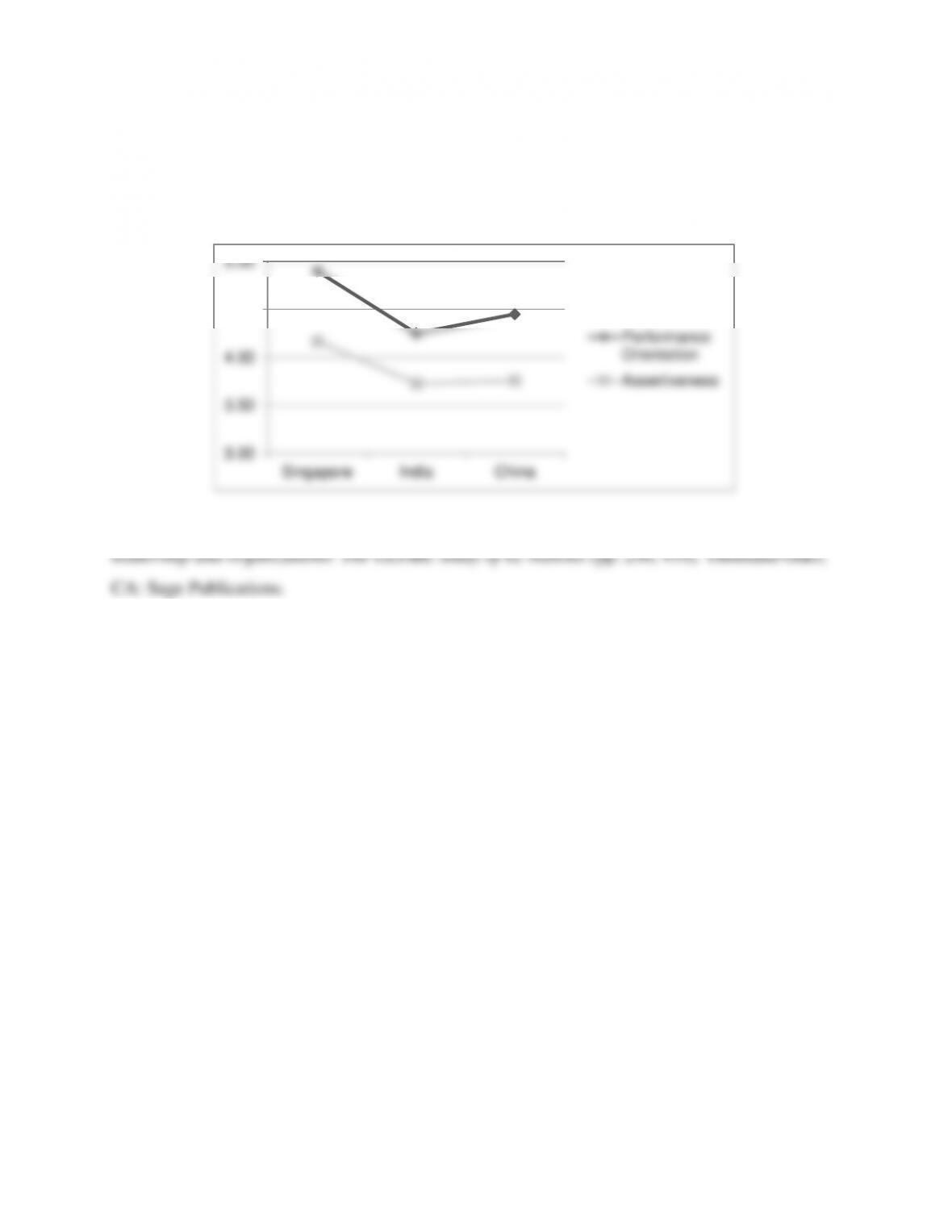
Using the GLOBE study framework, performance orientation is clearly higher in both Singapore
and China compared to India (see Exhibit TN-2). In the GLOBE study, performance orientation
Instructor Resource
Rowe, Cases in Leadership 5e
SAGE Publications, Inc., 2019
Personality Differences between Kumar and Chan
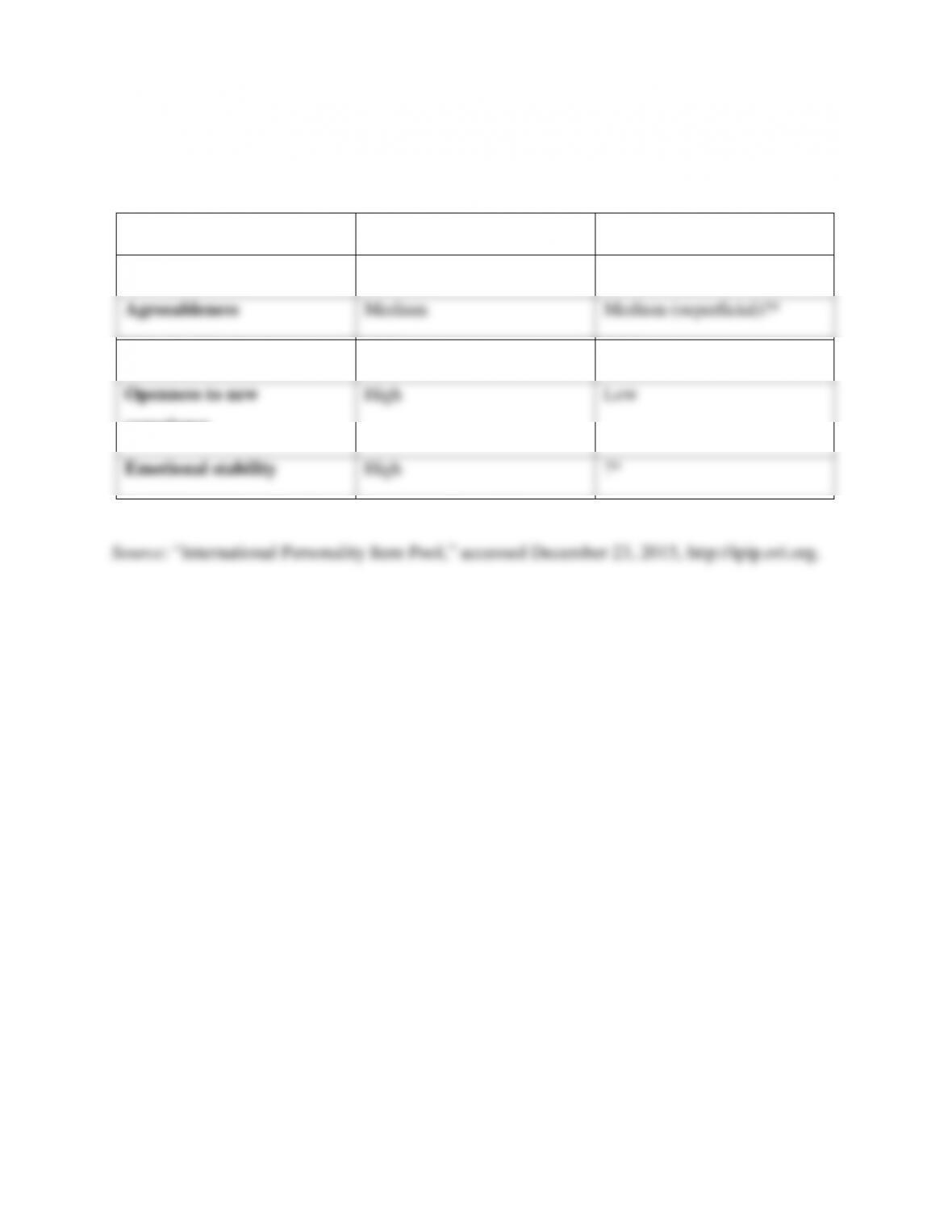
Using the Big Five personality framework (see Exhibit TN-5), we found that Kumar is high in
extraversion, conscientiousness, openness to new experiences, and emotional stability. Kumar is
rated medium in agreeableness. On the other hand, Chan is extraverted and conscientious.
Instructor Resource
Rowe, Cases in Leadership 5e
SAGE Publications, Inc., 2019
Kumar:
• Dynamic and strong analytical skills; quick decision maker
Chan:
• Selectively shared information from headquarters with his staff; autocratic style of
leadership
Instructor Resource
Rowe, Cases in Leadership 5e
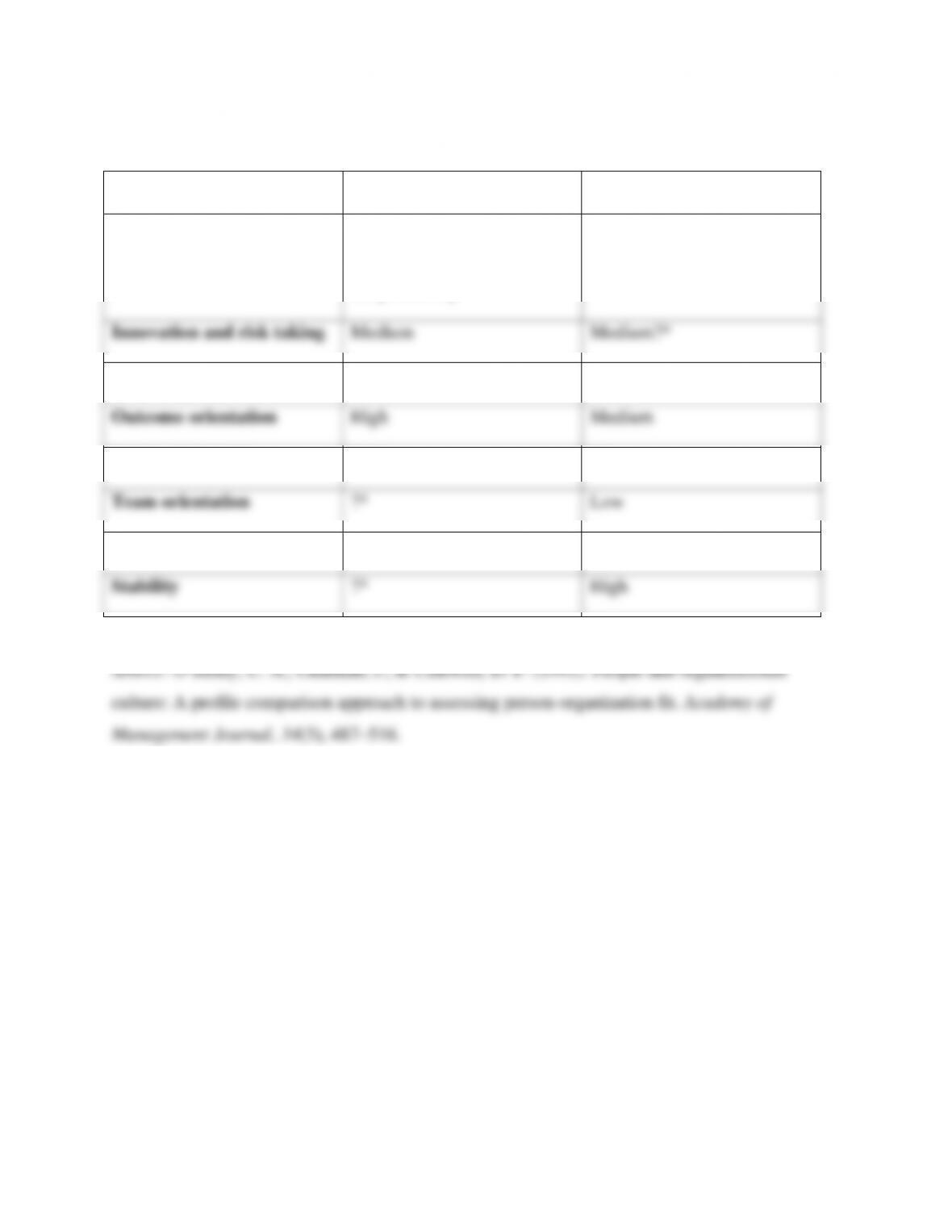
Organizational Culture Differences between Southern Metals and Steelworks (see Exhibit TN–
6)
Using the O’Reilly, Chatman, and Caldwell
9
framework of organizational culture, we inferred
that Southern Metals and Steelworks are not so closely aligned. Southern Metals appears to be
4. What could Kumar have done differently in his relationship with Chan and in the
Project C3 change initiative?
Kumar certainly faced many challenges. One key challenge was boundary spanning, because he
Language barrier
Because of the Chinese language barrier, Kumar tended to delegate the task of talking to Chan to
Instructor Resource
Rowe, Cases in Leadership 5e
SAGE Publications, Inc., 2019
Ability to adjust to new roles
Other than the personality and cultural issues, one key area that was often overlooked was the
ability of the staff to adjust to the new roles. Therefore, it is unclear if Chan had the capability to
Timeframe
The change-management process could have been implemented with a longer timeframe. That
would have enabled the new CEO to build relationships with his employees so that buy-in could
have been enacted more readily.
Of relevance to Kumar’s significant role as a boundary spanner, Siow asserted that:
A global business consists of a variety of boundaries. Externally, boundaries exist
Thus, Kumar needed to engage in “judicious relationship building.” According to Siow,
Discerning the right partners and building relationships with them is important to drive
Instructor Resource
Rowe, Cases in Leadership 5e
What Happened
Kumar was later informed that Chan had come back to the office the day after hearing Kumar’s
proposal, retrieved his personal belongings, walked around the office, and was never seen in the
factory again. Ling and the auditors reviewed the financials again after Chan left and found no
discrepancies. As of 2015, Kumar has not been able to figure out what came over Chan and why
he behaved the way he did.
Kumar, in his conversations with executives, expressed his disappointment in losing Chan
Instructor Resource
Rowe, Cases in Leadership 5e
SAGE Publications, Inc., 2019
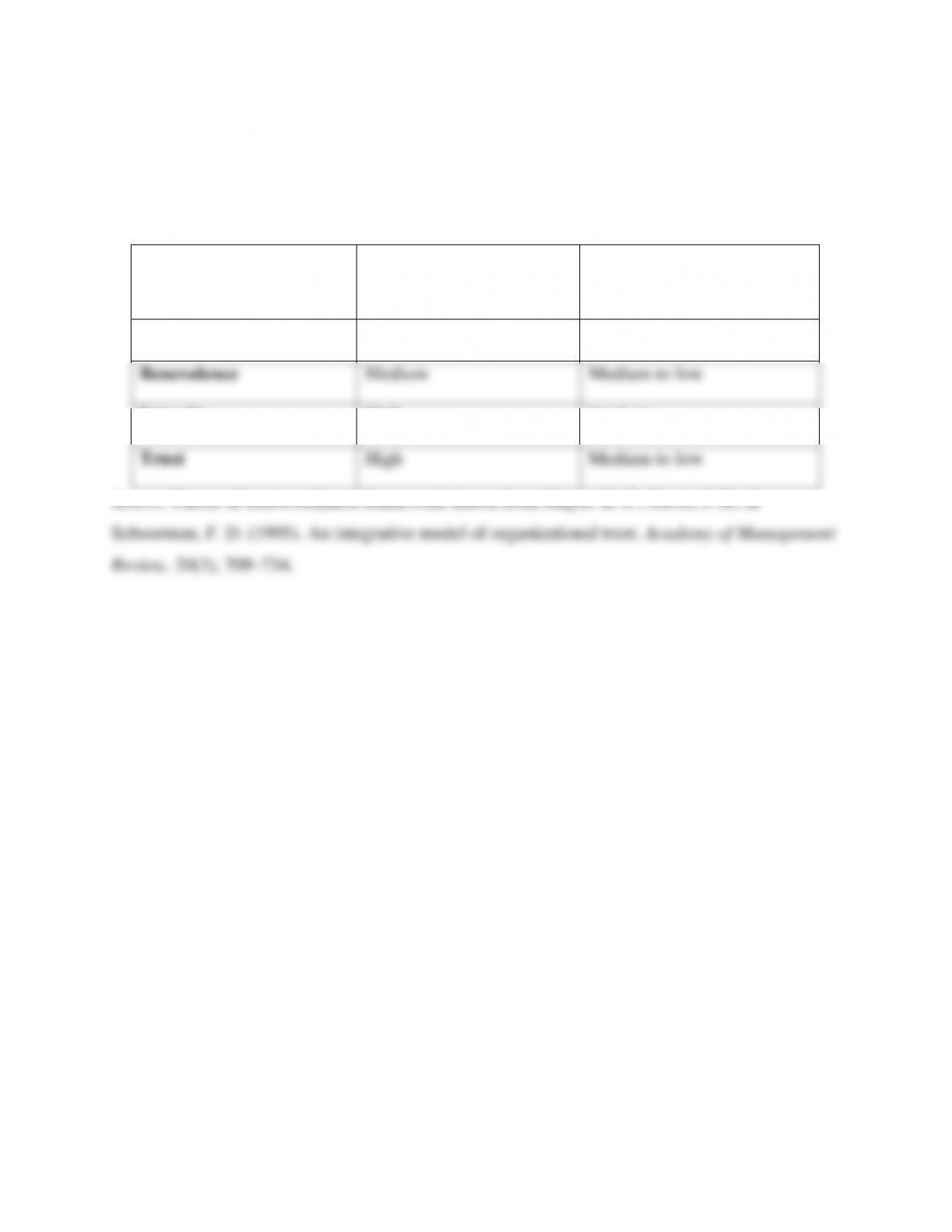
Exhibit TN-1
Assessments of the Factors of Trustworthiness in the Relationship Between Kumar and
Chan
Factors of
trustworthiness
Kumar towards Chan
Chan towards Kumar
Ability
High
High
Benevolence
Medium
Medium to low
Integrity
High
Unclear
Trust
High
Medium to low
Source: Factor of trustworthiness framework drawn from Mayer, R. C., Davis, J. H., &
Schoorman, F. D. (1995). An integrative model of organizational trust. Academy of Management
Review, 20(3), 709–734.
Instructor Resource
Rowe, Cases in Leadership 5e
SAGE Publications, Inc., 2019
Exhibit TN-2
Comparison of Performance Orientation and Assertiveness Across Singapore, India, and
China
Source: House, R. J., Hanges, P. J., Javidan, M., Dorfman, P. W., & Gupta, V. (2004). Culture,
3.00
3.50
4.00
4.50
5.00
Singapore India China
Performance
Orientation
Assertiveness
Instructor Resource
Rowe, Cases in Leadership 5e
SAGE Publications, Inc., 2019
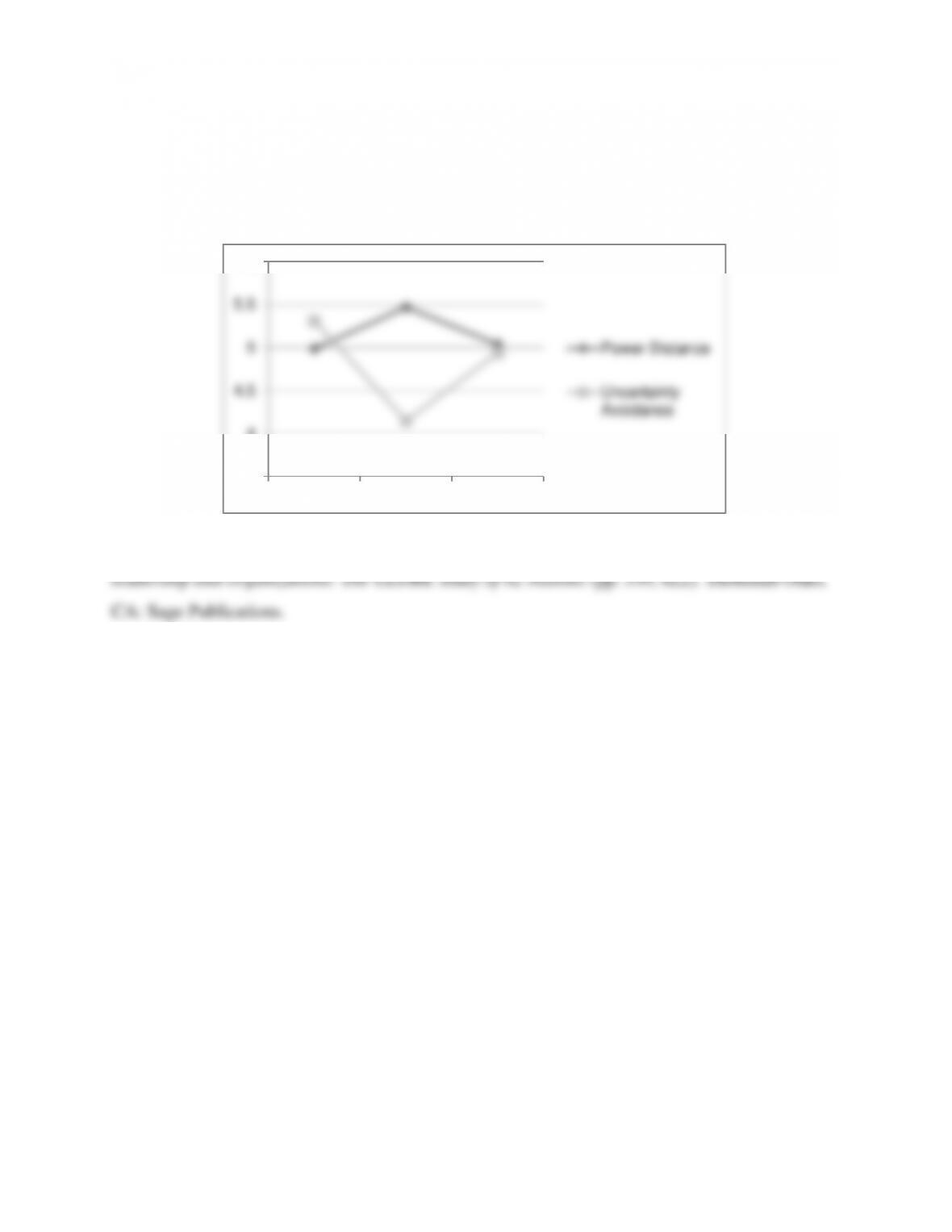
Exhibit TN-3
Comparison of Power Distance and Uncertainty Avoidance Across Singapore, India, and
China
Source: House, R. J., Hanges, P. J., Javidan, M., Dorfman, P. W., & Gupta, V. (2004). Culture,
3.5
4
4.5
5
5.5
6
Singapore India China
Power Distance
Uncertainty
Avoidance
Instructor Resource
Rowe, Cases in Leadership 5e
SAGE Publications, Inc., 2019
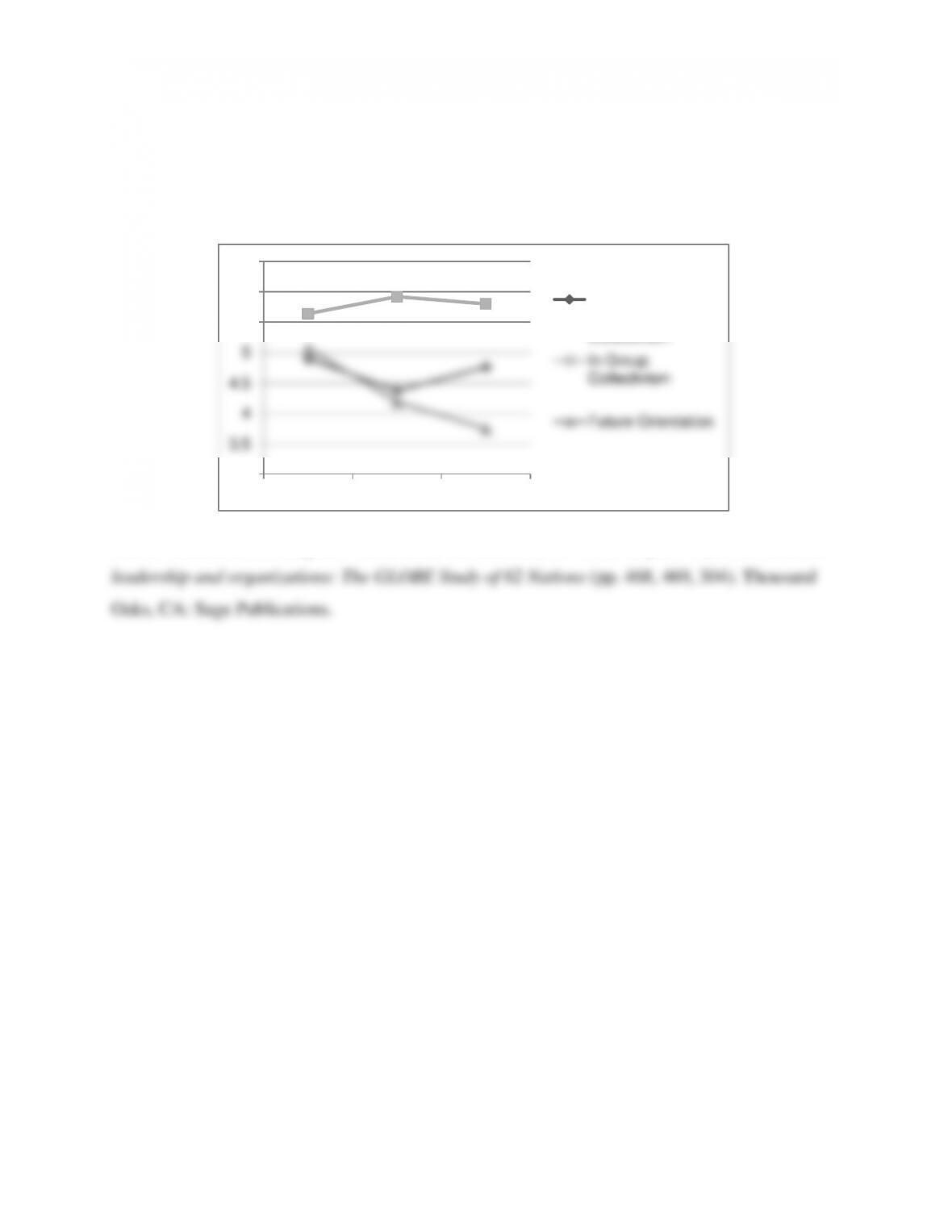
Exhibit TN-4
Comparison of Institutional Collectivism, In-group Collectivism and Future Orientation
Across Singapore, India, and China
Source: House, R. J., Hanges, P. J., Javidan, M., Dorfman, P. W., & Gupta, V. (2004). Culture,
3
3.5
4
4.5
5
5.5
6
6.5
Singapore India China
Institutional-
Societal
Collectivism
In Group
Collectivism
Future Orientation
Instructor Resource
Rowe, Cases in Leadership 5e
SAGE Publications, Inc., 2019
Exhibit TN-5
Assessment of the Personalities of Kumar and Chan
Kumar
Chan
Extraversion
High
High
Agreeableness
Medium
Medium (superficial)?*
Conscientiousness
High
High
Openness to new
experience
High
Low
Emotional stability
High
?*
*Insufficient information from the case to make an inference.
Instructor Resource
Rowe, Cases in Leadership 5e
SAGE Publications, Inc., 2019
Exhibit TN-6: Assessments of Organizational Differences
Southern Metals (India)
Steelworks (Singapore)
Values
Integrity, Understanding,
Excellence, Unity, and
Responsibility
Innovation and risk taking
Medium
Medium?*
Attention to details
Unclear
Medium
Outcome orientation
High
Medium
People orientation
High
?*
Team orientation
?*
Low
Aggressiveness
High
?*
Stability
?*
High
* Insufficient information from the case to make an inference.