3-1
Management Information Systems, 13E, Global Edition
Laudon & Laudon
Lecture Files by Barbara J. Ellestad
Chapter 3 Information Systems, Organizations, and Strategy
Chapter 3 describes how organizations and information systems work together, or
3.1 Organizations and Information Systems
You could say that this chapter relies on the chicken-and-egg theory to develop a
relationship between organizations and information systems. You need to design
What Is An Organization?
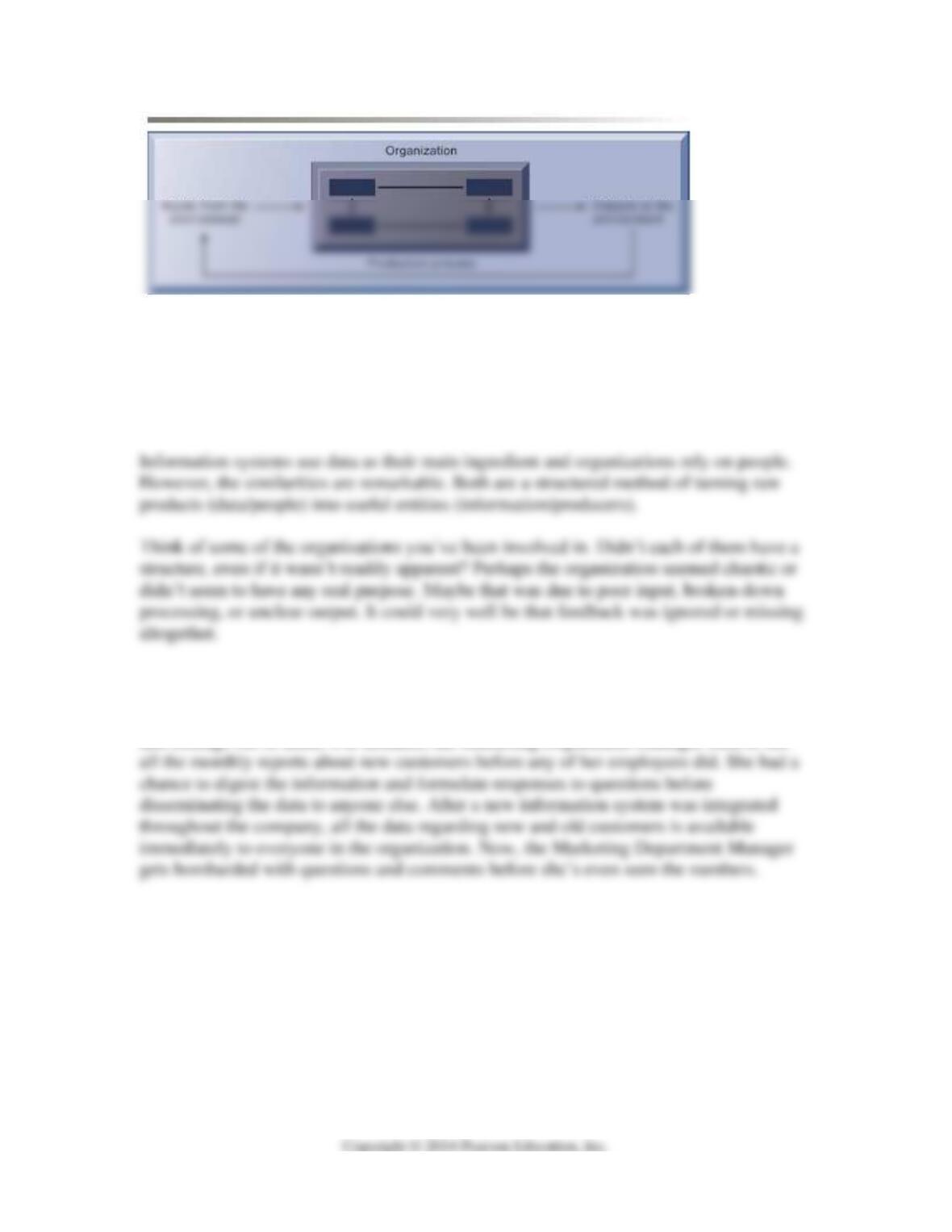
An organization is very similar to the information system described in Chapter 1.
Remember Figure 1-4 from Chapter 1? Compare it to Figure 3-2 in this chapter.
3-2
Figure 3-2 The Technical Microeconomic Definition of the Organization
These two figures have many things in common. Both information systems and
organizations require inputs and some sort of processing, both have outputs, and both
depend on feedback for successful completion of the loop.
Many times organizations are turned upside down when new information systems are
brought in. It’s not because the system is all wrong for the business. Usually it’s because
the system throws the delicate balance of rights, privileges, obligations, responsibilities,
and feelings out of kilter. For instance, the Marketing Department Manager used to see
Features of Organizations
The class you’re enrolled in is an organization of sorts, isn’t it? Think about it—how
many of the following characteristics fit your class? How many fit any organization
you’re in?
• Clear division of labor
• Hierarchy of authority
3-3
These characteristics describe organizations that are called bureaucracies, which most of
us think of as slow, cumbersome and unprogressive. That isn’t necessarily so. Many
organizations have bureaucratic characteristics and operate very well.
Routines and Business Processes
Successful organizations develop efficient routines for producing goods and services.
Organizational Politics
Each person in an organization ultimately has his own goals. Those goals may be aligned
very well with organizational goals but perhaps they aren’t. The bottom line is each
Organizational Culture
Just as every society reflects cultural values like language, dress, and food, so too does
every organization have its own culture. Some companies like Google are very “laid–
Organizational Environments
Organizations differ because their ultimate goals differ. Some organizations are small by
nature or small by design. Using the same thought process as you did for recognizing the
different structures in organizations around you, think about the unique differences in
those organizations. Why are they different: size, goals, environmental factors that
restrict their growth?
3-4
For instance, contrast a real estate company with an insurance company. The real estate
company is constantly looking for new customers (buyers and sellers) and new products
(houses or commercial properties) to sell. It may choose to stay small or to go with a
nationwide conglomerate. The environmental factors that are likely to influence it are the
Disruptive Technologies: Riding the Wave: Remember typewriters? If you’re under the
age of 30, you may have never seen one. They were ubiquitous in the business world 40
years ago. How many have you seen lately? Did they fade away because they weren’t a
good idea when they were first invented? They weren’t a good product? They didn’t
serve a need? As we all know, the answers to all those questions is a resounding no. They
were a great invention, a great product, and served a real need. But they were supplanted
by a disruptive technology called computers.
There are many examples of how new technologies disrupt old ones in Table 3-1 in the
Organizational Structure
The point is that every group of people is an organization. The interesting question you
could ask yourself would be: “How would the world look and function without some kind
of organization?”
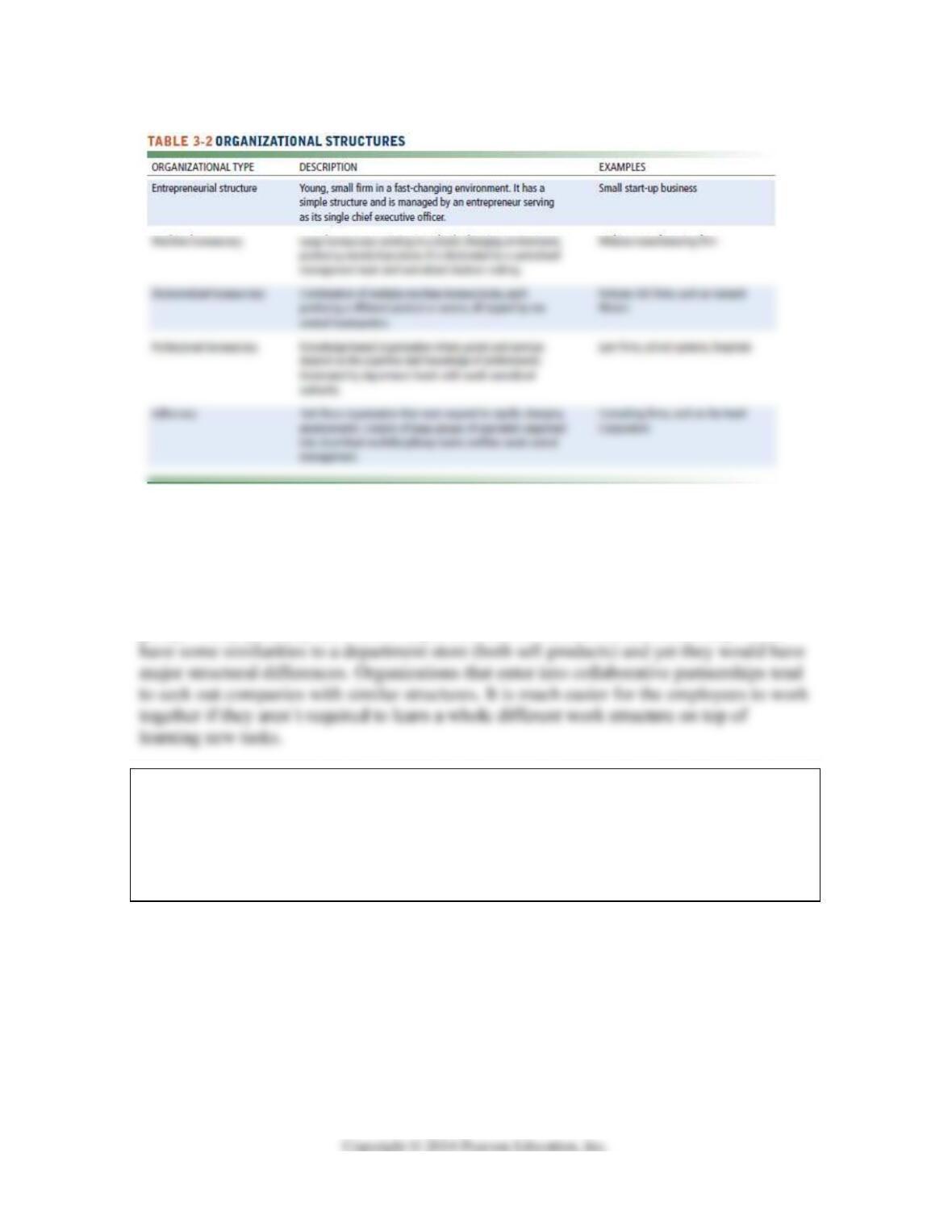
Table 3-2 shows some common organizational structures. Think about your own
3-5
Other Organizational Features
Would you consider the same organizational structure for a softball team as you would
for a theatre production group? Although there would be some similarities, the two
groups would probably have some major differences. An automobile dealership would
Bottom Line: Organizations and information systems influence each other. Each
organization shares common characteristics that an information system can
enhance. On the other hand, each organization has unique characteristics that
should be taken into account when incorporating technology. The organization
should determine how the technology is incorporated and not let the information
system totally dictate the organizational structure.
3.2 How Information Systems Impact Organizations and
Business Firms
Change is the only constant in the relationship between information systems and
organizations. As technology evolves and changes, its introduction into organizations
requires changes in the firm’s infrastructure and the services it can provide to its
employees, customers, and suppliers.
3-6
Economic Impacts
It’s sometimes cheaper to hire a computer than to hire a person. We may not like the idea
that machines can replace human beings, but when you think about it, they have been
doing this for thousands of years.
To better illustrate this concept, let’s take a look at how a company can find it cheaper to
use an information system to develop and disseminate a Human Resources policy for
employee dress codes. The HR assistant may write the first draft of the policy and give it
to the HR director on paper. The director will review it and make changes. The assistant
3-7
So what about the people who don’t have their own personal computer? You could post
the new policy to the company Intranet, which would be available to all employees
whenever they find it convenient. Again, time and resources are cut drastically through
the use of an information system. If the policy needs to be revised, the same process can
be used to make and send out changes. The revised policy can be posted on the intranet
for all to see.
Organizational and Behavioral Impacts
IT Flattens Organizations
Rather than five layers of management in an organization, information technology allows
companies to flatten the layers to three, maybe even two. Here’s how:
• IT pushes decision-making rights lower in the organization because lower-level
Postindustrial Organizations
Postindustrial theories also support the notion that IT should flatten hierarchies. Here’s
why:
• Professional workers tend to be self-managing, and decision making should
3-8
Technology makes virtual organizations more feasible, cheaper, and easier to set up and
tear down than before. If you had a small group of people from each functional area of
the company collaborating on a new production method, you can bring them together,
decide on the new methodology, and then return them to their regularly assigned units.
Let’s say your company decides to develop a new method of shipping hammers. You
If your company had the proper information system, much of the hassle and expense of
this scenario could be eliminated. By using technology, most of the collaboration and
communication throughout the organization, top-to-bottom, side-to-side, could be
accomplished quicker and cheaper.
Understanding Organizational Resistance to Change
Information systems are closely intertwined with an organization’s structure, culture, and
business processes. New systems disrupt established patterns of work and power
3-9
The Internet and Organizations
The example used earlier of posting personnel policies to the company intranet is just one
small example of how businesses are using network technologies to reduce costs and
Implications for the Design and Understanding of Information Systems
The integration of an information system into an organization naturally causes change for
the organization. Sounds simple enough. What isn’t so simple to manage is the very fact
that many people do not readily accept change. No matter how much technology you
employ, it is still the organization’s people who will make or break it. Remember the
3-10
Bottom Line: For some jobs, it’s better to employ technology than to employ a
person. Technology can reduce costs and increase the amount of information people
have access to. The changes brought about by the introduction of new technology
3.3 Using Information Systems to Achieve Competitive
Advantage
Google, Amazon, eBay—the giants of the Internet. They are successful and make loads
of money. They could easily rest on their laurels, kick back, and relax. If they are so
Porter’s Competitive Forces Model
Porter’s competitive forces model contends that much of the success or failure of a
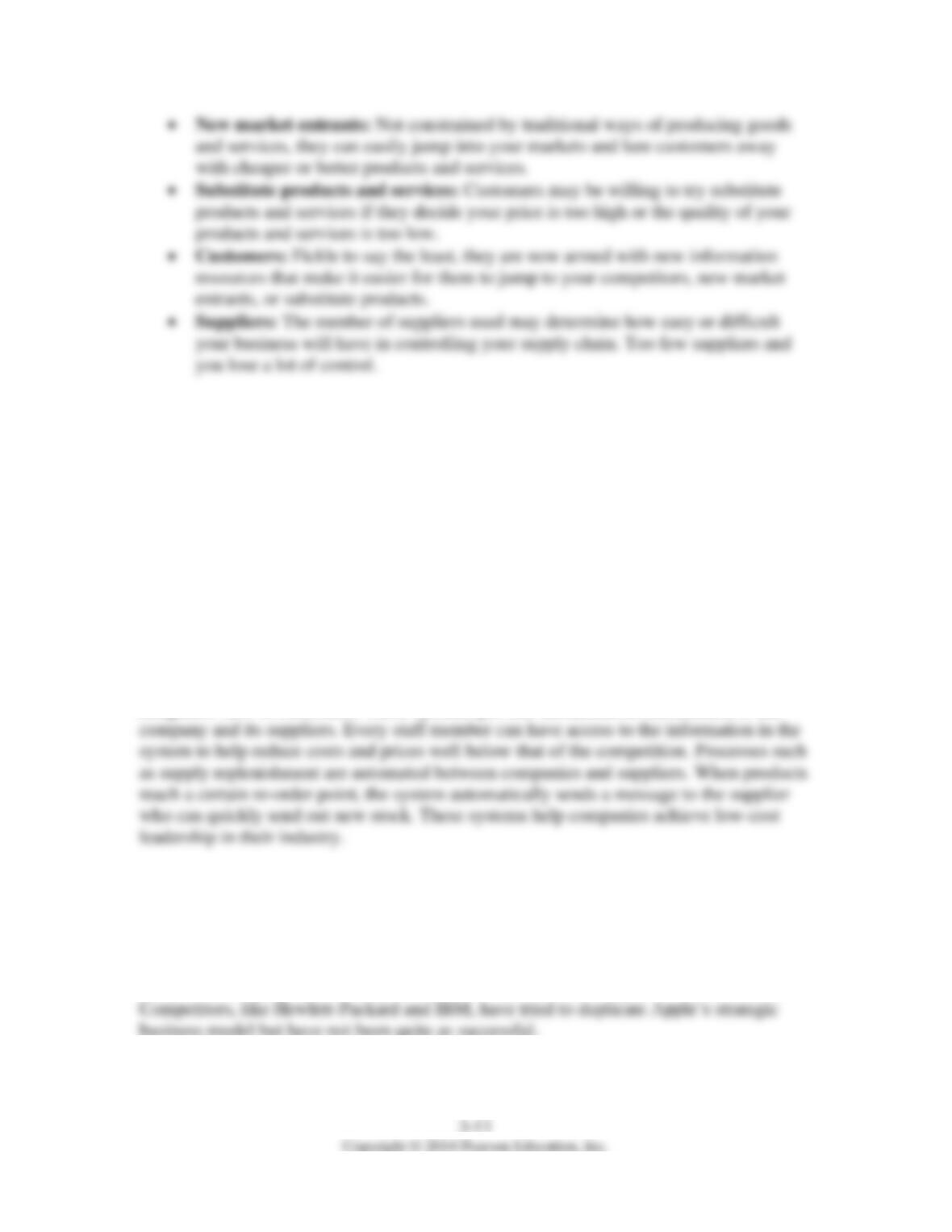
business depends on its ability to respond to its external environment. Figure 3-10 shows
five external forces that every business must contend with at one time or another.
Figure 3-10: Porter’s Competitive Forces Model
It’s important to understand from this model that a firm’s success is not predicated on
how well it does internally. It must also pay attention to:
• Traditional competitors: Always nipping at your heals with new products and
services trying to steal your customers.
Information System Strategies for Dealing with Competitive Forces
Many companies have found that effective and efficient information systems allow them
to deal with external forces in one of four ways: low-cost leadership, product
differentiation, focus on market niche, and strengthen customer and supplier intimacy.
Low-Cost Leadership
By using information systems to lower your operational costs you can lower your prices.
That will make it difficult for traditional competitors and new market entrants to match
your prices. This strategy works best with commodities such as computers or with
household products retailers like Walmart.
Efficient customer response systems provide a company and its suppliers with an
integrated view of customers. These systems provide instantaneous information to the
Product Differentiation
A very effective use of strategic information systems is to create products or services that
are so different that they create barriers for the competition. Product differentiation is at
the heart of Apple Computer’s success. Sure, it makes computers. But the company gets
away with charging a premium price because it differentiates its products from all others.