18
Mission: To present the Cincinnati area as one of the world’s favorite business centers.
Strategy: Be the first place that businesses in the region go for solutions to the competitive
challenges of growth.
You must help the students “see” the processes. Each key service in the case requires one or
more processes to create and deliver the service. Operations plays a vital role making these
processes work effectively, track economic opportunities, employee training, and measure
performance. For example, host a business development conference in Cincinnati ask the
students what processes are needed. A few are:
• Online website conference registration processes
• Booking hotel(s) process—contract, time, cost, etc.
• Booking the convention center process – contract, time, cost, technology available,
onsite IT help, etc.
Select any of these processes and ask the students, “What happens if there is a service upset?”
What if the morning coffee is cold? What if a convention speaker does not show up? What if a
printing error has the wrong time for the President’s luncheon? What if too many people
register for the conference and your facilities does not have adequate capacity? What if a
person with a gun gets through security? What if the IT equipment doesn’t work in three
seminar rooms?
The company managers may think if Cincinnati can’t execute a well-run conference than how
19
4. Rank order their competitive priorities.
Students will document many alternative rankings but our ranking is as follows:
#1 Service Quality (people to people conversations, meetings, festivals, conferences,
government relationships, and sales pitches); goods quality is in the webpage, brochures, and
5. In many areas, a Chamber of Commerce is primarily in the travel and tourism business.
How does the Greater Cincinnati Chamber of Commerce appear to differentiate itself
from these types of organizations?
Its vision explains the difference; the Chamber does not exist simply to attract conventions or
visitors; it is focused on the economic development of the community. This is supported by its
Teaching Plan
Instructors might follow the questions in this order in leading a class discussion:
1. Characterize the customer benefit package that the Chamber offers. What other
peripheral goods might the Chamber provide to complement its services? How might
this affect their strategy?
20
2. What sources of competitive advantage do you feel the Chamber has? Who do they
compete with?
3. Critique their mission and strategy. What operational processes must they excel at to
Teaching Note: Sustainable Lawn Care
Overview
The case focuses on how two firms in the same industry define their business strategy in
different ways—one currently from a pure physical perspective and the competitor from a full
service perspective. The case makes use of most of the ideas and paradigms in Chapter 3 on
The Lawn Care Company sold the “highest quality physical products” in the industry but they
were not currently in either the professional park and golf course or the residential lawn care
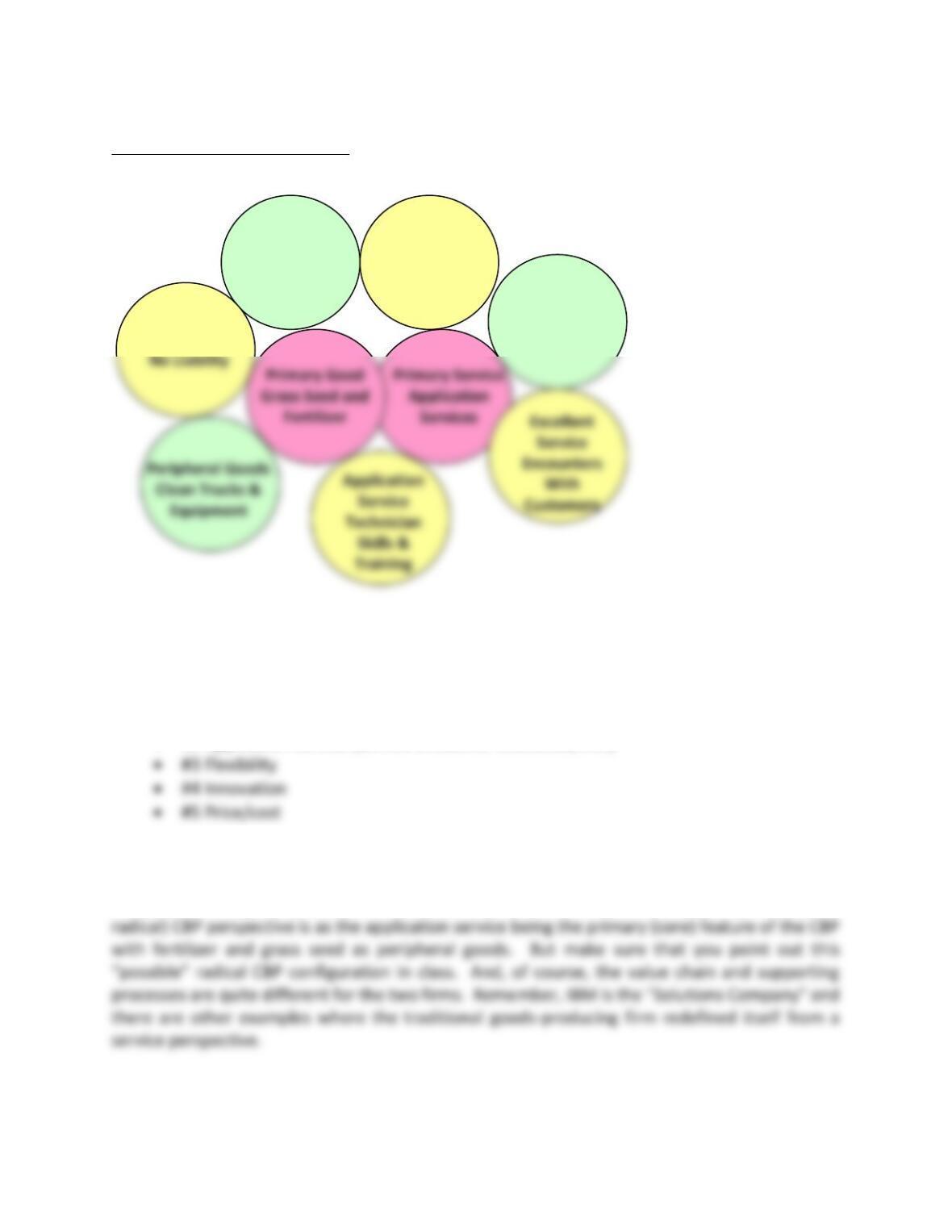
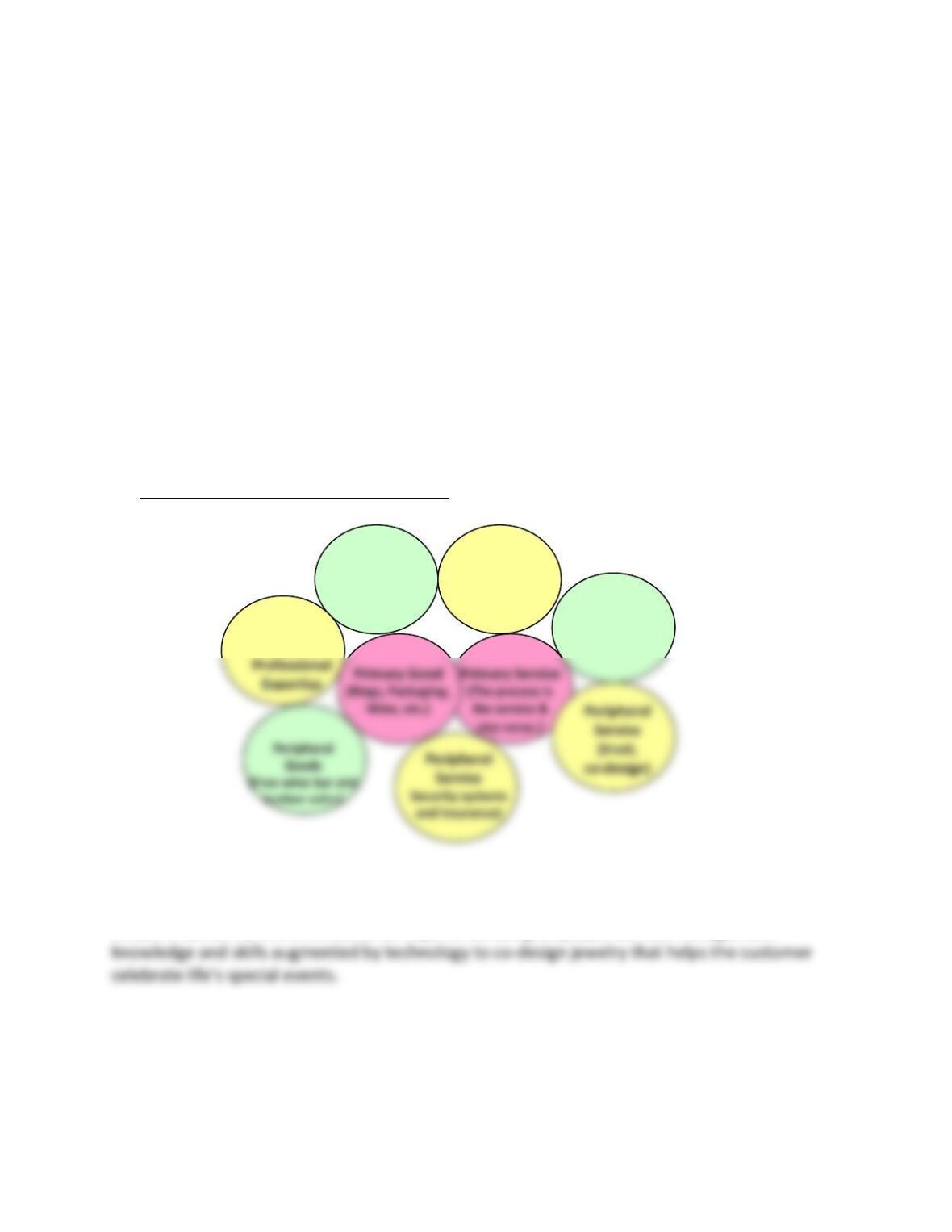
application market segments. A typical Lawn Care CBP analysis shown below provides the big
picture. Make sure the student understand that processes create and deliver each peripheral
or primary good or service and this is where OM has a major impact on overall organizational
performance.
Note: This case has been used in executive education programs so there is more contained in
21
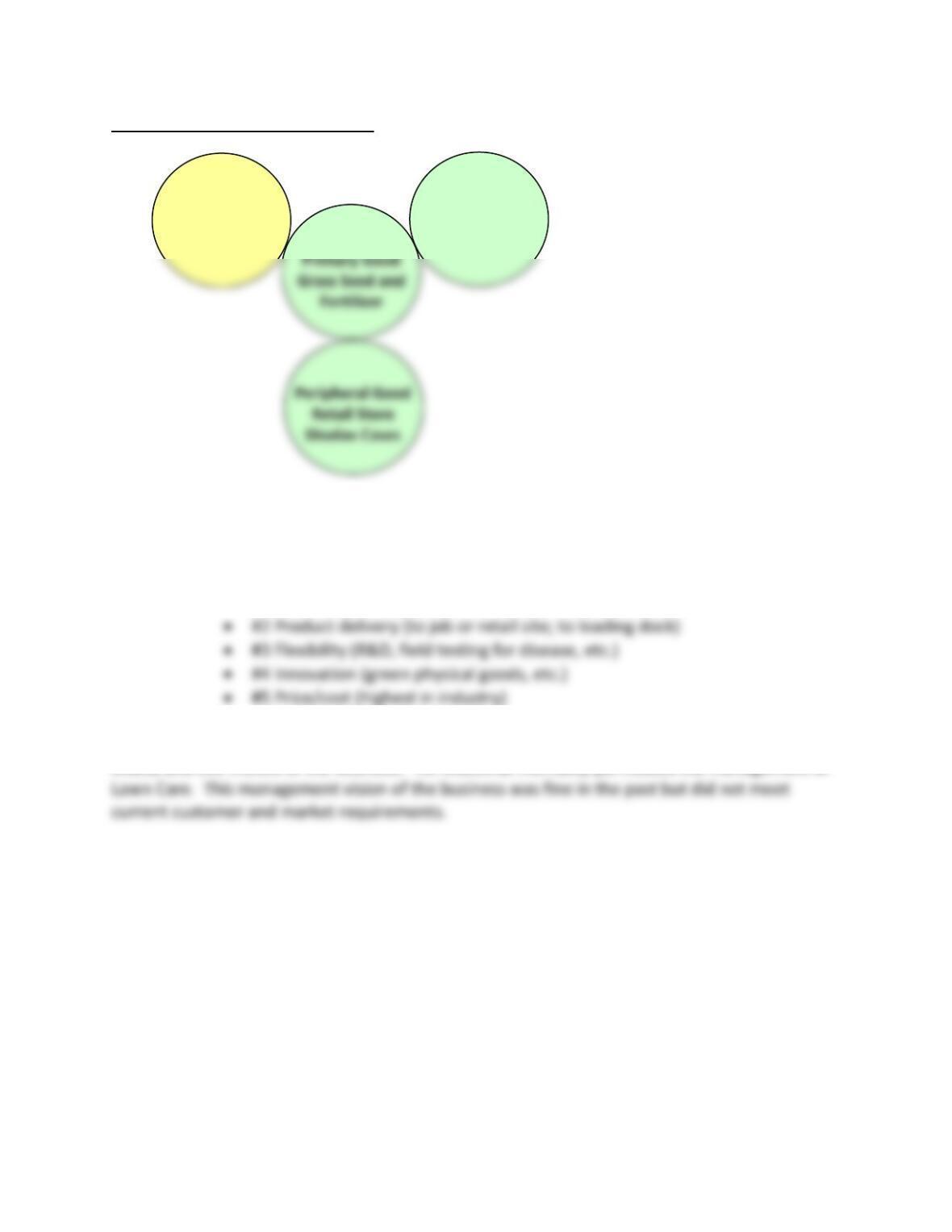
Lawn Care Company Example CBP
What’s the order winner above? #1 competitive priority is high quality grass seed and
fertilizer—a physical good! How would you rank order the competitive priorities using this
vision of the business? One ranking might look as follows:
• #1 Product quality (grass seed and fertilizer)
It is also useful to revisit Chapter 1 on customer benefit packages (also see the CBP power point
Peripheral Goods
Packaging
Peripheral Service
Claims Services
22
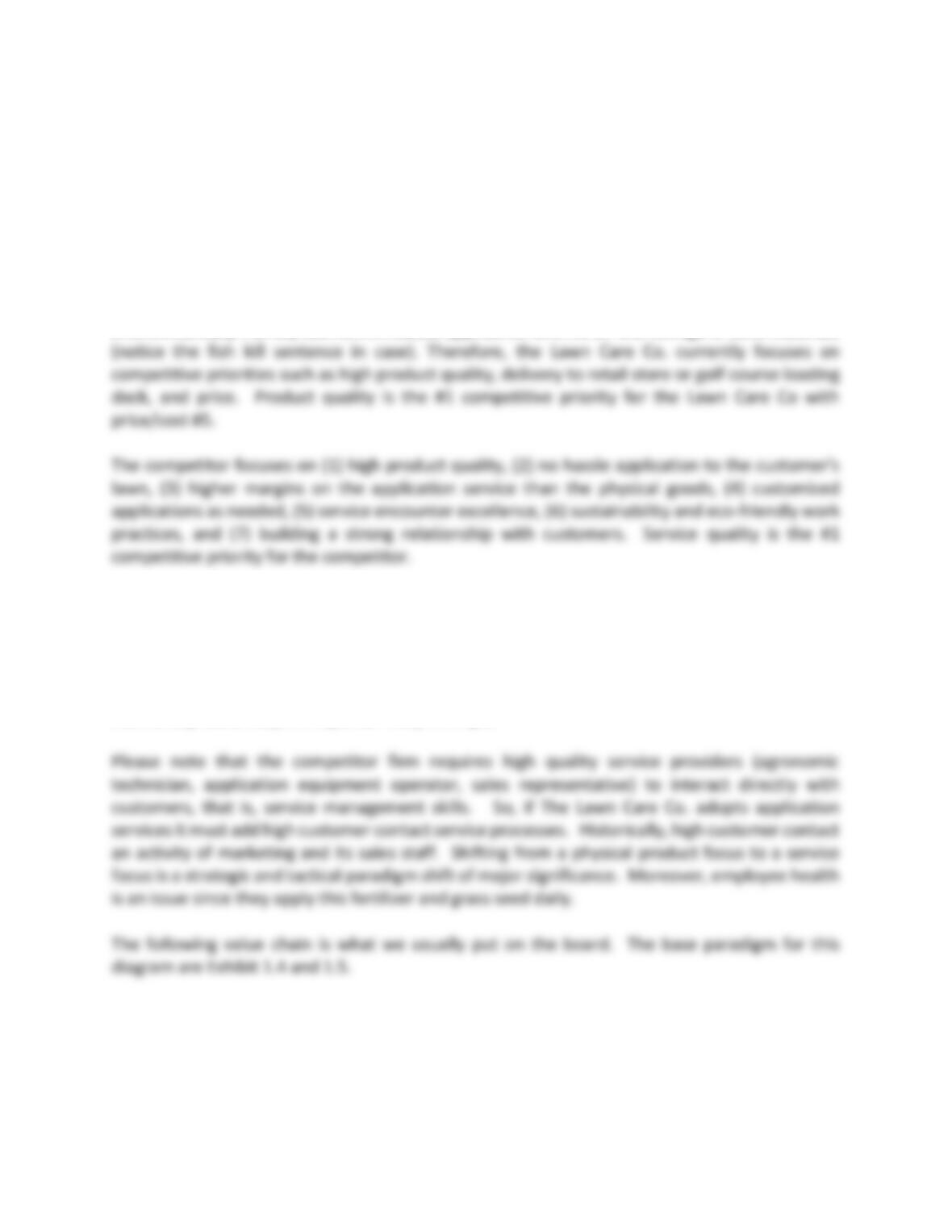
The Competitor’s Example CBP
What’s the order winner? A beautiful lawn with no hassles! Service! How would you rank
order the competitive priorities using this vision of the business?
• #1a and 1b Product and service quality (grass seed and fertilizer)
• #2 Application service (service encounter execution, etc.)
The Lawn Care Company defines its business more from a physical product or manufacturing
perspective while the competitor defines its VISION of the business as a dual CBP where service
is equal in strategic importance to the physical product. An even more radical (probably too
Peripheral Good
Retail Store
Display Cases
Peripheral
Service
Claims Services
Peripheral Goods
Packaging
Immediate
Application so
23
Case Questions for Discussion:
1. Define Lawn Care’s current strategic mission, strategy, competitive priorities, value chain,
and how it wins customers. What are the order qualifiers and winners? Draw the major
stages in their value chain without an application service.
The Lawn Care Company defines its business strategy as the “highest quality grass seed and
fertilizer in the world” while the competitor defines their business strategy as “beautiful lawns
with no hassles.” One could view the “no hassles” as part of doing work practices that are
Operations management is a key skill to making everything work as promised, that is, each of the
above processes. Some of above processes can be tied to “the physical good” while other
processes focus on the “application service.” Instructor expectation of students defining these
two processes should be general in nature at this early point in the course. The objective here is
simply to get students to think in terms of processes and some general notion of what type of
work and process steps is required. Keep it simple.
24
2. What problems, if any, do you see with The Lawn Care Company’s current strategy, vision,
customer benefit package design, and pre- and post-services?
There will always be a market for self-service application for golf courses, parks, and residential
lawns (like some step 1-2-3 self-service Four Step program sold at retail stores) but as the U.S.
standard of living and disposable income increases, the market for lawn care application
This case also fits nicely with the pre- and post-production value chain model of Exhibit 1.7.
Pre-Production
• Supplier negotiation and contracts
• Employee and customer application service training
Suppliers
Mining,
Farmers,
seeds,
chemicals,
Grass
Seed &
Fertilizer
Factories
(Continuo
Factory
Loading
Dock (Lawn
Care
responsibilit
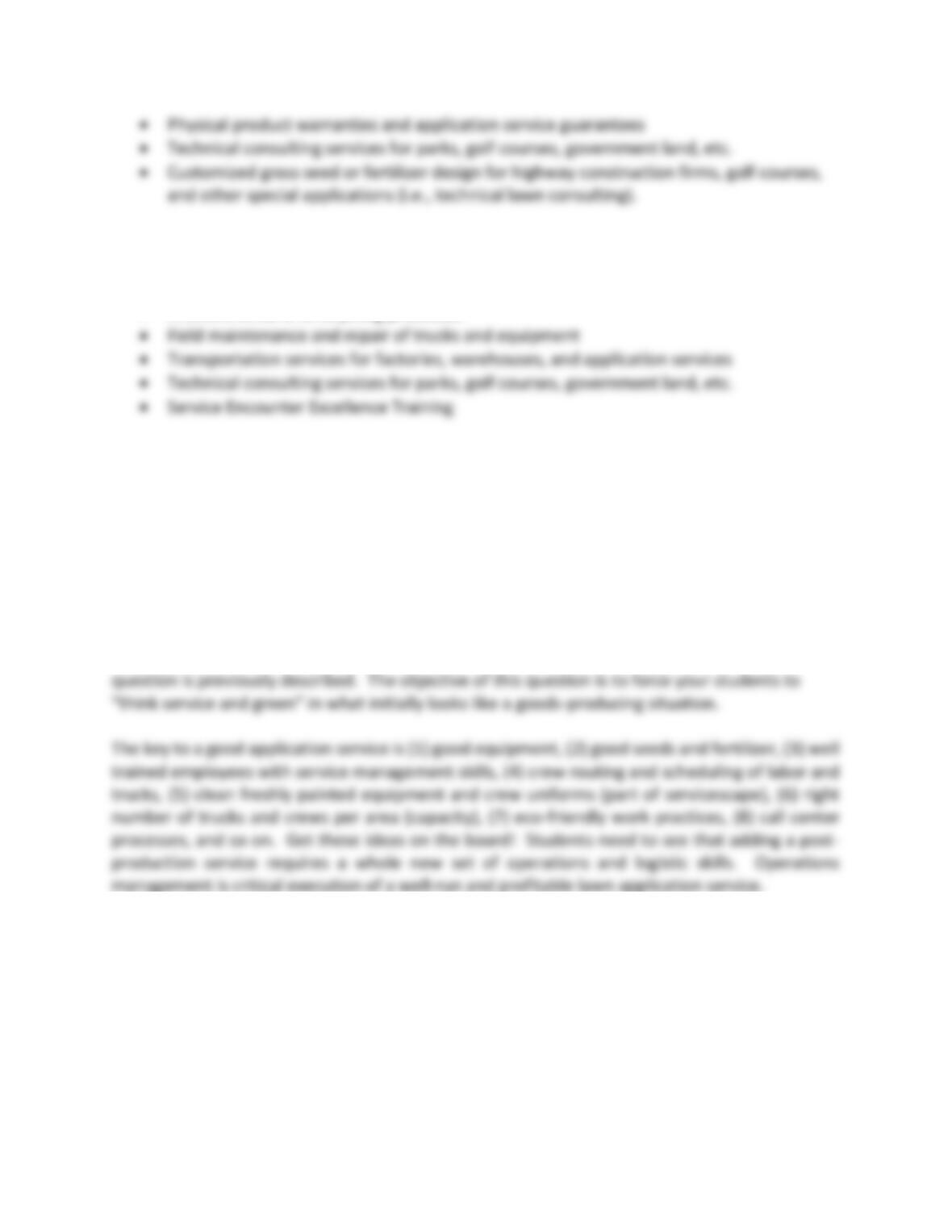
Lawn Care Value Chain (Focus on Physical Product or Add Service)
Third
Party
Shippers
Trucks, &
Rail to
Inbound
Shipping and
Transport
Trucks, third
party
Third Party
Applicators
Apply to
Lawns or Do
It Yourself
25
Post-Production
• Warranty and claims processing
• On-line billing and payment
Expect undergraduate students to only point out one or two of these – you will have to help
them “see” these pre– and post-production goods and services. Only talk about a few in class.
Of course, the key OM issue here is each of the above requires one or more processes to create
and deliver it!
3. Redo questions (1) to (2) and provide a new or revised strategy and associated customer
benefit package and value chain that is more appropriate for today’s marketplace.
Adding the application service (i.e., adding the last box to value chain) and extending the value
chain forward toward the customer is the focus of this question. Most of the answer to this
4. What does operations have to be good at to successfully execute your revised strategy?
We normally get into a discussion of “What does the firm have to be good at to offer the
application service?” Ask them questions like:
(1) How many crews?
(2) What’s the size of an application crew? Equipment? Trucks?
(3) How route and schedule crews?
26
So, implementing an application service is not easy and requires great OM and logistic skills!
5. What are your final recommendations?
Most students or teams will recommend they offer the application service but how to do it is
not so clear to them so ask “What options does LC have to do their own applications?” Some
options include:
(1) 100% company owned application service,
Additional Questions to Consider:
A. What issues do you see with respect to “green” in this business?
The case hints at sustainability issues with reference to polluted lakes and streams, and the
lawsuit by the green advocacy group. In real life, there are many profound issues with lawn
application service and the health of people and the environment such as:
(a) Where do you store toxic fertilizer and chemicals once delivered to the job site or do you
store them?
(b) Do employees’ breath contaminated air when they spray a lawn or golf course, and what
is the impact on their health?
B. What’s the gross margin on the physical goods (i.e., grass seed and fertilizer) versus the
application service?
Low for physical goods in the range of 10 to 30 percent while for the application service is it
closer to 100 percent. So, how do you make money in this business? Also, you can draw the
27
C. What are two example processes that create and deliver each good or service in the
current CBP? Briefly describe process issues and related decisions.
Example processes that create and deliver the CBP include:
• Equipment and truck purchasing process
• Evaluating labor and equipment capacity and demand forecasts by area
• Equipment maintenance and repair process
• Equipment parts ordering and inventory management
Postscript
The Lawn Care Co. dropped “professional” lawn care service after three years (the market was
too small, limited ability to raise prices, and Lawn Care had little expertise in OM field service
skills such as scheduling, purchasing, and capacity management) and bought existing and local
residential application service firms that already had the proper OM skills in cities such as
28
adopt a lawn care application service? (3) How should Lawn Care and other firms in this industry
define, control, and manage sustainability?
Teaching Note: Hudson Jewelers
A complete teaching note for all chapters is available in the Instructor Resources online.
Instructors should read the entire case and most of the case assignments at the end of each
chapter. Then decide if you want to assign all or part of the case questions.
Chapter 3 Case Questions for Discussion:
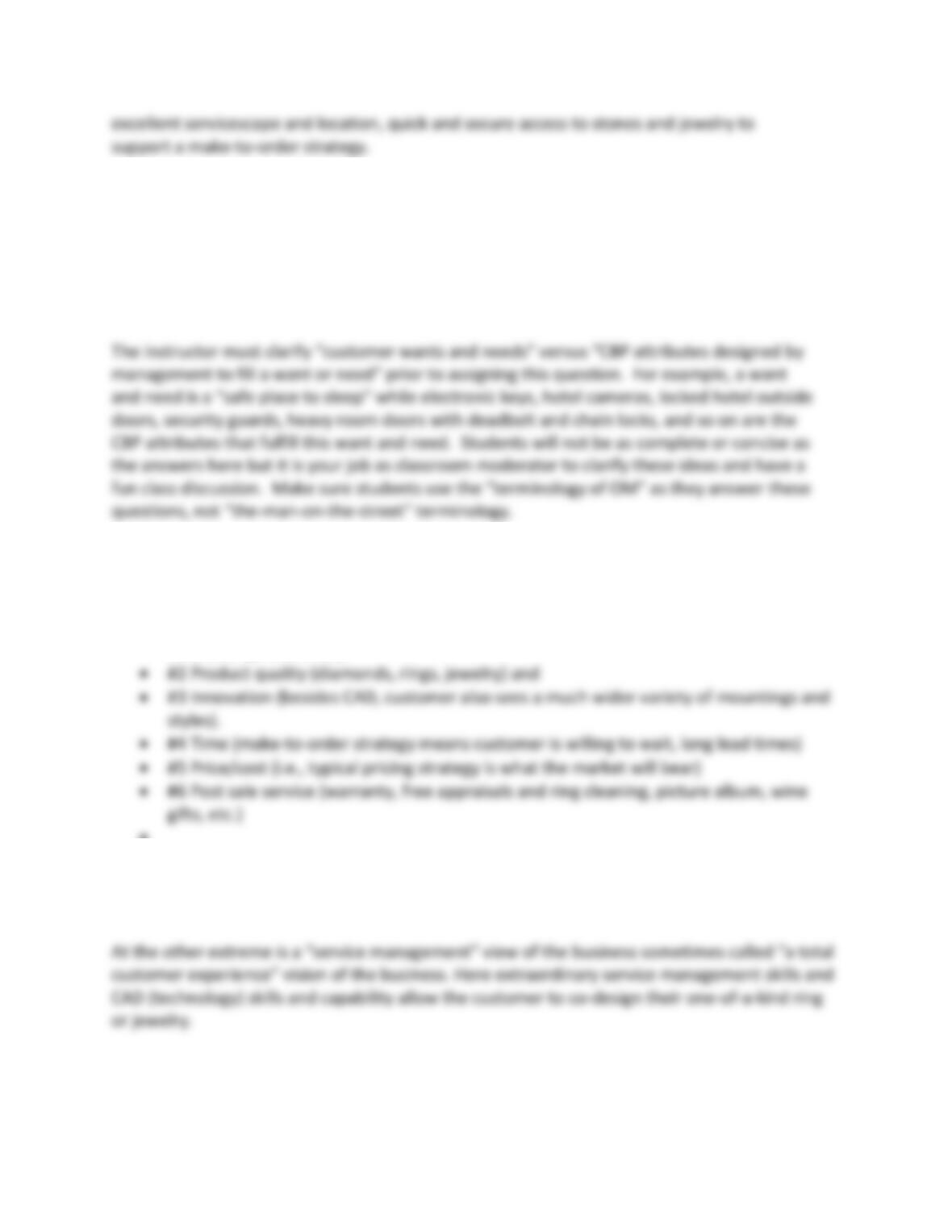
1. Define and draw the customer benefit package and state Hudson Jewelers’ strategy; rank
order its competitive priorities, order qualifiers, and order winners; and state the ways
they gain competitive advantage.
Example Dual CBP Students Might Draw
Strategy:
Create a wonderful life time customer experience using employee service management
Order Qualifiers:
Product quality, value chain capability that requires flow shop and job shop processes;
owner and employee jewelry/industry knowledge and expertise, a physical store with an
Peripheral Goods
Retail Store
Display Cases
And Lighting
Peripheral
Service
Financing
Peripheral Goods
High End Packaging
Peripheral
Service
29
Order Winners:
Service quality (the entire customer experience), design flexibility and customization,
employee service management and CAD technology skills, proof of conflict-free diamonds,
wine bar, use computer-aided-design (CAD) to co-produce the customer’s rings and jewelry,
product variety (customer sees thousands of alternative ring designs and mountings), fit
customer tastes and target price range.
How would you rank order the competitive priorities for this business?
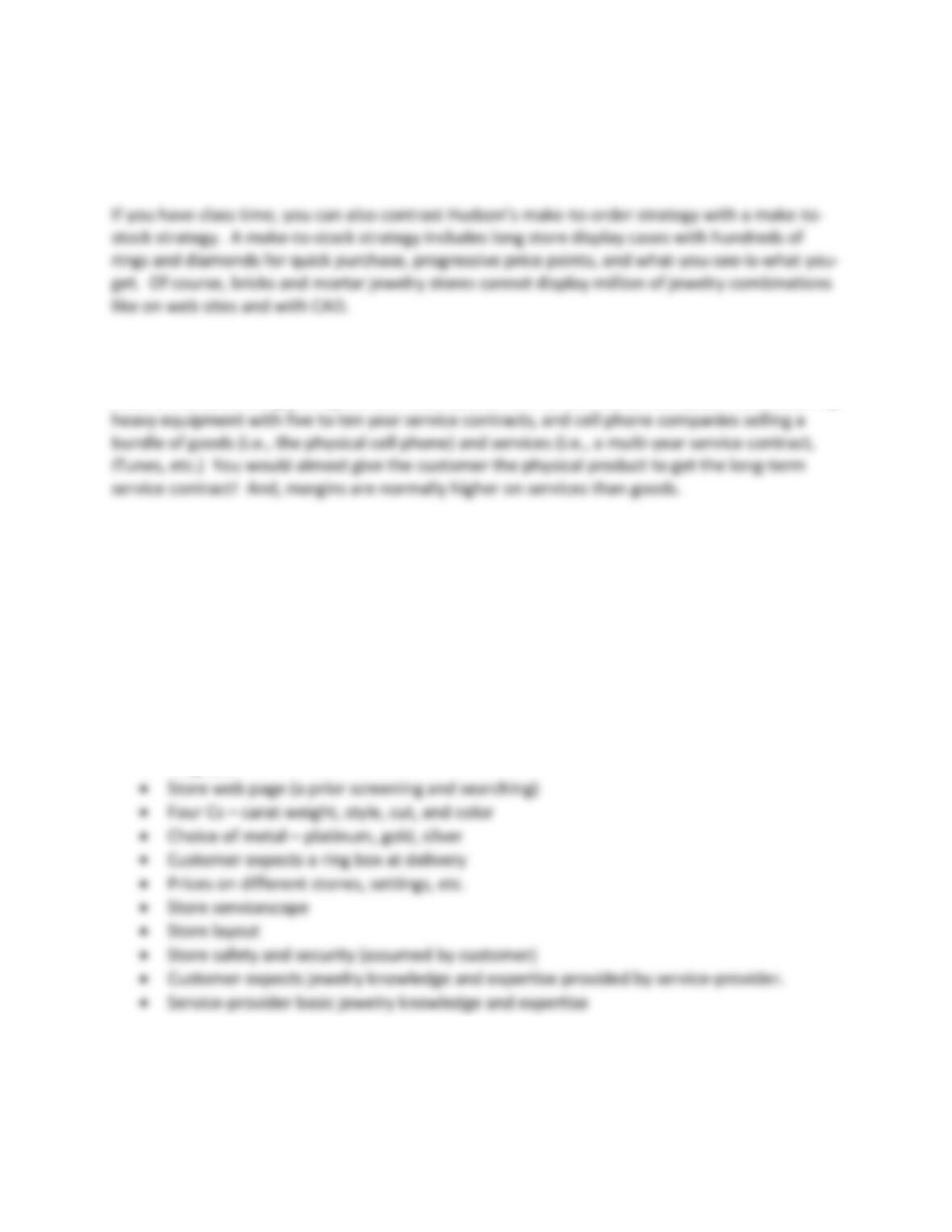
• #1a Flexibility/customization (co-designed, one-of-a-kind jewelry, make-to-order
strategy) – Or rank #1b –This is really design AND resource flexibility!
• #1b Service quality (employee CAD and service management skills, build customer
relationships and trust)
•
Competitor jewelers may define their business as “selling make–to–order jewelry,” a physical
product perspective void of service management practices. This is a very limited vision of the
business.
30
Also, ask the class, “If you had $100 to spend what part is for physical goods versus service and
the experience of co-designing your own jewelry?” Most students answer $80 physical goods
to $20 for the memorable and total service experience.
Remember, IBM is the “Solutions Company” and there are other examples where the
traditional goods-producing firm redefined itself from a service perspective such as General
Electric manufacturing jet engines with twenty year service contracts, Caterpillar manufacturing
2. Evaluate a customer’s retail store experience in terms of search, experience, and credence
attributes. Provide some examples and explain why they can be classified as search,
experience, and credence attributes.
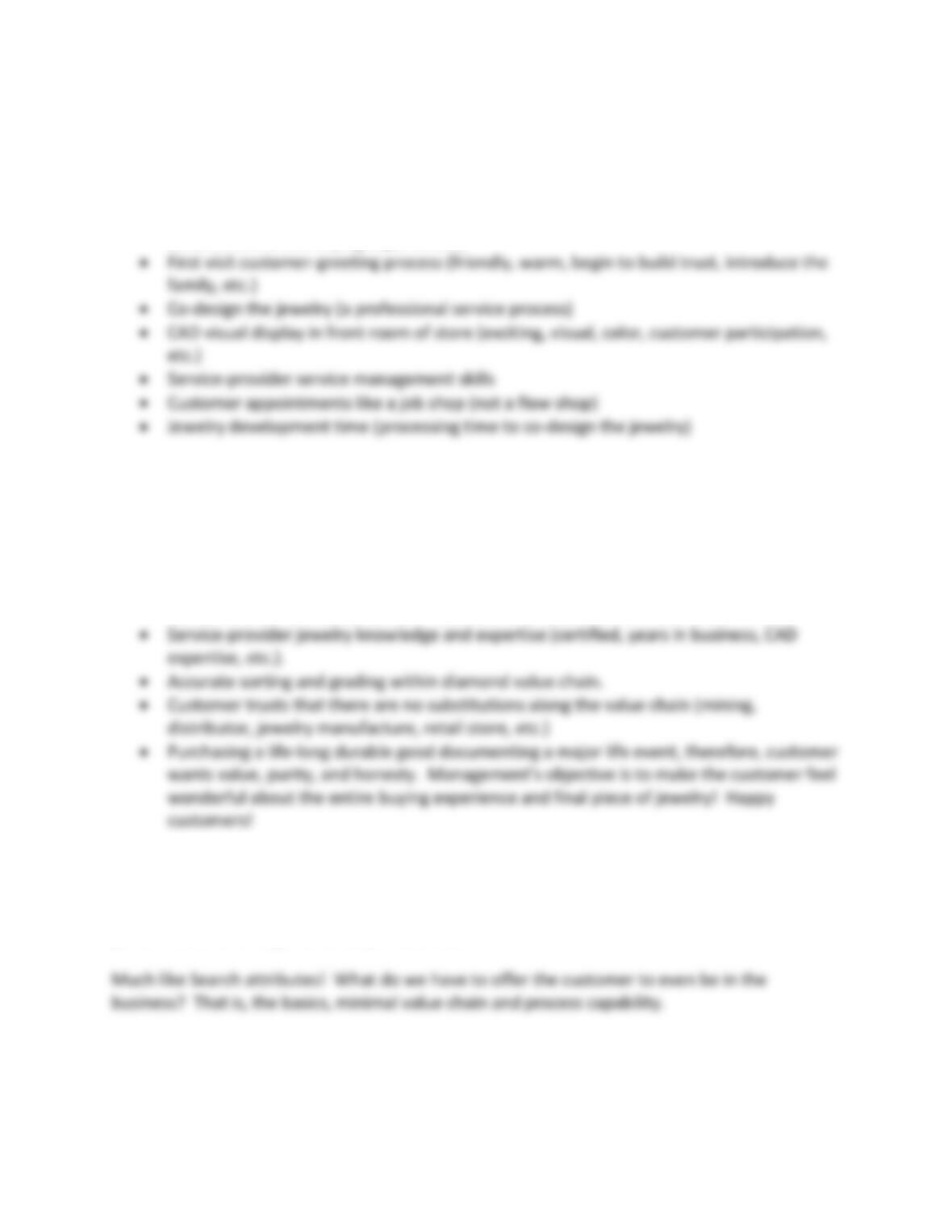
Search attributes are those that a customer can determine prior to purchasing the goods
and/or services. These attributes include things like color, price, freshness, style, fit, feel,
hardness, and smell.
• Store location
• Store hours open/closed
• Ring size
Experience attributes are those that can be discerned only after purchase or during
consumption or use. Examples of these attributes are friendliness, taste, wearability, safety,
fun, and customer satisfaction.
31
Remember that services are experienced, and the process is the service and vice versa.
• Jewelry delivery, pickup, and celebration process with wine, photo album, champagne,
toast, etc. (a pre-defined process established by store management, a surprise! Adding
biztainment to the buying experience!)
Credence attributes are any aspects of a good or service that the customer must believe in, but
cannot personally evaluate even after purchase and consumption. Examples include the
expertise of a surgeon or mechanic, the knowledge of a tax advisor, or the accuracy of tax
preparation software.
• Jewelry appraisals (trust that final jewelry is proper quality and value for the price).
• Are diamonds “blood diamonds?” Synthetic diamonds? Ethical diamonds?
Instructors might also engage students in a discussion of order qualifiers and order winners.
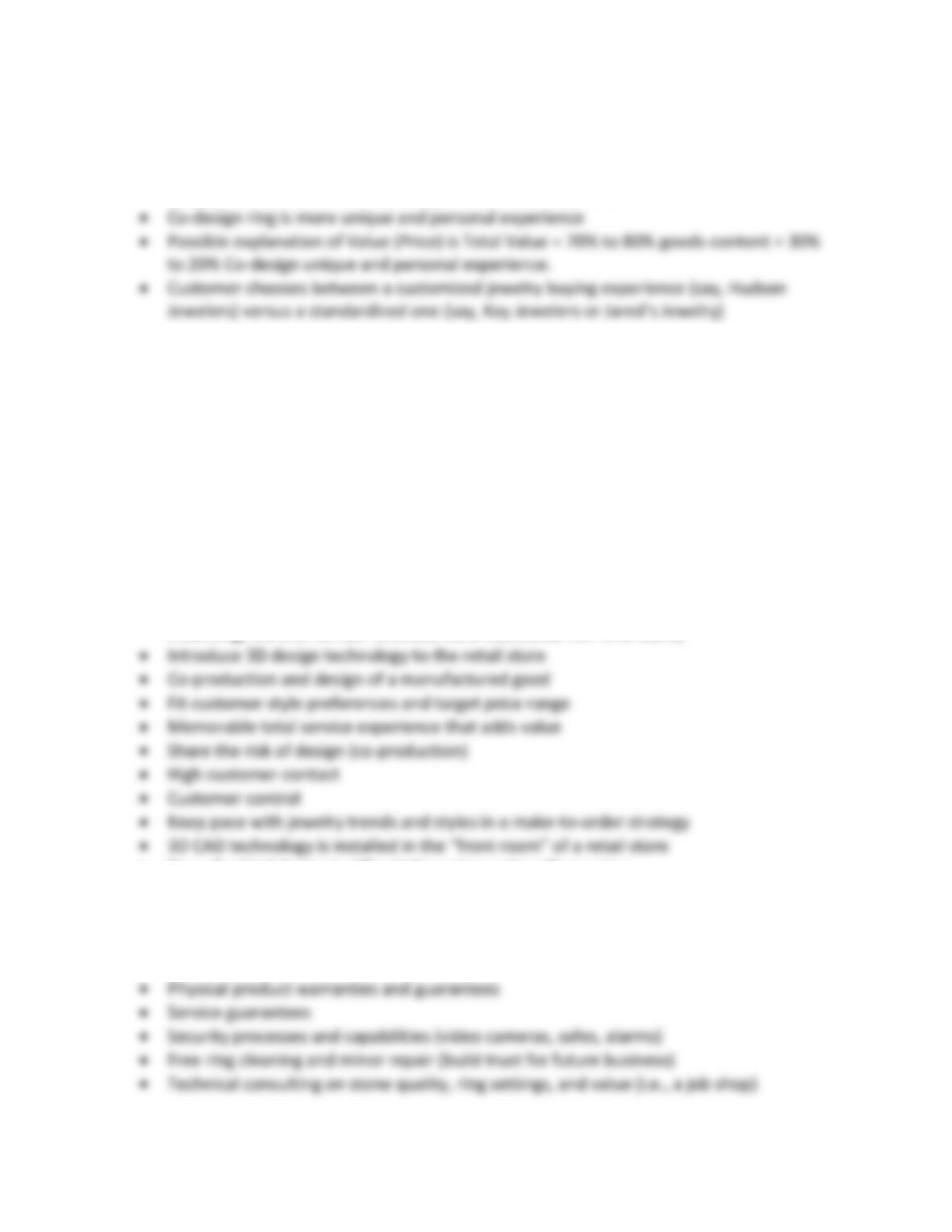
Order Qualifiers are basic customer expectations are generally considered the minimum
performance level required to stay in business.
Order Winners are goods and service features and performance characteristics that
differentiate one customer benefit package from another, and win the customer’s business.
32
Much like experience and credence attributes.
• Service-provider establishes a personal relationship between buyer and seller (Trust).
• Ring symbolizes eternal love (intangible human perception)
3. Define in detail the attributes of “value” when buying and co-designing a $50,000
wedding ring. What creates a buying experience that would delight the customer?
In Chapter 1 we defined value as:
Perceived benefits /Price (cost) to the customer
What attributes create value? Some examples of benefits to the customer and internal
approaches that might reduce the cost to the customer are:
• Design flexibility (mass customization)
• Product variety (customer sees tens of thousands of alternative ring designs and
• One-of-a-kind design justifies higher price and profit margins
• Employee service management skills
• Free wine bar and leather sofas in store
• Financing (via third parties like banks or jewelry trade-in credits)
• Customer jewelry trade-ins
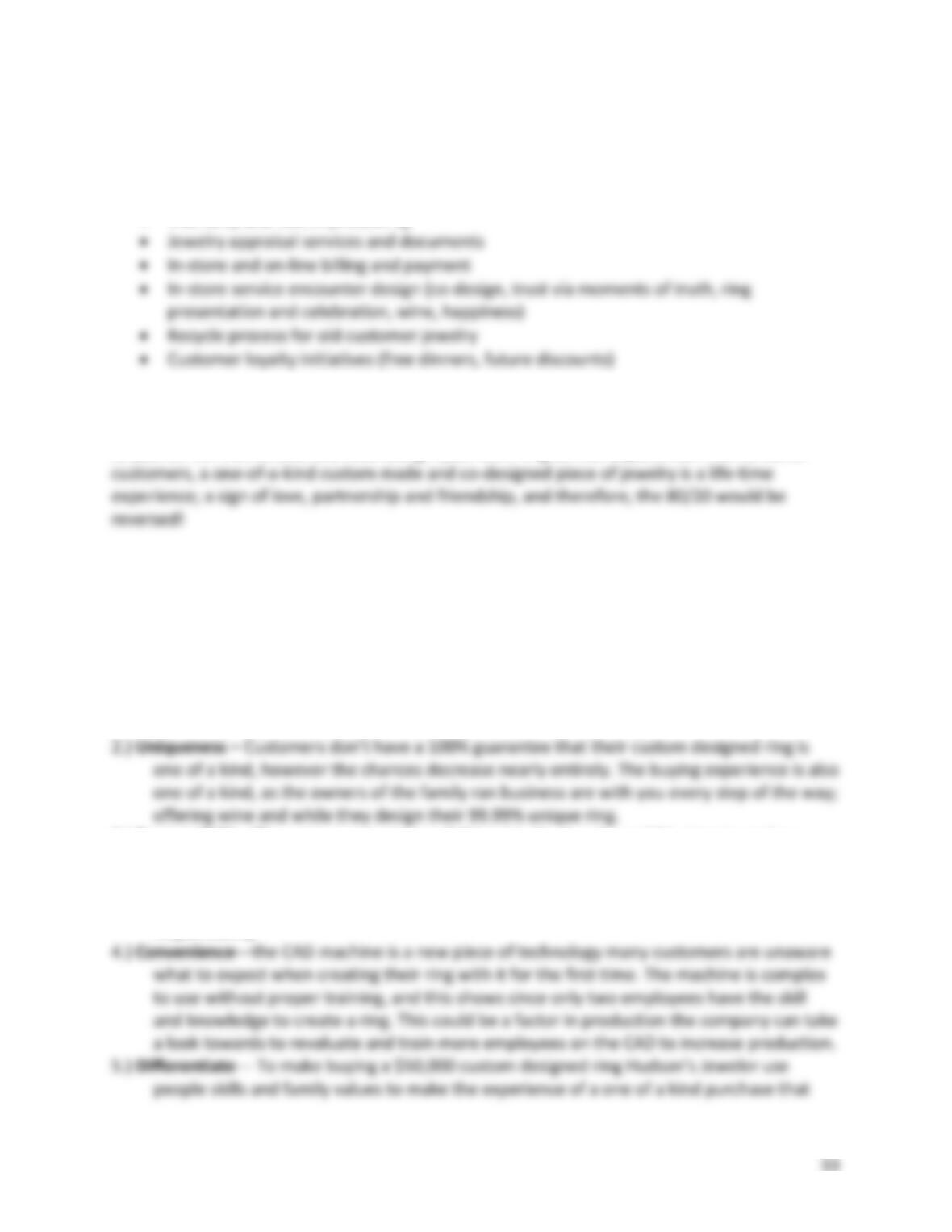
• Customized co-design of jewelry via in-store CAD (basically a family consulting business
built on trust)
• Quality standards for stones and gems (associations, grading, fraud, judgment versus
measurable specifications, high performance quality versus consistent quality)
Also, ask the class, “If you had $100 to spend what part is for physical goods versus service and
the experience of co-designing your own jewelry?” Most students answer $80 physical goods
to $20 for the memorable and total design-your-own-ring service experience. And for some
One student organized the numerator with the following five attributes with “Price” in the
denominator.
1.) Creativeness– By sitting down and creating your own custom designed ring for nearly 4-5
hours, it brings out the more creative side from a customer, rather than looking at a
limited supply of rings at a classic jeweler store. Customers can pick though thousands of
options between the color and cut of the stone, the setting for the diamond, and
practically endless selections of other ways to customize the ring.
3.) Responsibility– The customer must have full trust in the jeweler and his store to make a
long- term investment like a custom designed ring. The jewelry has a responsibility to the
customer to uphold that trust and to also make the purchase experience to be devoted to
the satisfaction of the customer in the short-run and long run. The company also has a
34
the customer will remember and treasure forever. By being a family-ran business
Hudson’s Jeweler can create a comfortable environment when picking out your ring. For
instance they offer free wine and an inviting sitting area to make customers feel at ease
when going through with various critical decisions for a personal custom ring.