Instructor Resource
Rowe, Cases in Leadership 5e
SAGE Publications, Inc., 2019
Case Notes
Case 3.1: Skills for Tomorrow: A Management Team in Crisis
Steven D. Charlier and Martin M. Brennan wrote this teaching note as an aid to instructors in
the classroom use of the case SkillsForTomorrow: A Management Team in Crisis, No.
9B13C022. This teaching note should not be used in any way that would prejudice the future use
of the case.
This publication may not be transmitted, photocopied, digitized or otherwise reproduced in any
form or by any means without the permission of the copyright holder. Reproduction of this
material is not covered under authorization by any reproduction rights organization. To order
copies or request permission to reproduce materials, contact Ivey Publishing, Ivey Business
Teaching Note
Synopsis
The SkillsForTomorrow (SFT) case presents a common scenario in management consulting—a
client/sponsor who may be unwilling to hear what you (the consultant) have to say! The student
is placed in the role of Martina Jones, a management consultant who has been hired to fix the
“morale” issues at an SFT location in Harrisburg, Pennsylvania. SFT is a government-sponsored
organization tasked with helping at-risk young adults gain vocational training toward preparing
Instructor Resource
Rowe, Cases in Leadership 5e
SAGE Publications, Inc., 2019
The case provides detailed information on the performance of the location relative to
benchmarks and peers. Notes from a series of interviews with SFT management, along with
some brief survey results, are also provided at the end of the case. From this information, it
should become evident that there are several factors influencing the morale of the SFT
Learning Objectives
There are two central learning objectives for the case study:
1. To analyze and diagnose task and interpersonal conflict that is detrimental to
team/organizational performance, and then develop solutions.
Beyond these main objectives, there are several auxiliary learning objectives for the case. While
any discussion of the case will focus on the two central learning objectives, the level of emphasis
on any of the following sub-objectives can vary based on the course, instructor and student
population:
Use of the Case
The case was initially designed for a graduate-level course in management consulting, within an
overall program focused on organizational leadership. However, the case can also potentially be
used in both upper-end undergraduate-level and graduate-level courses in management,
organizational behavior or teams. The issues and context for the case align well with the general
topic areas of teams, leadership, conflict, collaboration and communication.
In terms of timing within a given course, this will vary based on the level of the students.
At a minimum, students will need to have a basic understanding of consulting processes and
methodologies prior to engaging in the case study—an overview of a general consulting process
Recommended Readings
Below are a number of outside readings that are pertinent to the context and issues featured in
the case study, some of which are referenced within this teaching note:
Eisenhardt, K. M., Kahwajy J. L., & Bourgeois, L. J. (1997). How management teams can have a
good fight. Harvard Business Review, 75, 77–86.
Katzenbach, J. R. (1997). The myth of the top management team. Harvard Business Review, 75,
82–92.
Lencioni, P. (2002). The five dysfunctions of a team. San Francisco, CA: Jossey-Bass.
Mantel, S. J., Jr., Meredith, J. R., Shafer, S. M., & Sutton, M. M. (2011). Project management in
practice (4th ed.). Hoboken, NJ: John Wiley & Sons.
Instructor Resource
Rowe, Cases in Leadership 5e
SAGE Publications, Inc., 2019
Michel, J. G., & Hambrick, D. C. (1992). Diversification posture and top management team
characteristics. Academy of Management Journal, 35, 9–37.
Preparation for Class Discussion
Prior to class discussion, there are several questions related to the central learning objectives of
the case that may be posed to students. These align with the proposed organization of the
classroom discussion in the following section:
1. How does management consulting work? What is the role of the management consultant
in this particular situation?
2. What are the main issues facing the SFT Harrisburg team of directors? What are the root
causes of these issues?
3. How would you characterize Alvarez as a leader?
Additional questions that can be asked of students (either prior to the discussion or within the
classroom discussion) are as follows:
1. What is your interpretation of the performance data for SFT Harrisburg in case Exhibits 1
and 2? Is SFT Harrisburg doing a “good job” or not?
2. Is the current management structure at SFT Harrisburg effective? Why or why not?
3. Are there in-groups and out-groups within the team of directors at SFT Harrisburg? If so,
what are they? Is the relationship between Alvarez and Nelson an issue?
Again, the level of emphasis on the second group of questions will vary from class to class.
Organization of Class Discussion
The following is one potential means of organizing the in-class discussion of the case within a
90-minute class period. A recommended structure for the overall set of boards for the classroom
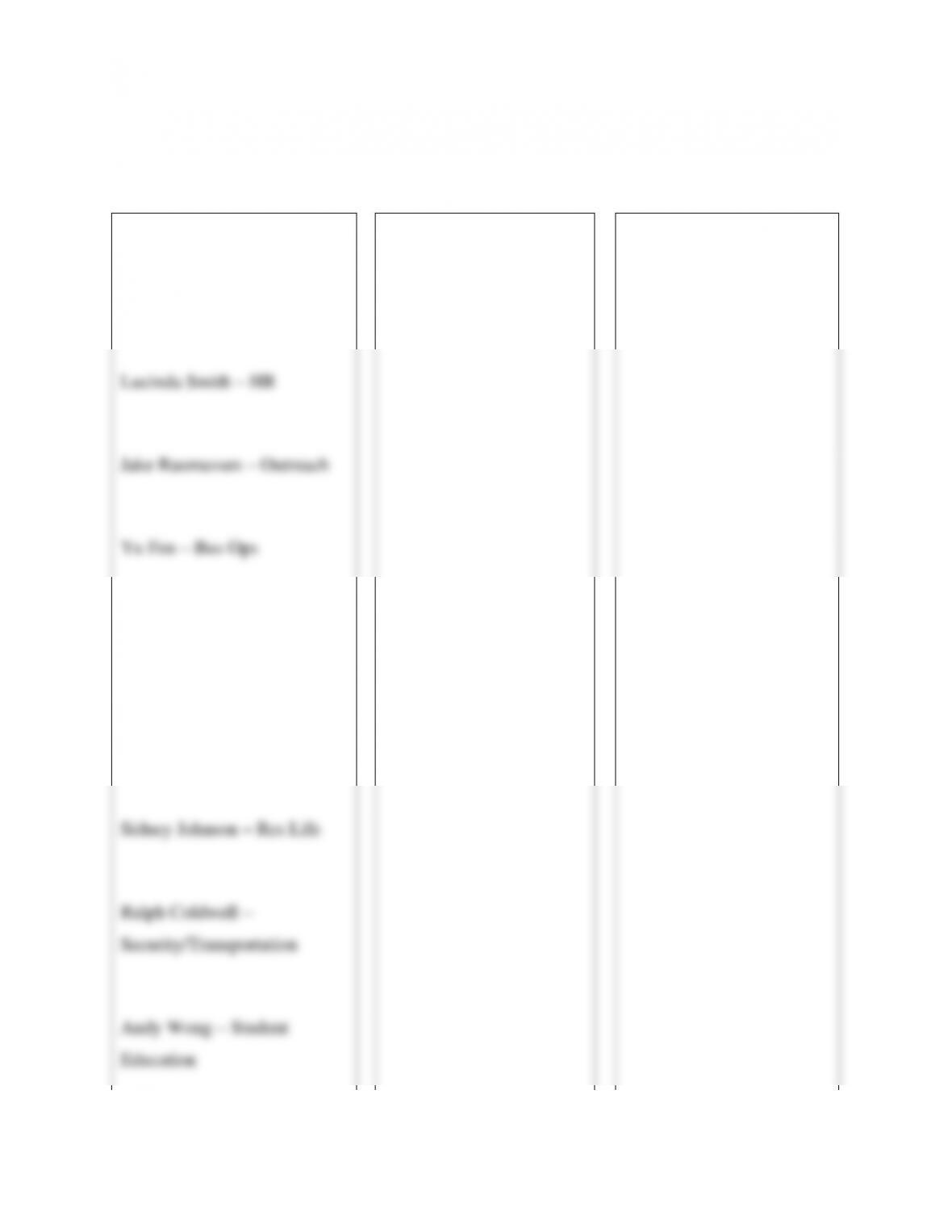
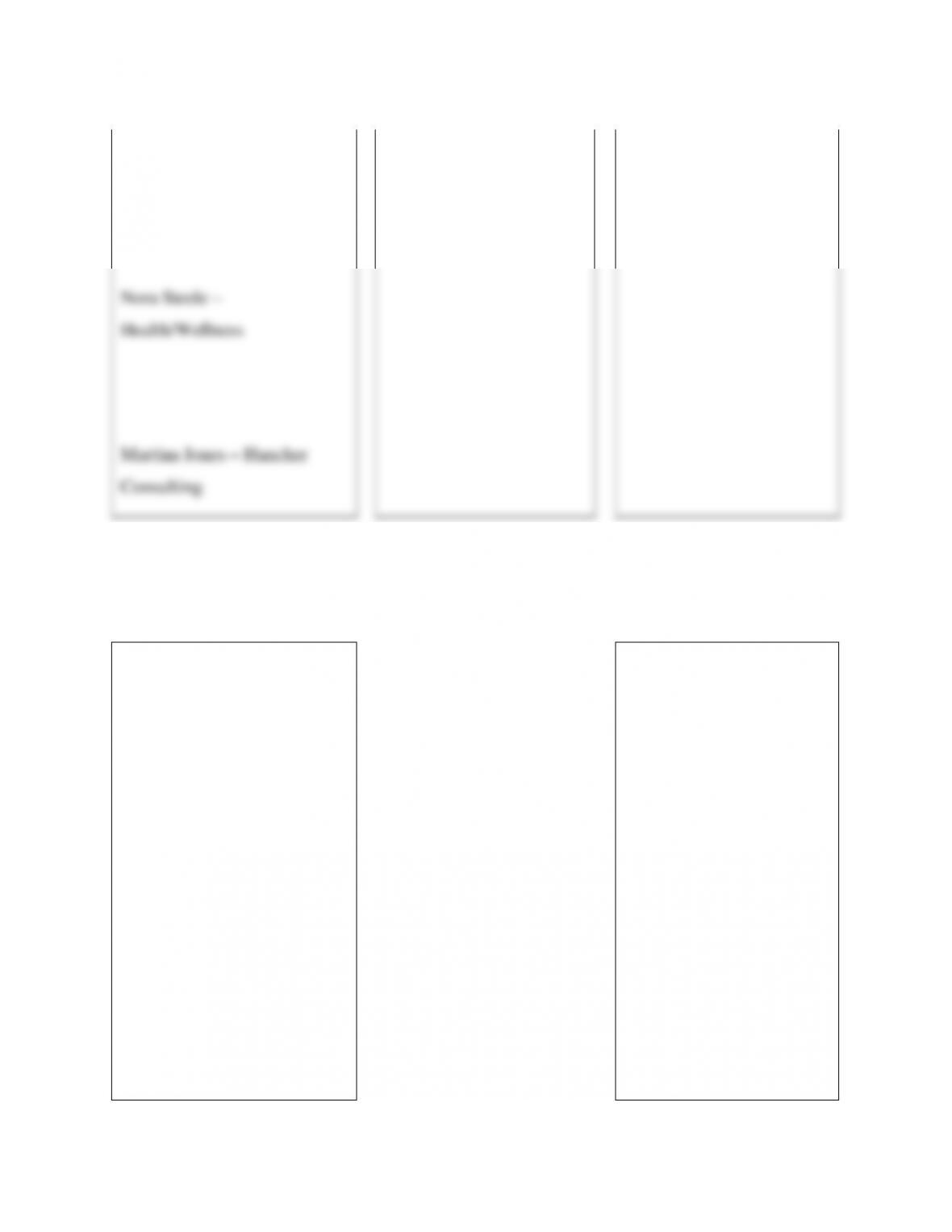
discussion is provided in Exhibit TN-2.
Overview of the Case and the Major Players (5 minutes)
It may be useful to have a list of the directors/roles (including Jones, the consultant) on a board
prior to the start of class. This will be helpful later in the discussion, as the various in- and out-
Analysis
1. How does management consulting work? What is the role of the management consultant
in this particular situation? (10 minutes)
Beyond the overview of the context for the case, it is important for students to understand the
unique environment within which consultants apply their craft. If the consulting process has not
Instructor Resource
Rowe, Cases in Leadership 5e
SAGE Publications, Inc., 2019
2. What are the main issues facing the SFT Harrisburg team of directors? What are the
root causes of these issues? (20 minutes)
Again, two boards should be used to capture the issues and root causes from the ensuing
discussion. In short, students should identify several areas of concern on the part of Alvarez and
others at SFT Harrisburg. In turn, these identified issues can be tied to various root causes at
Instructor Resource
Rowe, Cases in Leadership 5e
SAGE Publications, Inc., 2019
Instructor Resource
Rowe, Cases in Leadership 5e
SAGE Publications, Inc., 2019
3. How would you characterize Alvarez as a leader? (10 minutes)
Having gone through the previous discussion of issues at SFT, students will likely be quite
negative towards Alvarez’s performance as executive director thus far. While Alvarez is
4. What recommendations would you make to help improve the situation? (15 minutes)
Once all of the issues and root causes are documented on the boards, students should be asked to
recommend solutions to these problem areas. Up to this point, the conversation has stayed at a
somewhat clinical/diagnostic level, but this is where the aspects of the client-consultant
Instructor Resource
Rowe, Cases in Leadership 5e
SAGE Publications, Inc., 2019
5. If you were Martina Jones, specifically how would you approach the Monday-afternoon
meeting with the directors? What would you do before, during and after the briefing with
the directors? (15 minutes)
Armed with a set of issues and recommendations, students may immediately jump to planning
for the afternoon briefing with the directors (including Alvarez). Two things should result from
this portion of the discussion. First, a strategy for the presentation to the directors is clearly
Instructor Resource
Rowe, Cases in Leadership 5e
SAGE Publications, Inc., 2019
6. Is an off-site retreat advisable at this time? If so, what would be the focus of the retreat?
Specifically, how would you organize the retreat? (10 minutes)
Alvarez is clearly keen on holding an off-site retreat. While the retreat will likely not solve all of
the issues exhibited at SFT, some benefits can be gained from a properly structured program of
activities aimed at increasing the level of trust and communications within the TMT. The
Instructor Resource
Rowe, Cases in Leadership 5e
SAGE Publications, Inc., 2019
Wrap-up (5 minutes)
To conclude the discussion, the instructor can begin by recapping the issues and
recommendations that were developed by the students over the course of the class period. Key
points that should be addressed in the wrap-up include the following:
• Dysfunction in teams can stem from a variety of sources—personality, organizational
structure, task-related conflict, misaligned goals and more.
Epilogue
Prior to the briefing with the directors, Jones was able to meet with Alvarez and provide an
overview of Hancher Consulting’s findings. Alvarez was visibly shocked by some of the
information, particularly around his perceived relationship with Nelson and the impressions of an
“inner circle” with Alvarez. Alvarez did ask Jones to keep the comments on his relationship with
Nelson out of the afternoon presentation, but otherwise gave the green light to report the other
findings.
Instructor Resource
Rowe, Cases in Leadership 5e
SAGE Publications, Inc., 2019
the high-level issues listed previously. It was also agreed that Jones would facilitate the off-site
meeting, and the contract with Hancher was amended accordingly.
At the off-site meeting (held several weeks after the initial briefing), the directors went
through a series of exercises focused on open communication, honest feedback and the Five
Dysfunctions of a Team text (Lencioni, 2002). At the culmination of the two-day meeting, the
directors were asked to sit in a circle and write answers to the following questions for each of
their colleagues on the management team:
Instructor Resource
Rowe, Cases in Leadership 5e
SAGE Publications, Inc., 2019
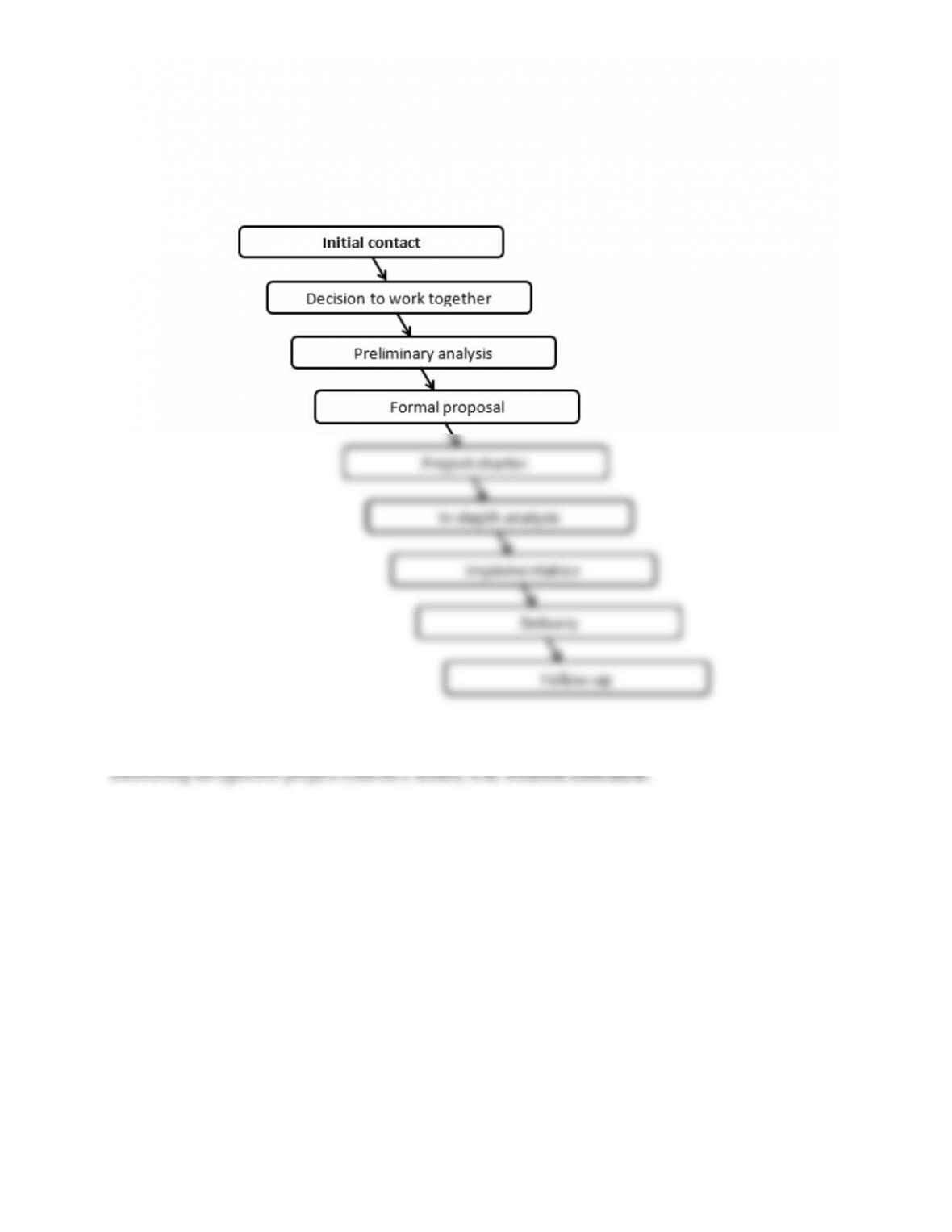
Exhibit TN-1
Consulting Process
Source: Adapted from Wickham, P., & Wickham, L. (2008). Management consulting:
Instructor Resource
Rowe, Cases in Leadership 5e
SAGE Publications, Inc., 2019
Exhibit TN-2
Board Structure for Start of Class Discussion
Key Personnel
Issues Root Causes
Solutions
Ted Alvarez – Executive
Director
Lucinda Smith – HR
Jake Rasmussen – Outreach
Yu Fen – Bus Ops
Nancy Cummings – Career
Services
Walter Blackmon – Dean
Sidney Johnson – Res Life
Ralph Coldwell –
Security/Transportation
Andy Wong – Student
Education
Instructor Resource
Rowe, Cases in Leadership 5e
SAGE Publications, Inc., 2019
Melinda Nelson – General
Education
Nora Steele –
Health/Wellness
Martina Jones – Hancher
Consulting
Monday Morning Strategy
Off-site Retreat