Case 4 Teaching Note Costco Wholesale Corp. in 2018: Mission, Business Model, and Strategy
311
Threat of entry into the warehouse club industry in North America—a weak competitive force
In assessing this competitive force, students should draw upon the information in Figure 3.5 in Chapter
3 (and the related text discussion).
From our perspective, the window for entering the North American warehouse club industry is pretty
much closed. There is, of course, potential for each competitor to enter cities/localities where no stores
are currently located.
The barriers to a totally new entrant are quite high:
Moreover, the three industry incumbents are in a strong position to vigorously contest a newcomer’s
entry.
Conclusions concerning the threat of entry. All things considered, a newcomer’s prospects for
attractive profitability appear slim indeed. This is a low-margin business to begin with (with profits
coming chiey from membership fees). What outside company (besides perhaps Target—and that is a
Case 4 Teaching Note Costco Wholesale Corp. in 2018: Mission, Business Model, and Strategy
312
• The merchandise that can be purchased at substitute retailers/discounters is broader and thus
sometimes more appealing/suitable than the narrow production selection at wholesale clubs.
The bargaining power and leverage of suppliers to the warehouse club industry—a moderate to weak
competitive force.
In assessing this competitive force, students should refer to Figure 3.7 and the related discussion in
Chapter 3.
The bargaining power and leverage of customers (the members of wholesale clubs)—a very weak
competitive force
In assessing this competitive force, students should refer to Figure 3.8 and the related discussion on pp.
62-64 of Chapter 3.
Case 4 Teaching Note Costco Wholesale Corp. in 2018: Mission, Business Model, and Strategy
313
• There’s no evidence indicating that clubs are frequently so overstocked with certain merchandise
that a single member is able to bargain down the posted price of overstocked items.
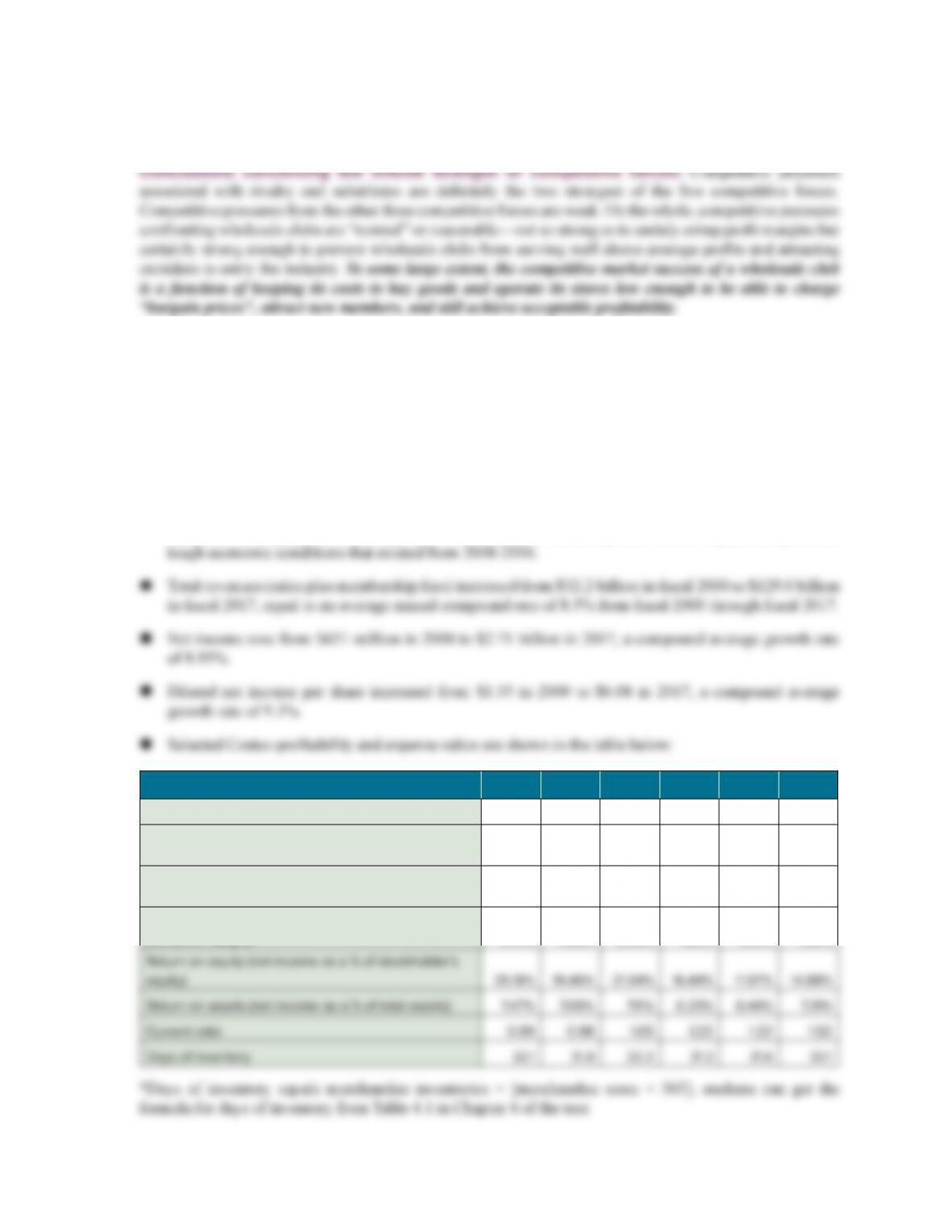
6. How well is Costco performing from a financial perspective? Do some number-crunching
using the data in case Exhibit 1 to support your answer. Use the financial ratios presented in
Table 4.1 of Chapter 4 to help you diagnose Costco’s financial performance.
The financial and operating summary in case Exhibit 1 indicate that Costco’s financial performance during
the 2000-2017 period has been good (but short of what could be termed “excellent”, partly, of course, due
to the challenging macroeconomic conditions in North America that prevailed in 2008-2016). Students can
point to any of several statistics and measures to support this conclusion:
Net sales increased from $31.6 billion in fiscal 2000 to $126.2 billion in fiscal 2017, equal to a
compound average growth rate (CAGR) of 8.5% since 2000; this growth rate is respectable given the
2017 2016 2015 2014 2005 2000
Merchandise costs as a % of net sales 88.67% 88.65% 88.91% 89.34% 89.37% 89.57%
Selling, general, and administrative expenses
as a % of total revenues 10.04% 10.17% 9.85% 9.68% 9.53% 8.57%
Operating income as a % of total revenues (operating
profit margin) 3.19% 3.09% 3.12% 2.86% 2.78% 3.22%
Net income as a % of total revenues
(net profit margin) 2.10% 1.98% 2.05% 1.83% 2.01% 1.96%
Case 4 Teaching Note Costco Wholesale Corp. in 2018: Mission, Business Model, and Strategy
314
Costco’s profitability ratios have stayed pretty steady over the years, improving modestly in 2017. Students
should also be cognizant of the following:
• The current ratio decreased from 1.22 in 2014 to 1.05 in 2015 and eroded a bit further to 0.99 in
fiscal 2017, but it is not alarmingly low (given the speed with which recently purchased merchandise
operation.
• As shown in case Exhibit 1, net cash provided by operating activities at Costco has trended upward,
climbing from $1.07 billion in fiscal 2000 to $1.77 billion in fiscal 2005, to $3.98 billion in fiscal
2014, and to $6.73 billion in fiscal 2017.
Conclusions regarding the data in case Exhibit 1: Costco’s financial performance is satisfactory to
good, and improved significantly in 2017.
You might also ask the class for their appraisal of the geographic operating data in case Exhibit 4. Here it
can be seen that:
Costco’s biggest geographic market and also its biggest source of profit (from a total dollar standpoint)
is the United States.
In fiscal 2017, Costco’s operating profit margin (operating income as a % of total revenue, including
From fiscal 2005 through fiscal 2017:
• Operating income grew at a CAGR of 7.05% in the United States
Case 4 Teaching Note Costco Wholesale Corp. in 2018: Mission, Business Model, and Strategy
315
Costco spent $1.7 billion on capital expenditure in the U.S. in fiscal 2017; in Canada capital expenditures
6. Based on the data in case Exhibits 1, 5, and 6, is Costco’s financial performance superior to
that at Sam’s Club and BJ’s Wholesale?
The comparisons are a bit mixed for all the years in Exhibits 1 and 5, especially in the case of Sam’s Club.
Costco has recently had the fastest rate of growth in sales revenues, operating income and net income, and
it has far and away the highest sales per store location. Sam’s Club has struggled to grow revenues in the
7. How well is Costco performing from a strategic perspective? Does Costco enjoy a competitive
advantage over Sam’s Club? Over BJ’s Wholesale? If so, what is the nature of its competitive
advantage? Does Costco have a winning strategy? Why or why not?
Costco’s strategic performance seems rather solid.
Since its founding in 1983, Costco has grown to become the second largest retailer in the United States
and the world, and the clear leader of the discount warehouse and wholesale club segment of the North
American retailing industry.
Case 4 Teaching Note Costco Wholesale Corp. in 2018: Mission, Business Model, and Strategy
316
Conclusions Regarding Whether Costco Has a Winning Strategy. In our view, it is fair to conclude
that Costco has a winning strategy. As discussed in Chapter 1, there are three tests of a winning strategy:
(1) Does the strategy fit the company’s situation?
(2) Is the strategy building competitive advantage?
(3) Is the strategy improving company performance?
As concerns Costco, the answers to these 3 questions are yes.
Costco’s strategy seems quite well matched to market conditions in the membership warehouse segment
of the retailing industry and to the company’s resources and competitive capabilities. We can see no
justifiable basis for criticizing the match-up.
8. Are Costco’s prices too low? Why or why not?
This is an important question to pose to the class. In the case, students will read that Costco’s markups and
prices were so low that Wall Street analysts had criticized Costco management for going all out to please
customers at the expense of charging prices that would increase profits for shareholders. In commenting on
Costco’s pricing strategy, one retailing analyst said, “They could probably get more money for a lot of the
items they sell.”
Case 4 Teaching Note Costco Wholesale Corp. in 2018: Mission, Business Model, and Strategy
317
Key Teaching Point Concerning Costco’s Prices. Perhaps the best way to demonstrate to students
just how low Costco’s prices are is to have them look at case Exhibit 1 and then lead the class through
some number-crunching. The numbers in the table below—which you might want to use as the basis for a
Income Statement Data 2017 2016 2015 2014
Membership fees (in millions) $2,853 $2,646 $2,533 $2,428
Income before income taxes (in millions) 4,039 3,619 3,604 3,197
Membership fees as a % of Costco’s income
before income taxes 70.6% 73.1% 70.3% 75.9%
The above calculations should suffice to demonstrate to class members that Costco’s prices are indeed quite
low (about as low as possible!!)—especially given that the company operates very lean and goes all-out to
keep its operating expenses to a minimum.
Students should realize that Costco is very much a low-cost operator. As Jim Sinegal stated in a recent
Costco annual report:
Case 4 Teaching Note Costco Wholesale Corp. in 2018: Mission, Business Model, and Strategy
318
9. What do you think of Costco’s compensation practices? Does it surprise you that Costco
employees apparently are rather well-compensated? Better compensated than employees
at Sam’s Club or BJ’s?
Costco’s compensation and benefit levels are substantially higher than those at Wal-Mart (and presumably
those at Wal-Mart’s Sam’s Club subsidiary—many of the Sam’s Club locations are adjacent to Wal-Mart
Supercenters).
Once you have covered these points with class members, you should then press the class for their opinions
as to whether Jim Sinegal was right. There are several questions you can pose to stimulate discussion:
Do you agree with Jim Sinegal’s views about the importance of having well-compensated employees at
Costco?
Are Costco’s employees overpaid?
Case 4 Teaching Note Costco Wholesale Corp. in 2018: Mission, Business Model, and Strategy
319
What does Costco’s practice of paying good wages/salaries and having an attractive fringe benefit
package tell us about the company’s values?
10. What recommendations would you make to Costco top executives regarding how best to
sustain the company’s growth and improve its financial performance?
Costco is not a company with glaring problems and shortcomings that desperately need to be fixed. On
the whole, we think students should recommend that the company “stay the course” and continue with the
present strategy largely unchanged from what we see the company doing as of the end of fiscal 2017. The
company has a sound strategy and no major overhaul is called for—some minor tweaking and fine-tuning
might well be proposed by class members.
There are a couple of issues that you should press the class to deal with:
What can/should Costco management do to try to boost profit margins and spur improvements in the
company’s bottom-line? The above analysis of the company’s financial performance indicated there was
Costco’s options for boosting its profit margins are fairly limited, but students should recognize the following
possibilities:
Boost profitability by doing a better job of containing selling and administrative costs. The problem with
this option is that Costco is already a lean operator; management has long been aggressive in controlling
operating costs and finding ways to operate cost-efficiently. There are not likely many ways to trim costs
by very much.
Case 4 Teaching Note Costco Wholesale Corp. in 2018: Mission, Business Model, and Strategy
320
Winding Up the Class: You can end the class by pointing out that Costco Wholesale is a perfect example
of a company that
Has a good strategy and
Epilogue
Costco ended its 2018 fiscal year (ending September 2, 2018) with 762 warehouses in operation, including 527
in the United States and Puerto Rico, 100 in Canada, 39 in Mexico, 28 in the United Kingdom, 26 in Japan, 15
in Korea, 13 in Taiwan, 10 in Australia, two in Spain, one in France and one in Iceland. Costco was also operating
e-commerce websites in the United States, Canada, the United Kingdom, Mexico, South Korea, and Taiwan.
Net sales for the 52-week fiscal year were $138.4 billion, an increase of 9.7 percent from $126.2 billion in the
53-week fiscal year of 2017. Net income for the 52-week fiscal year was $3.13 billion, or $7.09 per diluted share,
compared to $2.68 billion, or $6.08 per diluted share, in the 53-week prior year.
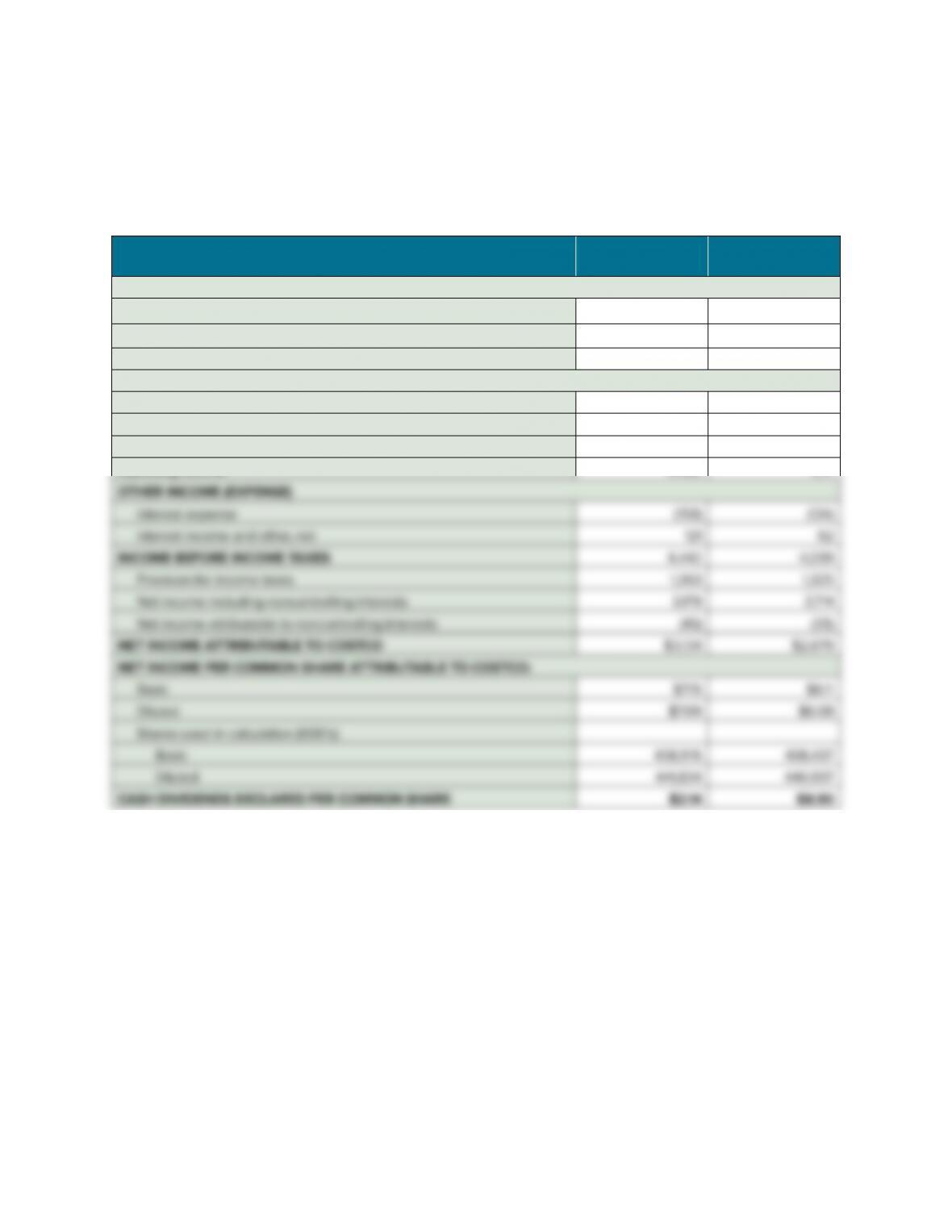
Comparable sales for the 52-week fiscal year were as follows:
52 Weeks
U.S. 9.4%
Canada 8.9%
Comparable sales for this period excluding the impacts from
changes in gasoline prices and foreign exchange were as
follows:
52 Weeks
U.S. 7.4%
Case 4 Teaching Note Costco Wholesale Corp. in 2018: Mission, Business Model, and Strategy
321
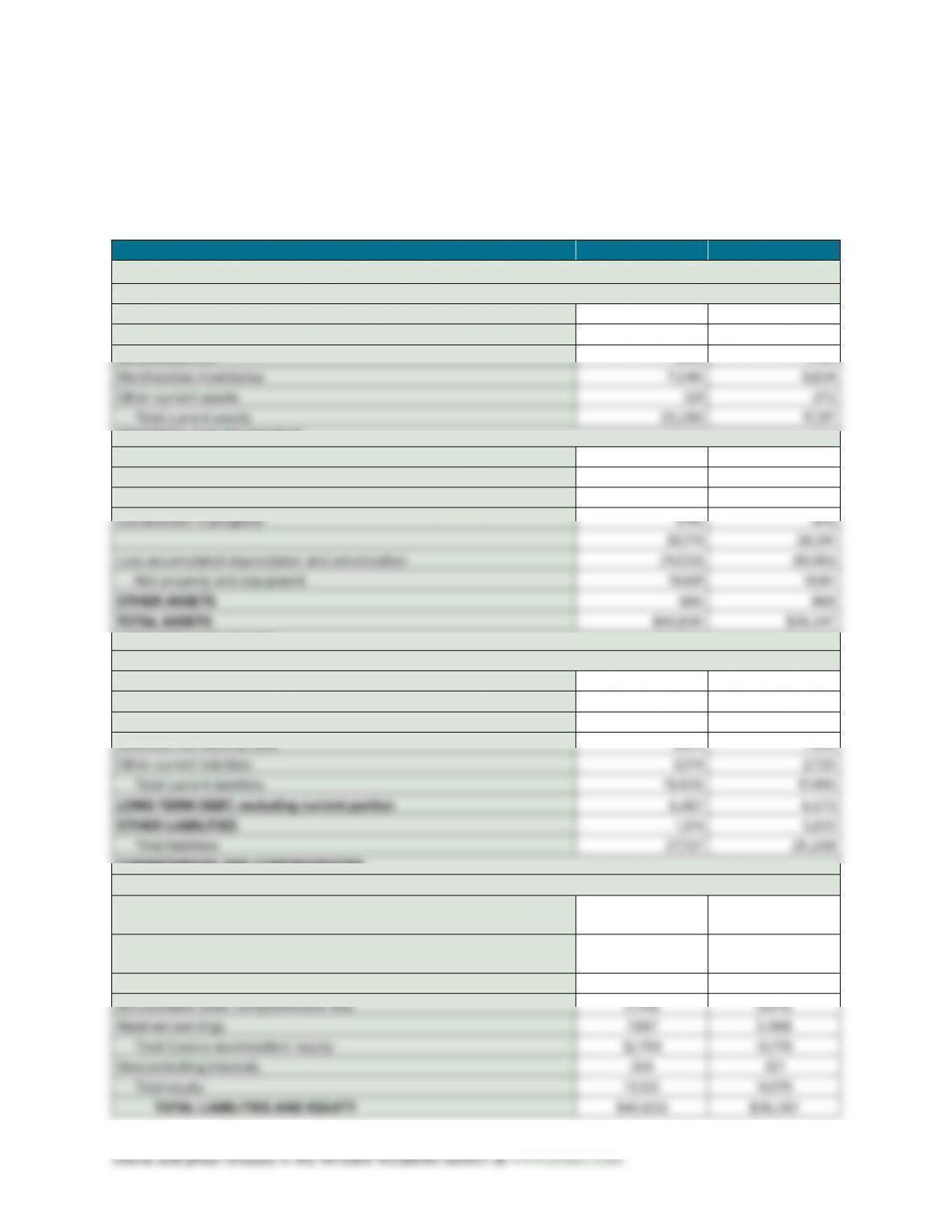
The company’s income statement for fiscal years 2018 versus 2017 was as follows:
COSTCO WHOLESALE CORPORATION
CONSOLIDATED STATEMENTS OF INCOME
(amounts in millions, except per value and share data)
(unudited)
52 Weeks Ended
September 2, 2018
53 Weeks Ended
September 3, 2017
REVENUE
Net sales $138,434 $126,172
Membership fees 3,142 2,853
Total revenue 141,576 129,025
OPERATING EXPENSES
Merchandise costs 123,152 111,882
Selling, general and administrative 13,876 12,950
Preopening expenses 68 82
Operating income 4,480 4,111
Case 4 Teaching Note Costco Wholesale Corp. in 2018: Mission, Business Model, and Strategy
322
Costco’s consolidated balance sheet for fiscal years 2018 versus 2017 was as follows:
COSTCO WHOLESALE CORPORATION
CONSOLIDATED BALANCE SHEETS
(amounts in millions, except par value and share data)
(unaudited)
September 2, 2018 September 3, 2017
ASSETS
CURRENT ASSETS
Cash and cash equivalents $6,055 $4,546
Short-term investments 1,204 1,233
Receivables, net 1,669 1,432
PROPERTY AND EQUIPMENT
Land 6,193 5,690
Buildings and improvements 16,107 15,127
Equipment and fixtures 7,274 6,681
LIABILITIES AND EQUITY
CURRENT LIABILITIES
Accounts payable $11,237 $9,608
Accrued salaries and benefits 2,994 2,703
Accrued member rewards 1,057 961
COMMITMENTS AND CONTINGENCIES
EQUITY
Preferred stock $0.01 par value; 100,000,000 shares authorized; no shares
issued and outstanding
— —
Common stock $0.01 par value; 900,000,000 shares authorized;
438,189,000 and 437,204,000 shares issued and outstanding
4 4
Additional paid-in capital 6,107 5,800
For the latest information on developments at Costco Wholesale, please check the company’s latest financial