Vail Resorts, Inc.
Overview
Vail Resorts (VR) in 2017 posted $1.6 billion in revenues, celebrated its 55th anniversary in operation,
and reached a crossroads in its growth strategy. VR’s CEO Rob Katz was facing new and more difficult
challenges, each posing significant tradeoffs. These challenges included: (1) an aging U.S. population,
resulting in declining demand for skiing; (2) maturation and potential for decline of the snowboarding segment
of the winter resort market; (3) rival operators’ investments and innovations in ski resort design and amenities;
(4) industry consolidations and mergers that had increased the concentration of large multi-resort providers;
(5) the lingering impact of the 2008–10 “Great Recession,” that had immutably altered consumer demand for
destination resorts; and (6) the onset of global warming and climate change that was making a wide-ranging and
seemingly irreversible negative impact on ski conditions.
VR’s mission was, “Extraordinary Resorts, Exceptional Experiences. Our Company operates resorts in some of
the most iconic locations in the world, all defined by the spectacular natural setting that surrounds them.” Since
Katz assumed his current role in 2006, VR’s substantial corporate growth had been accomplished via a “changing
of the old guard.” Katz had reconfigured the company’s organization chart and also engaged in ongoing talent
searches for professional expertise, requiring new approaches to motivating, retaining, and directing some
28,700 employees at the peak of the ski season.
*
case 28 teaching note
Case 28 Teaching Note Vail Resorts, Inc.
629
Suggestions for Using the Case
This case should generate student interest because of their familiarity with the ski and winter sports industry
as well as their personal experiences at destination resorts. The case is ideal as a final examination or final oral
presentation, or could be used as a review case for those assignments.
The VR case is sufficiently flexible in that it can pair particularly well with the coverage of strategies for
strengthening a company’s competitive position (Chapter 6); competing in international markets (Chapter 7);
diversification and business portfolio analysis (Chapter 8); environmental sustainability and the triple-bottom-
line (Chapter 9); as well as organization-building, benchmarking, leadership, and culture (Chapters 10–12).
There’s ample detail in the case for students to evaluate:
The assignment questions and teaching outline presented below reflect our thinking and suggestions about
how to conduct the class discussion and what aspects to emphasize.
To facilitate your use of study questions and to make them available to students, we have posted a file of the
assignment questions contained in this teaching note for the Vail Resorts case in the instructor resources
section of the Connect Library.
Video for Use with the Vail Resorts Case. There is a 2018 YouTube video entitled “Vail Resorts Announces
Plans to Acquire Crested Butte that you may wish to show at in class at the beginning of the case discussion or
have students view on their own before class. The 2:11-minute video can be accessed at https://www.youtube.
com/watch?v=bBkml4kn7hM.
This case is suitable for both written and oral presentations, but probably works best as a final examination
assignment. Our recommended assignment questions are as follows:
As part of your internship requirements with Vail Resorts, Inc., you have been asked to prepare an
analysis of VR’s competitive position in the destination resort marketplace. Your report should contain
2–3 pages of recommendations for continuing the company’s success in assembling a diversified
Case 28 Teaching Note Vail Resorts, Inc.
630
Assignment Questions
1. What are the major elements of VR’s competitive strategy in the destination resorts industry? How well do
the pieces fit together? Is the strategy evolving?
2. How have VR’s corporate strategy choices strengthened or weakened its competitive position in the
destination resorts industry?
3. Is VR’s competitive strategy best characterized as a first-mover strategy, fast-follower strategy, or later-
mover strategy?
Teaching Outline and Analysis
1. What are the major elements of VR’s competitive strategy in the destination resorts industry?
How well do the pieces fit together? Is the strategy evolving?
Students should be able to see that the primary thrust of VR’s strategy has been growth via acquisitions and,
to a lesser extent, via JVs or strategic alliances. Students should be able to compile a list of VR’s strategic
moves since 2001. See Table 1, “VR’s Recent Strategic Moves.”
TABLE 1. VR’s Recent Strategic Moves
Year
Acquisition cost
($ million) Holding Type Location
2001 7.5 Rock Resorts Small prestige resort hotels Mostly coastal areas
2012 20.0 Afton Alps & Mt. Brighton Urban “windshield” ski areas Twin Cities, MN &
Detroit, MI
2015 125.0 Perisher Four ski areas in one integrated
destination resort complex
Between Sydney
& Melbourne, AUST
2016 20.0 Wilmot Urban “windshield” ski area Chicago, IL
Case 28 Teaching Note Vail Resorts, Inc.
631
Careful inspection of Table 1 should reveal that since 2001, VR has expanded domestically via an estimated
total of $362.5 million spent for acquisitions of domestic U.S. and adjacent Canadian properties (Whistler)
as well as Australian ski area properties, and in 2018, to Japan and Europe via partnerships or sharing its
2. How have VR’s corporate strategy choices strengthened or weakened its competitive
position in the destination resorts industry?
This is a good time to drill students on information in the case exhibits, which students often overlook, and
review the concept of horizontal scope, which refers to the range of product and service segments that a firm
like VR serves for global markets, which are considerable due to its presence in nearly every sector of luxury
branded products in almost every region in the world.
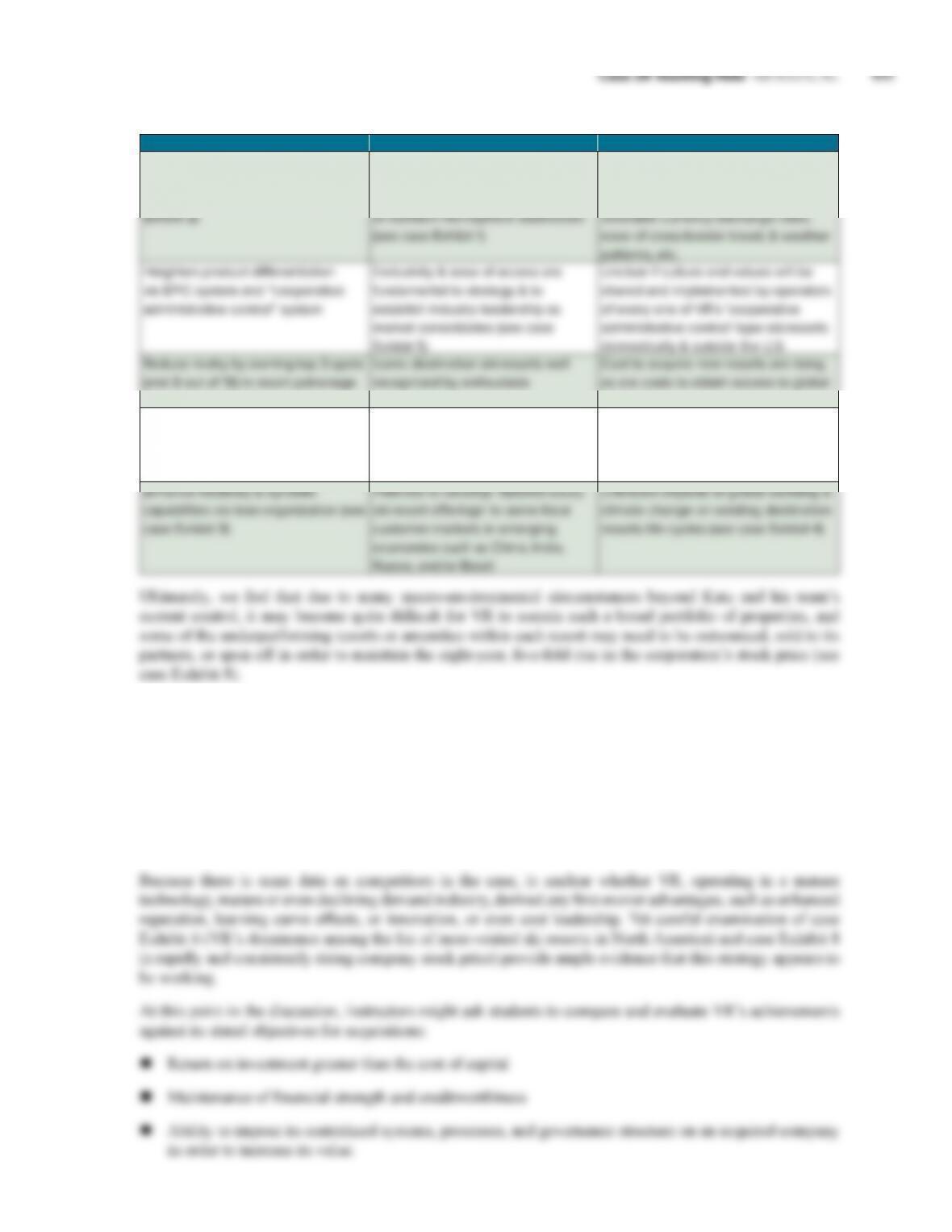
TABLE 2. Appraising VR’s Horizontal Diversification Strategies
Strategic intent Plusses Minuses
Leverage global demand from
emerging nations to offset flat or
declining market demand (see case
Reduced transport costs for urban
skiers, increased capacity of
destination resorts, offset seasonality
Highly dependent on slack labor
markets to reduce pressure on wages
(even for seasonal staff), as well as
(see case Exhibit 6)
markets
Increase bargaining power over
buyers & suppliers to boost market
share
Power of buyers & suppliers in the
ski resort segment is already weak
Offset by slowing demand for ski
resorts due to aging of baby boomers
& lingering effects of 2008–10
recession (see case Exhibit 3)
3. Is VR’s competitive strategy best characterized as a first-mover strategy, fast-follower
strategy, or later-mover strategy? What grade would you give to Rob Katx for his strategy-
making eorts?
Based on the above analyses and coverage of material in Chapter 6 of the textbook, instructors might wish
to steer the case discussion to weigh the benefits and disadvantages of the apparent first-mover entry of
VR to the global arena and whether it helped or harmed itself by taking advantage of advantage of the
consolidation spree of the global ski resort industry.
Case 28 Teaching Note Vail Resorts, Inc.
633
There is some evidence—as will be shown in Questions 4 and 5 containing a thorough analysis of VR’s
4. Does it make good strategic sense for VR to compete in all of its current segments? Which of
its product lines do you think is/are most important to VR’s future growth and profitability?
Should one or more of these current segments be discontinued? Why?? Should one or more
of these current segments be discontinued? Why?
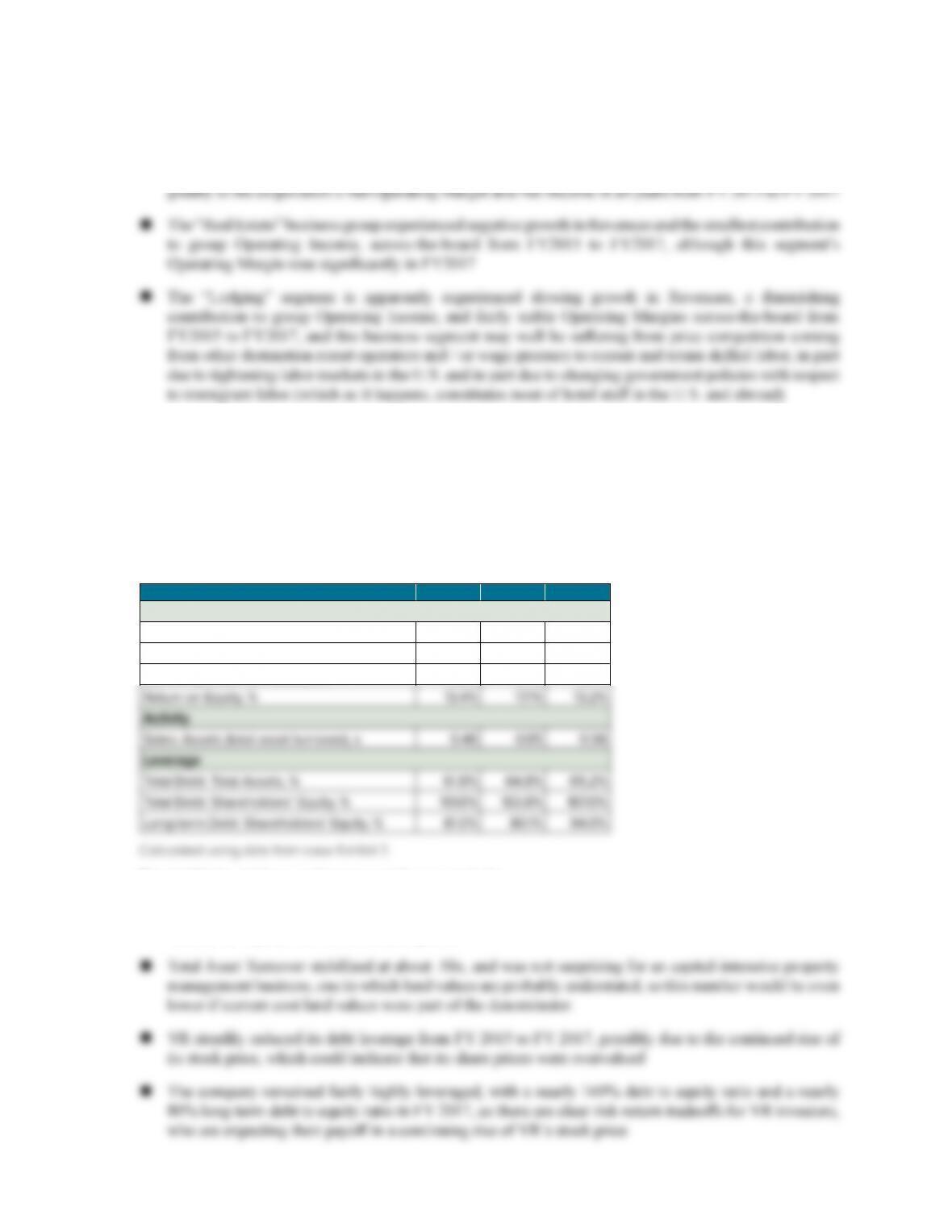
TABLE 3. Business Segment Performance Analyses for VR, 2015 – 2017
Segment Analysis of Operations Growth rates by segment
2017 2016 2015 2017 2016
Revenues, by segment
Mountain 84.5% 81.5% 78.9% 23.5% 18.2%
Lodging 14.6% 17.1% 18.2% 1.4% 7.9%
Real Estate 0.9% 1.4% 3.0% -23.5% -46.5%
Total Revenues 100.0% 100.0% 100.0% 19.1% 14.4%
Operating Expenses (excl. D&A), by segment
Mountain 54.9% 55.0% 55.5%
Lodging 13.2% 15.4% 16.6%
Case 28 Teaching Note Vail Resorts, Inc.
634
The analyses in Table 2 reveal that only the “Mountain” segment of VR’s business groups enjoyed
double-digit growth rates across-the-board from FY2015 to FY2017
The “Mountain” segment has the highest among all three segment operating income and contributed
5. What is your assessment of VR’s financial performance over the 2015–2017 period? (Use
the financial ratios in the Appendix of the text as a guide in doing your financial analysis.)
Students should be able to use the financial information provided in case Exhibit 7, as well as the financial
ratios provided in the Financial Summary Table 4.1 (or the Appendix of the text) to make calculations
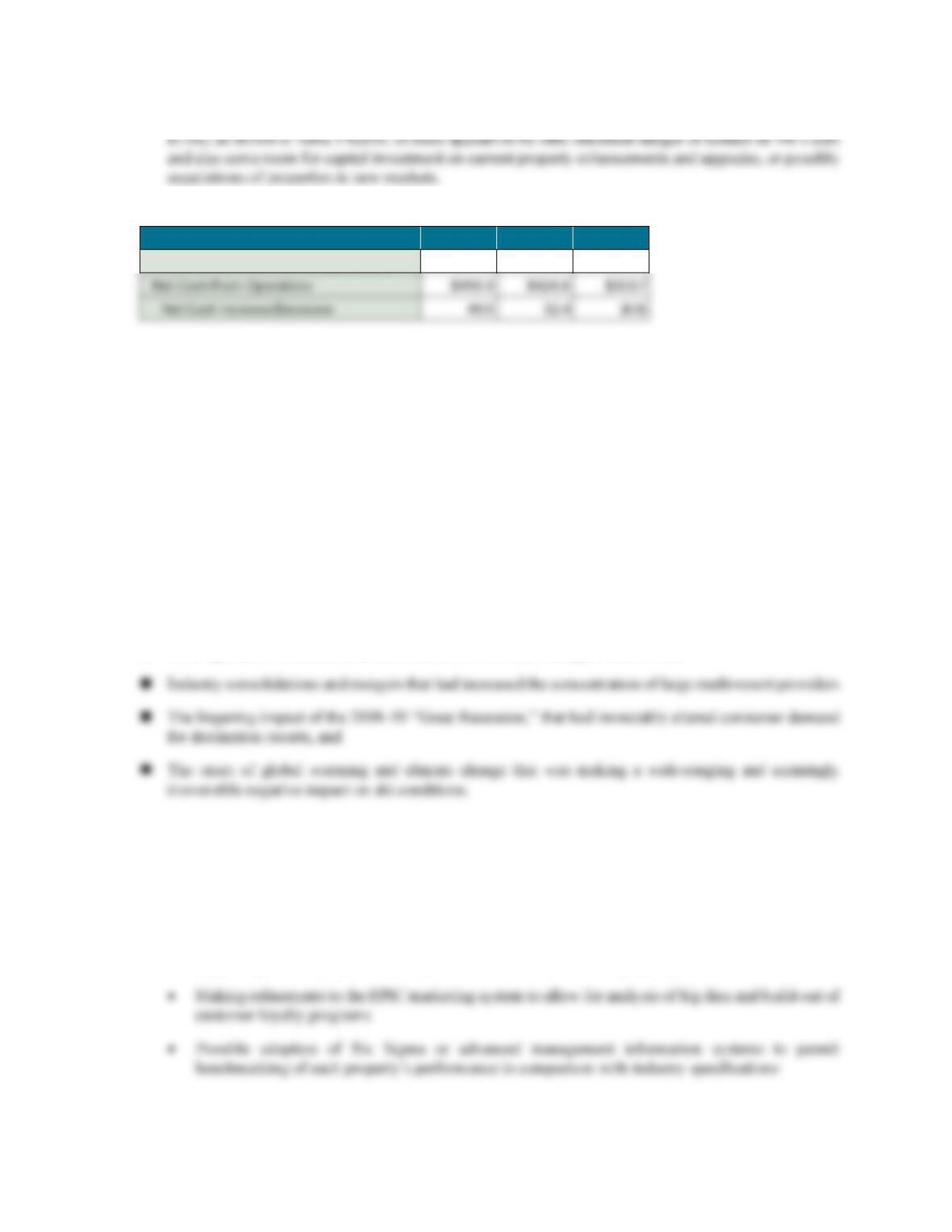
similar to those shown in Table 4, “Selected Financial Statistics and Ratios for VR, 2015–2017.”
TABLE 4. Selected Financial Statistics and Ratios for VR, 2015–2017
2017 2016 2015
Profitability
Return on Sales, % 11.0% 9.4% 8.2%
Return on Assets, % 5.1% 6.0% 4.6%
Operating Return on Assets, % 14.2% 18.1% 13.7%
Key highlights of these performance indicators include:
VR maintained relatively stable Returns on Sales, Returns on Assets, Operating Returns on Assets, and
Returns on Equity over the three-year period
Case 28 Teaching Note Vail Resorts, Inc.
635
While VR’s Annual Capital Expenditures remained robust, its Net Cash flows from operations continue
TABLE 5. VR’s Capital Expenditures and Cash Flows, 2015–2017
Cash Flows ($ millions) 2017 2016 2015
Annual Capital Expenditures (Operations) $144.0 $109.0 $124.0
6. What strategic issues confront VR in 2017? What market or internal circumstances should
most concern CEO Rob Katz and his company’s senior leadership team?
Students should be pressed to present a balanced view of the strategic issues that Katz faces, and consider
both the pros and cons of VR’s current strategy. Coverage of the superior strategy execution topics in
Chapters 10 and 11 might reveal some areas of immediate attention for Katz and his team at VR.
These can be summarized as follows:
Market circumstances—endemic to the ski and resort travel industry
Katz, like all ski industry operators, faced a myriad of issues:
An aging U.S. population, resulting in declining demand for skiing
Maturation and potential for decline of the snowboarding segment of the winter resort market
Rival operators’ investments and innovations in ski resort design and amenities
Internal circumstances—specific to VR’s current situation
Talent management: attracting and retaining key managers and staff, both centrally and in specific resort
locations
Allocation of capital expenditures and tradeoffs between acquisitions of properties in new markets vs.
investments in improving the current portfolio of resorts
• Upgrading current properties, with particular attention to the Lodging segment
Case 28 Teaching Note Vail Resorts, Inc.
636
• Deploying social media promotions to attract Millennial patrons
• Developing alternative high margin recreation and leisure programs to reduce dependence on skiing
and snowboarding
Carefully monitoring rival operators’ investments and innovations in ski resort design and amenities
Pros and cons of VR’s current strategy
7. What recommendations would you make to Katz to address the strategic issues confronting
VR in 2017 in order to sustain its impressive growth in revenues and profitability?
Demand for expensive travel to winter vacation destinations, hotel stays, resort fees and ski lift tickets can
shift over time. As the U.S. leader in destination resorts, VR has the opportunity to tap into the Millennials
We believe that global expansion, renovation of existing resorts, and price increases that go with product
innovation will continue to be the key growth drivers for VR
Case 28 Teaching Note Vail Resorts, Inc.
637
Wrapping Up The Class
Companies like Vail Resorts Inc. need to establish investment priorities that focus resources on the most
attractive business units: (covered in Chapter 6)
• Pursue rapid-growth strategies via putting resources into the most promising lines of business in the
most promising global markets. (covered in Chapter 7)
Epilogue
Case updates can be found at Vail Resorts’ website, http://investors.vailresorts.com/news-releases. For investor
and recent financial information, go to http://investors.vailresorts.com/news-releases/news-release-details/vail-
resorts-reports-fiscal-2018-fourth-quarter-and-full-year.