
– 582 –
The Walt Disney Company:
Its Diversification Strategy in 2018
Overview
The Walt Disney Company was a broadly diversified media and entertainment company with a business
lineup that included theme parks and resorts, motion picture production and distribution, cable television
networks, the ABC broadcast television network, eight local television stations, and a variety of other
businesses that exploited the company’s intellectual property. The company’s revenues had increased from $45
billion in fiscal year 2013 to $55 billion in fiscal 2017 and its share price had regularly outperformed the S&P
500. While struggling somewhat in the mid-1980s, the company’s performance had been commendable in almost
every year since Walt Disney created Mickey Mouse in 1928.
The company ended 2017 with a modest one percent increase in revenues and four percent increase in net income
over the year prior. However, its announcement in December 2017 that it would acquire 21st Century Fox for $71.3
billion in cash and stock had the potential to radically improve its future financial performance. The transaction
was approved by the U.S. Department of Justice (DOJ) Antitrust Division in June 2018 and was expected to be
finalized by year-end 2018. The acquisition of 21st Century Fox would extend Disney’s impressive collection of
media franchises to include Fox, FX, Fox News Channel, Fox Business Network, Fox Sports Network, National
Geographic Channel, Star India, 28 local television stations in the United States and more than 350 international
channels, Twentieth Century Fox Film, and Twentieth Century Fox television production studios. Twenty-First
Century Fox also held a 39.1 percent stake in Sky, Europe’s leading entertainment company that served nearly
23 million households in five countries.
As Disney entered the third quarter of 2018, it was coming off an impressive second quarter, but faced several
strategic issues. The company’s core Parks and Resorts business continued to grow and record healthy profit
margins, but its larger Media Networks business had seen minimal revenue growth in recent years and was
experiencing declining operating profits as media consumers turned from cable to direct-to-consumer (DTC)
programming. The company’s Studio Entertainment business unit had also struggled to develop stable revenue
and earnings growth and its Consumer Products & Interactive Media business unit had seen a decline in
revenues and operating profits in the past year. Going into 2019, CEO Bob Iger and Disney’s management
team would have to evaluate the corporation’s strategy to bolster the performance of its existing business units
and develop new media delivery capabilities while preparing for the integration of the probable acquisition
of 21st Century Fox.
case 24 teaching note
Case 24 Teaching Note The Walt Disney Company: Its Diversification Strategy in 2018
583
Suggestions for Using the Case
This case is ideally assigned during your module on corporate strategy and diversification since it was written to
illustrate such Chapter 8 concepts as related diversification, strategic fit, and financial resource fit. In addition, a
proper analysis of the case prepares students to make recommendations concerning the company’s next strategic
and financial moves. You should find students eager to discuss the case because of their familiarity with Disney’s
iconic characters, feature films, and theme parks. Students are also likely to be regular viewers of the company’s
cable and broadcast networks and may be among the tens of millions of former subscribers to Disney cable
programming who view sports and other entertainment via streaming services.
There is ample information in the case for students to prepare a 9-cell industry attractiveness/business strength
matrix, and to go through the steps of analyzing the business portfolio of a diversified company, as discussed
in Chapter 8. Based on their analysis of strategic fit and the historical financial performance of the businesses
included in Walt Disney Company’s portfolio, students should make recommendations about the best strategic
and financial actions that Disney’s management should take to improve the company’s financial and market
performance.
The assignment questions and teaching outline presented below reflect our thinking and suggestions about
how to conduct the class discussion and what aspects to emphasize.
To facilitate your use of study questions and making them available to students, we have posted a file of the
assignment questions contained in this teaching note for The Walt Disney Company case in the Instructors
Resource Center of the Connect Library for the 22nd edition. (We should also point out that there is a set of
study questions posted in the Connect Library for each of the 32 cases included in the 22nd edition.)
The Connect-based Exercise for The Walt Disney Company Case. The auto-graded exercise for
The Walt Disney Company case requires that students answer a series of multiple choice questions related
to Assignment Questions 1-6. Question 7 is left as an open ended question that allows students to fully discuss
recommendations for addressing strategic issues confronted by the company.
You may also find it beneficial to have your class read the Guide to Case Analysis that is found in the text after
Case 32 and is posted in the Instructor’s Resource Center of the Connect Library for the 22nd edition. Students
will find the content of this Guide particularly helpful if this is their first experience with cases and they are
unsure about the mechanics of how to prepare a case for class discussion, oral presentation, or written analysis.
Video for Use with The Walt Disney Company Case. There is a lengthy 23:18 interview with Walt Dis-
ney CEO Bob Iger that you may wish for students watch on their own prior to the class discussion of the case).
It is titled “Bob Iger: Leading the Walt Disney Company into the Future.” The link to the video is https://www.
youtube.com/watch?v=92LhIvO2FaM.
Case 24 Teaching Note The Walt Disney Company: Its Diversification Strategy in 2018
584
Suggested Assignment Questions for an Oral Team Presentation or Written Case Analysis.
This case works very well for oral team presentations and for written assignments. We suggest the following
questions:
As a consultant to The Walt Disney Company’s management, you have been asked to prepare an
assessment of the company’s diversification/acquisition strategy, beginning with Michael Eisner’s term
as CEO in 1984, and continuing to its present business line-up in 2018. Do the present business units
exhibit good strategic fit? Should the present portfolio be kept or should it be adjusted? How will moves
toward direct-to-consumer and over-the-top services and the 21st Century Fox acquisition affect overall
to-consumer and over-the-top services. Your 5–6 page report should also include recommendations to
further boost shareholder value. It is strongly suggested that you follow the analytical steps presented in
Chapter 8, as you develop your paper.
Assignment Questions
1. What is The Walt Disney Company’s corporate strategy?
2. What is your assessment of the long-term attractiveness of the industries represented in The Walt Disney
Company’s business portfolio?
3. What is your assessment of the competitive strength of The Walt Disney Company’s different business
units?
4. What does a 9–cell industry attractiveness/business strength matrix displaying The Walt Disney Company’s
business units look like?
5. Does The Walt Disney’s portfolio exhibit good strategic fit? What value chain match-ups do you see? What
opportunities for skills transfer, cost sharing, or brand sharing do you see?
6. What is your assessment of The Walt Disney Company’s financial and operating performance in fiscal
years 2013-2017? What is your assessment of the relative contribution of each business unit to the financial
strength of Disney based on the 2015 through 2017 fiscal year financial data?
7. What actions do you recommend that The Walt Disney Company’s management take to improve the company
and increase shareholder value? Are there specific actions that you recommend to successfully integrate the
21st Century Fox or improve the likelihood of success for Disney’s direct-to-consumer and over-the-top
media services? Your recommended actions must be supported with a convincing, analysis-based argument.
Case 24 Teaching Note The Walt Disney Company: Its Diversification Strategy in 2018
585
Teaching Outline and Analysis
1. What is The Walt Disney Company’s corporate strategy?
Disney’s corporate strategy is based upon related diversification and includes the following elements:
Acquisition of content and intellectual properties that offer corporate advantage potential through
integration with existing Disney entertainment franchises and business units.
Acquisitions keyed to building dynamic capabilities to enable the company to reach consumers in new
ways or new places,
Allocation of suffcient capital to its core theme parks and resorts to sustain the company’s advantage in
the industry,
Capturing existing synergies between the company’s businesses, and
Expanding internationally to exploit opportunities in emerging markets.
2. What is your assessment of the long-term attractiveness of the industries in The Walt
Disney’s business portfolio?
Students will be familiar with several of Disney’s industries. There is ample anecdotal evidence and data
presented in the case for students to accurately evaluate the industries in which the Walt Disney competes.
Students should readily recognize that the company’s Parks and Resorts business unit competes in a highly
attractive industry, while uncertainty in delivery of entertainment puts the company’s Media Networks
business unit is a less attractive industry environment. Some students may argue that the emergence of
new media delivery services creates opportunities for innovative companies. This is a valid point, but such
opportunity may or may not offset the definite coming decline in Disney’s subscription-based cable networks
in the United States. The case data suggests that the international markets for cable subscription networks
remains quite attractive.
The calculations shown in Table 1 reflect our analysis which rates the industries of media networks, parks
and resorts, studio entertainment, and consumer products industries as attractive with scores ranging from
6.6 to 8.1. The least attractive industry in our analysis—interactive media—is still considered moderately
attractive with a rating of 5.95.
Students should conclude that the industries in which the Walt Disney Company operates are clearly
attractive and present each business unit with opportunities for above average returns.
Case 24 Teaching Note The Walt Disney Company: Its Diversification Strategy in 2018
586
TABLE 1. Industry Attractiveness Assessment for The Walt Disney Company’s Businesses
(Scale: 1 = very low attractiveness; 5 = average attractiveness; 10 = very strong attractiveness
Attractiveness
Measure Weight
Media
Networks
Parks and
Resorts
Studio
Entertainment
Consumer
Products
Interactive
Media
Market Size and
growth rate .20 9/ 1.8 8/ 1.6 6/ 1.2 4/0.8 4/0.8
Industry
Profitability .20 9/ 1.8 8/ 1.6 7/ 1.4 9/1.8 3/ .60
Intensity of
Competition .10 3/ .30 7/ .70 4/ .40 6/ .60 6/ .60
Emerging
3. What is your assessment of the competitive strength of The Walt Disney’s dierent business
units?
The industries represented in Disney’s portfolio are moderately attractive to highly attractive and students
will ascertain that Disney’s business units have strong positions in their industries with the exception of the
Interactive Media unit. Student business strength calculations may be similar to those shown in Table 2. The
company’s Media Networks division is extremely strong with a broad collection of cable networks, the ABC
Television Network, ABC Studios, and ABC Media Productions. Disney’s domestic television stations in the
Media Networks unit are number one or strong number two in their markets. Six of Disney’s eight stations
are located in markets categorized as the ten largest U. S. television markets.
Disney’s Parks and Resorts unit includes the most recognizable theme parks in the U.S. and the world;
also the characters created by Disney Studios are the most recognizable in the world and continue to have
strong commercial appeal (e.g., Mickey Mouse, Minnie Mouse, Goofy, Donald Duck, and Daisy Duck).

Case 24 Teaching Note The Walt Disney Company: Its Diversification Strategy in 2018
587
TABLE 2. Competitive Position/Business Strength Calculations for The Walt Disney Company’s
Business Units
(Scale 1= very weak, 5 = average, 10 = very strong)
Strength Measure Weight
Media
Networks
Parks and
Resorts
Studio
Entertainment
Consumer
Products
Interactive
Media
Relative market
size
.20 9/ 1.8 9/ 1.8 8/ 1.6 9/ 1.8 4/ .80
Marketing and
promotion
.20 8/ 1.6 10/ 2.0 10/ 2.0 10/ 2.0 7/ 1.4
Product
innovation
capabilities
.20 8/ 1.6 9/ 1.8 10/ 2.0 8/ 1.6 8/ 1.6
Benefits from
strategic fit with
sister businesses
.10 8/ .80 9/ .90 9/ .90 10/ 1.0 5/ .50
Brand name
recognition/image
.30 9/ 2.7 10/ 3.0 9/ 2.7 10/ 3.0 7/ 2.1
1.0 8.5 9.5 9.2 9.4 6.4
4. What does a 9-cell industry attractiveness/business strength matrix displaying Walt Disney’s
business units look like?
Constructing a 9-cell industry attractiveness/business strength matrix for The Walt Disney Company requires
students to prepare an industry attractiveness rating for each industry in which Disney’s businesses operate,
and a competitive strength assessment for each of Disney’s business units. The scores for the industry
attractiveness and the competitive position/business strength for each business unit must be used to plot the
position of each business unit on the 9-cell grid. Students may attempt to position the circles on the matrix
on the basis of “judgment,” but circles positioned in that manner are unlikely to match those positioned on
the basis of calculated ratings.
To encourage students to practice applying the tools in Chapter 8, the professor should consider spending
class time to go through the development of industry attractiveness and competitive position/business
Of course, students will have judgmental differences regarding the choice of attractiveness measures,
strength measures, and the weights assigned to each. In the case of Walt Disney Company’s portfolio, the
variations should not be very large. It is clear that, with the exception of interactive media, the industries
represented in Disney’s portfolio are highly attractive, and interactive media is well above average. None of
the business units should fall in the average or below average categories.
All of Walt Disney Company’s businesses have strong positions in their respective categories. Interactive
media has the weakest competitive position (6.4), which is still well above average. Consequently, none of
the business units should fall in the average or below average range of competitive strength.
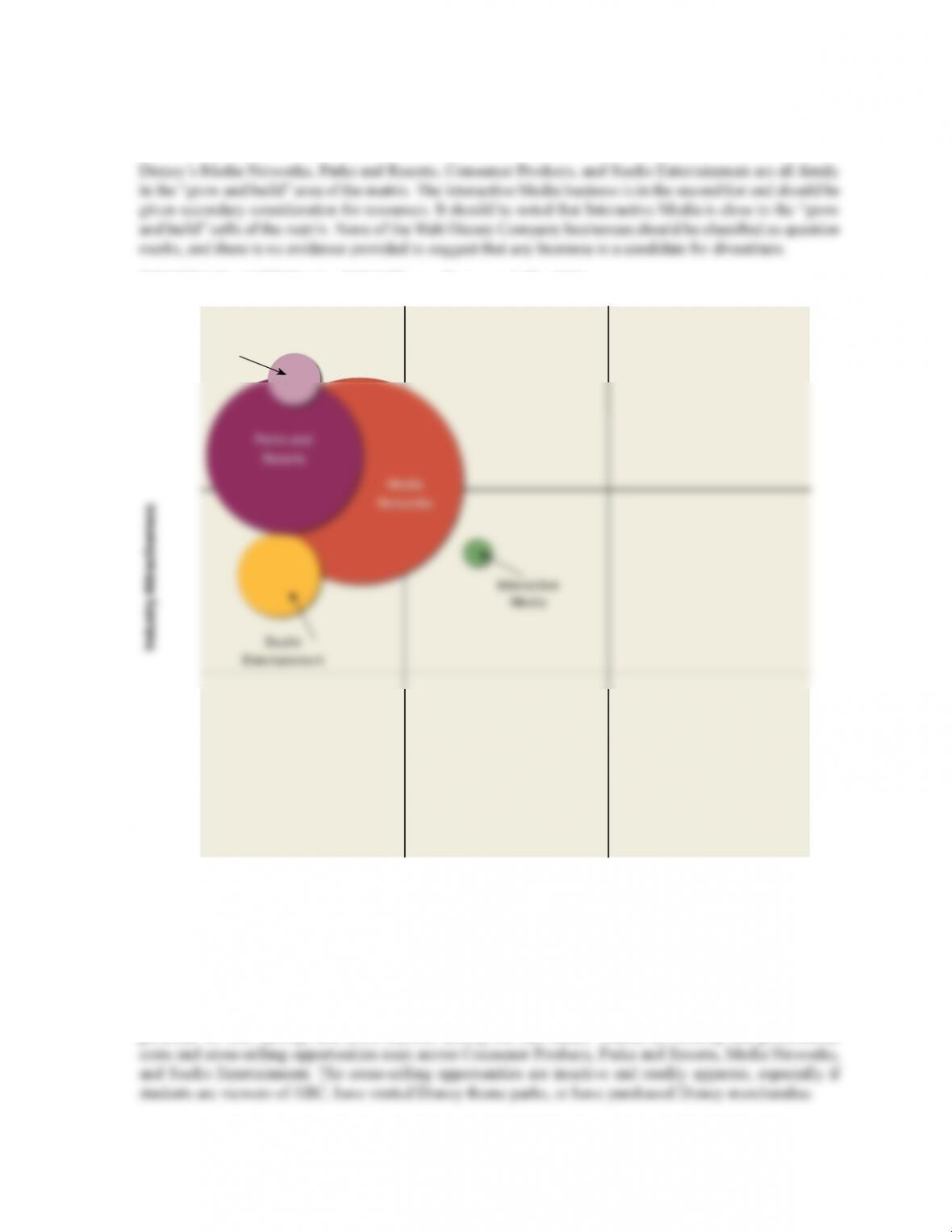
The business unit circle areas should be calculated as the percent contribution of each business to the total
revenue of the Walt Disney Company. This data can be obtained from Table 2. Placing the Disney businesses
on the 9-cell matrix, each at the intersection of the industry attractiveness and competitive strength ratings,
Case 24 Teaching Note The Walt Disney Company: Its Diversification Strategy in 2018
588
Disney businesses. Figure 1 presents a sample 9-cell GE Matrix prepared from the industry attractiveness
and business strength ratings in Tables 1 and 2.
FIGURE 1. 9-cell GE Matrix of Walt Disney Company’s Portfolio
High Low
Business Strength
High Consumer
Products
Entertainment
Interactive
Media
Low
Media
Networks
Parks and
Resorts
5. Does Walt Disney’s portfolio exhibit good strategic fit? What value-chain match-ups do you
see? What opportunities for skills transfer, cost sharing, or brand sharing do you see?
Students should recognize that Media Networks, Parks and Resorts, Studio Entertainment, and the Consumer
Products & Interactive Media business units all possess strong strategic fit opportunities with significant
potential for cost savings and skills transfer among the businesses. Shared advertising and promotional
Case 24 Teaching Note The Walt Disney Company: Its Diversification Strategy in 2018
589
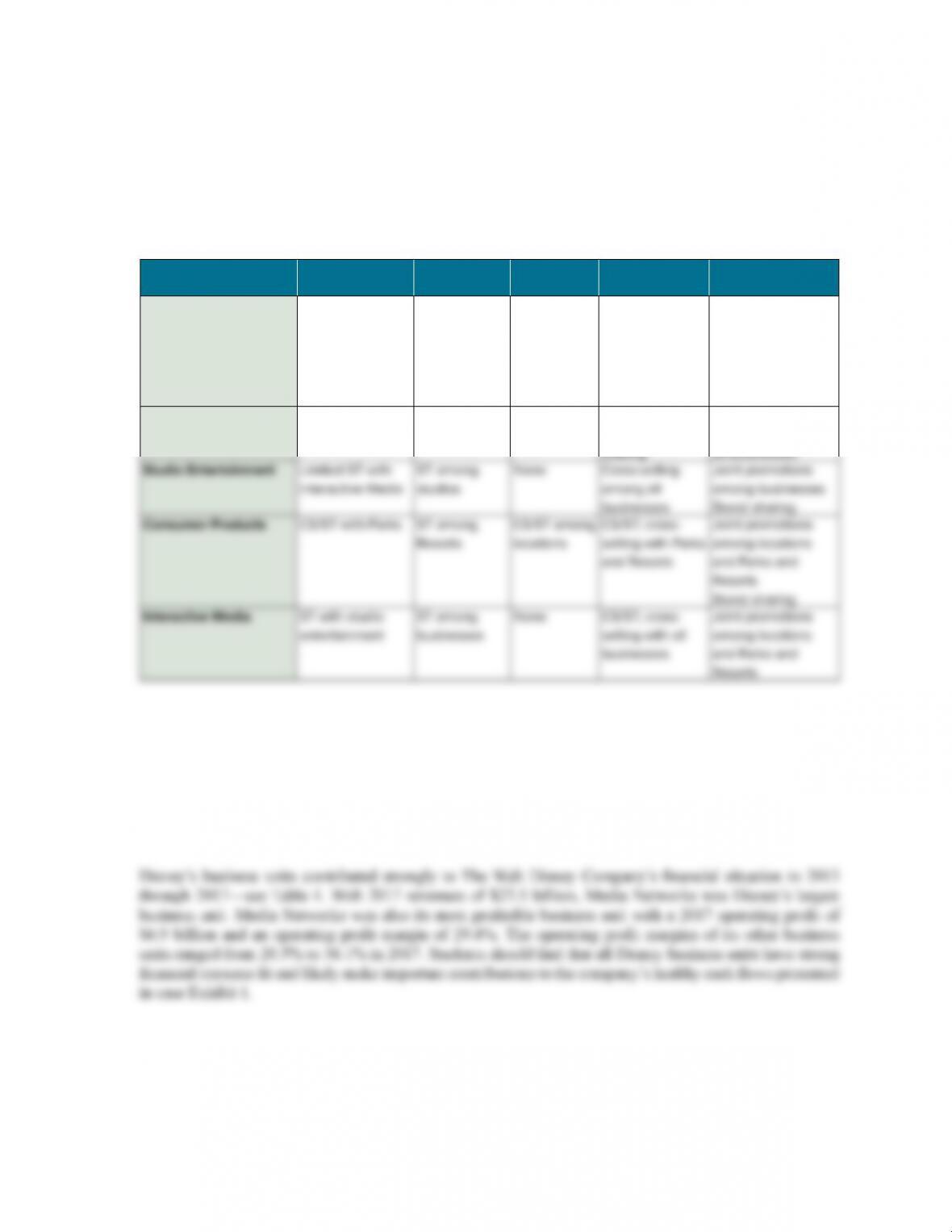
Figure 2 presents a sample value chain analysis showing cost sharing and skills transfer potential for the
Walt Disney Company’s divisions.
FIGURE 2. Assessment of Strategic Fit Potentials Between Walt Disney Company’s Business
Units
CS = Cost Sharing Benefits ST = Skills Transferring Opportunities
Value Chain Activities
Business Unit Purchasing Operations Distribution Sales &
Marketing
Advertising/
Promotion
Media Networks CS/ST among
stations
ST among
stations
None CS/ST among
stations. Cross-
selling among
stations
Joint promotions
among non-
competing stations
Joint promotions
among all
businesses
Parks & Resorts CS/ST among
locations
ST among
locations
None CS/ST among
locations. Brand
Joint promotions
brand sharing with
6. What is your assessment of The Walt Disney Company’s financial and operating performance
in fiscal years 2013–2017? What is your assessment of the relative contribution of each
business unit to the financial strength of Disney based on the 2015 through 2017 fiscal year
financial data?
Students will likely be quite impressed with the financial performance of The Walt Disney Company
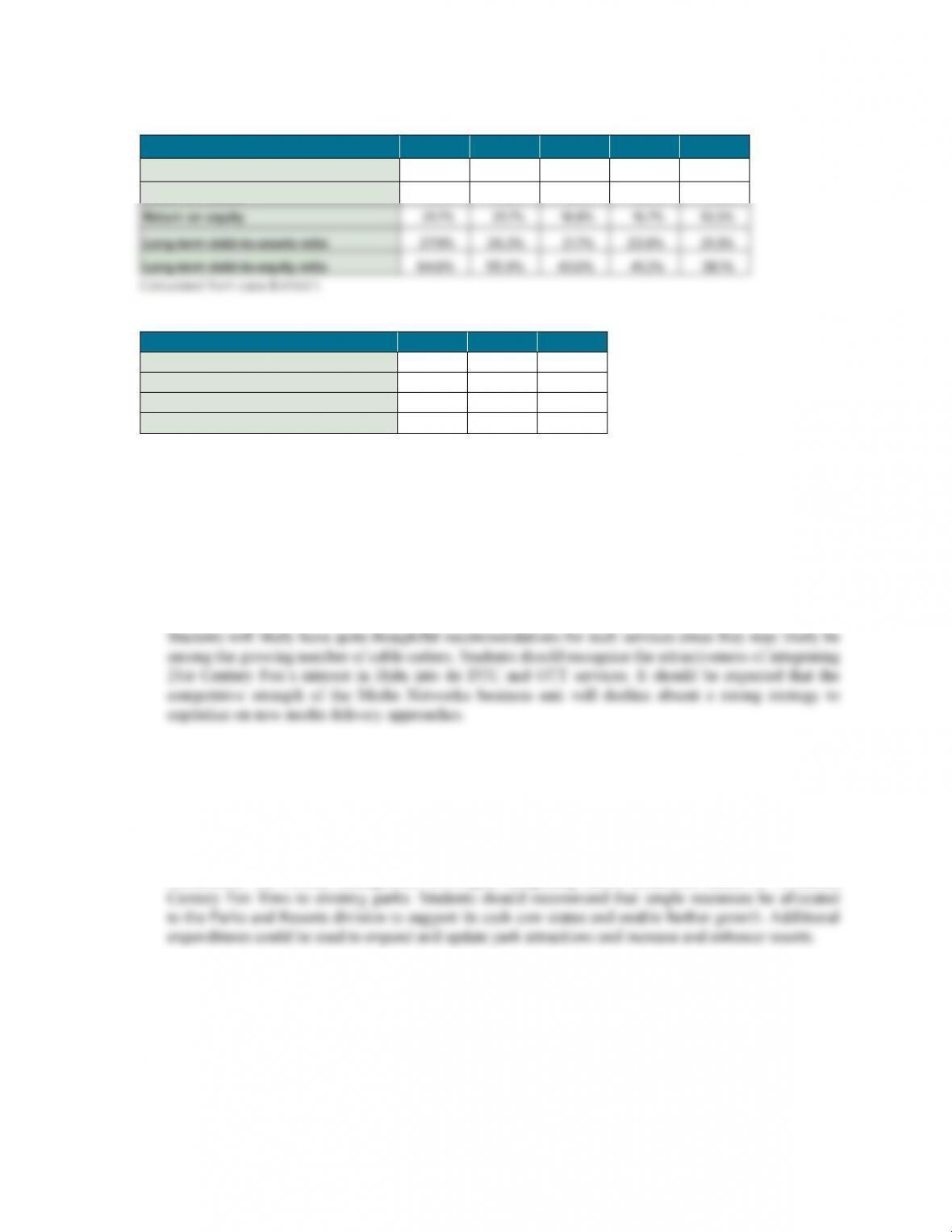
between 2013 and 2017. An examination of the ratios presented in Table 3 indicates that while the company
has become more leveraged since 2013, its profitability ratios have largely improved over the past five years.
Case 24 Teaching Note The Walt Disney Company: Its Diversification Strategy in 2018
590
TABLE 3. Selected Financial Ratios for The Walt Disney Company, 2013–2017
2017 2016 2015 2014 2013
Net profit margin 16.3% 16.9% 16.0% 15.4% 13.6%
Return on assets 9.4% 10.2% 9.5% 8.9% 7.6%
TABLE 4. Operating Profit Margin by The Walt Disney Company Business Unit, 2015–2017
Business Unit 2017 2016 2015
Media Networks 29.4% 32.7% 33.5%
Parks and Resorts 20.5% 19.4% 18.8%
Studio Entertainment 28.1% 28.6% 26.8%
Consumer Products & Interactive Media 36.1% 35.5% 33.2%
Calculated from case Exhibits 4–7.
7. What actions do you recommend that The Walt Disney Company’s management take to
improve the company and increase shareholder value? Are there specific actions that you
recommend to successfully integrate the 21st Century Fox or improve the likelihood of
success for Disney’s direct-to-consumer and over-the-top media services?
There is little reason for students to strongly recommend the divestiture of any Disney business unit,
although its Interactive Media business seems to hold the weakest position. Students should address
the Media Networks plans to offset the decline in cable subscriptions though DTC and OTT services.
Students should recommend that Disney management dedicate resources and focus toward integrating
Fox television assets into its Media Networks division. Fox possesses powerful cable assets such as Fox
News Channel, FX, Fox Sports, Fox Business Network, National Geographic Channel in the U.S. and
considerable assets in international markets such as a 39.1 percent stake in Sky and 350 international
channels.
Disney’s parks and resorts, as well as the cruise ships, have been very successful. Students may
recommend that Disney management investigate integrating theme attractions based on Twentieth
Students should also recommend that Disney management commit suffcient focus toward integrating
21st Century Fox into its Studio Entertainment division. The company has capitalized on the appeal
of Marvel comic book characters such as Iron Man, Incredible Hulk, Thor, Spider-Man, and Captain
America to increase revenue and operating profits for its Student Entertainment business. Disney has also
successfully captured strategic fit benefits from its Lucasfilm Star Wars franchise in expanding theme
park attractions. The company must ensure that similar benefits are captured through the acquisition of
21st Century Fox.
Case 24 Teaching Note The Walt Disney Company: Its Diversification Strategy in 2018
591
While Disney’s Interactive Media business holds the weakest position in its business lineup, the
financial results for its Consumer Products & Interactive Media division are quite impressive. The
financial statistics shown in case Exhibit 7 and Table 4 of this note show that the division has the highest
profitability of all Disney divisions. Students should recommend that additional resources be allocated
to the division to bolster its competitive position in the interactive media industry. The Interactive Media
Epilogue
There was nothing new to report at the time this teaching note went to press. You can review The Walt Disney
Company’s latest financial performance at www.thewaltdisneycompany.com/investor-relations.