
Hitt 13e Case Teaching Notes
Case 20: The Rise and Fall of ZO Rooms
Case Synopsis
In the emerging economy of India, the middle class is rising, and the demand for travel is
increasing. The demand for budget travel accommodations is particularly strong, and budget
hotels are widely available, yet many of them lack the resources or technological knowhow to
market themselves in an increasingly tech-savvy environment. This gap between smaller,
“unbranded” hoteliers and budget travelers created an opportunity for the owners of Zostel
Hospitality Pvt. Ltd., a group that had already achieved success with a backpacking hotel chain.
In its first year, the firm was able to expand rapidly, and top-level managers had big plans to
expand into other areas, such as mid-priced hotels. Yet, it soon encountered obstacles on all
sides. First, it faced fierce competition from rival OYO Rooms and dozens of other new entrants
into the marketplace that recognized the same opportunities as ZO Rooms’ founders. Second,
the firm was hit with a lawsuit from OYO, which claimed that ZO Rooms was illegally using
OYO’s proprietary software developments, given to ZO Rooms by a former OYO employee.
Learning Objectives
• Explain the importance of analyzing and understanding the firm’s external environment.
(Chapter 2)
dynamics. (Chapter 5)
• Describe market commonality and resource similarity as the building blocks of a
competitor analysis. (Chapter 5)
• Describe how strategic actions and tactical actions drive competitive rivalry between
firms. (Chapter 5)
• Describe two approaches used to manage cooperative strategies. (Chapter 9)
• Define strategic entrepreneurship and corporate entrepreneurship. (Chapter 13)
• Define entrepreneurship and entrepreneurial opportunities and explain their importance.
(Chapter 13)
• Define invention, innovation, and imitation, and describe the relationship among them.
Strategic Issues and Suggested Discussion Questions & Answers
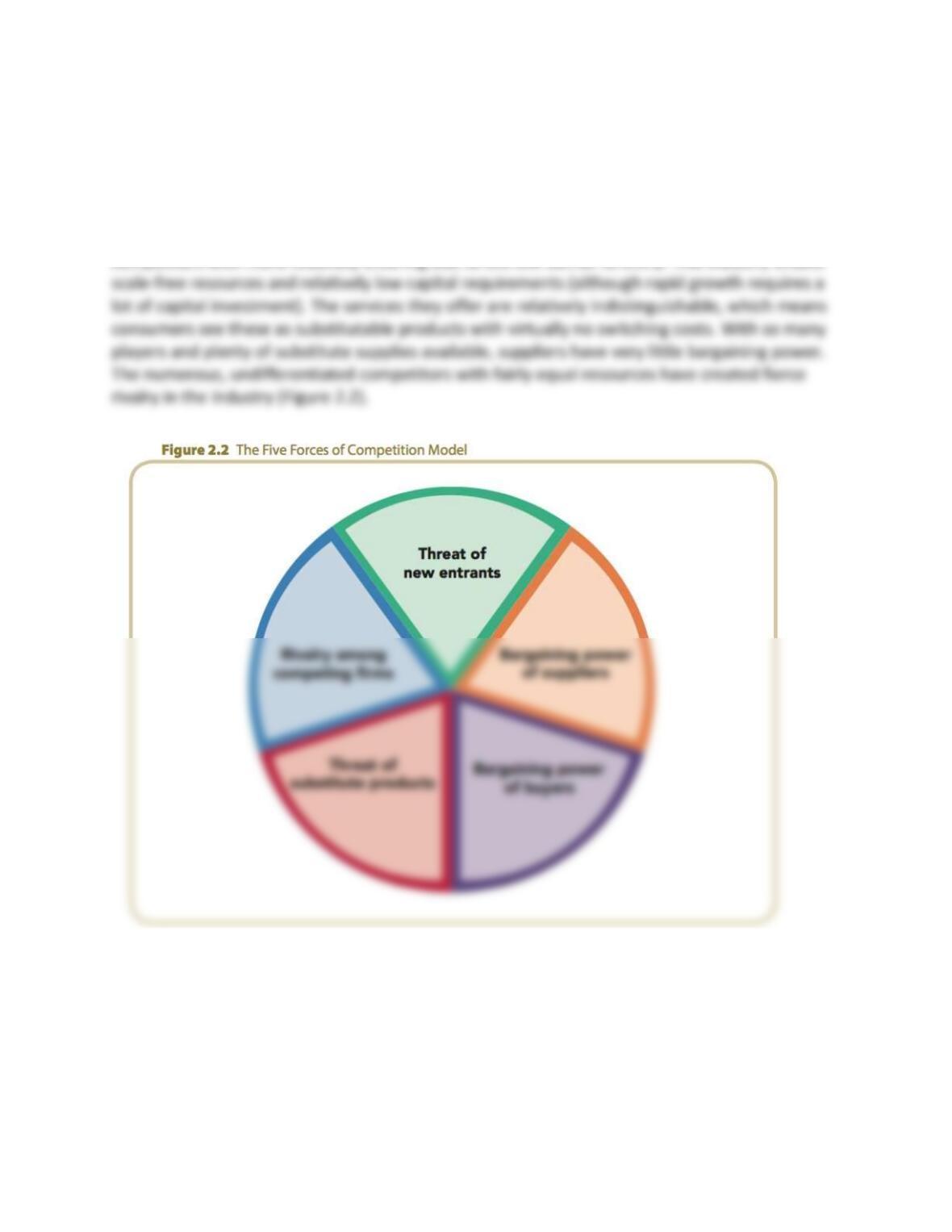
1. Use the five forces model of competition to analyze the industry environment in which
ZO Rooms was operating.
ZO Rooms was operating in the online budget hotel aggregation (OBA) industry, which is full of
competitors with more routinely entering due to the low barrier to entry. This industry entails
2. Briefly describe ZO Rooms’ tangible resources, intangible resources, and capabilities.
What key resources and capabilities did the firm lack? Using the four criteria for
evaluating capabilities, which of them have become core competencies?
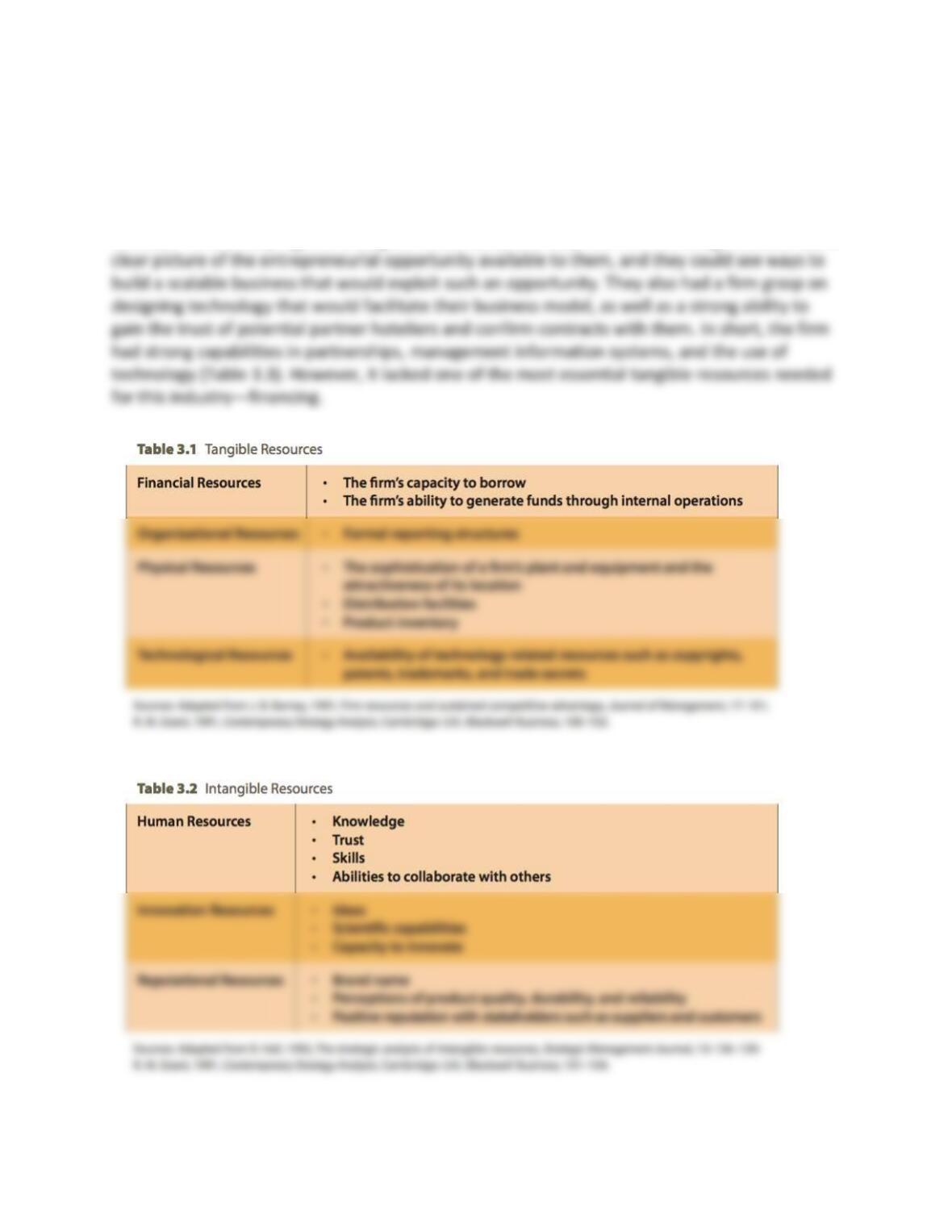
While ZO Rooms was deliberately low on tangible resources (Table 3.1)—called an asset-light
business—it was very high on intangible resources (Table 3.2). The firm’s strategic leaders had a
Students need to understand that none of these resources and capabilities really add up to core
competencies. Although they are valuable, none of them is rare or nonsubstitutable. It is
3. Explain ZO’s business model. How did the firm create, deliver, and capture value for
both budget-minded travelers and unbranded hotels?
As an online budget hotel aggregator, ZO Rooms’ purpose was to connect budget-minded
travelers looking for inexpensive, yet decent, accommodations with small or “unbranded”
4. Using the three concepts of awareness, motivation, and ability, describe the
competitive dynamics between ZO Rooms and other competitors, particularly OYO
Rooms.
ZO Rooms was part of a growing number of online budget hotel aggregators, which also
competed indirectly against online travel agents (OTAs). ZO Rooms had a high degree of market
The discounting issue reveals that ZO Rooms was also motivated to respond to competitors’
actions. It must have believed that its market position would improve if it copied their
discounting policies. This means that it was either willing to sacrifice or unaware of the
potential sacrifice of higher revenues and trust with partners.

5. In December 2015, OYO made an offer to acquire the struggling ZO Rooms. Why?
What type of acquisition was this? What were the intended benefits for both parties?
While OYO was clearly the dominant player in this marketplace—it had approximately three
times the number of rooms and hotels under contract in more than double the number of
6. Why do you think ZO Rooms failed? Support your answer with specific details.
Students’ answers will vary, but they should demonstrate logical reasoning. Many students will
Additional Resources
TechCrunch’s May 2017 article explained why the OYO–ZO Rooms deal fell through:
In September 2018, Reuters announced that OYO, now India’s largest hotel chain, planned to
expand internationally:

India’s Startup Central filed this video report on the demise of the OYO–ZO Rooms deal: