
Instructor Resource
Rowe, Cases in Leadership 5e
SAGE Publications, Inc., 2019
Case Notes
Case 2.1: London Health Sciences Centre: Talent Development (A) and (B)
Ken Mark wrote this teaching note under the supervision of Professor David Loree as an aid to
instructors in the classroom use of the cases London Health Sciences Centre: Talent
Development (A) and (B), Nos. 9B16C049 and 9B16C050. This teaching note should not be used
in any way that would prejudice the future use of the cases.
This publication may not be transmitted, photocopied, digitized or otherwise reproduced in any
form or by any means without the permission of the copyright holder. Reproduction of this
material is not covered under authorization by any reproduction rights organization. To order
copies or request permission to reproduce materials, contact Ivey Publishing, Ivey Business
Teaching Note
A director in critical care at London Health Sciences Centre (LHSC) is asking a manager to
review two candidates for promotion to a front-line coordinator position. James Erwell has been
tasked with the job of choosing between two promising candidates: Jane McNeil and Sara
Andrews. The two nurses are quite different from each other, and Erwell has to look carefully at
the two candidates to determine which one will be better suited as a front-line coordinator.
The immediate question is about which candidate should be selected. However, the process
reveals a larger issue: an opportunity to initiate a robust leadership-selection process at the
hospital. The case describes a situation where a candidate for promotion needs to be identified
within a few hours. A more rigorous selection process would mean that the director in critical
care would already have a list of candidates, ranked by suitability.

Instructor Resource
Rowe, Cases in Leadership 5e
Learning Objectives
This case has been designed for use in human-resources, leadership, and health-care courses at
both the undergraduate and graduate levels. Following discussion of the case, students will have
developed their ability to do the following:
• understand the role of leadership development programs in an organization’s human–
Relevant Resources
• Galbraith, J. The star model. Galbraith Management Consultants. Retrieved October 14,
2016 from www.jaygalbraith.com/images/pdfs/StarModel.pdf. This is a framework for
organizational design.
• Gurdjian, P., Halbeisen, T., & Lane, K. (2014, January). Why leadership-development
Teaching Plan
This teaching plan envisions the use of both cases A and B in an 80-minute session.
20 minutes

Instructor Resource
Rowe, Cases in Leadership 5e
SAGE Publications, Inc., 2019
Opening question: “Which of the two candidates should Erwell recommend as the new front-line
coordinator?” List on the board the two candidates and jot down a list of reasons for and/or
40 minutes
Role-play exercise: Divide the class into groups of five. Have two of the five students in each
15 minutes
Ask the students, “What other issues should Erwell consider?” The question is open-ended to elicit
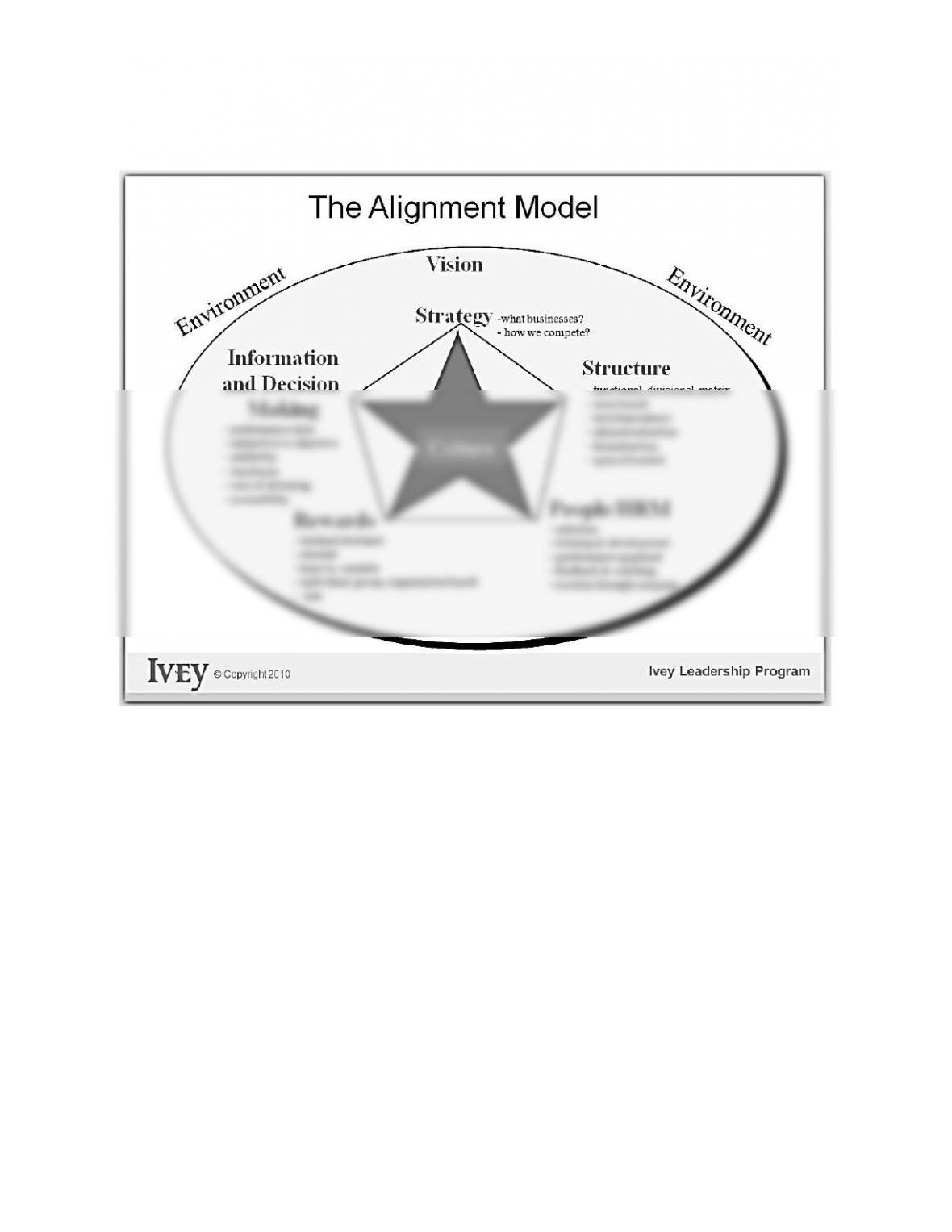
comments about the whole range of human-resources processes. Discuss Jay Galbraith’s star
5 minutes
Wrap-up by summarizing the facts and arguments.
After discussing the three assignment questions, hand out the B case, which shows that
Assignment Questions
1. Which of the two candidates should Erwell recommend as the new front-line
coordinator? Support your decision by reviewing the two candidates’ profiles.
2. How would you present the decision to the two candidates—an offer to one and a
rejection to the other? What advice would you give to each person? What responses
Analysis
1. Which of the two candidates should Erwell recommend as the new front-line
coordinator? Support your decision by reviewing the two candidates’ profiles.
The case provides a balanced view of both McNeil and Andrews. Neither person is portrayed as
Jane McNeil
Sara Andrews
Respect
• Not afraid to step in to help others
• Wants to have consistency at
work, and this includes strict
break time
• May be too deferential to
physicians
• Not as assertive as a leader should
be
• Reads people well
Trust
• Speaks the truth, but does not
consider how tone can have an
impact on others’ perception
• Actions are consistent with words
• Willing to listen to advice
• May override instructions because
of personal and professional
experience
Collaboration
• May not be a team player
• May not consider others’ feelings
when taking action
• Follows procedures strictly
• Seen as a team player
• May be too eager to accommodate
colleagues
• Can be passive-aggressive
Instructor Resource
Rowe, Cases in Leadership 5e
SAGE Publications, Inc., 2019
• Seems willing to change and learn
• Manages difficult situations well;
is learning to avoid anxiety
To select a leader, an ability-motivation-support-direction coaching framework helps to identify
the fundamental drivers of performance that individuals will bring to the role:
A suggested analysis of the two candidates based on this framework could read as follows:
Jane McNeil
Sara Andrews
Ability
• Assertive and willing to change
• Willing to work in difficult
situations to carry out tasks
• Able to read the situation and
apply her extensive experience in
deciding what to do
Motivation
• Able to process large amounts of
work efficiently
• Willing to work with colleagues
to help them learn
Support
• Supported in her work
environment; this is not an issue
• Supported in her work
environment; this is not an issue
Direction
• Requires coaching on how to
manage people and adapt to
situations
• May require assistance in getting
better at reading people and in
completing paperwork
In summary, either of the two candidates could be selected. Erwell has to justify his decision to
select one over the other. One potential way to select between the two is to tie the decision to
LHSC’s values.
2. How would you present the decision to the two candidates—an offer to one and a
rejection to the other? What advice would you give to each person? What responses would
you expect, and how would you deal with them?

Instructor Resource
Rowe, Cases in Leadership 5e
SAGE Publications, Inc., 2019
The role-play exercise allows students to practice giving advice and managing difficult
conversations. Invariably, students will feel more anxiety telling the rejected candidate that she
has not been selected for the position. When presenting the “bad news,” the student acting as the
manager has to consider the following:
• The nurse—either McNeil or Andrews—believes that she is an ideal candidate for
promotion.
3. What other issues should Erwell be aware of?
The case presents the dilemma of having to select between two candidates, and the manager has
a few hours within which to make that decision. It should be evident to some students that LHSC
should not have to rely on the last-minute efforts of a manager to decide which of the two

Instructor Resource
Rowe, Cases in Leadership 5e
SAGE Publications, Inc., 2019
Exhibit TN-1
Source: Case writers.
Culture