
Chapter 17 – Project Management
17-1
CHAPTER 17
PROJECT MANAGEMENT
Teaching Notes
In managing operations, we are often faced with activities that do not fit into the usual day-to-day
operations of the firm. These non-typical, unusual activities of the firm are called projects. Therefore
typical daily, weekly or monthly activities of a firm involving scheduling, quality control, purchasing, etc.
are not categorized as projects. Due to their unique nature, projects require different management
approaches and techniques. A list of project examples is given below:
2. Installation of a new computerized production and inventory control system
4. Feasibility study to decide whether to buy new machinery
6. Conversion of the plant layout from process layout to group technology layout.
8. Construction of a new facility
10. Planning organizing and managing major sports events such as Olympics, sports festivals, NCAA
basketball tournament, etc.
Project Management involves planning, controlling and directing the unusual activities facing the firm. In
managing projects, temporary project teams are formed to schedule the work, to adhere to a given budget,
and to monitor the progress of the work through its various stages. For larger projects, project teams are
Projects are not necessarily single-time events. They can be repeated in similar settings. In managing a
project, the project team is usually responsible for managing and controlling the following four factors:
1. The length of project completion time
3. Quality

Chapter 17 – Project Management
17-2
The project plan is generally prepared well before actual project work begins. The first phase of the
project needs to include a clear statement of goals and objectives of the project. The next phase involves
composing a detailed definition of the project. Then, using the Work Breakdown Structure, the project is
decomposed into tasks or activities. Once all of the unique tasks making up the project are identified,
specific time, cost and resource estimates are obtained for each task.
Answers to Discussion and Review Questions
1. To effectively manage a project, a project manager must employ a certain set of skills. For
projects that involve fairly well-defined work, the project manager must be able to
a. motivate his or her team.
e. communicate certain problems to upper management.
f. expedite work when necessary.
However, if the work is not well defined, there is usually more uncertainty involved. In projects
involving a higher degree of uncertainty, in addition to being able to perform the functions listed
above, the project leader must also demonstrate strong leadership skills. The more ill-defined the
work, the higher the need for leadership skills. Leadership skills are less tangible than the skills
listed above and may include the following:
a. ability to deal with change.
b. deciding what type of changes are needed and when to make the change or changes.

Chapter 17 – Project Management
17-3
2. Project champion is the person who is from within the company specifically designated to support
the project. The project champion can be instrumental in facilitating the work of the project
manager by promoting the project to other managers who might be asked to share resources with
3. The steps in risk management are:
a. Identification of risks.
b. Assessment and evaluation of risks.
c. Risk reduction.
– Contingency plans.
5. The advantages of using project management software include the following:
a. It imposes a methodology and a common project management technology.
b. It provides a logical planning structure.
6. Work Breakdown Structure (WBS) is a hierarchical listing of what must be done during the
7.
a. A path
e.
Beta distribution
c. Dummy activity
g.
Crashing
8. The primary advantages of PERT are:

Chapter 17 – Project Management
a. The PERT chart helps managers to visualize the project.
b. Planners must identify major activities and define sequential relationships.
The primary limitations of PERT are:
a. Important activities may be overlooked when developing the project network.
b. Errors may occur in designating precedence relationships.
9. Near-critical paths can have distributions which overlap the distribution of critical path time,
10. a. Expected activity time is a weighted average of optimistic, most-likely, and pessimistic time
for each activity:
6
tt4t
Tpmo
e
++
=
11. The critical path generates more attention than other paths. Hence, those associated with activities
12. Projects can offer a change of pace, a chance to do new work, meet new people and new
challenges. If the project is successful, certain rewards, recognition and perhaps new
13. Authority may not be commensurate with responsibility, time and funding pressures may be

Chapter 17 – Project Management
17-5
14. The project organization permits a narrower focus on activities related to a project than a more
traditional form of organization would.
Taking Stock
1. When contractors responsible for the completion of certain activities for a given project
determine the completion time estimates, they assume normal operating conditions, thus normal
2. The project manager, specialized project personnel dedicated to handle certain portions, activities
3. a. Project management software: As the project management software gets more and more
sophisticated, the ability of a project manager to manage, direct and control different aspects
of management gets easier.
Critical Thinking Exercise
1. The project management techniques are designed to handle unusual or atypical activities. They do not
lend themselves very well in managing the day-to-day activities of organizations. Projects by definition
are different than normal operations of the firm. They are usually not repeated, very expensive to design
and develop due to their unique and special characteristics. Since business managers have experience
Memo Writing Exercises
1. Work Breakdown Structure (WBS) is a hierarchical listing of what must be done during the
2. In a part-time capacity, the employee will continue to perform his/her regular duties and join the
project team as well. The employee may be concerned about reporting to two different managers

Chapter 17 – Project Management
17-6
3. The advent of technology made it much easier to manage projects. First and foremost, the use of
project management software presents many different benefits and conveniences for project
teams and project managers. Some of these benefits are listed below:
a. It imposes a methodology and a common project management technology.
b. It provides a logical planning structure.
f. It can generate multiple levels of summary reports and detailed reports.
g. It enables what-if scenarios and what-if analysis.
h. It can generate various chart types, including basic Gantt charts.

Chapter 17 – Project Management
17-7
Solutions
1.
a.
Path
Expected
Path Time
1–2–4–7–10–12
23
b.
Path
Expected
Path Time
1–2–4–6–8–9
41
48
55*
1–3–7–8–9
40
c.
Path
Expected
Path Time
1–2–5–12–16
44*
1–3–6–13–16
39
1–3–7–14–16
41
1–4–8–9–10–11–15–16
35
2.
a.
Choose topic
Shop
Library res.
Select
Outline
Install
Grammar ck
Submit paper
b. 1. AOA diagram
Library
24
1–3–6–9–11–12
31*

Chapter 17 – Project Management
17-8
2. AON diagram
Library
Choose
Outline
Submit

Chapter 17 – Project Management
17-9
Blank forms to distribute to students if desired:
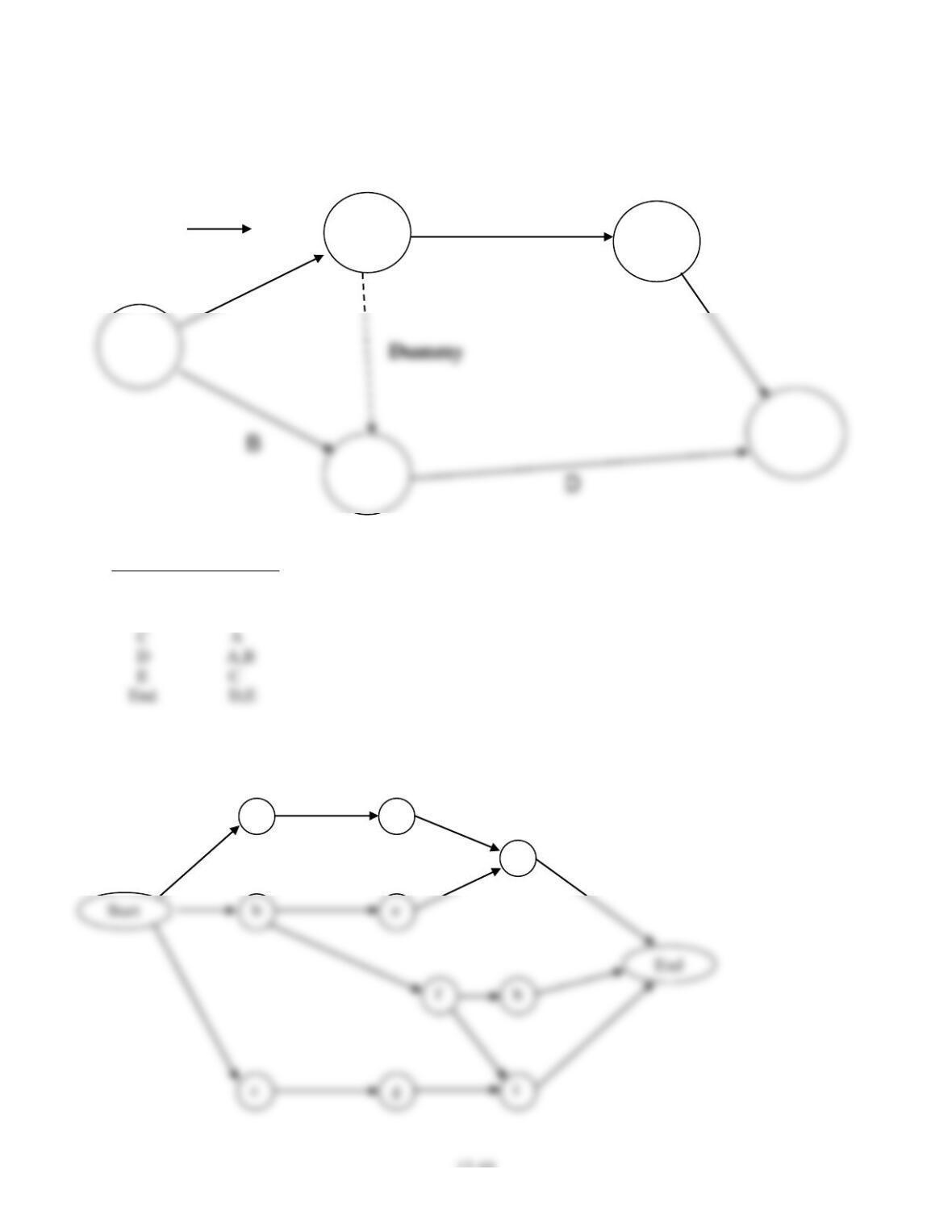
3a. Bank location.
Weeks after start
Activity 2 4 6 8 10 12 14 16 18 20
1-2
2-4
2-5
3-5
4-5
5-6
b. Solved problem #2.
Weeks after start
Activity 2 4 6 8 10 12 14 16 18
1-2
2-5
2-4
1-3
3-4
4-5
3. a. Bank location.
Weeks after start
Activity 2 4 6 8 10 12 14 16 18 20
1-2
1-3
2-4
2-5
3-5
4-5
5-6
b. Solved Problem #2.
Weeks after start
Activity 2 4 6 8 10 12 14 16 18
1-2
2-5
2-4
1-3
3-4
4-5
1-3
Chapter 17 – Project Management
17–10
4. a.
Immediate
Activity Predecessor
A –
B –
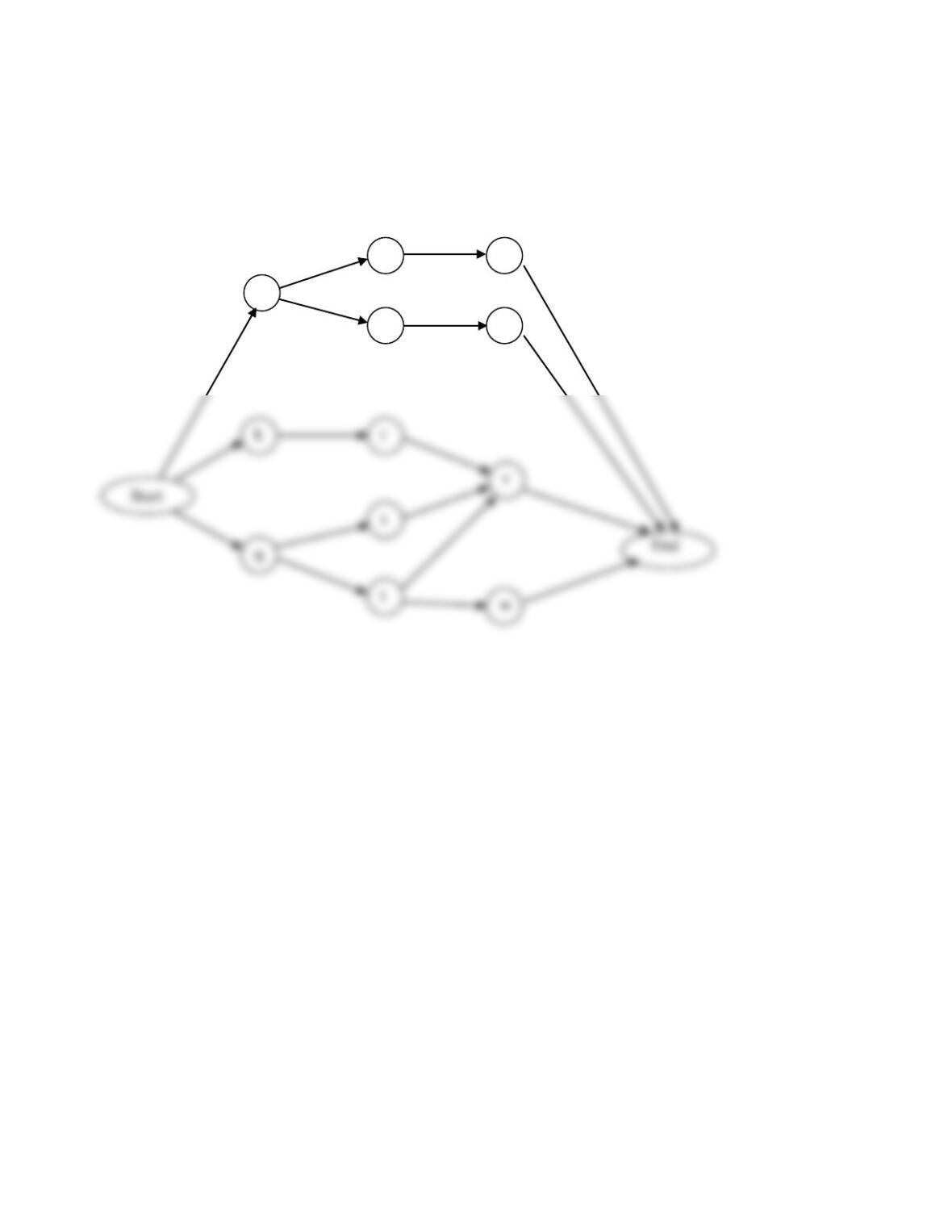
4. b. Case 1: Activity-on-Node diagram
b
e
f
h
i
g
c
A
C
E
a
d
k
Start
Chapter 17 – Project Management
17–11
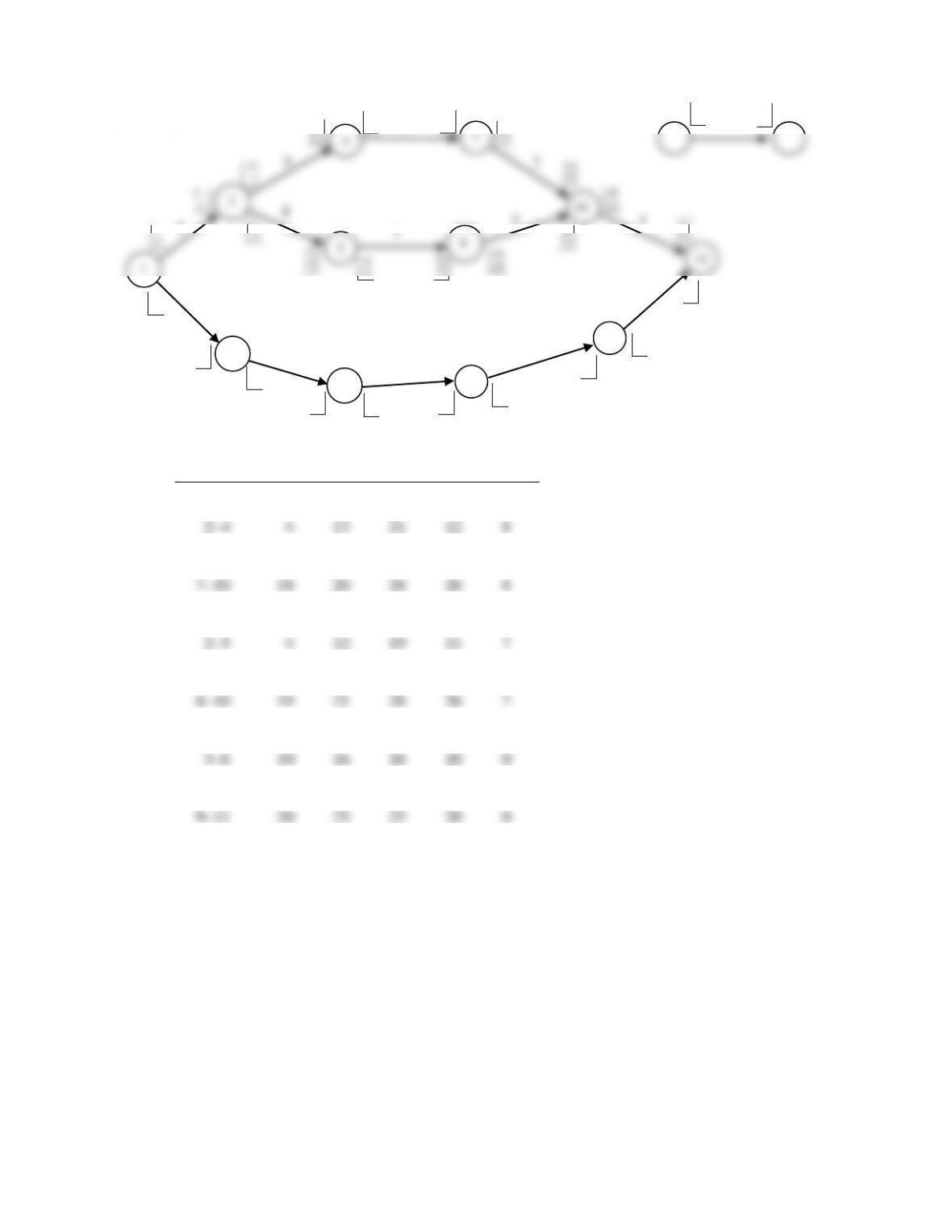
Case 2: Activity-on-Node diagram
m
l
j
p
n
k
r
v
q
s
t
w
Chapter 17 – Project Management
17–12
5. a.
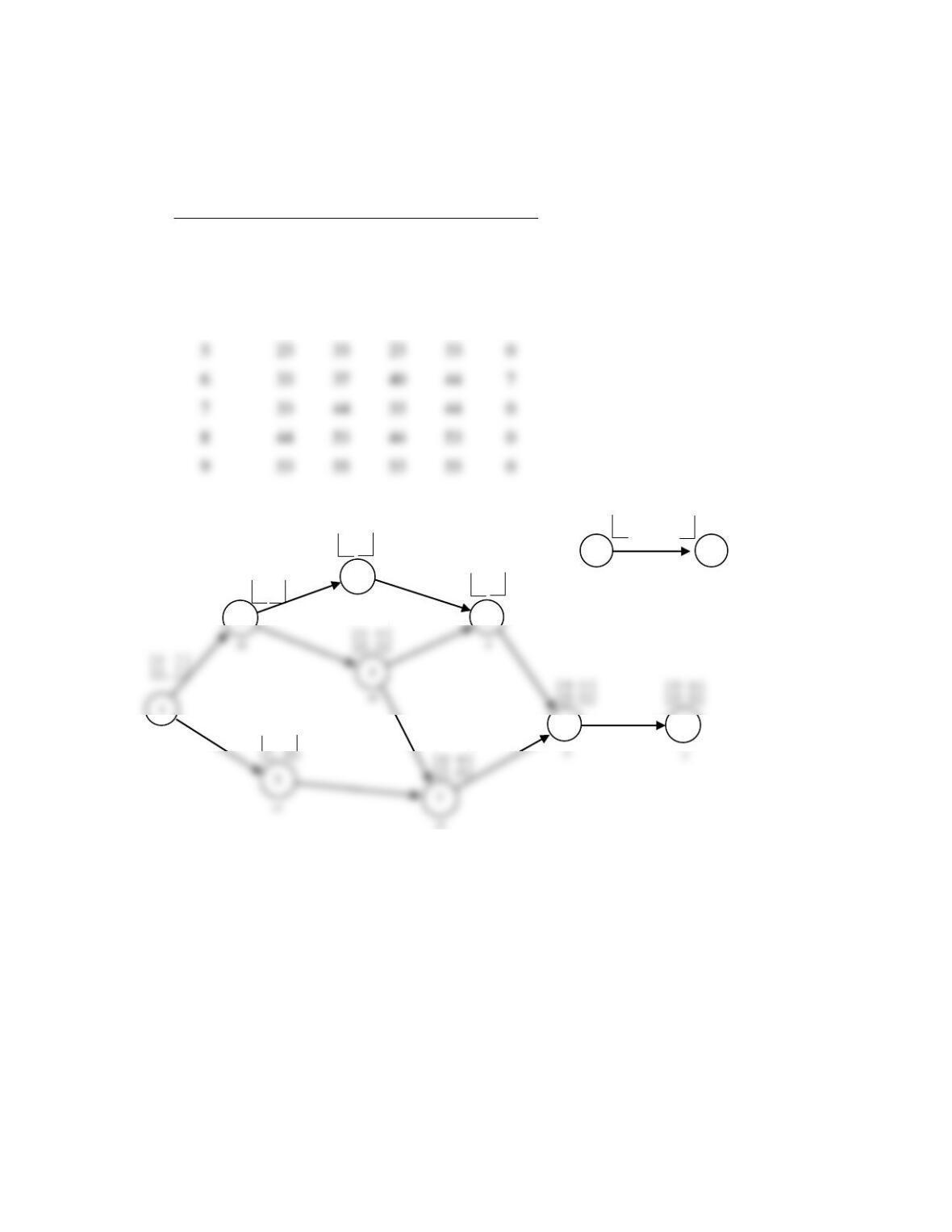
Summary:
Activity
ES
EF
LF
LS
Slack
1–2
0
4
11
7
7
4–7
13
18
26
21
8
18
20
28
26
8
10–12
21
24
31
28
7
2–5
4
12
19
11
7
5–8
12
19
26
19
7
19
21
28
26
7
1–3
0
10
10
0
0
3–6
10
16
16
10
0
6–9
16
20
20
16
0
20
25
25
20
0
11–12
25
31
31
25
0
28
21
18
2
28
20
4
7
9
2
2
19
12
1
5
26
19
7
26
7
26
9
6
3
11
11
0
0
10
10
16
16
20
20
25
25
31
31
25
25
20
20
16
16
10
10
26
18
31
21
21
13
5
3
6
5
4
6
10
4
LS
ES
LF
EF
2–4
4
13
21
12
8
Chapter 17 – Project Management
17–13
5. b.
Summary:
Activity
ES
EF
LS
LF
Slack
1
0
5
0
5
0
2
5
23
5
23
0
3
5
18
20
33
15
4
23
26
37
40
14
0
0
23
44
44
53
53
55
55
33
44
5
2
LS
ES
LF
EF
2
8
9
6
37
23
40
26
5
5
4
23
23
5
40
33
44
37
20
33
3
5
23
33
23
33
0
6
33
37
40
44
7
7
33
44
33
44
0
8
44
53
44
53
0
9
53
55
53
55
0
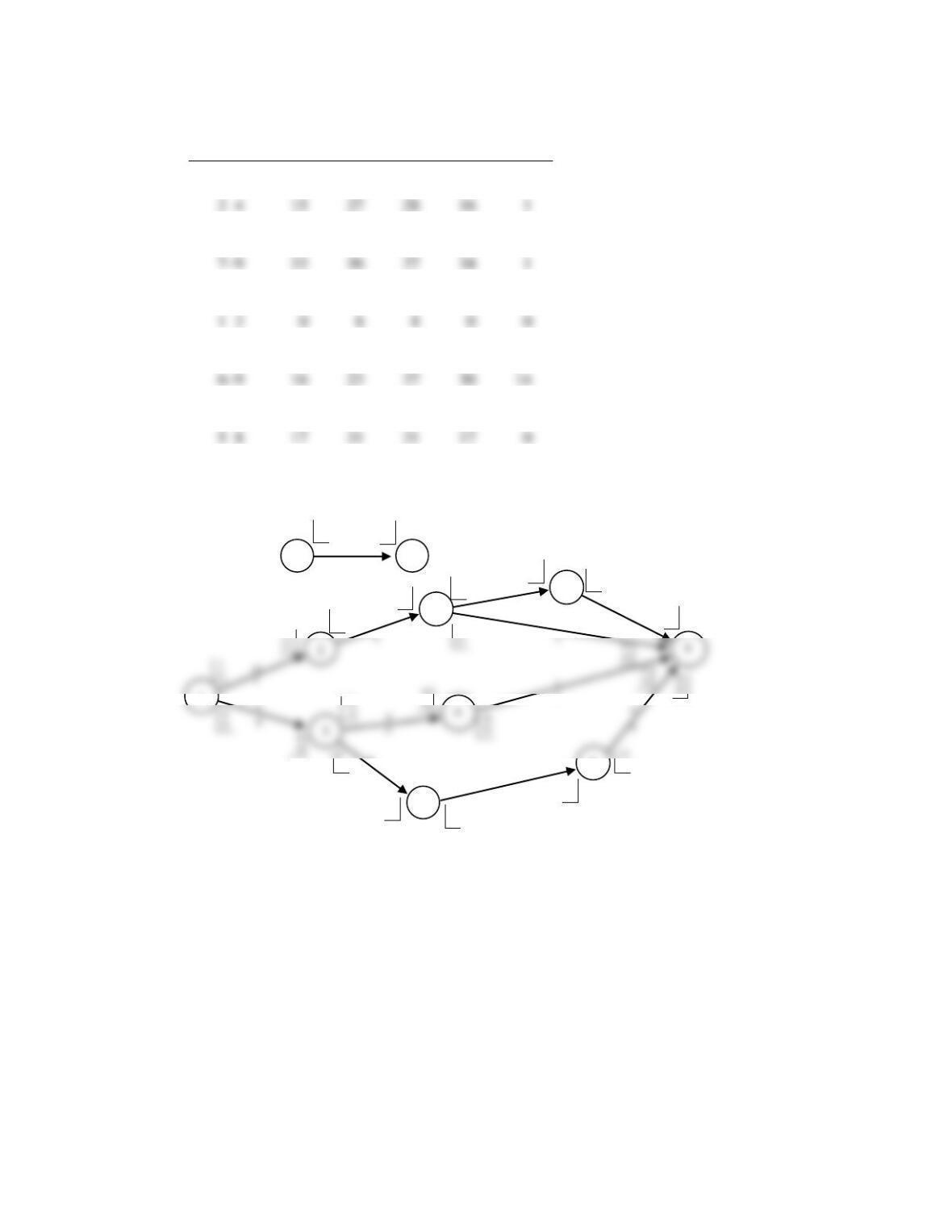
Chapter 17 – Project Management
17–14
5.
c.
Activity
ES
EF
LF
LS
Slack
1–2
0
15
16
1
1
4–7
27
33
34
28
1
7–9
33
36
37
34
1
4–9
27
32
37
32
5
1–3
0
8
0
0
3–6
8
16
30
22
14
6–9
16
23
37
30
14
3–5
8
17
17
8
0
5–8
17
31
31
17
0
8–9
31
37
37
31
0
1
0
2
i
b
16
8
0
0
30
16
3
31
f
32
34
33
37
36
30
16
15
8
17
17
28
27
34
33
31
31
17
17
28
27
16
1
8
4
7
5
31
h
9
j
14
7
12
6
c
3
e
d
LS
ES
LF
EF
2–4
15
27
28
16
1