Instructor Resource
Rowe, Cases in Leadership 5e
SAGE Publications, Inc., 2019
The PESTLE analysis is one of the most well-known and widely used environmental analysis
frameworks. The instructor can direct students to the work of Daft33 as well as relevant
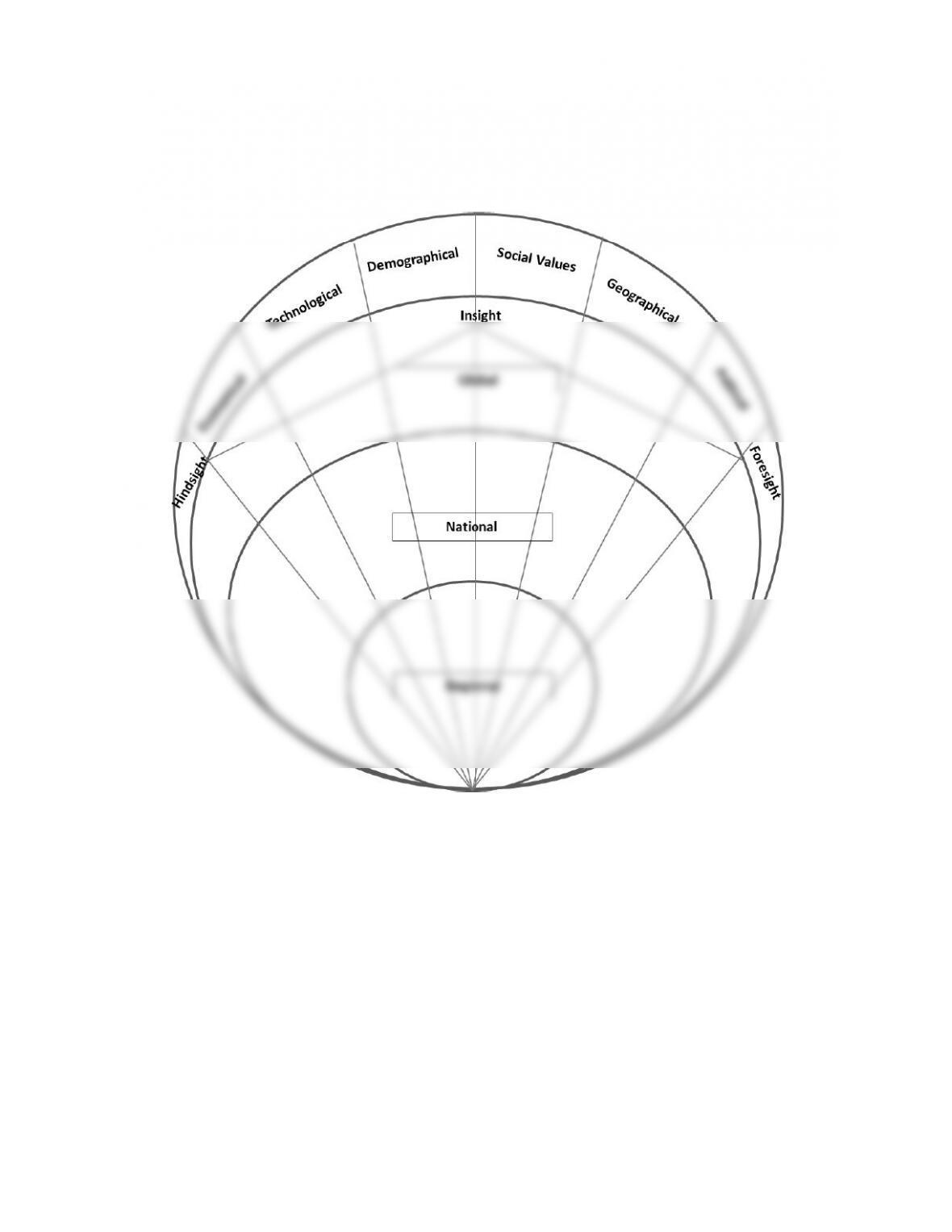
websites34 that offer templates for using the framework. Contextual variables in the Sibanye
case—according to political, economic, social, technological, legal, and environmental factors—
have been illustrated in both the case study and this teaching note (see Exhibit TN-2). For the
instructor’s use, contextual maps are provided in the PowerPoint slides that accompany this
teaching note. The slides can be copied for students to use on plant visits and immersions, where
Instructor Resource
Rowe, Cases in Leadership 5e
SAGE Publications, Inc., 2019
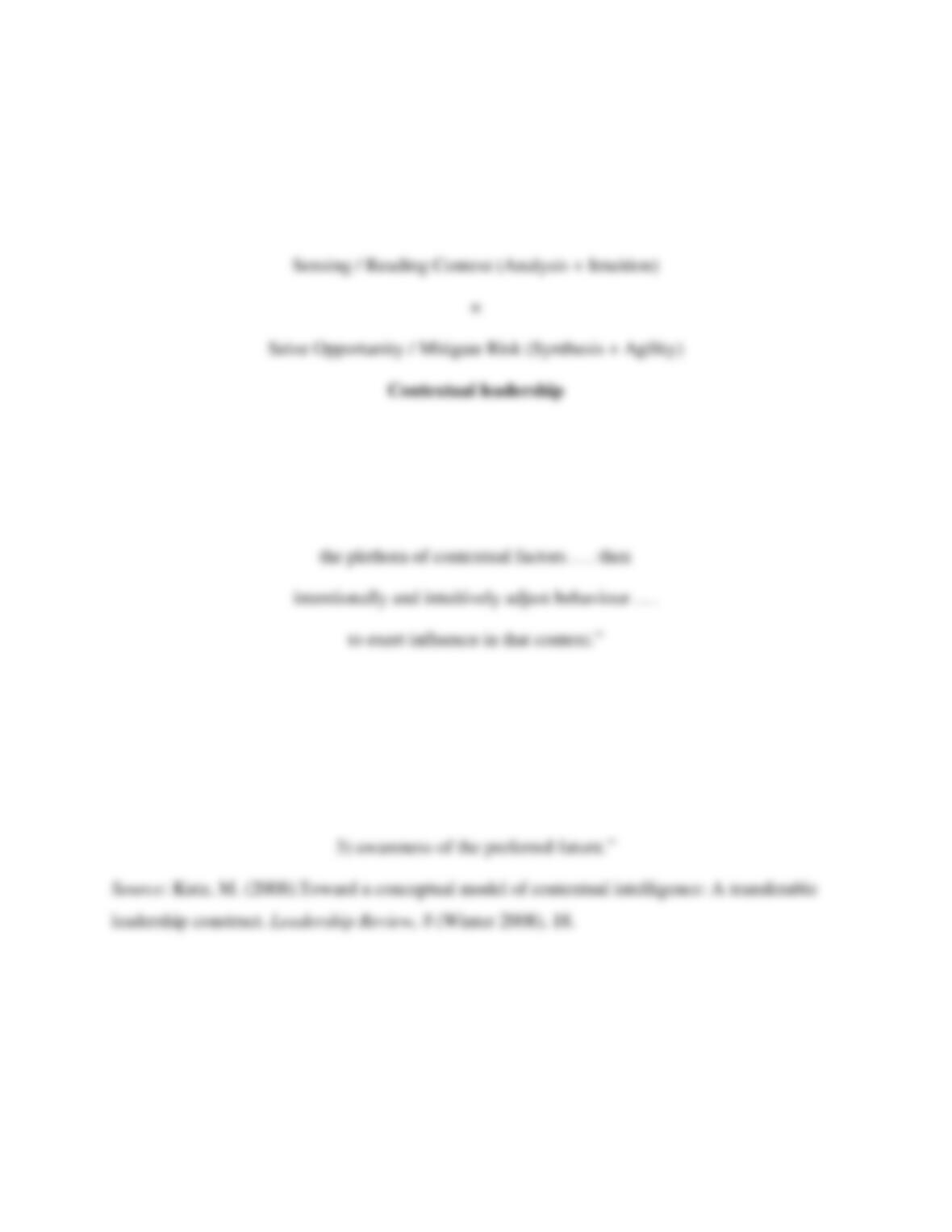
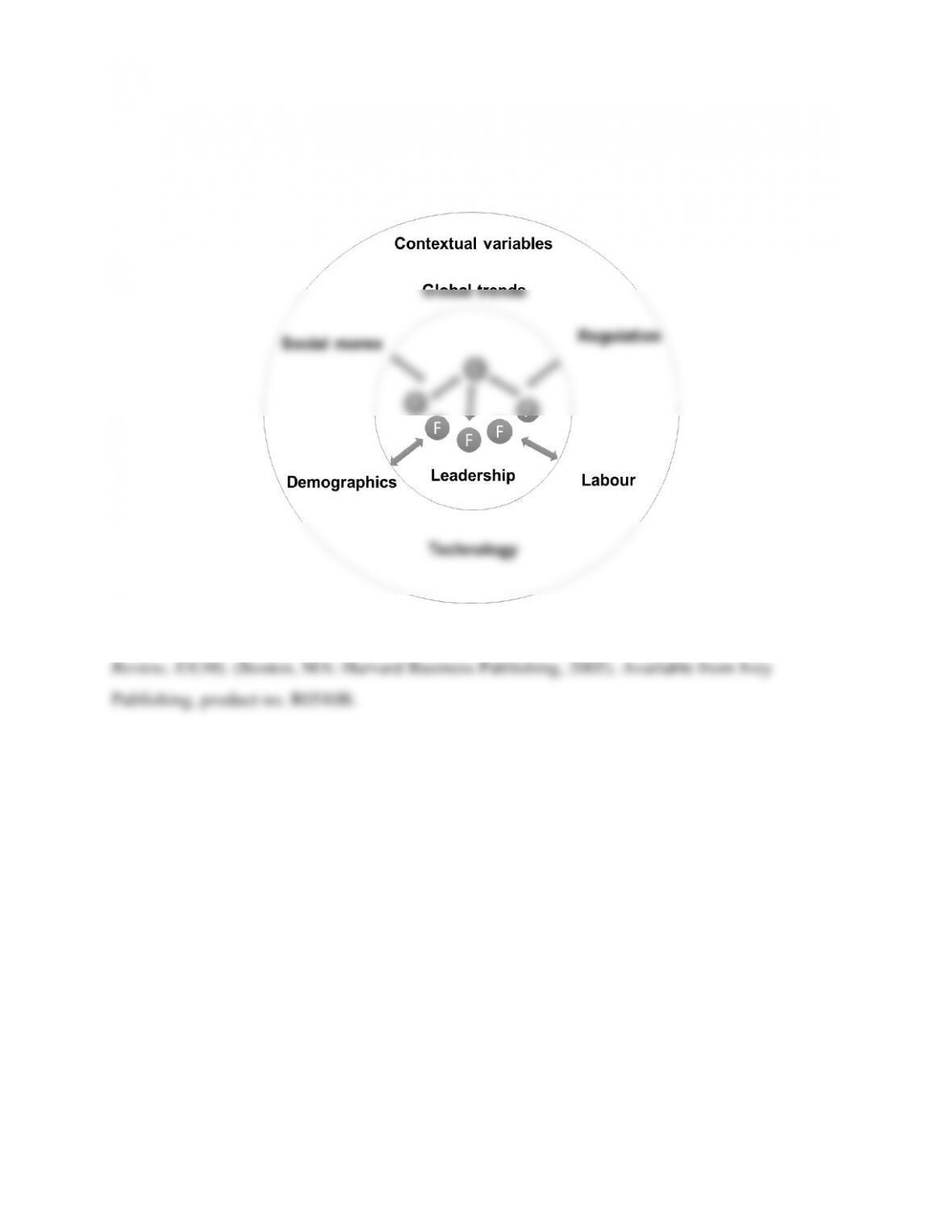
According to Mayo and Nohria,36 contextual leadership intelligence is the ability to
understand an evolving environment and to capitalize on those emerging trends (see Exhibit TN-
6). These scholars have identified a number of contextual variables, such as social mores, or the
values in a particular context, technology, or regulation. In turn, Kutz37 defines contextual
intelligence as the ability to recognize and diagnose the plethora of contextual factors inherent in
an event or circumstance, and then intentionally and intuitively adjust in an attempt to exert
influence in that context. Contextual intelligence requires three major qualities:
Contextual leadership broadens the view of leadership, as an individual interpersonal influence
to collective influence processes, for managing dynamic systems and interconnectivity that
extends to the environment.38 These scholars emphasize the following principles with regard to
leadership and context:
Instructor Resource
Rowe, Cases in Leadership 5e
SAGE Publications, Inc., 2019
Mostert was also in touch with the future of the organization because he was negotiating
with the newly acquired platinum mining operations’ managers. The evolving environment
includes the rich history or hindsight and the context within which the organization is embedded.
The rich history of Sibanye from the Gold Fields days is discussed in the case study.
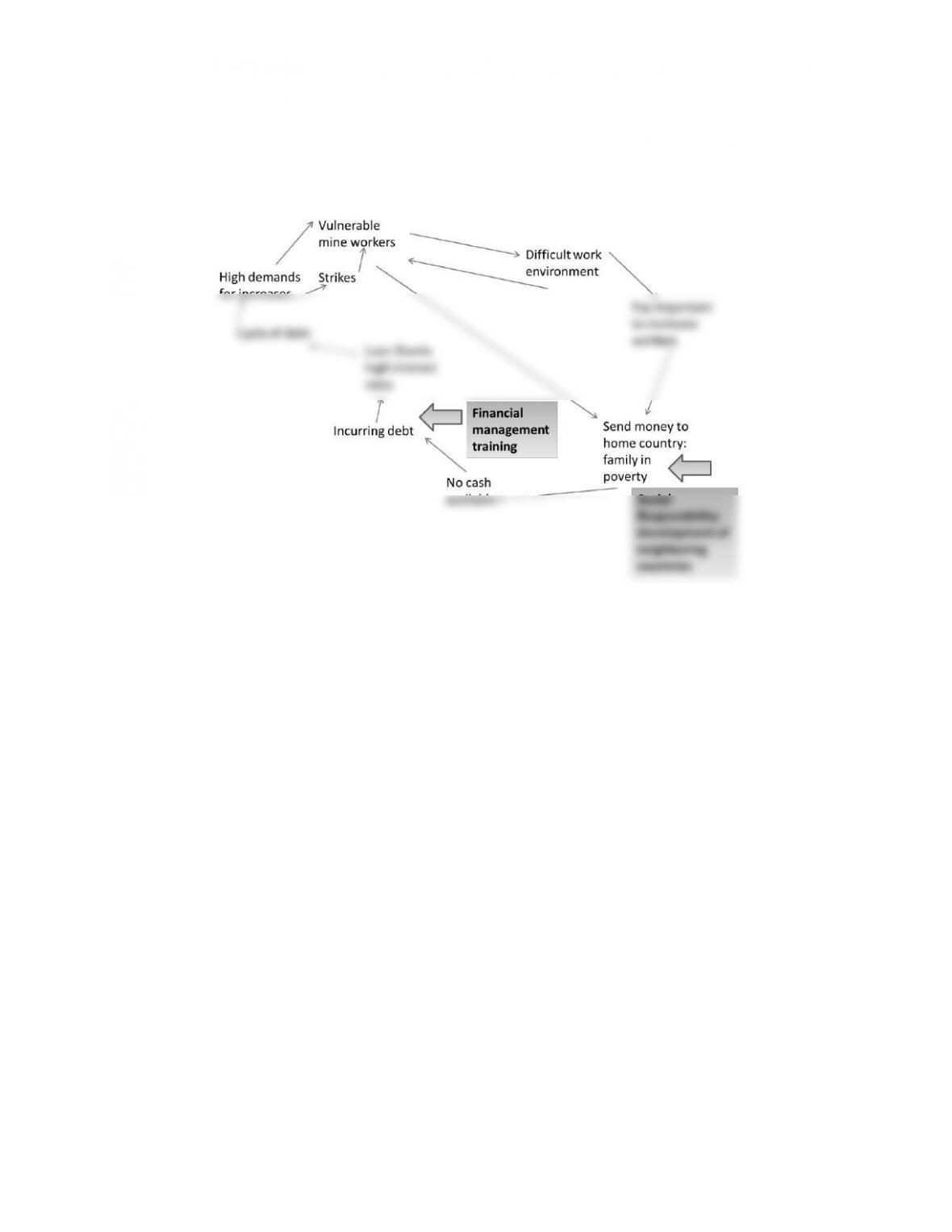
As part of contextual acumen, students should be encouraged to decipher the context in
terms of circular processes. As the case illustrates, Mostert initiated a program to lower
employee personal debt, intending to improve the financial well-being of the workers. These
initiatives were backed by unfiltered dialogue between employees and line managers, supported
by frequent factual communications from the desk of the chief executive officer (CEO). Recent
Sibanye also had extensive systems of control in place to minimize health and safety risks.
About 80 per cent of these initiatives relied on ownership being taken by all employees, from the
CEO to line management, supervisors, and mineworkers. For example, Mostert even acted as a
role model to his workers on the importance of safety procedures by wearing his safety gear.
Instructor Resource
Rowe, Cases in Leadership 5e
SAGE Publications, Inc., 2019
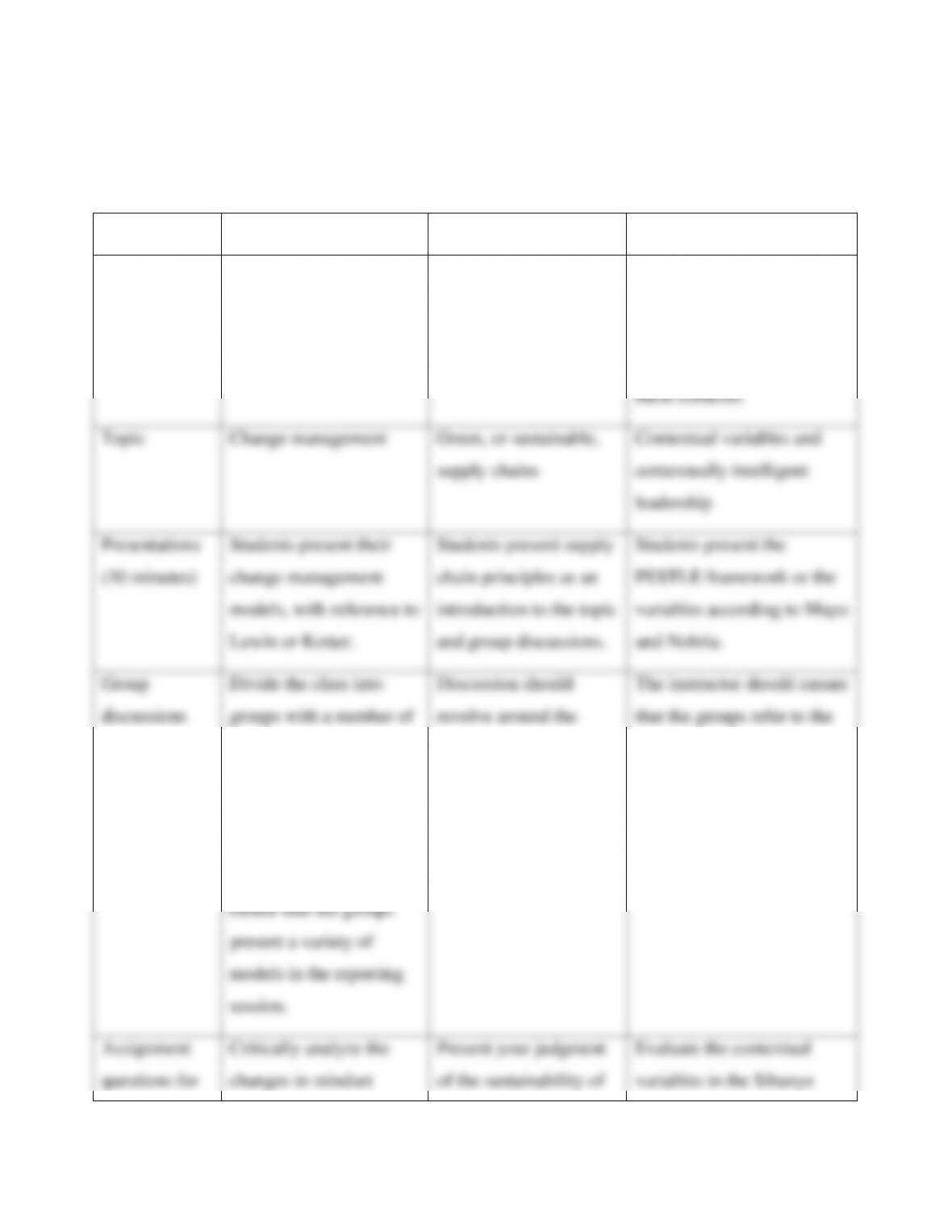
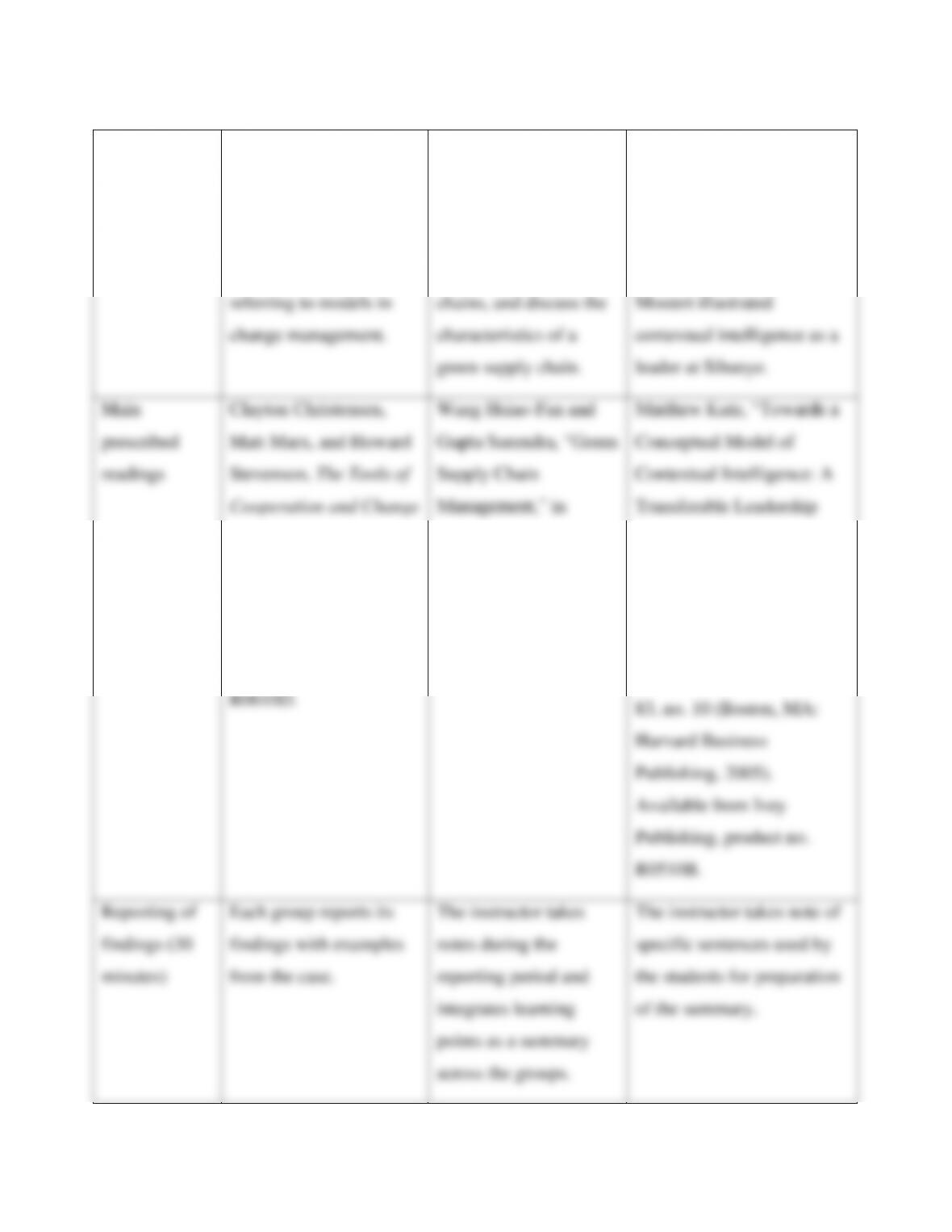
Exhibit TN-1
Expanded Learning Objectives and Teaching Plan
Learning Objective 1
Learning Objective 2
Learning Objective 3
Learning
objectives
To apply change
management theory to a
case study.
To evaluate a green
supply chain for a
mining company.
To identify and analyze
relevant contextual
variables and subsequent
leadership behaviours in
these contexts.
Topic
Change management
Green, or sustainable,
supply chains
Contextual variables and
contextually intelligent
leadership
Presentations
(30 minutes)
Students present their
change management
models, with reference to
Lewin or Kotter.
Students present supply
chain principles as an
introduction to the topic
and group discussions.
Students present the
PESTLE framework or the
variables according to Mayo
and Nohria.
Group
discussions
and
preparation for
the next
section (30
minutes)
to different groups to
mine.
Divide the class into
groups with a number of
representatives,
depending on the size of
the class. Assign
different change models
present a variety of
models in the reporting
session.
Discussion should
revolve around the
application of supply
chain principles to
sustainability or a green
concept at the Sibanye
The instructor should ensure
that the groups refer to the
relevant literature in their
analysis.
Assignment
questions for
Critically analyze the
changes in mindset
Present your judgment
of the sustainability of
Evaluate the contextual
variables in the Sibanye
Instructor Resource
Rowe, Cases in Leadership 5e
SAGE Publications, Inc., 2019
group
discussion, or
exam
questions
required by the
numerous stakeholders
in the Sibanye case
study. Recommend
future actions by
referring to models in
change management.
the supply chain
management at
Sibanye. Refer to
definitions of internal
and external supply
chains, and discuss the
characteristics of a
green supply chain.
case according to political,
economic, social,
technological, legal, and
environmental (PESTLE)
factors, and discuss whether
Mostert illustrated
contextual intelligence as a
leader at Sibanye.
Main
prescribed
readings
Clayton Christensen,
Matt Marx, and Howard
Stevenson, The Tools of
Cooperation and Change
84, no. 10 (Boston, MA:
Harvard Business
Publishing, 2006).
Available from Ivey
Publishing, product no.
R0610D.
Wang Hsiao-Fan and
Gupta Surendra, “Green
Supply Chain
Management,” in
Development of Green
Supply Chain
Management (New
York: McGraw-Hill,
2011), 3–12.
Matthew Kutz, “Towards a
Conceptual Model of
Contextual Intelligence: A
Transferable Leadership
Construct,” Leadership
Review 8, (Winter 2008):
18–31.
Anthony Mayo and Nitin
Nohria, Zeitgeist Leadership
83, no. 10 (Boston, MA:
Harvard Business
Publishing, 2005).
Available from Ivey
Publishing, product no.
R0510B.
Reporting of
findings (30
minutes)
Each group reports its
findings with examples
from the case.
The instructor takes
notes during the
reporting period and
integrates learning
The instructor takes note of
specific sentences used by
the students for preparation
of the summary.

Instructor Resource
Rowe, Cases in Leadership 5e
SAGE Publications, Inc., 2019
Instructor Resource
Rowe, Cases in Leadership 5e
SAGE Publications, Inc., 2019
Exhibit TN-2
Contextual Map for Students to Populate with Contextual Variables Relevant to Sibanye
Instructor Resource
Rowe, Cases in Leadership 5e
SAGE Publications, Inc., 2019
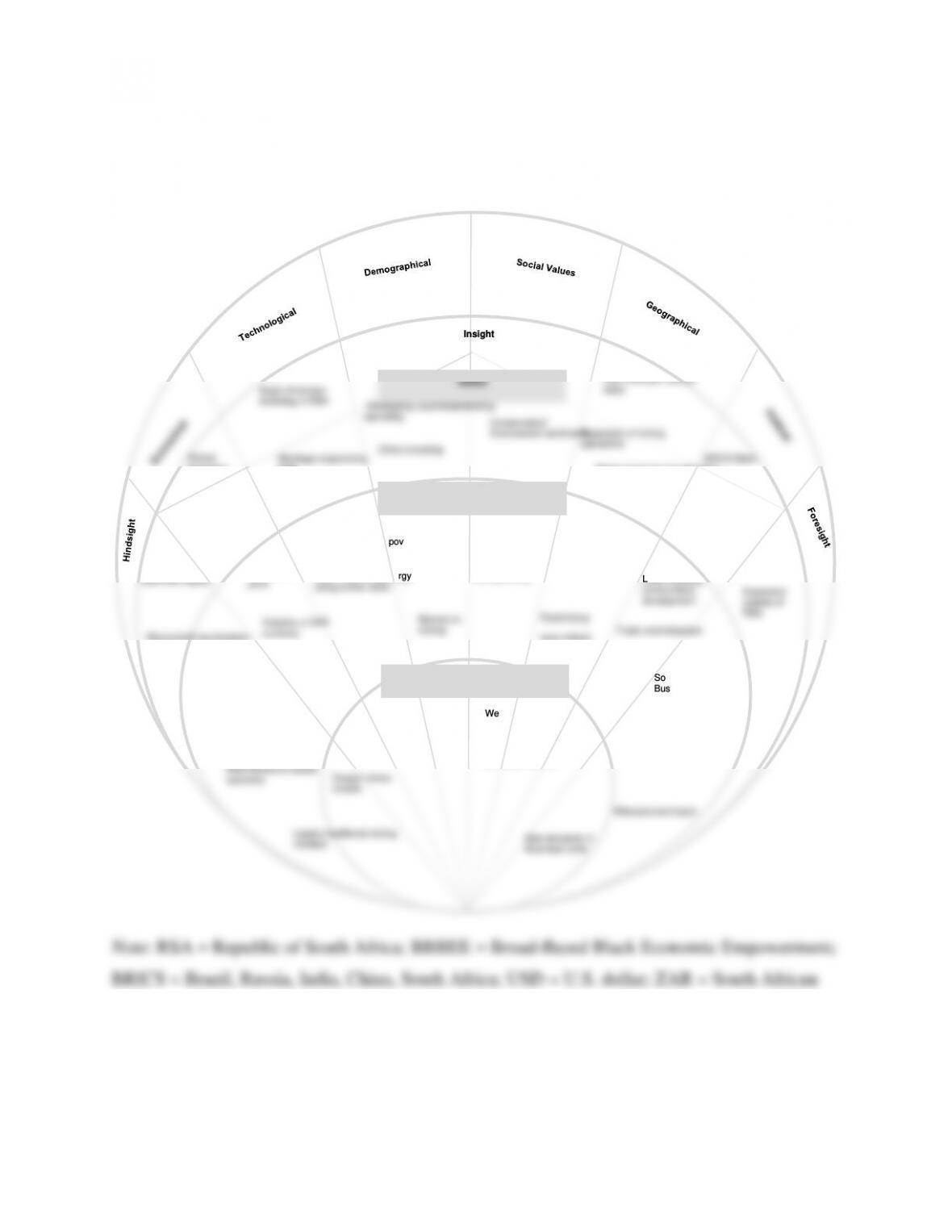
Exhibit TN-3
Completed Contextual Map for Discussion of Learning Objective 3
rand; SADC = Southern African Development Community
Insight
Global
National
Organizational
Goldfields unbundling
Volatility of ZAR
Trade unionstspower
Mining built countrydown
USD Gold
Apartheid legacy
Expansion
Westonaria
Marikana
Black majority
poverty
Labour
Sentiment
Socialism
Rustenburg
area militant
Expansion of mining
Global clients for beneficiation
SADC
Labor-sending
Multi commodity
future
Electricity cost
Shortage engineering
skills
BBBEE
deals
Supporting local
businesses
Anglo-American
26% BEE Mining
Charter
BRICS Bank
Witwatersrand basin
Commodity prices
Global
economic
meltdown
China investing
in R
Gold, Platinum synergy
Workers
from SADC
New structure: 3
Overspending
South Africae: 3
Business
Legacy traditional mining
Footprint
enlarged
Free State: Beatrix
unsafe
Women in
Conservation/
Geological
resources
extending
operating lives
Sustainability
Developing countriesextending
operating
Black Middle
Class growth
Political parties
use mining
unrest
China lack
of growth
USA increase interest
RSA Resource based
Instructor Resource
Rowe, Cases in Leadership 5e
SAGE Publications, Inc., 2019
Exhibit TN-4
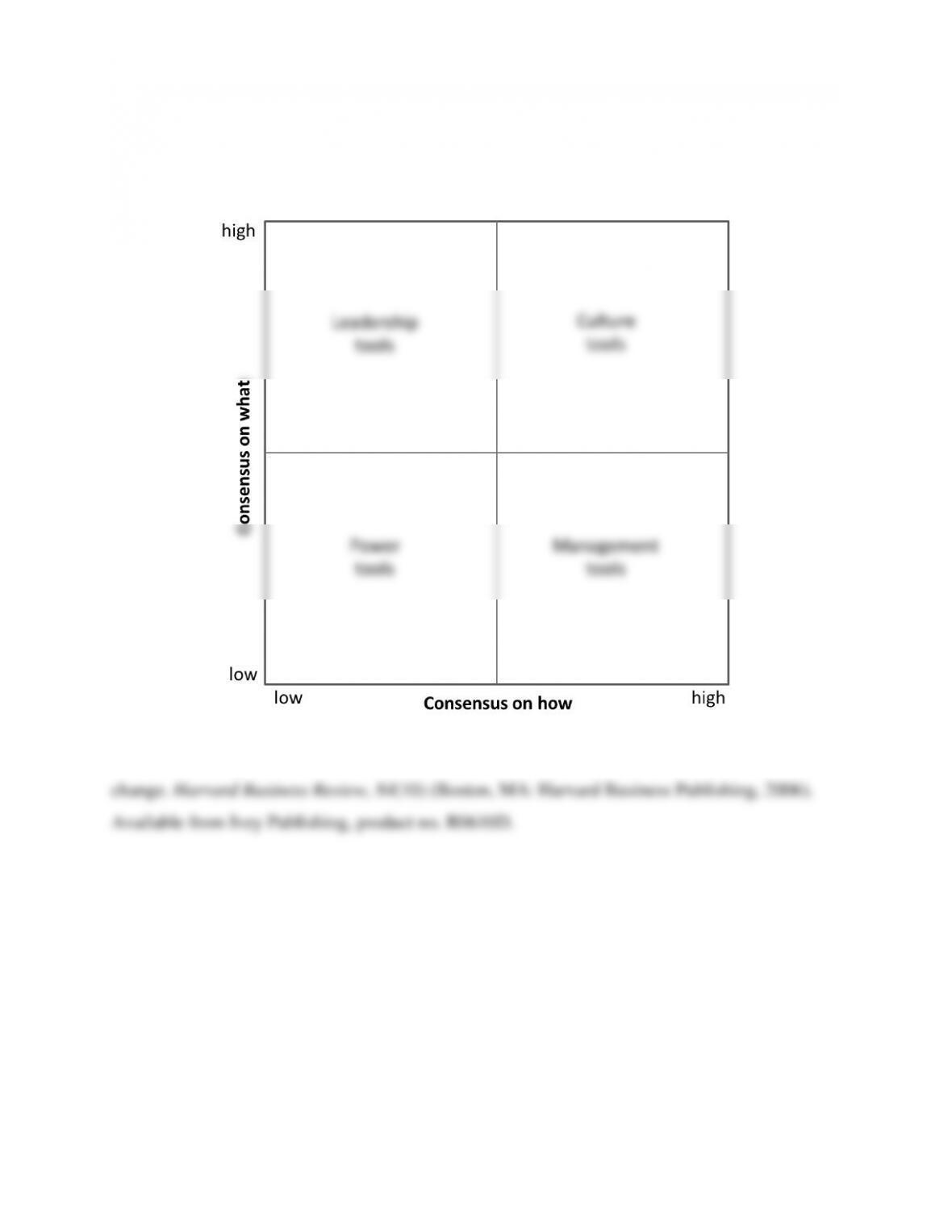
Change Tools in the agreement matrix
Source: Christensen, C., Marx, M., & Stevenson, H. (2006). The tools of cooperation and
Instructor Resource
Rowe, Cases in Leadership 5e
SAGE Publications, Inc., 2019
Exhibit TN-5
Definitions of Contextual Acumen
Contextual acumen =
Definition:
“The ability of leaders to recognize and diagnose
Requires:
“1) an intuitive grasp of relevant past experiences,
2) awareness of present contextual variables, and
Instructor Resource
Rowe, Cases in Leadership 5e
SAGE Publications, Inc., 2019
Exhibit TN-6
Leadership Embedded in Context with Particular Contextual Variables
Source: Adapted from Mayo, A., & Nohria, N. (2005). Zeitgeist leadership. Harvard Business
Instructor Resource
Rowe, Cases in Leadership 5e
SAGE Publications, Inc., 2019
Exhibit TN-7
Cyclical Systemic Patterns of Vulnerable Mineworkers