
Multinational Capital Budgeting ❖ 19
euros is 7%, regardless of the maturity of debt. Assume that interest rate parity exists. Cantoon’s cost
of capital is 20%. It plans to use cash to make the acquisition.
a. Determine the NPV under these conditions.
b. Rather than use all cash, Cantoon could partially finance the acquisition. It could obtain a loan of
3 million euros today that would be used to cover a portion of the acquisition. In this case, it
would have to pay back a lump sum total of 7 million euros at the end of 8 years to repay the
loan. There are no interest payments on this debt. This financing deal is structured such that none
of the payment is tax-deductible. Determine the NPV if Cantoon uses the forward rate instead of
the spot rate to forecast the future spot rate of the euro, and elects to partially finance the
acquisition. [You need to derive the 8-year forward rate for this question.]
ANSWER
b. The forward rate premium is:
30. Sensitivity of NPV to Conditions. Burton Co., based in the U.S., considers a project in which it
has an initial outlay of $3 million and expects to receive 10 million Swiss francs (SF) in one year. The
spot rate of the franc is $.80. Burton Co. decides to purchase put options on Swiss francs with an
exercise price of $.78 and a premium of $.02 per unit to hedge its receivables. It has a required rate of
return of 20 percent.
a. Determine the net present value of this project for Burton Co. based on the forecast that the Swiss
franc will be valued at $.70 at the end of one year.
b. Assume the same information in part (a), but with the following adjustment. While Burton
expected to receive 10 million Swiss francs, assume that there were unexpected weak economic
conditions in Switzerland after Burton initiated the project. Consequently, Burton received only 6
million Swiss francs at the end of the year. Also assume that the spot rate of the franc at the end of the
year was $.79. Determine the net present value of this project for Burton Co. if these conditions
occur.
ANSWER
31. Hedge Decision on a Project. Carlotto Co. (a U.S. firm) will definitely receive 1 million British
pounds in one year based on a business contract it has with the British government. Like most firms,
Carlotto Co. is risk averse and only takes risk when the potential benefits outweigh the risk. It has no
other international business, and is considering various methods to hedge its exchange rate risk.
Assume that interest rate parity exists. Carlotto Co. recognizes that exchange rates are very difficult to
forecast with accuracy, but it believes that the one-year forward rate of the pound yields the best
forecast of the pound’s spot rate in one year. Today the pound’s spot rate is $2.00, while the one-year
forward rate of the pound is $1.90. Carlotto Co. has determined that a forward hedge is better than
alternative forms of hedging. Should Carlotto Co. hedge with a forward contract or should it remain
unhedged? Briefly explain.
32. NPV of Partially Hedged Project. Sazer Co. (a U.S. firm) is considering a project in which it
produces special safety equipment. It will incur an initial outlay of $1 million for the research and
development of this equipment. It expects to receive 600,000 euros in one year from selling the
products in Portugal where it already does much business. In addition, it also expects to receive
300,000 euros in one year from sales to Spain, but these cash flows are very uncertain because it has
no existing business in Spain. Today’s spot rate of the euro is $1.50 and the one-year forward rate is
$1.50. It expects that the euro’s spot rate will be $1.60 in one year. It will pursue the project only if it
can satisfy its required rate of return of 24 percent. It decides to hedge all the expected receivables

Multinational Capital Budgeting ❖ 21
due to business in Portugal, and none of the expected receivables due to business in Spain. Estimate
the net present value (NPV) of the project.
ANSWER:
33. Project Financing Strategy. Konk Co., a U.S. firm, considers a project in which it would build a
subsidiary in Belgium that would generate net cash flows of about 10 million euros per year for 5
years and would remit that amount to the parent each year. It has no other international business. It
needs about 20 million euros as the initial outlay to establish the subsidiary. It can finance this initial
outlay in the following ways and the subsidiary would repay the amount of the investment evenly
over the next 5 years: (a) the parent can borrow dollars from a U.S. bank and convert them to euros,
(b) the parent can borrow euros from a Belgian bank, (c) the parent can use its equity (retained
earnings from existing business in the U.S.) and convert the funds into euros, (d) the parent can
borrow dollars from a Belgian bank and convert them to euros, and (e) the parent can diversify its
financing by obtaining one-fourth of the funds from each of the preceding sources. Assume that there
is no cost advantage to any financing method. If Konk Co. wants to use a financing method to
minimize its project’s exposure to exchange rate risk, which method should it use? Briefly explain.
34. NPV and Financing. Louisville Co. is a U.S. firm considering a project in Austria which it has an
initial cash outlay of $7 million. Louisville will accept the project only if it can satisfy its required
rate of return of 18 percent. The project would definitely generate 2 million euros in one year from
sales to a large corporate customer in Austria. In addition, it also expects to receive 4 million euros in
one year from sales to other customers in Austria. Louisville’s best guess is that the euro’s spot rate
will be $1.26 in one year. Today, the spot rate of the euro is $1.40, while the one-year forward rate of
the euro is $1.34. If Louisville accepts the project, it would hedge all the receivables resulting from
sales to the large corporate customer, and none of the expected receivables due to expected sales to
other customers.
a. Estimate the net present value (NPV) of the project.
b. Assume that Louisville considers alternative financing for the project, in which it would use $5
million cash, and the remaining initial outlay would come from borrowing euros. In this case, it
would need 1,600,000 euros to repay the loan (principal plus interest) at the end of one year. Assume
no tax effects due to this alternative financing. Estimate the NPV of the project under these
conditions.
c. Do you think the Louisville’s exposure to exchange rate risk due to the project if it uses the
alternative financing (explained in part b) is higher, lower, or the same as if it has an initial cash
outlay of $7 million (and does not borrow any funds)? Briefly explain.
ANSWER:
a.
Multinational Capital Budgeting ❖ 22
Cash flows (hedged): 2,000,000 euros × $1.34 = $2,680,000.
Solution to Continuing Case Problem: Blades, Inc.
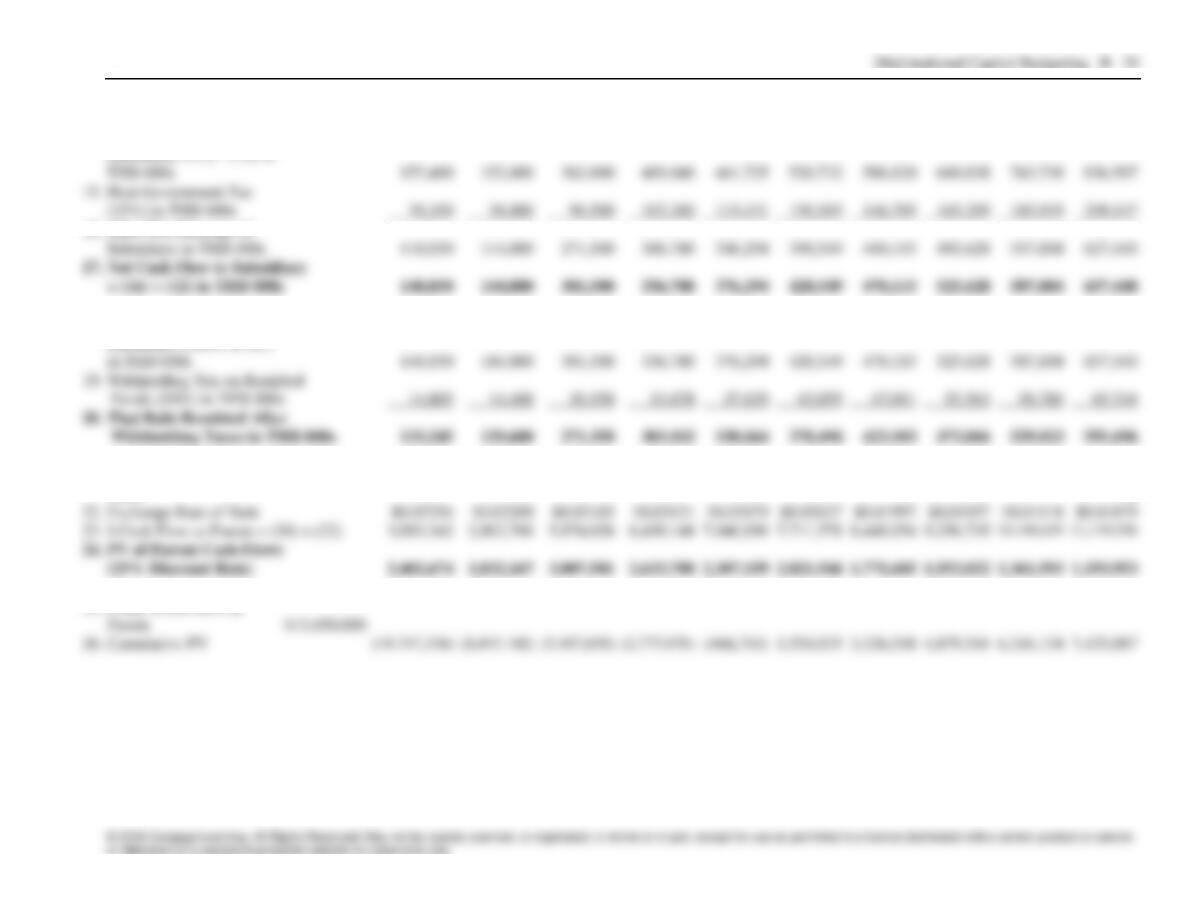
1. Should the sales and the associated costs of 180,000 pairs of roller blades to be sold in Thailand under
the existing agreement be included in the capital budgeting analysis to decide whether Blades should
establish a subsidiary in Thailand? Should the sales resulting from a renewed agreement be included?
Why or why not?
ANSWER: The sales from the existing agreement should not be included in the capital budgeting
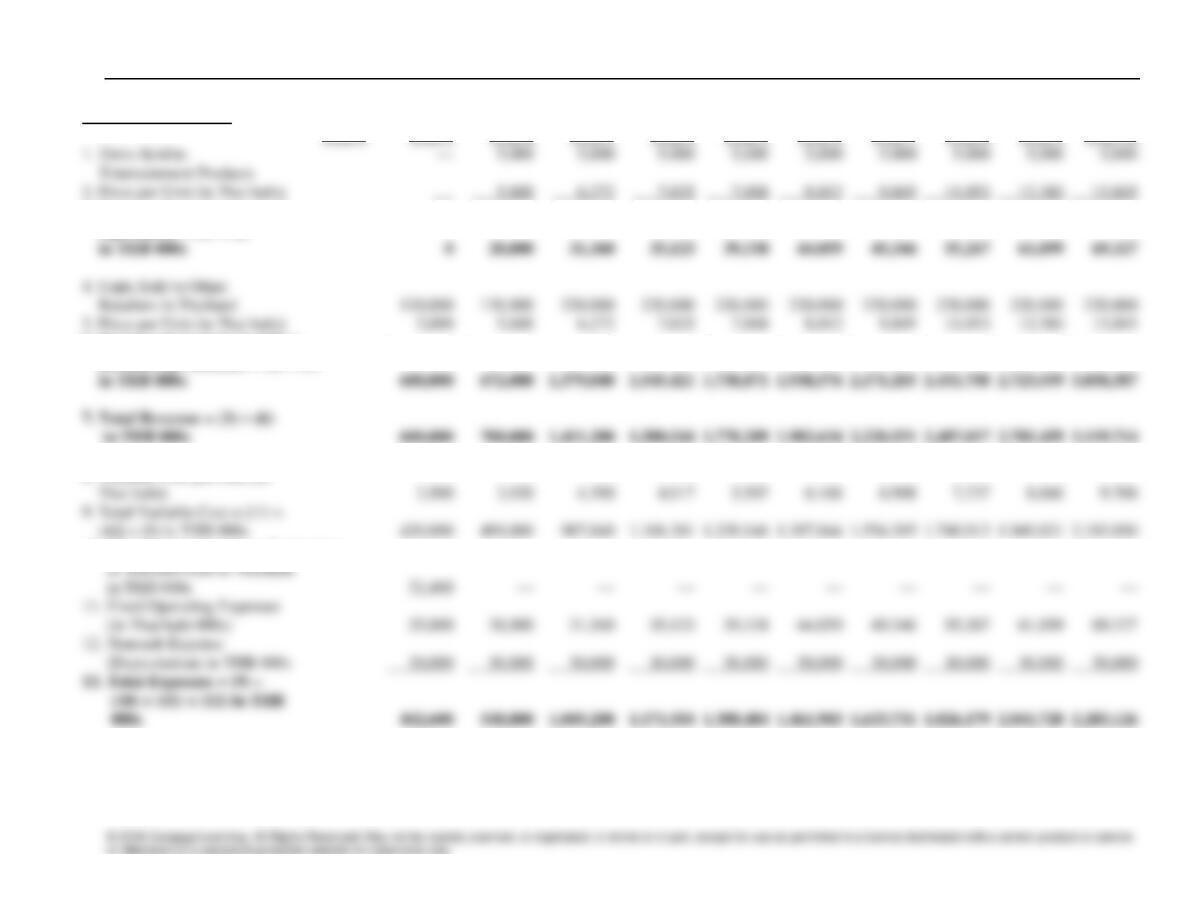
2. Using a spreadsheet, conduct a capital budgeting analysis for the proposed project assuming that
Blades renews the agreement with Entertainment Products. Should Blades establish a subsidiary in
Thailand under these conditions?
3. Using a spreadsheet, conduct a capital budgeting analysis for the proposed project assuming that
Blades does not renew the agreement with Entertainment Products. Should Blades establish a
Multinational Capital Budgeting ❖ 23
subsidiary in Thailand under these conditions? Should Blades renew the agreement with
Entertainment Products?
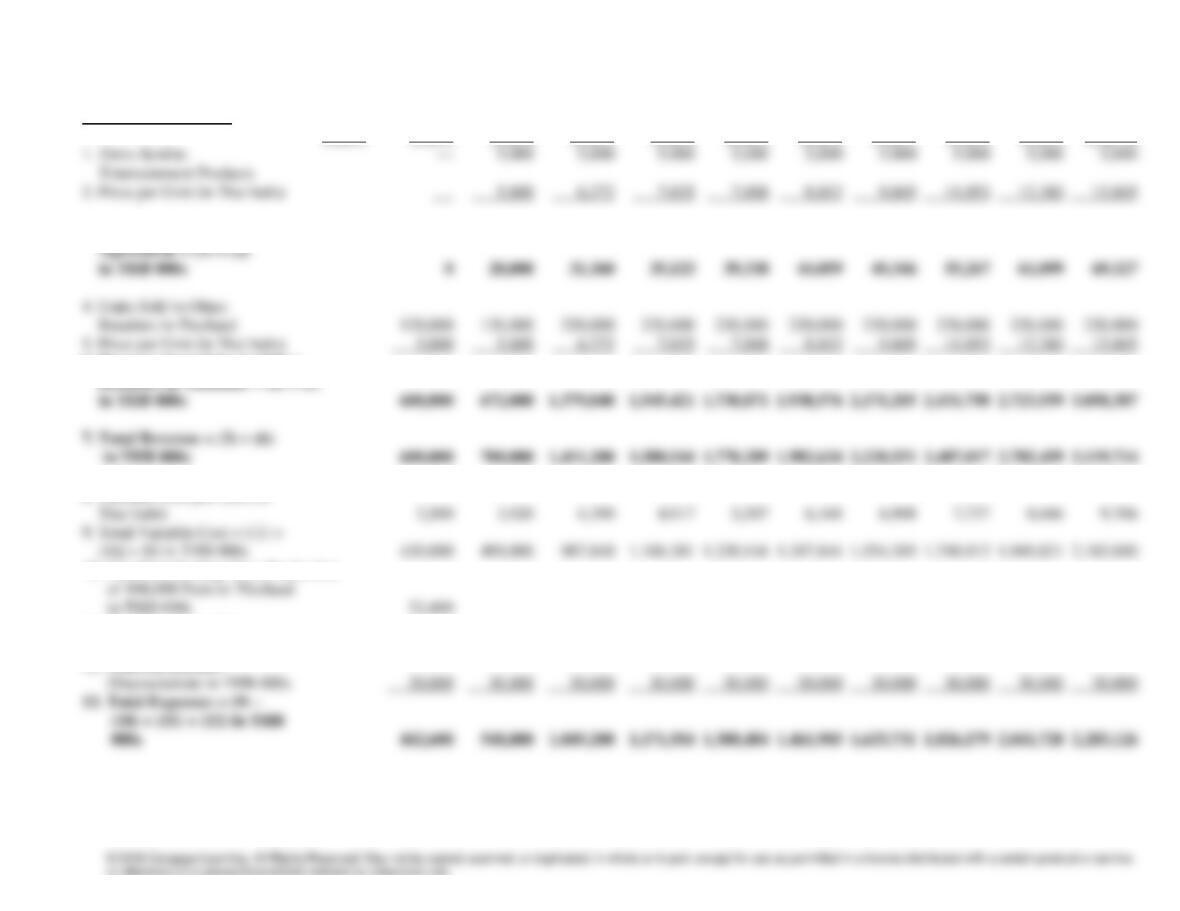
ANSWER: (See spreadsheet attached.) The spreadsheet shows a positive NPV of $8,746,688 if
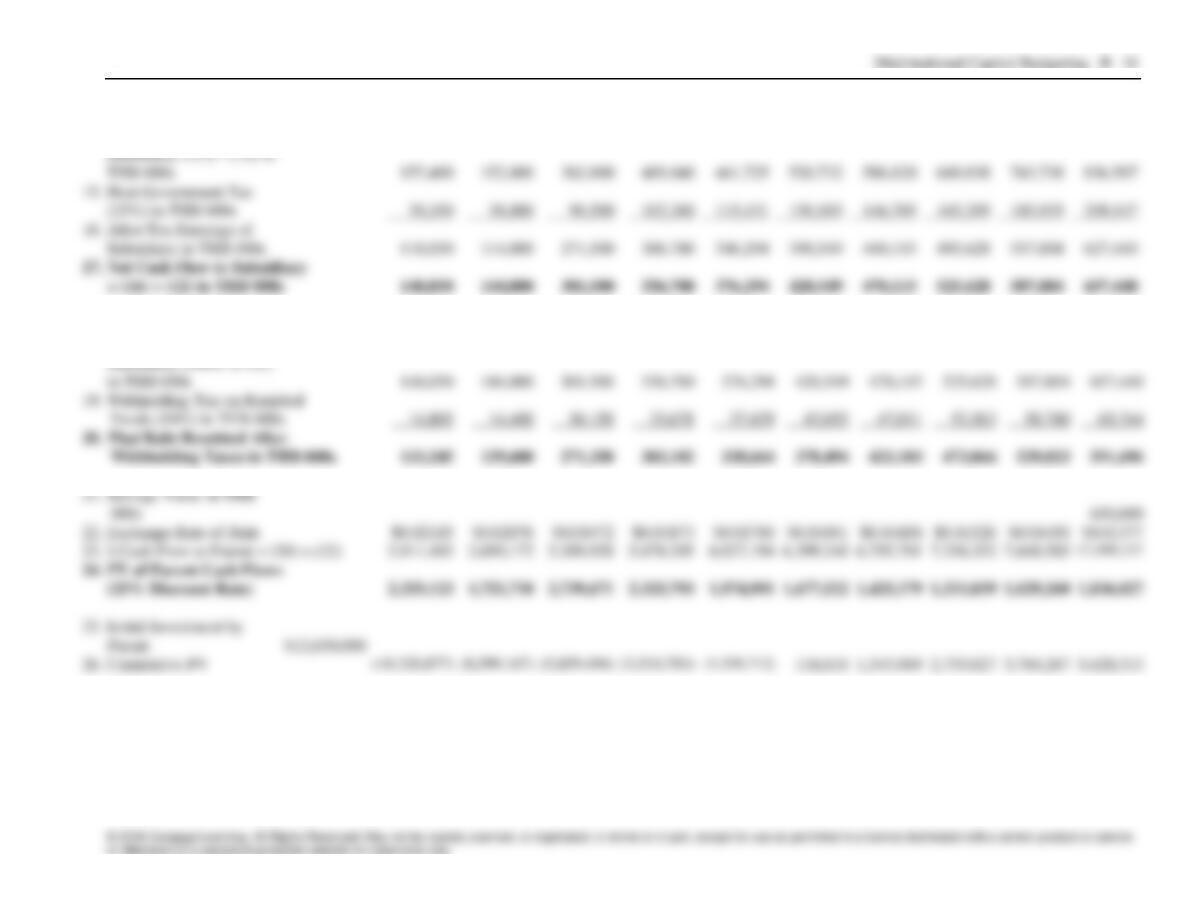
4. Since future economic conditions in Thailand are uncertain, Ben Holt would like to know how critical
the salvage value is in the alternative you think is most feasible.
5. The future value of the baht is highly uncertain. Under a worst case scenario, the baht may depreciate
by as much as 5 percent annually. Revise your spreadsheet to illustrate how this would affect Blades’
decision to establish a subsidiary in Thailand (Use the capital budgeting analysis you have identified
as the most favorable from questions 2 and 3 to answer this question.)
Multinational Capital Budgeting ❖ 24
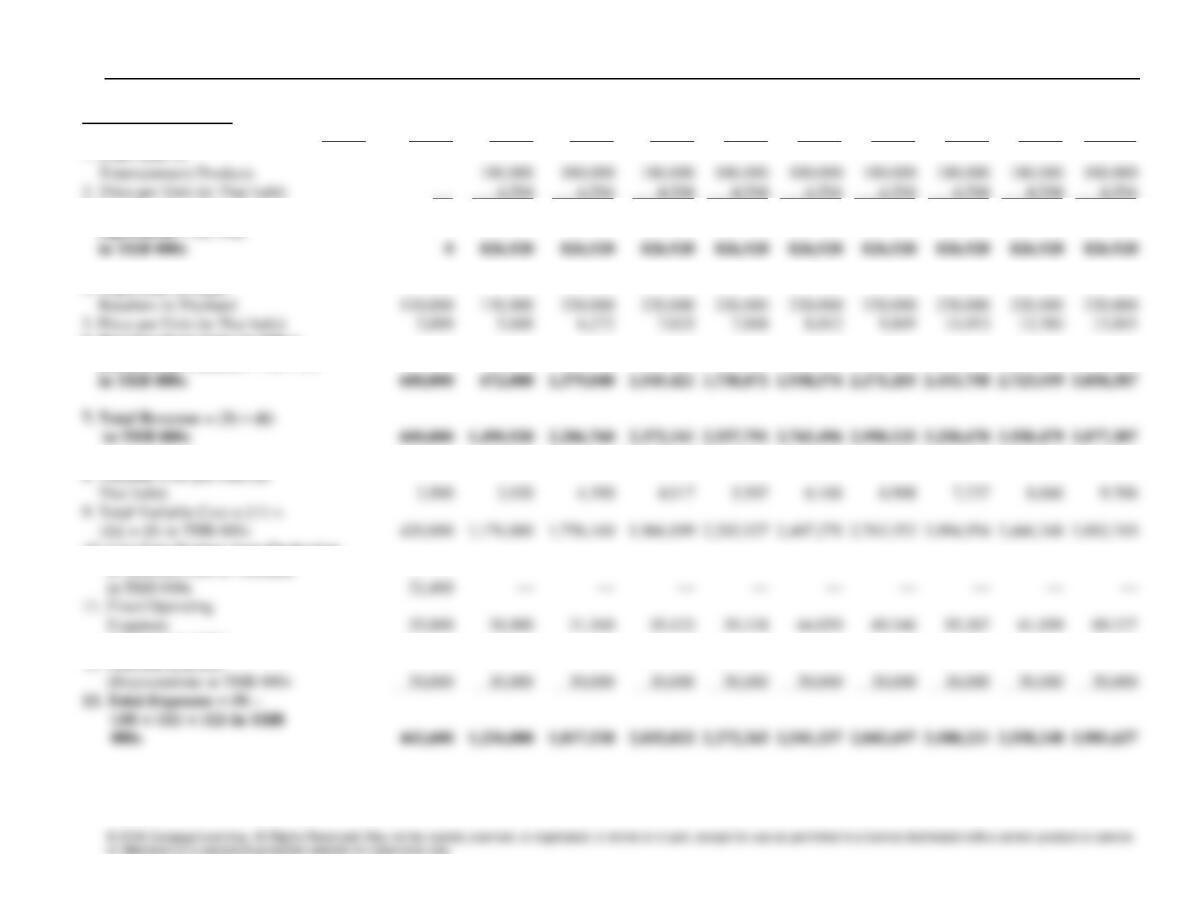
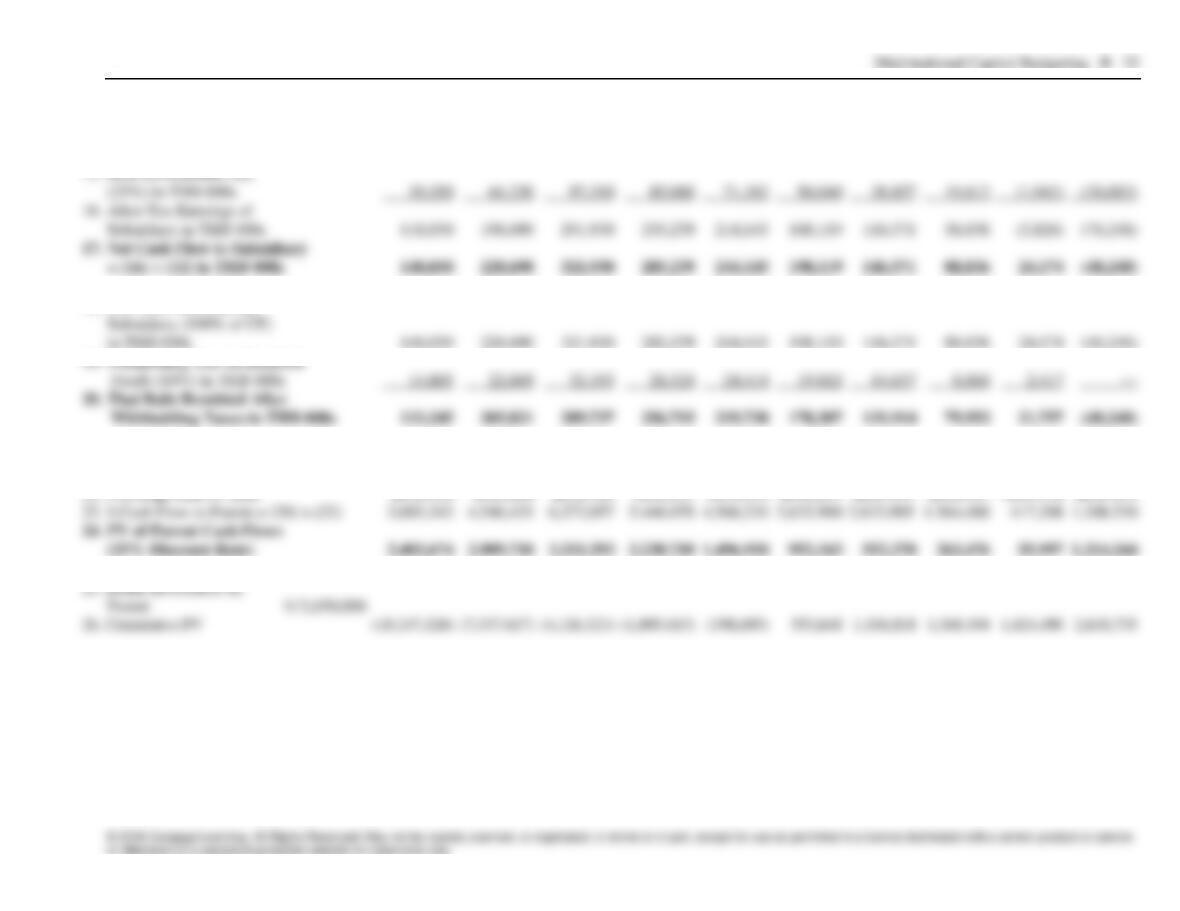
Answer to Question b:
Year 0
Year 1
Year 2
Year 3
Year 4
Year 5
Year 6
Year 7
Year 8
Year 9
Year 10
Entertainment Products
180,000
—
3. Revenue from Contractual
Agreement = (1) ×(2)
5. Price per Unit (in Thai baht)
4. Units Sold to Other
6. Revenue from Sales to Other
Retailers in Thailand = (4) × (5)
Thai baht)
3,920
4,390
4,917
5,507
6,168
6,908
7,737
8,666
9,706
9. Total Variable Cost = [(1) +
10. Less Cost Savings from Production
of 108,000 Pairs in Thailand
(in Thai baht 000s)
13. Total Expenses = (9) –
(10) + (11) + (12) in THB
14. Before-Tax Earnings of
Subsidiary = (7) – (13) in
THB 000s
157,400
264,920
389,240
340,318
285,526
224,159
155,428
78,449
(7,768)
(104,331)
15. Host Government Tax
(25%) in THB 000s
(26,083)
16. After-Tax Earnings of
Subsidiary (100% of CF)
in THB 000s
228,690
321,930
285,239
244,145
198,119
146,571
88,836
24,174
18. Thai Baht Remitted by
19. Withholding Tax on Remitted
Funds (10%) in THB 000s
21. Salvage Value in THB
000s
650,000
25. Initial Investment by
Parent
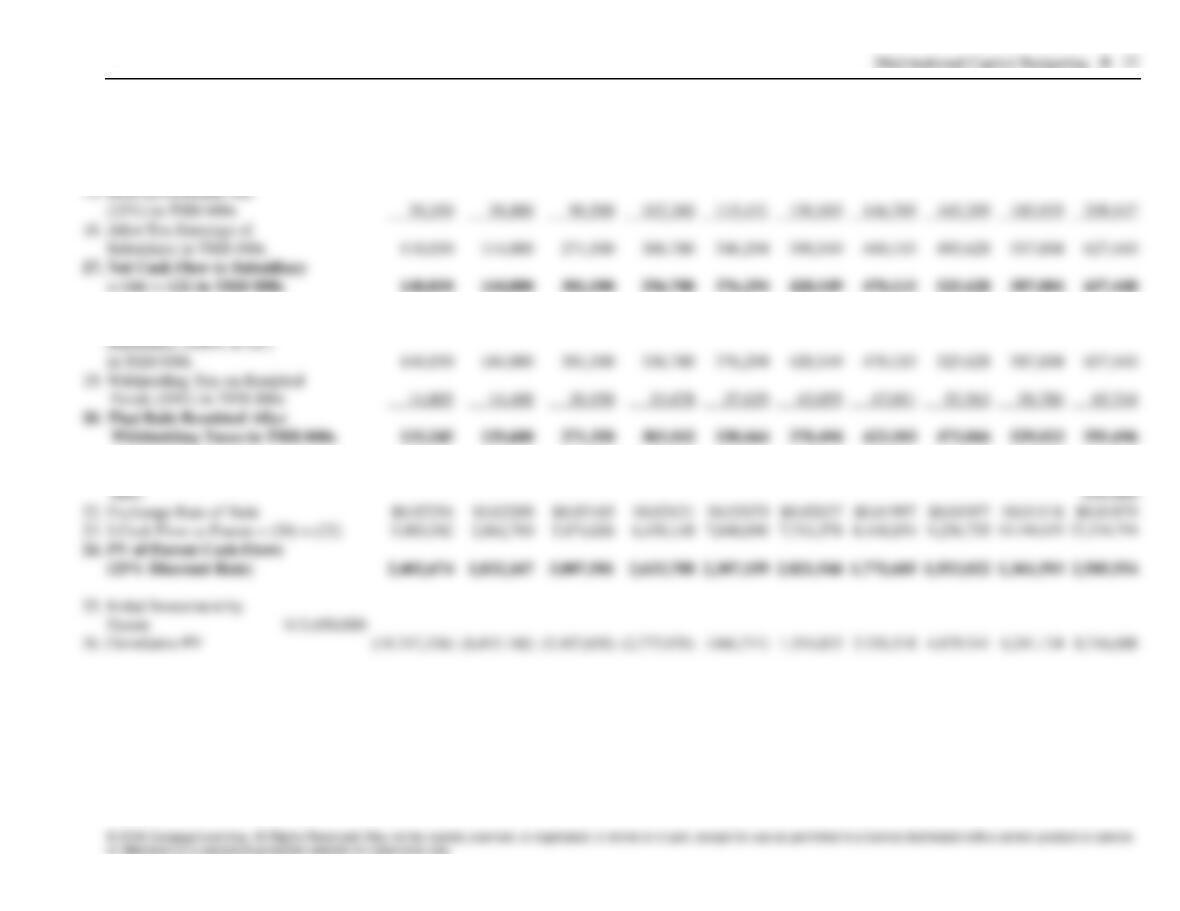
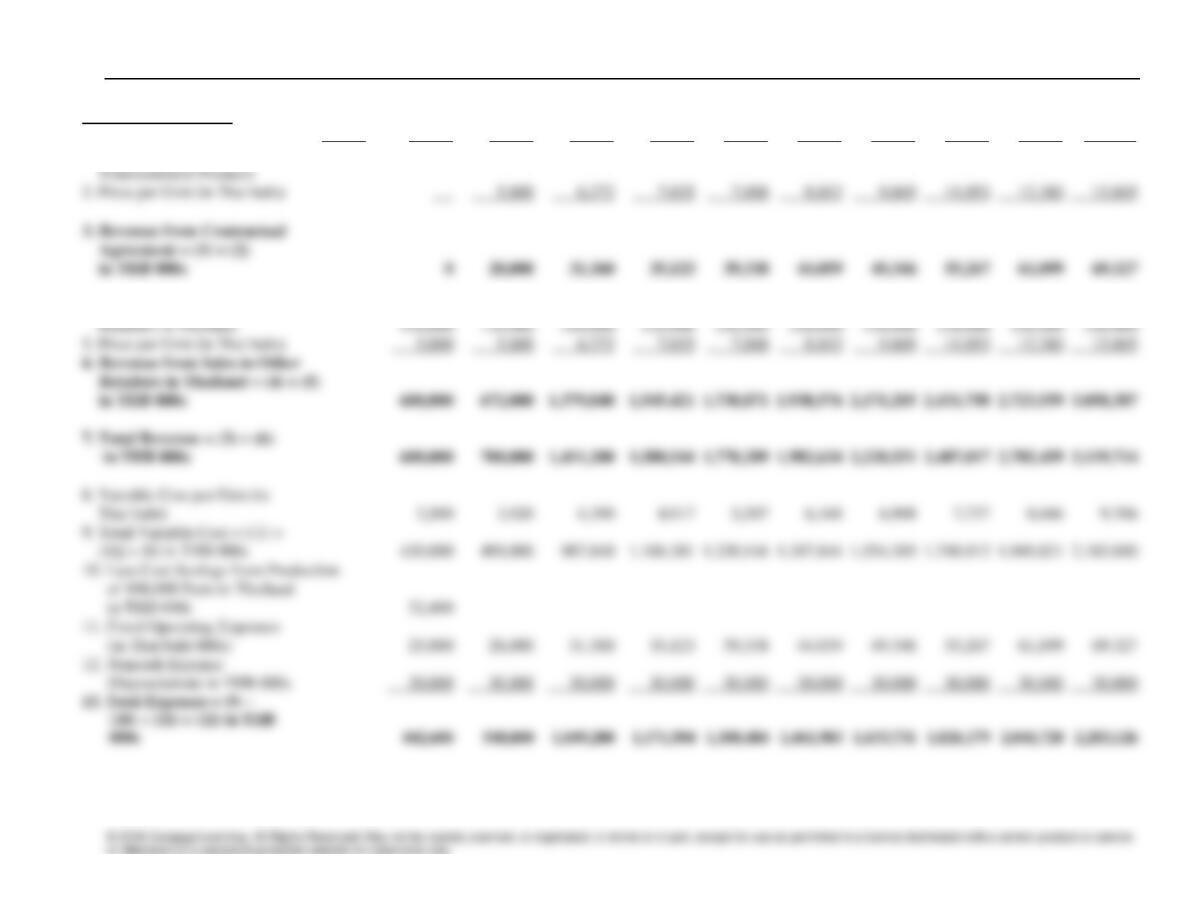
Answer to Question c:
Year 0
Year 1
Year 2
Year 3
Year 4
Year 5
Year 6
Year 7
Year 8
Year 9
Year 10
1. Units Sold to
Entertainment Products
4. Units Sold to Other
Retailers in Thailand
3. Revenue from Contractual
6. Revenue from Sales to Other
Retailers in Thailand = (4) × (5)
Thai baht)
3,920
4,390
4,917
5,507
6,168
6,908
7,737
8,666
9,706
9. Total Variable Cost = [(1) +
(4)] × (8) in THB 000s
8. Variable Cost per Unit (in
of 108,000 Pairs in Thailand
in THB 000s
32,400
10. Less Cost Savings from Production
11. Fixed Operating Expenses
(in Thai baht 000s)
25,000
28,000
31,360
35,123
39,338
44,059
49,346
55,267
61,899
69,327
(Depreciation) in THB 000s
30,000
13. Total Expenses = (9) –
12. Noncash Expense
14. Before-Tax Earnings of
Subsidiary = (7) – (13) in
THB 000s
157,400
152,000
362,000
409,040
461,725
520,732
586,820
660,838
743,738
836,587
16. After-Tax Earnings of
Subsidiary (100% of CF)
in THB 000s
144,000
301,500
336,780
376,294
420,549
470,115
525,628
587,804
657,440
19. Withholding Tax on Remitted
18. Thai Baht Remitted by
21. Salvage Value in THB
Multinational Capital Budgeting ❖ 28
Answer to Question d:
Year 0
Year 1
Year 2
Year 3
Year 4
Year 5
Year 6
Year 7
Year 8
Year 9
Year 10
1. Units Sold to
—
5,000
5,000
5,000
5,000
5,000
5,000
5,000
5,000
5,000
8. Variable Cost per Unit (in
3,920
4,390
4,917
5,507
6,168
6,908
7,737
8,666
9,706
9. Total Variable Cost = [(1) +
of 108,000 Pairs in Thailand
11. Fixed Operating Expenses
39,338
44,059
49,346
55,267
61,899
69,327
12. Noncash Expense
30,000
4. Units Sold to Other
Subsidiary = (7) – (13) in
15. Host Government Tax
14. Before-Tax Earnings of
16. After-Tax Earnings of
19. Withholding Tax on Remitted
Funds (10%) in THB 000s
18. Thai Baht Remitted by
Subsidiary (100% of CF)
21. Salvage Value in THB
000s
0
26. Cumulative PV
25. Initial Investment by
Multinational Capital Budgeting ❖ 30
Answer to Question e:
Year 0
Year 1
Year 2
Year 3
Year 4
Year 5
Year 6
Year 7
Year 8
Year 9
Year 10
1. Units Sold to
3. Revenue from Contractual
Agreement = (1) × (2)
6. Revenue from Sales to Other
Retailers in Thailand = (4) × (5)
3,920
4,390
4,917
5,507
6,168
6,908
7,737
8,666
9,706
8. Variable Cost per Unit (in
13. Total Expenses = (9) –
10. Less Cost Savings from Production
14. Before-Tax Earnings of
18. Thai Baht Remitted by
Solution to Supplemental Case: North Star Company
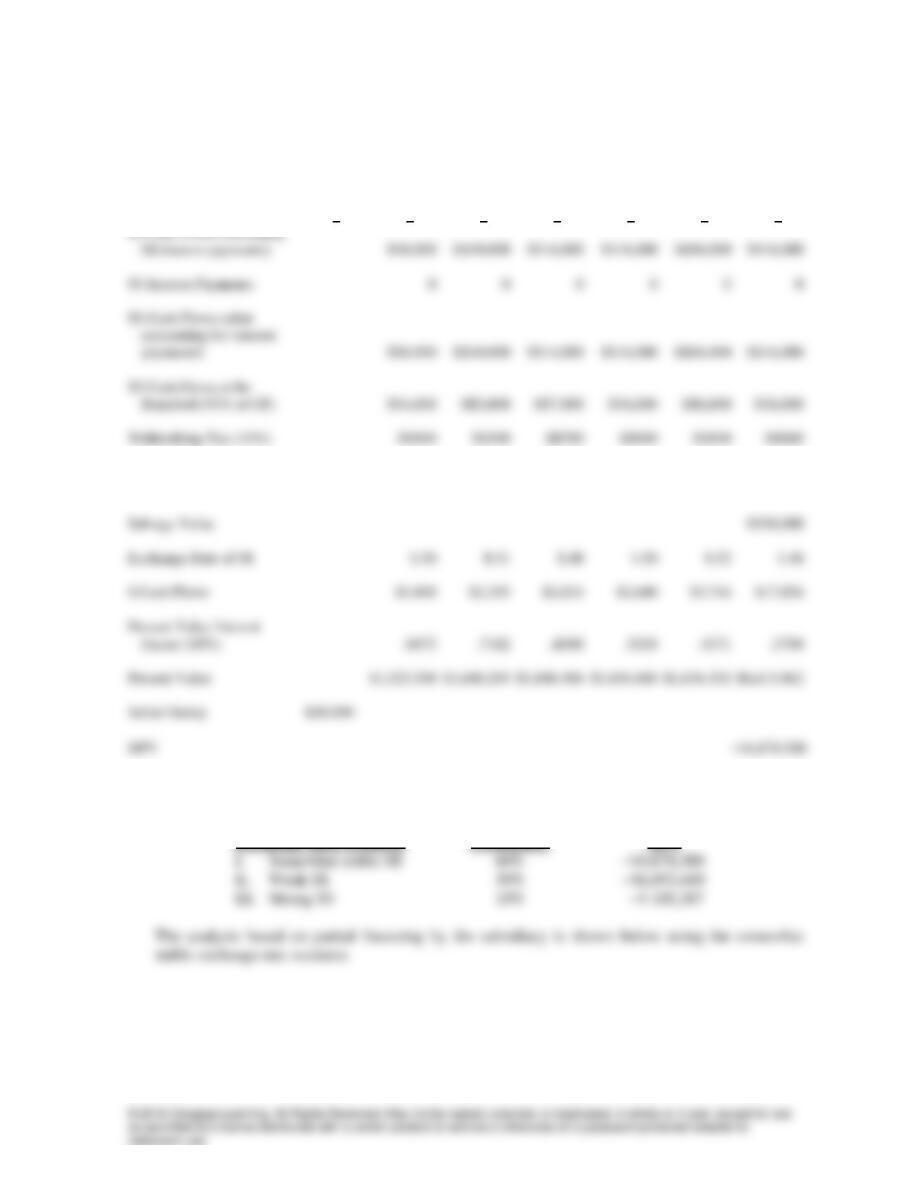
a. The analysis based on total parent financing is shown below using the somewhat stable exchange
rate scenario (in 1,000s):
0 1 2 3 4 5 6
S$ Cash Flows to be
Converted to $ S$3,600 S$4,500 S$6,300 S$7,200 S$7,200 S$7,200
Applying the same procedure from the previous table, the NPV for each exchange rate scenario is:
Exchange Rate Scenario Probability NPV
Multinational Capital Budgeting ❖ 33
(Cash amounts in thousands)
0 1 2 3 4 5 6
S$ Cash Flows (excluding
Exchange Rate of S$ $.50 $.51 $.48 $.50 $.52 $.48
Applying the same procedure from the previous table, the NPV for each exchange rate scenario is:
Exchange Rate Scenario Probability NPV
Multinational Capital Budgeting ❖ 34
c. When using a 20 percent withholding tax instead of a 10 percent withholding tax, the results
change as follows (based on partial financing by the subsidiary):
Exchange Rate Scenario Probability NPV
d. The estimate of net cash flows could be revised, which would result in a lower NPV for each
e. As of the end of Year 2, the present value of forgone cash flows for the following 4 years
Small Business Dilemma
Multinational Capital Budgeting by the Sports Exports Company
1. Describe the capital budgeting steps that would be necessary to determine whether this proposed
project is feasible, as related to this specific situation.
ANSWER: Jim would need to estimate the amount of footballs that would be sold to the
2. Explain why there is uncertainty surrounding the cash flows of this project.