
14-1
Management Information Systems, 13E, Global Edition
Laudon & Laudon
Lecture Files, Barbara J. Ellestad
Chapter 14 Managing Projects
Previously, we discussed how to design and build information system projects. That may
14.1 The Importance of Project Management
Why do so many information system projects fail to deliver on their promises? Is it
Runaway Projects and System Failure
The statistics provided in the Laudon text are startling:
• One-half of private sector projects are underestimated in terms of budget and time
required to deliver.
What is the leading cause of these dismal statistics? In two words—project management.
Figure 14-1 lists the consequences of poor project management.

14-2
Interactive Session: Management: Austin Energy’s Billing System Can’t Light Up
Project Management Objectives
Information system projects range from very small, end-user development projects to
major implementations of enterprise systems. Regardless of size, they all have some
common characteristics.
First, they require the effective use of project management tools and technologies that
Bottom Line: The statistics for successful implementation of information systems
are dismal. The leading cause of so many project failures is the lack of proper
project management. Every project includes five variables that must be adequately
managed to help ensure success: scope, time, cost, quality, and risk.
14.2 Selecting Projects
“Gee, we thought we did everything by the book. Why doesn’t the system work the way
we envisioned?” Perhaps it’s not the system itself but the way changes in the organization
Management Structure for Information Systems Projects
To help ensure success, companies should have four levels of management control for
system projects:
• Corporate strategic planning group: develops strategic plans.

14-3
Linking Information Systems to the Business Plan
Companies buy the hardware they think is necessary for a new or improved information
system. Then they purchase some software to go along with the new hardware. Now they
realize their hardware is inadequate for the new software, so they buy more powerful
hardware. And the vicious circle continues. Pretty soon they have a whole bunch of
hardware and a lot of expensive software, but do they have an information system? Only
if they have made sure all the hardware and software purchases fit in with their
organizational information systems plan and their people know how to use them.
“A what?” you say. “Another plan that stifles creativity and creates roadblocks to getting
work done?” No, a good information plan will help companies systematically figure out
Information Requirements and Key Performance Indicators
Key performance indicators (KPIs) are simply the goals managers feel will make the
organization a success. Using this method broadens the scope of the analysis to include
14-4
Portfolio Analysis
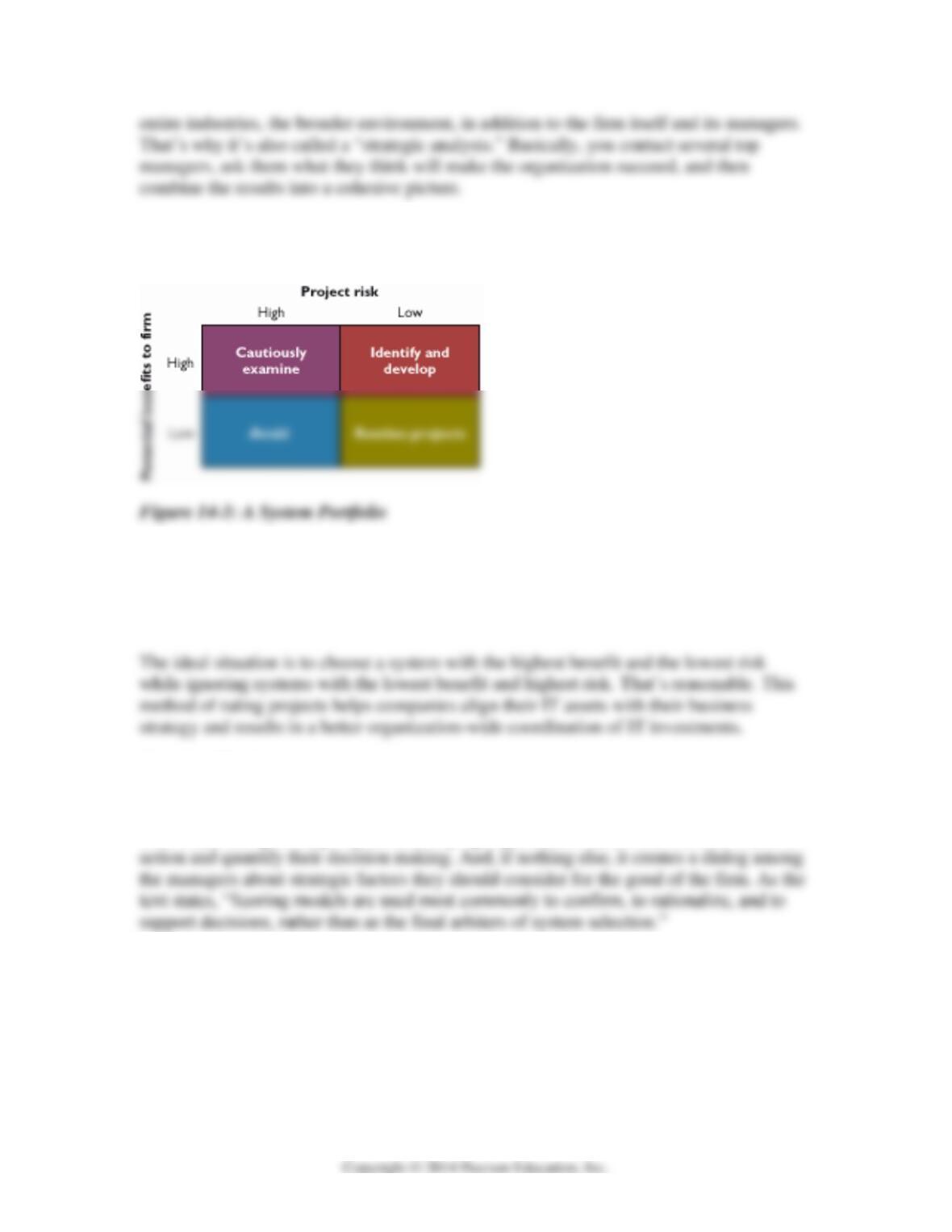
The portfolio analysis shown in this figure allows a company to objectively rate multiple
alternative projects for their risk and potential benefits. Companies too often get locked
into just one idea without understanding that multiple choices exist. There is always more
than one way to meet the organization’s goals.
Scoring Models
The scoring model is effective for comparing various alternatives in terms of their costs.
This model can go a long way toward helping organizations determine the best course of

14-5
Bottom Line: An appropriate management structure must be established for
information systems projects at the senior, middle, and operational management
14.3 Establishing the Business Value of Information Systems
Just as you can analyze the benefit of purchasing a new piece of equipment for your
business, you can analyze the impact of an information system. Think about it: You tell
the boss you need a new storage system for all the widgets you are producing. The boss
Information System Costs and Benefits
One of the more difficult choices to make when evaluating new systems is to determine
the tangible benefits vs. intangible benefits. When a financial institution must decide
whether to offer online banking, it may evaluate the system using one of the methods
Capital Budgeting for Information Systems
There are several methods for analyzing a new system in terms of dollars and cents using
capital budgeting techniques. Each method measures the financial worth of the system
Financial models used to evaluate new systems are:

14-6
• Payback Method: time required to pay back the initial investment.
Real Options Pricing Models
The system investment that looks good to one company may be all wrong for another
company based strictly on the numbers. That’s because no two companies are exactly the
same. And the uncertainty of most IT projects makes it even more difficult to evaluate a
project based solely on numbers. Real options pricing models offers strategic planners
the ability to bring other factors into the evaluation and place a value on them. It uses
these factors:
• Value of the underlying IT asset.
Limitations of Financial Models
Keep in mind that there are limitations to each financial model used to evaluate new
systems. Using the online banking example, you can assume the initial cost will not be
recouped until months or years after implementation. As we’ve seen in the last few years,
underestimated or even totally overlooked.
Bottom Line: Potential new systems should be evaluated in terms of tangible and
intangible costs. All costs—hardware, software, and personnel—should be included
in the bottom line so that the organization can truly determine the gains, or losses,
associated with new projects.
14.4 Managing Project Risk

14-7
There’s a risk to every project—large and small. Ignore those risks and you’re simply
asking for failure.
Dimensions of Project Risk
Here are three dimensions of risk associated with every project:
• Project size: As projects grow larger, the associated risk of failure increases. It’s
not just technical complexity that jeopardizes large projects. The number of units
Change Management and the Concept of Implementation
Change is a given element in the business world. From mergers and acquisitions, to
The Concept of Implementation
Implementation of a new system is not just about how to put the hardware and software
into place. You have to address and manage people and processes to make sure they are
The Role of End Users
Make users feel they own the new system instead of it being an enemy or something they
14-8
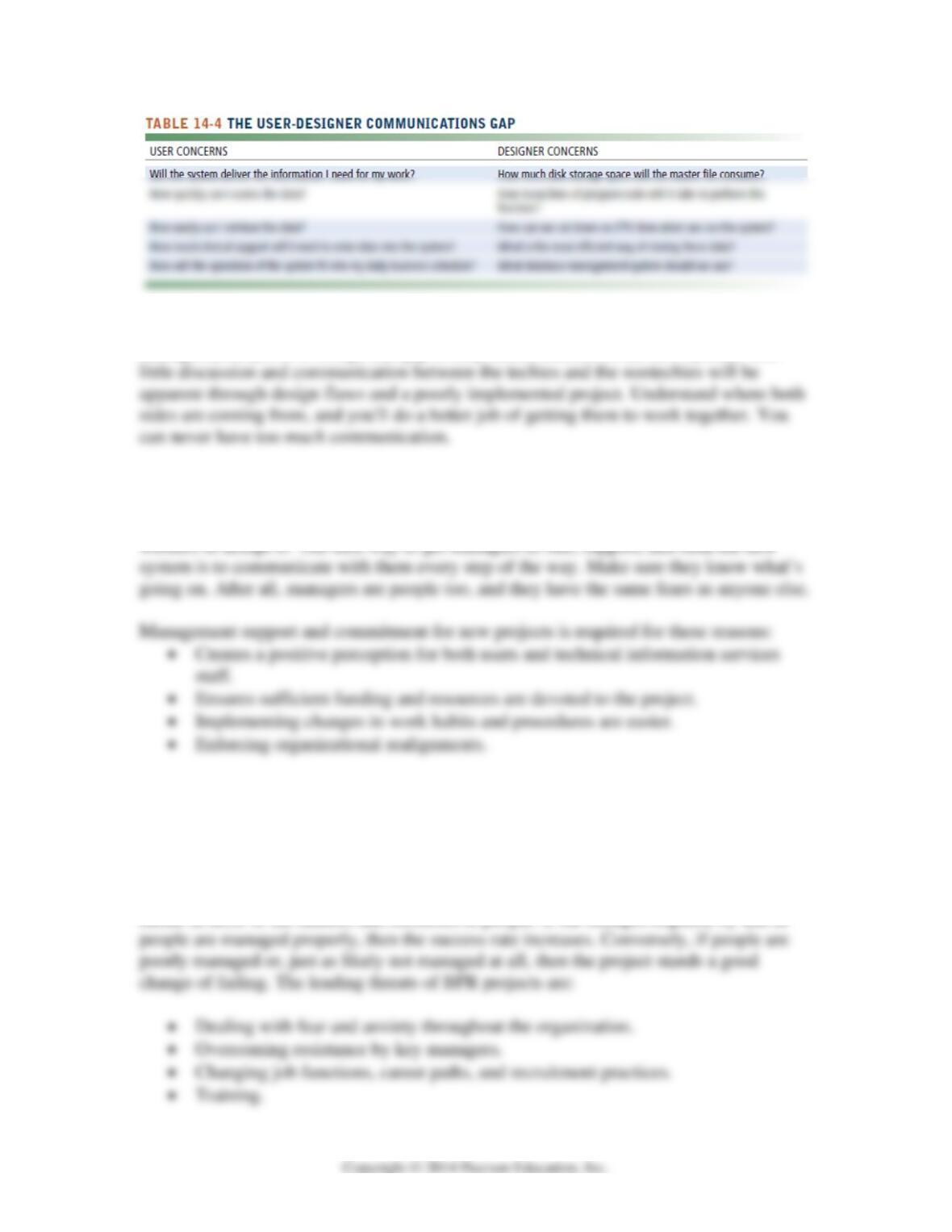
Table 14-4 gives you good insight into the user-designer communications gap. As a
manager, your job is to bridge that gap to help ensure success of the new system. Too
Management Support and Commitment
If managers don’t like the new system or fear it, then how in the world can you expect the
Change Management Challenges for Business Process Reengineering,
Enterprise Applications, and Mergers and Acquisitions
The text gives the startling fact that 70 percent of all business process reengineering
projects fail to deliver promised benefits. It doesn’t have to be that way. One abiding
theme in most of the failures and successes is people. If the changes required by and in

14-9
Remember when you moved in with your college roommate? Or perhaps you got
married. Or maybe you’re sharing an apartment with someone. Maybe you had to move
your favorite chair to another room to accommodate the other’s large-size sofa. Or
perhaps your microwave was different than your spouse’s, therefore he had to learn a
new way to operate yours. Regardless of the circumstances someone had to change the
way they do things. The same thing happens in the business world when two companies
merge.
Controlling Risk Factors
Identify the nature and level of risk associated with the project first. Then you can use the
appropriate tools and risk-management approaches to reduce the risk of the project
failing.
Managing Technical Complexity
You can use special tools to help you manage the implementation of a new information
Formal Planning and Control Tools
Automated management tools such as PERT or Gantt charts (formal planning and

14-10
Increasing User Involvement and Overcoming User Resistance
We simply can’t say it enough! Get users involved from the very beginning of a project
Some of the strategies you can use to overcome user resistance include:
• User participation.
• User education and training.
Interactive Session: Organizations: Westinghouse Electric Takes on the Risks of a
“Big Bang” Project (see page 578 on the text) discusses the success one company
experienced by using the right tools and technologies to manage projects. Most
importantly, the company involved its employees throughout the project lifecycle
and gave them a sense of ownership of the new system.
Designing for the Organization
“Just what will this new system do for us?” That’s a very appropriate question but
unfortunately, it’s often ignored. Everyone seems to get caught up in the hustle and bustle
of the implementation process and they forget to address basic questions about the new
How will the new system fit into the human element? That’s the idea behind
ergonomics; getting human and machine to agree and complement each other.

14-11
Sociotechnical Design
Unless you design a system that will be totally controlled and operated by robots, you
how the technical aspects of your system will fit in with the human aspects.
Project Management Software Tools
Because project management is so difficult, there are some great software programs you
can use to help you manage projects regardless of their size. The programs automate
many of the mundane tasks like defining tasks, assigning resources, establishing start and
Bottom Line: How well changes in an organization caused by implementation of a
new system are managed can spell success or failure. The causes of implementation
success and failure are user involvement and influence, management support and
commitment, controlling risk factors, and designing projects for the organization.
Discussion Questions
1. Why should you consider the intangible benefits of a new system when they are
difficult to factor into a capital budgeting model?
2. Discuss the difference between a portfolio analysis and a scoring model for
evaluating projects from a strategic standpoint?

Answers to Discussion Questions
1. Intangible benefits of a new system may outweigh the negative results of a capital
2. A portfolio analysis allows a company to objectively rate multiple projects for their
3. Causes of implementation success and failure are user involvement and influence, the