Solutions for Chapter 13: Questions and Problems
CHAPTER 13
AN INTRODUCTION TO
DERIVATIVE SECURITIES
Answers to Questions
1. Since call values are positively related to stock prices while put values are negatively
related, any action that causes a decline in stock price (e.g., a dividend) will have a
differential impact on calls and puts. Specifically, an impending dividend will boost put
values and depress call values.
Another way to consider the situation is to represent the difference between the
theoretical price of a call option (C) and the theoretical price of a put option (P) as C-P.
2. It is generally true that futures contracts are traded on exchanges whereas forward
contracts are done directly with a financial institution. Consequently, there is a liquid
market for most exchange traded futures whereas there is no guarantee of closing out a
forward position quickly or cheaply. The liquidity of futures comes at a price, though.
Solutions for Chapter 13: Questions and Problems
3. For forwards, calls and puts, what the long position gains, the short position loses, and
vice versa. However, while payoffs to forward positions are symmetric, payoffs to call
and put positions are asymmetric. That is to say, long and short forwards can gain as
much as they can lose, whereas long calls and puts have a gain potential dramatically
4. The important distinction is whether the option is a covered or uncovered position. If the
option is added to a portfolio that already contains the underlying asset (or something
highly correlated), then the option will frequently be a covered position and,
consequently, lower overall risk. For example, selling a call without owning the
5. Call options differ from forward contracts in that calls have unlimited upside potential
and limited downside potential, whereas the gains and losses from a forward contract are
both unlimited. Therefore, since call options do not have the downside potential of
Solutions for Chapter 13: Questions and Problems
6. Since options have nonlinear (kinked) payoffs, broad market movements may have
different relative effects on the value of a portfolio with options depending on whether
the market moves up or down. For example, a portfolio that is put-protected may not
7. A synthetic off-market forward contract with a forward price of $25 could be created
using put-call parity. Buying a call struck at $25 and selling a put struck at $25 assures
8. A long straddle consists of a long call and a long put on the same stock and profits from
dramatic price movement by the stock. A short straddle involves the sale of a call and a
9. A range forward is actually an option strategy that combines a long call and a short put
(or vice versa) through a costless transaction. Because the options will not have the same
striking price, the combination is classified as a range forward as opposed to an actual
forward, created by combining long and short options with the same striking price. It is
fair to view actual forwards as a special case (or zero-cost version) of range forwards.

Solutions for Chapter 13: Questions and Problems
– 95 –
CHAPTER 13
Answers to Problems
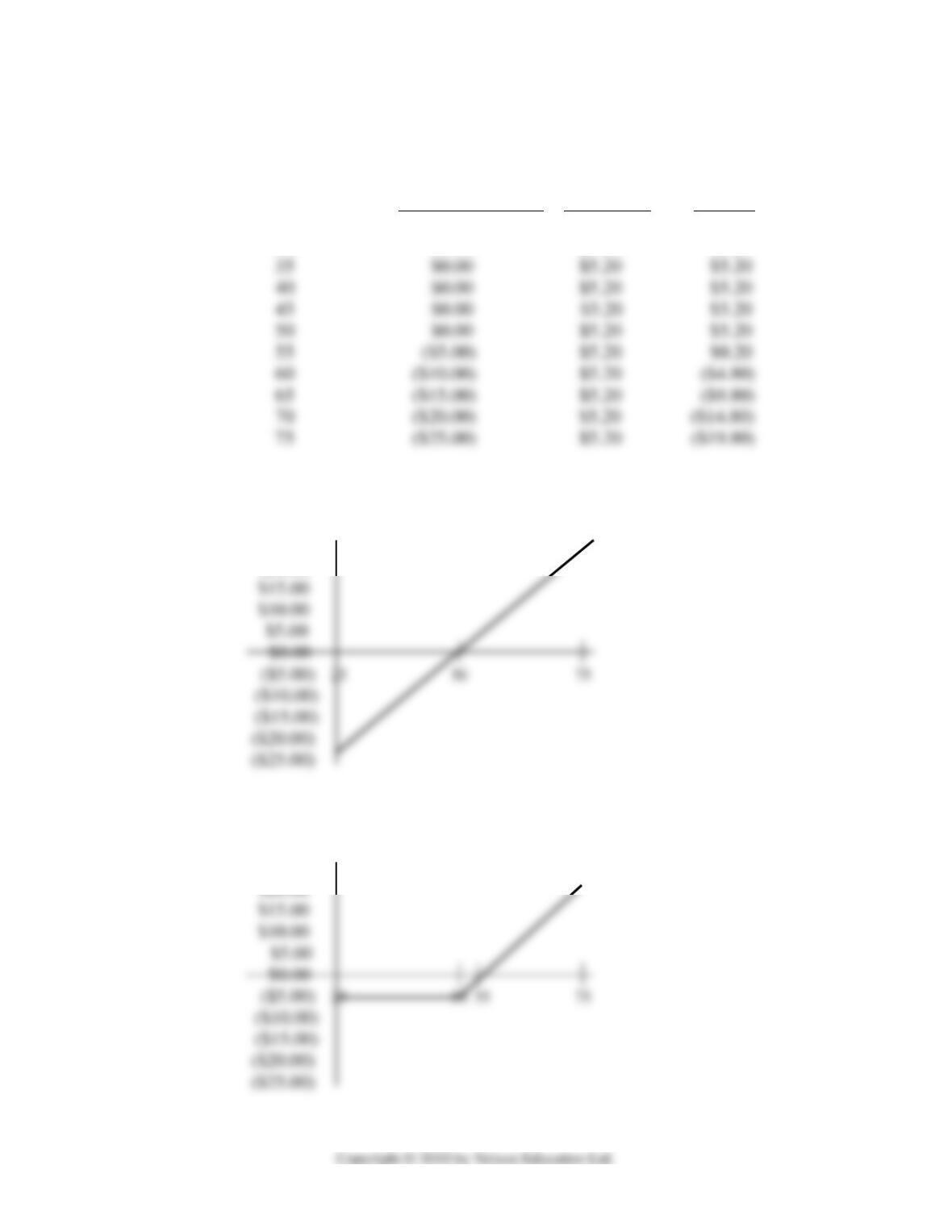
l(a).
(i). A long position in a forward with a contract price of $50.
Expiration Date Osprey Long Forward Initial Long
Stock Price (S) (X=$50) Payoff=S-50 Forward Premium Net Profit
25 ($25.00) $0.00 ($25.00)
30 ($20.00) $0.00 ($20.00)
(ii). A long position in a call option with a exercise price of $50 and a front-end
premium expense of $5.20.
Expiration Date Osprey Long Call (X=$50) Initial Long
Stock Price (S) Payoff = max (0,S-50) Call Premium Net Profit
25 $0.00 ($5.20) ($5.20)
30 $0.00 ($5.20) ($5.20)
Solutions for Chapter 13: Questions and Problems
– 96 –
(iii). A short position in a call option with an exercise price of $50 and a front-end
premium receipt of $5.20.
Expiration Date Osprey Short Call (X=$50) Initial Short
Stock Price (S) Payoff = -max (0,S-50) Call Premium Net Profit
25 $0.00 $5.20 $5.20
30 $0.00 $5.20 $5.20
l(b). (i). A long position in a forward with a contract price of $50.
Long Forward
$25.00
$20.00
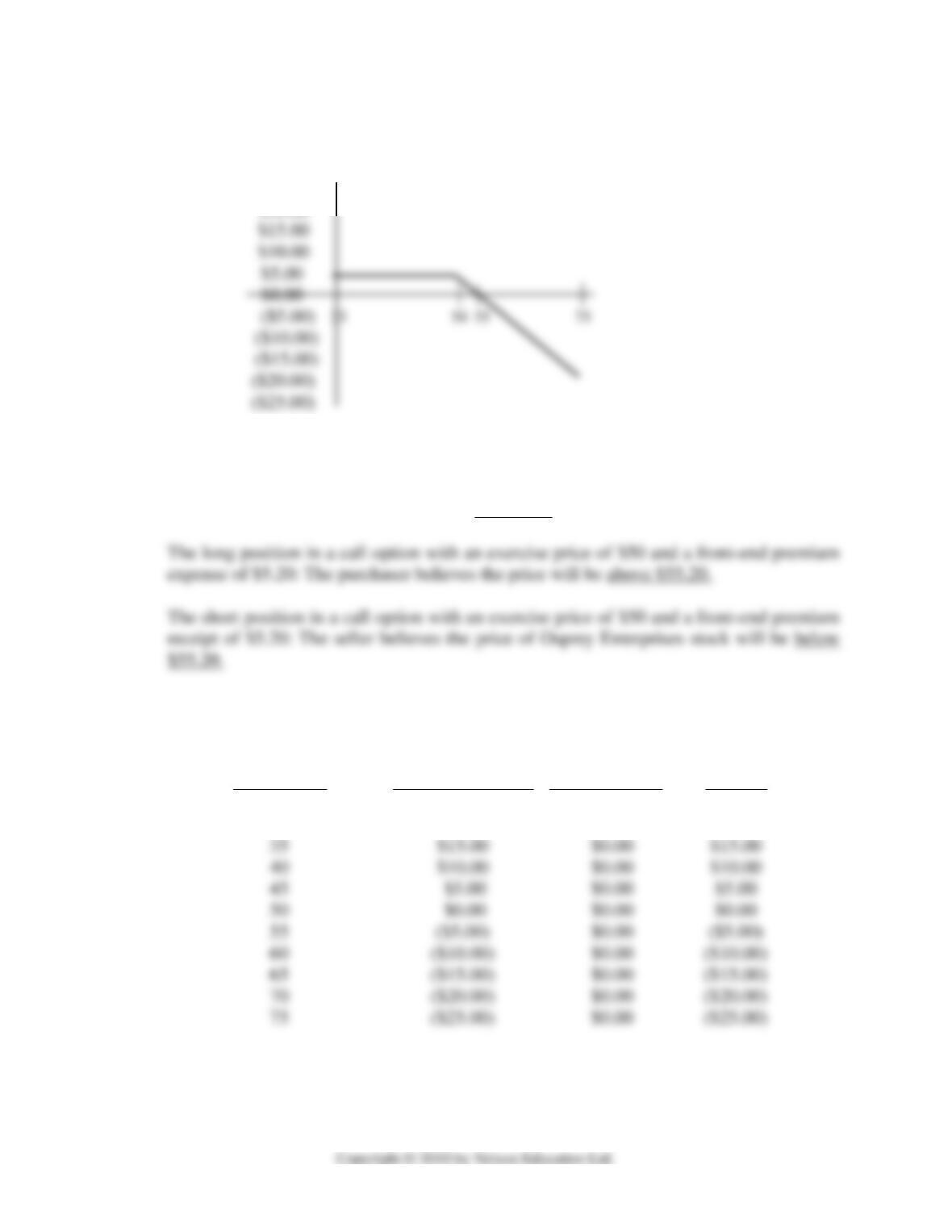
(ii.) A long position in a call option with an exercise price of $50 and a front-end premium
expense of $5.20:
Long Call
$25.00
Solutions for Chapter 13: Questions and Problems
– 97 –
(iii.) A short position in a call option with an exercise price of $50 and a front-end
premium receipt of $5.20
Short Call
$25.00
$20.00
THE BREAKEVEN POINT FOR THE CALL OPTIONS IS $55.20.
l(c). The long position in a forward with a contract price of $50: The purchaser believes that the
price of Osprey Enterprises stock will be above $50.
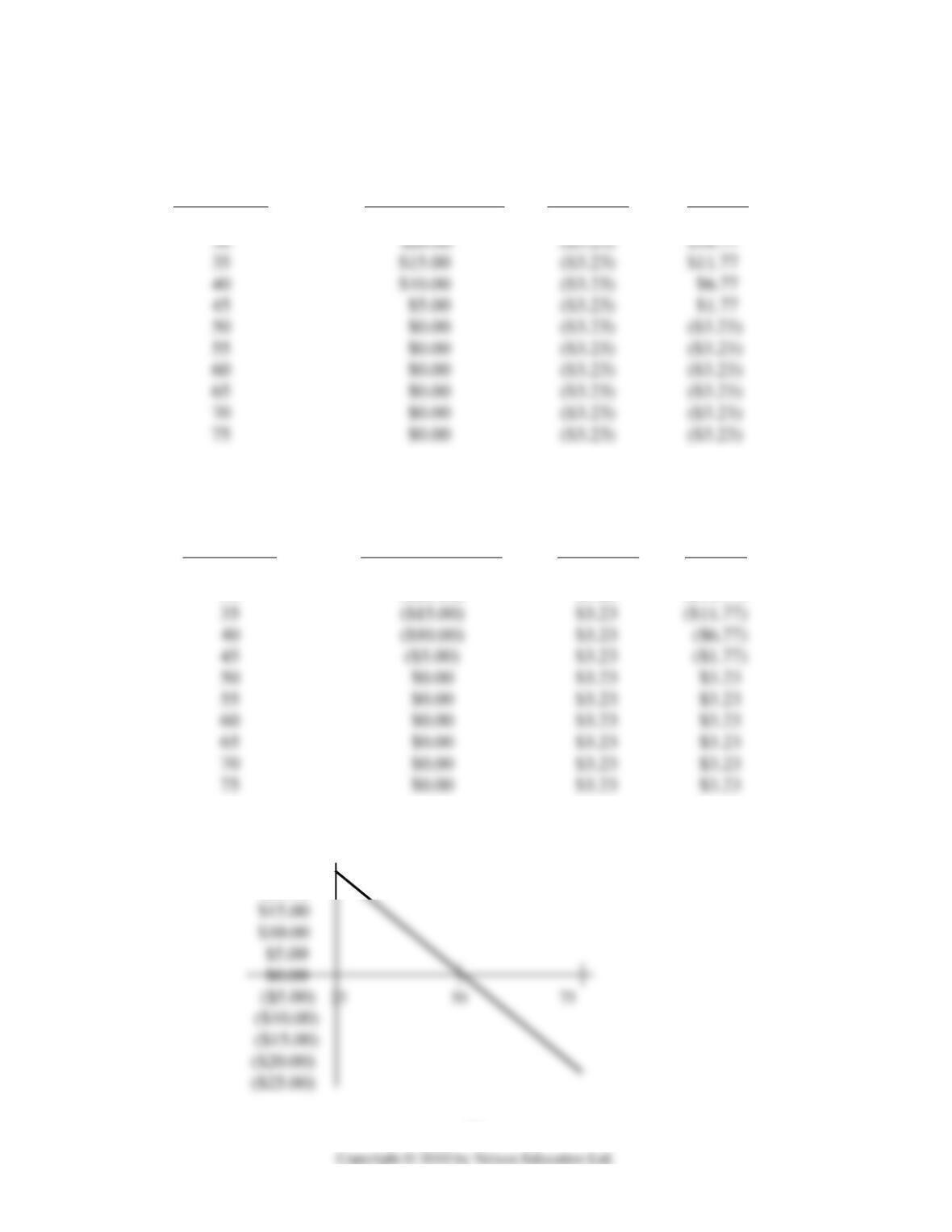
2(a). (i). A short position in a forward with a contract price of $50.
Expiration Date Osprey Short Forward Initial Short
Stock Price (S) (X=$50) Payoff= S-50 Forward Premium Net Profit
25 $25.00 $0.00 $25 00
30 $20.00 $0.00 $20.00
Solutions for Chapter 13: Questions and Problems
– 98 –
(ii). A long position in a put option with a exercise price of $50 and a front-end premium
expense of $3.23.
Expiration Date Osprey Long Put (X=$50) Initial Long
Stock Price (S) Payoff= max (0,50-S) Put Premium Net Profit
25 $25.00 ($3.23) $21.77
(iii.) A short position in a put option with an exercise price of $50 and a front-end
premium receipt of $3.23.
Expiration Date Osprey Short Put (X=$50) Initial Short
Stock Price (S) Payoff= -max (0,50-S) Put Premium Net Profit
25 ($25.00) $3.23 ($21.77)
30 ($20.00) $3.23 ($16.77)
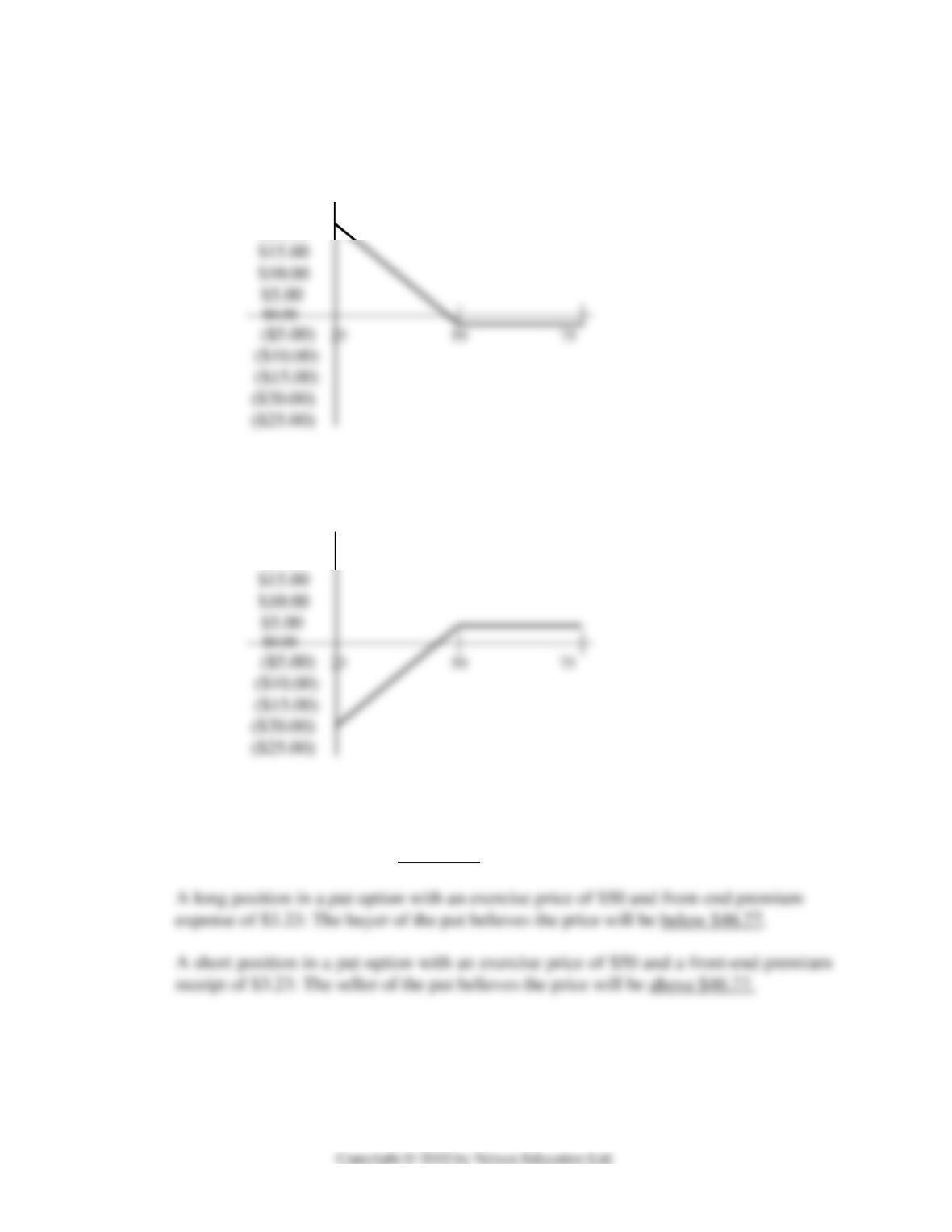
2(b). (i). A short position in a forward with a contract price of $50:
Short Forward
$25.00
$20.00
Solutions for Chapter 13: Questions and Problems
– 99 –
(ii). A long position in put option with an exercise price of $50 and front-end premium
expenses of $3.23:
Long Put
$25.00
$20.00
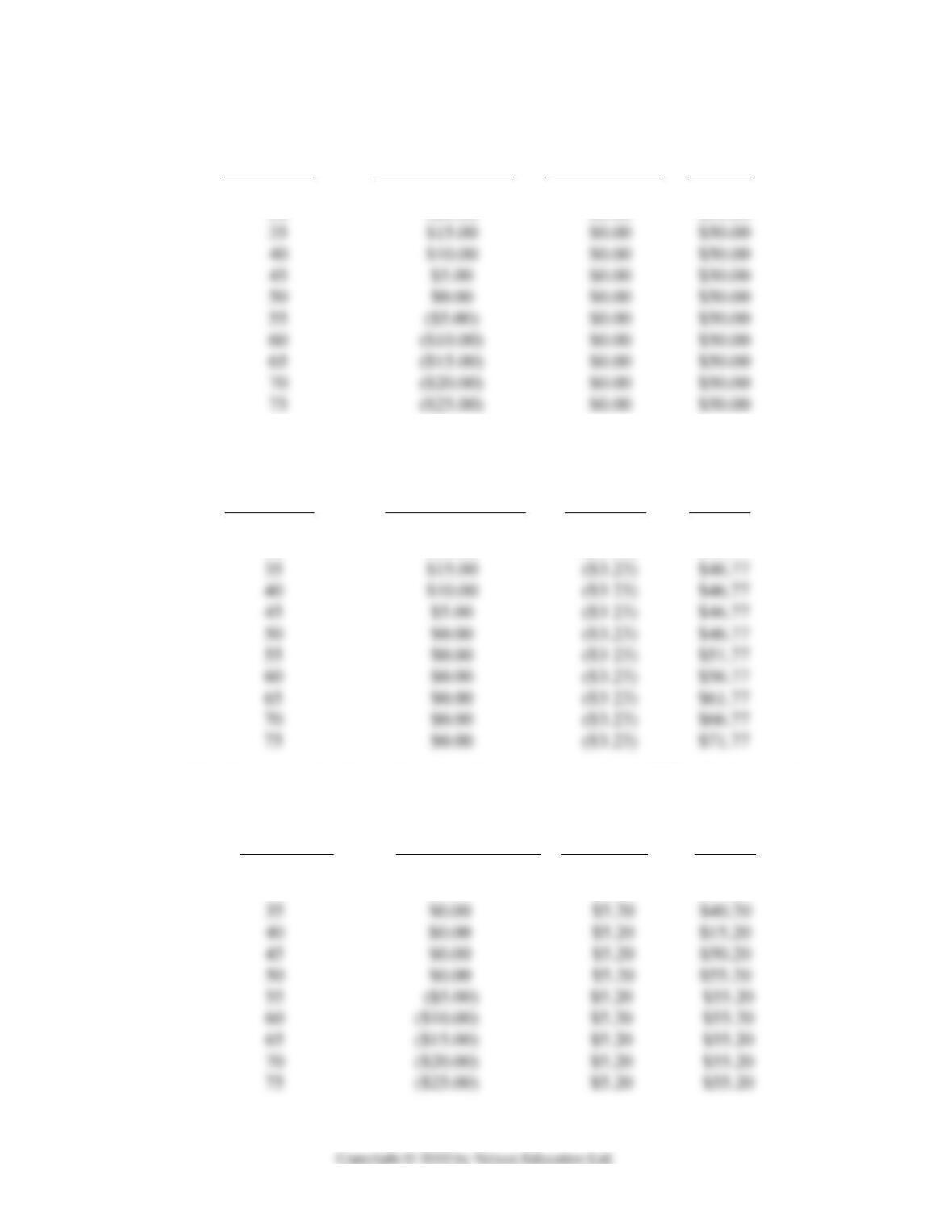
(iii). A short position in a put option with an exercise price of $50 and a front-end
premium receipt of $3.23:
Short Put
$25.00
$20.00
THE BREAKEVEN POINT FOR BOTH PUT OPTIONS IS $46.77.
2(c). A short position in a forward with a contract price of $50: The seller believes the price
of Osprey Enterprises will be below $50.
Solutions for Chapter 13: Questions and Problems
– 100 –
3(a). (i). A short position in a forward option with a exercise price of $50.
Expiration Date Osprey Short Forward (X=$50) Initial Short
Stock Price (S) Payoff =max (0, S-50) Forward Premium Net Profit
25 $25.00 $0.00 $50.00
30 $20.00 $0.00 $50.00
(ii). A long position in a put option with a exercise price of $50 and a front-end
premium expense of $3.23.
Expiration Date Osprey Long Put (X=$50) Initial Long Put
Stock Price (S) Payoff = max (0,50–S) Put Premium Net Profit
25 $25 00 ($3 23) $46.77
30 $20.00 ($3.23) $46.77
premium receipt of $5.20.
Expiration Date Osprey Short Call (X=$50) Initial Short
Stock Price (S) Payoff = -max (0,S-50) Call Premium Net Profit
25 $0.00 $5.20 $30.20
30 $0.00 $5.20 $35.20
Solutions for Chapter 13: Questions and Problems
– 101 –
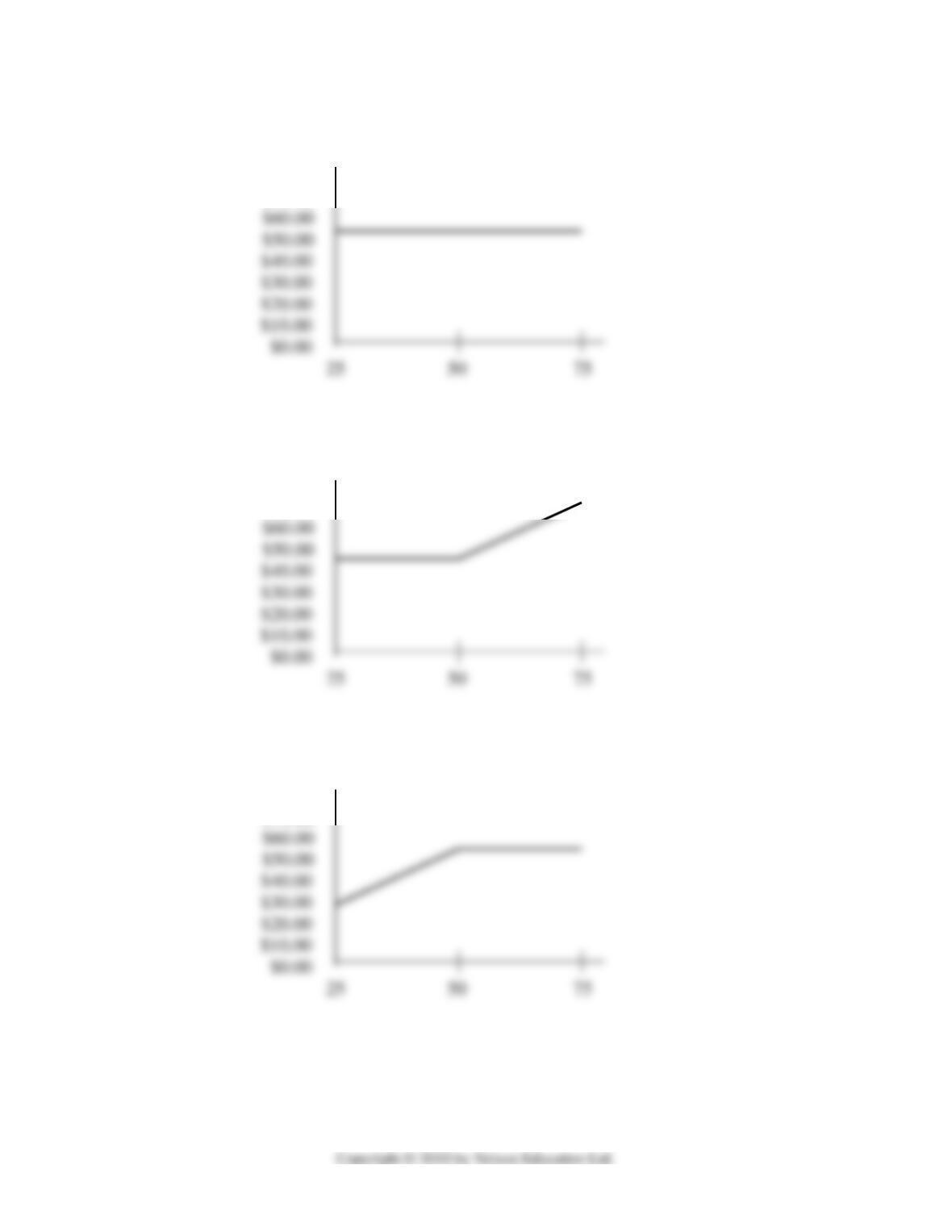
3(b). (i). A short position in a forward with a contract price of $50:
Short Forward
$80.00
$70.00
(ii). A long position in a put option with an exercise price of $50 and a front-end
premium expense of $3.23:
Long Put
$80.00
$70.00
(iii). A short position in a call option with an exercise price of $50 and a front-end
premium expense of $5.20:
Short Call
$80.00
$70.00
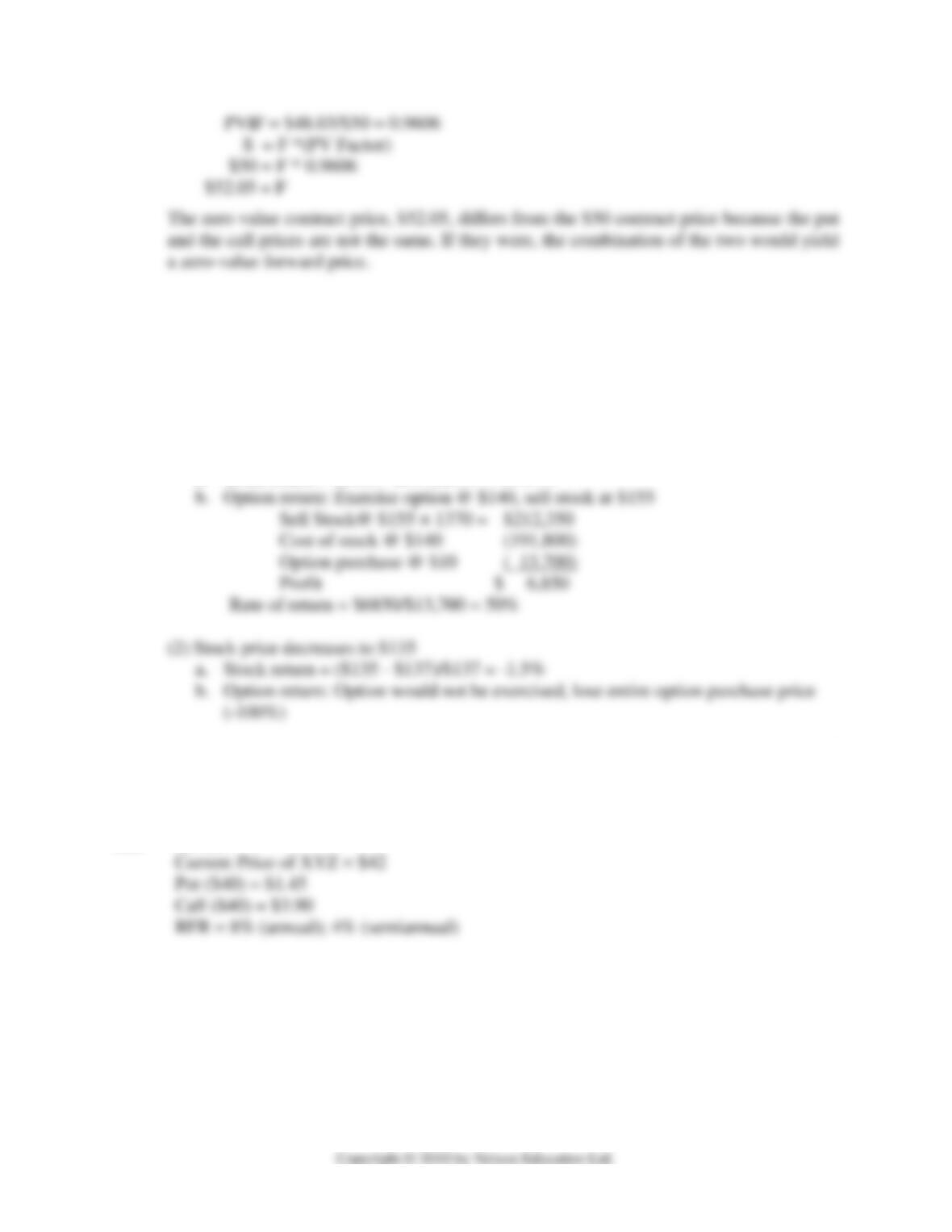
3(c). F0,T = Call – Put + PV(Strike)
$50.00 = 5.20 – 3.23 + PV($50)
$48.03 = PV ($50)
Solutions for Chapter 13: Questions and Problems
– 102 –
4(a). With $13,700 to spend, one could:
(1) Purchase 100 shares of Breener Inc. stock (@ $137 per share); or
(2) Purchase 1370 call options with exercise price of $140
Potential payoff is unlimited in both cases, however the leverage that options provide will
translate into a higher percentage gain than purely purchasing stock. However, leverage
works both ways.
4(b). (1) Stock price increases to $155
a. Stock return = ($155 – $137)/$137 = 13.14%
4(c). Breakeven on this call option is $150. In other words, the writer of the call option will
receive the premium of $10, that is, the maximum amount the seller will receive. If the
seller does not currently own the stock, his/her loss is potentially unlimited.
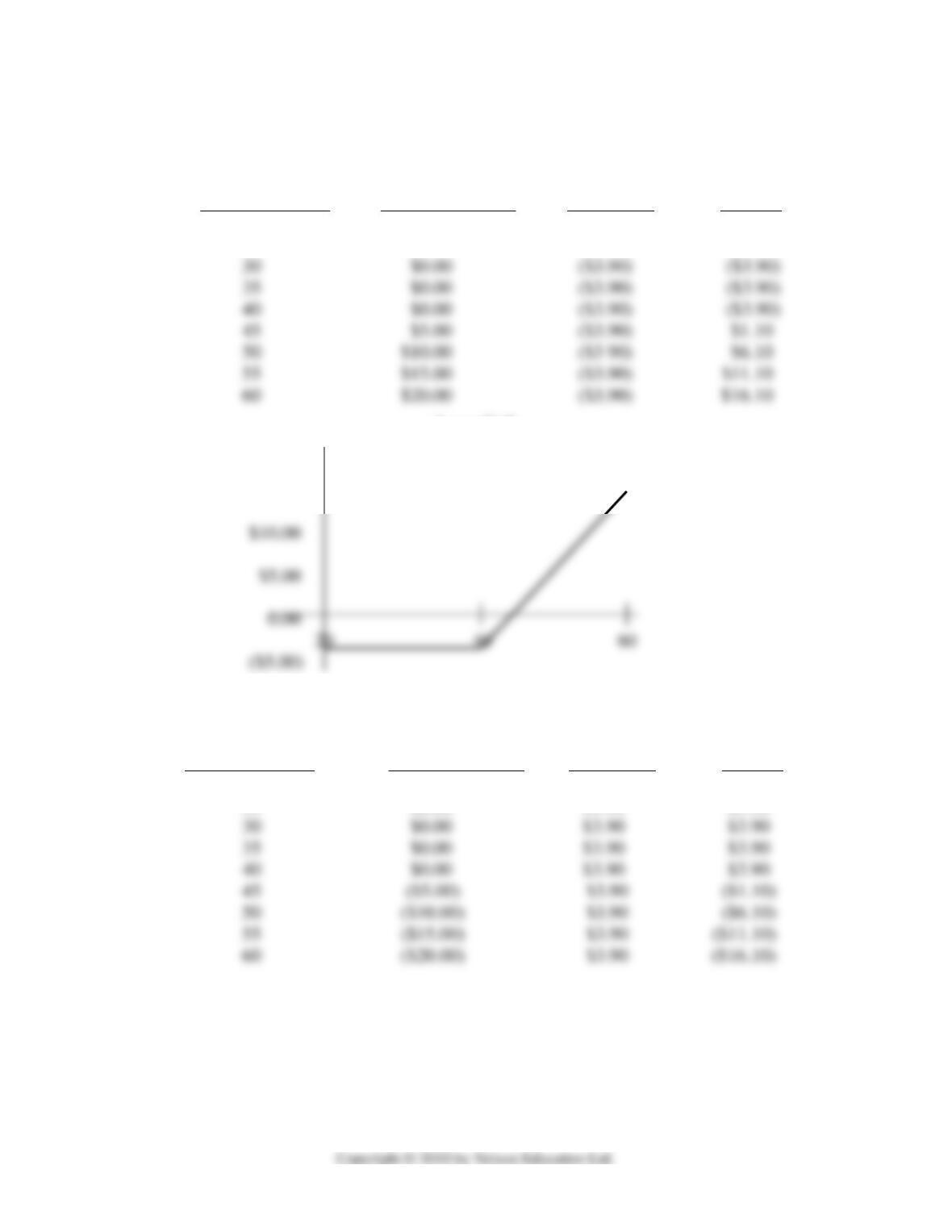
5(a). Given:
Solutions for Chapter 13: Questions and Problems
– 103 –
(i). Buy one call option
Expiration Date Long Call (X=$40) Initial Long
XYZ Stock Price (S) Payoff = max (0,S-40) Call Premium Net Profit
20 $0.00 ($3.90) ($3.90)
25 $0.00 ($3.90) ($3.90)
$20.00
$15.00
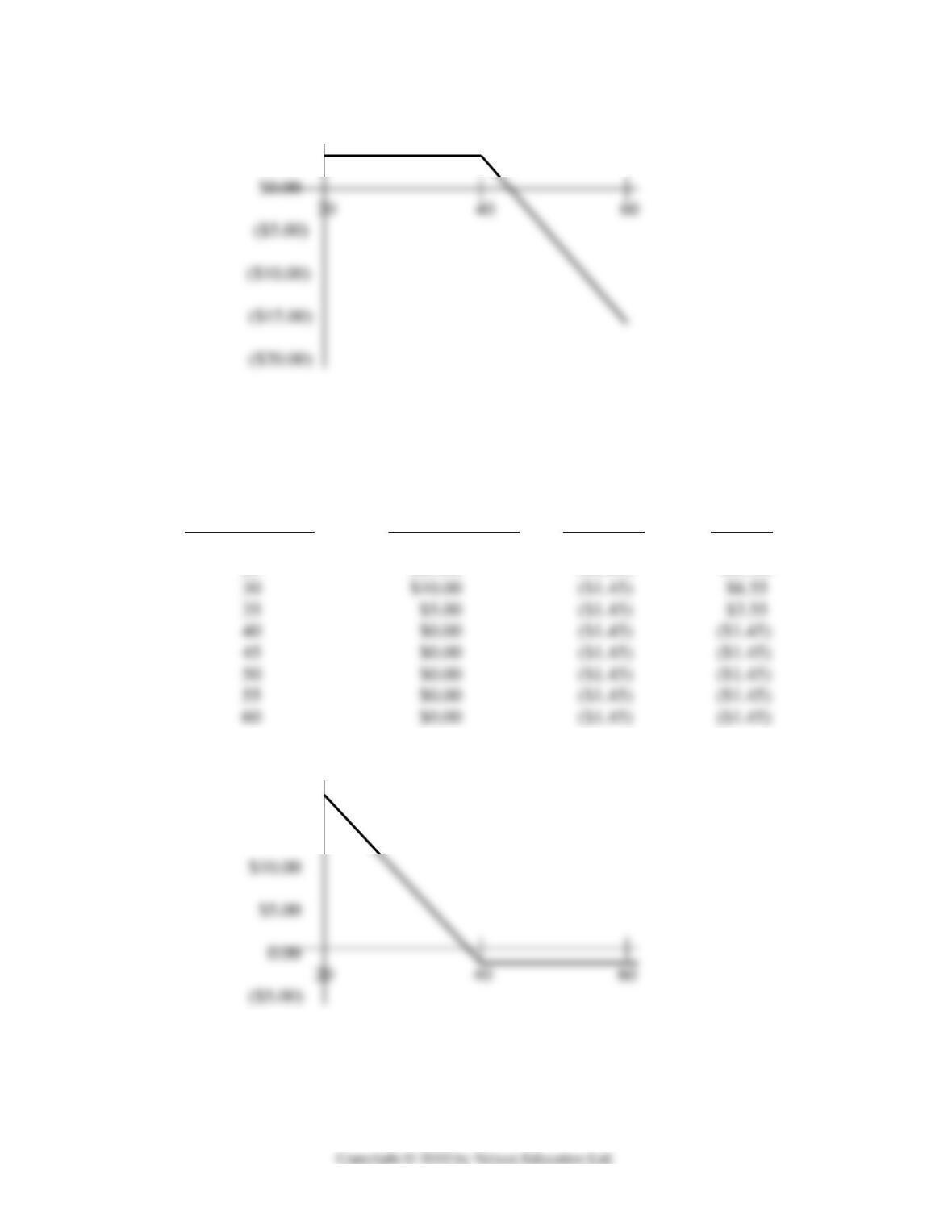
(ii). Short one call option
Expiration Date Short Call (X=$40) Initial Short
XYZ Stock Price (S) Payoff =-max (0,S-40) Call Premium Net Profit
20 $0.00 $3.90 $3.90
25 $0.00 $3.90 $3.90
Solutions for Chapter 13: Questions and Problems
– 104 –
Short Call
$5.00
Both call positions will break even at a stock price of $43.90.
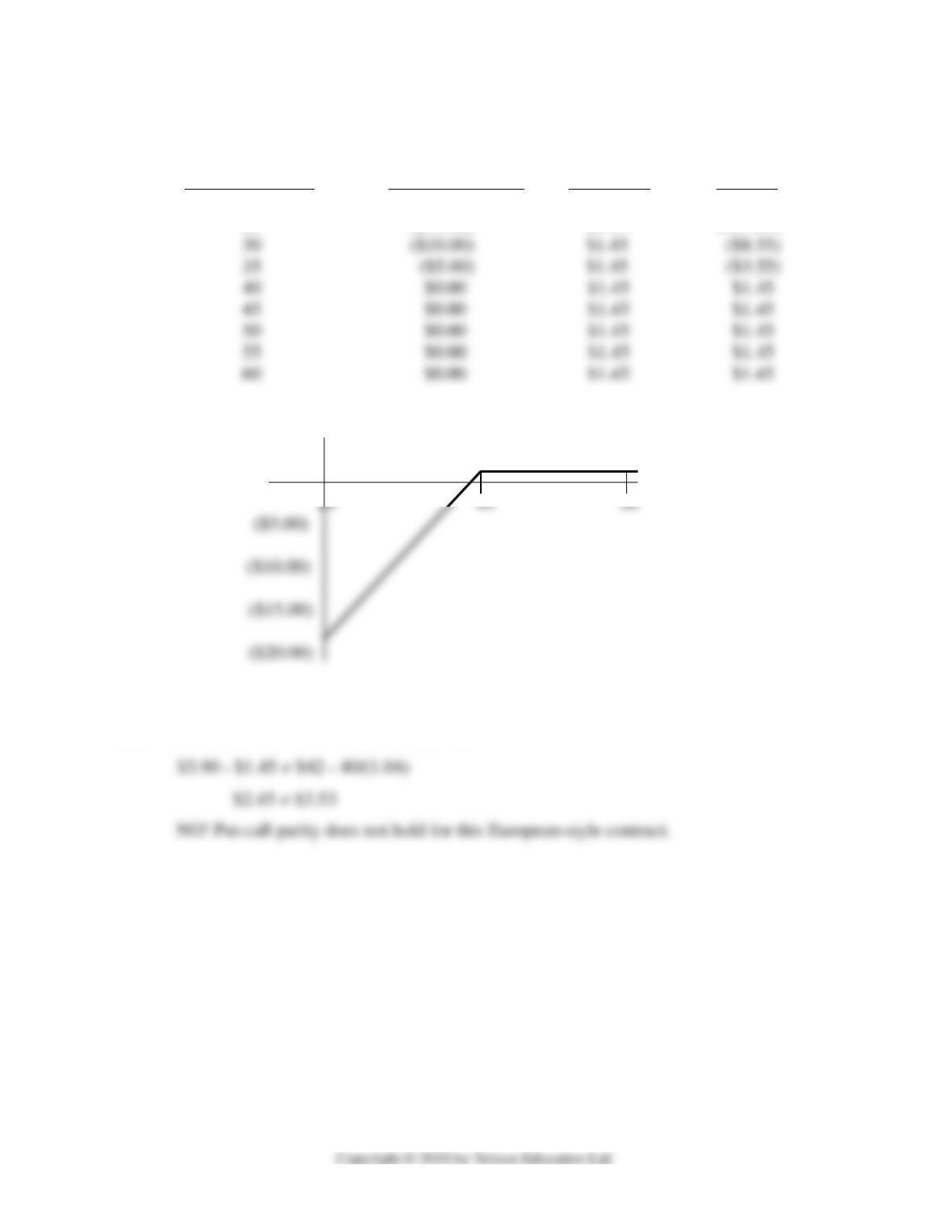
5(b). (i). Buy one put option
Expiration Date Long Put (X=$40) Initial Long
XYZ Stock Price (S) Payoff =max (0,40-S) Put Premium Net Profit
20 $20.00 ($1.45) $18.55
25 $15.00 ($1.45) $13.55
Long Put
$20.00
$15.00
Solutions for Chapter 13: Questions and Problems
– 105 –
(ii). Short one put option
Expiration Date Short Put (X=$40) Initial Short
XYZ Stock Price (S) Payoff =-max (0,40-S) Put Premium Net Profit
20 ($20.00) $1.45 ($18.55)
25 ($15.00) $1.45 ($13.55)
Short Put
$5.00
$0.00
Both put positions will break even at a stock price of $38.55.
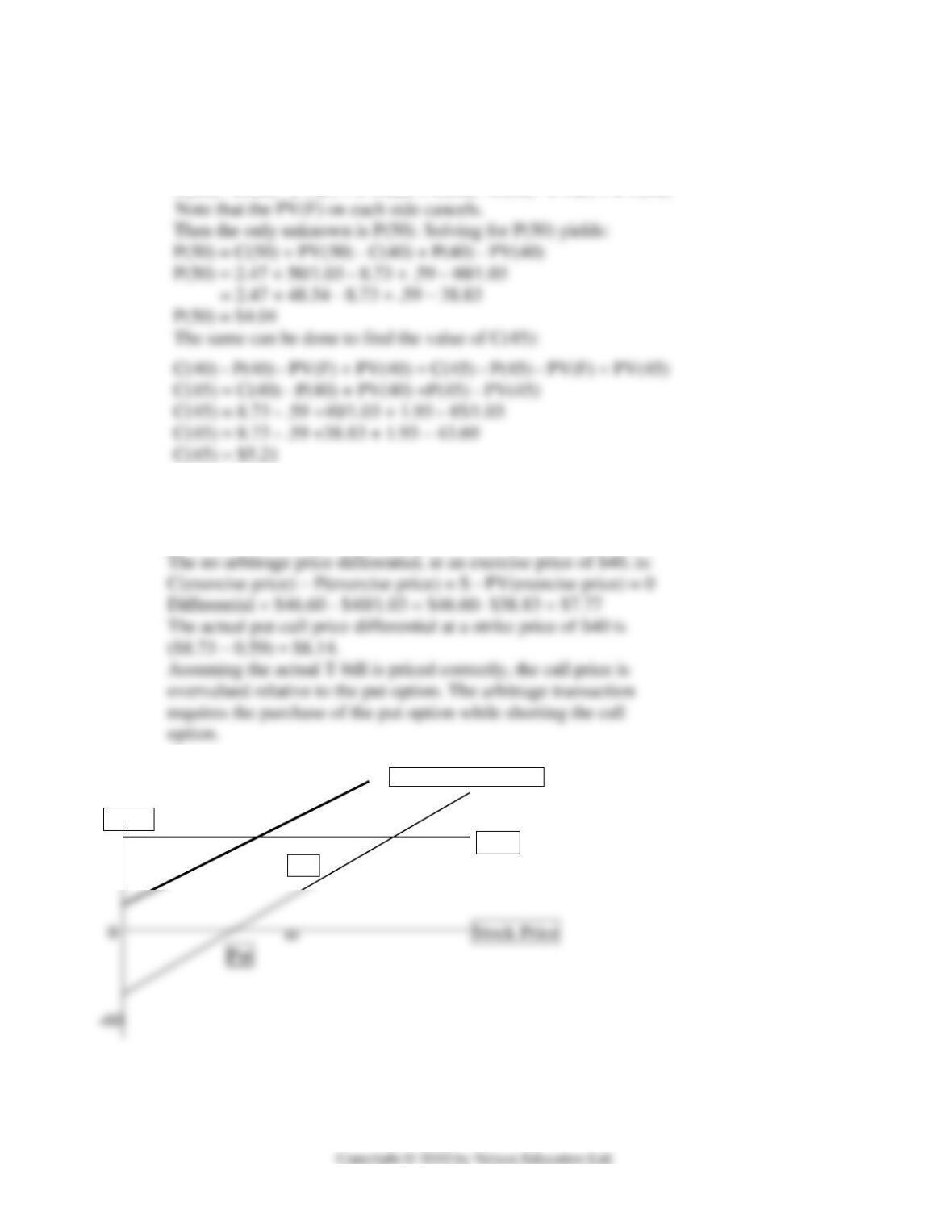
5(c). Does Call – Put = S – PV(exercise price)?
Solutions for Chapter 13: Questions and Problems
– 106 –
6(a). To solve this problem, express put call parity in the following form:
C(exercise price) – P(exercise price) – PV(F) + PV(exercise price) = 0
Now we can equate put-call parity for two different options:
C(40) – P(40) – PV(F) + PV(40) = C(50) – P(50) – PV(F) + PV(50)
6(b). To solve this problem, express put call parity in the following form:
C(exercise price) – P(exercise price) – PV(F) + PV(exercise price) = 0
Solve for the share price PV(F) or S = $48/1.03 = $46.60
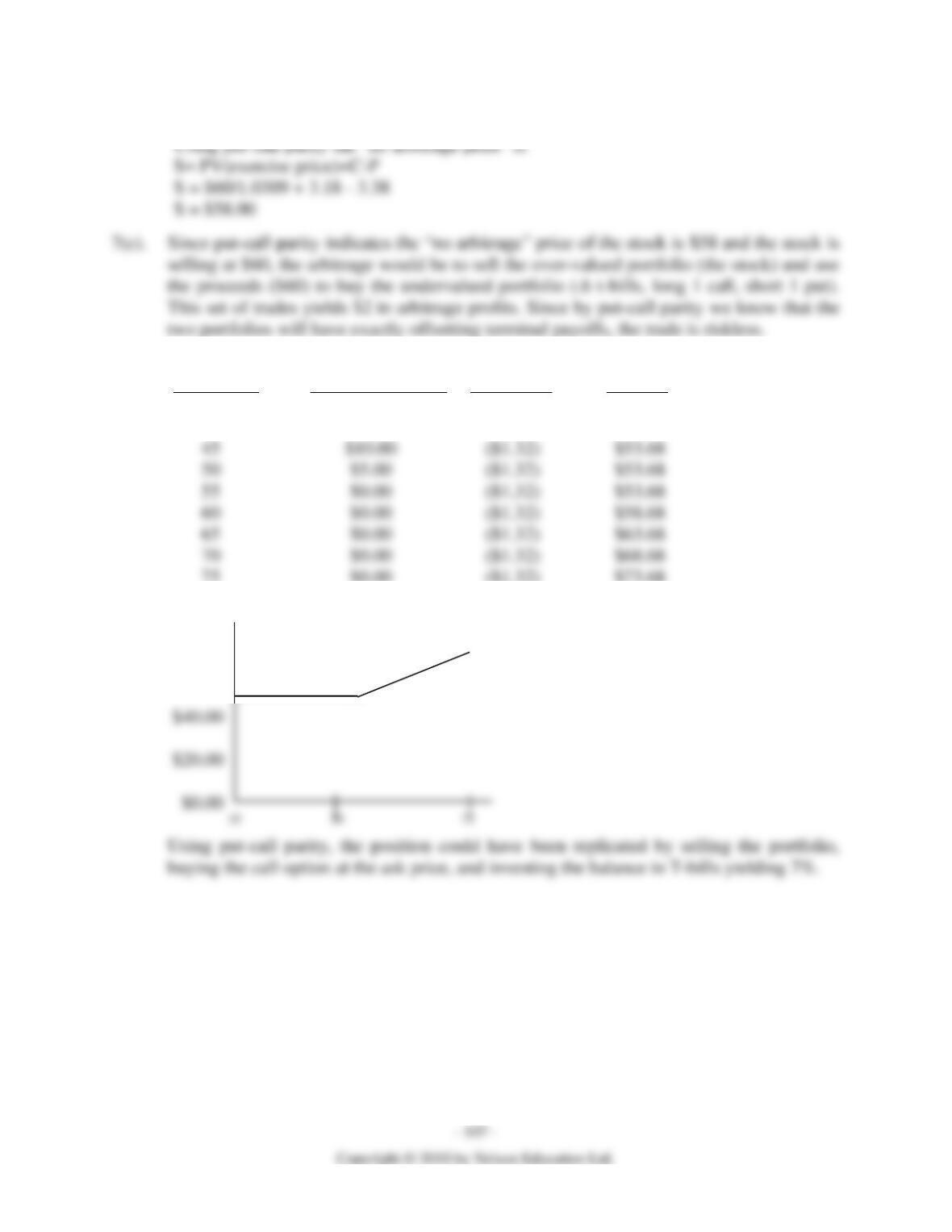
7. (a). Sum of T-bill, call & put
Payoff
60 T-bill
Call
Solutions for Chapter 13: Questions and Problems
7(b). With a price of $97 for 6 month T-bills, the 6-month risk-free rate is 100/97 -1 = 3.09%
8(a). Expiration Date Long Put (X=$55) Initial Long
Stock Price(S) Payoff = max(0,55-S) Put Premium Net Profit
35 $20.00 ($1.32) $53.68
40 $15.00 ($1.32) $53.68
75 $0.00 ($1.32) $73.68
Long Put
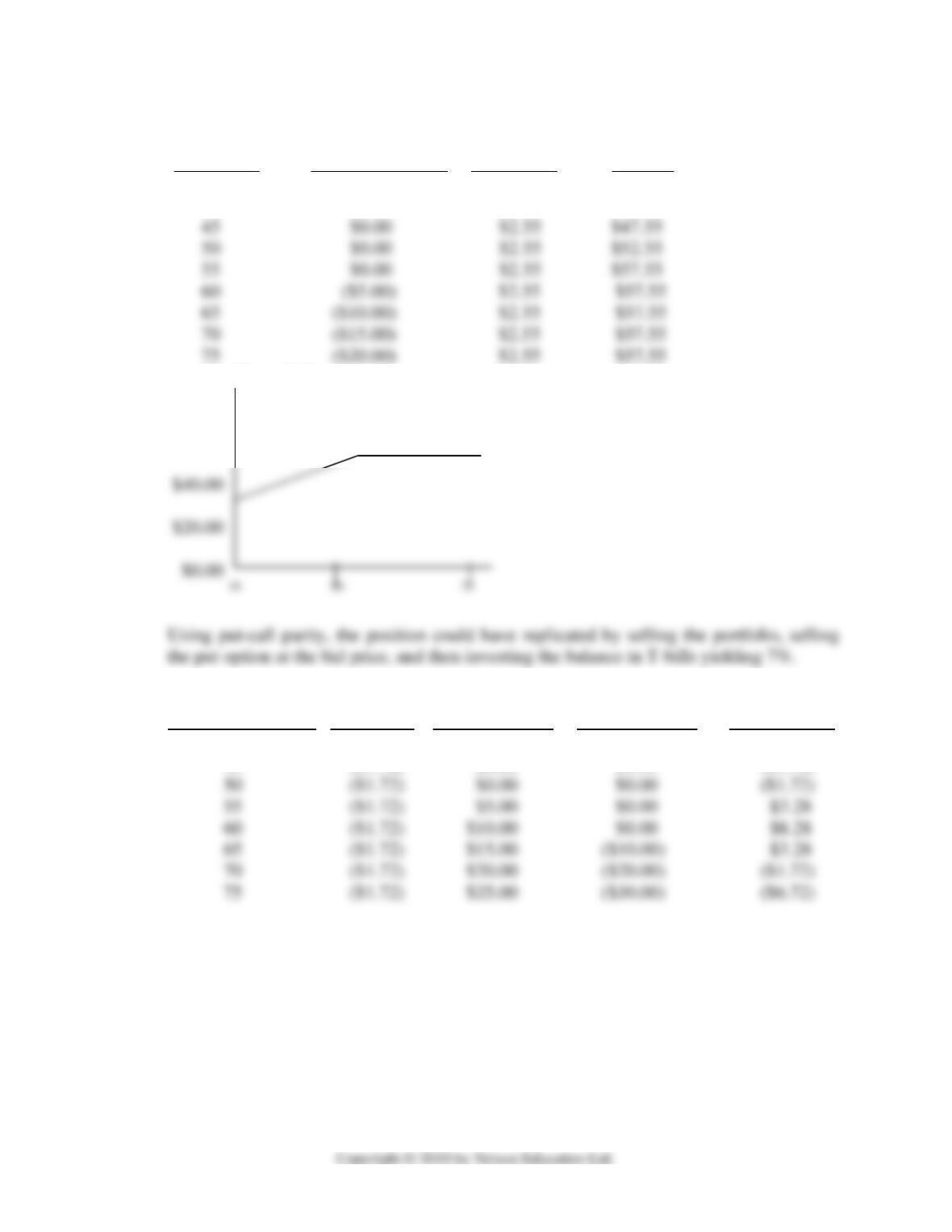
8(b). $80.00
$60.00
Solutions for Chapter 13: Questions and Problems
– 108 –
8(c). Expiration Date Short Call (X=$55) Initial Short
Stock Price(S) Payoff = max(0,S-55) Call Premium Net Profit
35 $0.00 $2.55 $37.55
40 $0.00 $2.55 $42.55
Short Call
8(d). $80.00
$60.00
9(a) Price of ARB Profit on Profit on Net Profit on
Stock at Expiration Initial Cost Call #1 Position Call #2 Position Total Position
40 ($1.72) $0.00 $0.00 ($1.72)
45 ($1.72) $0.00 $0.00 ($1.72)
Solutions for Chapter 13: Questions and Problems
– 109 –
9(b).
$8.00
$4.00
9(c). The user of this position is betting on low volatility (that prices will stay between
breakeven points). The holder has limited liability for substantial price declines and
unlimited liability for substantial price increases.
10. Consider the following put option transactions: (i) long one put #1 (exercise price $35);
(ii) short two puts #2 (exercise price $40), and (iii) long one put #3 (exercise price $45).
SAS Price Value of Value of Value of Cost of Net
(Expiration) Put #1 Put #2 Put #3 Options Profit
20 15.00 -40.00 25.00 (0.83) -0.83
25 10.00 -30.00 20.00 (0.83) -0.83