13-1
Management Information Systems, 13E, Global Edition
Laudon & Laudon
Lecture Notes by Barbara J. Ellestad
Chapter 13 Building Information Systems
“What do you mean we have to change the way we make our candy bars? They are the
number one selling product we have. Everyone loves them. Why can’t we just keep doing
things the way we’ve always done them? It’s worked fine this long.”
13.1 Systems as Planned Organizational Change
It would be nice if we could give you a precise checklist of how to smoothly introduce a
new information system, but we can’t. No one can. What we provide in this chapter is
information you can use to help plan and analyze organizational changes associated with
new systems development.
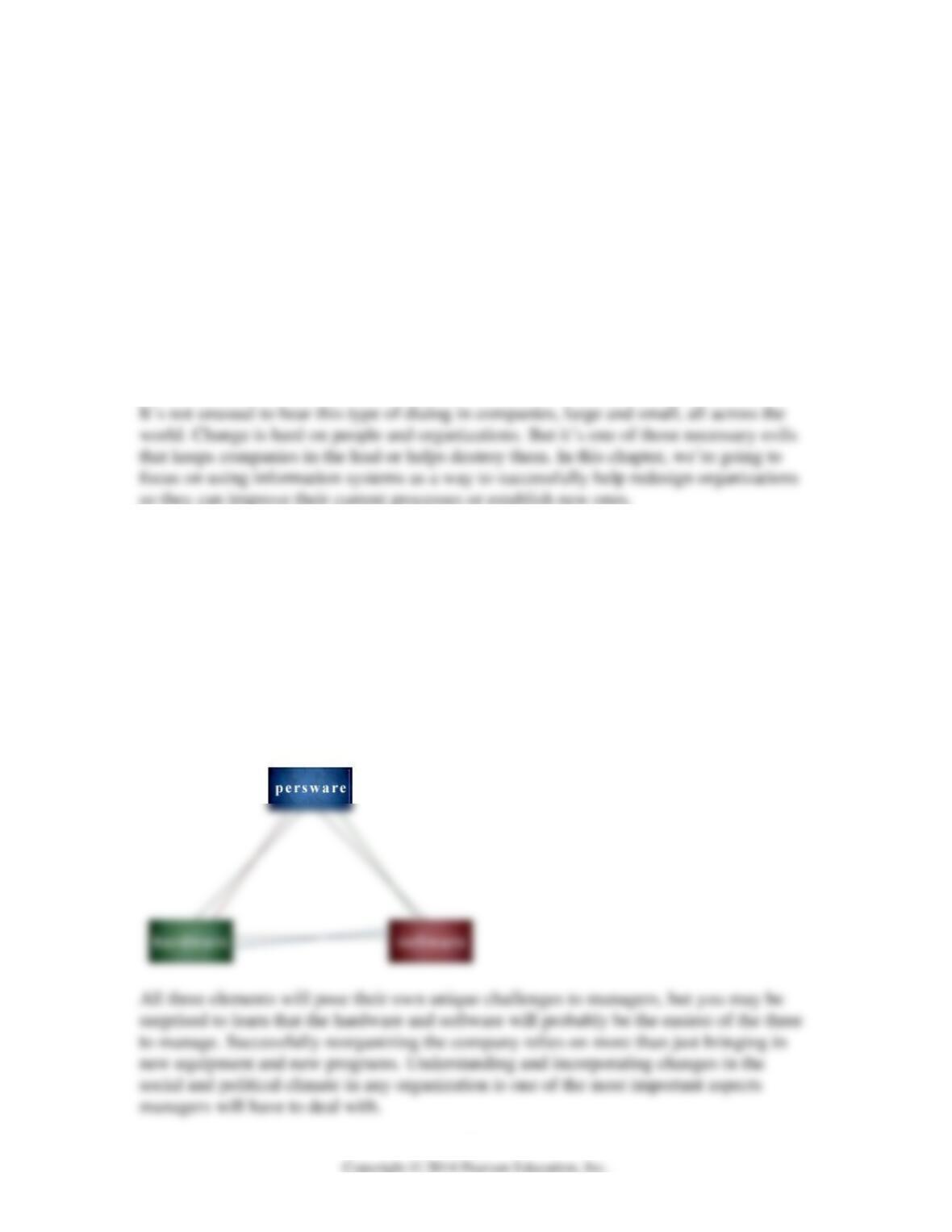
The triangle that we’ve used before is back…
13-2
Systems Development and Organizational Change
Change is disruptive. Change is dangerous. Change is good. Change is necessary.
Change is constant.
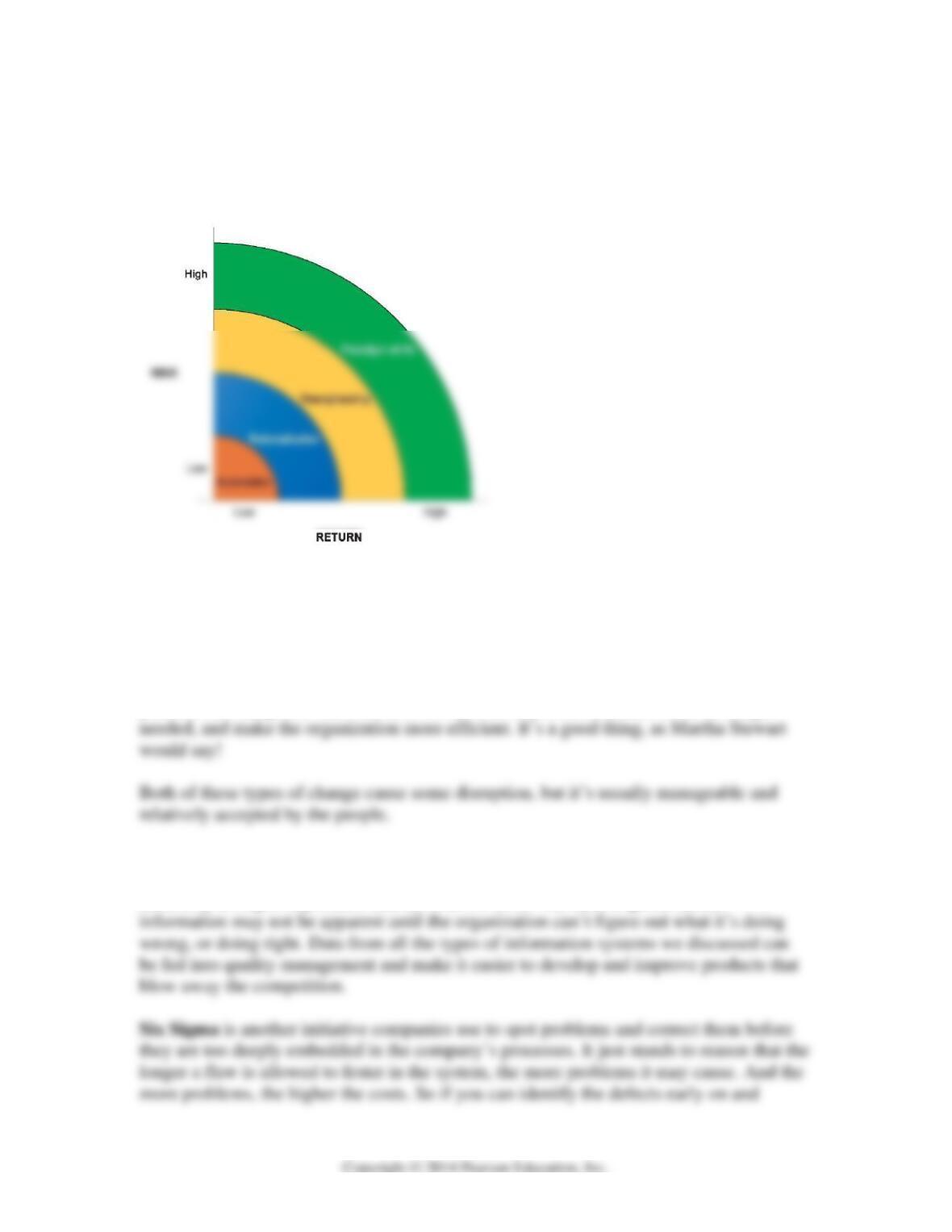
Figure 13-1: Organizational Change Carries Risks and Rewards
This figure shows the four degrees of organizational change. Automation is the easiest
(except for those people losing their jobs), and the most common form of change. But
that doesn’t mean you don’t have to plan for the change first.
Rationalization of procedures causes the organization to examine its standard operating
procedures, change the ones that don’t work well anymore, eliminate those no longer
Total quality management, making quality control everyone’s responsibility, relies on
an excellent information system that supplies workers and management with the data
necessary to improve products and drive down costs. The lack of good, useful
13-3
eliminate them, you can achieve more efficient production at lower costs. That’s the
premise behind Six Sigma.
Business process redesign, on the other hand, can cause radical disruption. The mere
mention of the term nowadays strikes fear in the hearts of workers and managers at all
The Internet is causing all kinds of industries and businesses to alter their products, their
services, and their processes in radical ways. Entire organizations are being created to
handle the paradigm shifts caused by the Web and other Internet applications. Look at the
automobile industry as an example of this type of change: Traditional dealerships are
being disrupted by automalls and online buying opportunities. How can a local dealer
compete on price with these two environmental challenges? What is the dealers’ role in
the revolutionary changes taking place all around them?
Business Process Redesign
Take a seemingly simple task such as sending out customer invoices and really analyze
how many steps are involved in the process. Even in a small business, you may be
surprised how many steps there are. Business process management (BPM) is the art and
science of analyzing every task in a business and helping firms continually optimize
them. BPM includes work flow management, business process modeling, quality

13-4
First, decide which business processes you need to focus on. Sometimes it’s not the
information system that’s the real problem but rather the process itself. Understanding the
difference can help prevent fixing the wrong thing. By determining what business
processes are most important to the organization and improving them, you can improve
the overall business performance.
The third step is to design and document the new process. Does the new process save
time and money or improve customer service? Sometimes you can accomplish all three
objectives. For instance, instead of ten people handling a single bank loan application,
you can install software that will speed up the process, allow several people to work on
the document at the same time, and decrease the total number of people who handle it.
Or, you can migrate the application process to the Web and make it even more efficient
and customer-friendly. Wells Fargo Bank allows customers to complete an online
Last, you need to understand that every process requires continuous measurement to
ensure you keep up with changes and technological improvements. That’s where the
documentation you created in the second step can help.
13-5
Tools for Business Process Management
Fortunately, you have a lot of tools that will help you manage these aspects of the BPM
process:
• Identifying and documenting processes
• Creating models of improved processes
The tools for BPM generally fall into one of three categories:
Interactive Session: Organizations: Burton Snowboards Speeds Ahead with Nimble
Business Processes (see page 526 of the text) shows how every company can use
technology to improve its business process management regardless of the products it
makes.
Bottom Line: Continual change is a necessary part of corporate life. Four types of
13.2 Overview of Systems Development
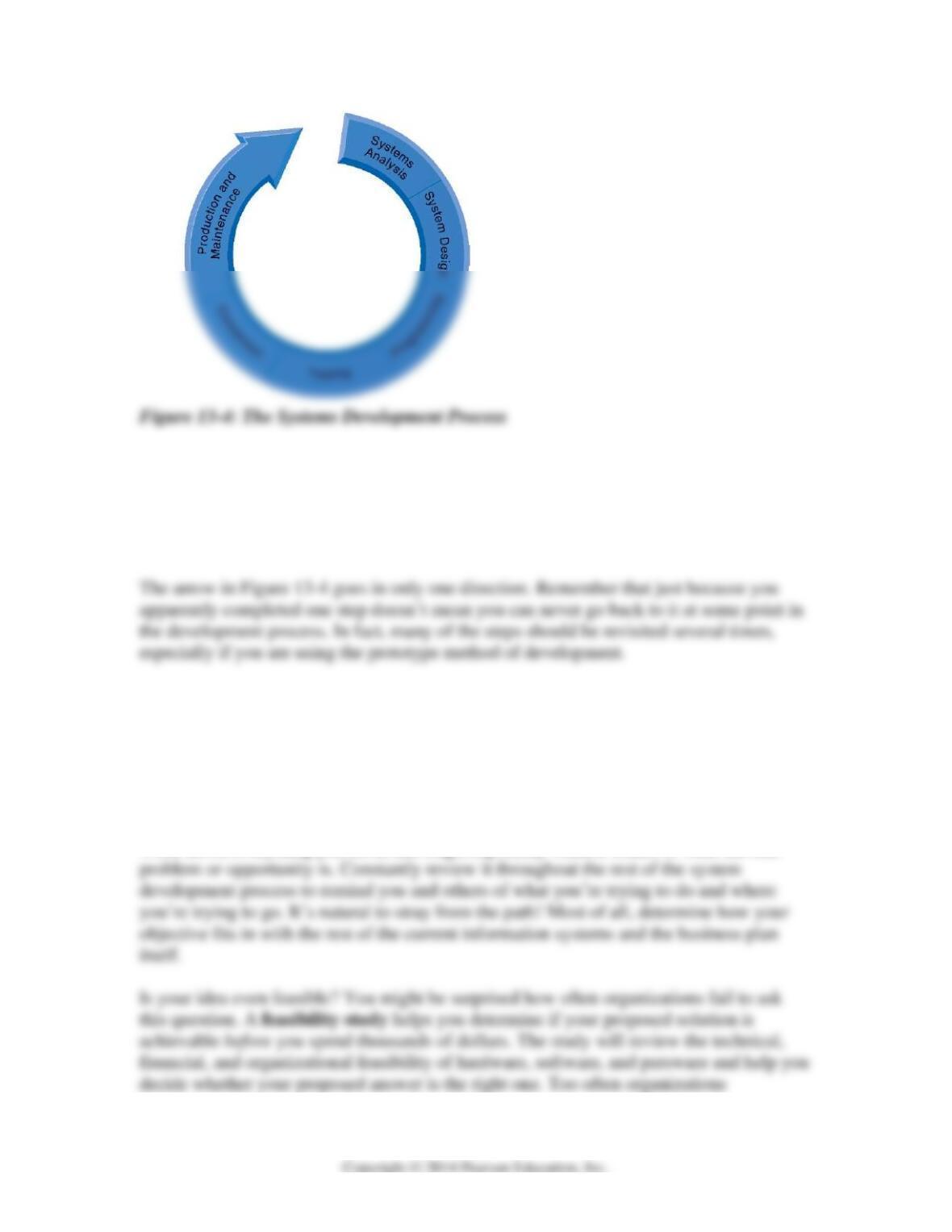
Systems development includes every resource and every step that goes into producing an
information system that solves a problem or helps the organization take advantage of new
opportunities.
13-6
Don’t start by thinking, “Oh, we’re going to develop a new computer system? Well, that
problem belongs to the IT (Information Technology) department.” Nowadays, system
development belongs to you as much as it belongs to the techies. You have to work hand-
in-hand from start to finish within the entire organization to develop a usable system that
will serve everyone.
Systems Analysis
So what’s the problem? Answering that question is harder than you might think. You
have to analyze the current situation to determine the real cause of the problem. Make
sure you’re addressing the real problem and not just the symptoms. Effective systems
analysis, adequately determining the real problem, is the key.
Write down everything you do in this stage, especially when it comes to what the real
13-7
Establishing Information Requirements
Figuring out who needs what information, where, when, and how will challenge the
political dynamics of any organization. No system can answer every need, so you’re
going to have to decide who gets what. That’s why you must write down the problem
and then keep referring to your notes throughout the development process. It is too easy
Systems Design
Congratulations! If you get to the systems design stage, it means you managed to live
through the analysis phase. Now you can get down to figuring out how the system will
actually solve the problem or help you take advantage of new opportunities. Remember,
your goal is to fit the system into the organization and not make the organization fit the
The Role of End Users
Unfortunately, the physical design sometimes overrides the logical design. Why?
Because the nontechies give up too much control to the techies. This is a reminder that
13-8
Completing the Systems Development Process
Now that you’re through the analysis and design phases, you can move on to the
remaining steps in the process. Just remember, you can always go back to those two steps
and probably should at some point.
Programming
The actual programming phase will in all likelihood be carried out by the IT department.
Testing
“Hey, it works!” But does it really work as it was designed for a real-world situation?
Was every aspect thoroughly tested by independent testers in an actual setting? Several
things that go wrong in the testing phase of the development process can severely
hamper the projects success.
13-9
There is no right way or wrong way to implement the system; you have to look at it in the
context of your particular organization.
• You can use the parallel strategy, but it’s expensive to run two separate systems
at one time. If you don’t have a lot of confidence in your new system, you might
want to go with this one.
However you convert, make sure everyone knows what’s going on. Tell them through
documentation of a formal conversion plan and not the grapevine. Use the information
you gathered in the earlier stages of the development process to help guide the
implementation plan. Make sure you figure out how to convert the data and train the
users. User resistance through fear of the unknown can destroy all your hard work and
planning.
Production and Maintenance
You buy a new car and think your problems with the old junker are over. Only for a
13-10
After you install the new system and it’s in production, you want to go back one more
time and make sure it’s meeting your needs through a postimplementation audit.
Eventually you’re going to have to perform maintenance on the system no matter how
well you designed and built it. And someday you’ll have to make major changes or
replace it altogether.
It’s interesting to note the statistical breakdown of system maintenance that Laudon and
Laudon include in the text:
Modeling and Designing Systems: Structured and Object-Oriented
Methodologies
There’s always more than one way to accomplish a task. The trick is to use the one that
works best for the job you’re trying to accomplish.
Structured Methodologies
Traditionally, systems have been structured in a very orderly manner. The methods used
to build the systems begin at the top and progress to the lowest detail always with an eye
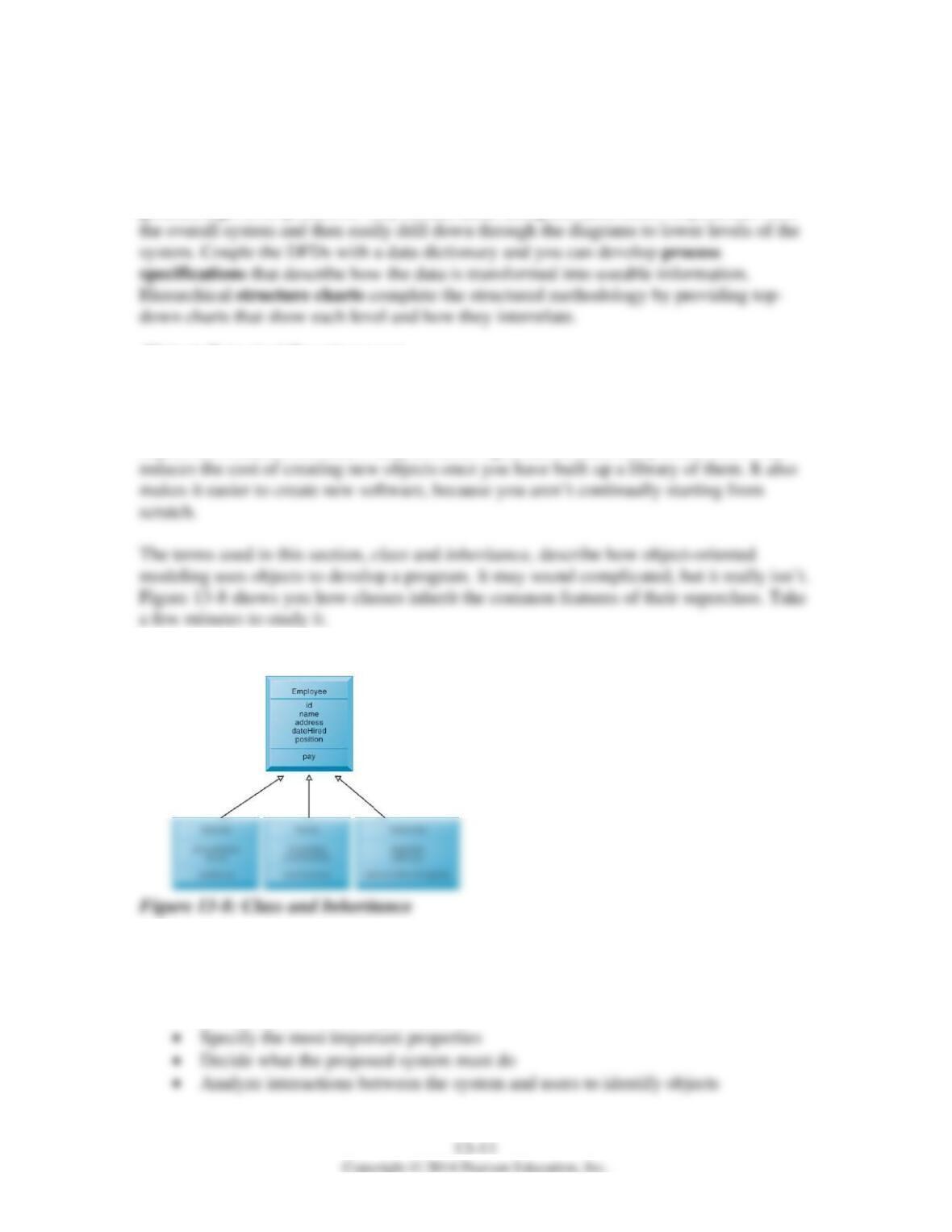
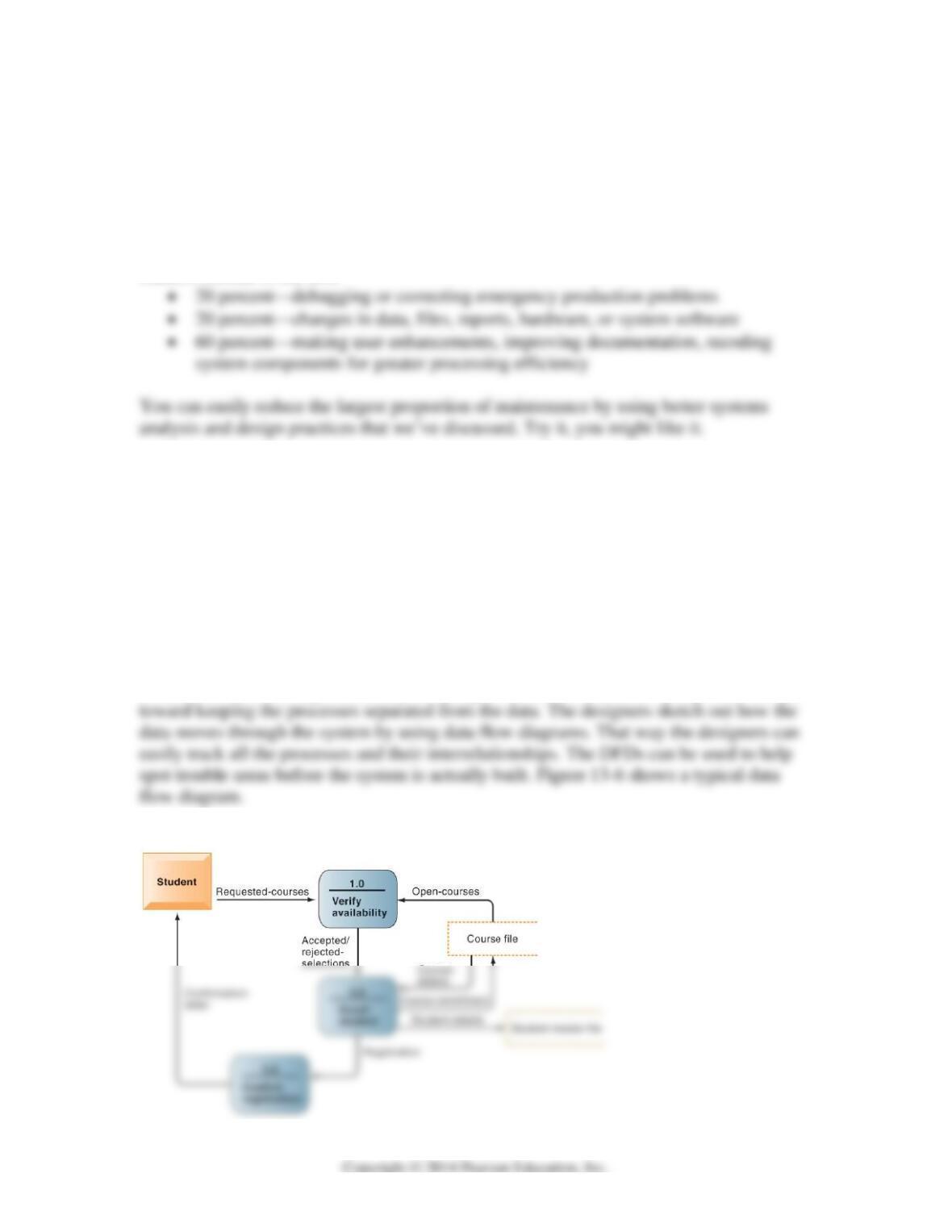
Figure 13-6: Data Flow Diagram
The advantage of using data flow diagrams is that they can be used to show a very
general, high-level process or very minute detail using the same tools. Anyone can view
Object-Oriented Development
The structured development method keeps data and processes separate. Object-oriented
development combines the two and treats them as one object. More importantly, the
objects are created once and, if they are done right, can be used many times over. That
Object-oriented development is an iterative and incremental way of building programs.
The steps in the analysis phase are:
• Document functional requirements