Hitt 13e Case Teaching Notes
Case 12: Pfizer
Case Synopsis
Founded more than 170 years ago in Brooklyn, New York, Pfizer is one of the largest
pharmaceutical companies in the world. It produces some of the best-known brand-name
drugs, including Lipitor®, Lyrica®, Viagra®, Xeljanz®, Celebrex®, EpiPen®, and even Advil®,
Robitussin®, and ChapStick®. Despite its long-term international success, the firm has struggled
in recent decades.
As an alternative route to securing new drugs and other medical technologies, Pfizer has made
a number of important acquisitions, on average every 18 months or so. These acquisitions have
enabled the firm to move into growth areas in the pharmaceutical field, although some analysts
predict that there are no truly breakthrough categories of drugs left to be developed. Pfizer has
also made two attempts to merge with competitors—AstraZeneca and Allergan—with the
intention of relocating Pfizer headquarters in a foreign country where it will be subject to lower
taxes. However, both attempts have fallen through.
Learning Objectives
• Describe vision and mission and discuss their value. (Chapter 1)
• Define stakeholders and describe their ability to influence organizations. (Chapter 1)
• Describe the work of strategic leaders. (Chapter 1)
• Explain the popularity of merger and acquisition strategies in firms competing in the global
economy. (Chapter 7)
• Discuss reasons why firms use an acquisition strategy to achieve strategic competitiveness.
(Chapter 7)
(Chapter 11)
• Explain the use of three versions of the multidivisional (M-form) structure to implement
different diversification strategies. (Chapter 11)
• Discuss the organizational structures used to implement three international strategies.
(Chapter 11)
Strategic Issues and Suggested Discussion Questions & Answers
1. Describe two ways in which Pfizer has gained access to innovative drugs and other
medical technologies. What challenges do you suppose the firm has faced in pursuing
each of these strategies?
Pfizer has gained access to innovations through both internal development and external
acquisitions. Internally, the firm has state-of-the-art laboratories, but it still faces a number of
challenges once it has targeted a specific type of drug it would like to develop. Once the initial
2. Pfizer has twice attempted to merge with another pharmaceutical company, and both
times the mergers have failed. Why is Pfizer so eager to merge? Why did these
attempts fail? What segments of the external environment have influenced this
situation?
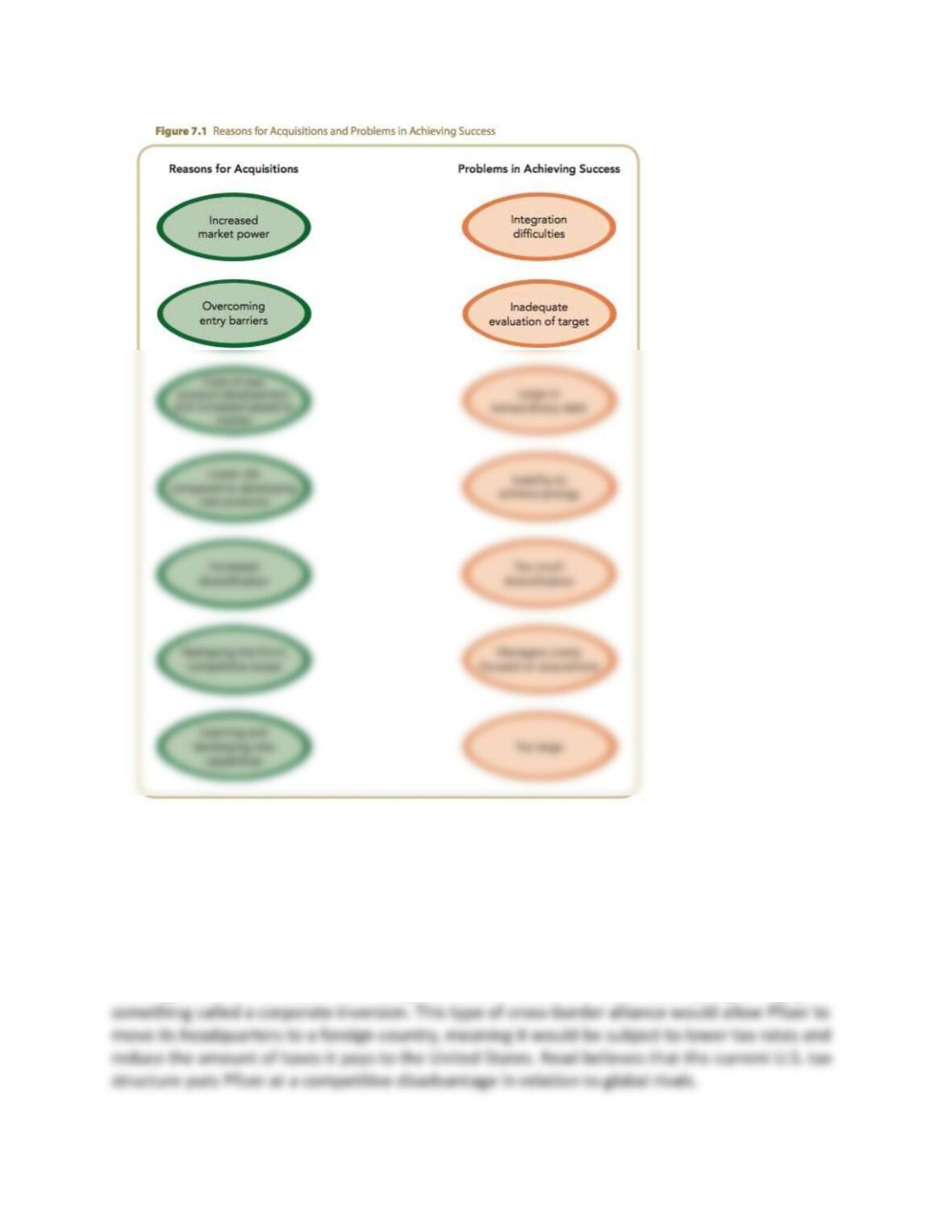
In 2014, Pfizer attempted to merge with U.K.-based rival AstraZeneca; in 2016, Pfizer again tried
to merge with Ireland-based rival Allergan. Led by Ian Read, the firm is attempting to engage in
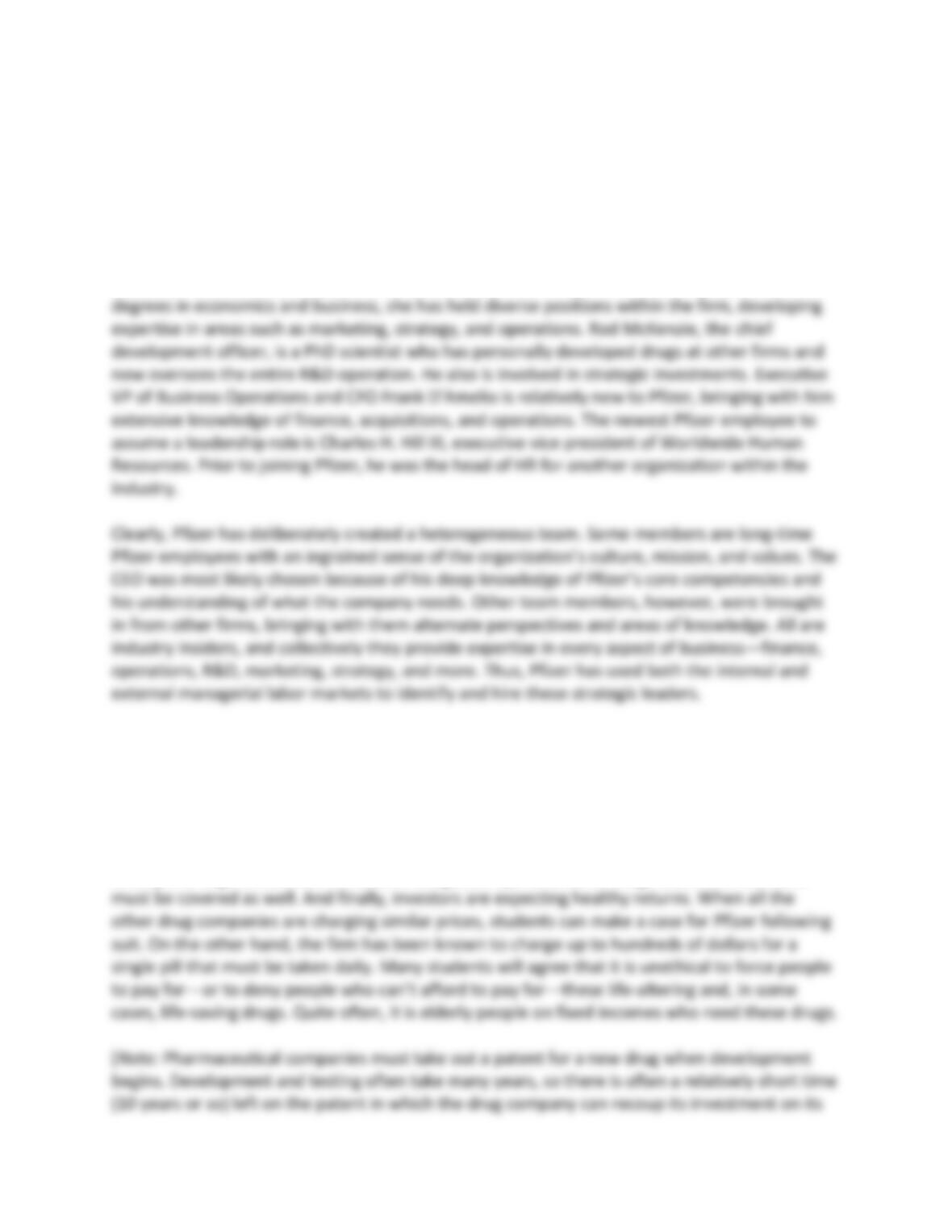
3. When Ian Read became the CEO in 2010, he restructured Pfizer into two segments:
Established Products and Innovative Products. What type of structure is the firm now
using? How will this move benefit the firm?
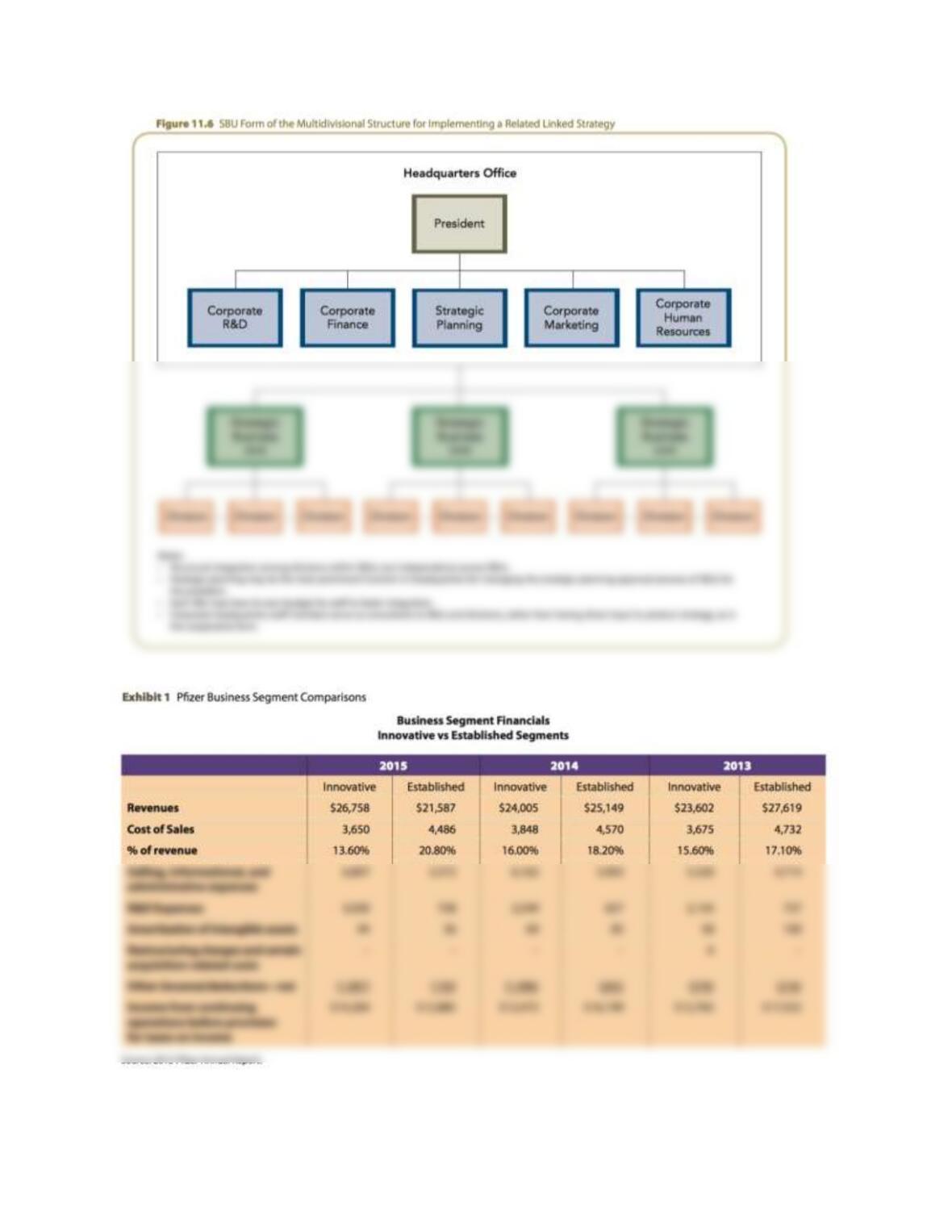
Although Pfizer is a global firm with many strategic locations (Figure 11.9), it is practicing a
global strategy by selling standardized products around the world. Read’s new structure
4. Briefly summarize the bios of CEO Ian Read and other members of the top
management team. How would you describe this team? What type of managerial
labor market has Pfizer used to assemble its team?
Although he holds a degree in chemical engineering, CEO Ian Read began his career in
accounting at Pfizer and worked his way up. He held several strategic leadership positions in
international posts before assuming the top position at Pfizer. Executive VP of Strategy
Portfolio and Commercial Operations Laurie Oslo is also a long-time Pfizer employee. With
5. Pfizer and other big pharma companies have been harshly criticized for charging
“exorbitant” prices for some of their drugs, but Pfizer says its prices are justified.
Debate the issue, examining both viewpoints. Is this a smart pricing strategy or not?
This question could make for a lively formal or informal debate in class, touching on both
financial and ethical issues. Some students will take Pfizer’s side, arguing that the firm must
recoup the huge investment it makes in drug development. Some drugs fail, and those costs
Additional Resources
Reuters’s company profile gives in–depth background on Pfizer’s current financials, leadership,
valuation, news, and more:
Investors tried to pressure Pfizer into splitting into two companies in 2016, but the firm refused
and explained why:
In April 2019, The Motley Fool described three obstacles that could negatively impact Pfizer’s
future success:
Dr. Peter Rost, former Pfizer VP, described some corrupt practices in the medical industry in
August 2015: