CHAPTER TWELVE
EDUCATIONAL PROGRAMMING
KEY CONCEPTS
Licensing requirements typically address educational programming in general terms;
more specific requirements are spelled out in NAEYC accreditation criteria and
quality rating systems.
Many states have developed early learning standards detailing knowledge and skills
expected of children by the time they reach kindergarten.
A curriculum model should provide guidance for creating a welcoming, stimulating
indoor and outdoor environment, for planning experiences
interests and backgrounds, and for interacting with children and families to promote
attainment of challenging and achievable goals.
skills, on establishing a physical and social context to support development, or on content
and concepts to be learned. See figure 12.1.)
Developmentally appropriate curriculum is grounded in basic developmental principles
on what research has taught us about how children learn and develop. See Table 12.1.
ACTIVITIES AND PROJECTS FOR STUDENTS
1. Have several class members bring a copy of the daily schedule from a child development
facility where they have worked or have visited. Analyze the schedules to determine the
42
2. Have students interview a manager of a child development facility. Ask what input the
ability to plan and implement appropriate programs? What obstacles does the manager face
fulfilling this function?
3. Ask students to select a curriculum model that they might use as a center manager. Have
4. Have students read the description of videatives and view the demonstration examples at the
5. requirements
regarding educational programs for young children; have the second study NAEYC
6. Have students work in small groups to complete a weekly activity plan for an infant-toddler
7.
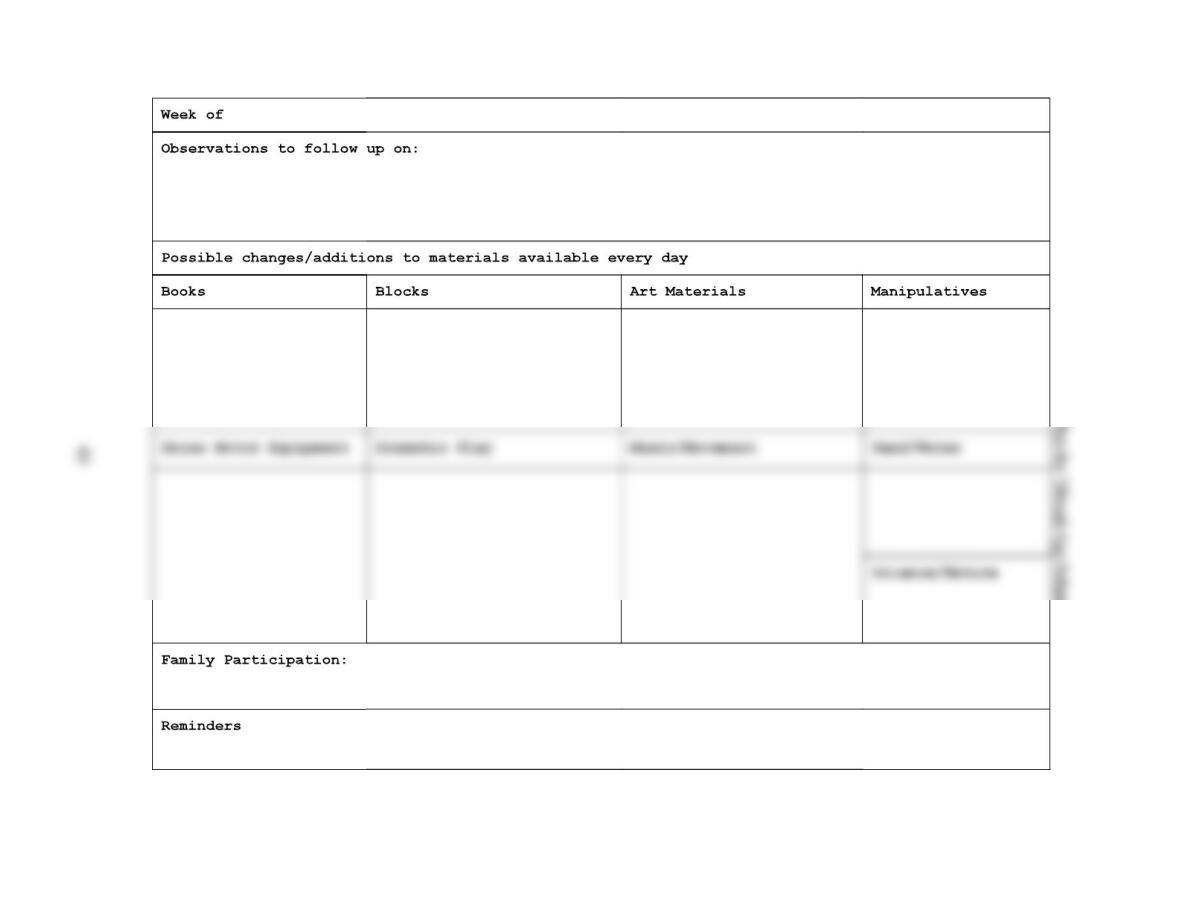
Handout 12.1 Weekly Activity Plan for Mixed-Age Infant-Toddler Room
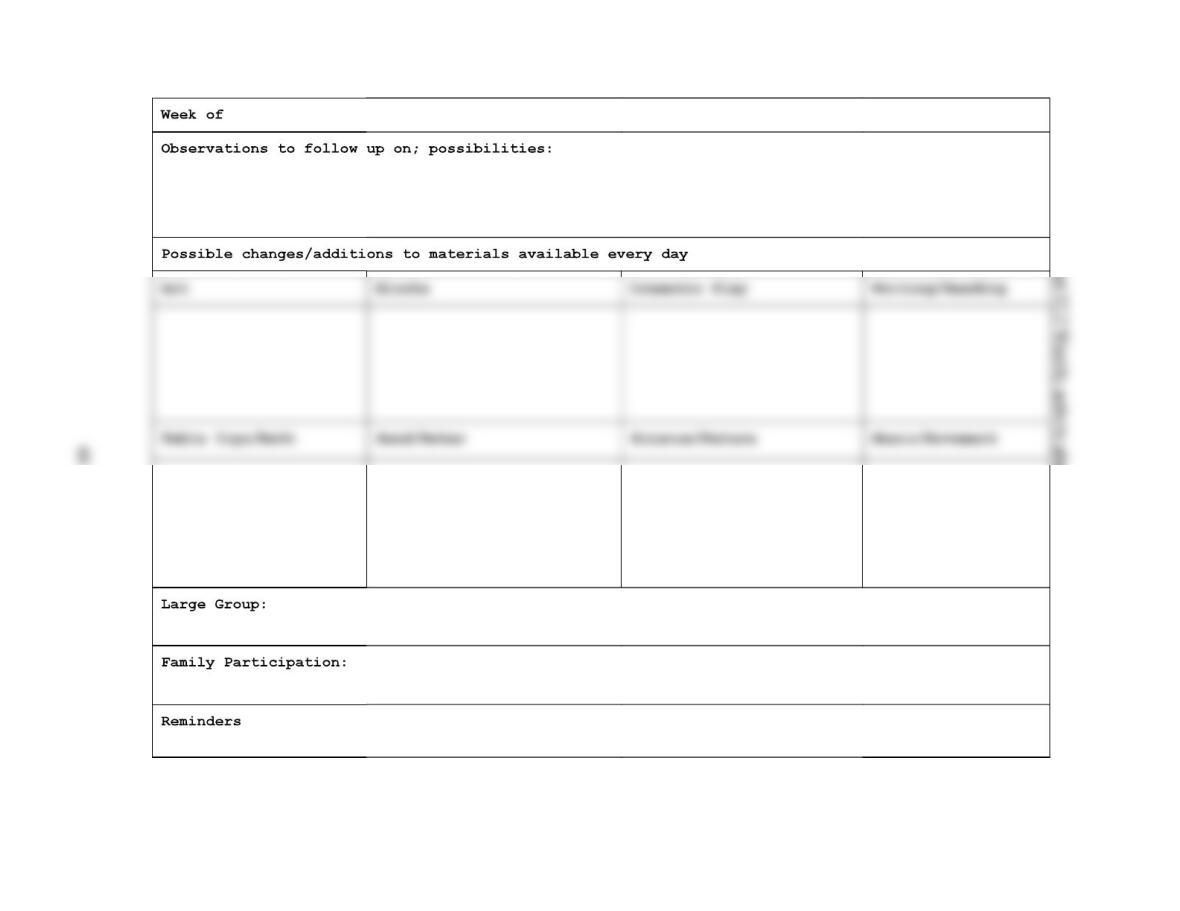
Handout 12.2 Weekly activity plan for 3- to 5-year-old children