Instructor Resource
Rowe, Cases in Leadership 5e
SAGE Publications, Inc., 2019
be in a position to nurture the intervention and ensure that it is understood and supported by any
lower levels.
Institutionalization processes
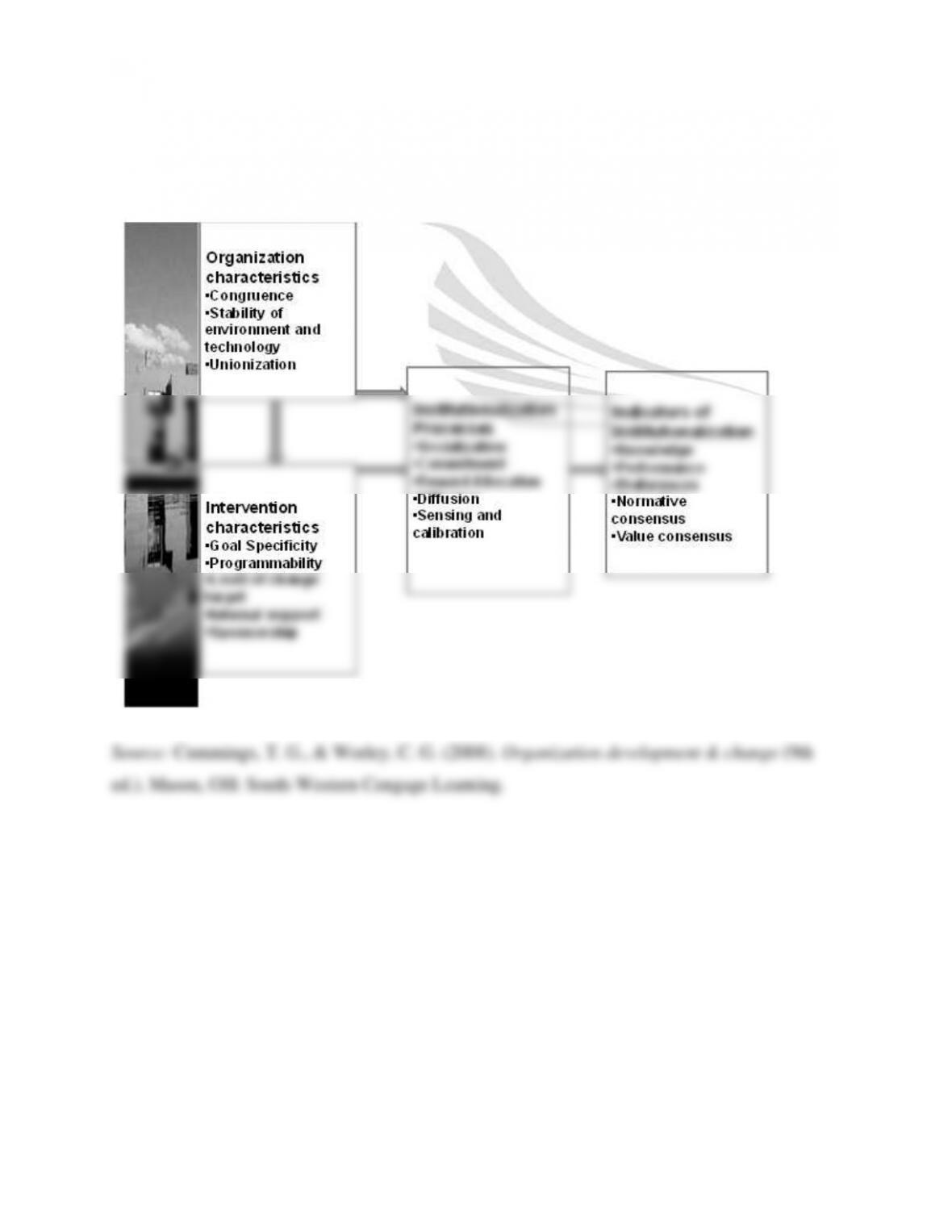
The framework depicted in Exhibit TN-6 shows institutionalization processes that can directly
affect the degree to which interventions are institutionalized, including socialization,
commitment, reward allocation, diffusion, sensing and calibration.17
Change programs require socialization in order to succeed. Such socialization can be
defined as the provision of information about the norms, values, beliefs and preferences
Instructor Resource
Rowe, Cases in Leadership 5e
SAGE Publications, Inc., 2019
attending lower-level Invocom sessions) demonstrated commitment to the intervention.
Maintaining this commitment and involvement is crucial to sustaining momentum.
Various rewards, both intrinsic and extrinsic, can serve to reinforce new behaviours
pertinent to the success of an intervention. Intrinsic rewards are internal and stem from
opportunities to meet challenges and to develop, as well as from the sense of accomplishment
Instructor Resource
Rowe, Cases in Leadership 5e
Indicators of institutionalization
Five factors will, by their presence or absence, play a large role in the persistence of an
intervention: knowledge, performance, preferences, normative consensus and value consensus.
Successful institutionalization depends on the presence of these factors.
Knowledge is dependent on communication as it represents the extent to which members of
the organization are informed about the behaviours associated with an intervention. Knowledge

Instructor Resource
Rowe, Cases in Leadership 5e
SAGE Publications, Inc., 2019
interviews and/or focus groups conducted by independent and external consultants could
probably provide more reliable information on these preferences. As described in the case, the
IPM measurement performed at Medupi revealed positive attitudes of 75 per cent, towards, for
instance, leadership styles, communication, remuneration and employee practices.
Another indicator of institutionalization is normative consensus: this term refers to the
extent to which employees agree on the importance of organizational change. Changes will only
General Discussion
Students could decide whether they agree or disagree with the following statement: “Changes
have been institutionalized at Medupi and will persist even when the main sponsor (the project
director) leaves.”
They could be divided into two groups for the debate. This could lead to a valuable
discussion concerning criteria for institutionalization. Students could also put themselves in the

Instructor Resource
Rowe, Cases in Leadership 5e
SAGE Publications, Inc., 2019

Instructor Resource
Rowe, Cases in Leadership 5e
SAGE Publications, Inc., 2019
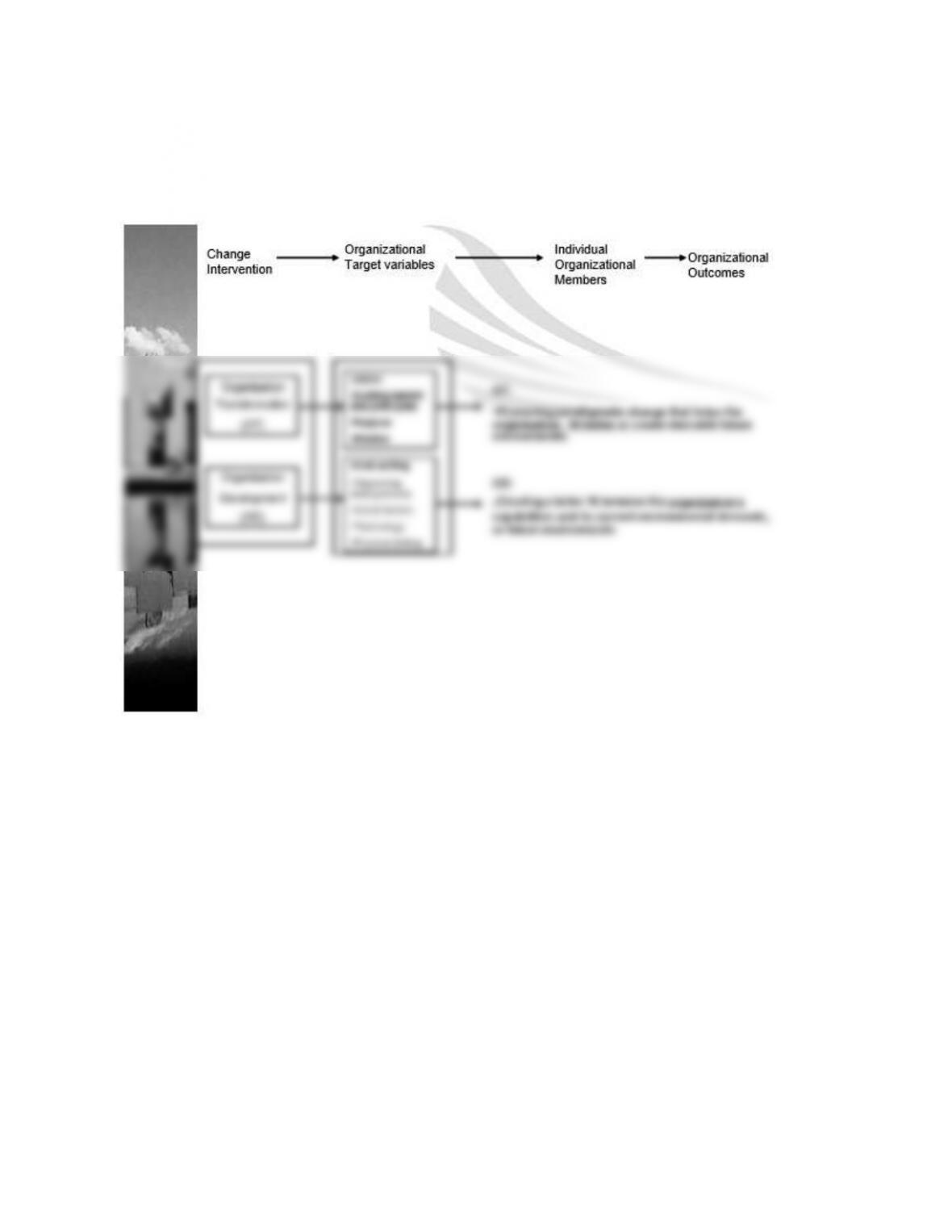
Exhibit TN-1
OD Definition
Instructor Resource
Rowe, Cases in Leadership 5e
SAGE Publications, Inc., 2019
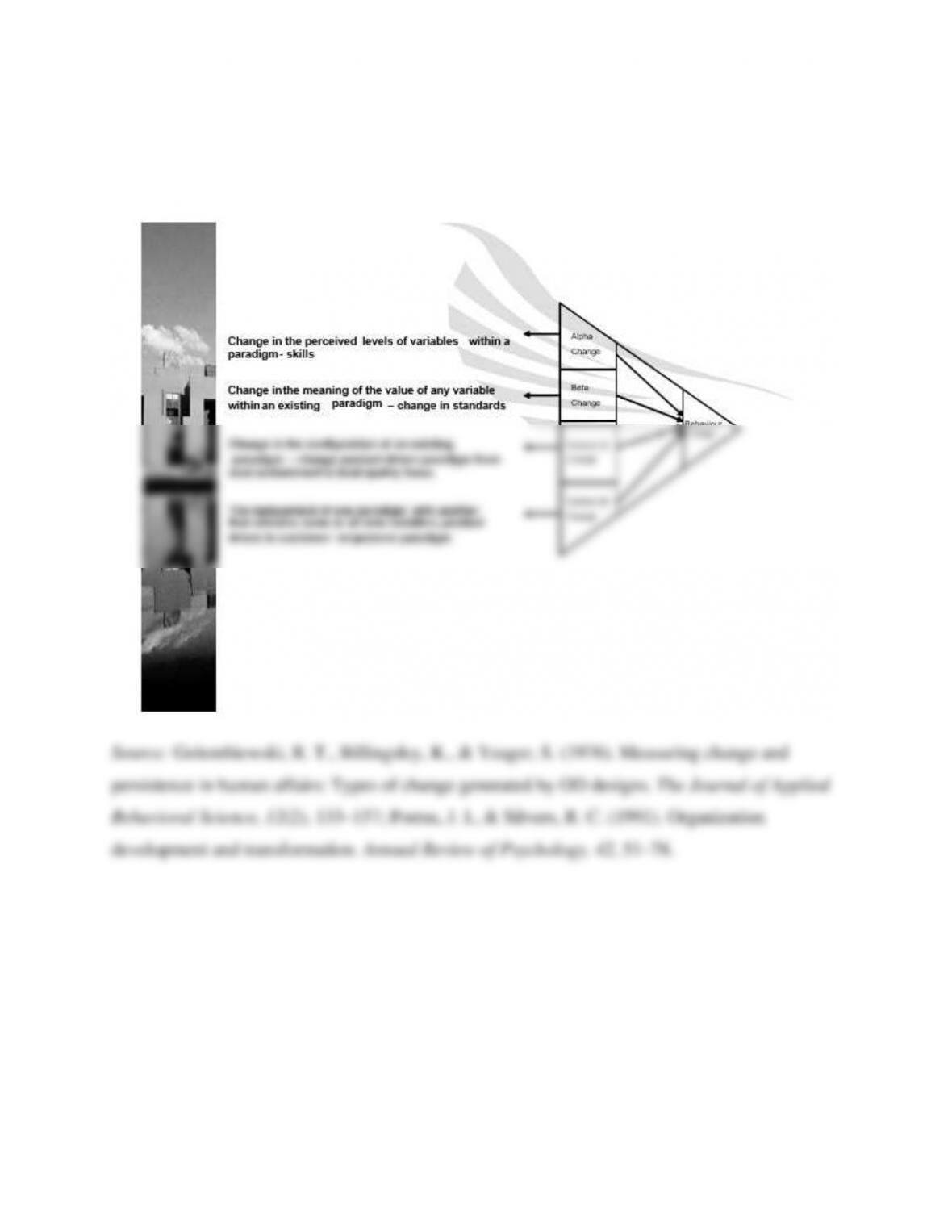
Exhibit TN-2
Organization Development and Transformation
Source: Porras, J. I., & Silvers, R. C. (1991). Organization development and transformation.
Annual Review of Psychology, 42, 51–78.
Instructor Resource
Rowe, Cases in Leadership 5e
SAGE Publications, Inc., 2019
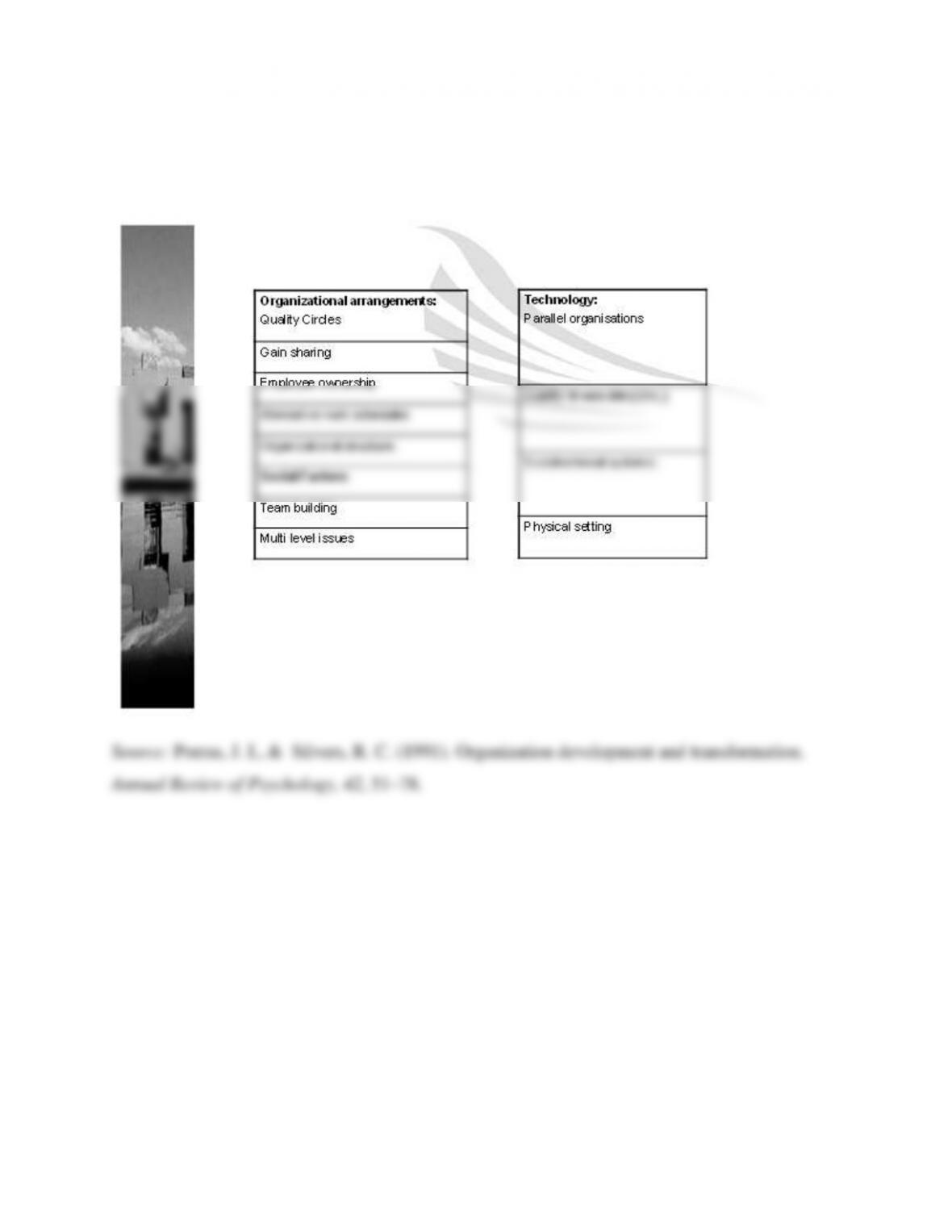
Exhibit TN-3
Types of Behaviour Change
Instructor Resource
Rowe, Cases in Leadership 5e
SAGE Publications, Inc., 2019
Exhibit TN-4
Examples of Organization Development Interventions

Instructor Resource
Rowe, Cases in Leadership 5e
SAGE Publications, Inc., 2019
Exhibit TN-5
Kotter’s 8 Steps to Transform Organizations
Instructor Resource
Rowe, Cases in Leadership 5e
SAGE Publications, Inc., 2019
Exhibit TN-6
Institutionalization Framework