
Management Information Systems, 13TH ED.
MANAGING THE DIGITAL FIRM
Kenneth C. Laudon ● Jane P. Laudon
continued
Learning Track 1: Challenges of Knowledge Management
Systems
Successful deployment of knowledge management systems requires a very clear understanding of
Opportunities
Businesses armed with proprietary knowledge about their customers and operations have what could
be called an “invisible competitive advantage” if this knowledge is not available to competitors and
cannot be purchased by others in the marketplace. For that reason, knowledge management systems
can be a source of tremendous value if they enable firms to further leverage that knowledge.
Management Challenges
Proving the quantitative benefits of knowledge management projects that deal with intangibles
such as “knowledge” and “collaboration” is often more challenging than other information systems
projects. Information systems that truly enhance the productivity of knowledge workers may be
dicult to build because the manner in which information technology can enhance higher-level
tasks, such as those performed by managers and professionals, is not always clearly understood.
Some aspects of organizational knowledge are tacit, unstructured, and not easily captured or codi-
fied. Only certain kinds of information problems are appropriate for intelligent techniques.
Research conducted in the past five years on knowledge management projects has uncovered a
number of diculties in implementing knowledge management systems. Among these diculties
are the following:
◆ Insucient resources are available to structure and update the content in repositories.
Chapter 11: Managing Knowledge
Chapter 11 Learning Track 1 2
continued
◆ Search engines return too much information, reecting lack of knowledge structure or
taxonomy.
Solution Guidelines
ere are both managerial and technological solutions to these challenges. Communities of prac–
tice are useful in providing motivation to employees and help provide context to knowledge.
Properly designed knowledge taxonomies are also helpful in organizing knowledge. Firms can
revise their employee compensation systems to reward knowledge sharing.
Proper planning and rollout can increase the chances of success for knowledge management proj–
ects. ere are five important steps in developing a successful knowledge management project that
has measurable results:
◆ Develop in stages
◆ Choose a high-value business process
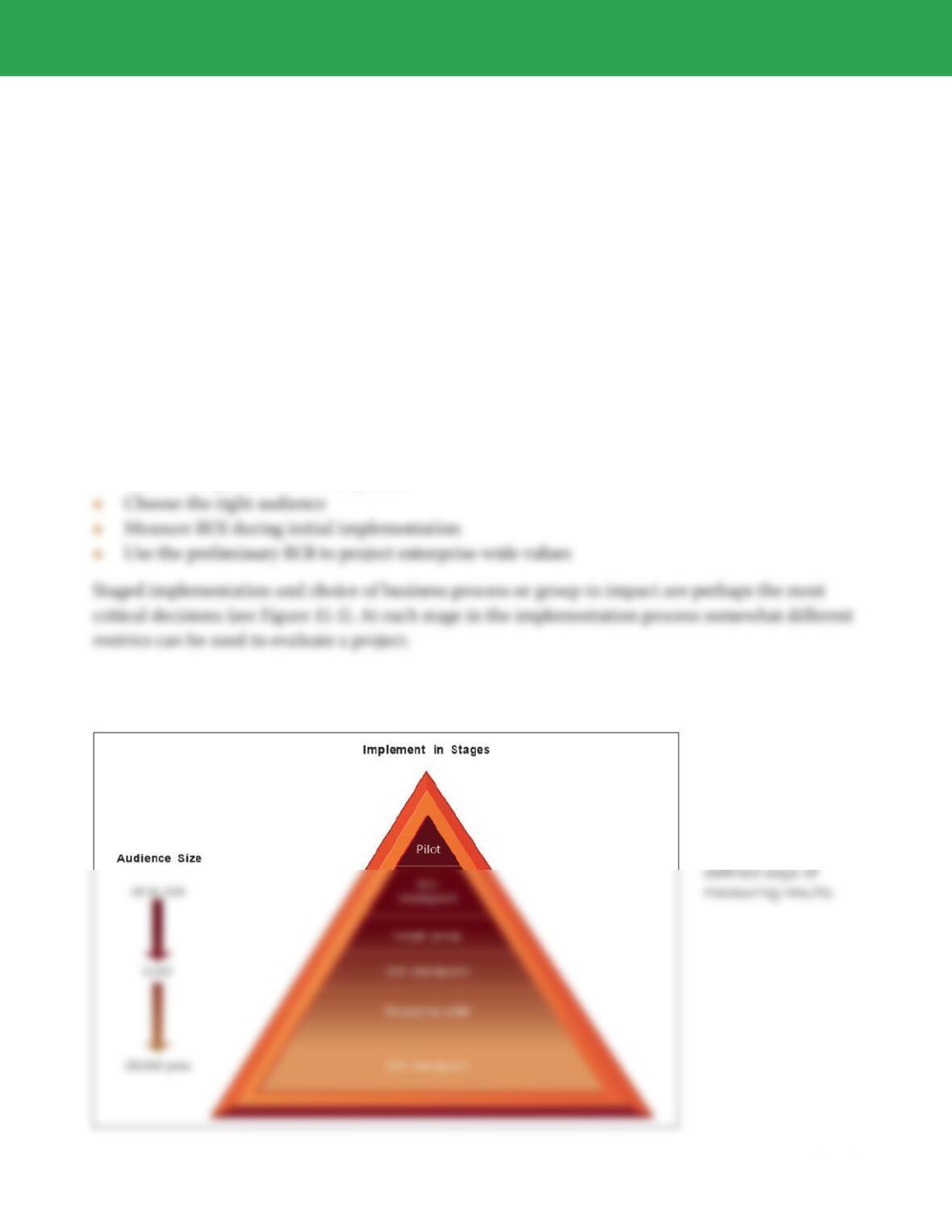
FIGURE 11-1 Implementing Knowledge Management Projects in Stages.
Knowledge manage–
ment projects have
a greater chance of
succeeding if they
are implemented in
stages with clearly

Chapter 11 Learning Track 1 3
continued
TABLE 11-1 Stages for Measuring Value of Knowledge Management Systems
Stage Approach Required Time Data Availability Accuracy
Pilot project Bottom up
Evaluation metrics
Short Usually available Good
In the early stages, bottom–up reports and evaluations from users can be gathered. Users can
be asked to assign a value (either a dollar value or minutes and hours saved during work) to the
various uses they make of the knowledge management system:
◆ Number of conversations viewed
◆ Number of visits
◆ Number signed on to system
◆ Number of answers found in the knowledge base
◆ Number of answers received from expert providers
◆ Average rating of answers (on a scale of 1 to 5)
◆ Number of FAQs requested
In the group implementation stage, a dierent set of top-down measures can be used. Here,
Table 11–2 illustrates one set of results of using these measures for 1,000 users during a 90-day
period. e total savings produced by all of these improvements during that period amounted to

Chapter 11 Learning Track 1 4
TABLE 11-2 Example of Savings from a Knowledge Management System
Metric Assigned Value First 90 Days Results Total Value
Documents shared $450 172 $77,400
In the enterprise-wide implementation stage, other enterprise business process metrics become