Chapter 1: Strategic Management and Strategic Competitiveness
1-4b Mission
A firm’s mission is an externally focused application of its vision that states the firm’s
unique purpose and the scope of its operations in product and market terms.
As with the vision, the final responsibility for forming the firm’s mission rests with the
CEO, though the CEO and other top-level managers tend to involve a larger number of
6
Define stakeholders and describe their ability to influence organizations.
1-5 STAKEHOLDERS
1-5a Classification of Stakeholders
The stakeholder concept reflects that individuals and groups have a “stake” in the strategic
outcomes of the firm because they can be either positively or negatively affected by those
outcomes and because achieving the strategic outcomes may be dependent on the support
or active participation of certain stakeholder groups.
Chapter 1: Strategic Management and Strategic Competitiveness
1-19
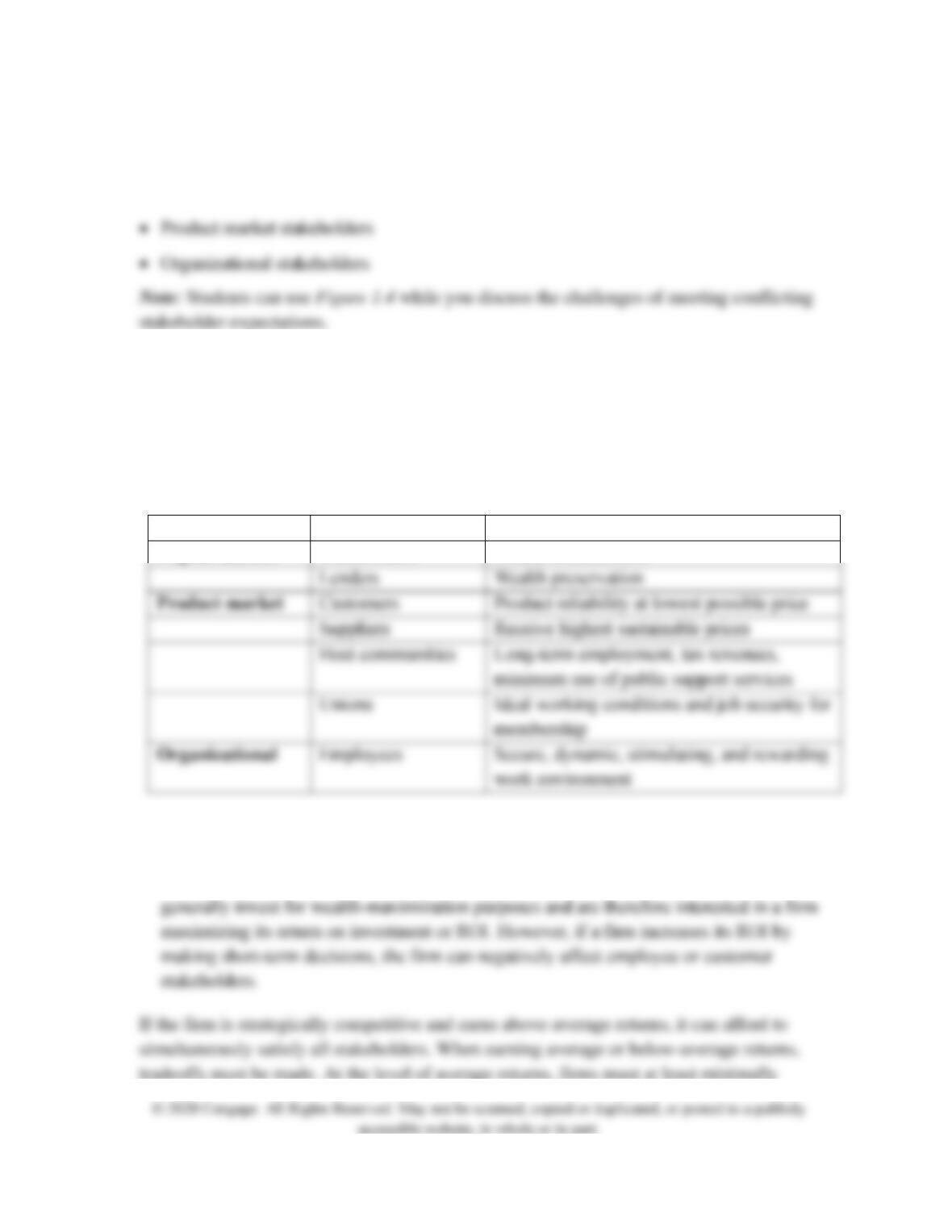
Figure 1.4 provides a definition of a stakeholder and illustrates the three general
classifications and members of each stakeholder group:
• Capital market stakeholders
Teaching Note
The following table was developed from the text’s presentation (and more) to assist you
in organizing a discussion of each stakeholder group’s expectations or demands,
potential conflicts, and stakeholder management strategies.
Stakeholder Groups, Membership, and Primary Expectation or Demand
Stakeholder group
Membership
Primary expectation/demand
Capital market
Shareholders
Wealth enhancement
Product market
Product reliability at lowest possible price
Receive highest sustainable prices
Teaching Note
From reviewing the primary expectations or demands of each stakeholder group, it
becomes obvious that a potential for conflict exists. For instance, shareholders
Chapter 1: Strategic Management and Strategic Competitiveness
satisfy all stakeholders. When returns are below average, some stakeholders can be
minimally satisfied, while others may be dissatisfied.
For example, reducing the level of research and development expenditures (to increase
Teaching Note
Stakeholder management has introduced some interesting notions into business
practice. For example, business schools typically teach that there are three main
stakeholder groups (owners, customers, and employees) and that they should be tended
to in that order. That is, it is important to begin with the idea that the primary purpose
7
Describe the work of strategic leaders.
1-6 STRATEGIC LEADERS
Teaching Note
One way of covering this section is through a series of questions and answers as
presented in the following format.
Chapter 1: Strategic Management and Strategic Competitiveness
1-21
Strategic leaders are people located in different areas and levels of the firm using the
Top managers play decisive roles in firms’ efforts to achieve their desired strategic
outcomes. As organizational strategists, top managers are responsible for deciding how
resources will be developed or acquired, at what cost, and how they will be used or
allocated throughout the organization. Strategists also must consider the risks of actions
under consideration, along with the firm’s vision and managers’ strategic orientations.
1-6a The Work of Effective Strategic Leaders
Though it seems simplistic, performing their role effectively requires strategists to work
hard, perform thorough analyses of available information, be brutally honest, desire high
Chapter 1: Strategic Management and Strategic Competitiveness
8
Explain the strategic management process.
STRATEGIC FOCUS
Strategic Leaders’ Decisions as a Path to Firms’ Efforts to Deal Successfully with
Their Challenges
Rapid and continuous change in the competitive landscape poses a tremendous challenge
Teaching Note
The boxed feature offers several examples of the impact of rapid change. For example,
1-7 THE STRATEGIC MANAGEMENT PROCESS
Teaching Note
The final section of this chapter reviews Figure 1.1 (The Strategic Management
Process), providing both an outline of the process and the framework for the next 12
chapters. Thus, students should refer back to Figure 1.1 as you present the material to
come next.
Chapters 2 and 3 provide more detail regarding the strategic inputs to the strategic
management process: analysis of the firm’s external and internal environments that must
1-23
9)
The final sections of the text, Chapters 10–13, examine actions necessary to effectively
implement strategies. Effective implementation has a significant impact on firm
performance. Topics covered include:
• Methods for governing to ensure satisfaction of stakeholder demands and attainment of
strategic outcomes (Chapter 10)
Teaching Note
Students should realize that none of the chapters stand alone, just as no single step or
facet of the strategic management process stands alone. If the strategic management
ANSWERS TO REVIEW QUESTIONS
1. What are strategic competitiveness, strategy, competitive advantage, above-average
returns, and the strategic management process?
Strategic competitiveness is achieved when a firm successfully formulates and
Chapter 1: Strategic Management and Strategic Competitiveness
2. What are the characteristics of the current competitive landscape? What two factors
are the primary drivers of this landscape?
In the current competitive landscape, the nature of competition has changed. As a result,
managers making strategic decisions must adopt a new mindset that is global in
3. According to the I/O model, what should a firm do to earn above-average returns?
The I/O model suggests that conditions and characteristics of the external environment
Chapter 1: Strategic Management and Strategic Competitiveness
1-25
4. What does the resource-based model suggest a firm should do to earn above-average
returns?
The resource-based model assumes that each firm is a collection of unique resources and
capabilities that provides the basis for its strategy and is the primary source of its
5. What are vision and mission? What is their value for the strategic management
process?
Vision is a picture of what the firm wants to be, and in broad terms, what it wants to
ultimately achieve. Vision is “big picture” thinking with passion that helps people feel
Chapter 1: Strategic Management and Strategic Competitiveness
6. What are stakeholders? How do the three primary stakeholder groups influence
organizations?
Stakeholders are individuals and groups who can affect and are affected by strategic
outcomes achieved and who have enforceable claims on a firm’s performance. In other
7. How would you describe the work of strategic leaders?
Strategic leaders are people located in different parts of the firm using the strategic
management process to help the firm reach its vision and mission. Regardless of their

Chapter 1: Strategic Management and Strategic Competitiveness
1-27
8. What are the elements of the strategic management process? How are they
interrelated?
The parts of the strategic management process (illustrated in Figure 1.1) are strategic
MINI CASE
Starbucks Is Juicing its Earnings per Store Through Technological Innovations
Note: To prepare students for class discussion and to introduce them to the
fundamentals of the Strategic Management process, each chapter Mini-Case is
Teaching Note
Firms that pay attention to technology-related trends are more likely to succeed in
rapidly changing business environments. Technology-related trends and conditions can
be placed into three categories: technology diffusion and disruptive technologies, the
information age, and increasing knowledge intensity. Through these categories,
technology is significantly altering the nature of competition and contributing to highly
dynamic competitive environments.
Chapter 1: Strategic Management and Strategic Competitiveness
Answers to Case Discussion Questions
1. What competitive advantage or competitive advantages do you believe Starbucks seeks to
establish? What are the main challenges the firm faces as it tries to maintain the
advantage or advantages you identified?
Starbucks is easily the most widely recognized brand of coffee and coffee store the world
2. Identify three or four capabilities you believe Starbucks possesses. Of these, are any a
core competence? If so, explain your reasoning.
Several key capabilities are described in the case. First, Starbucks is dedicated to utilizing
3. Starbucks’s mission is “To inspire and nurture the human spirit—one person, one cup and
one neighborhood at a time.” What actions do you recommend the firm take to reach this
mission?
Given the size of the organization, it would be easy for Starbucks to become an
various neighborhoods or regions. Students will probably offer additional suggestions.
4. As Starbucks’s new chief executive officer and strategic leader, what key challenges does
Kevin Johnson and his firm face?
As a global corporation, Starbucks must face the challenges of meeting the widely
Chapter 1: Strategic Management and Strategic Competitiveness
ADDITIONAL QUESTIONS AND EXERCISES
The following questions and exercises can be presented for in-class discussion or assigned
as homework.
Application Discussion Questions
1. Business success is often tied to effectively managed strategies. Using the Internet, study
Starbuck’s current performance. Based on analysis, do you judge Starbucks to be a
success? Why or why not?
4. Are you a stakeholder at your university or college? If so, of what stakeholder group or
groups are you a part?
5. Think of an industry in which you want to work. In your opinion, which of the three
primary stakeholder groups is the most powerful in that industry today? Why? Which do
Ethics Questions
1. Can a firm achieve a competitive advantage and, thereby, strategic competitiveness
without acting ethically? Explain.
5. Can ethical issues be integrated into a firm’s vision and mission? Explain.
Chapter 1: Strategic Management and Strategic Competitiveness
30
INSTRUCTOR’S NOTES FOR MINDTAP
Cengage offers additional online activities, assessments and resources inside MindTap,
our online learning platform. Here is a comprehensive listing of the activities available
within each chapter of MindTap for Hitt, Ireland Hoskisson’s Strategic Management:
Competitiveness and Globalization, 13th edition:
Course Level Resource: Cornerstone to Capstone Diagnostic- features short quizzes in
the key business areas of: Finance, Marketing, Accounting, Management and Economics.
Chapter Level Resources:
• What Would You Do Video
• MindTap Reader (eBook)
• Assignments:
o Multiple Choice Quiz
o Video Quiz
Course Level Case Resources:
• Text Cases (Readings)

Chapter 1: Strategic Management and Strategic Competitiveness
1-31
ADDITIONAL INFORMATION FOR SELECT MINDTAP RESOURCES:
WHAT WOULD YOU DO? LULULEMON
This exercise introduces students to strategic decisions as they are made in the real world.
Students should come to class prepared to discuss this exercise, and why they chose the
answer they did. All answers are graded as correct – the point of the exercise is to engage
your student’s interest.
Students read a brief case about Lululemon and have to decide how they would help
no single best answer to strategy questions.
VIDEO QUIZ: LULULEMON
The media quiz offers additional opportunities for students to apply the concepts in the
chapter to a real-world scenario as it is described in news reports.
Title: Lululemon
RT: 2:10
Topic Key: Strategic Competitiveness, Strategy, Strategic Leaders
Laurent Potdevin, chief executive officer at Lululemon Athletica Inc., talks about the
Suggested Discussion Questions and Answers
• What are the two types of competitors Potdevin describes, and how does Lululemon have
a unique competitive advantage over both of them?
Chapter 1: Strategic Management and Strategic Competitiveness
• Potdevin also touches upon one of Lululemon’s important strategies, which is the “vertical
model” by which he means that the company sells direct to consumers through branded
stores. What advantages does this strategy offer?
Potdevin explains that the vertical model allows Lululemon to be “the best in the
GUIDED CASE: STARBUCKS
This auto-graded activity asks students to read the short end-of-chapter case on Starbucks,
and answer questions in the areas of Analysis, Strategy, and Implementation &
Performance.
Starbucks is arguably the world’s most widely recognized brand of coffee. In 2017, long–
time CEO Howard Schultz stepped down, and Kevin Johnson, a Microsoft veteran,
assumed the role. Since then, while other brick-and-mortar stores have seen declines,
GROUP PROJECT: THE HEART OF PLANNING: A NON–
PROFIT ORGANIZATION
In this student team exercise, students will practice the analysis and strategy formulation
portion of the strategic management process for a non-profit organization. Students will
analyze organizational stakeholders, develop a mission and vision, and consider a strategic
initiative. Students will have the opportunity to practice valuable strategic management
skills, including research, critical thinking, and teamwork. Students have been asked to
Chapter 1: Strategic Management and Strategic Competitiveness
1-33
Students will be asked to:
• Develop a mission and vision.