Chapter 1
Engineering and Management
DISCUSSION QUESTIONS
1-1. Q: The precursors of today’s engineers listed in the quotation from Wickenden had no classes and
few or no books from which to learn scientific principles. How can you explain their success?
1-2.
A: Certainly there was a great deal of trial and error, and lessons learned were passed on through
long apprenticeship to the masters of such knowledge as existed in the field. Knowledge migrated
1-2. Q: Compare how well engineering and management satisfy the several parts of the definition of a
profession.
A: Engineering clearly meets all of the criteria of a profession. One might argue that engineering
is not as consistent in establishing and self-policing ethical standards nor as unwavering in the
1-3. Q: Why is it so difficult to answer the simple question “How many engineers are there in the
United States?” Is the question “How many physicians are there in the United States” easier?
1-4. Q: Comment on the sensitivity of U.S. engineering employment to a major change in the
Department of Defense budget. What types of engineers would be especially affected?
1-5. Q: What are the similarities in the definitions of management quoted from authors of
management textbooks? Do the definitions provided by business executives differ in any way?
Synthesize your own definition of management.
A: Management textbook definitions typically emphasize the achievement of organizational
1-6. Q: How does the job of supervisor or first-line manager differ from that of a higher manager?
1-7. Q: How does the job of a top manager differ from those of the several levels of middle
management?
1-8. Q: Identify the three types of skills needed by an effective manager as conceived by Robert L.
Katz, and describe how the relative need for them might vary with the level of management.
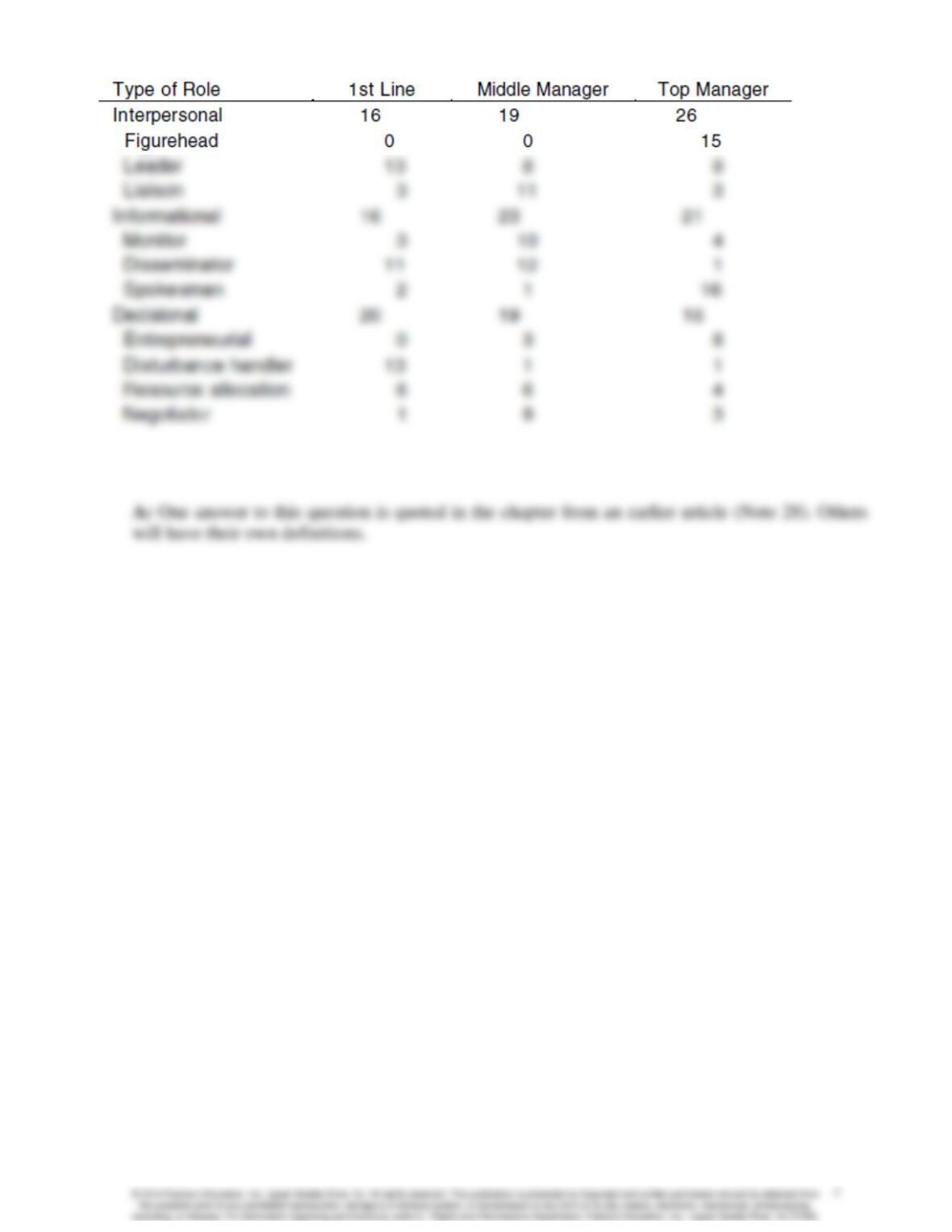
1-9. Q: From the 10 managerial roles provided by Mintzberg, choose three or four that you consider
most important for the first-line manager and explain your selection. Repeat for middle level and
top managers.
A: The responses to this question are, of course, matters of opinion, and will differ with the level
1-10. Q: How would you distinguish between engineering management and management in general?