SA = 0.4000
SM = 0.38
Problem 9-12
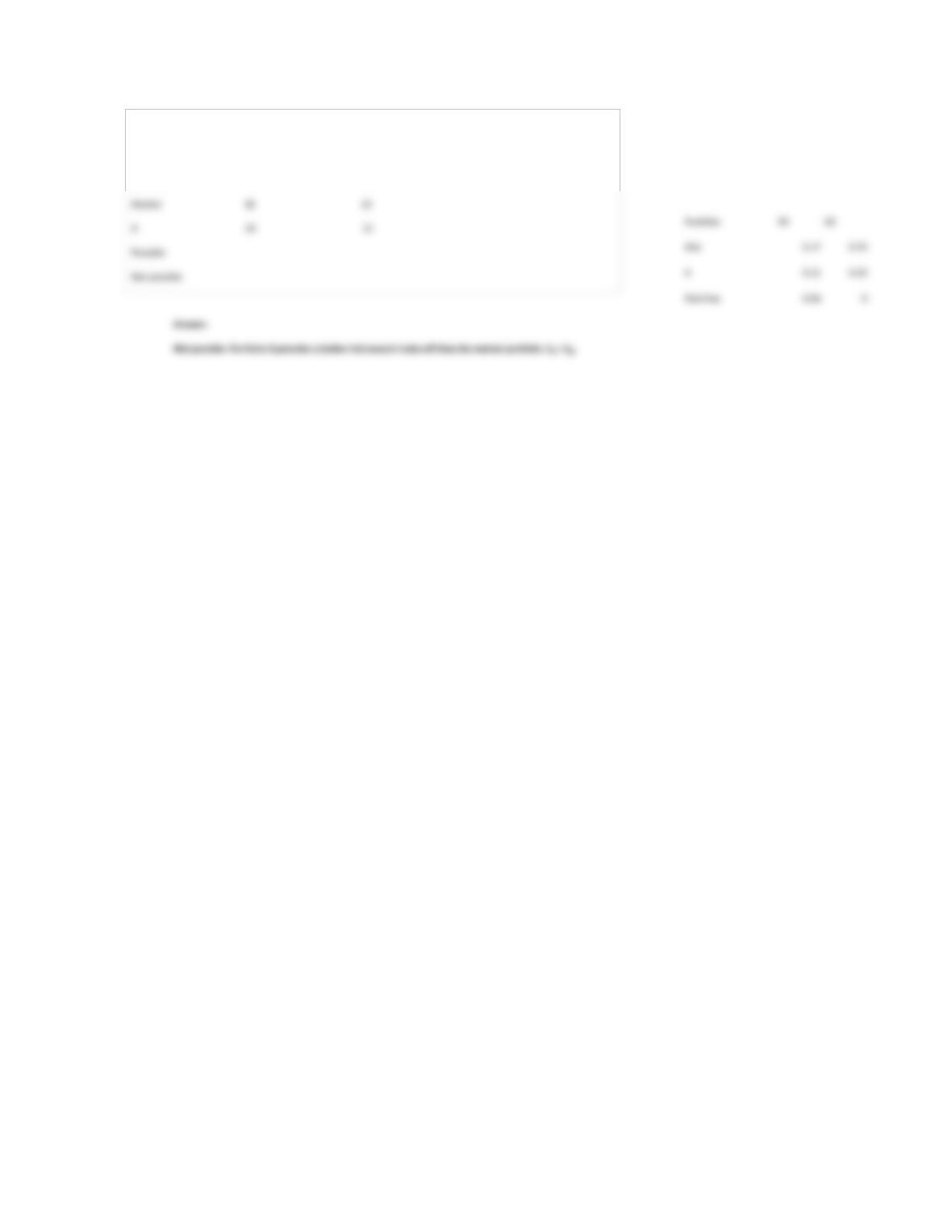
If the simple CAPM is valid, say whether the situation is possible or not?
Portfolio Expected Return Standard Deviation
Risk-free 10 0
Answer:
Problem 9-13
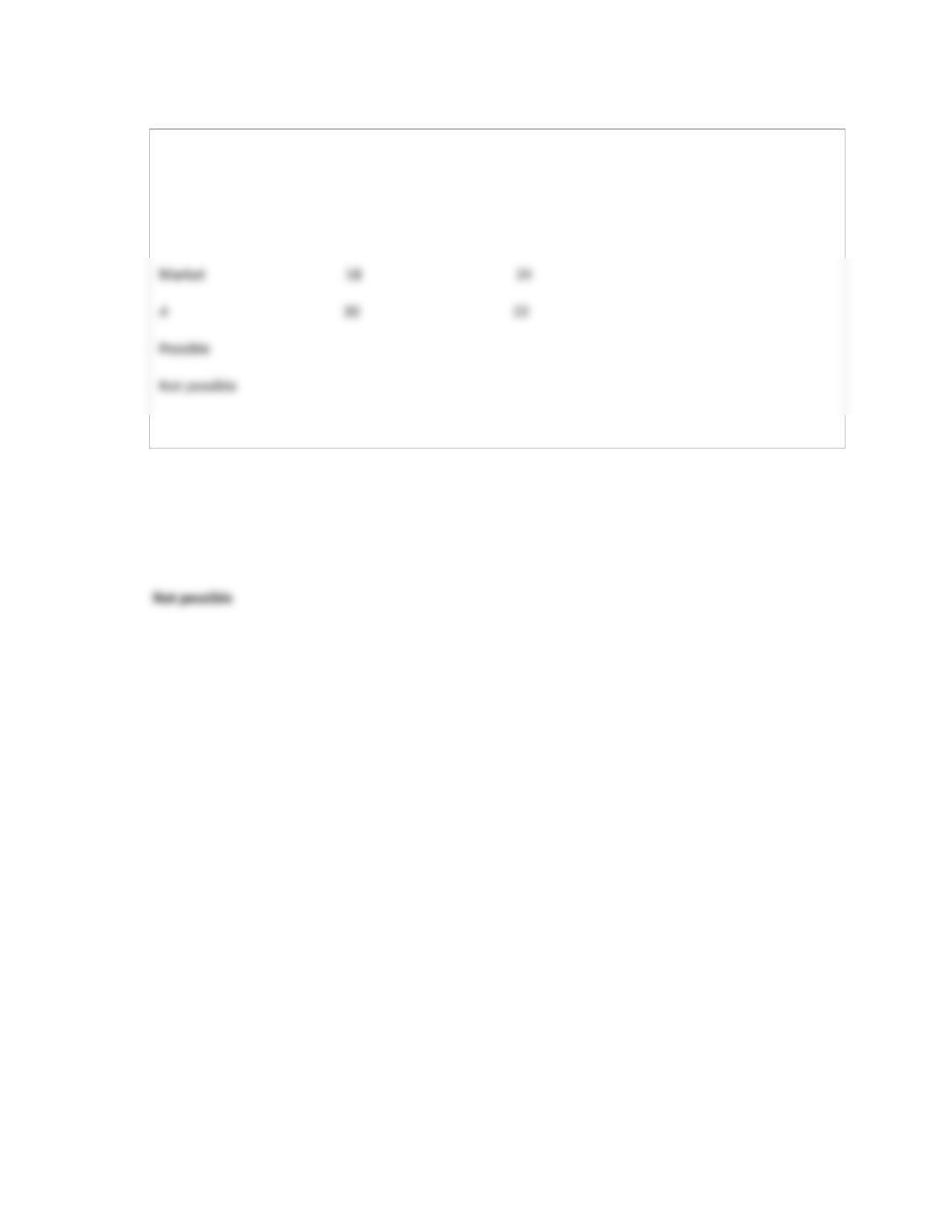
If the simple CAPM is valid, say whether the situation is possible or not?
Portfolio Expected Return Standard Deviation
Risk-free 10 0
E(r) = 0.274
Problem 9-14
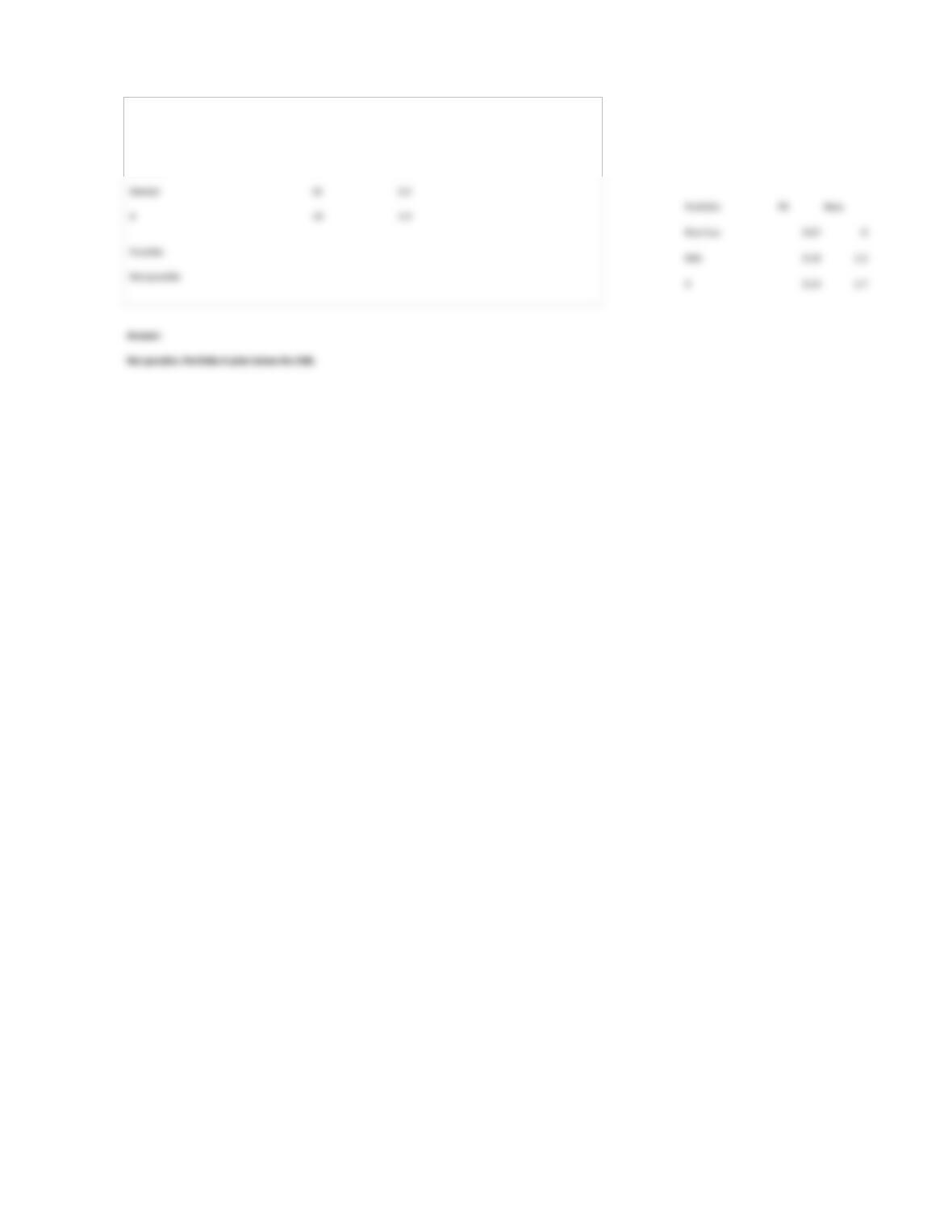
If the simple CAPM is valid, say whether the situation is possible or not?
Portfolio Expected Return Beta
Risk-free 10 0
E(r) = 0.17
Portfolio ER Beta
Problem 9-15
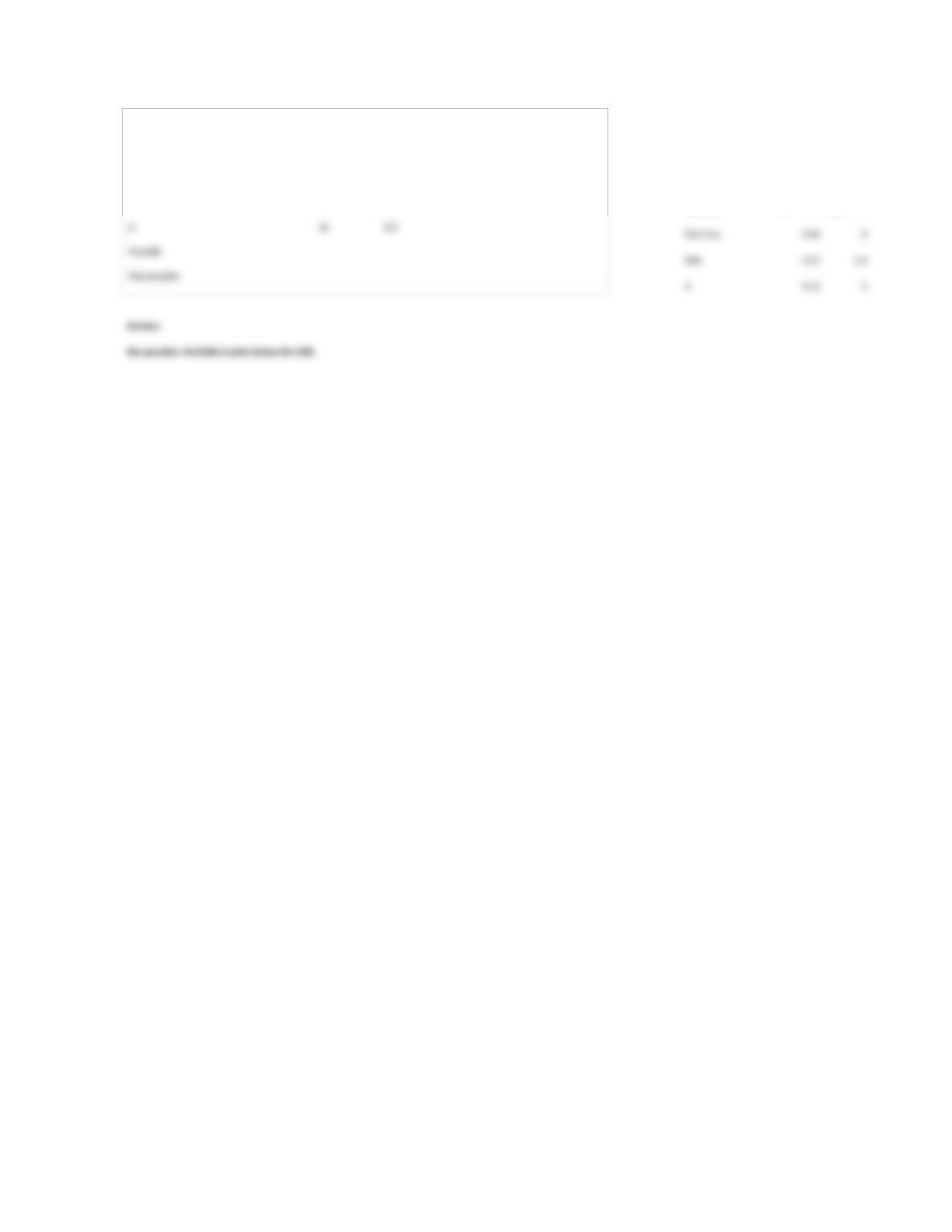
If the simple CAPM is valid, say whether the situation is possible or not?
Portfolio Expected Return Beta
Risk-free 10 0
Market 18 1.0
SA = 0.3571
SM = 0.3333
Problem 9-16
If the simple CAPM is valid, say whether the situation is possible or not?
Portfolio Expected Return Standard Deviation
Risk-free 10 0

E(r)M 0.15
D14
P168.788
P062
Problem 9-17
Assume that the risk-free rate of interest is 6% and the expected rate of return on the market is 16%. A share of stock
sells for $50 today. It will pay a dividend of $6 per share at the end of the year. Its beta is 1.2. What do investors expect
the stock to sell for at the end of the year? (Do not round intermediate calculations. Omit the “$” sign in your
response.)
Inputs:
E(r)M 0.17
D1
P1
P0
Problem 9-18
Assume that the risk-free rate of interest is 6% and the expected rate of return on the market is 16%. I am buying a firm with an
expected perpetual cash flow of $1,000 but am unsure of its risk. If I think the beta of the firm is .5, when in fact the beta is
really 1, how much more will I offer for the firm than it is truly worth? (Do not round intermediate calculations. Round your
answer to 2 decimal places. Omit the “$” sign in your response.)

Inputs
E(r)M 0.16
D1
P1
Problem 9-19
Assume that the risk-free rate of interest is 6% and the expected rate of return on the market is 16%. A stock has an expected
rate of return of 4%. What is its beta? (Negative value should be indicated by a minus sign. Do not round intermediate
calculations. Round your answer to 1 decimal place.)
P0
E(r)S 0.05
Investor #1 Investor #2
b. E(r)M 0.12 0.12
c. E(r)M 0.16 0.16
P1
P0
βS = 1.5 1
a. E(r) 0.21 0.17
c. rf = 0.05 0.05
b. rf = 0.08 0.08
Problem 9-20
Two investment advisers are comparing performance. One averaged a 19% rate of return and the other a 16% rate of return.
However, the beta of the first investor was 1.5, whereas that of the second was 1.
a. Can you tell which investor was a better selector of individual stocks (aside from the issue of general movements in the market)?
First investor
Second investor
Cannot determine
b. If the T-bill rate were 6% and the market return during the period were 14%, which investor would be the superior stock selector?
Fair E (r)0.005
E(r)
P049
P151
D14
rf = 0.05
E(r)M 0.14
Actual E (r)0.122449
Answers:
Problem 9-21
Suppose the rate of return on short-term government securities (perceived to be risk-free) is about 5%. Suppose also
that the expected rate of return required by the market for a portfolio with a beta of 1 is 12%. According to the
capital asset pricing model:
a. What is the expected rate of return on the market portfolio? (Omit the “%” sign in your response.)
b. What would be the expected rate of return on a stock with β = 0? (Omit the “%” sign in your response.)

0.06
E(r)M 0.16
E(r) Zero-beta 0.06
E(r) .?-beta 0.16
Problem 9-22
Suppose that borrowing is restricted so that the zero-beta version of the CAPM holds. The expected return on the market
portfolio is 17%, and on the zero-beta portfolio it is 8%. What is the expected return on a portfolio with a beta of .6? (Do not
round intermediate calculations. Round your answer to 1 decimal place. Omit the “%” sign in your response.)
E(r) Zero-beta = rf = 0.06