Chapter 07: Current Asset Management
Chapter 7
Current Asset Management
Discussion Questions
7-1.
In the management of cash and marketable securities, why should the primary
concern be for safety and liquidity rather than maximization of profit?
Cash and marketable securities are generally used to meet the transaction needs
of the firm and for contingency purposes. Because the funds must be available
when needed, the primary concern should be with safety and liquidity rather
than the maximum profits.
7-2.
Explain the similarities and differences of lockbox systems and regional
collection offices.
Both lockbox systems and regional collection offices allow for the rapid
processing of checks that originate at distant points. The difference is that a
regional collection center requires the commitment of corporate resources and
personnel to staff an office, while a lockbox system requires only the use of a
post office box and the assistance of a local bank. Clearly, the lockbox system
is less expensive.
7-3.
Why would a financial manager want to slow down disbursements?
By slowing down disbursements or the processing of checks against the
corporate account, the firm is able to increase float and also to provide a source
of short-term financing.
7-4.
Use The Wall Street Journal or some other financial publication to find the
going interest rates for the list of marketable securities in Table 7-1 on page
200. Which security would you choose for a short-term investment? Why?
The answer to this question may well depend upon the phase of the business
cycle at the time the question is considered. In normal times, small CDs and
savings accounts may prove adequate. However, in a tight money period, wide
differentials may be established between the various instruments and maximum
returns may be found in Treasury bills, large CDs, commercial paper, and
money market funds.
Chapter 07: Current Asset Management
d. Disregarding your answer to part c and considering the aging schedule for accounts
receivable, should the company be satisfied?
e. What additional information does the aging schedule bring to the company that the
average collection period may not show?
7-11. Solution:
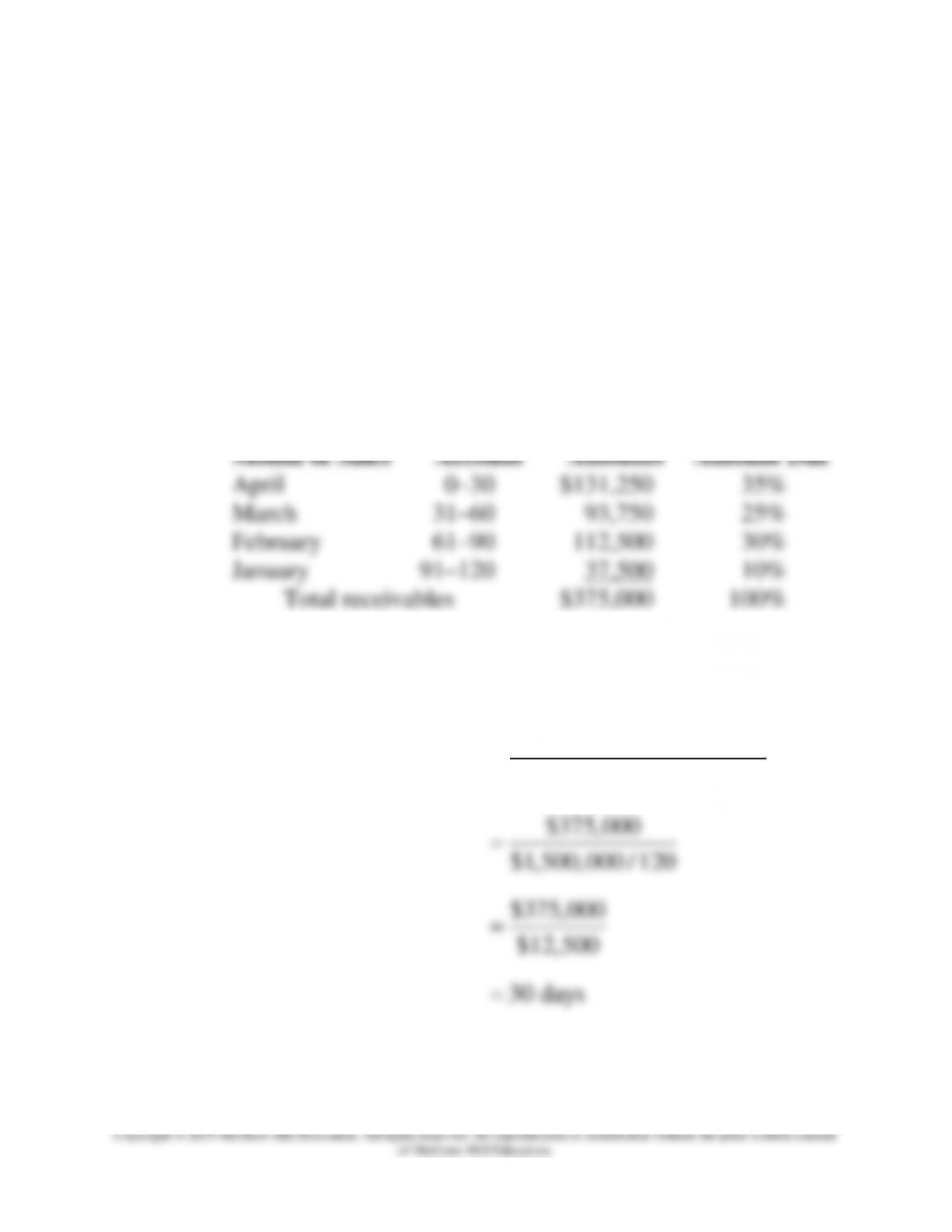
Route Canal Shipping Company
Age of Receivables, April 30, 20X1
a.
(1)
(2)
(3)
(4)
Month of Sales
Age of
Account
Amounts
Percent of
Amount Due
April
0–30
$131,250
35%
March
31–60
93,750
25%
February
61–90
112,500
30%
January
91–120
37,500
10%
Total receivables
$375,000
100%
7-11. (Continued)
b.
Accounts receivable
Average collection period Average daily credit sales
$375,000
$1,500,000 /120
$375,000
$12,500
30 days
=
=
=
=
Chapter 07: Current Asset Management
12. Economic ordering quantity (LO5) Nowlin Pipe & Steel has projected sales of 72,000
pipes this year, an ordering cost of $6 per order, and carrying costs of $2.40 per pipe.
a. What is the economic ordering quantity?
b. How many orders will be placed during the year?
c. What will the average inventory be?
7-12. Solution:
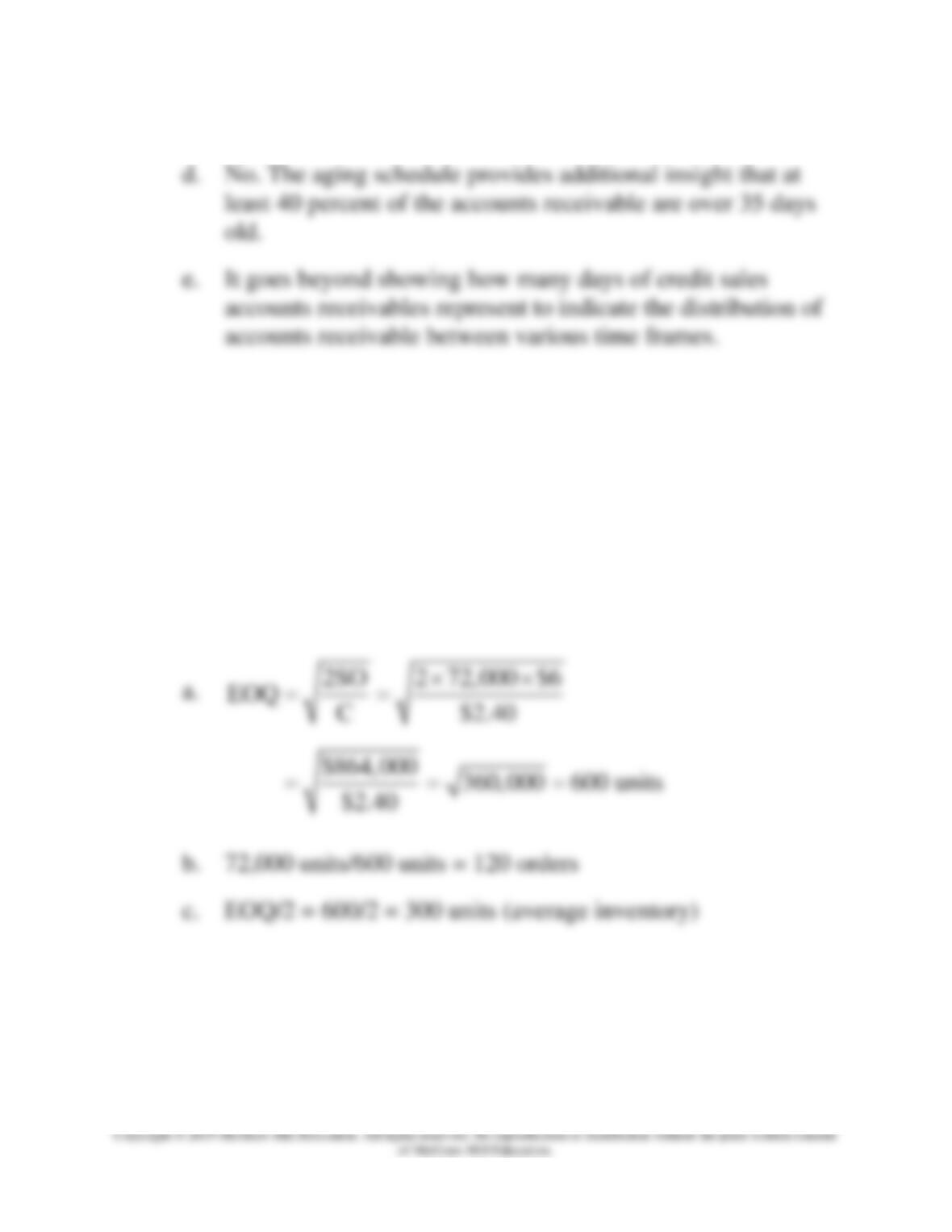
Nowlin Pipe and Steel Company
2SO 2 72,000 $6
13. Economic ordering quantity (LO5) Fisk Corporation is trying to improve its inventory
control system and has installed an online computer at its retail stores. Fisk anticipates
sales of 49,000 units per year, an ordering cost of $8 per order, and carrying costs of $1.60
per unit.
a. What is the economic ordering quantity?
b. How many orders will be placed during the year?
Chapter 07: Current Asset Management
c. What will the average inventory be?
d. What is the total cost of ordering and carrying inventory?
7-13. Solution:
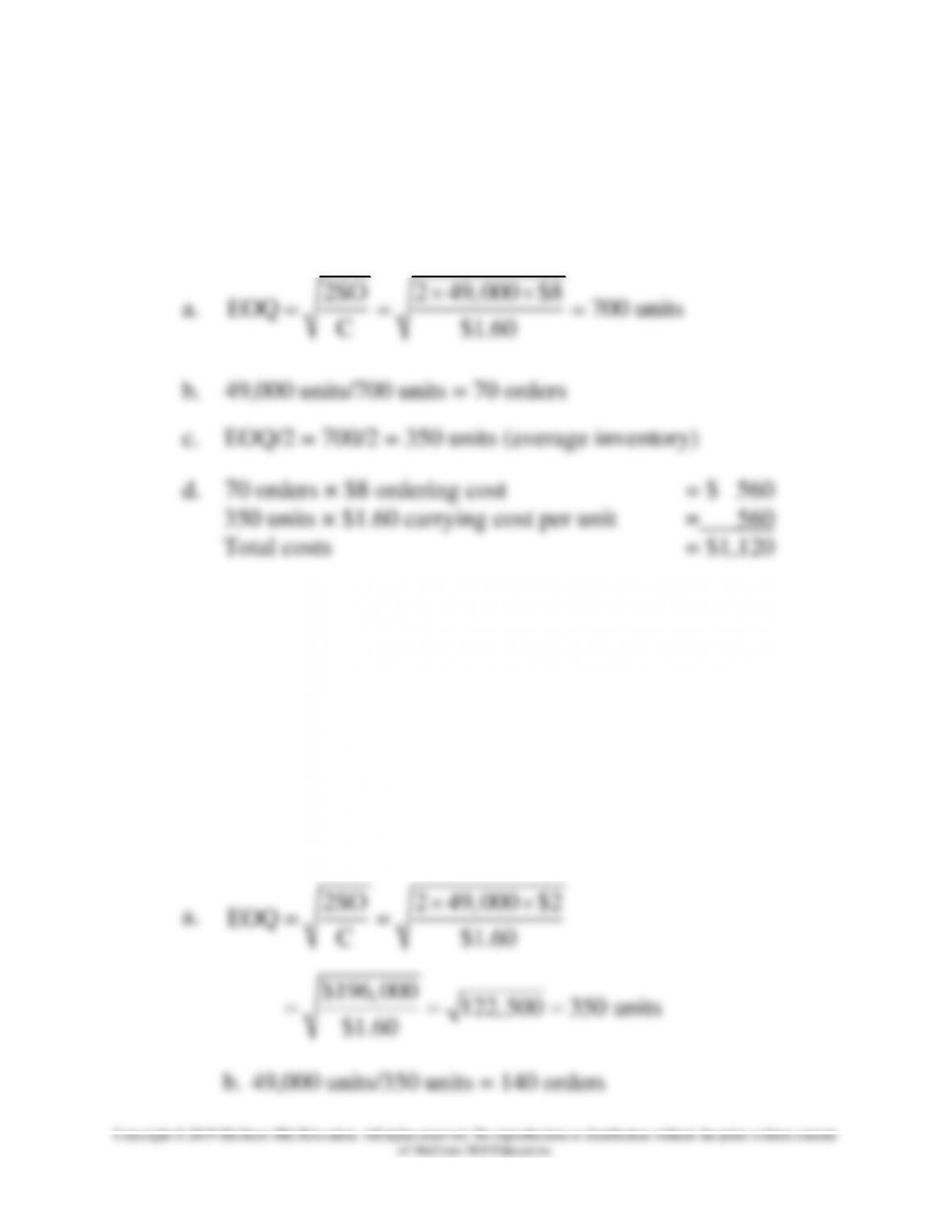
Fisk Corp.
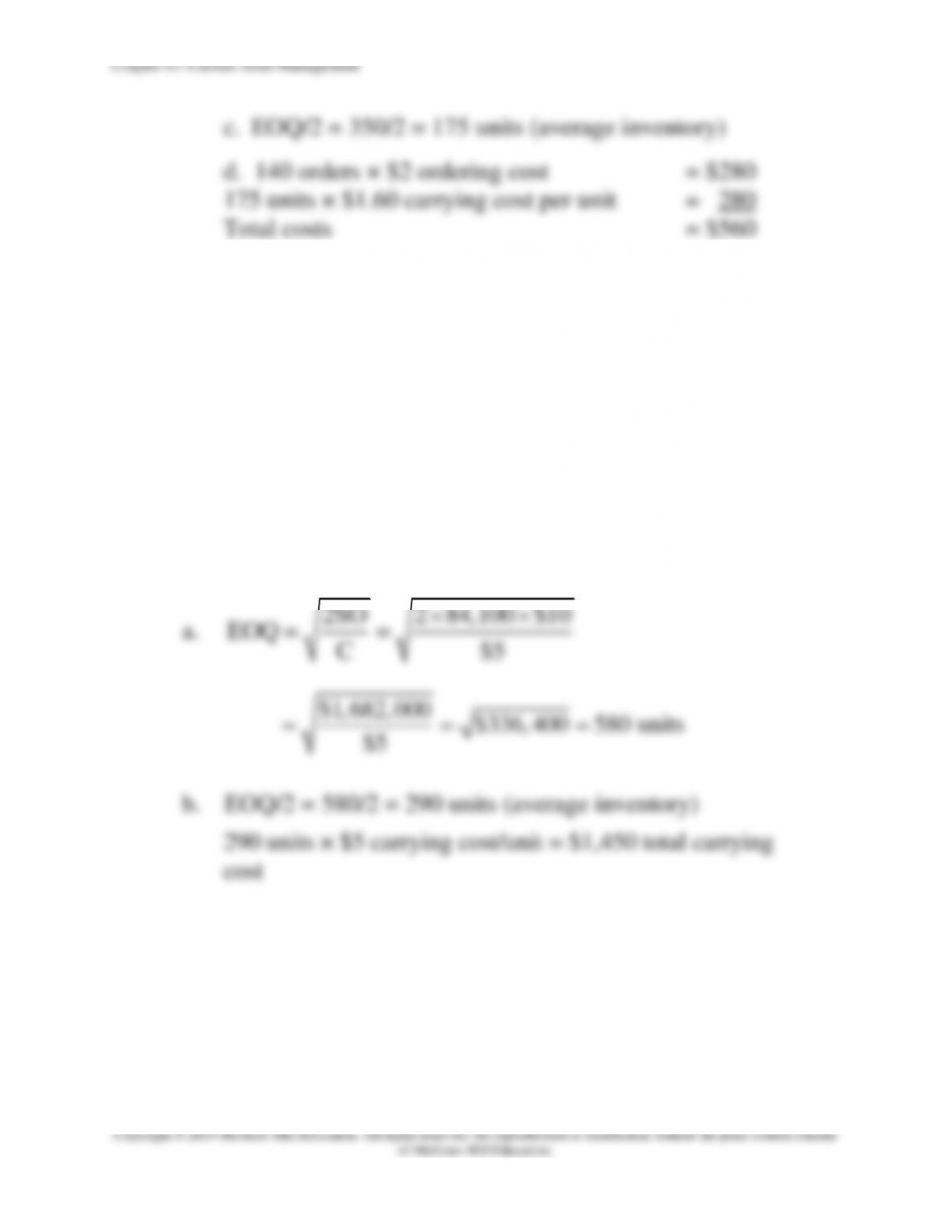
2SO 2 49,000 $8
14. Economic ordering quantity (LO5) Fisk Corporation is trying to improve its inventory
control system and has installed an online computer at its retail stores. Fisk anticipates
sales of 49,000 units per year, an ordering cost of $2 per order, and carrying costs of $1.60
per unit.
a. What is the economic ordering quantity?
b. How many orders will be placed during the year?
c. What will the average inventory be?
d. What is the total cost of ordering and carrying inventory?
7-14. Solution:
Fisk Corp. (Continued)
2SO 2 49,000 $2