Chapter 07: Current Asset Management
Incremental income
$18,525 / $150,000 12.35%
==
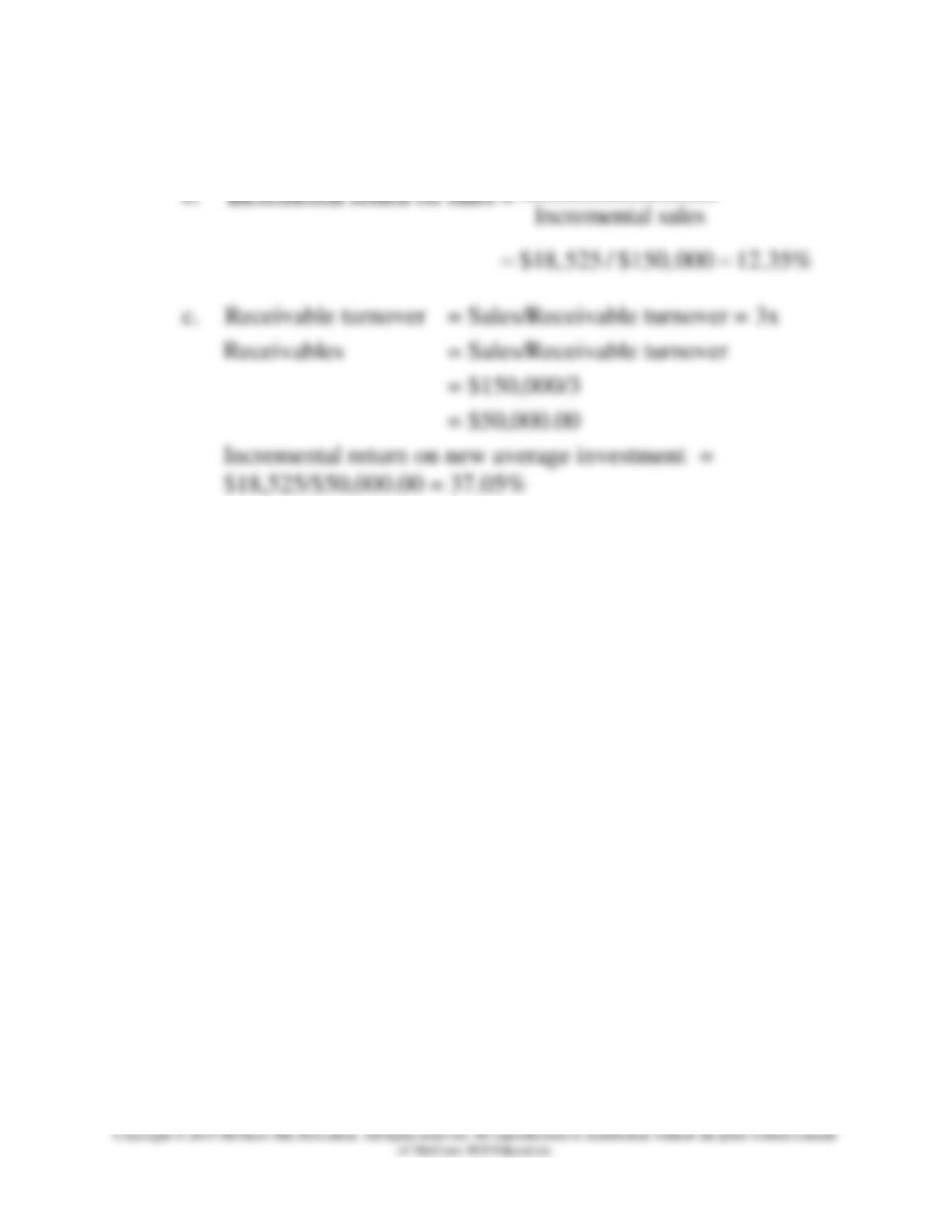
c. Receivable turnover = Sales/Receivable turnover = 3x
Receivables = Sales/Receivable turnover
= $150,000/3
= $50,000.00
Incremental return on new average investment =
$18,525/$50,000.00 = 37.05%
18. Credit policy decision-receivables and inventory (LO4 and 5) Henderson Office Supply
is considering a more liberal credit policy to increase sales, but expects that 9 percent of the
new accounts will be uncollectible. Collection costs are 6 percent of new sales, production
and selling costs are 74 percent, and accounts receivable turnover is four times. Assume
income taxes of 20 percent and an increase in sales of $65,000. No other asset buildup will
be required to service the new accounts.
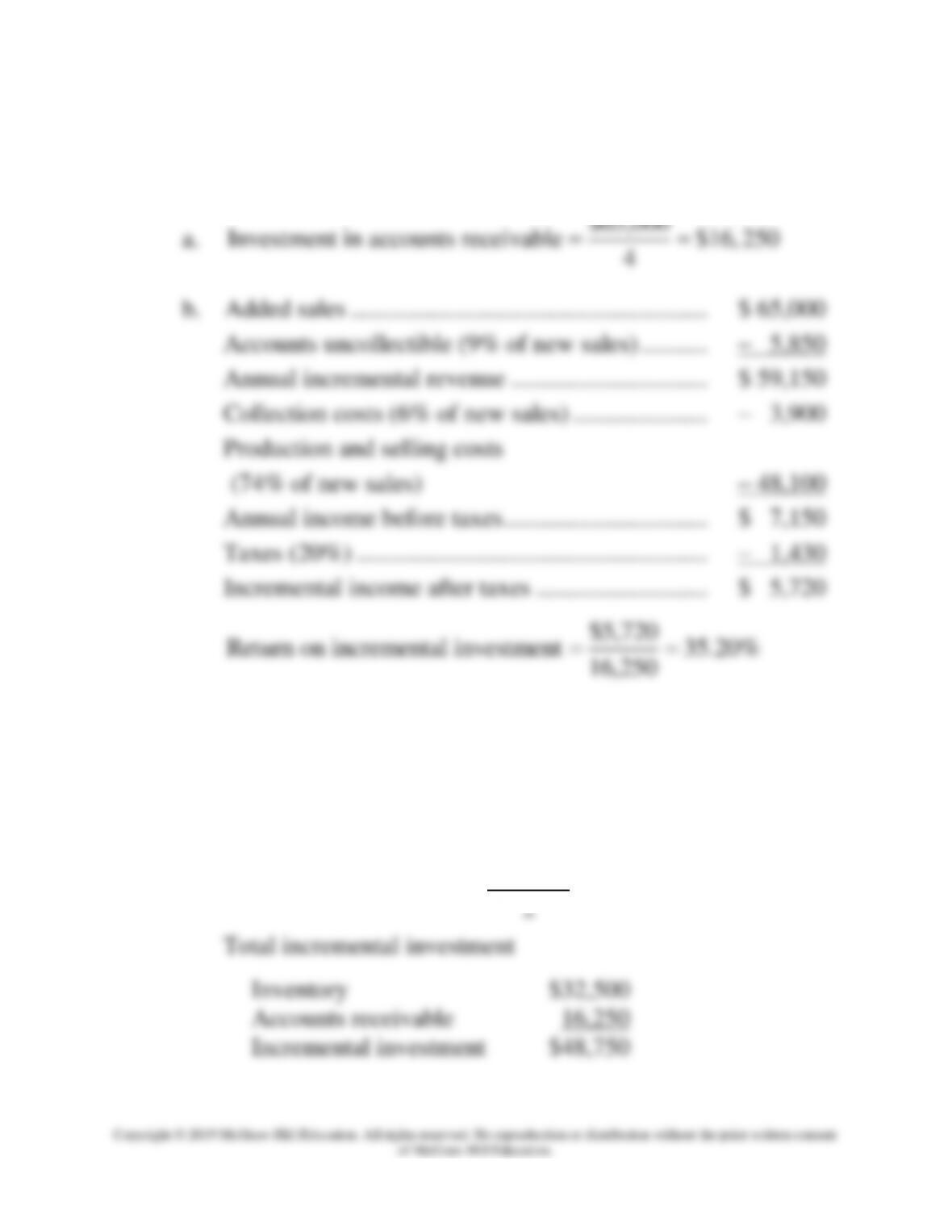
a. What is the level of accounts receivable to support this sales expansion?
b. What would be Henderson’s incremental aftertax return on investment?
c. Should Henderson liberalize credit if a 16 percent aftertax return on investment is
required?
Assume that Henderson also needs to increase its level of inventory to support new sales and
that inventory turnover is two times.
d. What would be the total incremental investment in accounts receivable and inventory
to support a $65,000 increase in sales?
e. Given the income determined in part b and the investment determined in part d,
should Henderson extend more liberal credit terms?
7-18. Solution:
Chapter 07: Current Asset Management
Henderson Office Supply
$65,000
7-18. (Continued)
c. Yes! 35.20 percent exceeds the required return of 16 percent.
d.
$65,000
Investment in inventory = $32,500
2=
Chapter 07: Current Asset Management
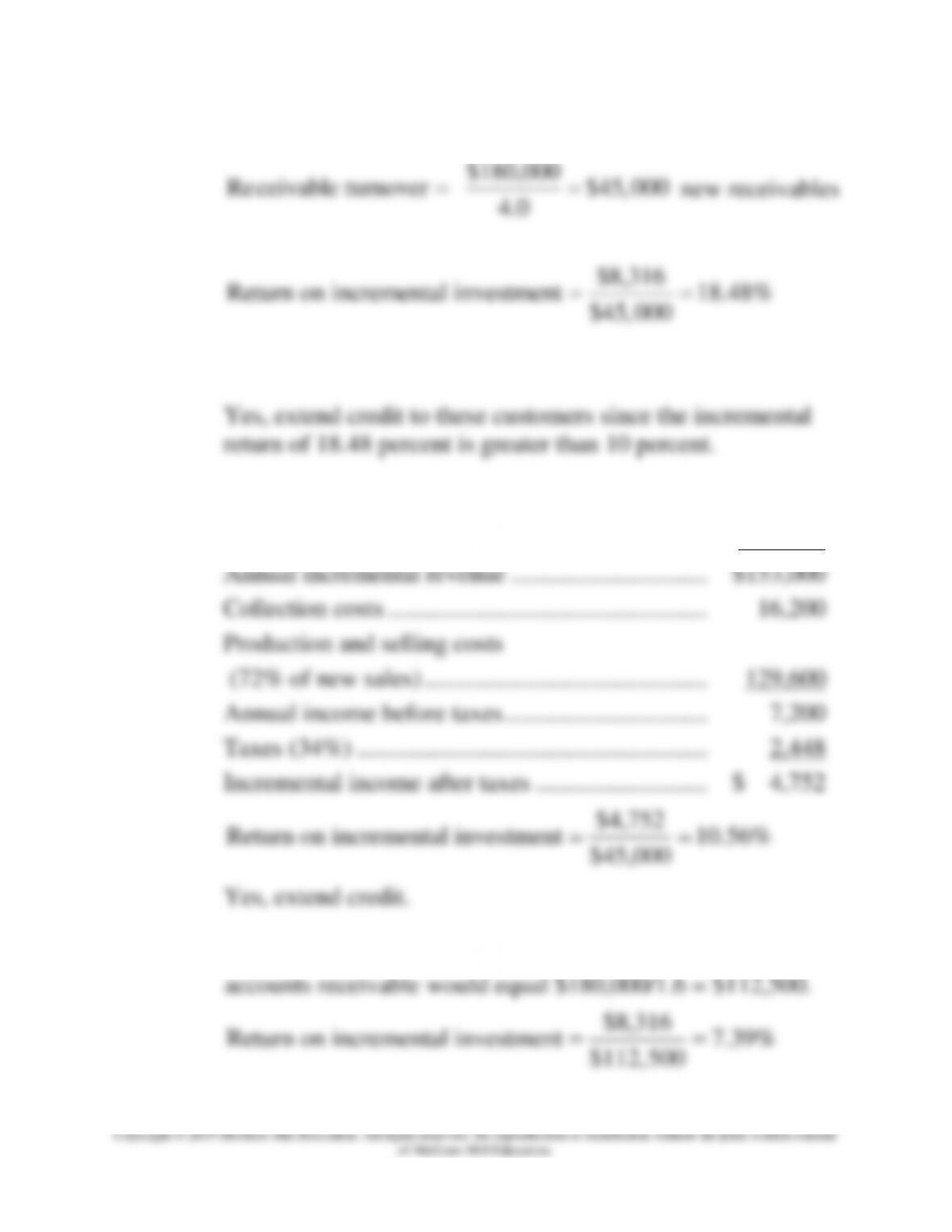
$180,000
Re ceivable turnover $45,000
4.0
$8,316
Return on incremental investment 18.48%
$45,000
==
==
Yes, extend credit to these customers since the incremental
return of 18.48 percent is greater than 10 percent.
b. Added sales …………………………………………………. $180,000
Accounts uncollectible (15% of new sales) ……… 27,000
c. If receivable turnover drops to 1.6x, the investment in
new receivables
Chapter 07: Current Asset Management
which cost 12 percent, by the cash generated from its reduced receivables, what will be the
net gain or loss to the firm? Should it offer the discount?
7-24. Solution:
Sales / 360 days = Average daily sales
$180,000 / 360 = $500
Old receivable balance = $500 × 60 days = $30,000
25. Dome Metals has credit sales of $180,000 yearly with credit terms of net 60 days, which is
also the average collection period. Dome offered a 3 percent discount for payment in 18
days, and Dome reduced its bank loans, which cost 12 percent. Assume that the new trade
terms of 3/18, net 60 will increase sales by 15 percent because the discount makes the
Dome’s price competitive. If Dome earns 20 percent on sales before discounts, what will
be the net change in income? Should it offer the discount?
7-25. Solution:
New sales = $180,000 × 1.15 = $207,000
Change in sales = $207,000 – $180,000 = $ 27,000
Chapter 07: Current Asset Management
COMPREHENSIVE PROBLEM
Logan Distributing Company (receivables and inventory policy) (LO4 and 5) Logan
Distributing Company of Atlanta sells fans and heaters to retail outlets throughout the Southeast.
Joe Logan, the president of the company, is thinking about changing the firm’s credit policy to
attract customers away from competitors. The present policy calls for a 1/10, net 30 cash
discount. The new policy would call for a 3/10, net 50 cash discount. Currently, 30 percent of
Logan customers are taking the discount, and it is anticipated that this number would go up to 50
percent with the new discount policy. It is further anticipated that annual sales would increase
from a level of $400,000 to $600,000 as a result of the change in the cash discount policy.
The increased sales would also affect the inventory level. The average inventory carried by
Logan is based on a determination of an EOQ. Assume sales of fans and heaters increase from
15,000 to 22,500 units. The ordering cost for each order is $200 and the carrying cost per unit is
$1.50 (these values will not change with the discount). The average inventory is based on
EOQ/2. Each unit in inventory has an average cost of $12.
Cost of goods sold is equal to 65 percent of net sales; general and administrative expenses are
15 percent of net sales, and interest payments of 14 percent will only be necessary for the
increase in the accounts receivable and inventory balances. Taxes will be 40 percent of before-
tax income.
a. Compute the accounts receivable balance before and after the change in the cash
discount policy. Use the net sales (total sales minus cash discounts) to determine the
average daily sales.
b. Determine EOQ before and after the change in the cash discount policy. Translate this
into average inventory (in units and dollars) before and after the change in the cash
discount policy.
Chapter 07: Current Asset Management
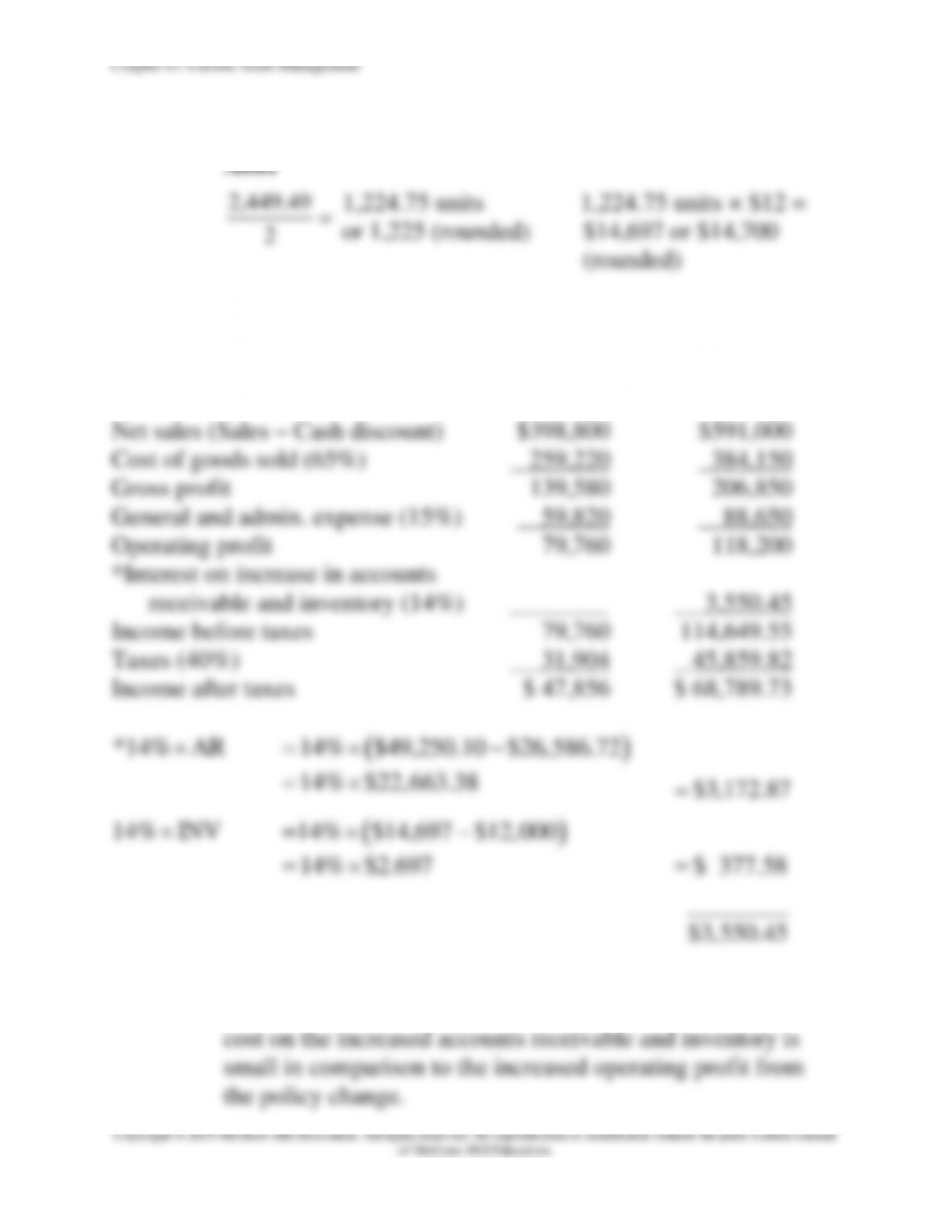
c. Complete the following income statement.
Before Policy
Change
After Policy
Change
Net sales (Sales – Cash discounts) ……………
Cost of goods sold ………………………………….
Gross profit …………………………………………..
General and administrative expense………….
Operating profit ……………………………………..
Interest on increase in accounts
receivable and inventory (14%) …………….
Income before taxes ……………………………….
Taxes ……………………………………………………
Income after taxes ………………………………….
d. Should the new cash discount policy be utilized? Briefly comment.
CP 7-1. Solution:
Logan Distributing Company
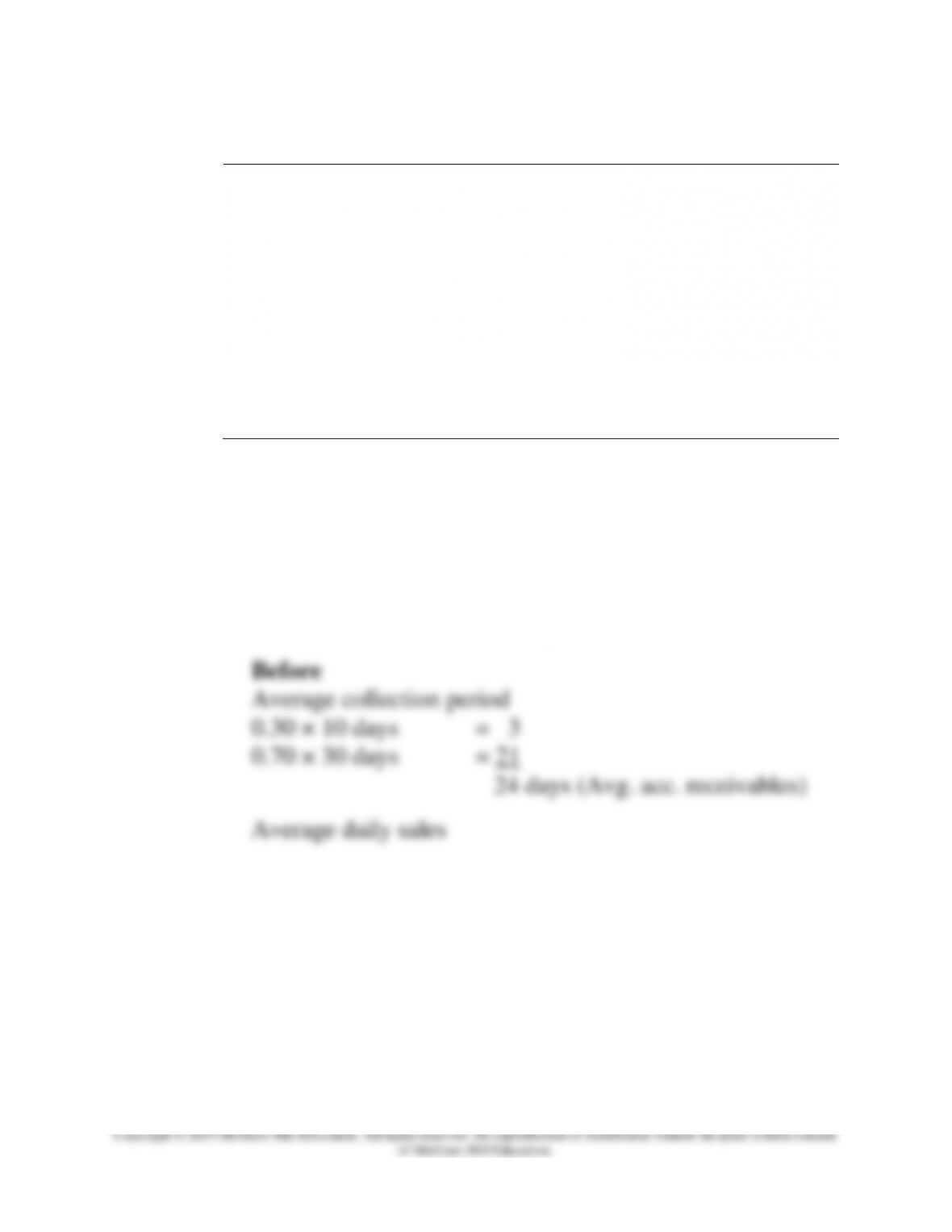
a. Accounts receivable = Average collection × Average daily
period sales
Chapter 07: Current Asset Management
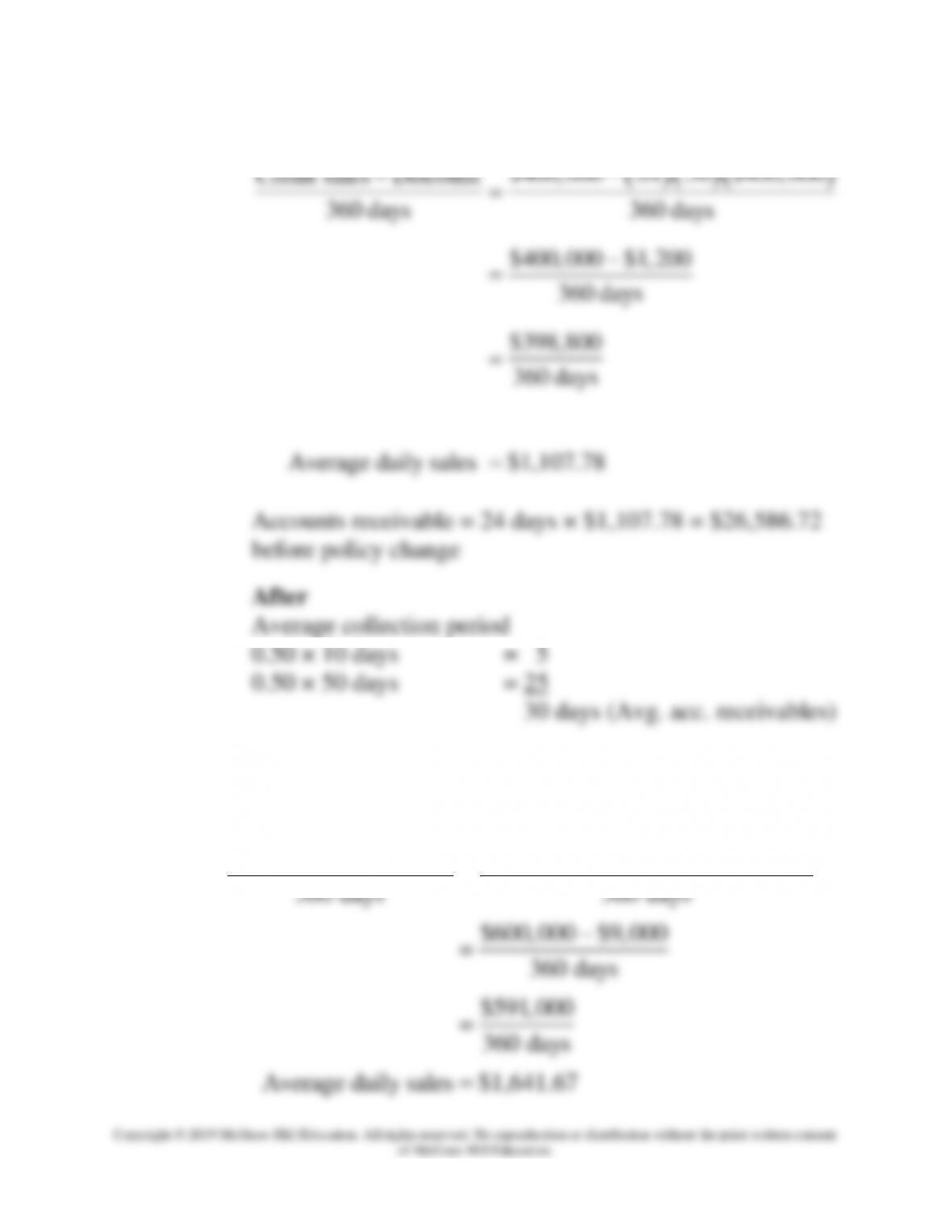
( )( )( )
$400,000 .01 .30 $400,000
Credit sales Discount
360 days 360 days
$400,000 $1,200
360 days
$398,800
360 days
Average daily sales $1,107.78
−
−=
−
=
=
=
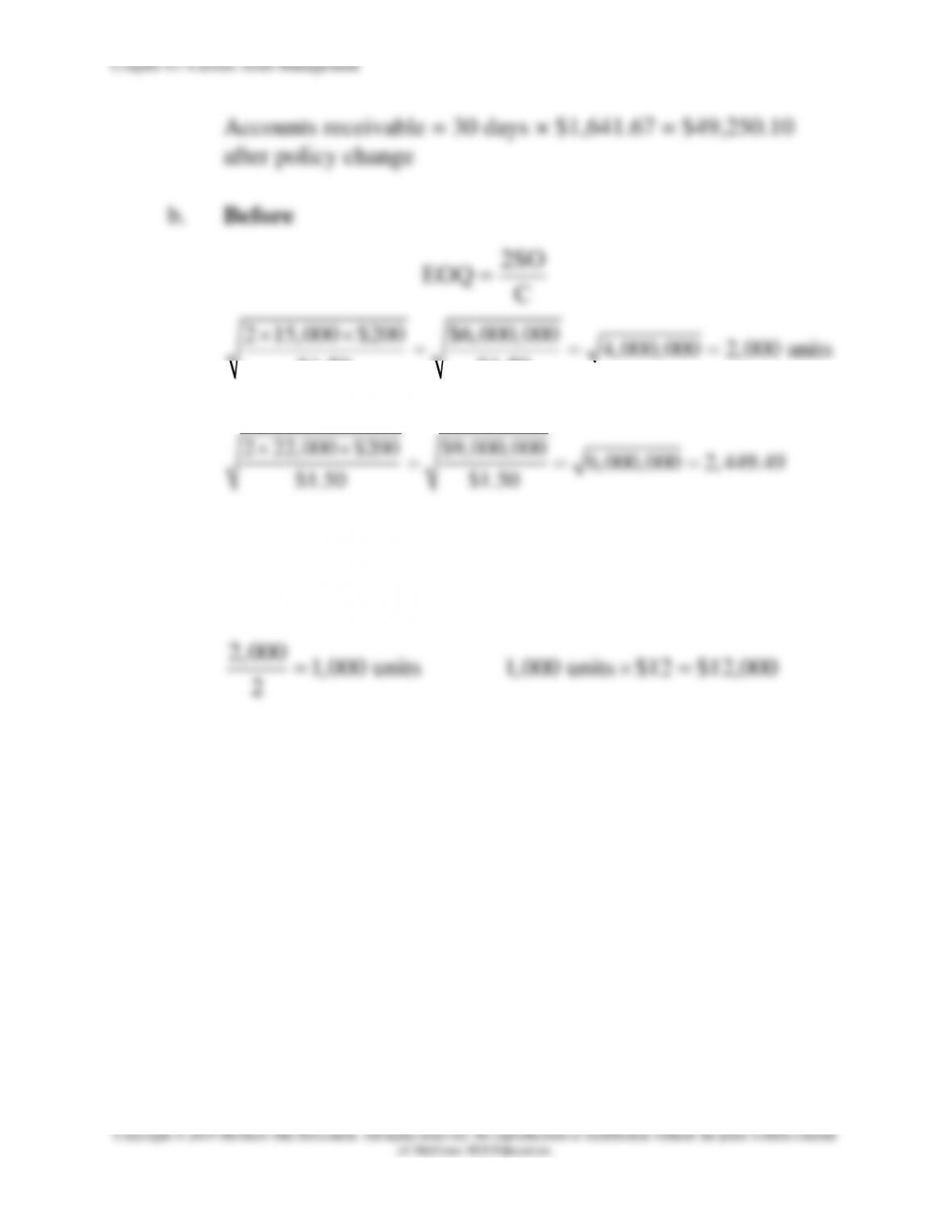
Accounts receivable = 24 days × $1,107.78 = $26,586.72
before policy change
After
Average collection period
0.50 × 10 days = 5
0.50 × 50 days = 25
30 days (Avg. acc. receivables)
CP 7-1. (Continued)
Average daily sales
( )( )( )
$600,000 .03 .50 $600,000
Credit sales discount
360 days 360 days
$600,000 $9,000
360 days
$591,000
−
−=
−
=