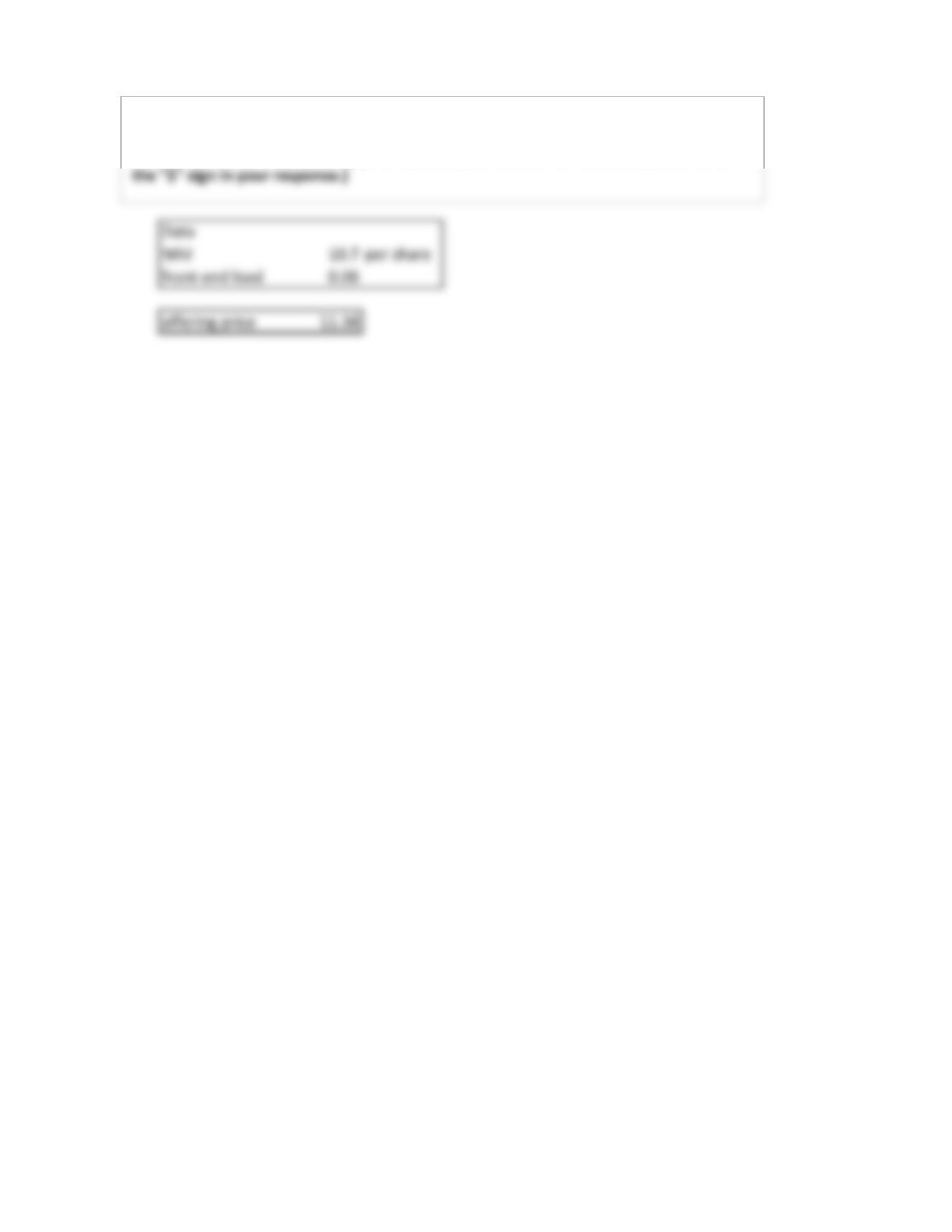
Problem 4-7
An open-end fund has a net asset value of $10.70 per share. It is sold with a front-end
load of 6%. What is the offering price? (Round your answer to 2 decimal places. Omit
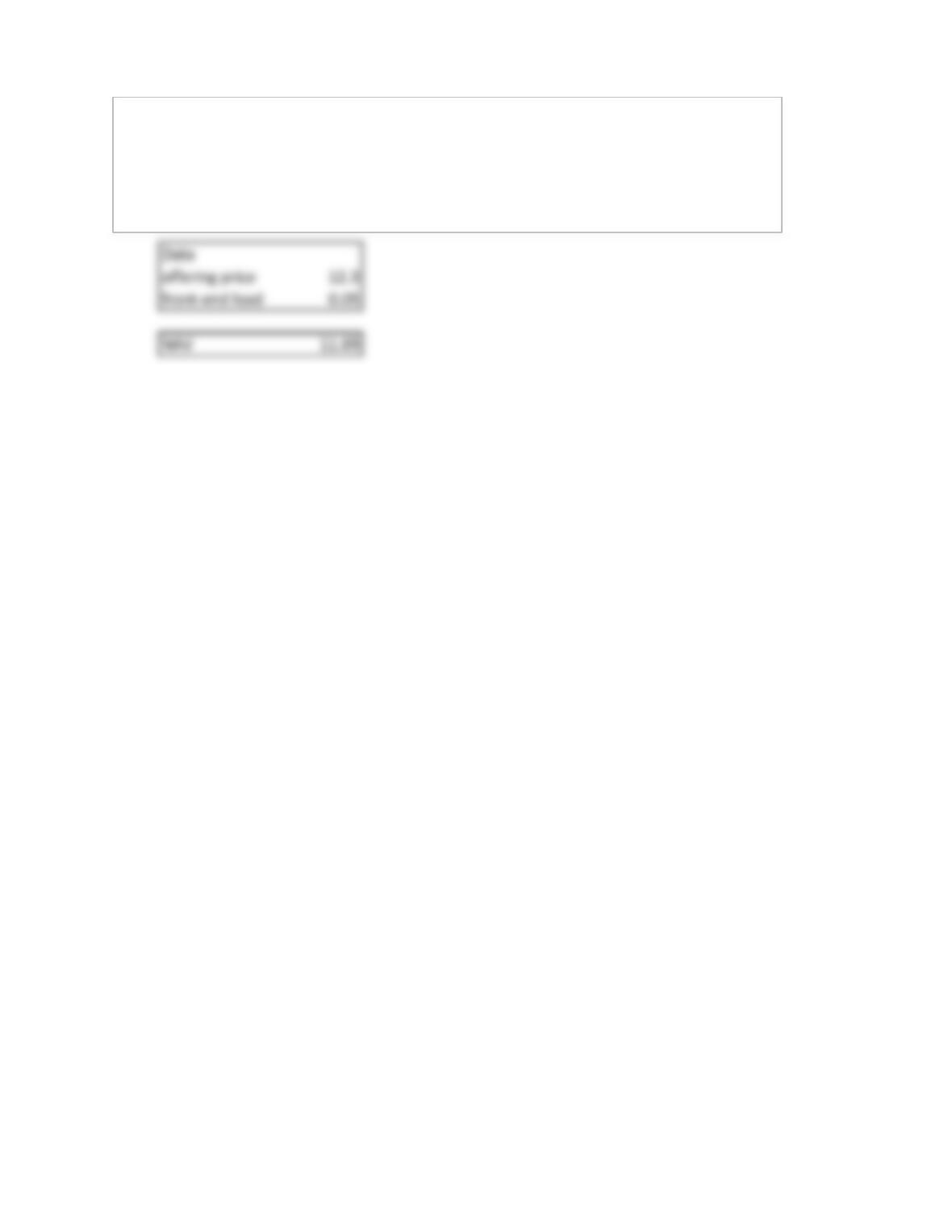
Problem 4-8
The offering price of an open-end fund is $12.30 per share and the fund is sold with a front-
end load of 5%.
What is its net asset value? (Round your answer to 2 decimal places. Omit the “$” sign in
Data
fee 0.03
shares out 4 mil
stock shares price
a 0.2 35
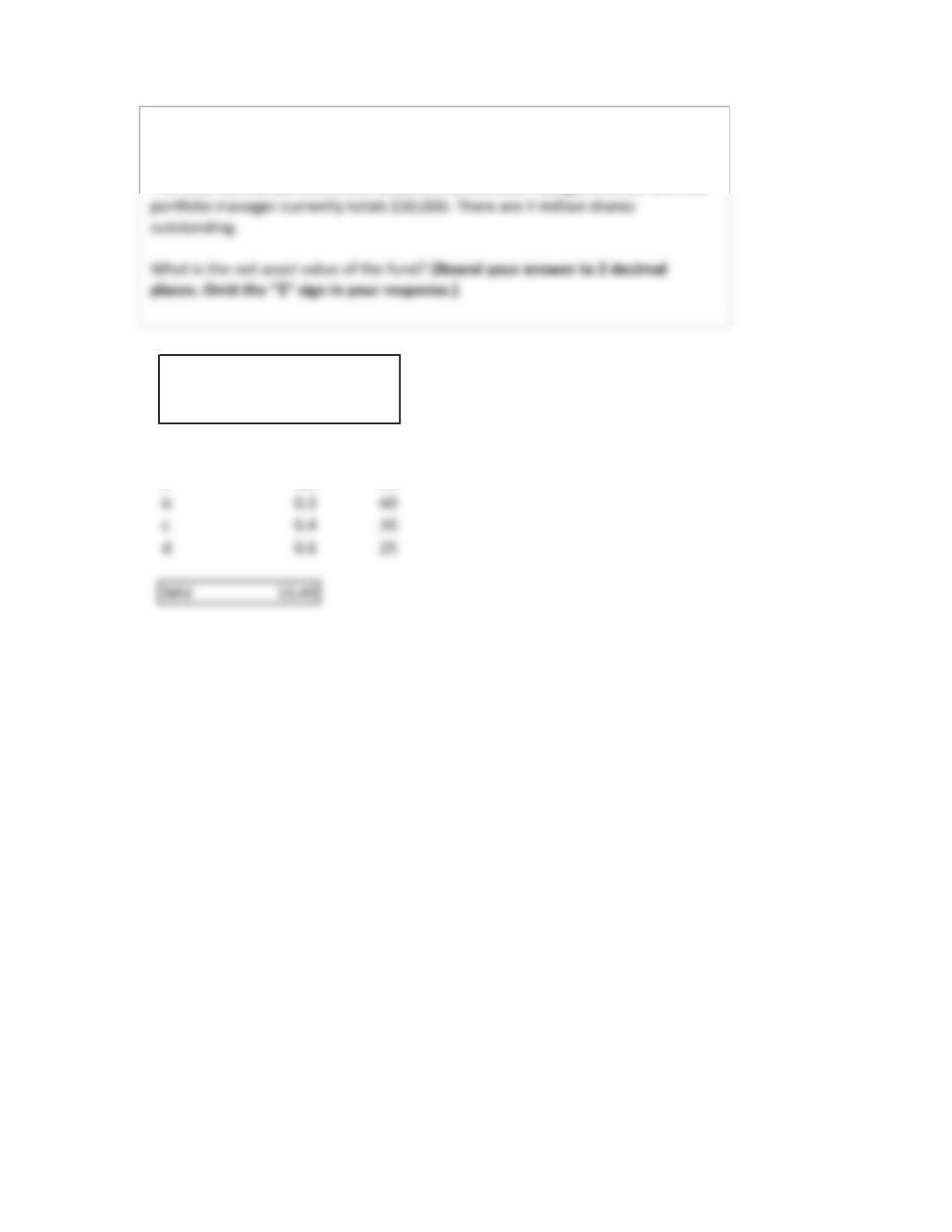
Problem 4-9
The composition of the Fingroup Fund portfolio is as follows:
The fund has not borrowed any funds, but its accrued management fee with the
b 0.3 40
c 0.4 20
d 0.6 25
Data
sell all of stock D
stock shares price
a 0.2 35
b 0.3 40
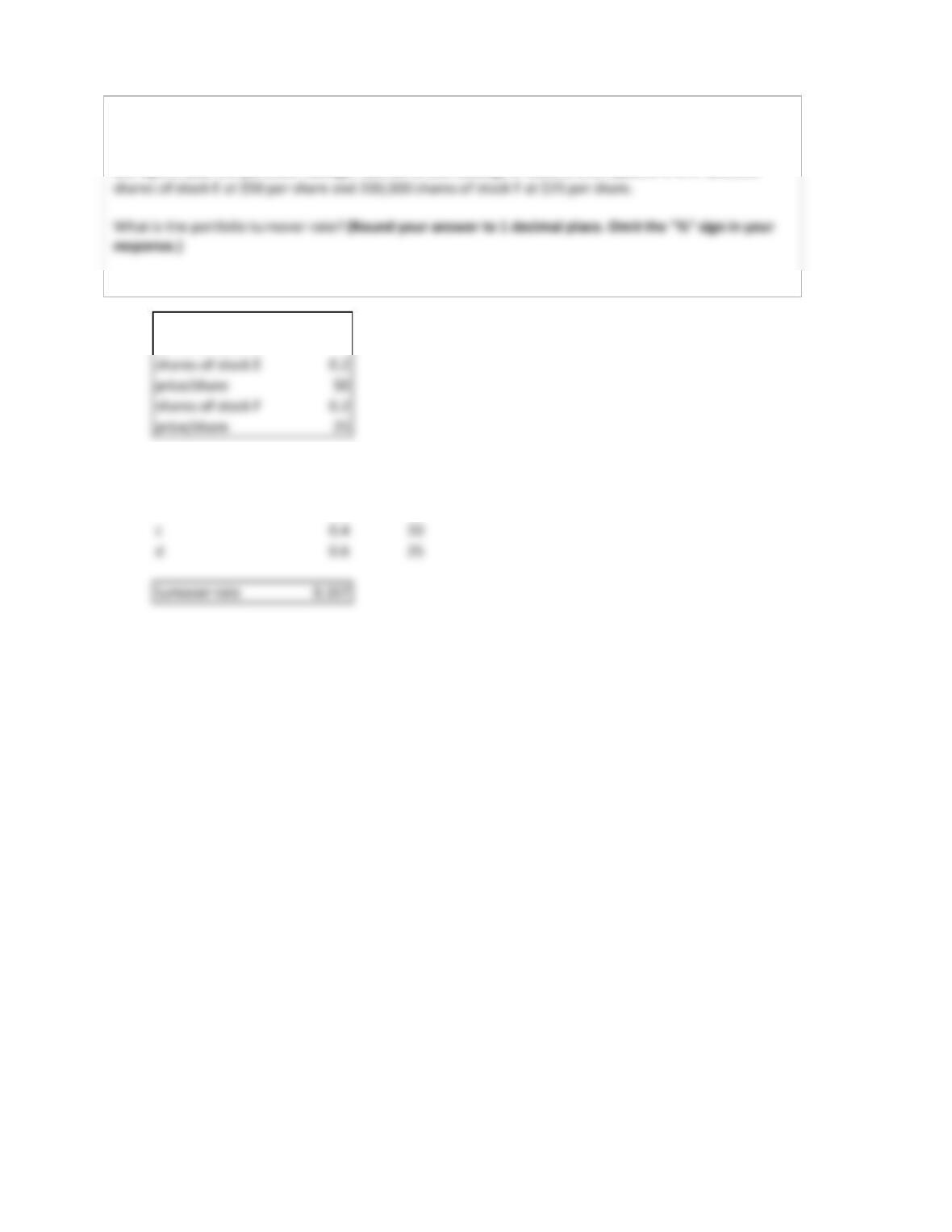
Problem 4-10
The composition of the Fingroup Fund portfolio is as follows:
During the year the portfolio manager sells all of the holdings of stock D and replaces it with 200,000
Data
value 200 mil
Problem 4-11
The Closed Fund is a closed-end investment company with a portfolio currently worth
$200 million. It has liabilities of $3 million and 5 million shares outstanding.
a.What is the NAV of the fund? (Round your answer to 2 decimal places. Omit the
Data
NAV 12.5
Problem 4-12
Corporate Fund started the year with a net asset value of $12.50. By year-end, its NAV
equaled $12.10. The fund paid year-end distributions of income and capital gains of $1.50.
What was the (pretax) rate of return to an investor in the fund? (Round your answer to 1
year-end NAV 12.1
Rate of return 0.088
Data
year start 12
year end 12.1
Problem 4-13
A closed-end fund starts the year with a net asset value of $12.00. By year-end, NAV equals $12.10. At the beginning
of the year, the fund was selling at a 2% premium to NAV. By the end of the year, the fund is selling at a 7% discount
to NAV. The fund paid year-end distributions of income and capital gains of $1.50.
a.What is the rate of return to an investor in the fund during the year? (Do not round intermediate calculations.
Data
assets 200 mil
Problem 4-15
Consider a mutual fund with $200 million in assets at the start of the year and with 10 million shares
outstanding. The fund invests in a portfolio of stocks that provides dividend income at the end of the year of
$2 million. The stocks included in the fund’s portfolio increase in price by 8%, but no securities are sold, and
there are no capital gains distributions. The fund charges 12b-1 fees of 1%, which are deducted from portfolio
assets at year-end.
Data
average daily asset 2.2 billion
Problem 4-16
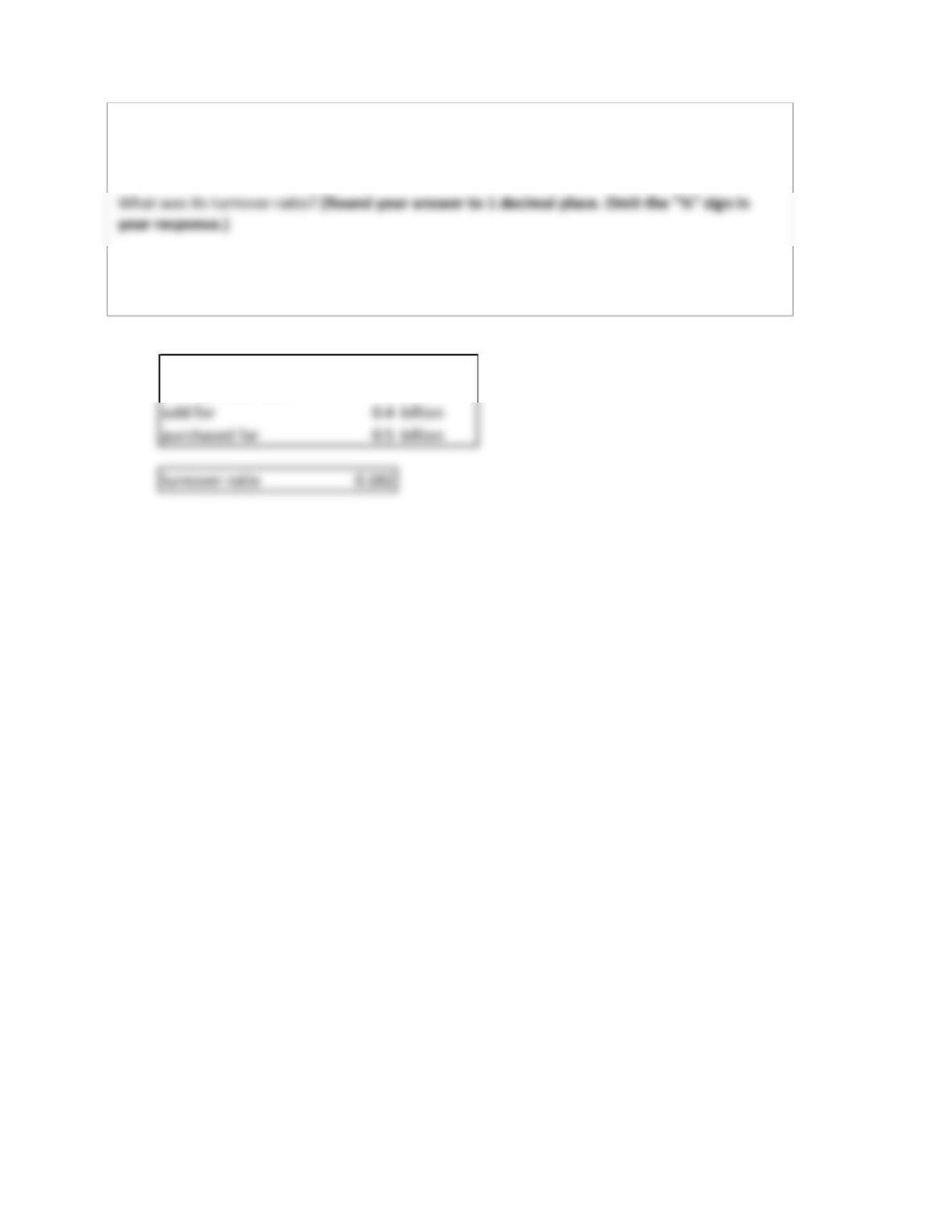
The New Fund had average daily assets of $2.2 billion last year. The fund sold $400 million
worth of stock and purchased $500 million during the year.
sold for 0.4 billion
purchased for 0.5 billion
turnover ratio 0.182
Data
average daily asset 2.2 billion
Problem 4-17
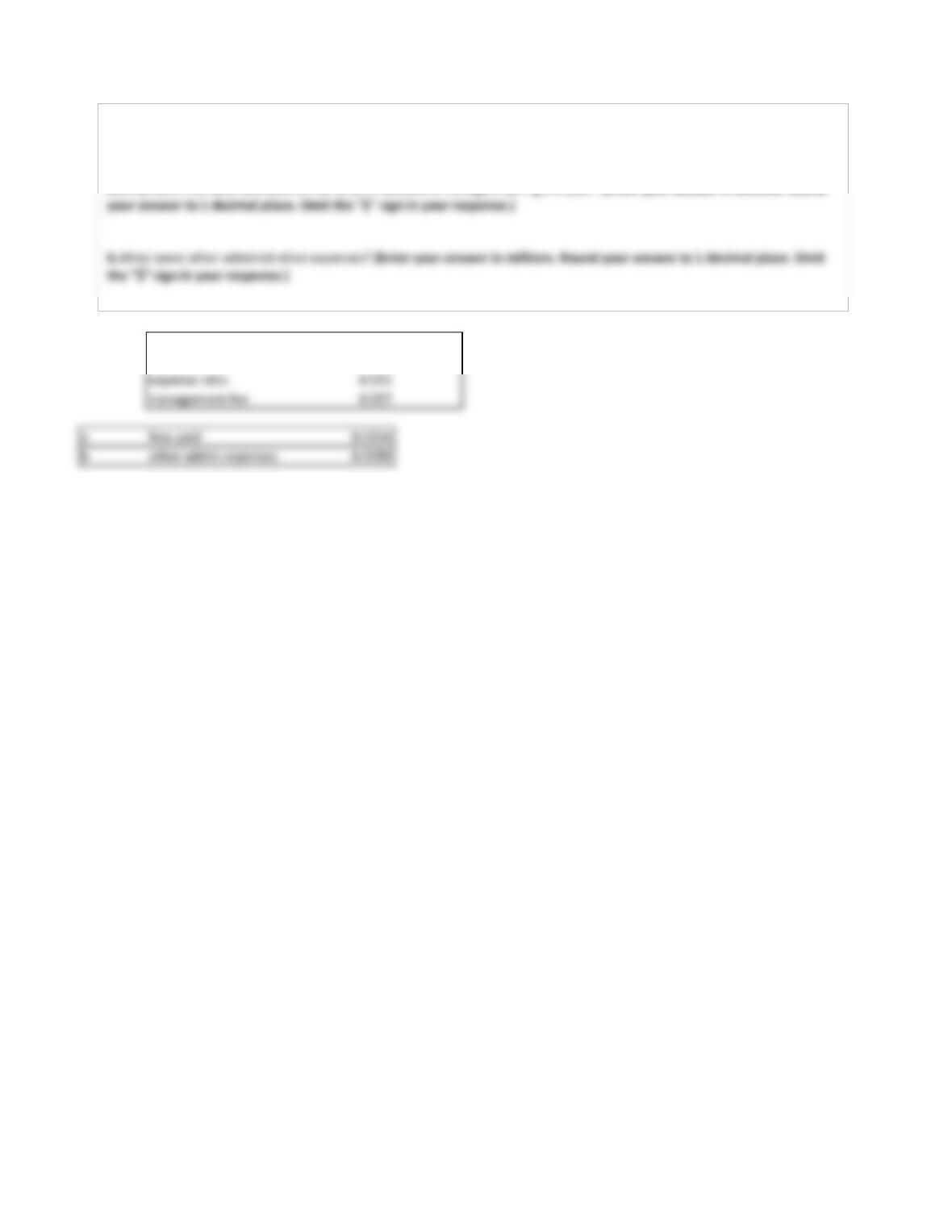
The New Fund had average daily assets of $2.2 billion in the past year. If New Fund’s expense ratio was 1.1% and the
management fee was 0.7%.
a.What were the total fees paid to the fund’s investment managers during the year? (Enter your answer in millions. Round
20833.33
22160
a rate of return 0.06368
Problem 4-18
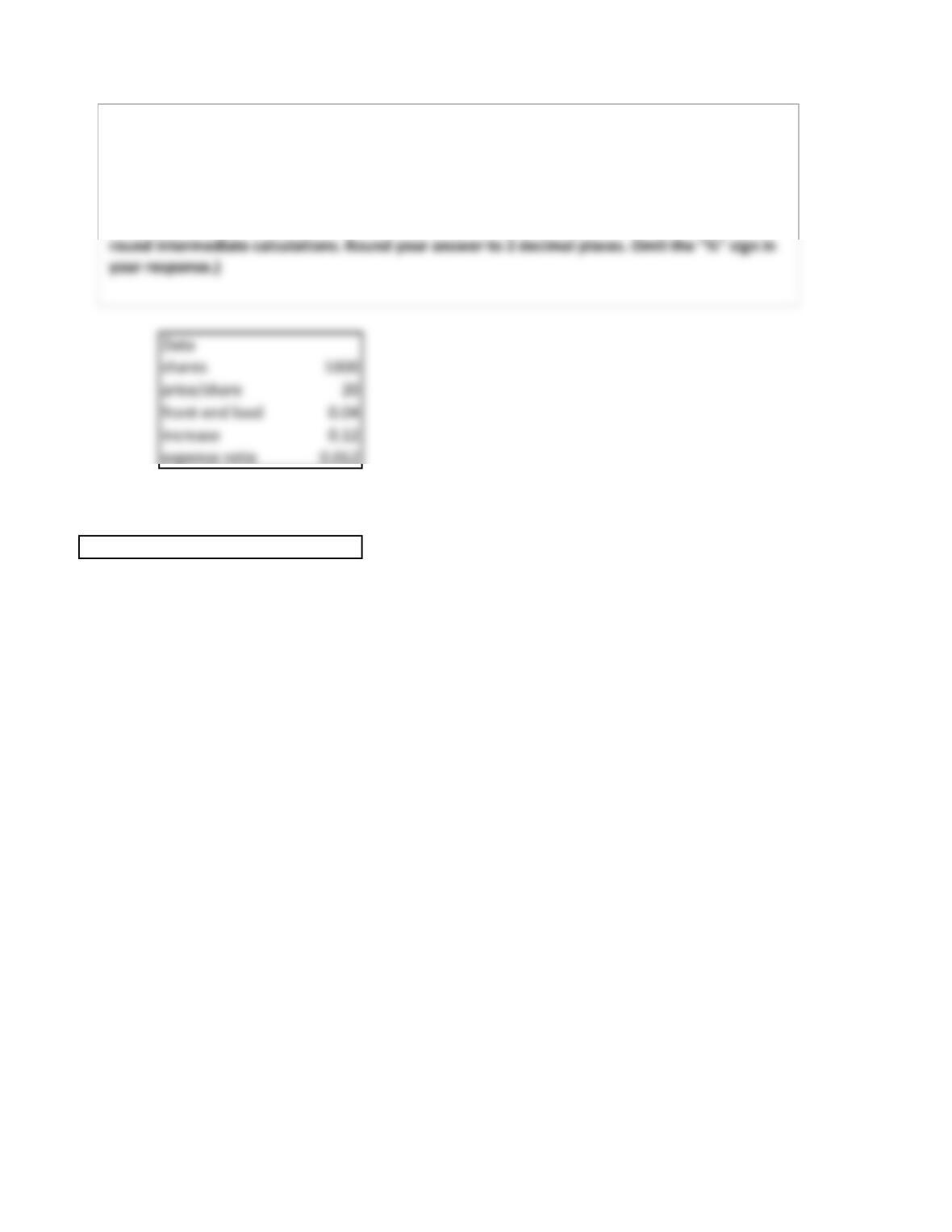
You purchased 1,000 shares of the New Fund at a price of $20 per share at the beginning of the
year. You paid a front-end load of 4%. The securities in which the fund invests increase in value
by 12% during the year. The fund’s expense ratio is 1.2%.
What is your rate of return on the fund if you sell your shares at the end of the year? (Do not
Economy fund
front-end load 0.02
12b-1 0
expense ratio 0.0025
Problem 4-19
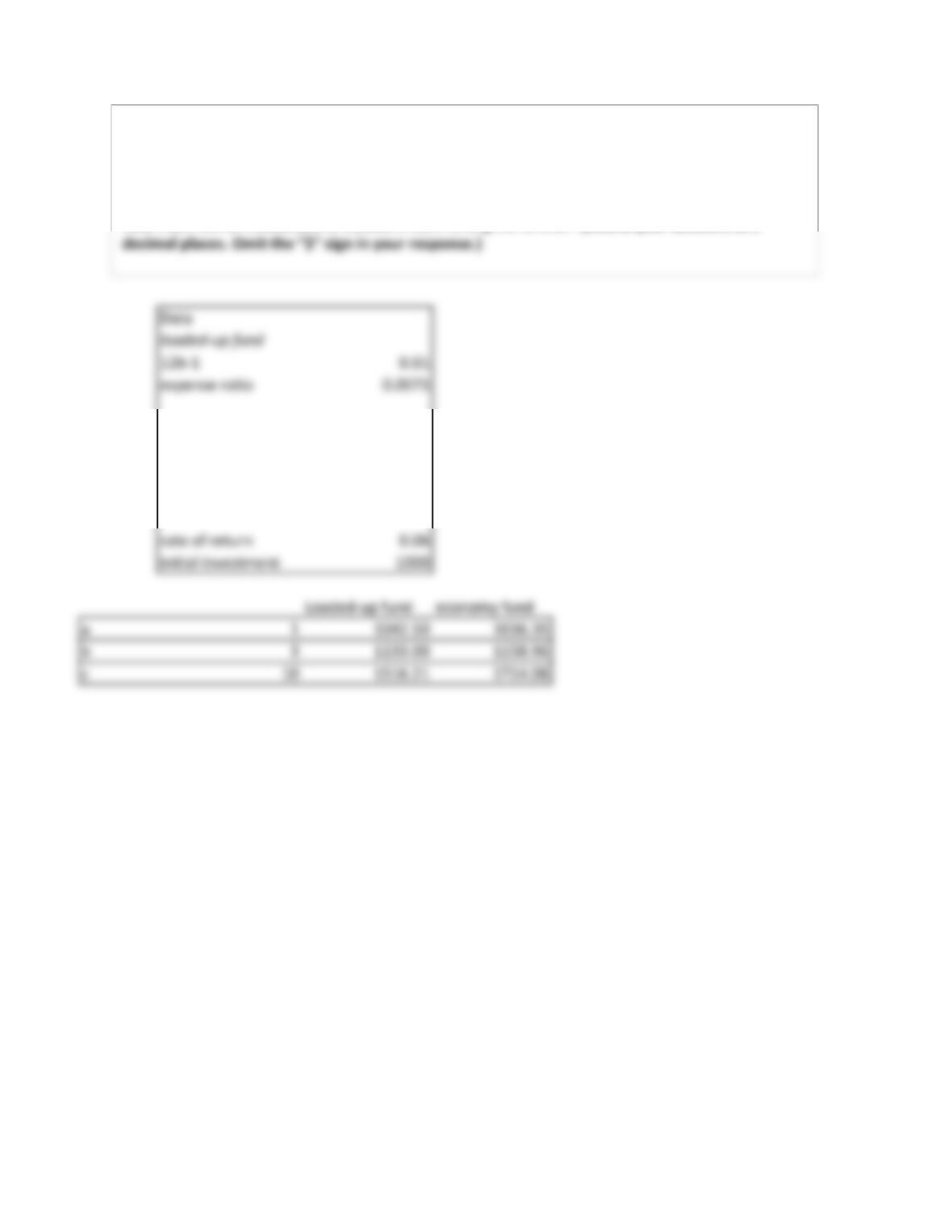
Loaded-Up Fund charges a 12b-1 fee of 1.0% and maintains an expense ratio of 0.75%. Economy
Fund charges a front-end load of 2% but has no 12b-1 fee and an expense ratio of 0.25%. Assume
the rate of return on both funds’ portfolios (before any fees) is 6% per year.
How much will an investment of $1,000 in each fund grow to after: (Round your answers to 2
Problem 4-20
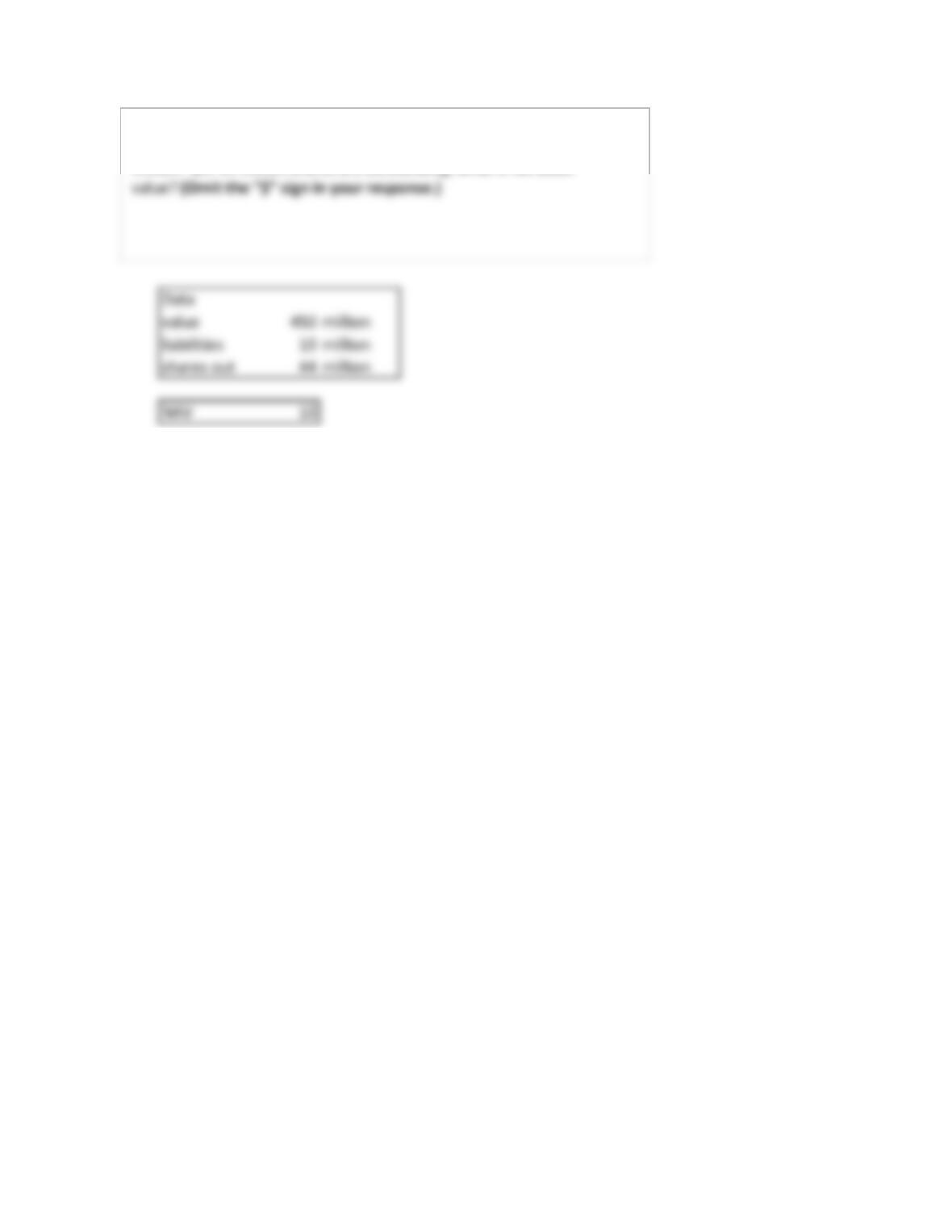
City Street Fund has a portfolio of $450 million and liabilities of $10
million. a.If 44 million shares are outstanding, what is net asset
initial investment 1000
rate of return 0.1
a-1 t= 415
Problem 4-21
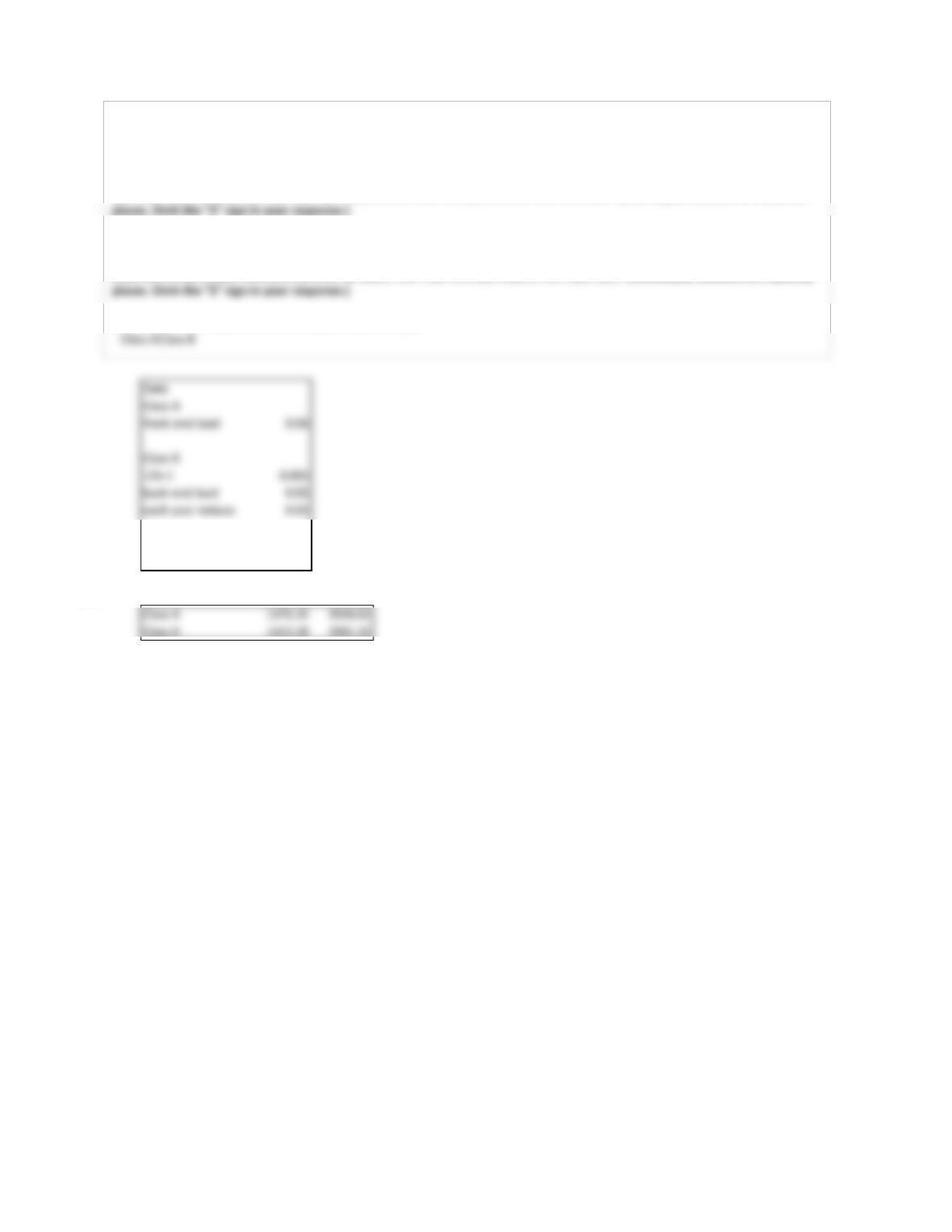
The Investments Fund sells Class A shares with a front-end load of 6% and Class B shares with 12b-1 fees of 0.5% annually as well as
back-end load fees that start at 5% and fall by 1% for each full year the investor holds the portfolio (until the fifth year). A
ssume that
you have $1,000 to invest and the portfolio rate of return net of operating expenses is 10% annually.
a-1.If you invest in each fund and sell after 4 years, how much will you receive from each sale? (Round your answers to 2 decimal
a-2.Are Class A or Class B shares the better choice for you?
b-1.If you invest in each fund and sell after 15 years, how much will you receive from each sale? (Round your answers to 2 decimal
b-2.Are Class A or Class B shares the better choice for you?
Data
load 0.04
expense ratio 0.005
CD r 0.06
Problem 4-22
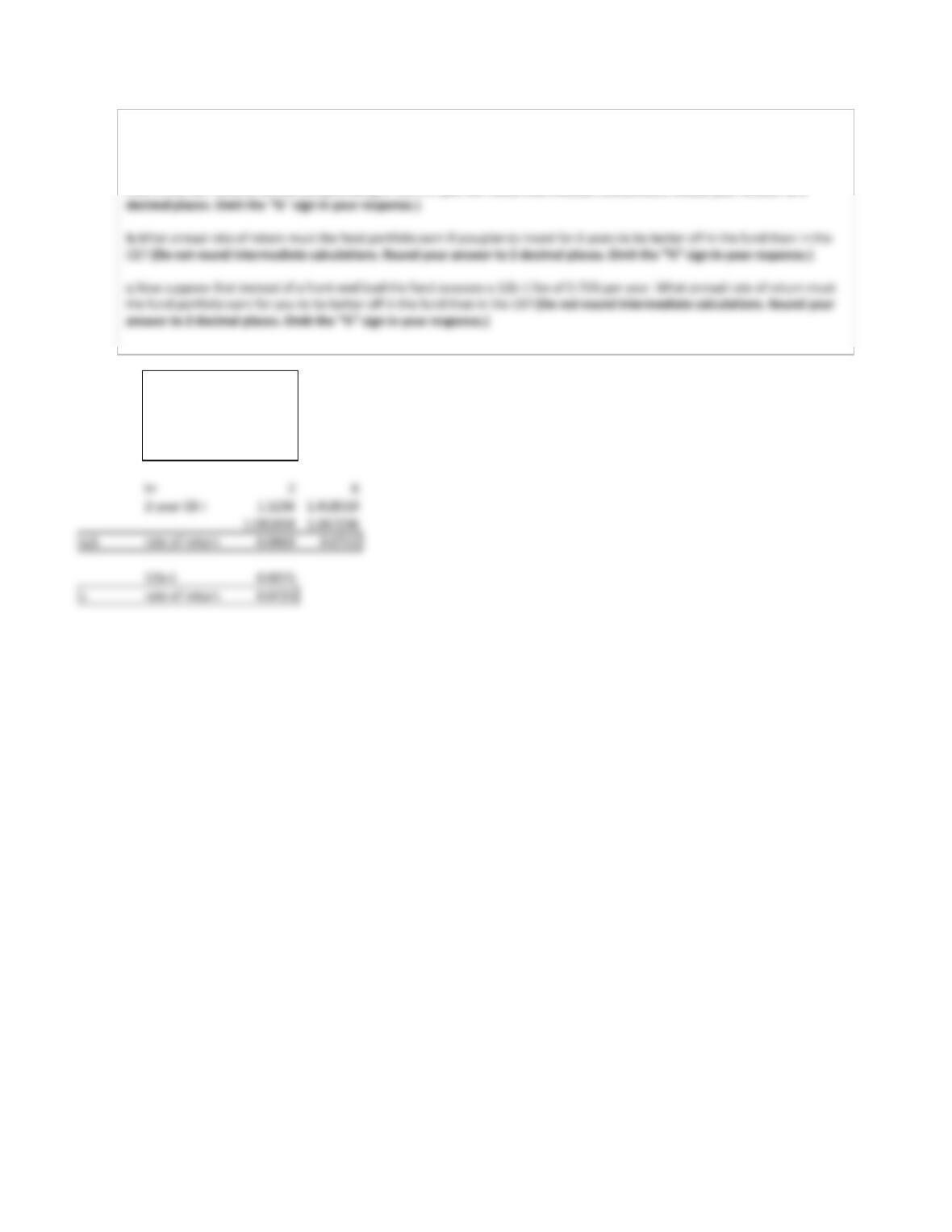
You are considering an investment in a mutual fund with a 4% load and expense ratio of 0.5%. You can invest instead in a bank CD
paying 6% interest.
a.If you plan to invest for 2 years, what annual rate of return must the fund portfolio earn for you to be better off in the fund
than in the CD? Assume annual compounding of returns. (Do not round intermediate calculations. Round your answer to 2
2-year CD r 1.1236 1.418519
Problem 4-23
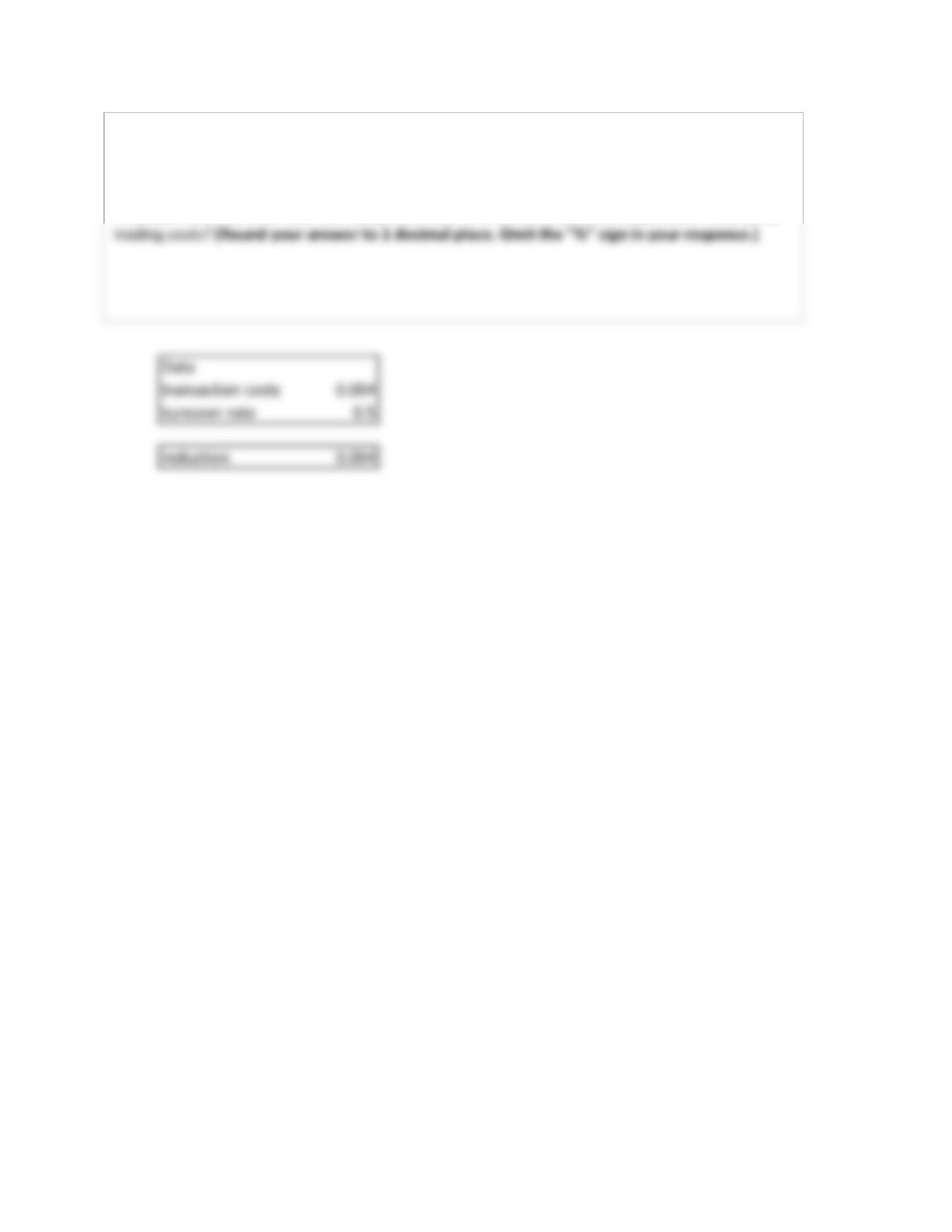
Suppose that every time a fund manager trades stock, transaction costs such as commissions and
bid–ask spreads amount to 0.4% of the value of the trade.
If the portfolio turnover rate is 50%, by how much is the total return of the portfolio reduced by