Chapter 02: Review of Accounting
Change in retained earnings ……………………………. $93,000
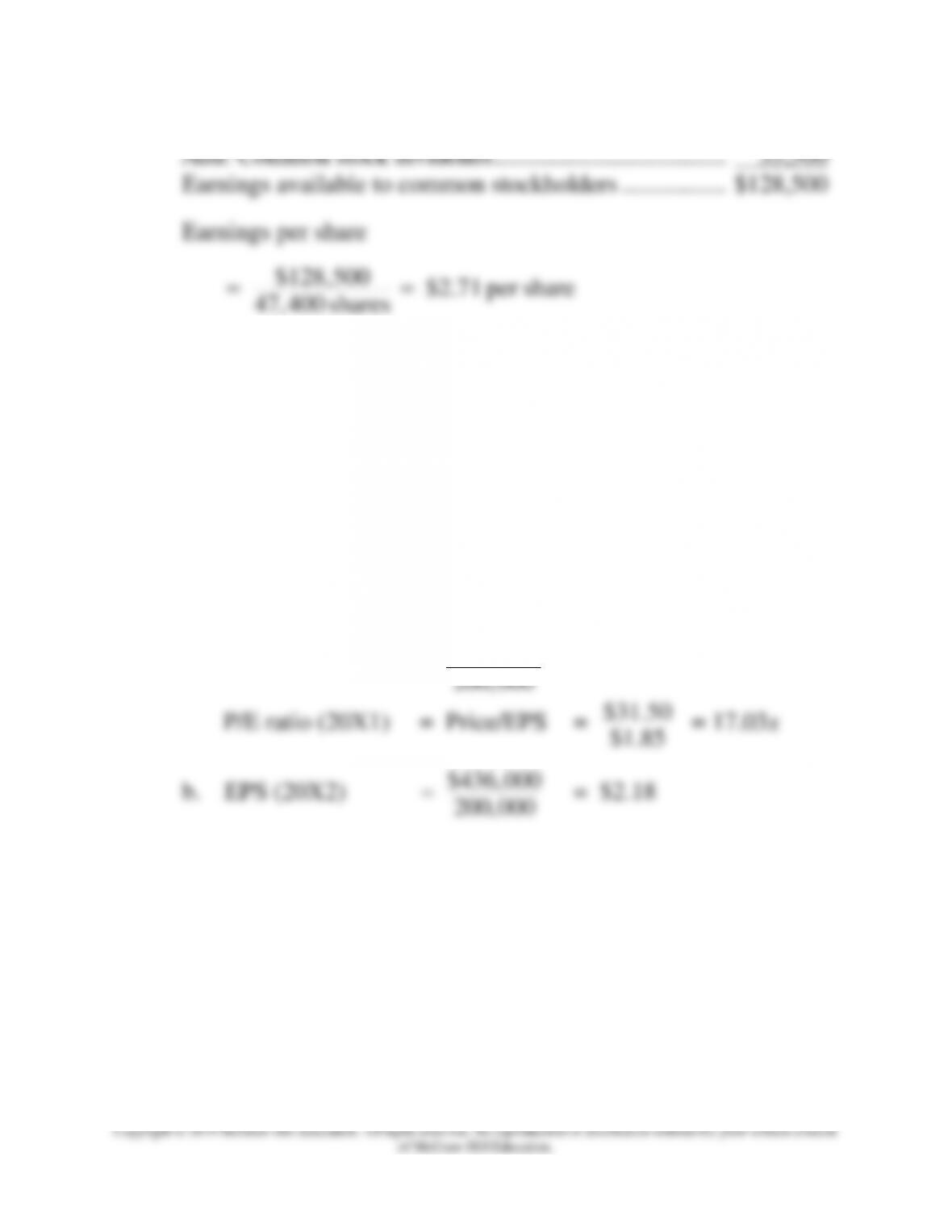
47,400 shares
18. Price/earning ratio (LO2) Botox Facial Care had earnings after taxes of $370,000 in
20X1 with 200,000 shares of stock outstanding. The stock price was $31.50. In 20X2,
earnings after taxes increased to $436,000 with the same 200,000 shares outstanding. The
stock price was $42.00.
a. Compute earnings per share and the P/E ratio for 20X1.
(The P/E ratio equals the stock price divided by earnings per share.)
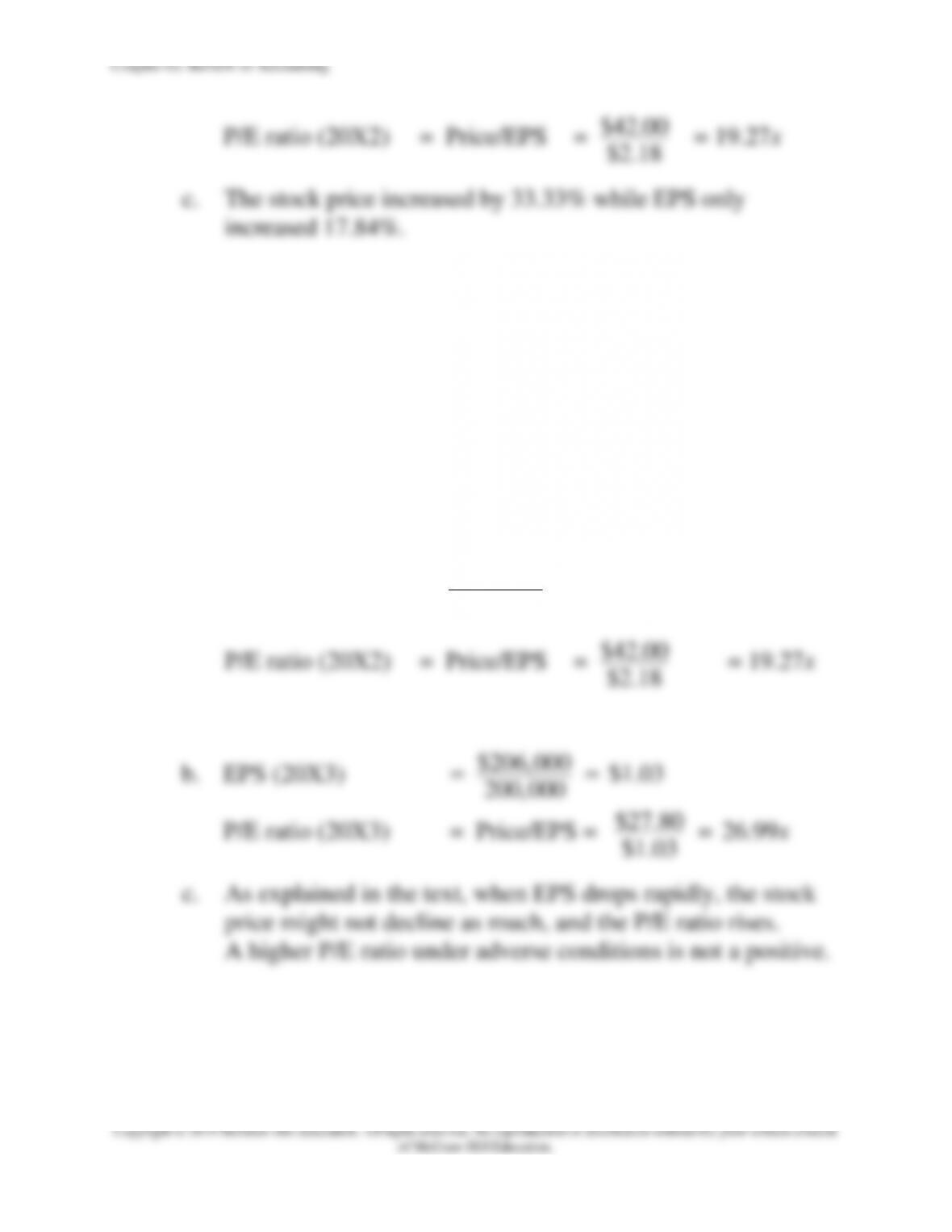
b. Compute earnings per share and the P/E ratio for 20X2.
c. Give a general explanation of why the P/E ratio changed.
2-18. Solution:
Botox Facial Care
a. EPS (20X1)
$370,000
200,000
=
= $1.85
$31.50
200,000
Chapter 02: Review of Accounting
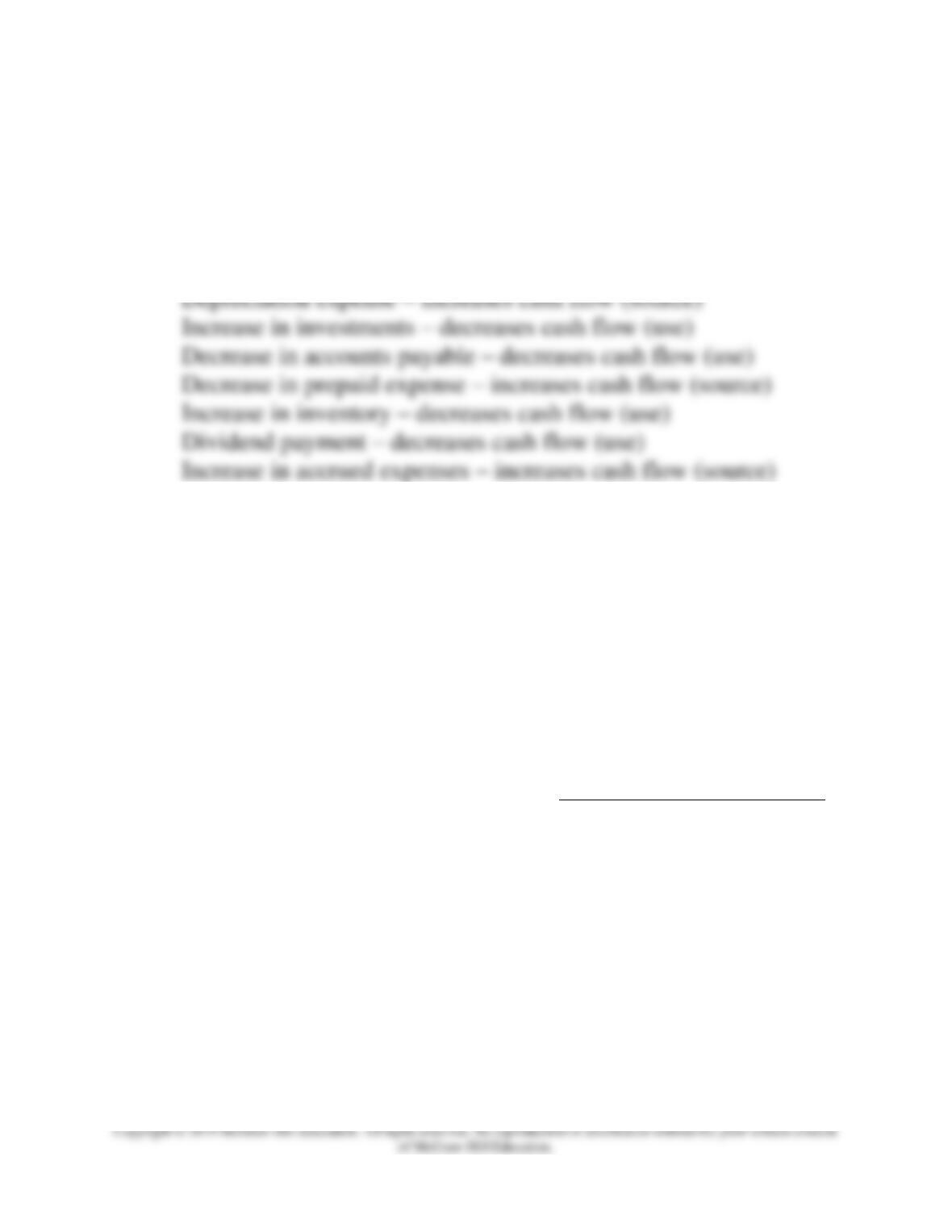
Increase in investments Increase in accrued expenses
Decrease in accounts payable
2-20. Solution:
Increase in accounts receivable – decreases cash flow (use)
Increase in notes payable – increases cash flow (source)
21. Depreciation and cash flow (LO5) The Rogers Corporation has a gross profit of $880,000
and $360,000 in depreciation expense. The Evans Corporation also has $880,000 in gross
profit, with $60,000 in depreciation expense. Selling and administrative expense is
$120,000 for each company.
Given that the tax rate is 40 percent, compute the cash flow for both companies.
Explain the difference in cash flow between the two firms.
2-21. Solution:
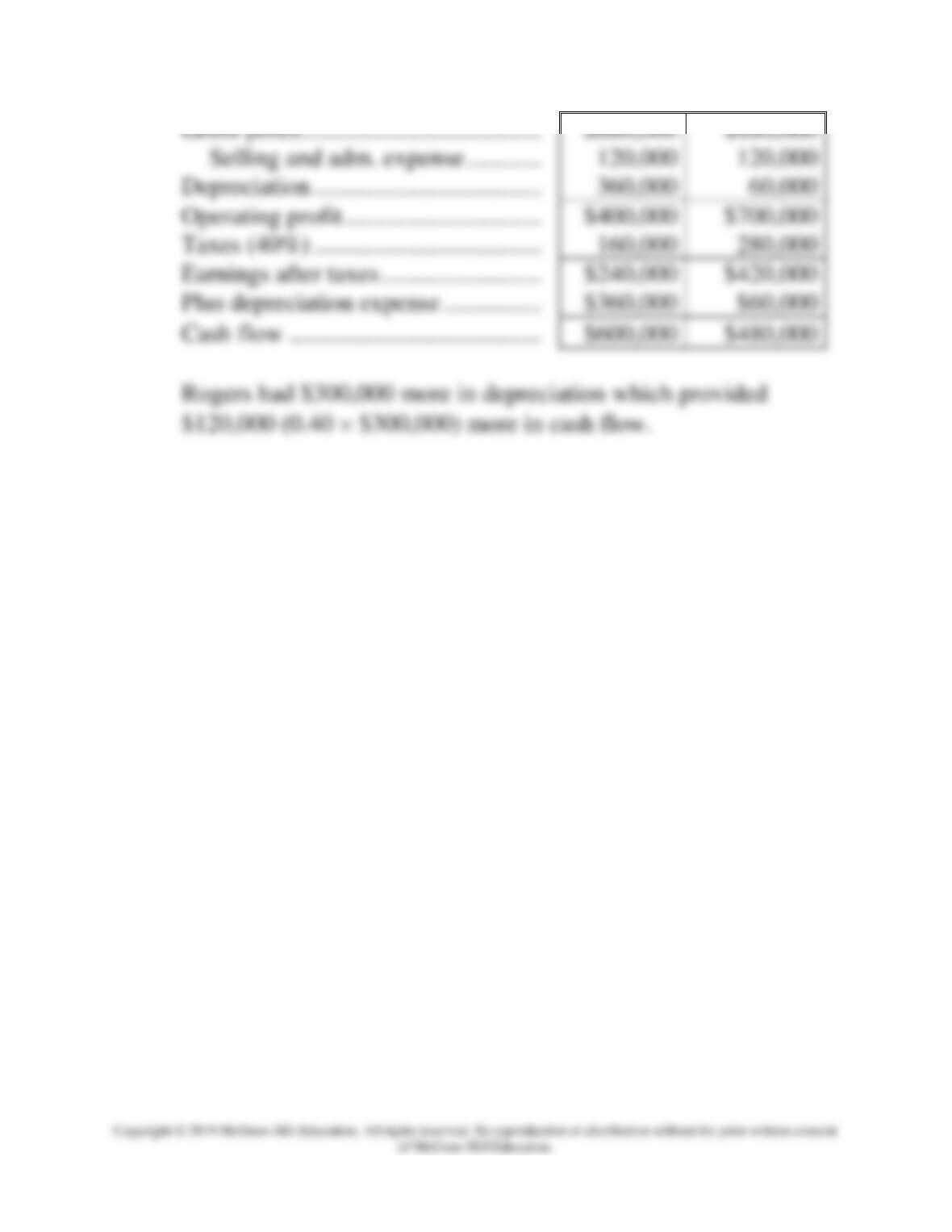
Rogers Corporation – Evans Corporation
Rogers
Evans
Chapter 02: Review of Accounting
Gross profit …………………………………
Selling and adm. expense …………
Depreciation ……………………………….
$880,000
120,000
360,000
$880,000
120,000
60,000
Operating profit …………………………..
Taxes (40%) ……………………………….
$400,000
160,000
$700,000
280,000
Earnings after taxes ……………………..
Plus depreciation expense …………….
$240,000
$360,000
$420,000
$60,000
Cash flow …………………………………..
$600,000
$480,000
Rogers had $300,000 more in depreciation which provided
$120,000 (0.40 $300,000) more in cash flow.
Chapter 02: Review of Accounting
Common shares outstanding ……………………….
Book value (net worth) per share …………………
25,000
$ 5.20

Chapter 02: Review of Accounting
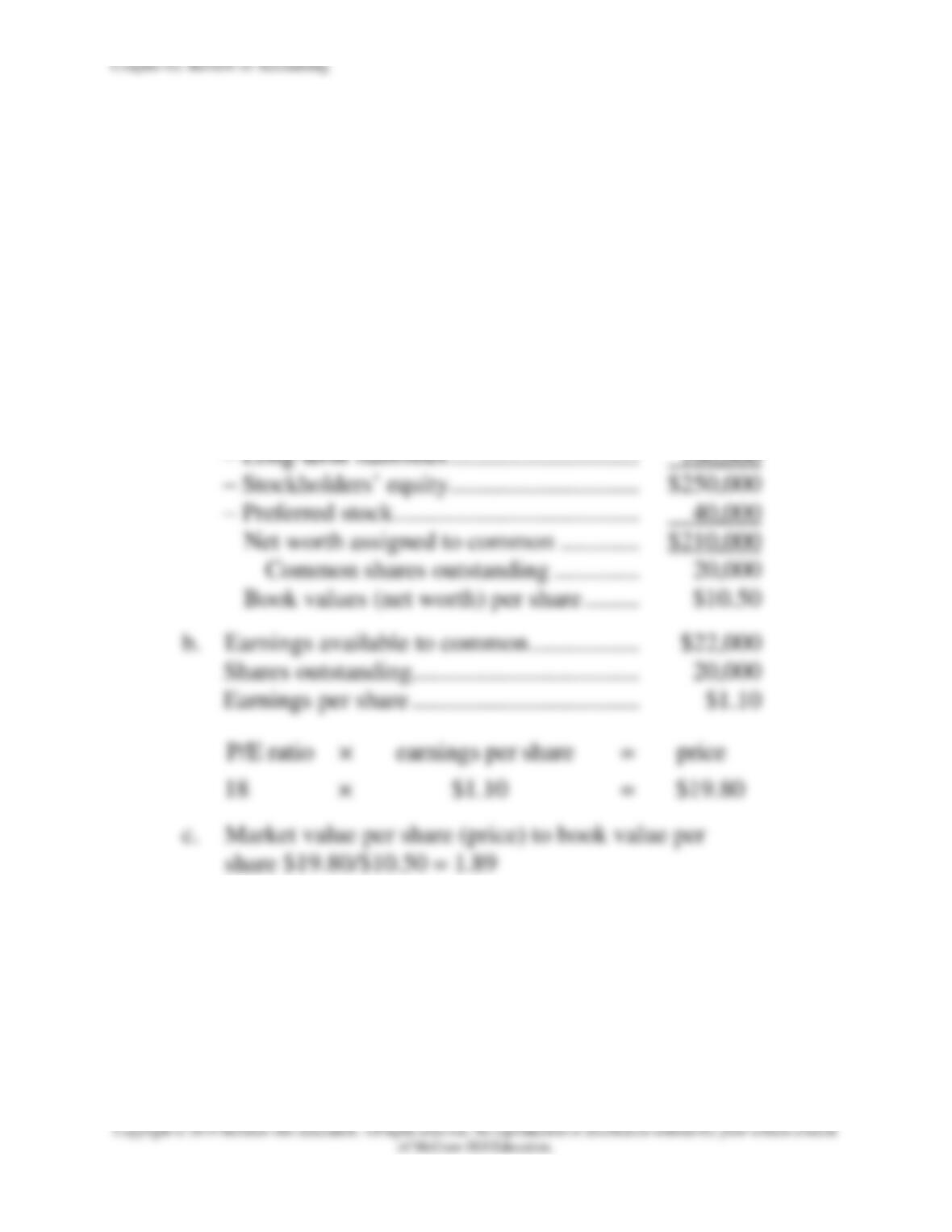
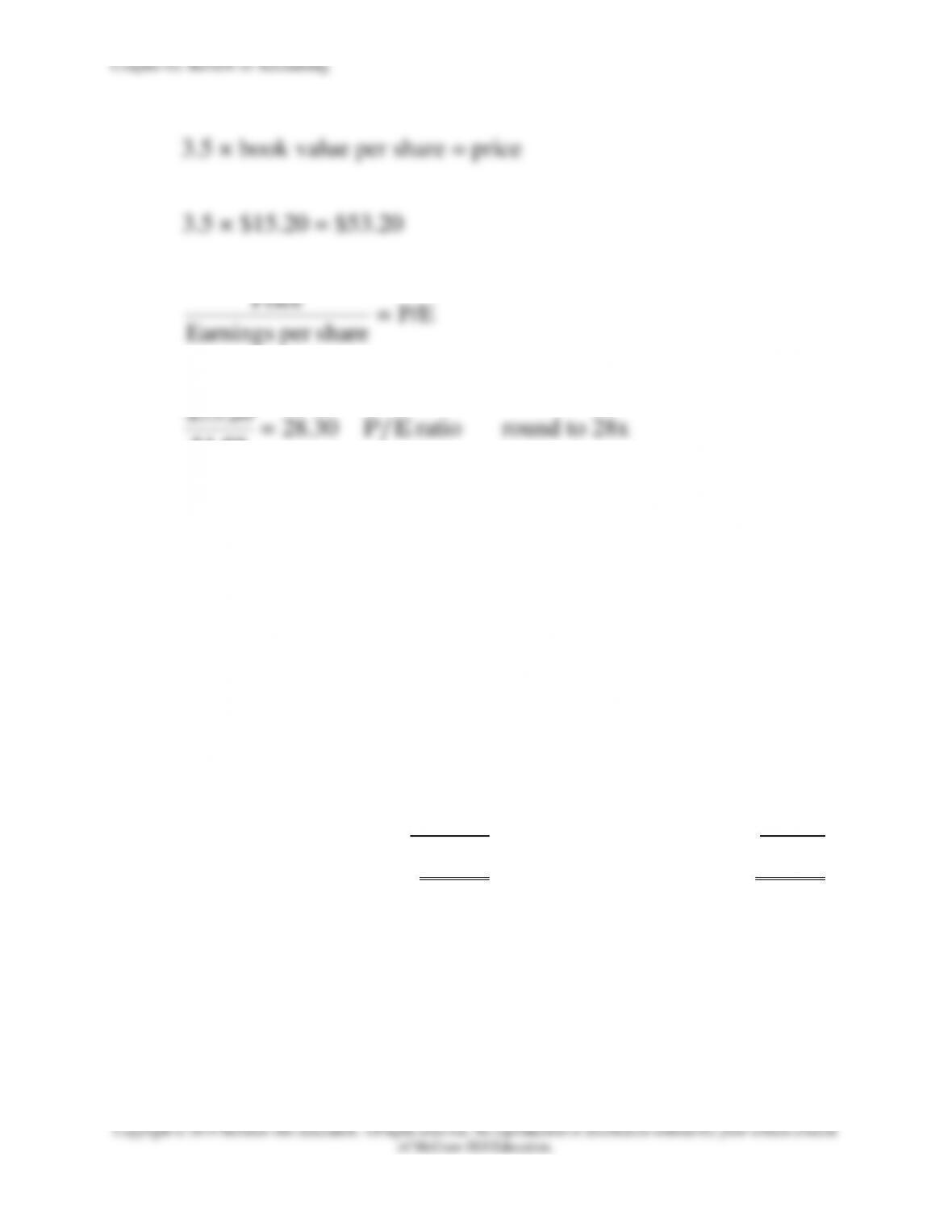
c. What is the ratio of market value per share to book value per share? (Round to two
places to the right of the decimal point.)
Chapter 02: Review of Accounting
During 20X2, the cash balance and prepaid expenses balances were unchanged.
Accounts receivable and inventory increased by 10 percent. A new machine was purchased
on December 31, 20X2, at a cost of $40,000.
Accounts payable increased by 20 percent. Notes payable increased by $6,500 and
bonds payable decreased by $12,500, both at the end of the year. The preferred stock,
common stock, and paid-in capital in excess of par accounts did not change.
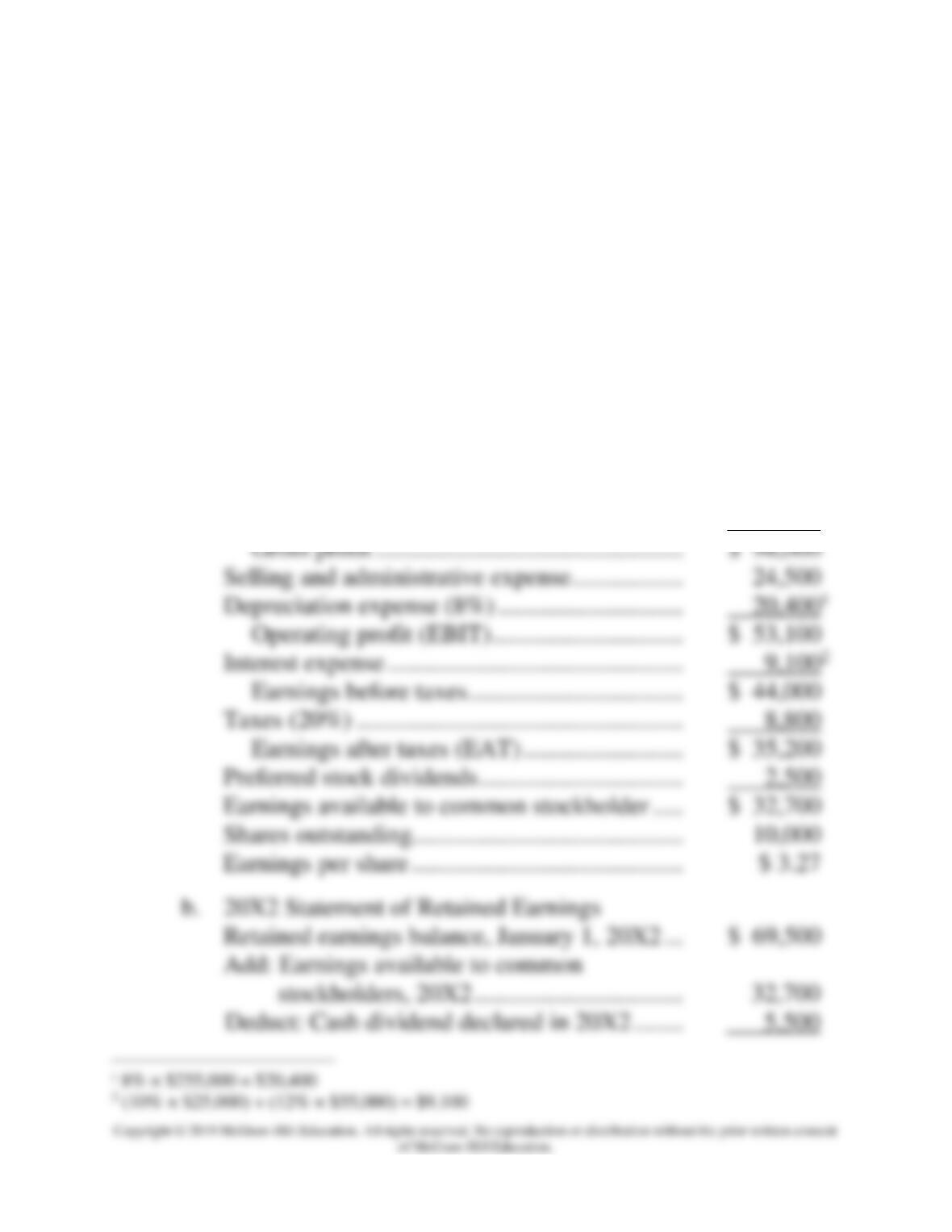
a. Prepare an income statement for 20X2.
b. Prepare a statement of retained earnings for 20X2.
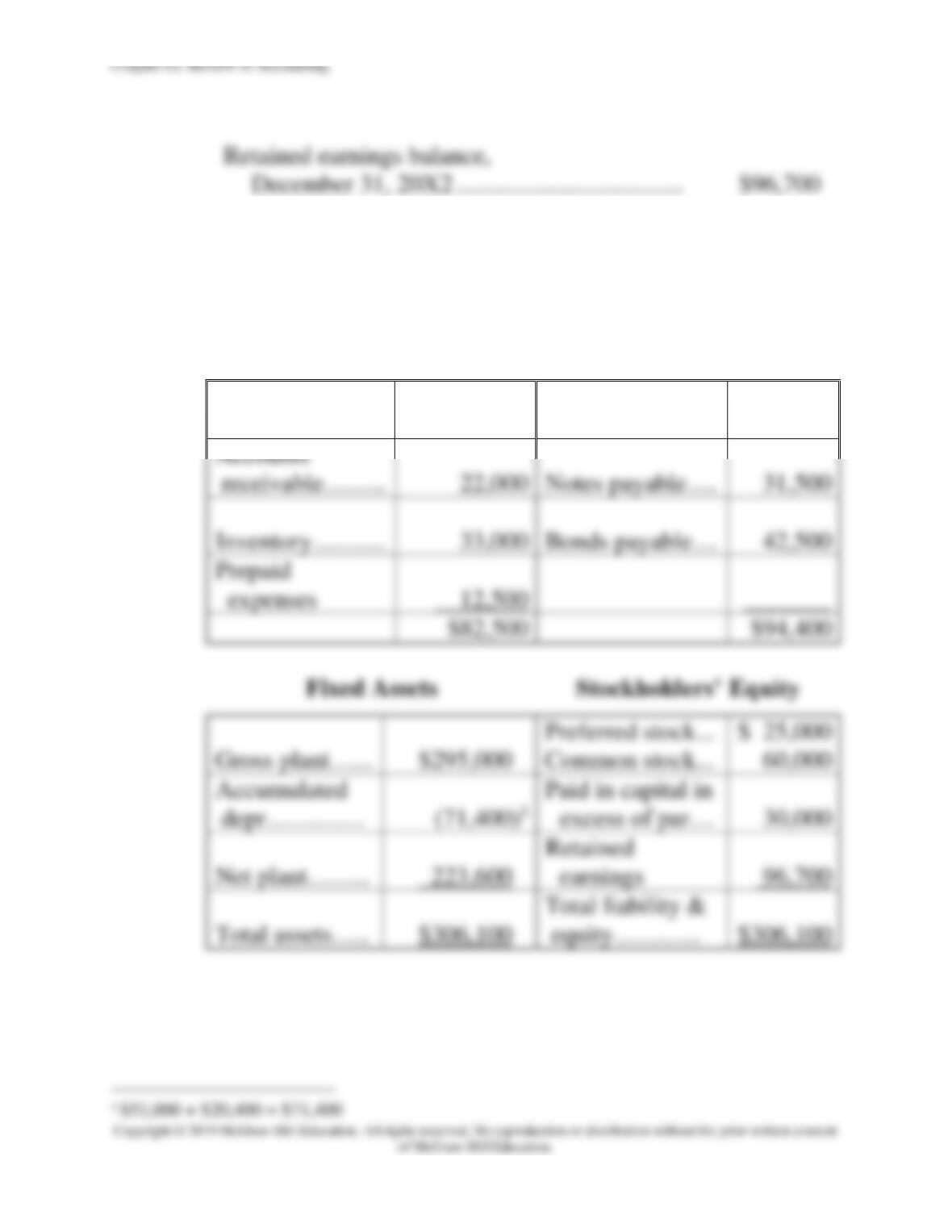
c. Prepare a balance sheet as of December 31, 20X2.
2-27. Solution:
Baxter Corporation
20X2 Income Statement
a. Sales ………………………………………………………… $245,000
Cost of good sold (60%) ……………………………. 147,000


Chapter 02: Review of Accounting
Assets 20X1 20X2
Current assets:
Cash…………………………………………………………………………. $ 70,000 $100,000
Accounts receivable (net) …………………………………………… 300,000 350,000
Inventory …………………………..…………………………………………… 410,000 430,000
Prepaid expenses …………………………………………………………….. 50,000 30,000
Total current assets ……………………………………………………. 830,000 910,000
Investments (long-term securities) …………………………………….. 80,000 70,000
Plant and equipment ………………………………………………………… 2,000,000 2,400,000
Less: Accumulated depreciation ………………………………….. 1,000,000 1,150,000
Net plant and equipment ………………………………………………….. 1,000,000 1,250,000
Total assets …………………………………………………………………….. $1,910,000 $2,230,000
Liabilities and Stockholders’ Equity
Current liabilities:
Accounts payable ………………………………………………………. $ 250,000 $ 440,000
Notes payable ……………………………………………………………. 400,000 400,000
Accrued expenses………………………………………………………. 70,000 50,000
Total current liabilities …………………………………………….. 720,000 890,000
Long-term liabilities:
Bonds payable, 20X2 …………………………………………………. 70,000 120,000
Total liabilities ……………………………………………………….. 790,000 1,010,000
Stockholders’ equity:
Preferred stock, $100 par value …………………………………… 90,000 90,000
Common stock, $1 par value ………………………………………. 120,000 120,000
Capital paid in excess of par ……………………………………….. 410,000 410,000
Retained earnings ………………………………………………………. 500,000 600,000
Total stockholders’ equity………………………………………… 1,120,000 1,220,000
Total liabilities and stockholders’ equity ……………………………. $1,910,000 $2,230,000
_______________________________________________________________________
(The following questions apply to the Crosby Corporation, as presented in Problem 27.)
Chapter 02: Review of Accounting
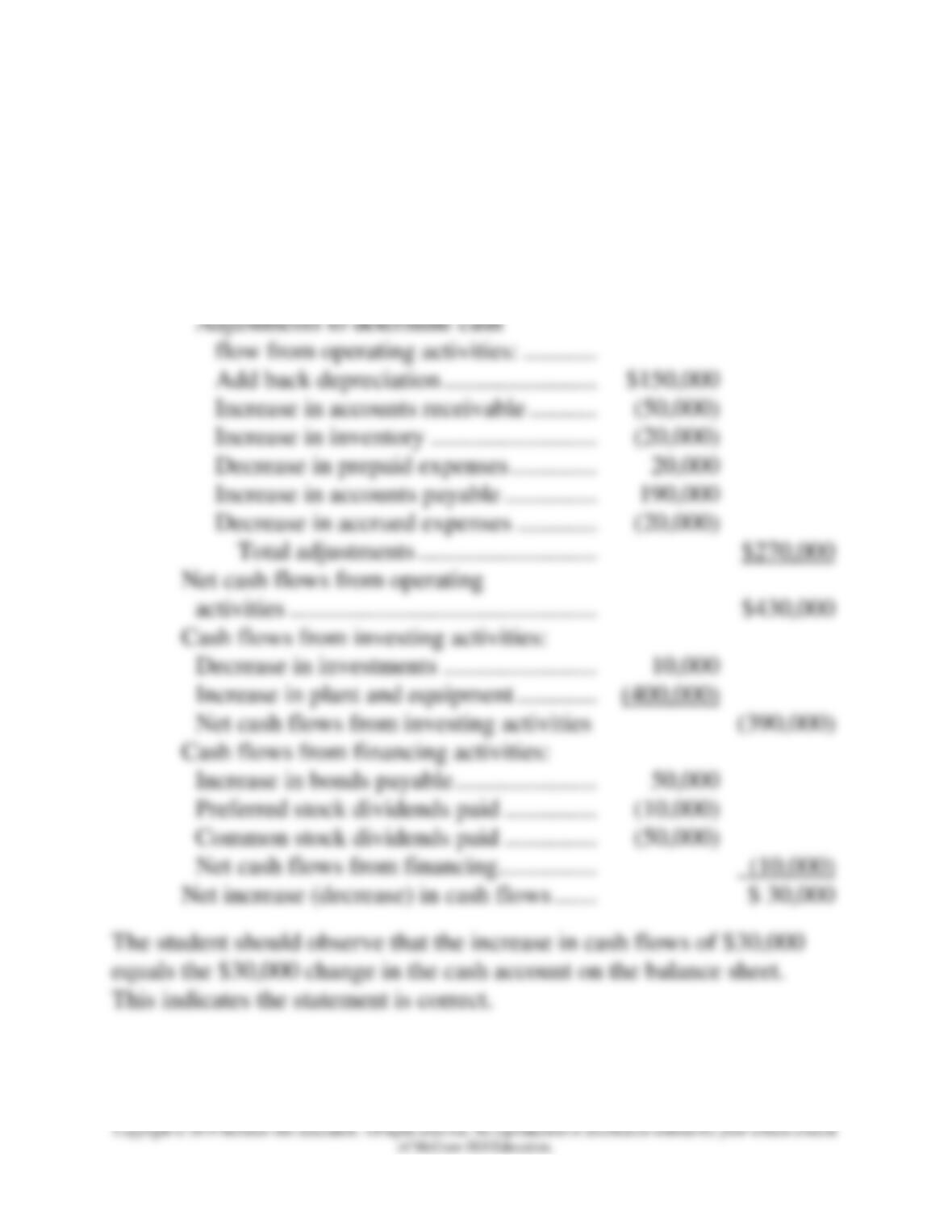
Solution 2-28 a):
Crosby Corporation
Statement of Cash Flows
For the Year Ended December 31, 20X2
Cash flows from operating activities:
Net income (earnings after taxes) ………..
Adjustments to determine cash
flow from operating activities: …………
Add back depreciation …………………….
Increase in accounts receivable ………..
Increase in inventory ………………………
Decrease in prepaid expenses …………..
Increase in accounts payable ……………
Decrease in accrued expenses ………….
Total adjustments ………………………..
Net cash flows from operating
activities …………………………………………..
Cash flows from investing activities:
$150,000
(50,000)
(20,000)
20,000
190,000
(20,000)
$160,000
$270,000
$430,000
Chapter 02: Review of Accounting
Solution 2-28 b):
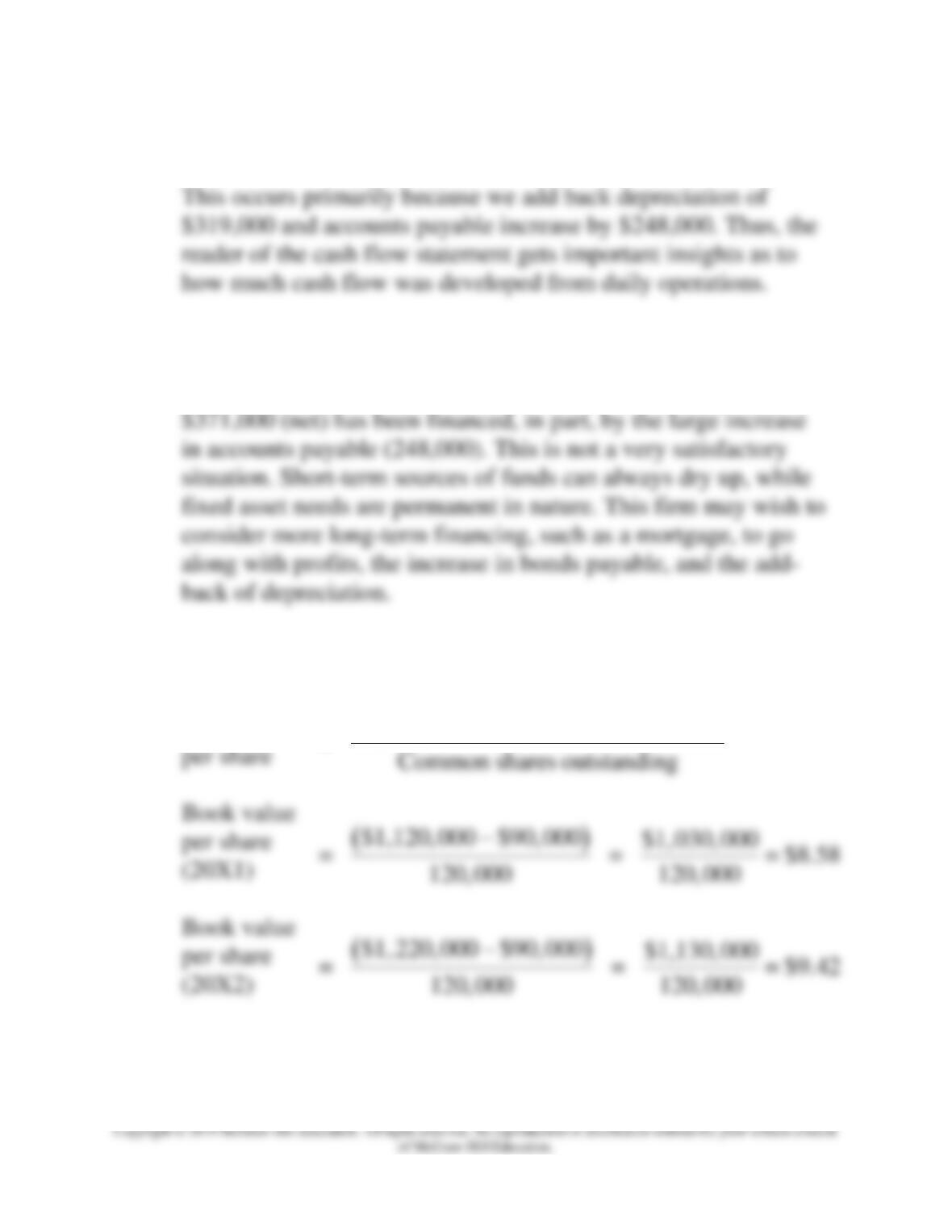
Cash flows from operating activities far exceed net income.
This occurs primarily because we add back depreciation of
$319,000 and accounts payable increase by $248,000. Thus, the
reader of the cash flow statement gets important insights as to
how much cash flow was developed from daily operations.
Solution 2-28 c):
The buildup in plant and equipment of $690,000 (gross) and
$371,000 (net) has been financed, in part, by the large increase
in accounts payable (248,000). This is not a very satisfactory
situation. Short-term sources of funds can always dry up, while
fixed asset needs are permanent in nature. This firm may wish to
consider more long-term financing, such as a mortgage, to go
along with profits, the increase in bonds payable, and the add–
back of depreciation.
Solution 2-28 d):
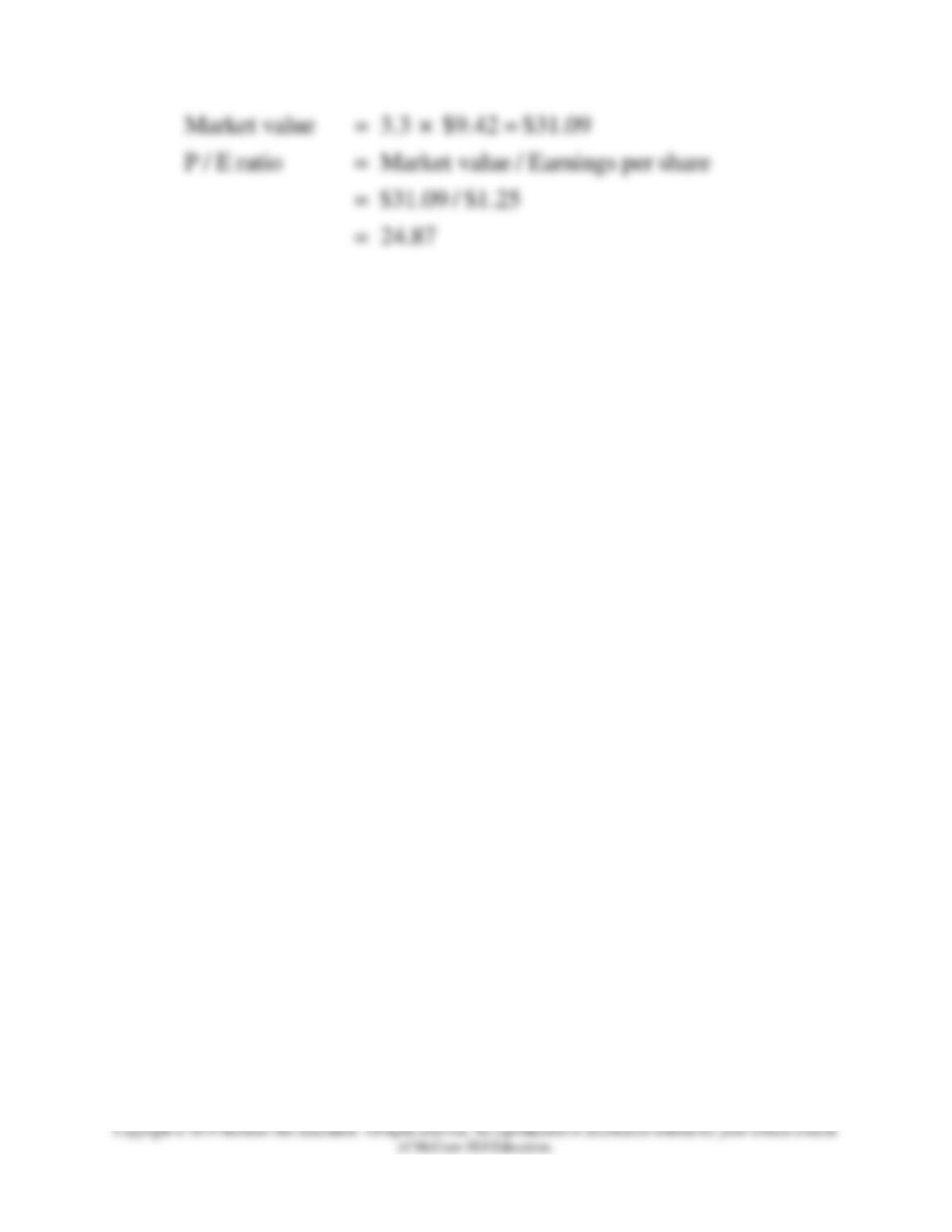
Book value
per share
Book value
per share
(20X1)
Book value
( )
( )
Stockholders’ equity Preferred stock
=Common shares outstanding
$1,120,000 $90,000 $1,030,000
= = = $8.58
120,000 120,000
$1,220,000 $90,000 $1,130,000
−
−
−
Chapter 02: Review of Accounting
Market value = 3.3 × $9.42 = $31.09
P / E ratio = Market value / Earnings per share
= $31.09 / $1.25
= 24.87