Chapter 02: Review of Accounting
Chapter 2
Review of Accounting
Discussion Questions
2-1.
Discuss some financial variables that affect the price-earnings ratio.
The price-earnings ratio will be influenced by the earnings and sales growth of
the firm, the risk or volatility in performance, the debt-equity structure of the
firm, the dividend payment policy, the quality of management, and a number of
other factors. The ratio tends to be future-oriented, and the more positive the
outlook, the higher it will be.
2-2.
What is the difference between book value per share of common stock and
market value per share? Why does this disparity occur?
Book value per share is arrived at by taking the cost of the assets and
subtracting out liabilities and preferred stock and dividing by the number of
common shares outstanding. It is based on the historical cost of the assets.
Market value per share is based on the current assessed value of the firm in the
marketplace and may bear little relationship to original cost. Besides the
disparity between book and market value caused by the historical cost approach,
other contributing factors are the growth prospects for the firm, the quality of
management, and the industry outlook. To the extent these are quite negative or
positive; market value may differ widely from book value.
2-3.
Explain how depreciation generates actual cash flows for the company.
The only way depreciation generates cash flows for the company is by serving
as a tax shield against reported income. This non-cash deduction may provide
cash flow equal to the tax rate times the depreciation charged. This much in
taxes will be saved, while no cash payments occur.
2-4.
What is the difference between accumulated depreciation and depreciation
expense? How are they related?
Accumulated depreciation is the sum of all past and present depreciation
charges, while depreciation expense is the current year’s charge. They are
related in that the sum of all prior depreciation expense should be equal to
accumulated depreciation (subject to some differential related to asset
write-offs).
Chapter 02: Review of Accounting
Frantic Fast Foods
a. Year 20X1
Earnings after taxes
Earnings per share Shares outstanding
$420,000
= $1.36
309,000
=
=
b. Year 20X2
Earnings after taxes $420,000 1.30 $546,000
Shares outstanding 309,000 20,000 329,000
$546,000
Earnings per share $1.66
329,000
= =
= + =
==
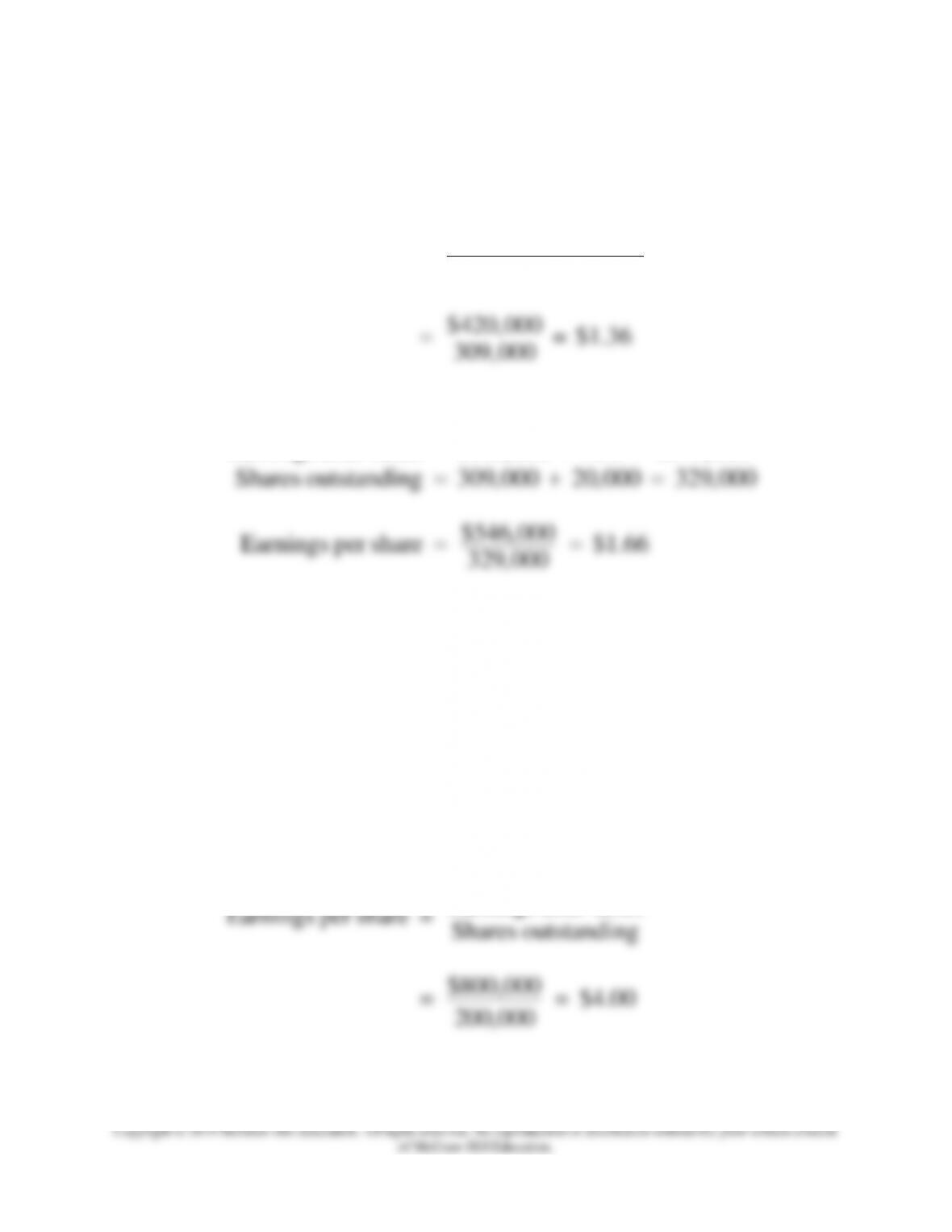
2. Income statement (LO1) Sosa Diet Supplements had earnings after taxes of $800,000 in
the year 20X1 with 200,000 shares of stock outstanding. On January 1, 20X2, the firm
issued 50,000 new shares. Because of the proceeds from these new shares and other
operating improvements, earnings after taxes increased by 30 percent.
a. Compute earnings per share for the year 20X1.
b. Compute earnings per share for the year 20X2.
2-2. Solution:
Sosa Diet Supplements
a. Year 20X1
Earnings after taxes
Earnings per share = Shares outstanding
$800,000
= = $4.00
200,000
b. Year 20X2
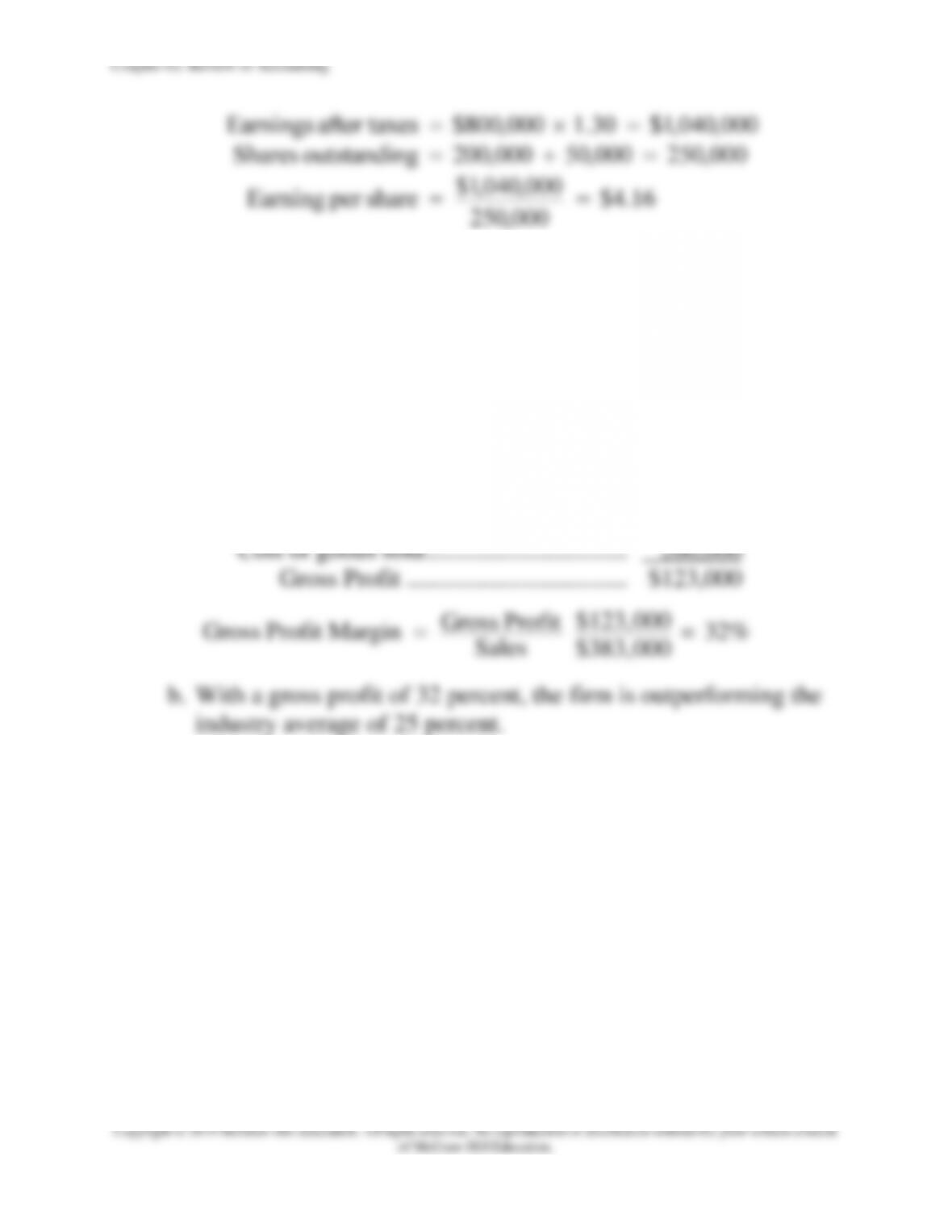
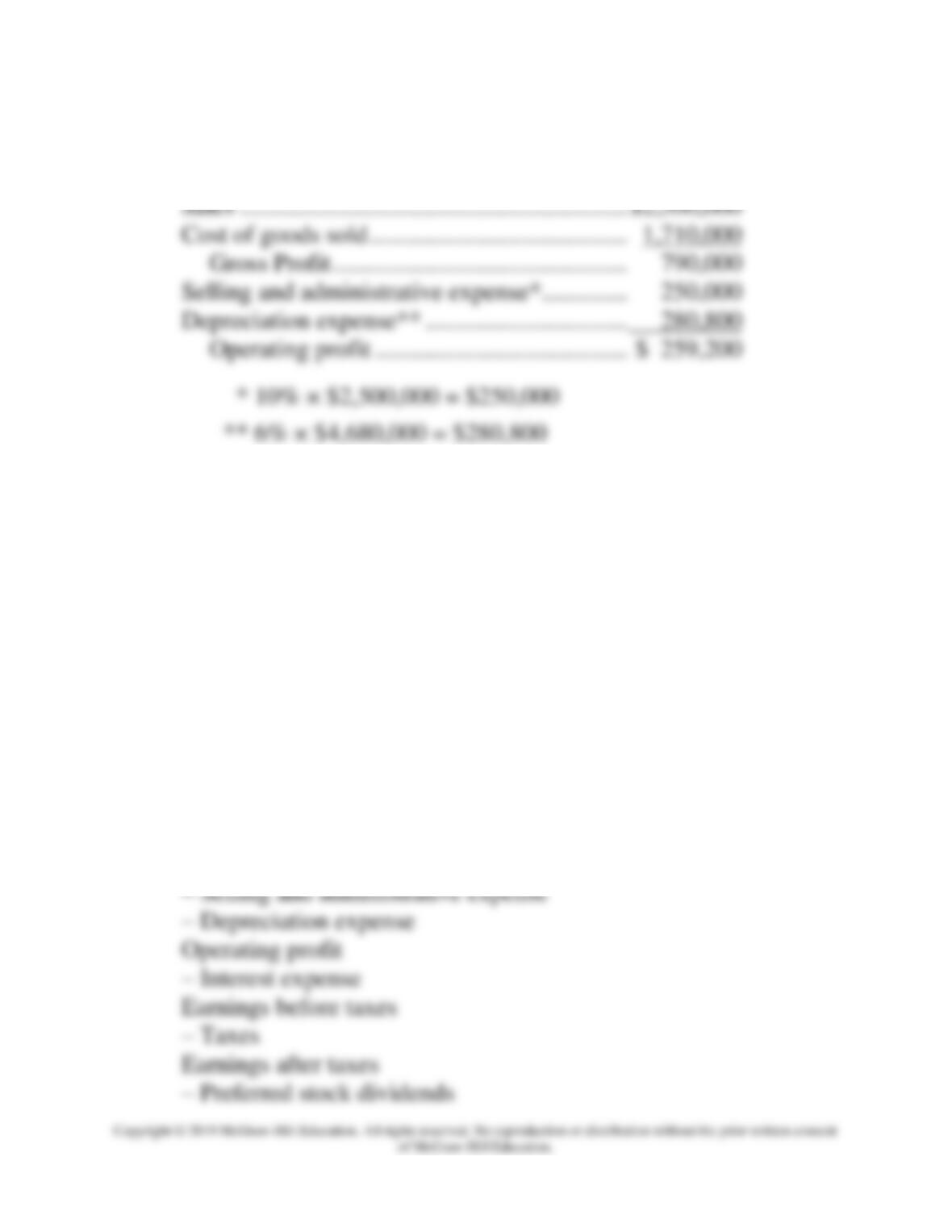
Chapter 02: Review of Accounting
A-Rod Fishing Supplies
5. Income statement (LO1) Arrange the following income statement items so they are in the
proper order of an income statement:
Taxes Earnings per share
Shares outstanding Earnings before taxes
Interest expense Cost of goods sold
Depreciation expense Earnings after taxes
Preferred stock dividends Earnings available to common
Operating profit stockholders
Sales Selling and administrative expense
Gross profit
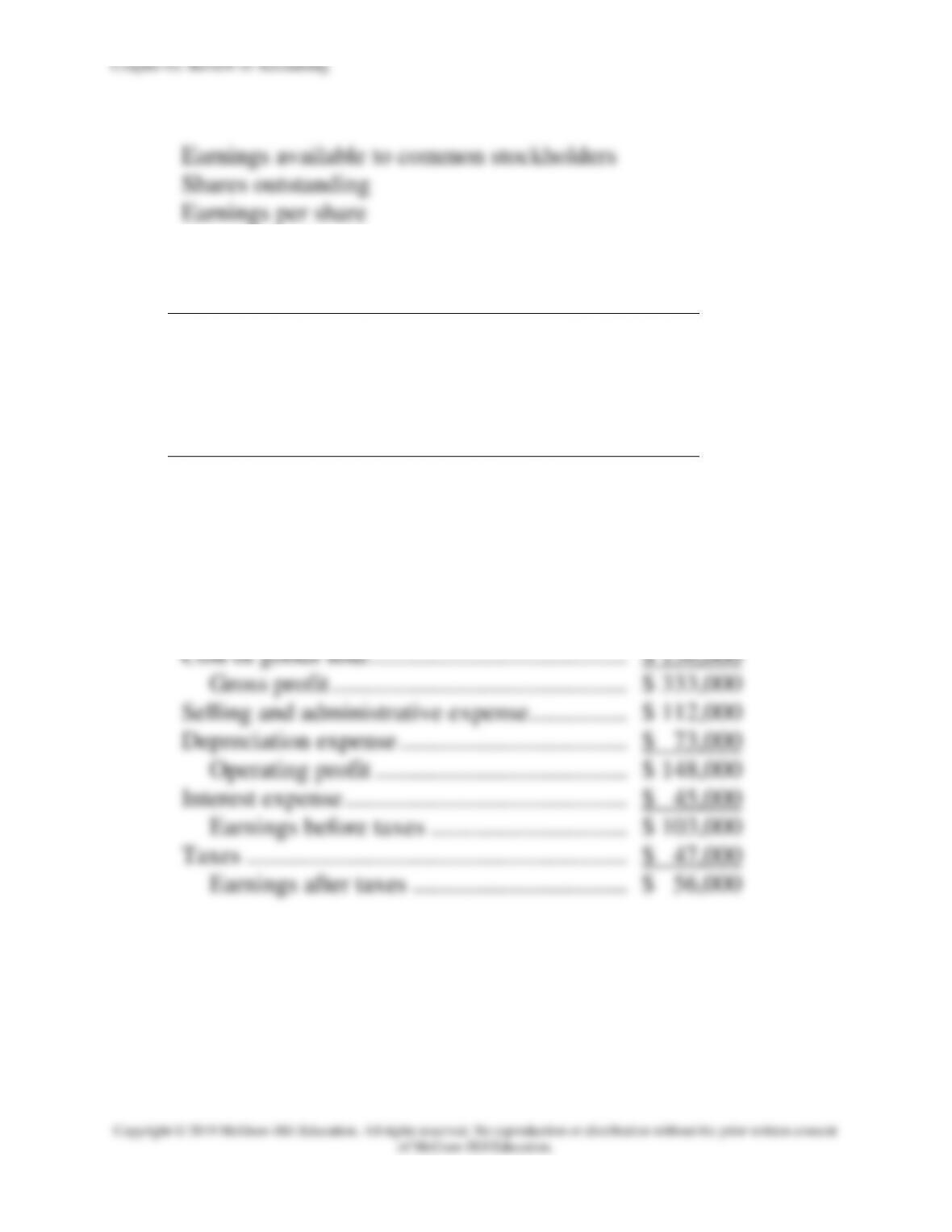
2-5. Solution:
Sales
– Cost of goods sold
Gross profit
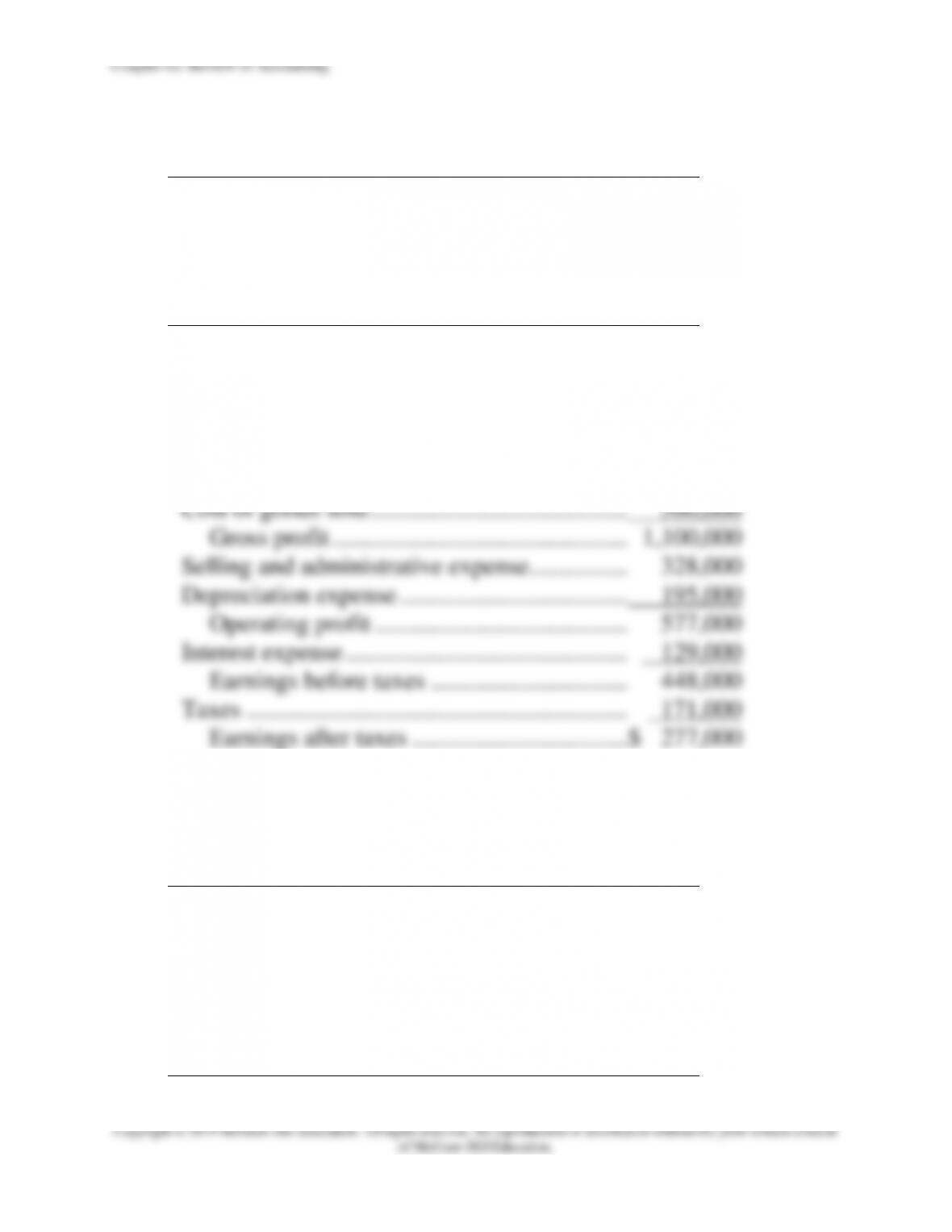
Chapter 02: Review of Accounting
Elite Trailer Parks
a. Operating profit (EBIT) …………………………………… $200,000