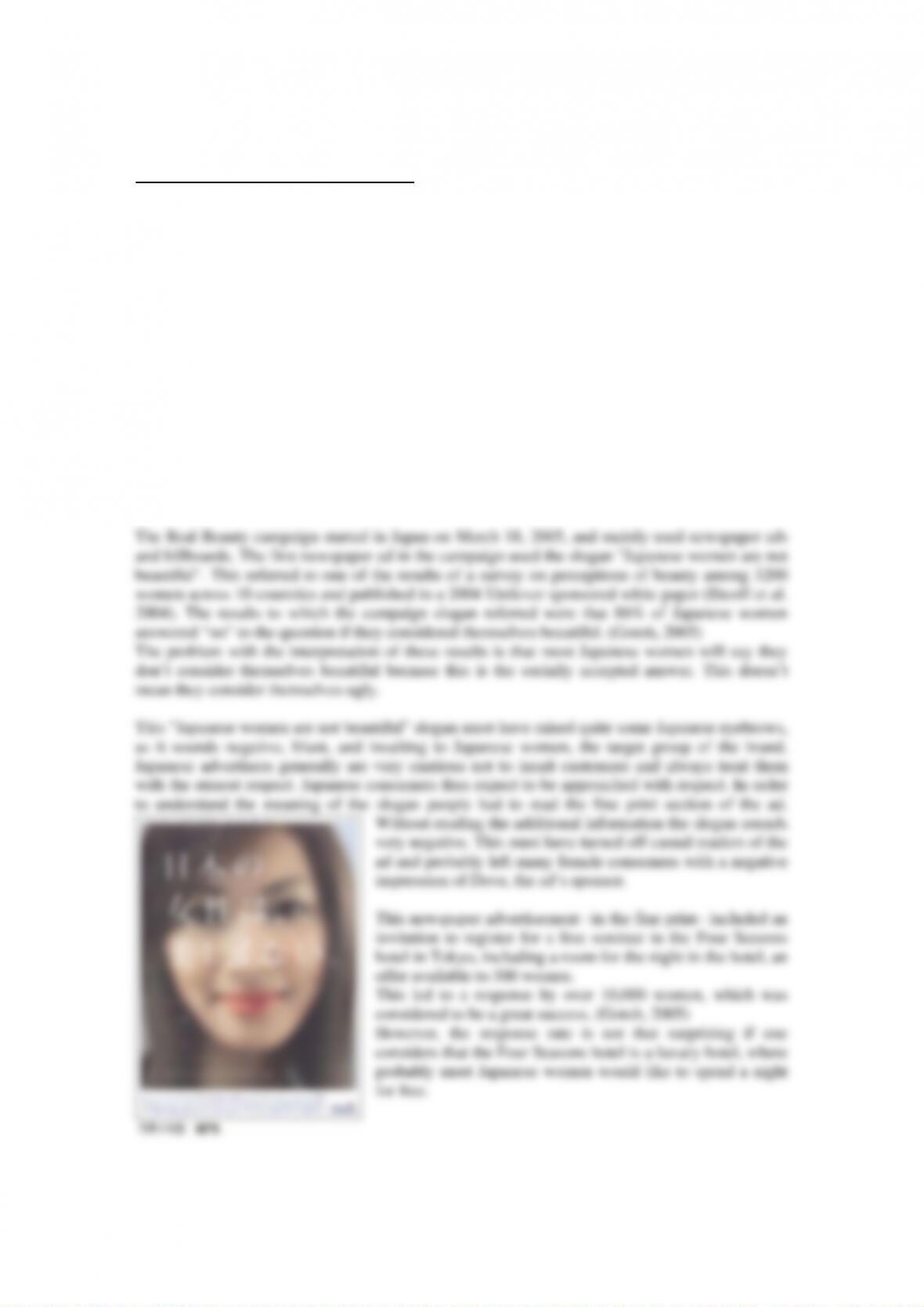
1
Campaign for Real Beauty Japan, 2005
This case was written by Carolus Praet, Professor of International Marketing at Otaru University
of Commerce in Japan.
This is a short case about introducing the Dove ‘campaign for Real Beauty’ in Japan. It
introduces and discusses the use and interpretation of cross-cultural survey data and how data
collected for the Dove brand were translated into a marketing communications campaign for the
Japanese market. The case also illustrates pitfalls when using unconventional and culturally
incompatible advertising styles, concepts and content. Finally the case briefly discusses how a
competing Japanese brand was extremely successful by using a diametrically opposite approach
to the one used for Dove.
Unilever introduced the Dove brand to the Japanese market in 1999. Since the beginning it has
used testimonials by average users in its advertising for Dove (Gotoh, 2005). This approach is in
stark contrast with the usual approach taken by virtually all competing brands in the Japanese
personal care product category: the use of famous actresses and fashion models as brand
endorsers.
2
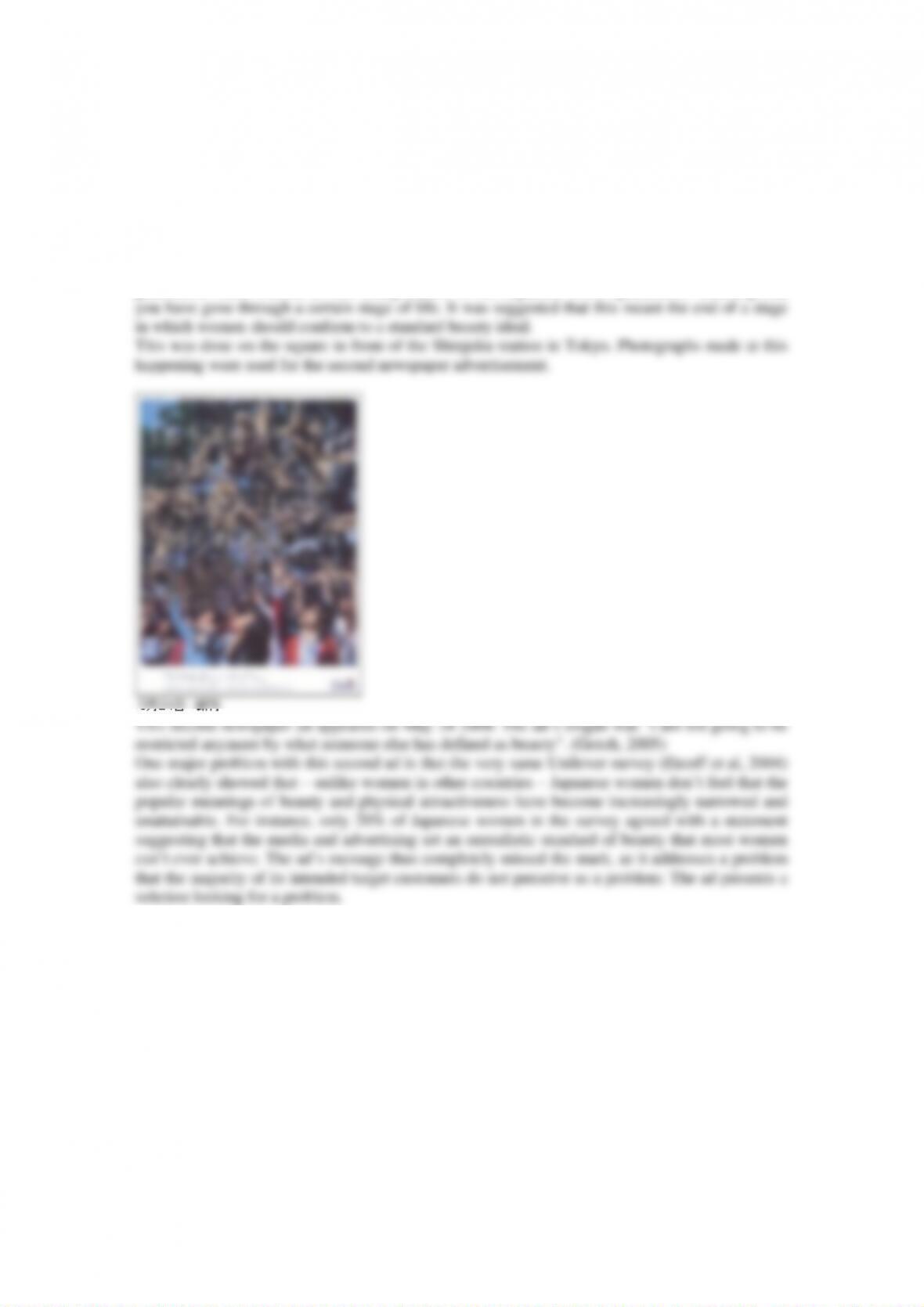
The success of this campaign was the huge response to the offer of a free night in a luxury hotel.
However, this did not necessarily translate into increased sales of the Dove products.
Ogilvy & Mather Japan made the 300 participants to the seminar wear a blonde wig at the end of
the seminar. After the seminar the women were instructed to simultaneously throw the blonde
wigs into the air (Gotoh, 2005), the way in the US students throw their caps into the air after
graduation. This referred to one interpretation of the Japanese word ‘graduation’ meaning that
3
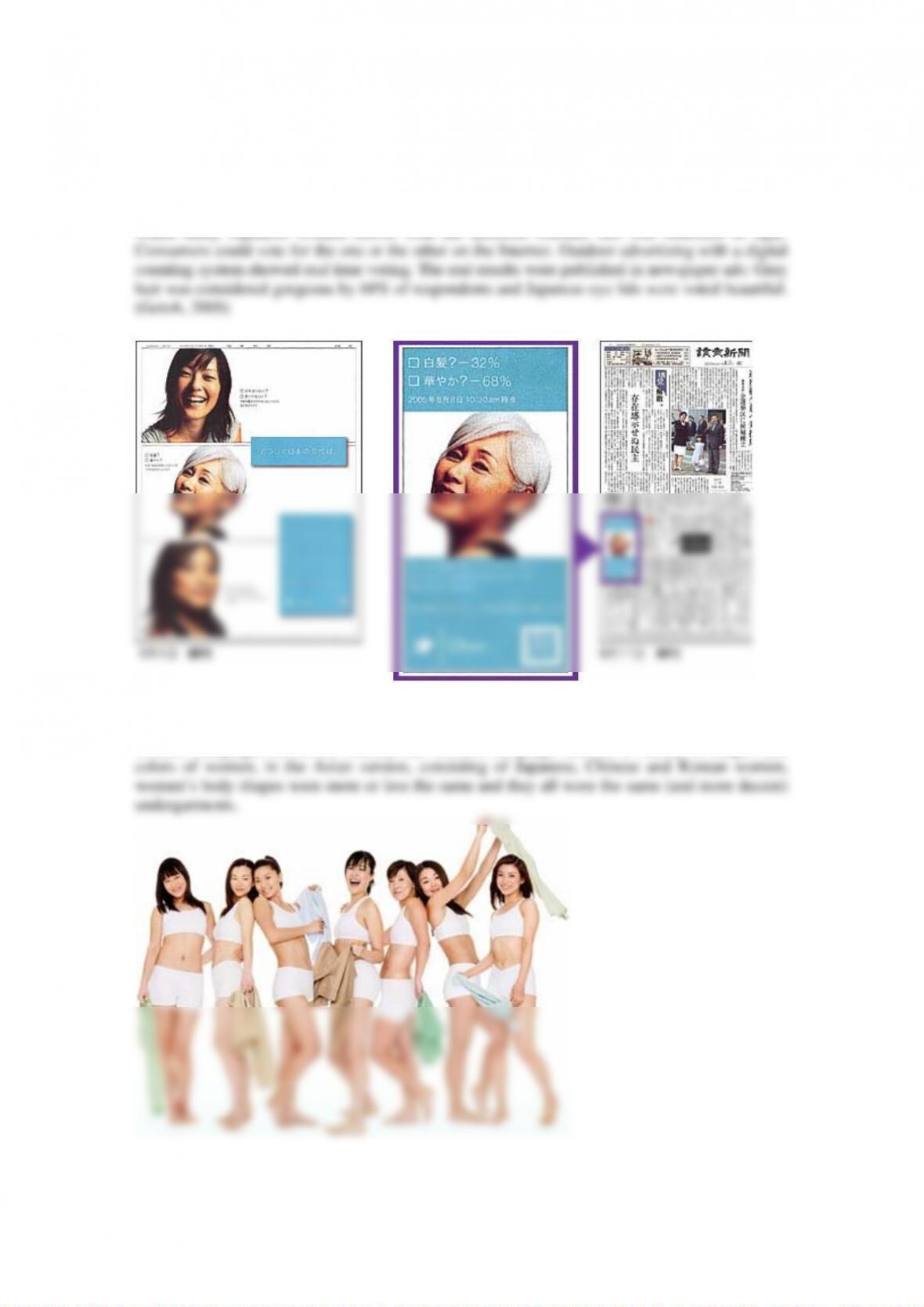
In August 2005 the follow-up campaign showed a photograph of a Japanese woman with grey
hair and asked whether this picture represented ‘grey hair’ or ‘gorgeous’. Another photograph
showed a Japanese woman withAsiansingle eyelids (as opposed to western double eyelids for
which many Japanese women crave) with the question whether this was beautiful or ugly.
In a 2006 follow-up campaign, billboards showed a group of women in their underwear, like the
western campaign. However, whereas the western campaign showed a variety of shapes and
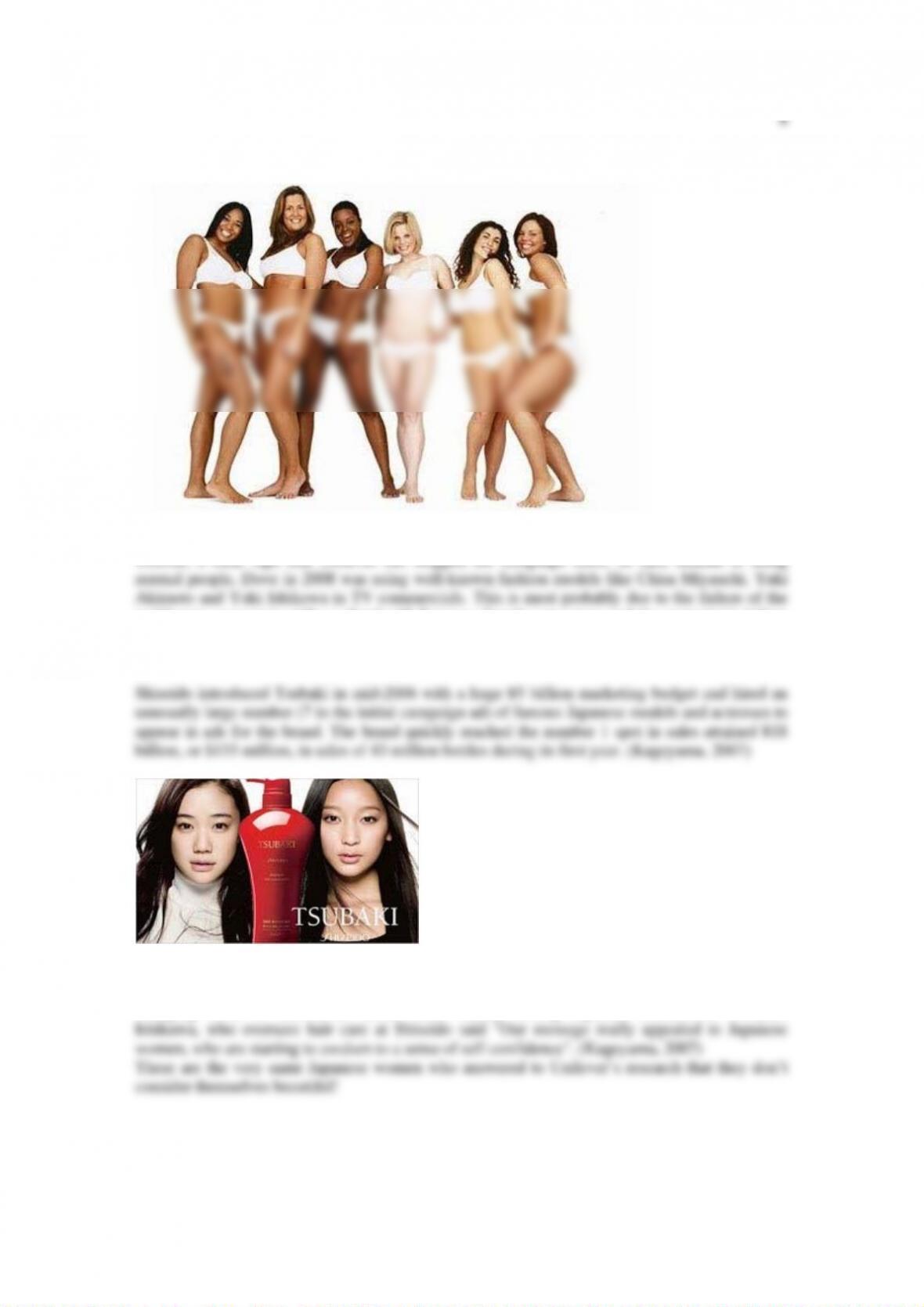
In contrast to other countries, Japan is currently (2010) no longer listed on the Real Beauty
website, a clear sign that Unilever has stopped the campaign there. In fact, instead of using
real beauty concept to strike a chord with Japanese female consumers and the campaign’s failure
to result in increased sales. It was also most likely in response to the enormous success of the
Tsubaki brand introduced by competitor Shiseido in 2006.
In stark contrast to Unilever’s message in its second ad of the Real Beauty campaign, Tsubaki
launched the Tsubaki brand using the slogan “Japanese women are beautiful”, tapping into a
changing sense of confidence about Asian beauty among Japanese consumers. Hiroyuki

5
References
Etcoff, Nancy, Orbach, Susy, Scott, Jeniffer, and Heidi D’Agostino (2004) “THE REAL TRUTH
ABOUT BEAUTY: A GLOBAL REPORT – Findings of the Global Study on Women, Beauty
and Well-Being,” retrieved on February 10, 2010 from
www.campaignforrealbeauty.ae/uploadedfiles/dove_white_paper_final.pdf