Labor Unions across Countries
•Union Membership
➢Union membership as a percentage of the total work
force (union density) globally has declined steadily for
decades.
•Reasons for Declining Union Density
➢Globalization of business to nonunion labor markets
➢Mechanization of labor-intensive industries
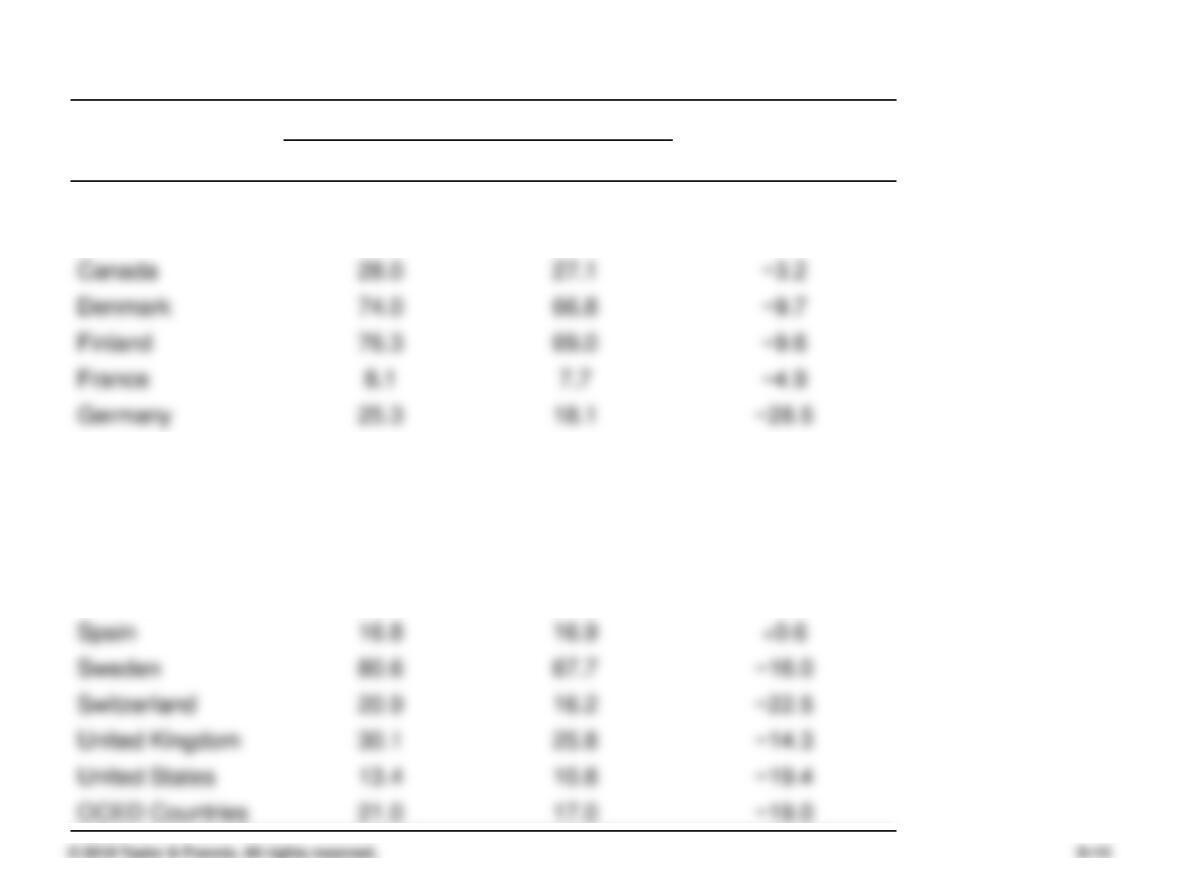
Table 9.4 Union Density Rates & Changes over Time
Country
Density Rates (%)
Change (%)
2000 2013
Australia
25.4 17.0 −33.1
Belgium
54.3 55.1 +1.5
Denmark
Finland
France
Ireland
38.7 29.6 −23.5
Italy
35.4 37.3 +5.4
Japan
22.2 17.8 −19.8
Netherlands
24.7 17.8 −27.9
Norway
54.8 52.1 −4.9
Unions in EU Countries
•Unions in France
➢Dominated by national unions with strong political
influences and social agendas
•Unions in Germany
•Unions in the United Kingdom
➢Declining in influence due to a stable economy and
legislation that reduced union power
Unions in Asia
•Unions in Japan
➢Take the form of enterprise (in-house) unions that
represent only permanent employees to a single large
•Unions in China
➢Represent a growing Internet-fueled awareness of
Unions in Asia (continued)
•Unions in Other Asian Nations
➢Countries such as India, Indonesia, the Philippines,
Thailand, and Vietnam have economies—and labor
Labor Unions in Mexico and Africa
•Unions in Mexico
➢Have benefitted from legislation that promotes a high
degree of union participation but also allows for a high
degree of fractionalization of workplace unions
•Unions in Africa
➢Are underdeveloped with differences in labor-
International Employee Unions
•International Labour Organization (ILO)
➢Created by the League of Nations
•International Confederation of Free Trade
Unions (ICFTU)
➢Seeks to emulate the organization of a multinational
in developing a transnational bargaining system
•Factors Limiting International Unions
Other Forms of Employee Input and Control:
Types of Worker Participation
•Joint Consultation Committees
➢Groups of workers who sit on a committee with
management to deal with issues of mutual interest
to employees and management
•Worker Membership on Board of Directors
➢Mandated by law in seven European nations
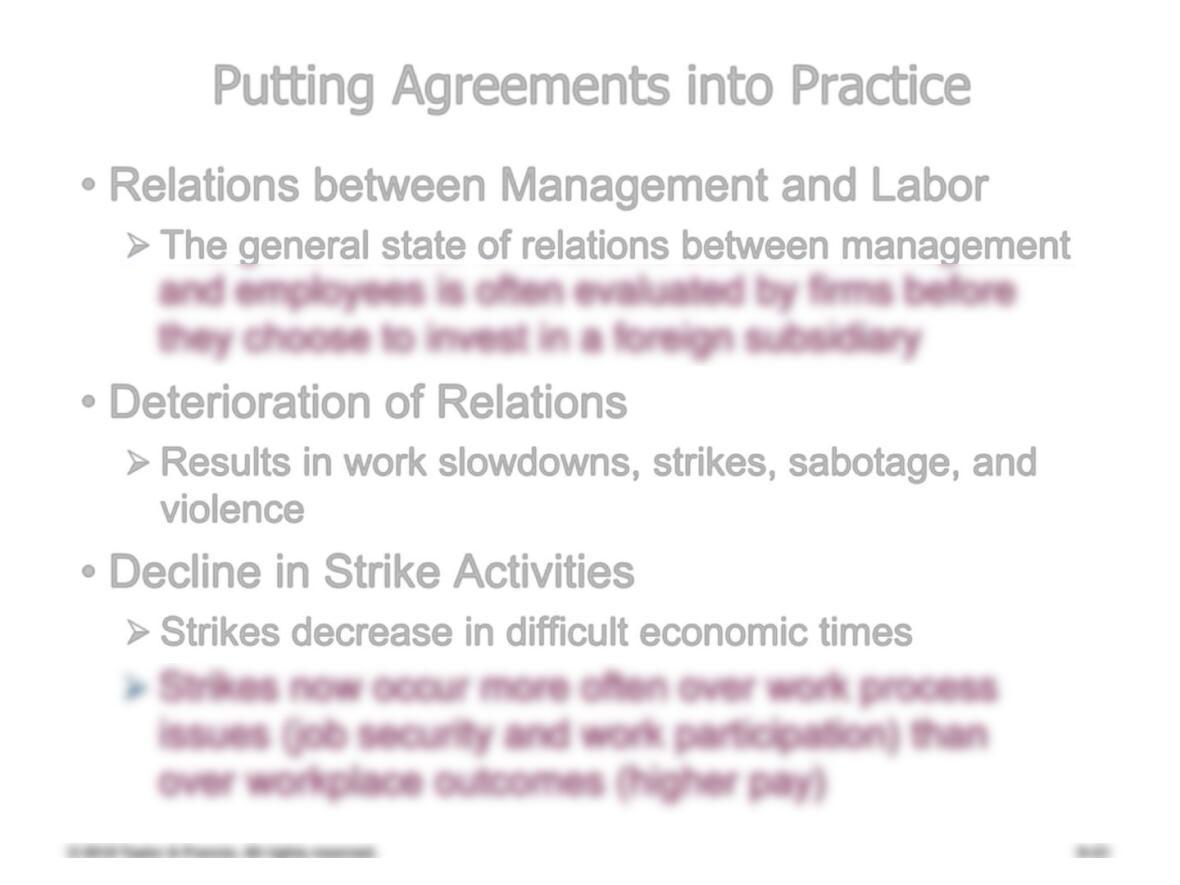
Putting Agreements into Practice
•Relations between Management and Labor
➢The general state of relations between management
•Deterioration of Relations
➢Results in work slowdowns, strikes, sabotage, and
violence
•Decline in Strike Activities
➢Strikes decrease in difficult economic times
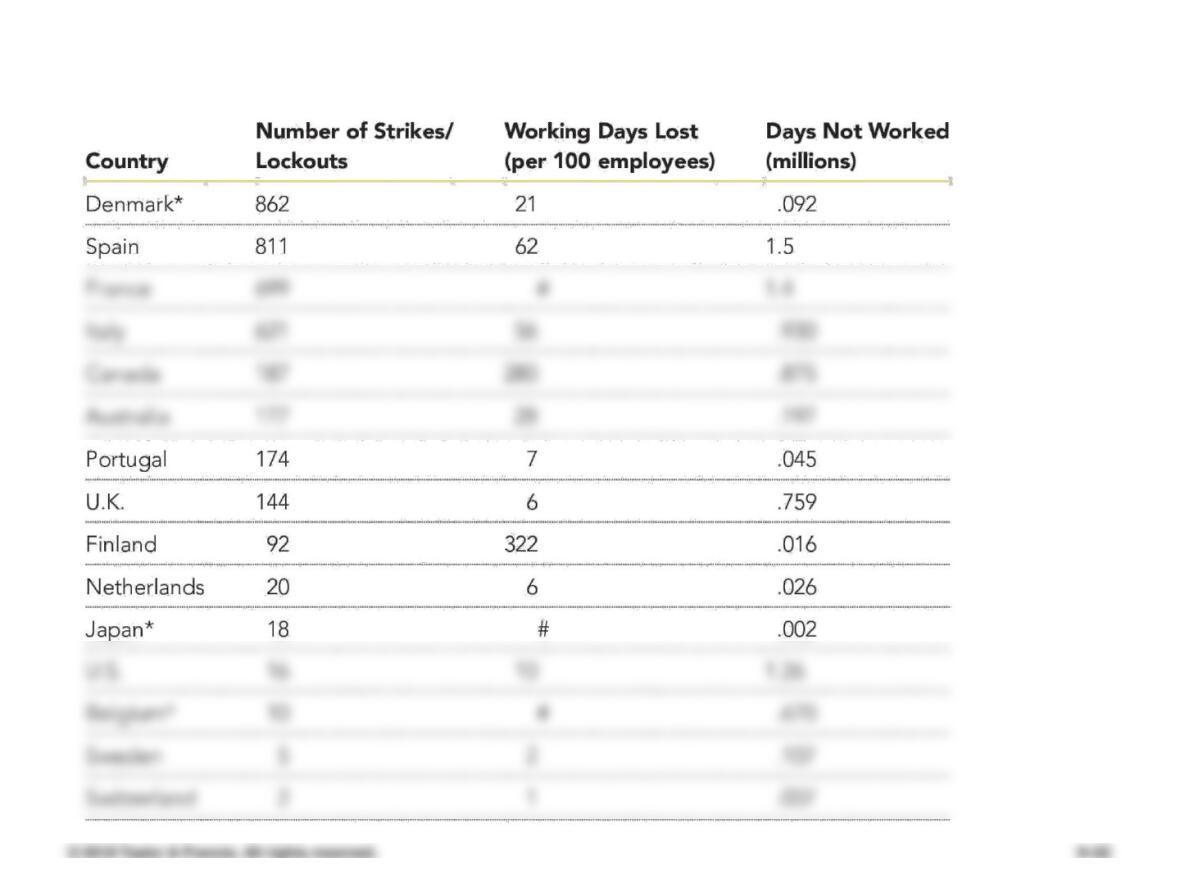
Table 9.5 Strike Activity & Effects in a Variety of Countries
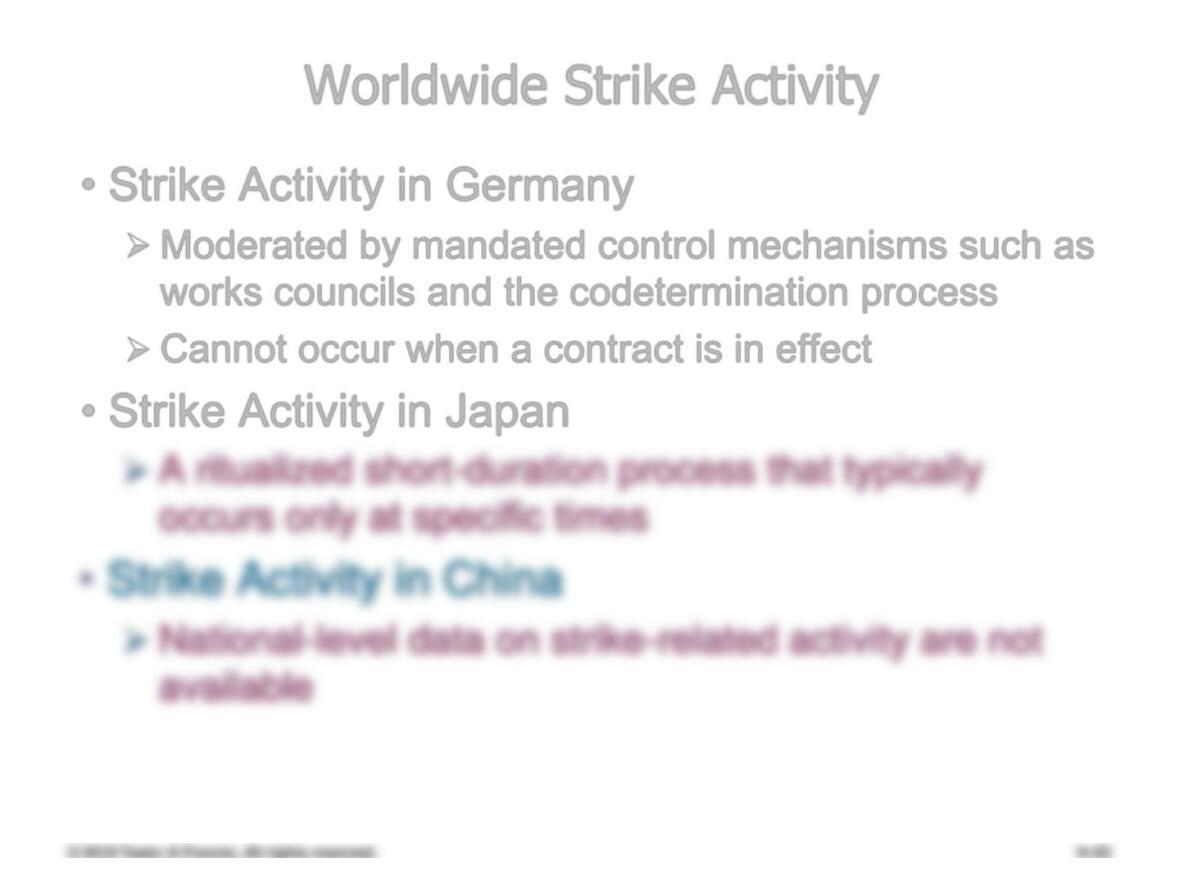
Worldwide Strike Activity
•Strike Activity in Germany
➢Moderated by mandated control mechanisms such as
works councils and the codetermination process
➢Cannot occur when a contract is in effect
•Strike Activity in Japan
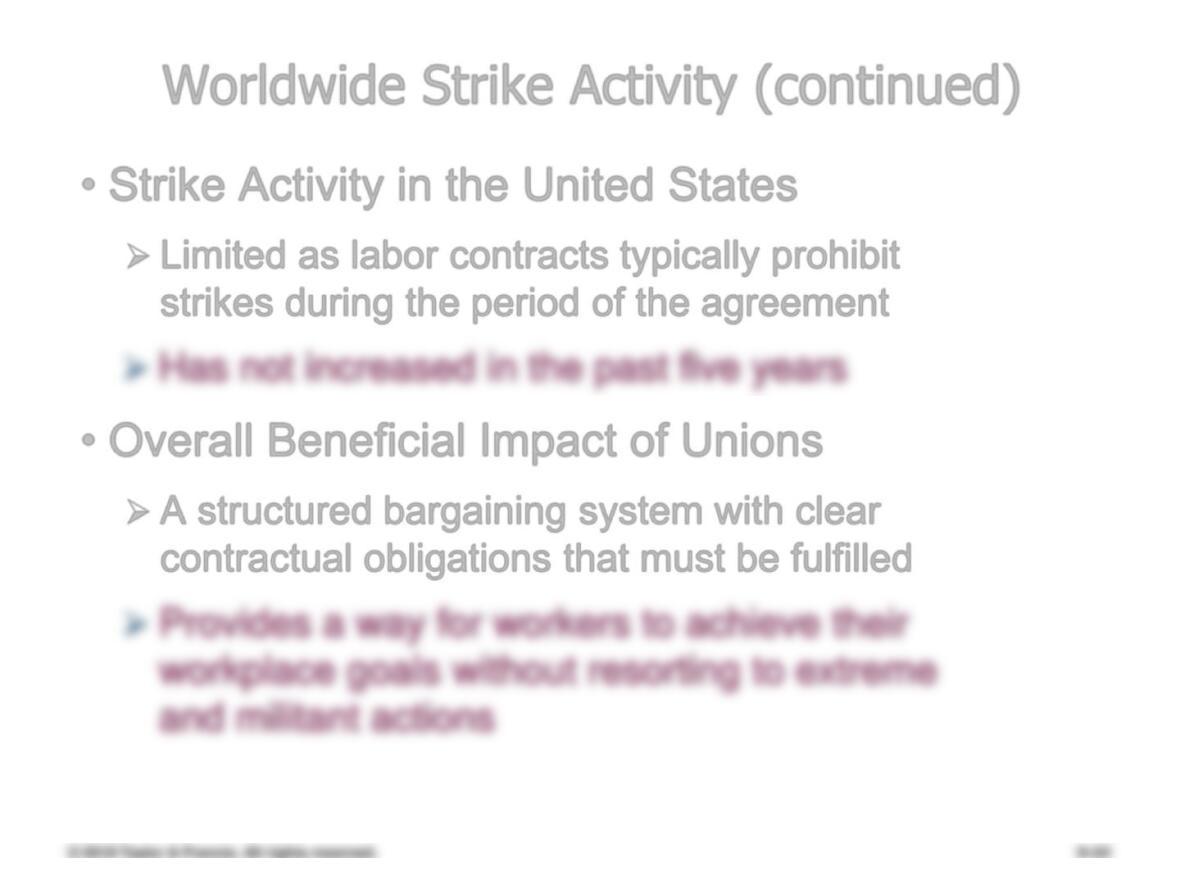
Worldwide Strike Activity (continued)
•Strike Activity in the United States
➢Limited as labor contracts typically prohibit
strikes during the period of the agreement
•Overall Beneficial Impact of Unions
➢A structured bargaining system with clear
contractual obligations that must be fulfilled