International Organizational Behavior 2e Chapter 9 Page 15
Joint consultation committees (JCC) are common in many Western countries.
These groups of workers sit on a committee that deals with topics of mutual
interest to employees and management. Their charge can range from concerns
B. Works councils
Works councils in Western Europe (e.g., France, Germany, and the Netherlands)
differ from JCCs in that they often have significant power to block management
C. Board membership
Board membership is a less common mechanism through which workers have, in
this case, extensive input. In seven European countries (including Denmark,
VII. Putting Agreements into Practice
Unfortunately, there are also many ways that disagreements can emerge, and these
can sometimes result in open conflict between the two groups.
A. Relations between management and labor
International Organizational Behavior 2e Chapter 9 Page 16
The general state of relations between management and employees is often
evaluated by firms before they choose to invest in a foreign subsidiary. These
B. Deterioration of relations
Sometimes labor–management relations can deteriorate to the point that work
slows down, sabotage occurs, and even violence happens. But, events such as
slowdowns are difficult to track, and violence against management or security
1. Strikes have been declining since the 1970s. The number of days lost to
strikes has fallen in recent years, and especially so in the EU—outcomes
2. There has also been a shift in the reason for strikes. They are more likely to
3. Some countries that are thriving economically (e.g., Denmark, France, and
Italy) also have a relatively high number of strikes. The total number of lost
International Organizational Behavior 2e Chapter 9 Page 17
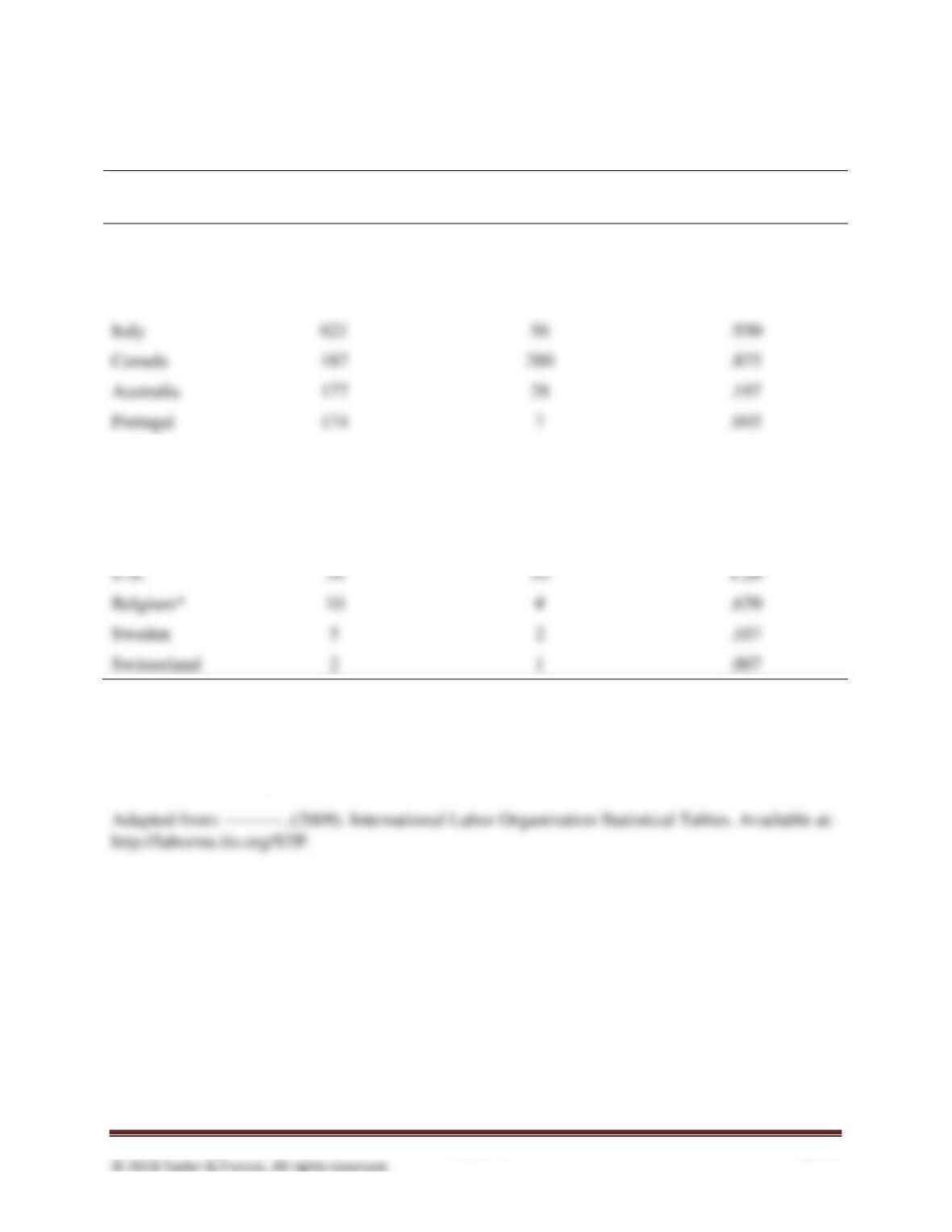
Table 9.5 presents a ranking of various countries on the number of
strikes/lockouts and the number of work days lost from these actions.
C. Strike activity in Germany
Despite a powerful tradition of union influence, strike activity in Germany is not
as common as in other Western European nations. For example, days lost per
D. Strike activity in Japan
Union–management relations in Japan are quite good, as mentioned earlier. Table
9.5 shows there were only 18 strikes in 2008, which produced only about 2,000
lost work days. Most disagreements are settled amicably, and it is rare for
E. Strike activity in China
Increased activity has been shown by Chinese workers, including a well-
publicized strike at Honda in 2010 that resulted in a 24% increase in pay (before
F. The United States
Table 9.5 shows that the U.S. had 16 official strikes in 2008—this figure has
hovered near 20 for the last half decade prior. These strikes resulted in over 1
million lost work days for the U.S.’s large labor force. Labor contracts typically
International Organizational Behavior 2e Chapter 9 Page 18
prohibit strikes during the period of the agreement. Once a contract is in place, a
strike (called a “wildcat strike”) is rare and usually not authorized by the union.
VIII. Overall Impact of Unions
Despite all this, there are benefits from a unionized workforce, including a
structured bargaining system and clear contractual obligations that must be
fulfilled. A subtle benefit of union membership is that it may quell more extreme
CHAPTER SUMMARY
This chapter looked closely at the management topics of ethics and labor forces/relations and
related issues around the globe. We reviewed various perspectives on ethics that can be taken
There are many differences across countries in both the presence and influence of unions. The
percentage of workers who are union members varies across countries and is on the decline
worldwide. One reason for both the variance and the decline is that worker interests can be
served by a variety of other legal and political mechanisms, ranging from weaker methods—such
International Organizational Behavior 2e Chapter 9 Page 19
DISCUSSION QUESTIONS
1. What role does universalism and relativism play for international managers? Which
approach to ethics makes the most sense in your view? Why?
• Universalism: moral guidelines exist and should be followed by everyone
everywhere, including international managers
• Cultural relativism: popular alternative to universalism provides more
flexibility for international managers
o The definition of “ethical behavior” in a country is shaped by its
culture, laws, and business practices.
2. How should multinationals deal with demands for bribes abroad? What about other
questionable practices? Do you agree with the basic tenets of the FCPA? Explain
your position.
• May choose to adopt formal corporate guidelines about bribery and other
3. Why might multinationals have the upper hand in dealing with workers, even if those
workers are unionized and spread across a variety of countries?
• Resources available to multinationals can insulate them from actions by
disgruntled employees.
International Organizational Behavior 2e Chapter 9 Page 20
• A multinational could outlast a union strike by absorbing losses at a particular
location.
4. What are some of the differences between how North American, European, and Asian
unions operate? Why might those differences exist?
• See Tables 9.3 and 9.4
• National differences have been tied to numerous factors, including political
leanings of the government, how wages are determined, and the size of the
public employment sector.
5. What is the relationship between the presence of unions and the level of worker
militancy? Explain why this is the case.
• Organized employee input may make management–worker relations smoother
than would otherwise be the case.
ADDITIONAL ACTIVITIES
International Organizational Behavior 2e Chapter 9 Page 21
BOXED FEATURES
CULTURE CLASH – Science Project: Overcome Barriers in Multicultural Teams
GLOBAL INNOVATIONS – Family-Friendly Perks Keep Indian Women on the Career
Ladder
ADDITIONAL RESOURCES
Table 9.1 The United Nations Global Compact
Human Rights—Businesses should:
Principle 1
Support and respect the protection of internationally proclaimed human rights
Principle 2
Make sure that they are not complicit in human rights abuses
Labor Standards—Businesses should:
Principle 3
Uphold freedom of association and the recognition of the right to collective
bargaining
Principle 4
Work to eliminate all forms of forced and compulsory behavior
Principle 5
Eliminate child labor
Principle 6
Eliminate discrimination due to employment and occupation
Environment—Businesses should:
Principle 7
Support appropriate cautions to protect the environment
Principle 8
Undertake initiatives to improve environmental responsibility
technologies
Anti-Corruption—Businesses should:
Principle 10
Work against corruption in all its forms, including extortion and bribery
Source: United National Global Compact. Available at:
www.unglobalcompact.org/AboutTheGC/TheTenPrinciples/index.html.
International Organizational Behavior 2e Chapter 9 Page 22
Table 9.2 Rankings of the Most Corrupt and Least Corrupt Nations
Least Corrupt
Most Corrupt
Nation
% Reporting
Corruption
Nation
% Reporting
Corruption
Australia
1
India
54
Denmark
1
61
1
62
Japan
1
Libya
62
Spain
2
Mozambique
62
Canada
3
Zimbabwe
62
South Korea
3
Kenya
70
Malaysia
3
Yemen
74
New Zealand
3
Liberia
75
3
Sierra Leone
84
Note: Corruption defined as the percentage of respondents in each country who report having
paid bribes in past year (to any of eight service areas such as law enforcement, police, education,
etc.).
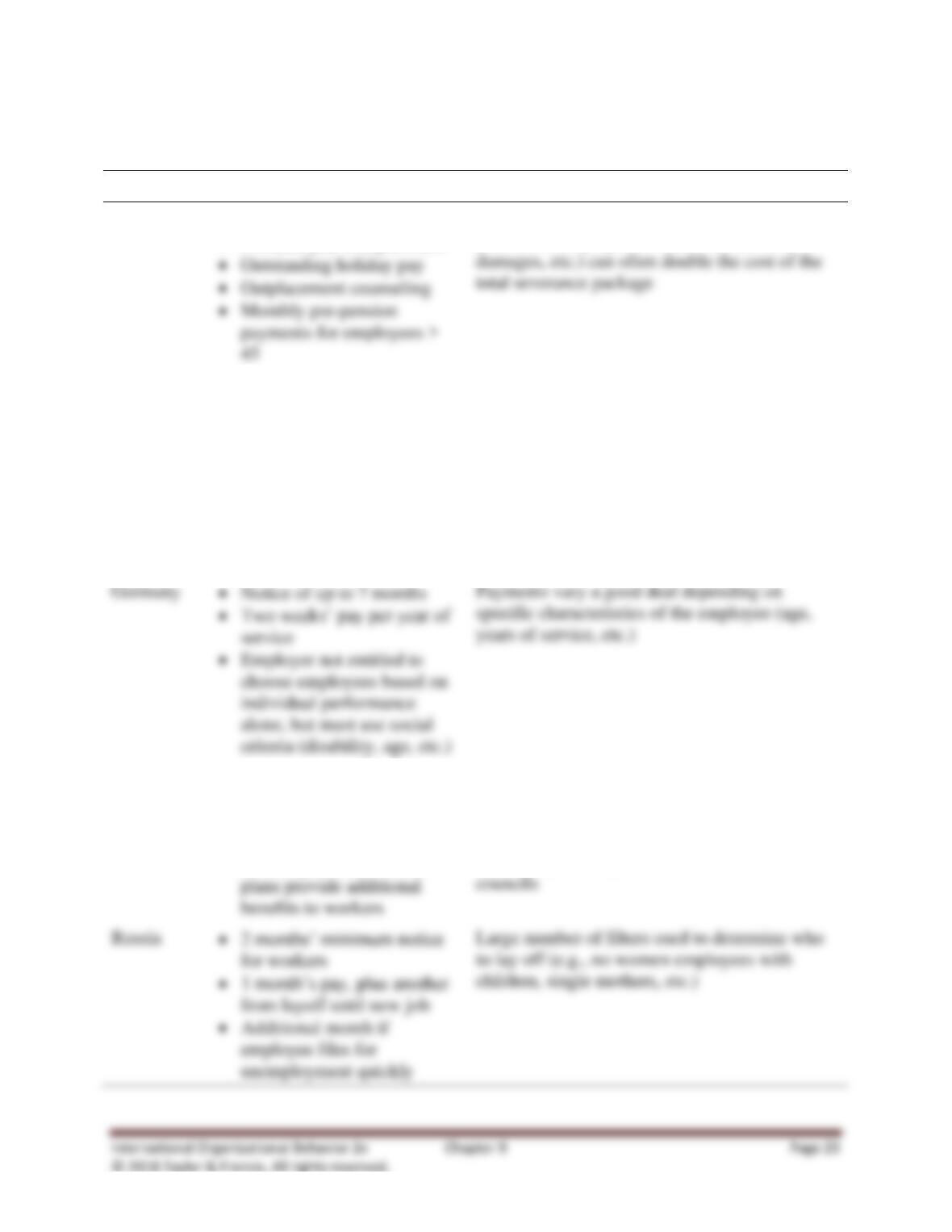
Table 9.3 Legal Protections for Worker Severance in Several European Countries
Country
Legal Protections
Common Additions/Summary
Belgium
• Extensive advanced notice
• Prorated year end premium
Union negotiated additions (e.g., closure
premiums, employment search costs, moral
France
• 30 days’ pay for each year of
service
• Payments increased if more
than 10 years of service
• Compensation rises if layoff
is large-scale
• Firm of > 1000 employees
must offer full pay leave of
4–6 months
Payments often exceed these minimums. If
court decides there was no genuine/serious
reason for layoffs, damages might be added to
payments – amounting to at least 6 months’
salary. Employees may become increasingly
militant at notice of layoff
Netherlands
• One months’ salary for
employees 35–45 years old;
1.5 months 45–55; and 2
months for those > 55
• A variety of other social
Employers must select employees by applying
the last-in/first-out system (those with less
service first). Dutch labor law does not allow
unilateral breaking of employment agreement
by employer—they must consult with works
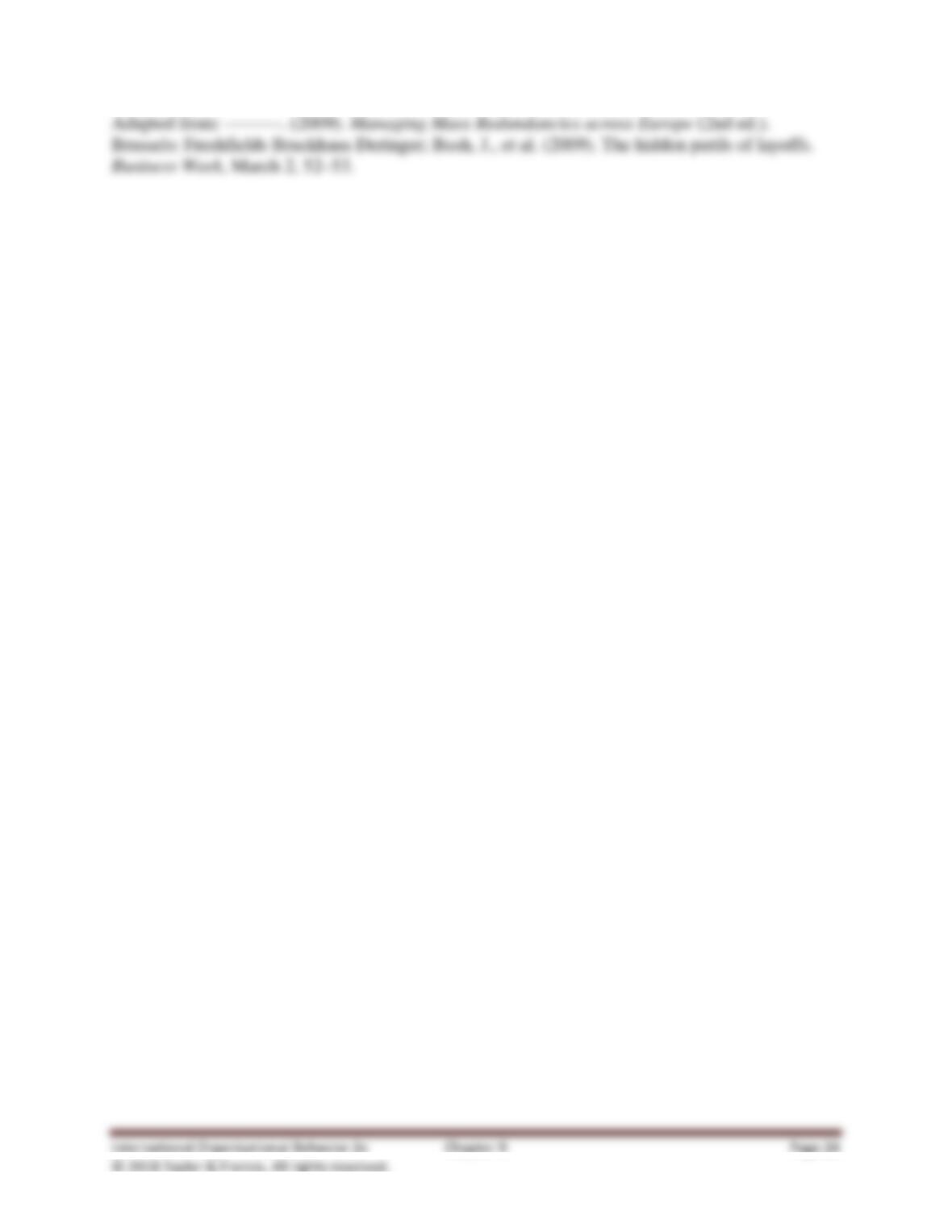
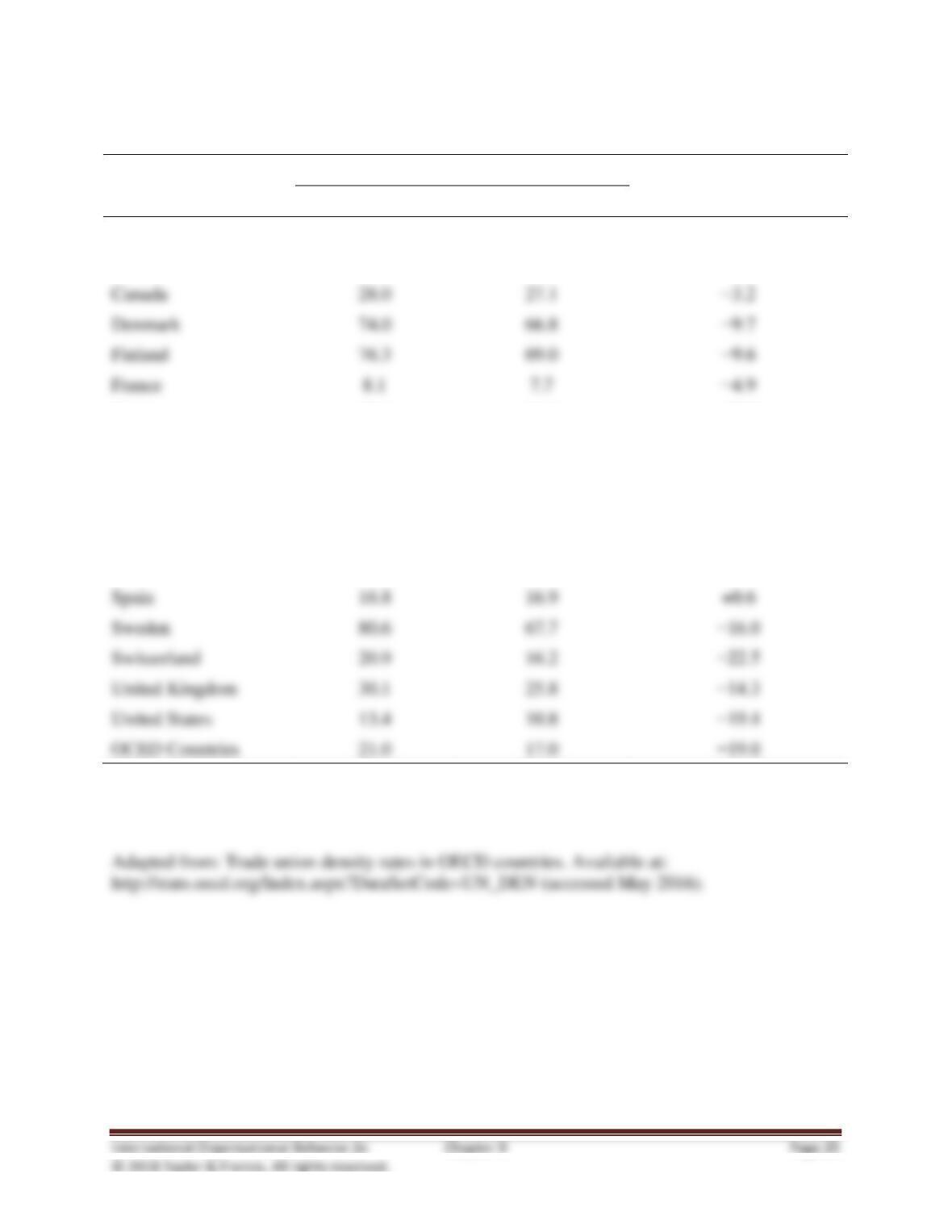
Table 9.4 Union Density Rates & Changes over Time
Country
Density Rates (%)
Change (%)
2000
2013
Australia
25.4
17.0
−33.1
Belgium
54.3
55.1
+1.5
Canada
28.0
27.1
−3.2
Denmark
74.0
66.8
−9.7
Finland
76.3
69.0
−9.6
France
−4.9
Germany
25.3
18.1
−28.5
Ireland
38.7
29.6
−23.5
Italy
35.4
37.3
+5.4
Japan
22.2
17.8
−19.8
Netherlands
24.7
17.8
−27.9
Norway
54.8
52.1
−4.9
Spain
16.8
16.9
+0.6
Sweden
80.6
67.7
−16.0
Switzerland
20.9
16.2
−22.5
United Kingdom
30.1
25.8
−14.3
United States
13.4
10.8
−19.4
OCED Countries
21.0
17.0
−19.0
Note: Density reflects estimates of the percentage of wage and salary workers who were union
members in 2000 and 2013.
International Organizational Behavior 2e Chapter 9 Page 26
Table 9.5 Strike Activity & Effects in a Variety of Countries
Country
Number of
Strikes/Lockouts
Working Days Lost (per
100 employees)
Days Not Worked
(millions)
Denmark*
862
21
.092
Spain
811
62
1.5
France
699
#
1.4
Italy
621
56
.930
Canada
187
280
.875
Australia
177
28
.197
Portugal
174
7
.045
U.K.
144
6
.759
Finland
92
322
.016
Netherlands
20
6
.026
Japan*
18
#
.002
U.S.
16
10
1.26
Belgium*
10
#
.670
Sweden
5
2
.107
Switzerland
2
1
.007
Note: “Number of strikes/lockouts” excludes work stoppage involving fewer than 500 workers
and lasting less than one full day or shift. “Days not worked” (in millions) refers to the number
of eight-hour days lost due to strikes or lockouts. Most data are for 2009; some (*) are from
2007/2008, “Working days lost” from 2006; # = no data available.