reason, multinationals sometimes pay expatriates in the home and local currency
to even out currency fluctuations between countries (referred to as split pay).
Regardless of what index is used, goods and services will inevitably be more
expensive in some countries than in others. Some companies calculate goods and
services differentials using an efficient purchaser index (EPI). These calculations
G. The balance sheet on balance
The major goal of the balance sheet method is to treat expatriates fairly. The
effect of many of the adjustments is to make a foreign posting less of a hardship,
if not altogether pleasant. However, the balance sheet approach is not without
Practical problems also emerge when expatriates are sent to places where costs
are generally lower than at home, meaning that housing as well as goods and
services can produce negative differentials. In such cases, should the employee
payments be reduced to reflect a lower cost of living, for example, in Mexico?
International Organizational Behavior 2e Chapter 8 Page 17
What seems to be more popular among firms is to move away from thinking
about foreign assignment as something automatically deserving of a special
CHAPTER SUMMARY
There are very few managers who enjoy conducting performance evaluations, and bringing
foreign employees into this mix adds to that feeling. There are many problems associated with
the appraisal of expatriate performance—ones not easily overcome. But, raising basic questions
such as who will evaluate, how often it will be done, and how the evaluation will be conducted
are useful for both employee and firm. Once evaluated, compensation/rewards are often doled
out. This can be a complex task, especially for expatriates where there are unique challenges.
International business can be tough going. Difficulties faced by expatriates include constant
travel, little contact with friends or family, trouble in understanding others, difficulty in getting
DISCUSSION QUESTIONS
1. How are problems in evaluating employee performance complicated in an
international setting? What are some key features to keep in mind when providing
feedback on performance levels to employees in locations with different cultural
values?
International Organizational Behavior 2e Chapter 8 Page 18
• Multinationals face different core questions when it comes to managing and
appraising employee performance:
o Rely on a standardized set of policies, procedures, and practices for
• Determine in advance how the following will be addressed:
o The appropriate time for providing feedback following an evaluation
o Who will provide the feedback?
o How frequently will feedback be provided
2. What are some problems in compensating employee performance, and how are
these problems complicated by an international setting?
• Problems:
o Maintaining consistent and fair compensation for all employees
o Maintaining compensation levels that align well with competitors while
closely watching costs
o A complex process requiring extensive communication and coordination
• Complications:
o Requires extra time on performance evaluation to help set and manage
compensation levels around the world
International Organizational Behavior 2e Chapter 8 Page 19
o Must account for the whole range of human resource practices that exist
across the locations where business is done and employees are stationed
3. How might cultural beliefs regarding the basis for compensation affect an approach
to rewarding expatriates and host-country/third-country nationals in the same firm?
• Differences in expectations about the employment relationship
4. What are some ways of compensating employees and executives alike for their
international service?
• Incentives to accept assignment
• Housing costs differential
5. How should expatriates be compensated? In your view, what is the best approach,
and why?
• Potential approaches to determine compensation of expatriates:
o Ad hoc
ADDITIONAL ACTIVITIES
DEVELOPING YOUR INTERNATIONAL CAREER – Giving Negative Performance
Feedback across Cultures
International Organizational Behavior 2e Chapter 8 Page 20
DEVELOPING YOUR INTERNATIONAL CAREER – Assembling an Expatriate
Compensation Package
BOXED FEATURES
CULTURE CLASH – Do Not Necessarily Give as You Expect to Be Given: Advice for
Providing Performance Feedback to International Employees
ADDITIONAL RESOURCES
Table 8.1 Benefits and Drawbacks of Home-Country versus Host-Country Evaluation of
Expatriates
Performance Evaluation Done by
Home Country Professional
Performance Evaluation Done by
Host Country Professional
Benefits
• Typically has a better
understanding of overall
corporate goals and objectives
• In the best position to observe
expatriate’s behavior and
performance over a long period
International Organizational Behavior 2e Chapter 8 Page 21
Drawbacks
• May have little knowledge or
understanding of local context
• May have weak grasp of
criteria important for
performing well in local
context
• Evaluations will likely be
shaped by their local values
objectives
• May have more difficulty
communicating because of
language, cultural differences
International Organizational Behavior 2e Chapter 8 Page 22
Table 8.2 Differences in Performance Evaluation Systems: A Four-Country Snapshot
Characteristic
Country
U.S.
Saudi Arabia
South Korea
China
General purpose
Evaluation of
Feedback from
Considerable
Considerable
Relatively little
Little, but may receive
Face saving
concern
Low
High
High
Evaluation,
Coaching
retention
Employee
involvement
Medium to high
High
Low
Medium—self-
evaluation expected
Type of feedback
Criticism is
Criticism less
Criticism mostly
Criticism mostly
Level of formality
Formal;
written
Informal; not
Informal; not written,
Largely informal
Determinants of
positive appraisal
Performance
criteria
Seniority,
connections
Seniority, but ability,
performance
becoming important
Age, seniority, but
becoming more
performance oriented
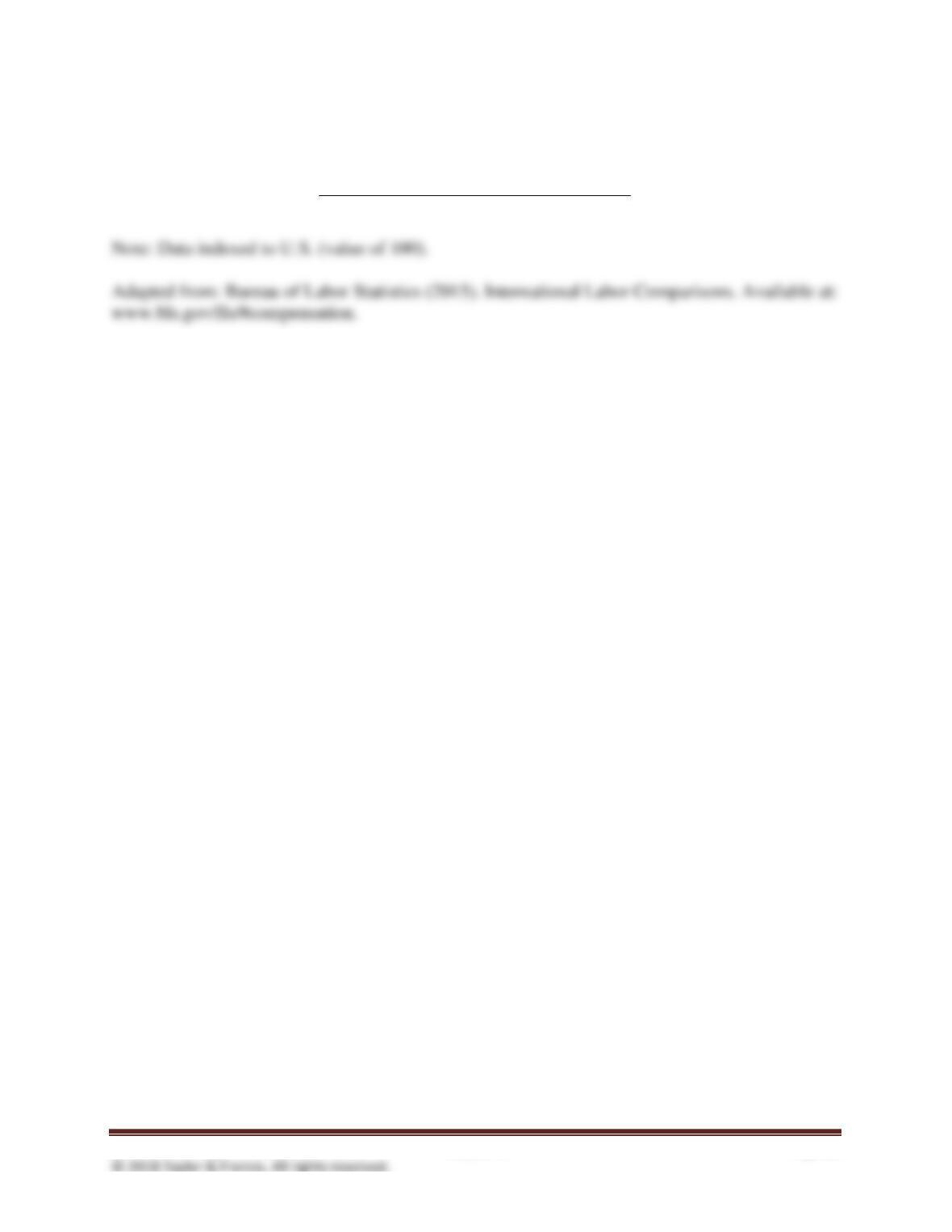
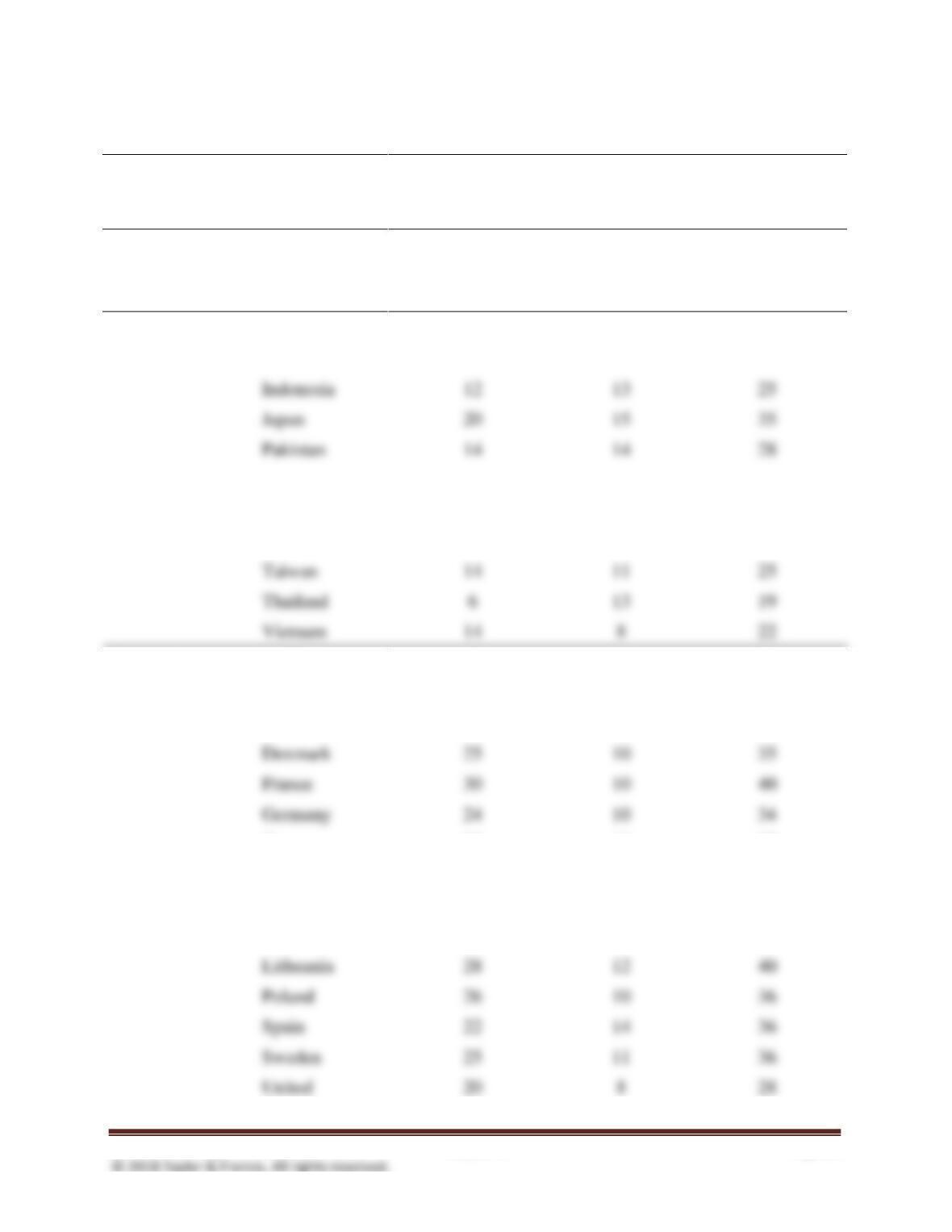
Table 8.3 Hourly Compensation Rates for Manufacturing Workers in a Variety of
Countries, 2002 & 2012
Country
Year
2002
2012
United States
100
100
Argentina
12
57
Australia
64
141
Austria
81
114
Belgium
89
130
Brazil
10
28
Canada
70
108
Czech Republic
16
32
Denmark
108
161
Finland
82
122
France
74
103
Germany
99
133
Greece
40
55
Hungary
14
25
Ireland
76
116
Israel
46
61
Italy
59
89
Japan
83
107
Korea, Republic of
36
60
Mexico
18
16
Netherlands
86
114
New Zealand
44
87
Norway
117
192
Philippines
4
7
Poland
16
27
Portugal
25
36
Singapore
47
74
Slovakia
11
30
International Organizational Behavior 2e Chapter 8 Page 24
Switzerland
122
180
Taiwan
28
30
United Kingdom
87
97
International Organizational Behavior 2e Chapter 8 Page 25
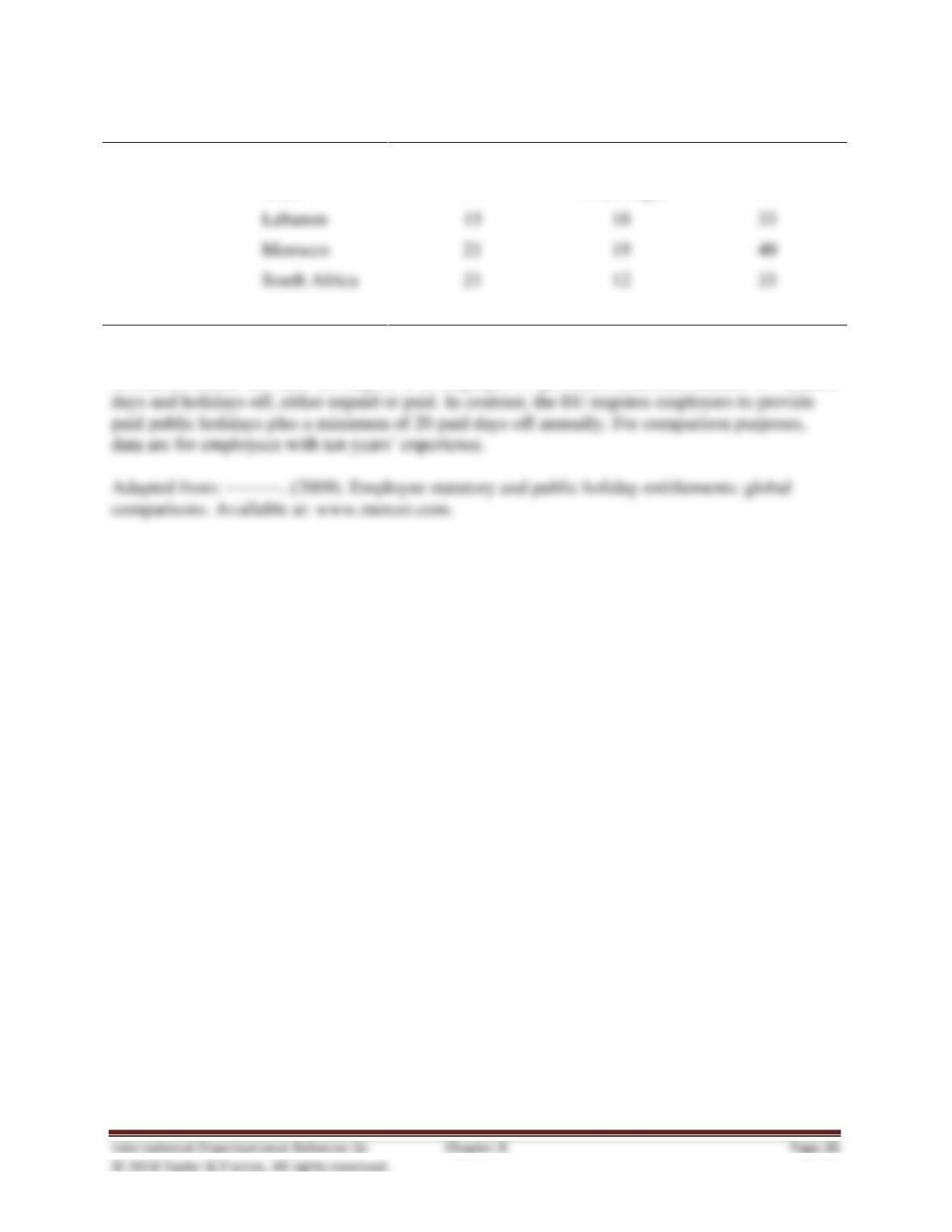
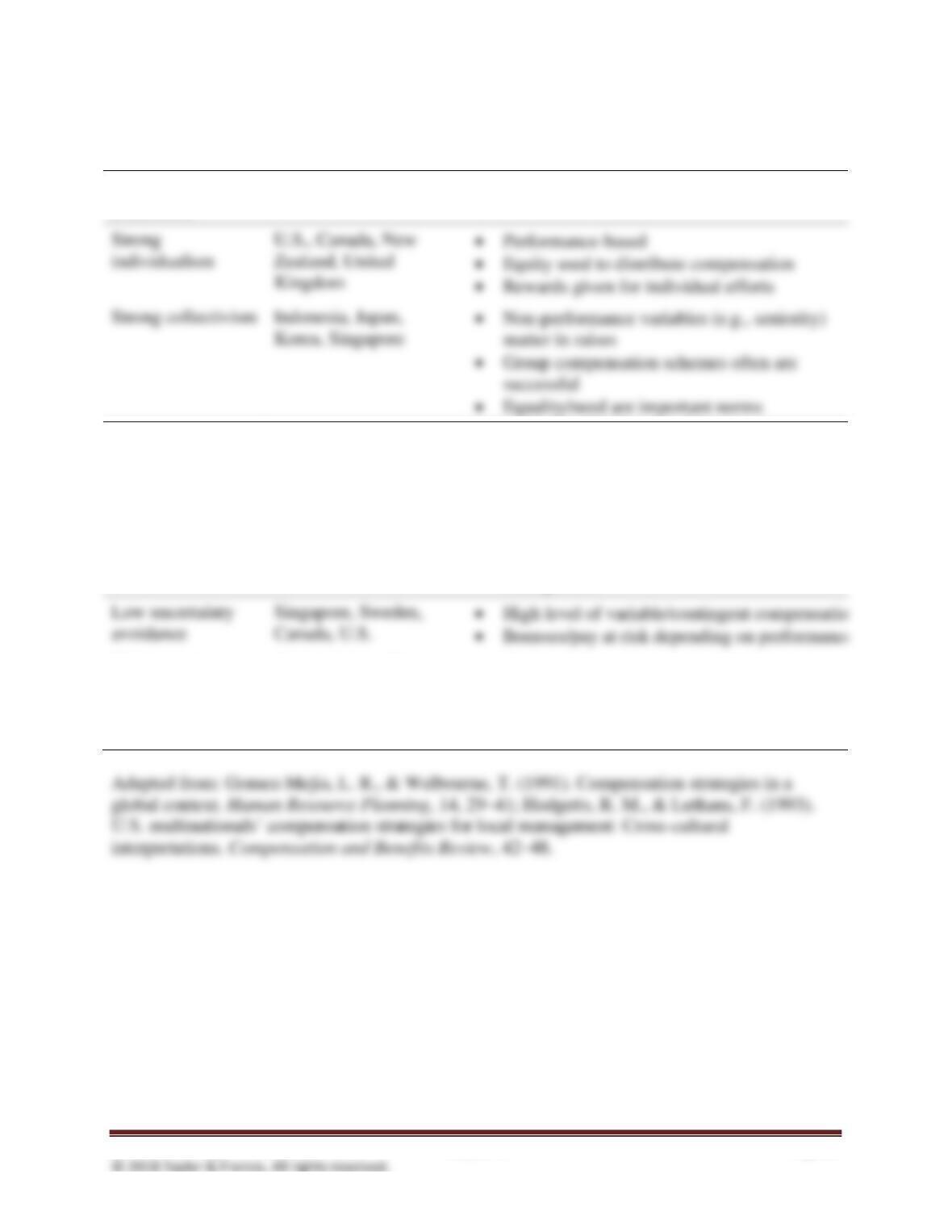
Table 8.4 Paid Days Off Provided by Firms in Countries around the World
Country/Region
Paid Vacation Days
(Minimum)
Public
Holidays
(With Pay)
Total Days Off
The Americas
United States*
15 (typical large
firm)
10 (typical
large firm)
25 (typical large
firm)
Canada
10
10 (average)
20
Asia/Pacific
Hong Kong
14
12
26
India
12
19
31
Indonesia
12
13
25
Japan
20
15
35
Pakistan
14
14
28
Philippines
5
14
19
Singapore
14
12
26
South Korea
19
11
30
Taiwan
14
11
25
Thailand
6
13
19
Vietnam
14
8
22
Europe/
Scandinavia
Belgium
20
10
30
Bulgaria
20
12
32
Czech Rep.
20
11
31
Denmark
25
10
35
France
30
10
40
Germany
24
10
34
Greece
25
12
37
Hungary
23 (if > 21 yrs old)
10
33
Ireland
20
9
29
Italy
20
11
31
Lithuania
28
12
40
Poland
26
10
36
Spain
22
14
36
Sweden
25
11
36
Kingdom
Middle
East/Africa
Egypt
21
16
37
Israel
24
16 (average)
40
Lebanon
15
18
33
Morocco
21
19
40
South Africa
21
12
33
UAE
30
9
39
*Note: Numbers for the U.S. reflect common practice among large companies—unlike in most
International Organizational Behavior 2e Chapter 8 Page 27
Table 8.5 Selected Traditional Compensation Practices across Cultures and Countries
Cultural
Dimension
Sample Countries
Characteristics of Compensation System
Low power
distance
U.S., United Kingdom,
Denmark, Australia
• Wage gap between lower and higher jobs often
not that great
• Profit sharing likely to be successful
High power
distance
Malaysia, Mexico,
Philippines, Spain
• Compensation tied to place in the social
structure
• Large salary gap between workers and
management
High uncertainty
avoidance
Greece, Japan, Korea,
Portugal
• Highly structured, lock-step compensation
plans
• Centralized decision making/evaluation
• Discretionary pay minimized
International Organizational Behavior 2e Chapter 8 Page 28
Table 8.6 Potential Sources of Costs Associated with Expatriation
Direct Payments/Reimbursements
Support for Adjustment to Global
Assignment
Tax reduction/equalization
Home leave (4–6 weeks)
Housing allowance
Emergency leave
Furnishing allowance
Personal security
Education allowance
Car/driver
Hardship/foreign service premium
Domestic help
Currency protection
Spouse employment
Goods and services differential
Child care provider
Temporary living allowance
Language/translation services
Car/transportation allowance
Cultural training
Assignment completion bonus
Repatriation assistance
Extension bonus
Social club fees
Help renting U.S. home
Imported food and other goods