
Part III: Building and Managing
a Global Workforce
CHAPTER 8
Evaluating and
Compensating
International
Employees

Employee Performance Appraisal:
The Global Challenge
•In managing and appraising employee
performance, should multinational firms:
➢Use a standardized set of policies, procedures, and
practices for appraising performance worldwide?
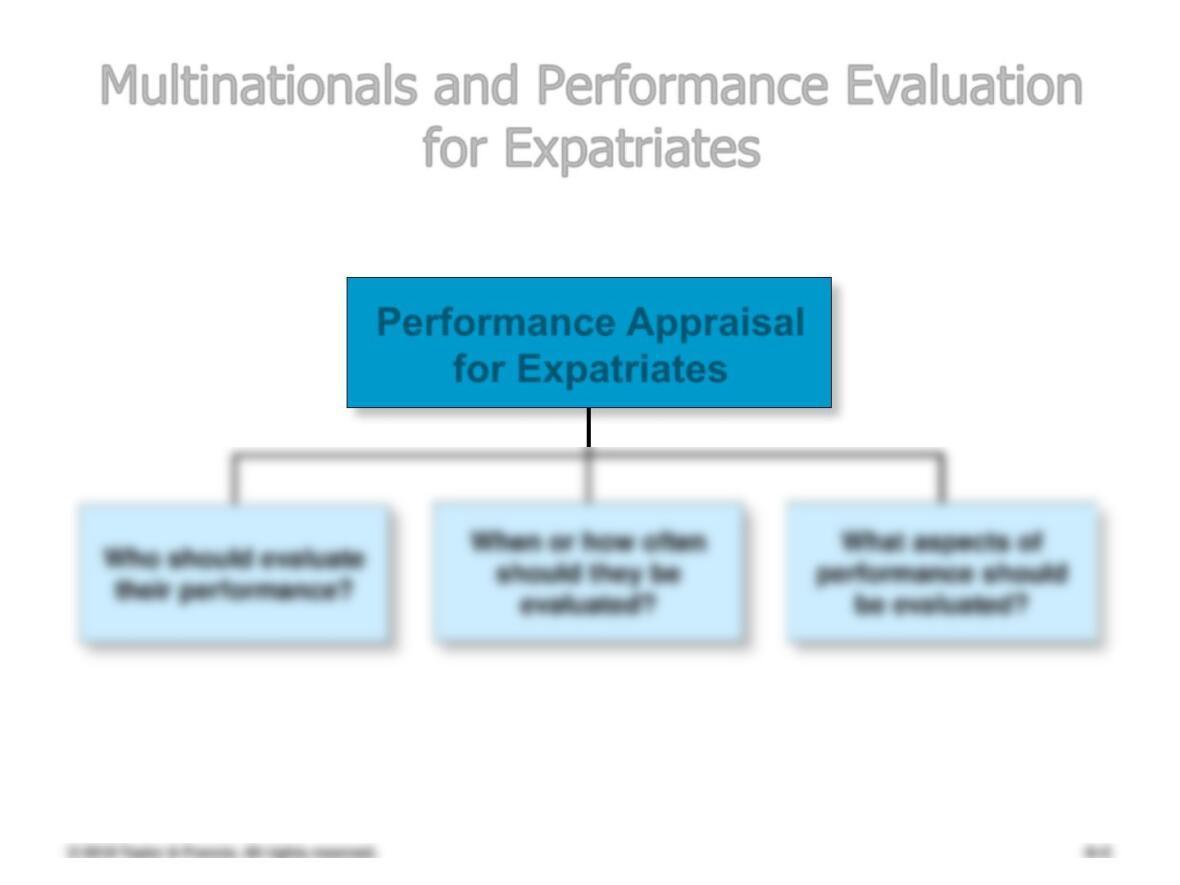
Multinationals and Performance Evaluation
for Expatriates
Performance Appraisal
for Expatriates
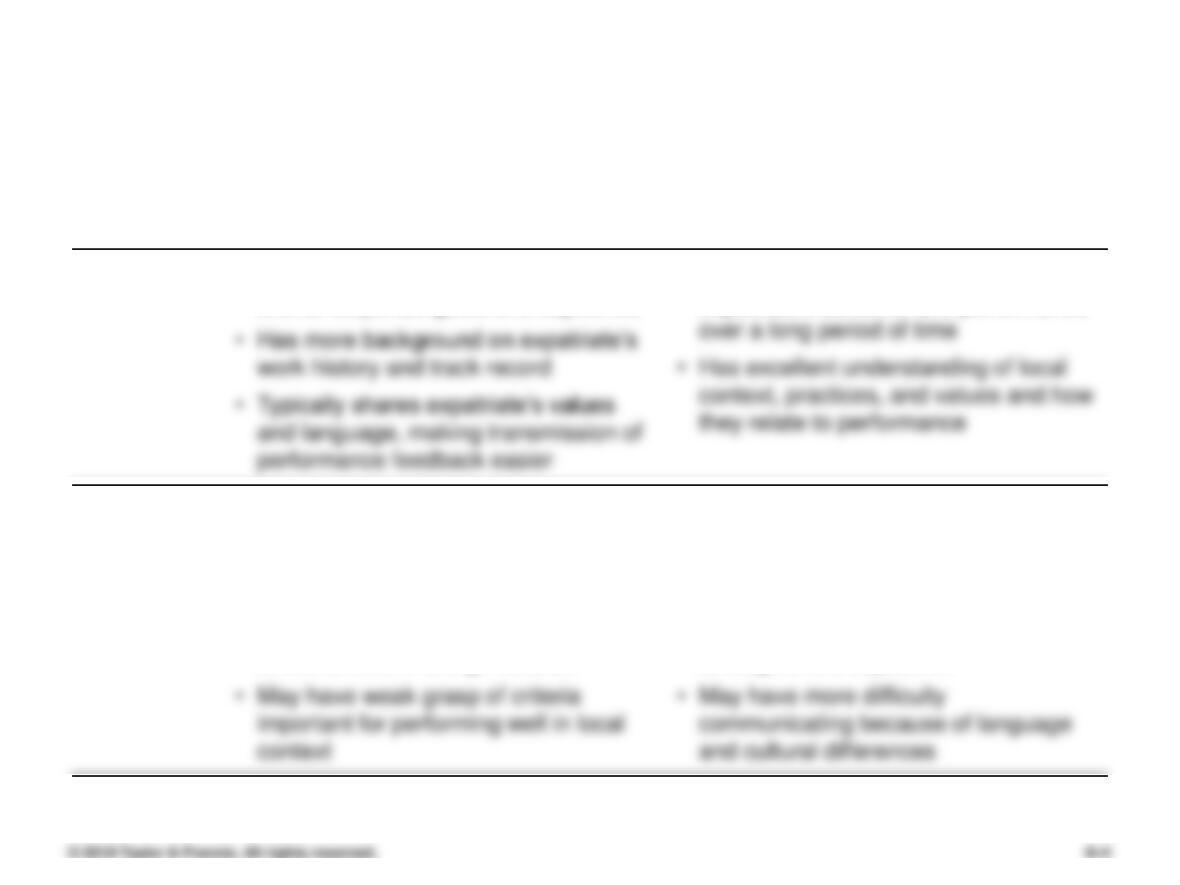
Table 8.1 Benefits and Drawbacks of Home-Country versus Host-Country
Evaluation of Expatriates
Performance Evaluation Done
by Home-Country Professional
Performance Evaluation Done
by Host-Country Professional
Benefits •Typically has a better understanding of
overall corporate goals and objectives
•In the best position to observe
expatriate’s behavior and performance
Drawbacks •May have little knowledge or
understanding of local context or
culture
•Has little or no direct observation of
expatriate performance or
effectiveness in foreign location
•Evaluations will likely be shaped by
local values and perspectives, which
may create problems with company
objectives
•Less familiar with overall company
strategies and objectives
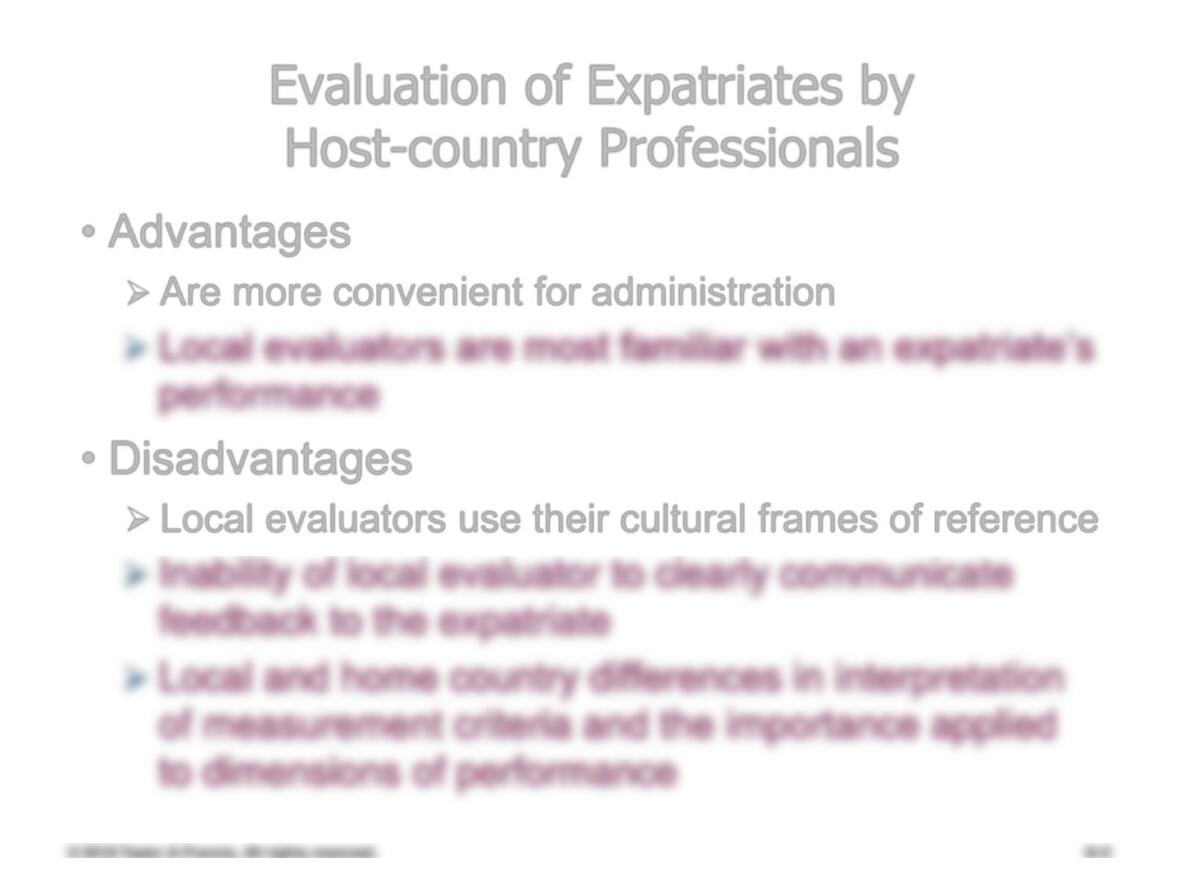
Evaluation of Expatriates by
Host-country Professionals
•Advantages
➢Are more convenient for administration
•Disadvantages
➢Local evaluators use their cultural frames of reference
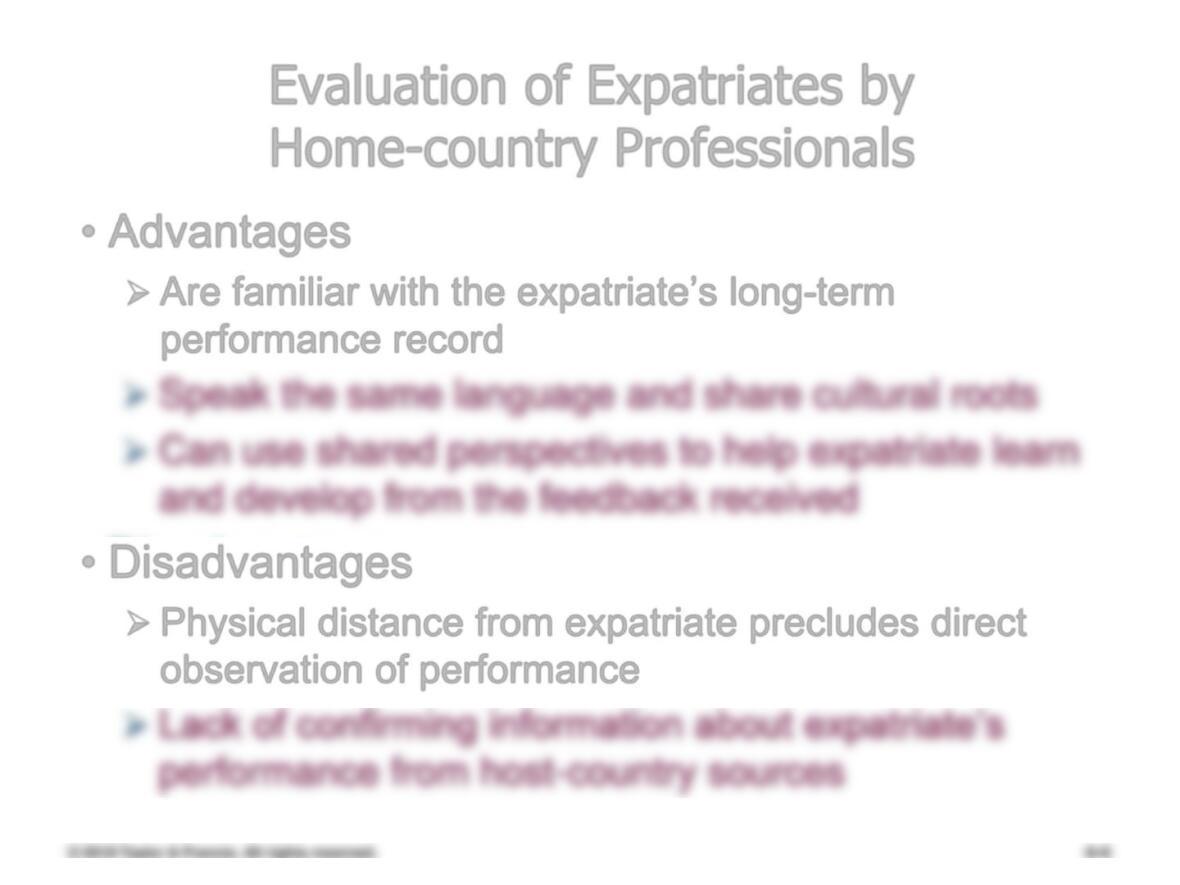
Evaluation of Expatriates by
Home-country Professionals
•Advantages
➢Are familiar with the expatriate’s long–term
performance record
•Disadvantages
➢Physical distance from expatriate precludes direct
observation of performance
When Should Expatriate Performance
Be Evaluated?
•Frequency of Evaluation
➢U.S. firms typically evaluate employees—domestic
and international—once or twice per year.
•When to Evaluate?
➢Local evaluation upon completion of projects or
attainment of major assignment milestones
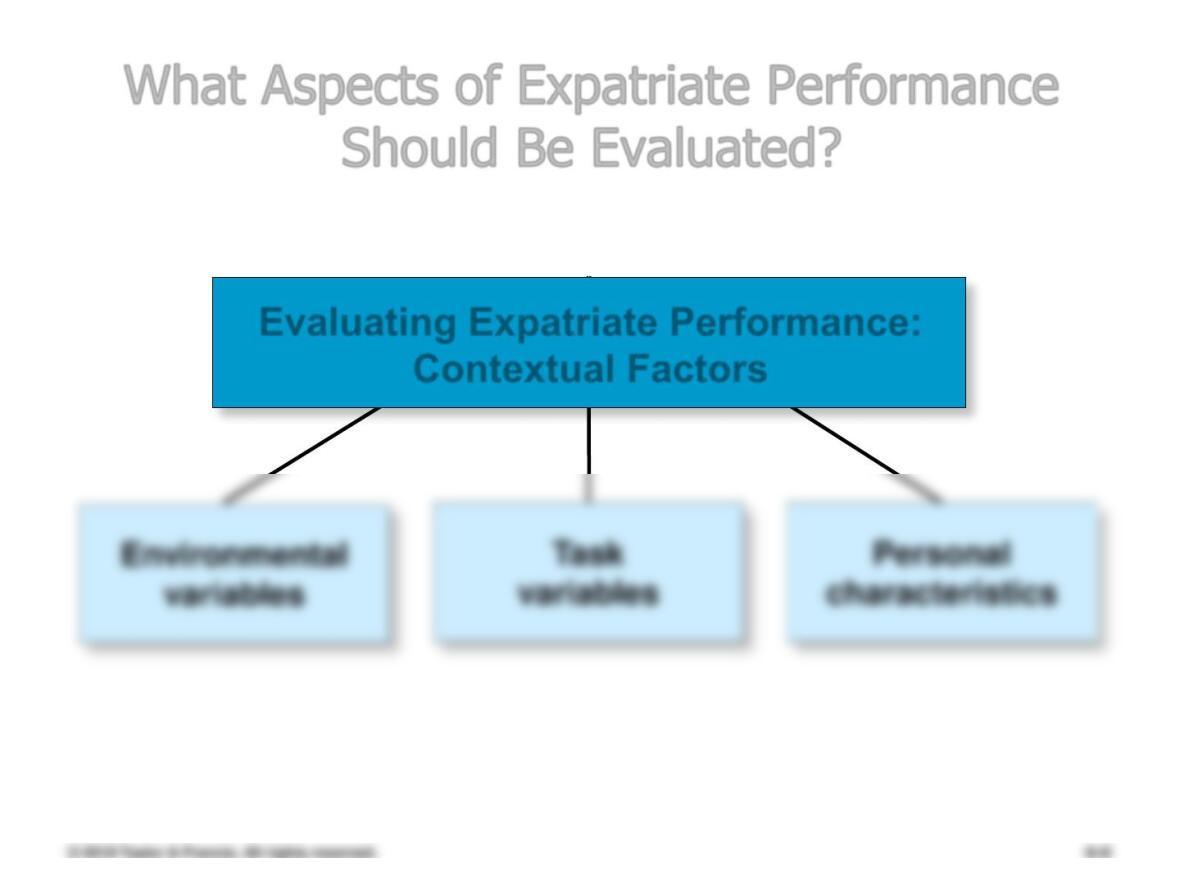
What Aspects of Expatriate Performance
Should Be Evaluated?
Evaluating Expatriate Performance:
Contextual Factors
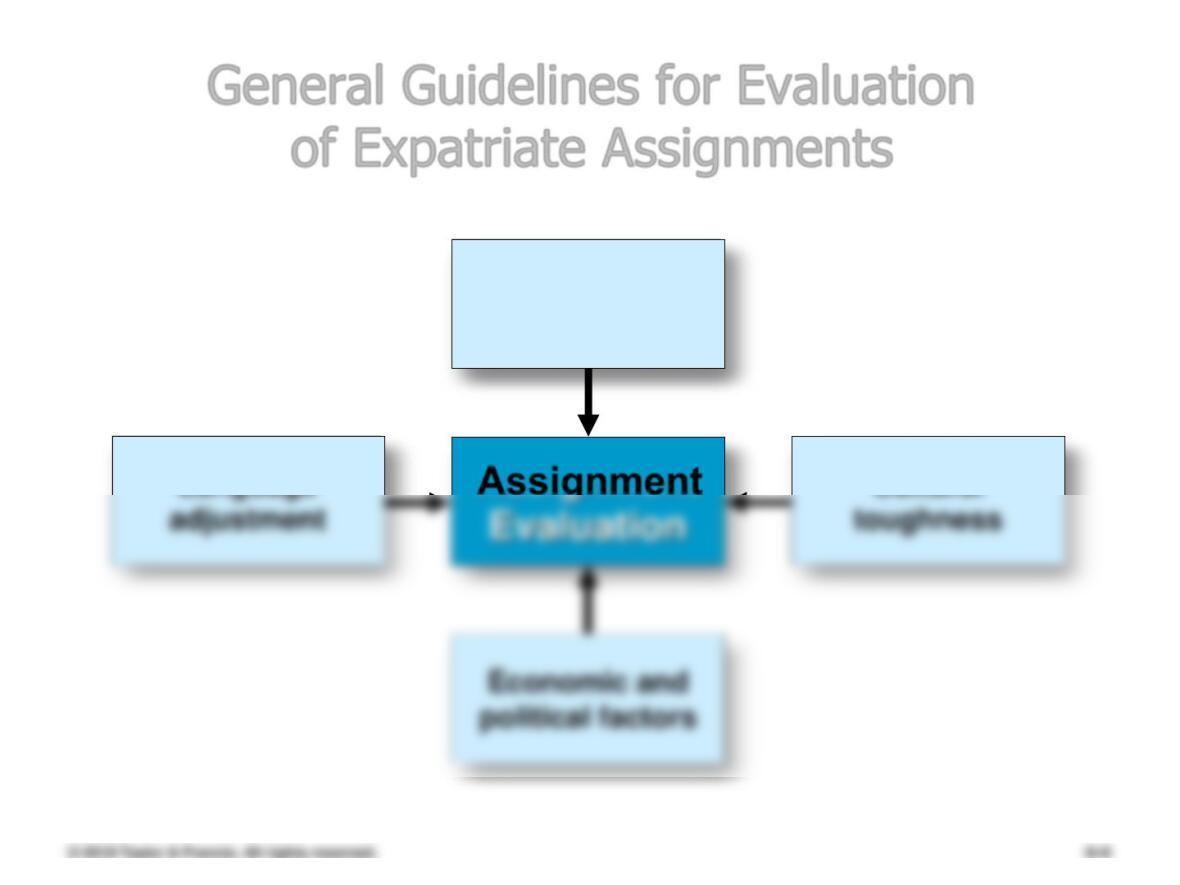
General Guidelines for Evaluation
of Expatriate Assignments
Intended
outcomes of
assignment
Additional Suggestions for
Expatriate Evaluation
•Place greater weight on host-country evaluations.
•Use an evaluator with experience in the area to which the expatriate
is posted.
•Conduct training for both evaluators and the expatriate about the
role played by their respective frames of reference.
Evaluating Foreign-born Employees
•Two Scenarios
➢Foreign nationals in parent-country locations
•Anticipated Challenges
➢Developing an evaluation process that is culturally
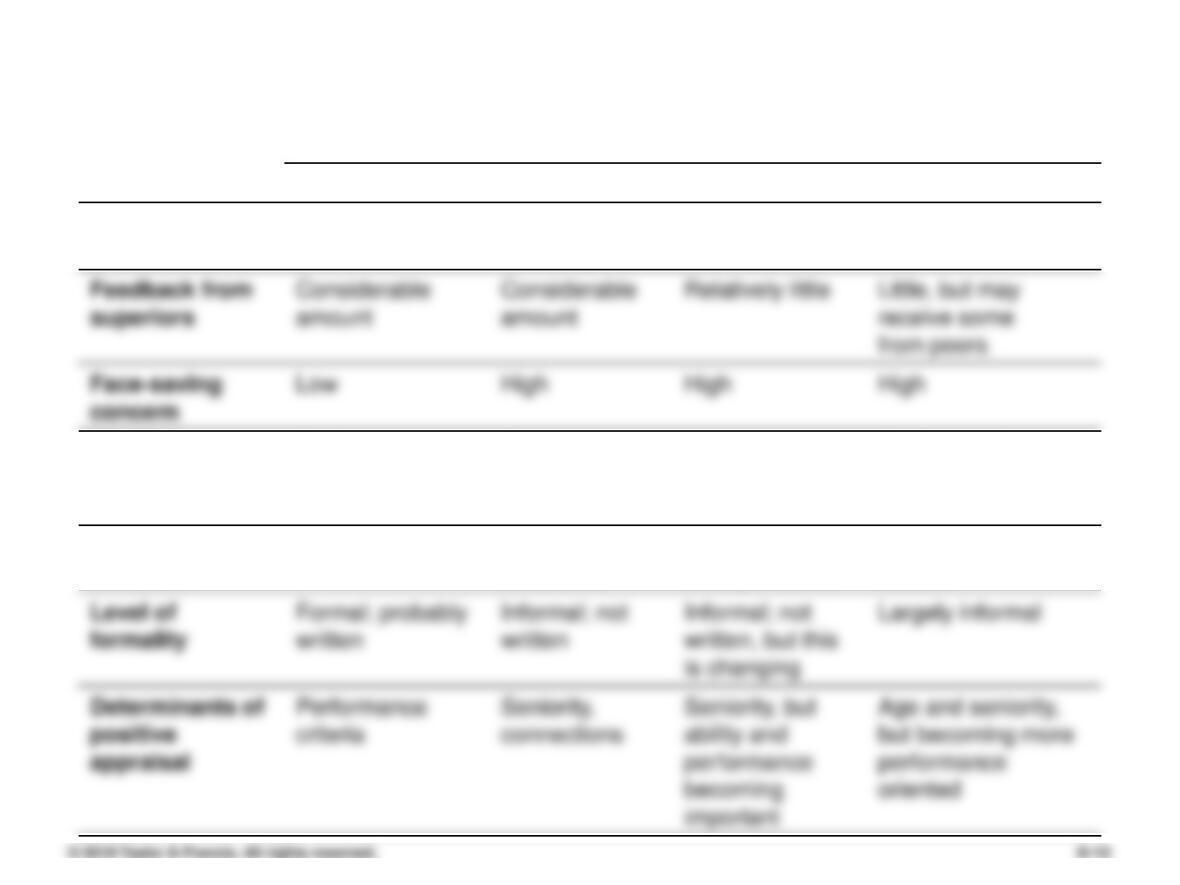
Table 8.2 Differences in Performance Evaluation Systems:
A Four-Country Snapshot
Country
Characteristic United States Saudi Arabia South Korea China
General purpose Evaluation of
performance
Evaluation,
coaching
Coaching Financial reward,
retention
Employee
involvement
Medium to high High Low Medium; self-
evaluation is
expected
Type of
feedback
Criticism is direct Criticism is
less direct
Criticism is
mostly indirect
Criticism is mostly
indirect
The Challenges of Compensation
in the Multinational Firm
•Compensation Management
➢Supports performance evaluation outcomes in setting
and managing compensation levels around the world
Rewards and Compensation
in the Multinational Firm
•Key Goals for Compensation
➢Attract and retain the best people to staff positions
worldwide
➢Ease the transfer of people to various firm locations

•Compensation
➢Is a swap (exchange) of employee effort (outputs) for
wages and benefits provided by the employer (U.S.)
Rewards and Compensation
in the Multinational Firm
•Employee Pay across Borders
➢Offshoring of jobs is used to take advantage of cross-
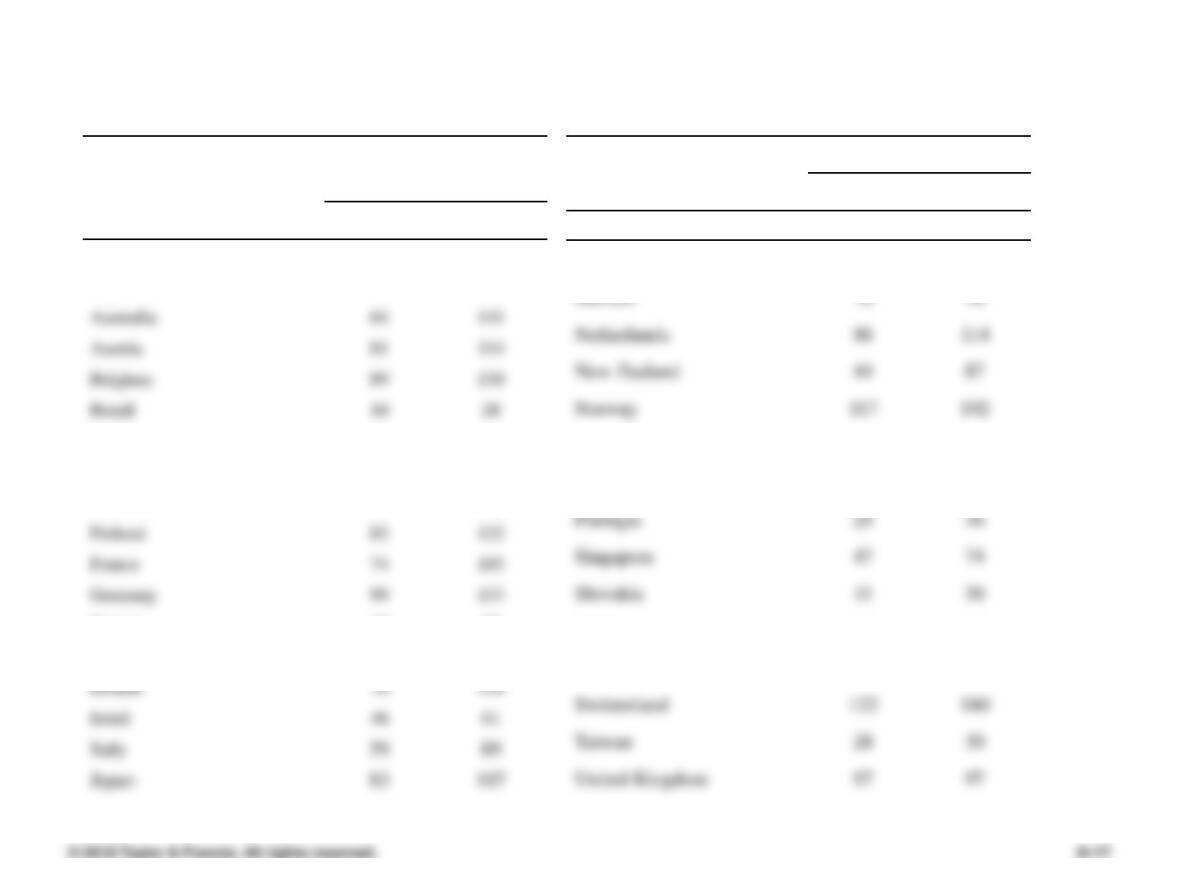
Table 8.3 Hourly Compensation Rates for Manufacturing Workers
in a Variety of Countries, 2002 & 2012
Country Year
2002 2012
United States
100 100
Argentina
12 57
Canada
70 108
Czech Republic
16 32
Denmark
108 161
Finland
France
Germany
Portugal
Greece
40 55
Hungary
14 25
Country Year
2002 2012
Korea, Republic of
36 60
Philippines
4 7
Poland
16 27
Spain
48 73
Sweden
78 122
Rewards and Compensation
in the Multinational Firm
•Senior Executive Compensation across
Countries
➢Compensation is highest in the United States, where
it is heavily weighted to variable performance
measures.
Vacation Time: Less in the United States,
More in Europe
•U.S. companies are not required by law to
give workers a minimum number of days off—
paid or unpaid.
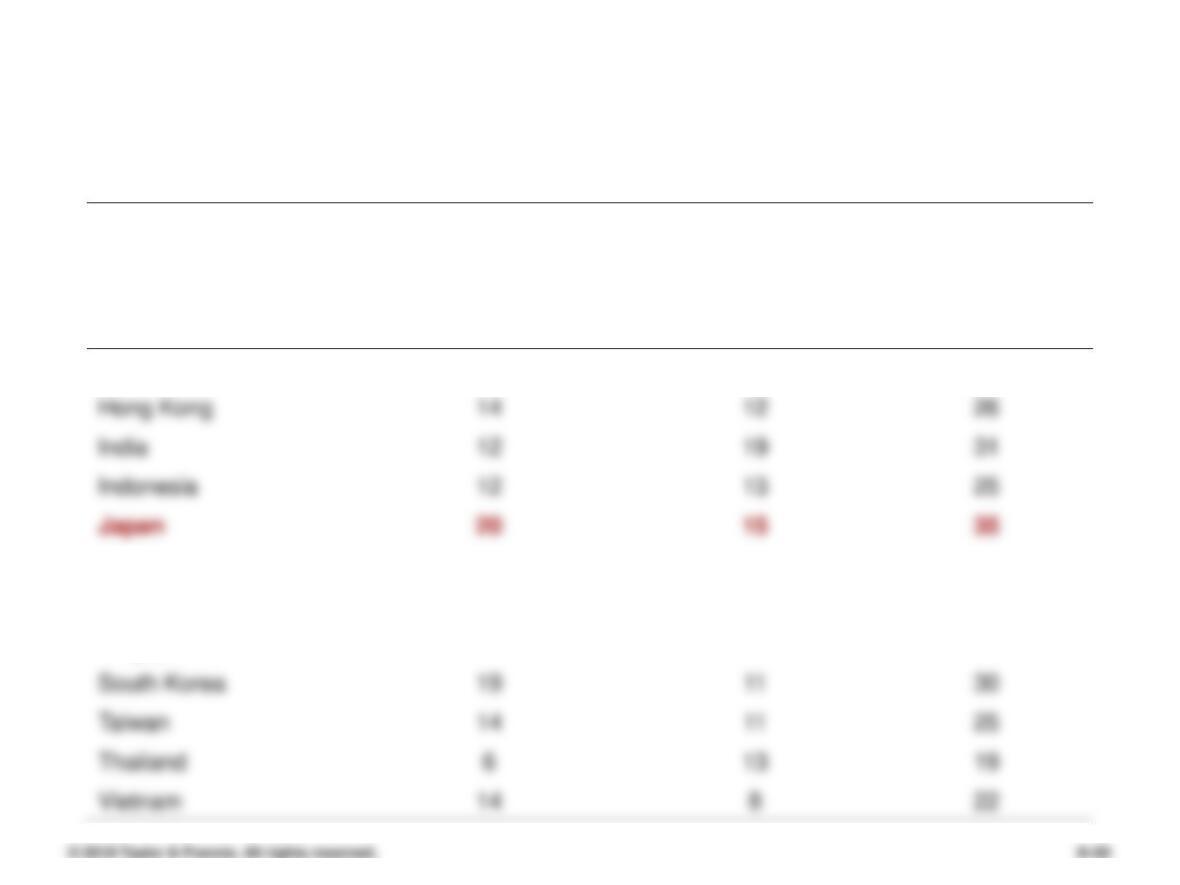
Table 8.4 Paid Days Off Provided by Firms in Countries
around the World
Country/Region
Paid Vacation Days
(Minimum)
Public Holidays
(with Pay) Total Days Off
The Americas
United States 15
(typical large firm)
10
(typical large firm)
25
(typical large firm)
Canada 10 10 (average) 20
Asia/Pacific
Pakistan 14 14 28
Philippines 514 19
Singapore 14 12 26