British Pound Futures, US$/pound (CME) Contract = 62,500 pounds
Open
Maturity Open High Low Settle Change High Interest
March 1.4246 1.4268 1.4214 1.4228 0.0032 1.4700 25,605
June 1.4164 1.4188 1.4146 1.4162 0.0030 1.4550 809
a. If Tony buys 5 June pound futures, and the spot rate at maturity is $1.3980/£, what is the value of her position?
b. If Tony sells 12 March pound futures, and the spot rate at maturity is $1.4560/£, what is the value of her position?
c. If Tony buys 3 March pound futures, and the spot rate at maturity is $1.4560/£, what is the value of her position?
d. If Tony sells 12 June pound futures, and the spot rate at maturity is $1.3980/£, what is the value of her position?
a) b) c) d)
Assumptions Values Values Values Values
Pounds (₤) per futures contract
£62,500 £62,500 £62,500 £62,500
Problem 7.1 Saguaro Funds
Tony Begay, a currency trader for Chicago-based Saguaro Funds, uses the following futures quotes on the British pound (£) to speculate on the value of the pound.
greater than the ending spot price.
a. What is the value of her position at maturity if the ending spot rate is $0.12000/Ps?
b. What is the value of her position at maturity if the ending spot rate is $0.09800/Ps?
c. What is the value of her position at maturity if the ending spot rate is $0.11000/Ps?
a. b. c.
Assumptions Values Values Values
Number of pesos per futures contract
500,000 500,000 500,000
Number of contracts
8.00 8.00 8.00
Buy or sell the peso futures?
Sell Sell Sell
Ending spot rate ($/peso)
$0.12000 $0.09800 $0.11000
Problem 7.2 Amber McClain
Amber McClain, the currency speculator we met earlier in the chapter,sells eight June futures contracts for
500,000 pesos at the closing price quoted in Exhibit 7.1.
$0.10773 $0.10773 $0.10773
Option Strike Price Premium
Put on Sing $ $0.6500/S$ $0.00003/S$
Call on Sing $ $0.6500/S$ $0.00046/S$
a. Should Cece buy a put on Singapore dollars or a call on Singapore dollars?
b. What is Cece’s breakeven price on the option purchased in part (a)?
Option choices on the Singapore dollar: Call on S$ Put on S$
Strike price (US$/Singapore dollar)
$0.6500 $0.6500
a. Should Cece buy a put on Singapore dollars or a call on Singapore dollars?
b. What is Cece’s breakeven price on the option purchased in part a)?
Per S$
c. What is Cece’s gross profit and net profit (including premium) if the ending spot rate is $0.70/S$?
Gross profit Net profit
(US$/S$) (US$/S$)
d. What is Cece’s gross profit and net profit (including premium) if the ending spot rate is $0.80/S$?
Gross profit Net profit
(US$/S$) (US$/S$)
Problem 7.3 Cece Cao in Jakarta
Cece Cao trades currencies for Sumatra Funds in Jakarta. She focuses nearly all of her time and attention on the U.S.
dollar/Singapore dollar ($/S$) cross-rate. The current spot rate is $0.6000/S$. After considerable study, she has concluded
that the Singapore dollar will appreciate versus the U.S. dollar in the coming 90 days, probably to about $0.7000/S$. She
has the following options on the Singapore dollar to choose from:
This gives her the right to BUY Singapore dollars at a future date at $0.65 each, and then immediately resell them in the
open market at $0.70 each for a profit. (If her expectation of the future spot rate proves correct.)
Since Cece expects the Singapore dollar to appreciate versus the US dollar, she should buy a call on Singapore dollars.
c. Using your answer from part (a), what is Cece’s gross profit and net profit (including premium) if the spot rate at the
end of 90 days is indeed $0.7000/S$?
d. Using your answer from part (a), what is Cece‘s gross profit and net profit (including premium) if the spot rate at the
end of 90 days is $0.8000/S$?
a. b.
Assumptions Values Values
Initial investment (funds available) $10,000,000 $10,000,000
Strategy for Part a):
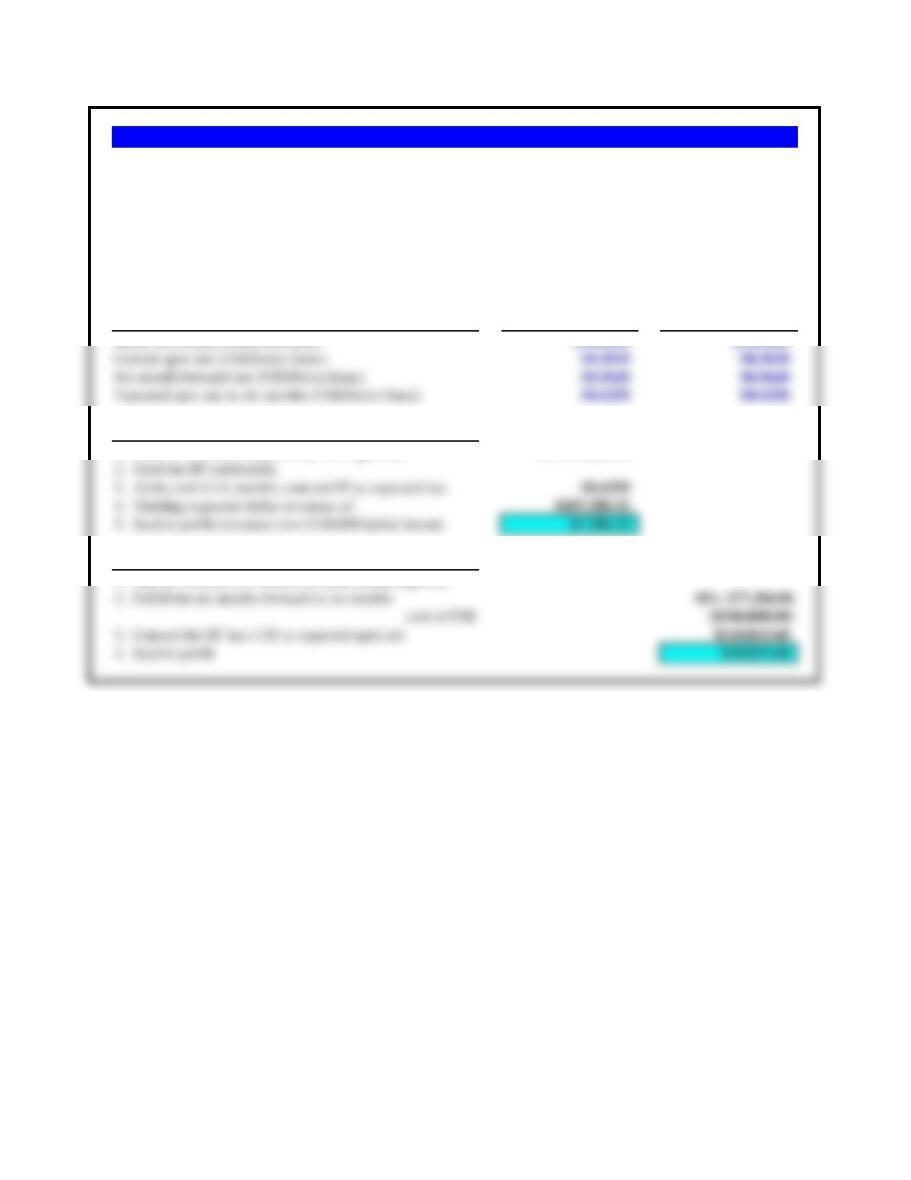
market at the end of 30 days, but he has the ability to buy or sell dollars at a forward rate of $1.3350/€. He should therefore buy
euros forward 30 days (requires no actual cash flow up-front), and at the end of 30 days take delivery of those euros and sell in
Strategy for Part b):
wait 30 days and buy the euros needed on the open market at $1.28, and immediately then use those euros to fulfill his forward
One of the more interesting dimensions of speculating in the forward market, is that if the speculator has access to the forward
market (bank lines or relationships when working on behalf of an established firm), many forward speculation strategies
require no actual cash flow position up-front. In this case, Christoph believes the dollar will be trading at $1.36/€ in the open
Again, a profitable strategy can be executed without any actual cash flow changing hands at the beginning of the period. Since
Christoph believes that the dollar will strengthen to $1.28 in 30 days, he should sell euros forward now at the higher dollar rate,
b. If Christoph believes the euro will depreciate in value against the U.S. dollar, so that he expects the spot rate to be
$1.2800/€ at the end of 30 days, what should he do?
Problem 7.4 Kapinsky Capital (A)
Christoph Hoffeman trades currency for Kapinsky Capital of Geneva. Christoph has $10 million to begin with, and he must
state all profits at the end of any speculation in U.S. dollars. The spot rate on the euro is $1.3358/€, while the 30-day forward
rate is $1.3350/€.
a. If Christoph believes the euro will continue to rise in value against the U.S. dollar, so that he expects the spot rate to be
$1.3600/€ at the end of 30 days, what should he do?
a. Calculate Christoph’s expected profit assuming a pure spot market speculation strategy.
b. Calculate Christoph’s expected profit assuming he buys or sells SF three months forward.
a. b.
Assumptions Values Values
Strategy for Part a:
1. Use the $100,000 today to buy SF at spot rate
SFr. 171,821.31
Strategy for Part b:
1. Buy SF forward six months (no cash outlay required)
Problem 7.5 Kapinsky Capital Geneva (B)
Christoph Hoffeman of Kapinsky Capital Geneva now believes the Swiss franc will appreciate versus the U.S.
dollar in the coming three-month period. He has $100,000 to invest. The current spot rate is $0.5820/SF, the three-
month forward rate is $0.5640/SF, and he expects the spot rates to reach $0.6250/SF in three months.
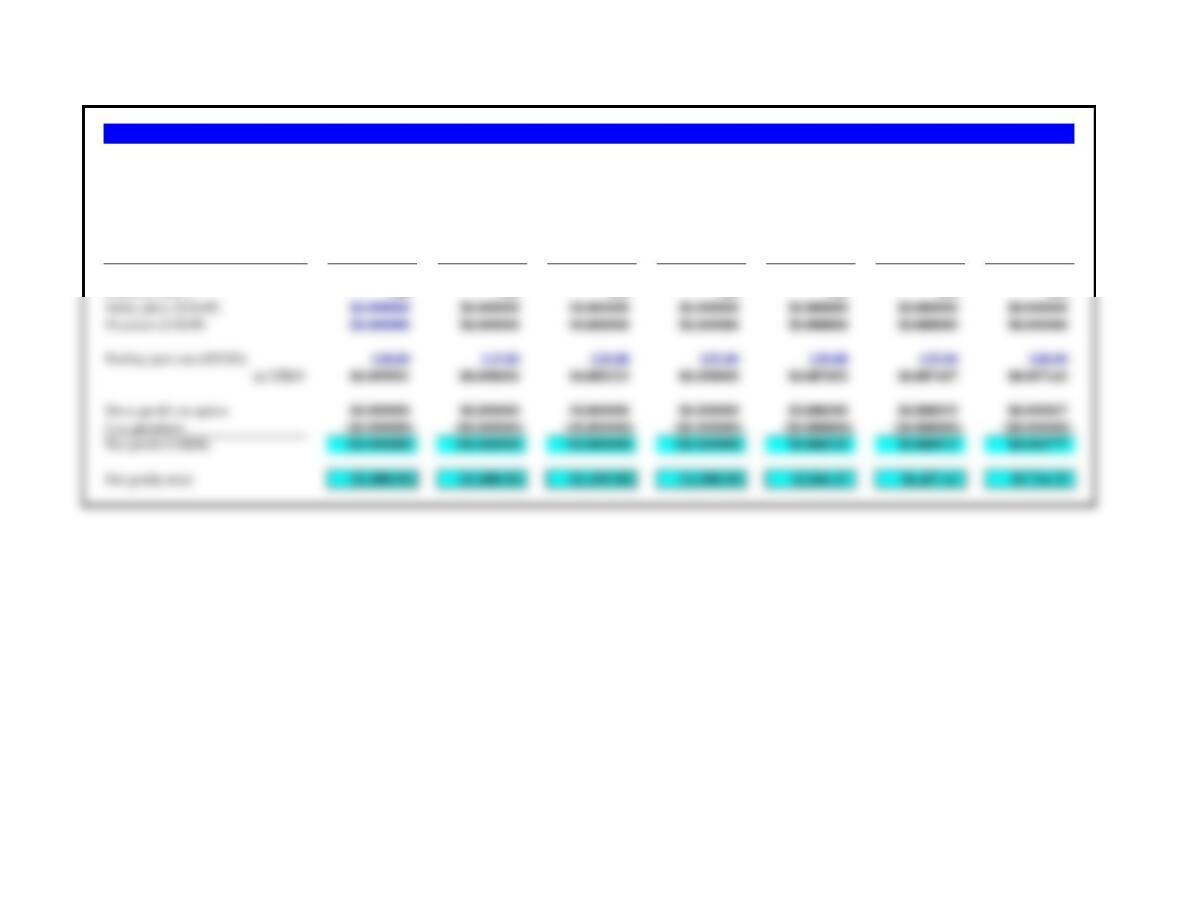
a) b) c) d) e) f) g)
Assumptions Values Values Values Values Values Values Values
Notional principal (¥)12,500,000 12,500,000 12,500,000 12,500,000 12,500,000 12,500,000 12,500,000
Maturity (days) 180 180 180 180 180 180 180
Problem 7.6 Peleh’s Puts
Peleh writes a put option on Japanese yen with a strike price of $0.008000/¥ (¥125.00/$) at a premium of 0.0080¢ per yen and with an expiration date six month from now.
The option is for ¥12,500,000. What is Peleh’s profit or loss at maturity if the ending spot rates are ¥110/$, ¥115/$, ¥120/$, ¥125/$, ¥130/$, ¥135/$, and ¥140/$.
Strike price (US$/¥)$0.008000 $0.008000 $0.008000 $0.008000 $0.008000 $0.008000 $0.008000
Premium (US$/¥)$0.000080 $0.000080 $0.000080 $0.000080 $0.000080 $0.000080 $0.000080
Ending spot rate (¥/US$) 110.00 115.00 120.00 125.00 130.00 135.00 140.00
Gross profit on option $0.000000 $0.000000 $0.000000 $0.000000 $0.000308 $0.000593 $0.000857
Less premium ($0.000080) ($0.000080) ($0.000080) ($0.000080) ($0.000080) ($0.000080) ($0.000080)
Net profit (US$/¥)($0.000080) ($0.000080) ($0.000080) ($0.000080) $0.000228 $0.000513 $0.000777
Net profit, total ($1,000.00) ($1,000.00) ($1,000.00) ($1,000.00) $2,846.15 $6,407.41 $9,714.29

Assumptions Values
Principal borrowing need
8,000,000$
New York interest rate practices
56
Interest calculation uses:
Great Britain interest rate practices
56
Interest calculation uses:
Swiss interest rate practices
Interest calculation uses:
Assumed 30 days per month for two months
60
Problem 7.7 Chavez S.A.
Chavez S.A., a Venezuelan company, wishes to borrow $8,000,000 for eight
weeks. A rate of 6.250% per annum is quoted by potential lenders in New York,
Great Britain, and Switzerland using, respectively, international, British, and the
Swiss-Eurobond definitions of interest (day count conventions). From which
source should Chavez borrow?
Option Strike Price Premium
Put on yen ¥125/$ $0.00003/S$
Call on yen ¥125/$ $0.00046/S$
a. Should Cachita buy a put on yen or a call on yen?
b. What is Cachita’s breakeven price on the option purchased in part (a)?
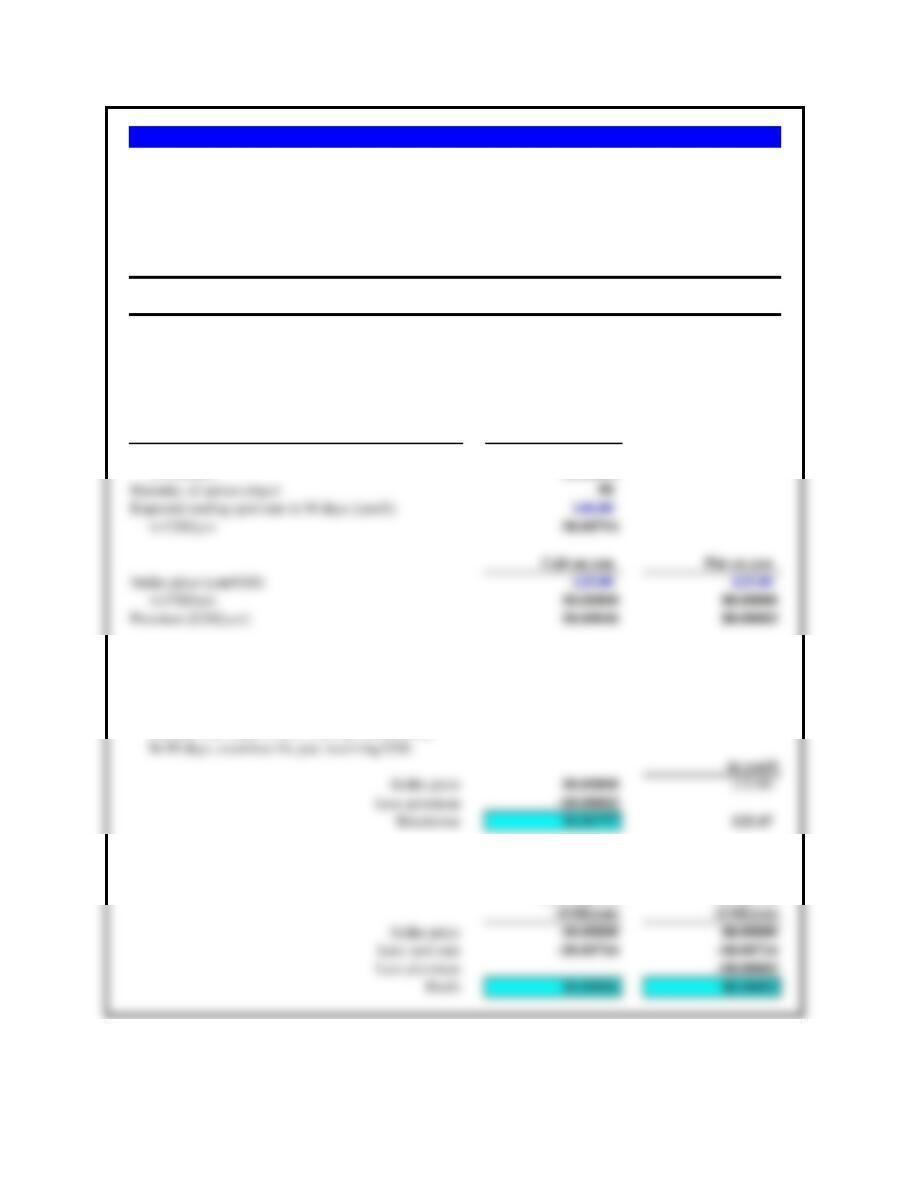
Assumptions Values
Current spot rate (Japanese yen/US$)
120.00
in US$/yen
$0.00833
a. Should she buy a call on yen or a put on yen?
Cachita should buy a put on yen to profit from the rise of the dollar (the fall of the yen).
b. What is Cachita’s break even price on her option of choice in part a)?
Cachita buys a put on yen. Pays premium today.
c. What is Cachita’s gross profit and net profit if the end spot rate is 140 yen/$?
Gross profit Net profit
Problem 7.8 Cachita Haynes at Vatic Capital
Cachita Haynes works as a currency speculator for Vatic Capital of Los Angeles. Her latest speculative
position is to profit from her expectation that the U.S. dollar will rise significantly against the Japanese yen.
The current spot rate is ¥120.00/$. She must choose between the following 90-day options on the Japanese
yen:
c. Using your answer from part (a), what is Cachita’s gross profit and net profit (including premium) if the
spot rate at the end of 90 days is ¥140/$?
140.00
$0.00714
Call on yen Put on yen
125.00 125.00
Note: the option premium is 3.8 cents per euro, not 38 cents per euro.
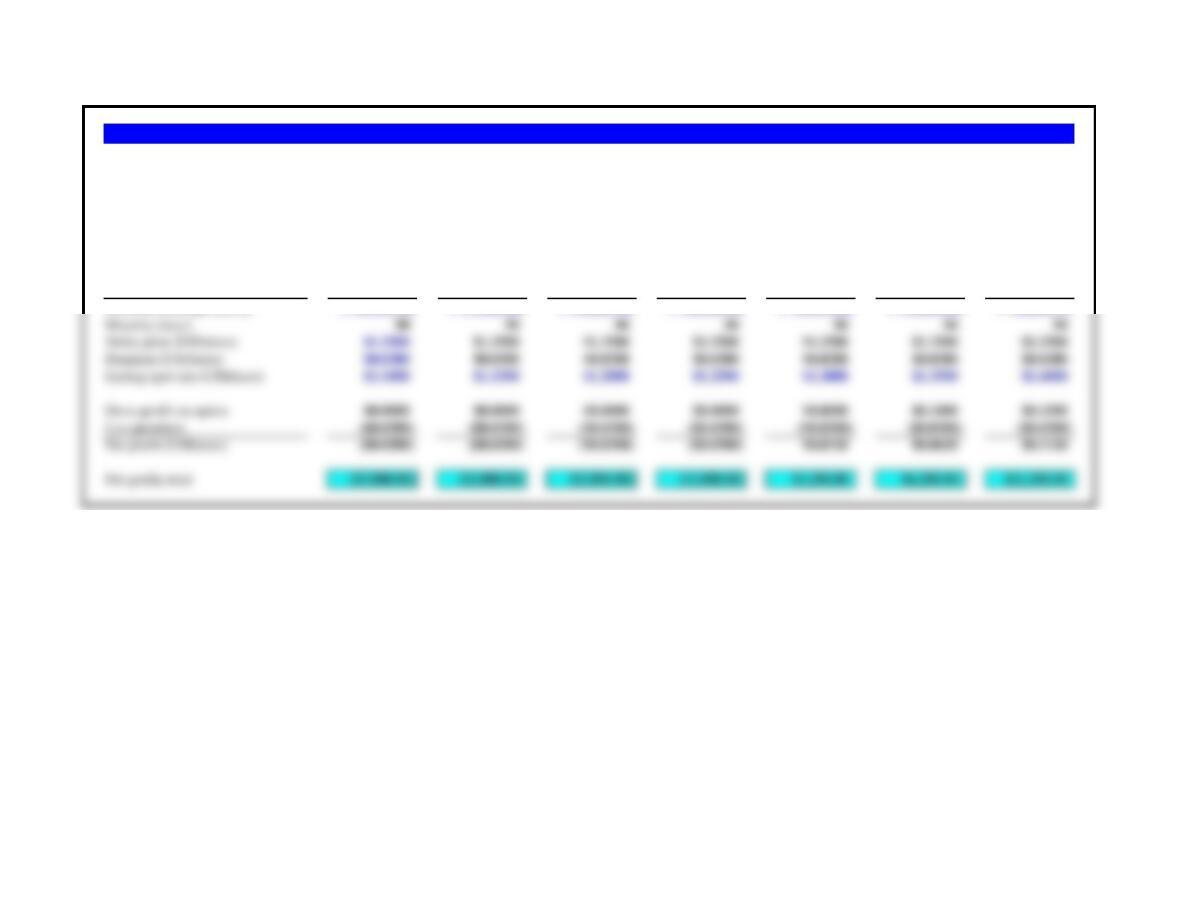
a. b. c. d. e. f. g.
Assumptions Values Values Values Values Values Values Values
Notional principal (euros) € 100,000.00 € 100,000.00 € 100,000.00 € 100,000.00 € 100,000.00 € 100,000.00 € 100,000.00
Problem 7.9 Calling All Euros
Assume a call option on euros is written with a strike price of $1.2500/€ at a premium of 3.80¢ per euro ($0.0380/€) and with an expiration date three months from now.
The option is for €100,000. Calculate your profit or loss should you exercise before maturity at a time when the euro is traded spot at strike prices beginning at $1.10/€,
rising to $1.40/€ in increments of $0.05.
Strike Price Maturity Premium
$1.36/£ 30 days $0.00081/£
$1.34/£ 30 days $0.00021/£
$1.32/£ 30 days $0.00004/£
$1.36/£ 60 days $0.00333/£
$1.34/£ 60 days $0.00150/£
$1.32/£ 60 days $0.00060/£
Assumptions Values
Issues for Sydney to consider:
1. Because his expectation is for “30 to 60 days” he should confine his choices to the 60 day options to be sure and capture
the timing of the exchange rate change. (We have no explicit idea of why he believes this specific timing.)
2. The choice of which strike price is an interesting debate.
* The lower the strike price (1.34 or 1.32), the cheaper the option price.
* The reason they are cheaper is that, statistically speaking, they are increasingly less likely to end up in the money.
Problem 7.10 Arthur Doyle at Baker Street
Arthur is convinced that the British pound will slide significantly — possibly to $1.3200/£ — in the coming 30 to 60 days. The current
spot rate is $1.4260/£. Arthur wishes to buy a put on pounds which will yield the 25% return expected by his investors. Which of the
following put options would you recommend he purchase. Prove your choice is the preferable combination of strike price, maturity, and
up-front premium expense.
Arthur Doyle is a currency trader for Baker Street, a private investment house in London. Baker Street’s clients are a collection of
wealthy private investors who, with a minimum stake of £250,000 each, wish to speculate on the movement of currencies. The investors
expect annual returns in excess of 25%. Although officed in London, all accounts and expectations are based in U.S. dollars.
Put options on pounds Put #1 Put #2 Put #3
Put options on pounds Put #4 Put #5 Put #6
Option Strike Price Premium
Put on C$ $0.7000 $0.00003/S$
Call on C$ $0.7000 $0.00049/S$
a. Should Calandra buy a put on Canadian dollars or a call on Canadian dollars?
b. What is Calandra’s breakeven price on the option purchased in part (a)?
Assumptions Values
Current spot rate (US$/Canadian dollar)
$0.6750
a) Which option should Giri buy?
b) What is Giri’s breakeven price on the option purchased in part a)?
Strike price
$0.7000
0.00049
$0.7005
c) What is Giri’s gross profit and net profit (including premium) if he ending spot rate is $0.7600/C$?
Gross profit Net profit
(US$/C$) (US$/C$)
Spot rate
$0.7600 $0.7600
d) What is Giri’s gross profit and net profit (including premium) if the ending spot rate is $0.8250/C$?
Gross profit Net profit
(US$/C$) (US$/C$)
$0.8250 $0.8250
Problem 7.11 Calandra Panagakos at CIBC
Calandra Panagakos works for CIBC Currency Funds in Toronto. Calandra is something of a contrarian — as opposed to
most of the forecasts, she believes the Canadian dollar (C$) will appreciate versus the U.S. dollar over the coming 90
days. The current spot rate is $0.6750/C$. Calandra may choose between the following options on the Canadian dollar:
c. Using your answer from part (a), what is Calandra’s gross profit and net profit (including premium) if the spot rate at
the end of 90 days is indeed $0.7600?
d. Using your answer from part (a), what is Calandra‘s gross profit and net profit (including premium) if the spot rate at
the end of 90 days is $0.8250?
$0.7000 $0.7000
Pricing Currency Options on the Euro
Variable Value Variable Value
Spot rate (domestic/foreign)
S0$1.2480 S0€ 0.8013
Strike rate (domestic/foreign) X $1.2500 X€ 0.8000
When the volatility is increased to 12.000% from 10.500%, the premium on the call option on euros rises to $0.0412/€, or 5.15%.
Problem 7.12 U.S. dollar/Euro
A U.S.-based firm wishing to buy
A European firm wishing to buy
or sell euros (the foreign currency)
or sell dollars (the foreign currency)
Time (years, 365 days) T 1.000 T1.000
Days equivalent 365.00 365.00
Volatility (% p.a.) s 12.000% s 12.000%
Call option premium (per unit fc) c $0.0534 c € 0.0412
Put option premium (per unit fc) p $0.0643 p € 0.0342
(European pricing)
Call option premium (%) c 4.28% c 5.15%
Put option premium (%) p 5.15% p 4.27%
Pricing Currency Options on the Japanese yen
Variable Value Variable Value
Spot rate (domestic/foreign)
S0JPY 105.64 S0$0.0095
Strike rate (domestic/foreign) X JPY 100.00 X$0.0100
or sell dollars (the foreign currency)
or sell yen (the foreign currency)
Problem 7.13 U.S. Dollar/Japanese Yen
A Japanese firm wishing to buy
A U.S.-based firm wishing to buy
Time (years, 365 days) T 1.000 T1.000
Days equivalent 365.00 365.00
Volatility (% p.a.) s 12.000% s12.000%
Call option premium (per unit fc) c JPY 7.27 c $0.0003
Put option premium (per unit fc) p JPY 3.06 p $0.0007
(European pricing)
Call option premium (%) c 6.88% c 3.06%
Put option premium (%) p 2.90% p 7.27%
Put option premium (JPY/US$) JPY 3.06
Notional principal (US$) $750,000
Total cost (JPY) JPY 2,297,243
Pricing Currency Options on the Euro/Yen Crossrate
Variable Value Variable Value
Spot rate (domestic/foreign)
S0JPY 133.89 S0€ 0.0072
Strike rate (domestic/foreign) X JPY 136.00 X€ 0.0074
Problem 7.14 Euro/Japanese Yen
A Japanese firm wishing to buy
A European firm wishing to buy
or sell euros (the foreign currency)
or sell yen (the foreign currency)
Time (years, 365 days) T 0.247 T0.247
Days equivalent 90.00 90.00
Volatility (% p.a.) s 10.000% s10.000%
Call option premium (per unit fc) c JPY 1.50 c € 0.0001
Put option premium (per unit fc) p JPY 4.30 p € 0.0002
(European pricing)
Call option premium (%) c 1.12% c 1.30%
Put option premium (%) p 3.21% p 2.90%
Put option premium (euro/JPY) € 0.0002
Notional principal (JPY) JPY 10,400,000
Total cost (euro) € 2,167.90
Pricing Currency Options on the British pound
Variable Value Variable Value
Spot rate (domestic/foreign)
S0$1.8674 S0£0.5355
Strike rate (domestic/foreign) X $1.8000 X£0.5556
Problem 7.15 U.S. Dollar/British Pound
A U.S.-based firm wishing to buy
A British firm wishing to buy
or sell pounds (the foreign currency)
or sell dollars (the foreign currency)
Time (years, 365 days) T 0.493 T0.493
Days equivalent 180.00 180.00
Volatility (% p.a.) s 9.400% s9.400%
Call option premium (per unit fc) c $0.0696 c £0.0091
Put option premium (per unit fc) p $0.0306 p £0.0207
(European pricing)
Call option premium (%) c 3.73% c 1.70%
Put option premium (%) p 1.64% p 3.87%
180-day maturity ($/pound) $0.0696
90-day maturity ($/pound) $0.0669
Difference ($/pound) $0.0027
Pricing Currency Options on the British pound/Euro Crossrate
Variable Value Variable Value
Spot rate (domestic/foreign)
S0€ 1.4730 S0£0.6789
Strike rate (domestic/foreign) X € 1.5000 X£0.6667
Problem 7.16 Euro/British Pound
A European firm wishing to buy
A British firm wishing to buy
or sell pounds (the foreign currency)
or sell euros (the foreign currency)
Time (years, 365 days) T 0.247 T0.247
Days equivalent 90.00 90.00
Volatility (% p.a.) s 11.400% s11.400%
Call option premium (per unit fc) c € 0.0213 c £0.0220
Put option premium (per unit fc) p € 0.0487 p £0.0097
(European pricing)
Call option premium (%) c 1.45% c 3.24%
Put option premium (%) p 3.30% p 1.42%
Call option on pounds when euro interest is 4.000% € 0.0213
Call option on pounds when euro interest is 2.072% € 0.0189
Change, an increase in the premium € 0.0213