International partnerships do not always involve whole or shared ownership. Table 6.8
presents four other types of alliances. For any alliance to be successful, trust between
partners is essential, along with the formation of clear goals. It also helps if management
1. Production alliances. Obtaining expertise may be part of the motivation behind
2. Research and development alliances. These help partner firms stay on the cutting
edge of rapidly changing technology and involve joint research to develop new
3. Financial alliances. Their intent is to reduce the partners’ financial risks associated
with specific projects, so financial alliances are typically used in capital-intensive
4. Marketing alliances. These are created when firms pool resources to gain access to
partners’ markets. Marketing alliances are now standard practice for airlines world–
wide, with most major carriers belonging to one of the three big global alliances:
Oneworld, Sky Team, and Star Alliance. Each alliance includes code-sharing
agreements so that members can sell “seamless” tickets that stitch together flights
International Organizational Behavior 2e Chapter 6 Page 16
CHAPTER SUMMARY
In this chapter, we first examined the issue of managing cross-national and intra-national
diversity in international firms. Firms are sometimes reluctant to send women or minorities to
There are many challenges facing multicultural teams. Research shows that cultural differences
have the potential to both cause problems for and offer benefits to such teams. Groups are more
important in collectivist cultures than in individualistic cultures—and in a collectivist culture, in-
managers worldwide are more likely to behave accordingly and follow through to support them.
To create fairness, managers should make significant efforts to familiarize themselves with local
operations and ensure two-way communication with local employees when developing their
international strategies.
There are six stages many firms go through as they develop their international operations:
• Stage 1—domestic firms begin internationalizing by exporting.

partnership, as there are major questions companies must address when setting up international
partnerships and issues that must be dealt with in managing them. Acquisitions offer more
control, but the buyer is also taking on all the problems in the acquired firm, while joint ventures
are set up as a separate legal entity with ownership split between the partnering firms. Cultural
and other management challenges can plague joint ventures and other types of alliance.
International Organizational Behavior 2e Chapter 6 Page 18
DISCUSSION QUESTIONS
1. What are some of the major approaches that companies can take in managing
diversity? Which approach has the best chance of success in your view? Explain.
• See Table 6.3 for a summary of approaches
2. In discussing diversity-related conflict, we sometimes focus too much on negative
implications. Can you think of any positive effects that might result from this
concept?
• Teams that are culturally diverse should eventually make better decisions,
3. What types of mechanisms can multinational companies use to make more effective
firm-level strategic decisions and to better coordinate units worldwide?
• See Table 6.5.
• Formal mechanisms: strategic planning teams, teams of managers, or
assigning managers to liaise between business areas and geographic areas
International Organizational Behavior 2e Chapter 6 Page 19
4. What different stages might companies pass through as they develop internationally?
Discuss examples of firms that have progressed through all the stages.
• See Table 6.5
5. Describe the different types of international partnerships and alliances that may exist
between firms. What are some of the major management and cultural headaches
associated with each type?
• Acquisition
o Challenges: cultural and stylistic gaps; acquire existing problems; more
management learning
ADDITIONAL ACTIVITIES
DEVELOPING YOUR INTERNATIONAL CAREER – Assessing Diversity: A Real-
World Audit in an International Firm
International Organizational Behavior 2e Chapter 6 Page 20
BOXED FEATURES
GLOBAL INNOVATIONS – The Best Care in the Air: Cultural Challenges and Flight
Crew Training
ADDITIONAL RESOURCES
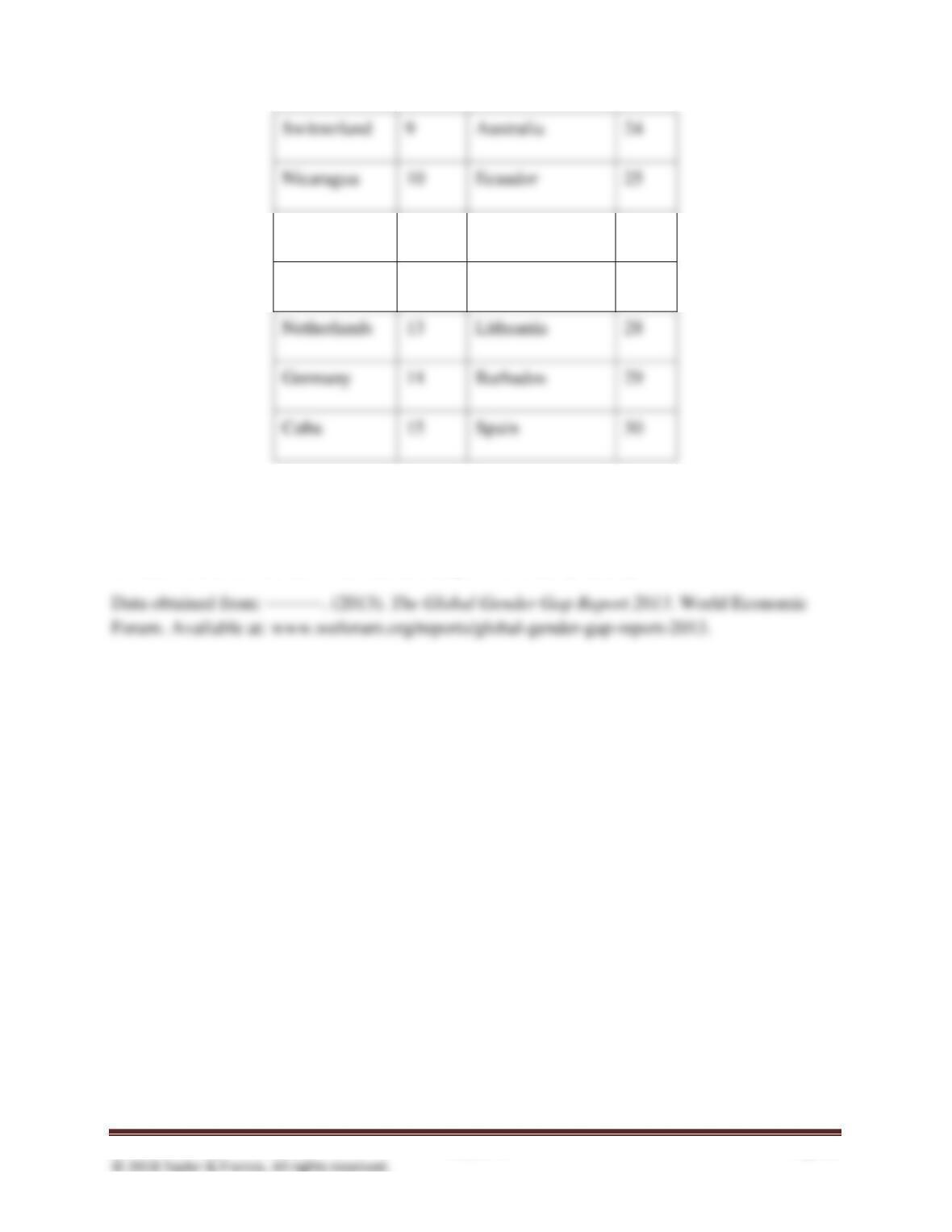
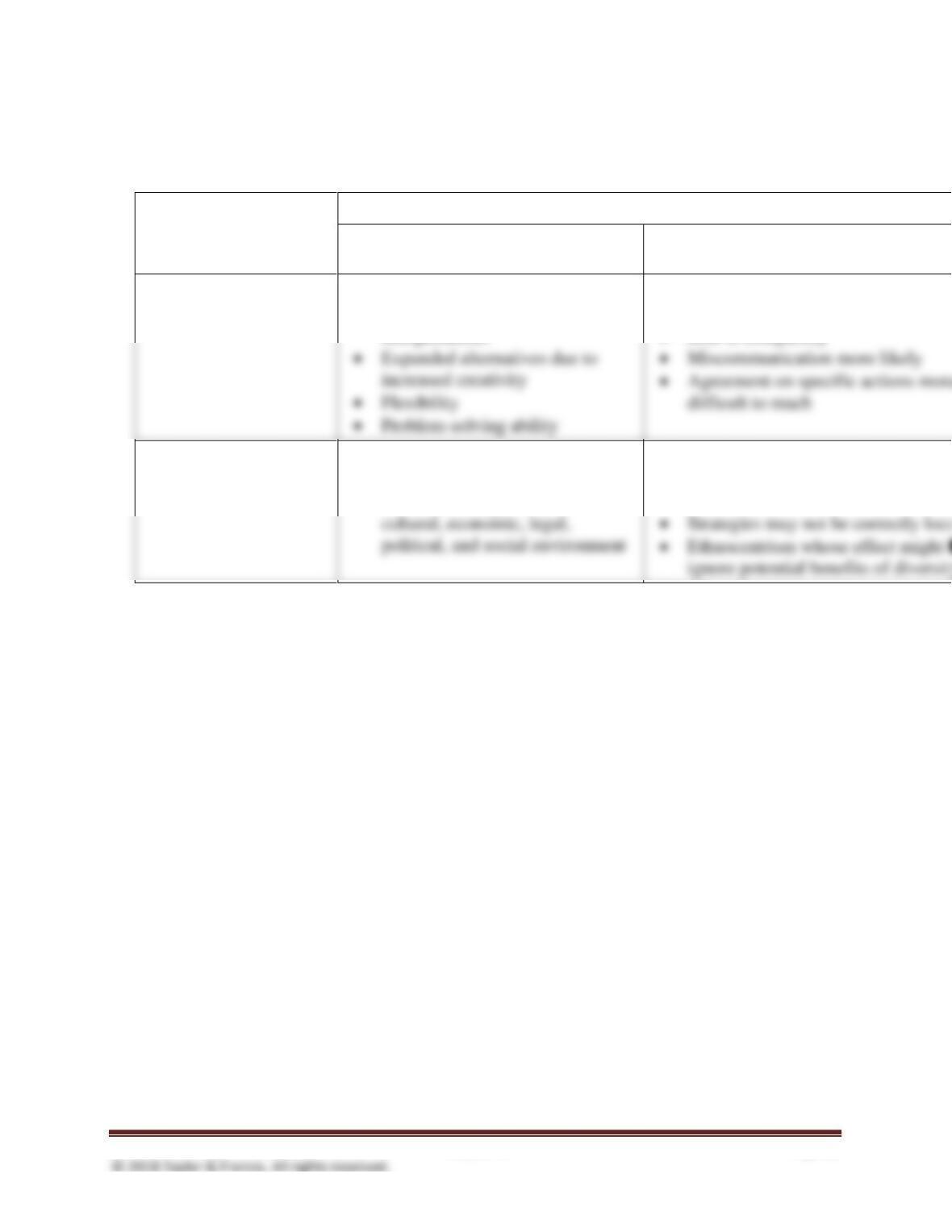
Table 6.1 Rankings of the Top 30 Countries on “Gender Gap”
Country
Rank
Country
Rank
Iceland
1
Lesotho
16
Finland
2
South Africa
17
Norway
3
United Kingdom
18
Sweden
4
Austria
19
Philippines
5
Canada
20
Ireland
6
Luxembourg
21
New Zealand
7
Burundi
22
International Organizational Behavior 2e Chapter 6 Page 21
Switzerland
9
Australia
24
Nicaragua
10
Ecuador
25
Belgium
11
Mozambique
26
Latvia
12
Bolivia
27
Netherlands
13
Lithuania
28
Cuba
15
Spain
30
Note: Rankings are based on a composite a variety health and economic indicators. Rankings
indicate relative gaps between women and men and not the general state of the economic health
of these countries; data also available on changes over time by country.
International Organizational Behavior 2e Chapter 6 Page 22
Table 6.2 Benefits & Costs of Diversity for Multinationals
Impact of Diversity
Outcome
Benefit/Cost of Diversity
Benefits
Costs
Organization-related
• Greater openness to new ideas
• Expanded perspectives and
• Increased ambiguity and potential
confusion
Location-related
• Better understanding of local
staff, customers, and markets
• More knowledge of local
• Risk of overgeneralizing the use of
company policies, practices, and
procedures

International Organizational Behavior 2e Chapter 6 Page 23
Table 6.3 Three Approaches to Managing Cultural Diversity
Firm Approach to
Diversity & Associated
Perceptions
Strategies Often
Used with Each
Diversity Approach
Most Likely Outcomes
for Each Diversity
Approach
How Frequently
Diversity
Approach is
Used
Parochial (our way is the
only way): Cultural
diversity is perceived to
have no impact on
companies
Ignore differences &
the impact that
diversity can have on
companies
Problems surface, but
are not linked by
management to issues
associated with cultural
diversity
Very frequently
Synergistic
multiculturalism
(leveraging our differences
Managers are trained
to identify and then
use various cultural
Likely to succeed at
tapping the benefits of
diversity while still
Comparatively
rare

International Organizational Behavior 2e Chapter 6 Page 24
Table 6.4 Managing Common Problems in Multicultural Teams
Common Team
Problem
Typical Negative
Consequences
Possible Management
Approach (Description)
When Best to Use Approach
(Costs or Complications)
Decision-
making norms
that diverge or
conflict
Frustration,
conflict,
impatience,
inability to be
effective
Adaptation (find ways
to work with or around
culture gaps without
changing team itself)
Members have high cultural
awareness, feel problems are
due to culture, not
personalities (can be time-
consuming to execute)
credibility, unable
(make decisions for the
(risks creating dependency
exacerbate differences)
Language
fluency
problems
Miscommunication,
frustration, unable
to tap members’
skills
Exit (removal of one or
more team members)
Some team members can’t
adjust, too much damage
already done, team is
permanent (costs to train,
develop exited member are
lost)

International Organizational Behavior 2e Chapter 6 Page 25
Table 6.5 Common Stages in the Process of Corporate Internationalization
Stage
Area of Concentration
Stage 1
Exporting
Stage 2
Sales subsidiaries
Stage 4
Stage 5
Stage 6
International Organizational Behavior 2e Chapter 6 Page 26
Table 6.6 Thinking about an International Partnership? Issues to Consider
Issue
Description
Whether a partnership
makes sense in the first
place
Identifying when, where, and why to form a partnership; are the
costs (e.g., time, less control) worth it (acquired learning)?
Deciding which
international firm to partner
with
Select partners that maximize benefits and minimize risks
(consider compatibility of management and culture, level of trust,
and extent of complementary needs and assets)
How to best structure a
partnership
Create a structure which provides incentives for success (contract
or equity based)
Awareness of partnership
dynamics and how to
manage them
Understand that management adjustments may be needed as
partnerships evolve
Recognize partnership
Partnerships can have organizational constraints, lead to strategic
gridlock, and create dependence
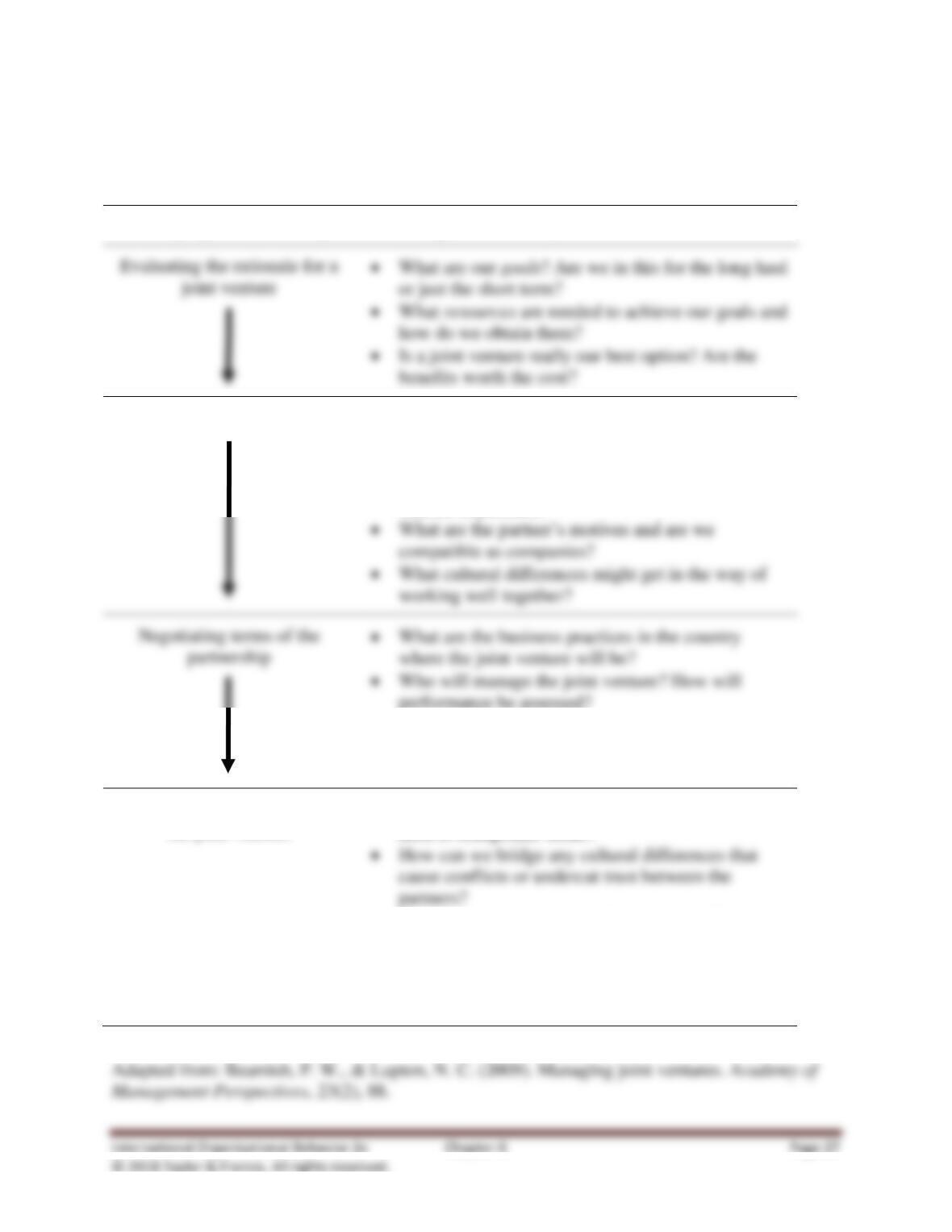
Table 6.7 Creating a Joint Venture Partnership: Process Steps and Key Questions
Developing the Partnership
Decision Questions to Address
• What are our goals? Are we in this for the long haul
or just the short term?
Choosing the best partner
• Are our goals aligned with our partner’s goals?
• Does the partner have the resources we need and
will they provide them?
• Does the partner have any international joint
venture experience?
performance be assessed?
• What equity split is appropriate?
• Are all assumptions on the table? Any unresolved
issues remaining?
Implementing and managing
• How should we handle disputes and any potential
• If outcomes are poor, how do we improve?
When/under what circumstances should we
terminate the joint venture?
• Are we learning and can the parent firms leverage
any new capabilities?

International Organizational Behavior 2e Chapter 6 Page 28
Table 6.8 Beyond Joint Ventures: Other Types of International Strategic Alliances
Type of Alliance
Purpose
Production alliance
Partners’ motivation may include the desire to acquire complex
manufacturing expertise and know-how from each other as well as
reducing the costs of production.
Research and
development
alliance
The partners conduct joint research to develop new products, services, or
technologies (i.e., pooled resources are more likely to lead to
breakthroughs).
Marketing alliance
Partners share services or expertise in marketing related areas in ways that
generate additional profits for both.