Part II: Leading People and Teams
across Cultural Boundaries
CHAPTER 6
Managing
Diversity in
Multicultural
Teams and
International
Partnerships
Managing Diversity:
Sensitive and Difficult Challenges
•Gender Discrimination
➢Underutilization of women in the workforce caused by
undervaluation of working women
•Cultural Norms versus Diversity
➢Local stereotypes of business roles for women
Diversity Challenges Facing Expatriates
•“Equal opportunity” is a value that is not held
everywhere—or at least not interpreted in the
same way.
➢U.S. antidiscrimination laws make it illegal for U.S.
Helping Expatriates Succeed Abroad
Suggestions for Dealing with
Diversity-related Issues
Avoid stereotypical assumptions when choosing expatriates.
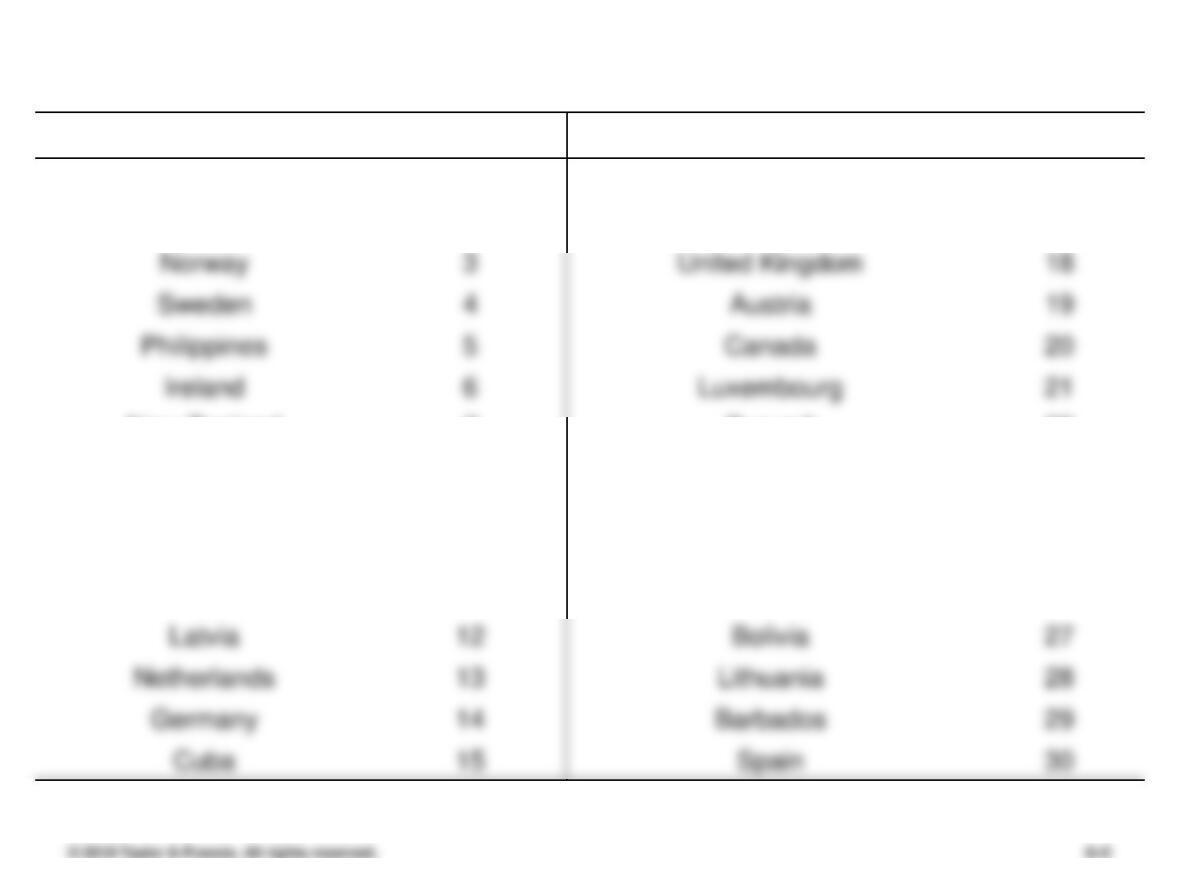
Table 6.1 Rankings of the Top 30 Countries on “Gender Gap”
Country Rank Country Rank
Iceland 1 Lesotho 16
Finland 2 South Africa 17
New Zealand 7 Burundi 22
Denmark 8 U.S. 23
Switzerland 9 Australia 24
Nicaragua 10 Ecuador 25
Belgium 11 Mozambique 26
Corporate-level Approaches
to Managing Diversity
•Challenges to Managing Diversity
➢Simultaneously managing both cross-national and
intranational diversity
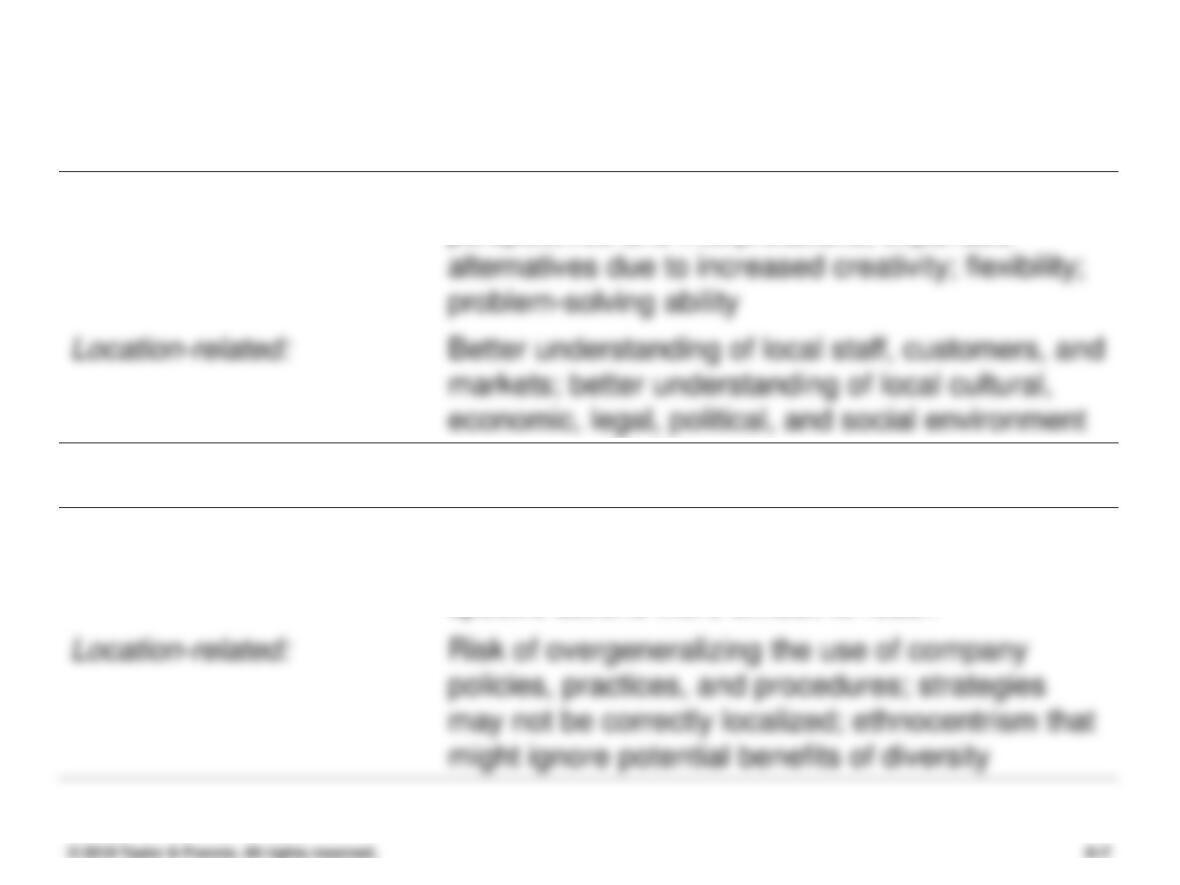
Table 6.2 Benefits and Costs of Diversity for Multinationals
Benefits of Diversity
Organization-related: Greater openness to new ideas; expanded
Costs of Diversity
Organization-related: Increased ambiguity, confusion, and complexity;
miscommunication more likely; agreement on
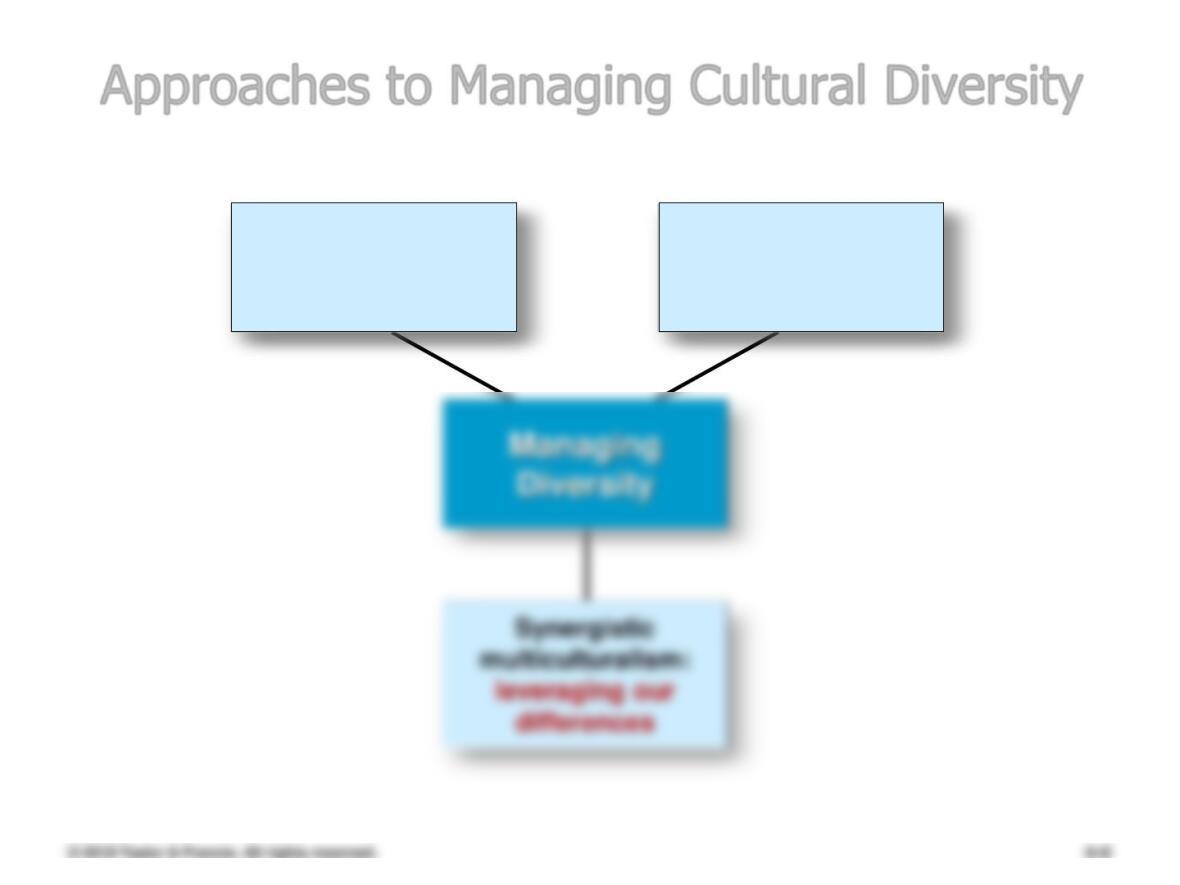
Approaches to Managing Cultural Diversity
Parochial:
our way is
the only way
Ethnocentric:
our way is
the best way
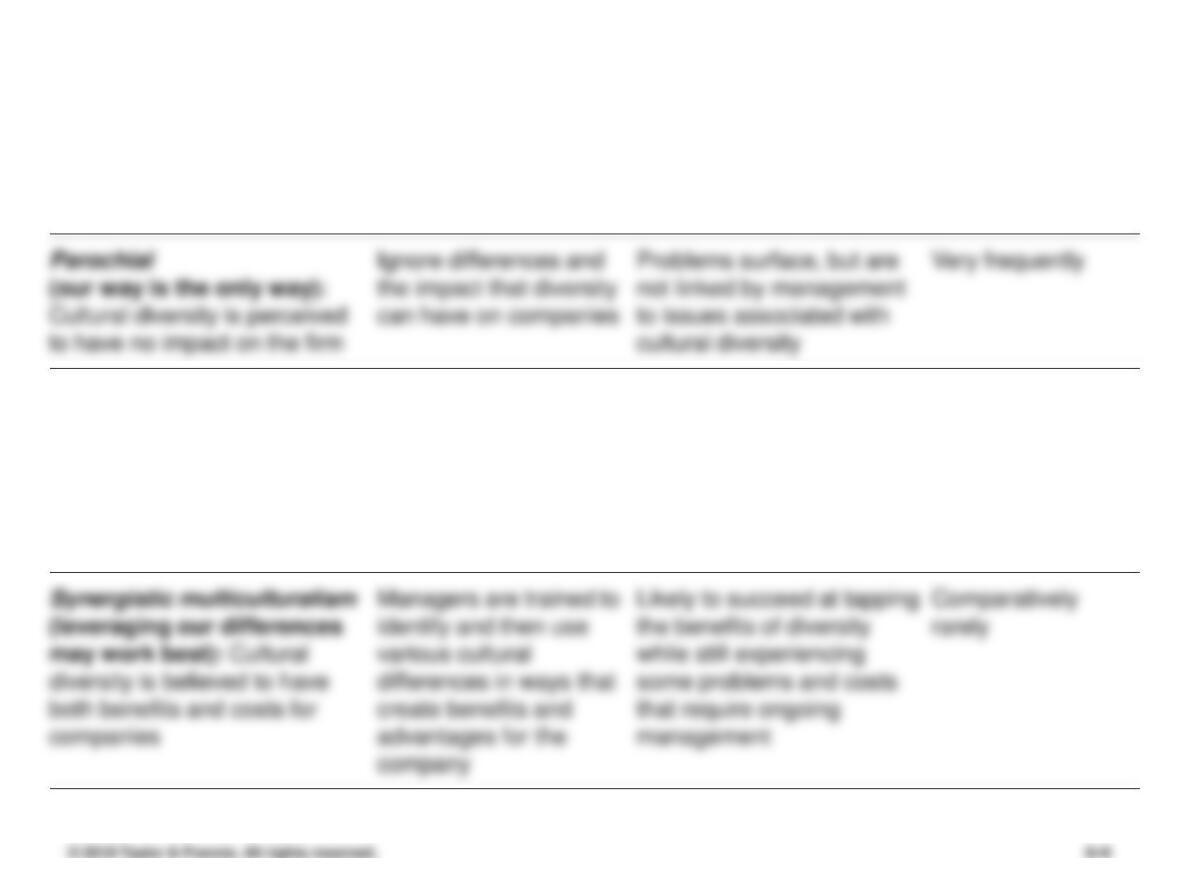
Table 6.3 Three Approaches to Managing Cultural Diversity
Firm Approach to Diversity
and Associated Perceptions
Strategies Often Used
with Each Diversity
Approach
Most Likely Outcomes
for Each Diversity
Approach
How Frequently
Diversity
Approach Is Used
Ethnocentric
(our way is the best way):
Cultural diversity is perceived
to create problems for
companies
Attempt to minimize the
sources and impact of
cultural diversity by
socializing employees
worldwide to embrace
corporate values
May succeed in reducing
costs associated with
diversity (e.g., ambiguity),
but will likely erase or
ignore potential benefits
Frequently
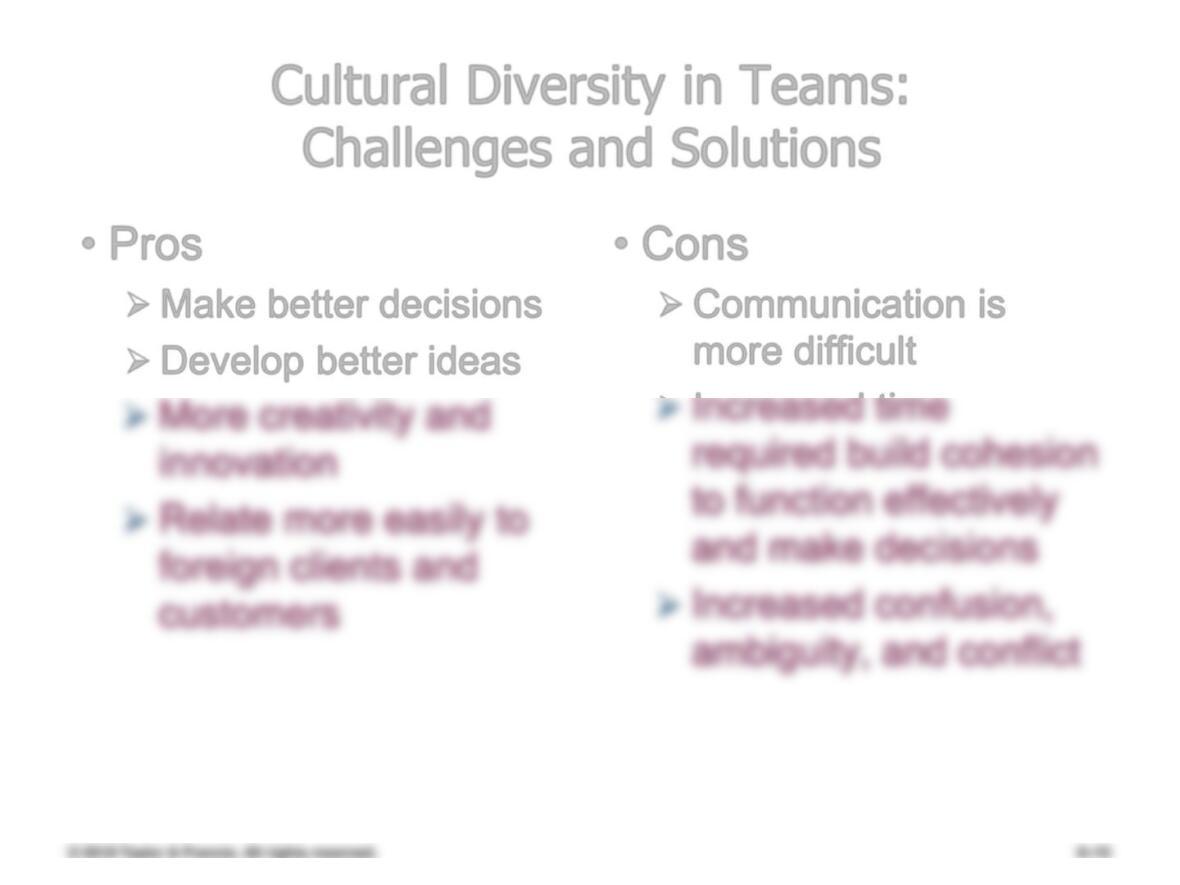
Cultural Diversity in Teams:
Challenges and Solutions
•Pros
➢Make better decisions
➢Develop better ideas
•Cons
➢Communication is
more difficult
In the Trenches with Multicultural Teams
•Teams
➢The fundamental building blocks of organizations
•Types of Teams
➢Work teams that manufacture products
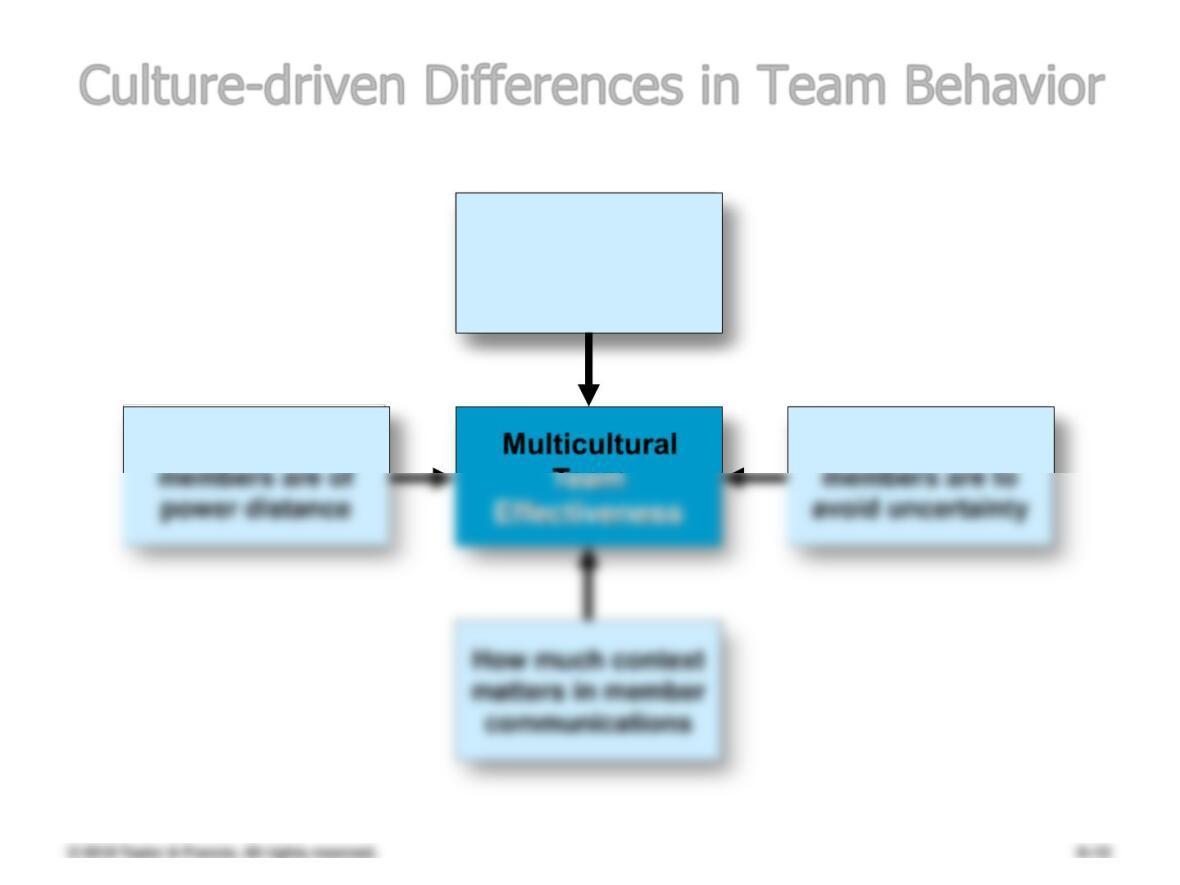
Culture-driven Differences in Team Behavior
Multicultural
How accepting
How motivated
How members
perceive teams
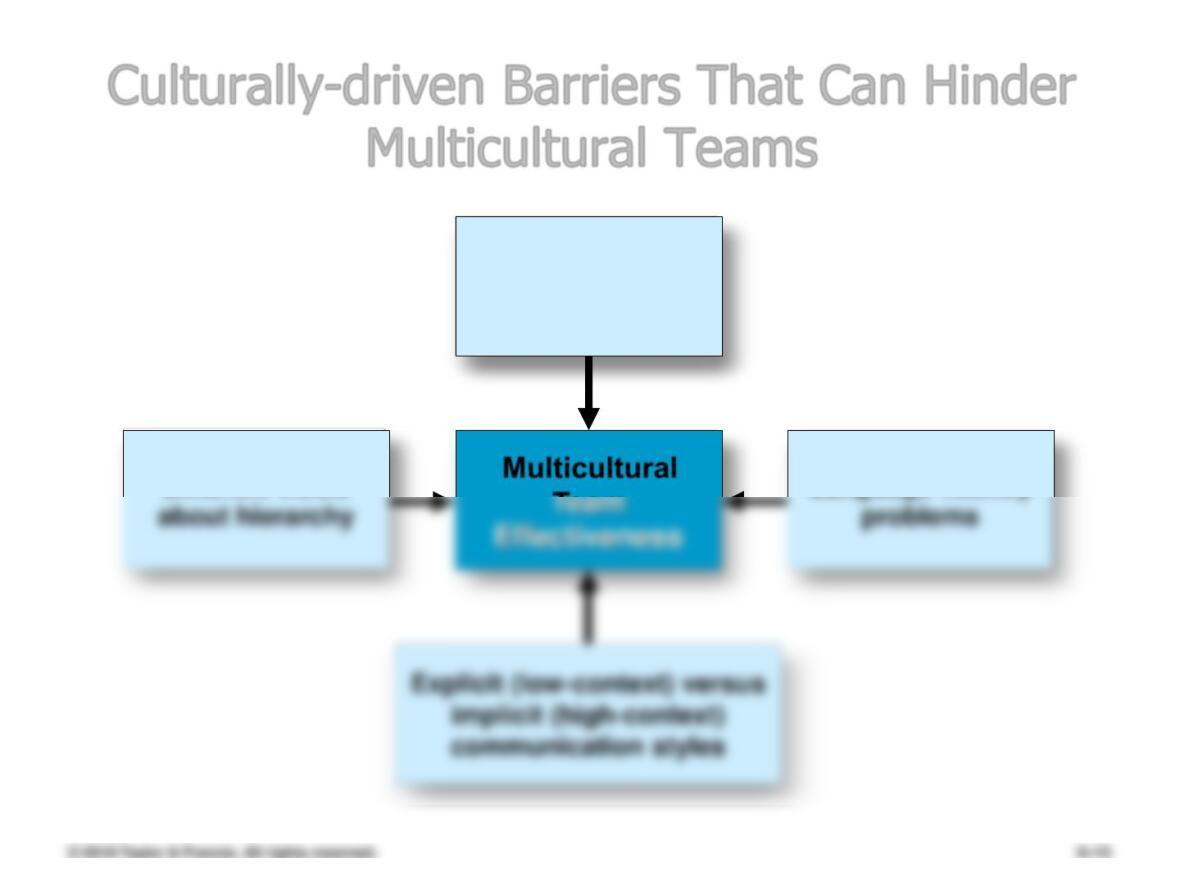
Culturally-driven Barriers That Can Hinder
Multicultural Teams
Multicultural
Decision-making
norms that diverge
or conflict
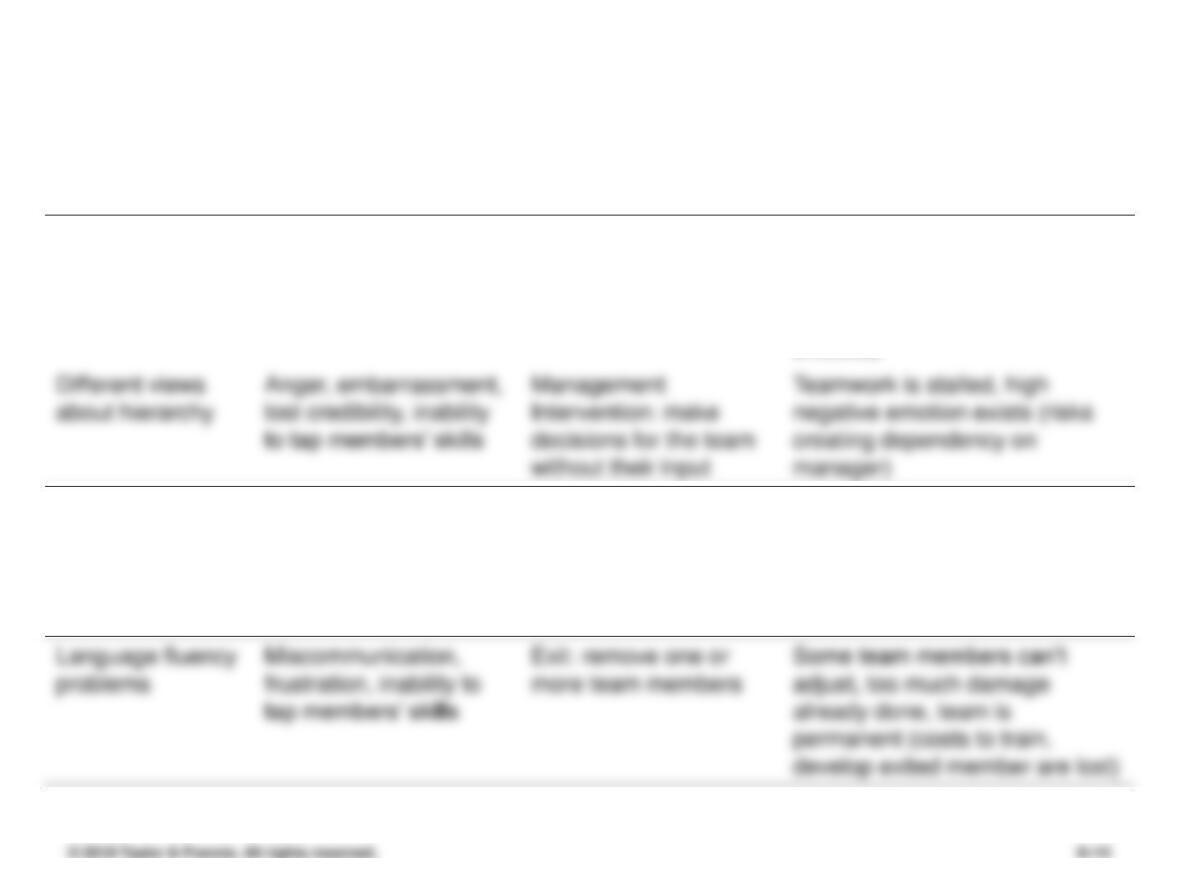
Table 6.4 Managing Common Problems in Multicultural Teams
Common Team
Problem
Typical Negative
Consequences
Possible
Management
Approach
When Best to Use Approach
(and Costs or Complications)
Decision-making
norms that
diverge or conflict
Frustration, conflict,
impatience, inability to
be effective
Adaptation: find ways
to work with or around
culture gaps without
changing team itself
Members have high cultural
awareness, feel problems are
due to culture not personalities
(can be time-consuming to
execute)
Explicit versus
implicit
communication
styles
Embarrassment,
mistrust, uncertainty,
lost credibility, conflict
Structural intervention:
reorganize team or
team processes to
reduce tensions
Team/tasks can be subdivided,
members are clinging to
negative stereotypes
(subgroups may exacerbate
differences)
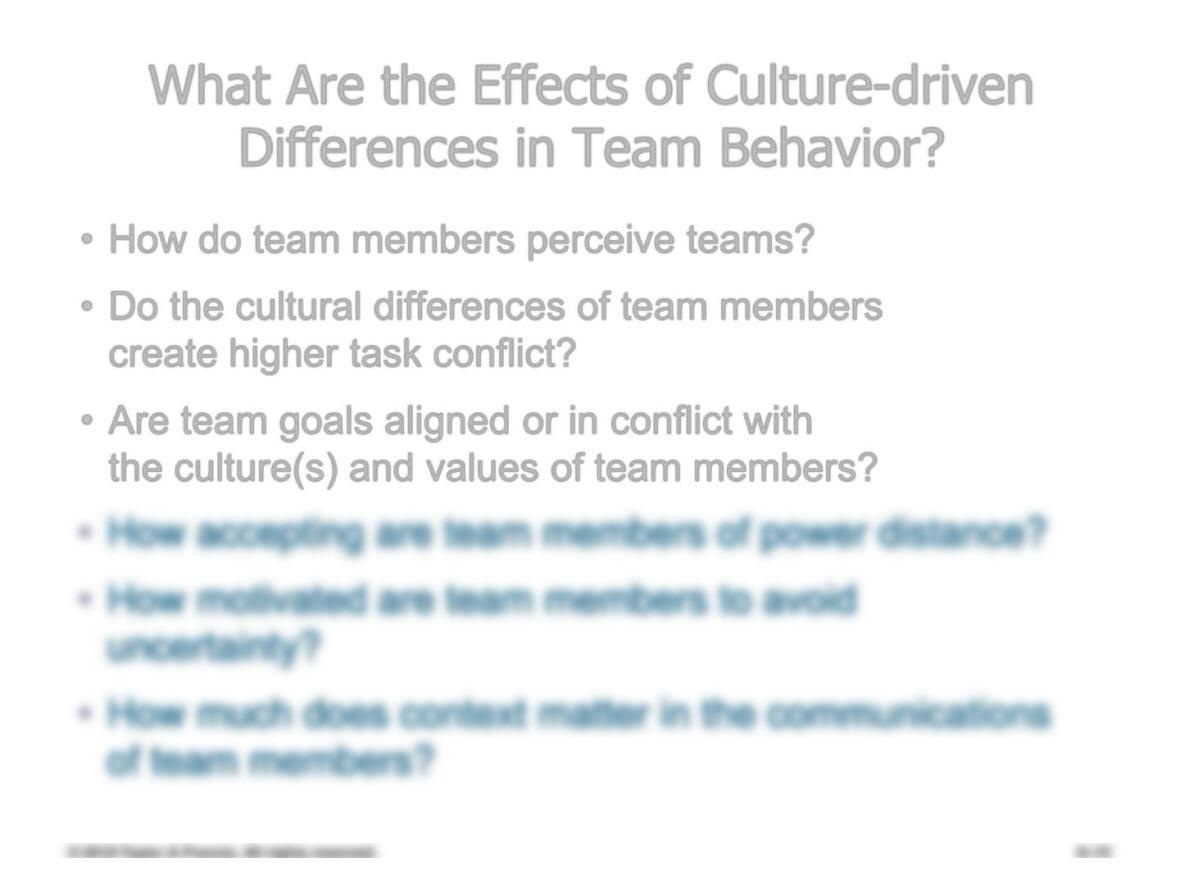
What Are the Effects of Culture-driven
Differences in Team Behavior?
•How do team members perceive teams?
•Do the cultural differences of team members
create higher task conflict?
•Are team goals aligned or in conflict with
the culture(s) and values of team members?
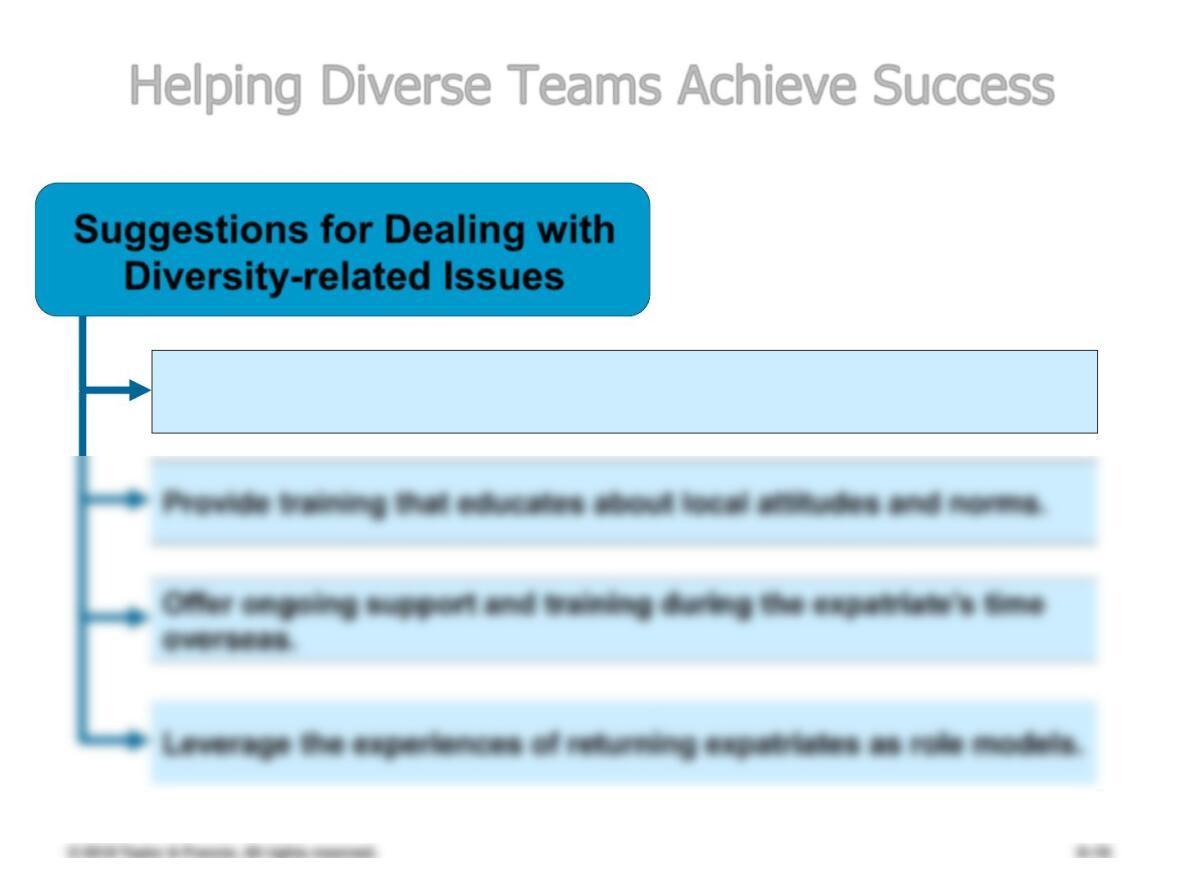
Helping Diverse Teams Achieve Success
Suggestions for Dealing with
Diversity-related Issues
Avoid stereotypical assumptions when choosing expatriates.
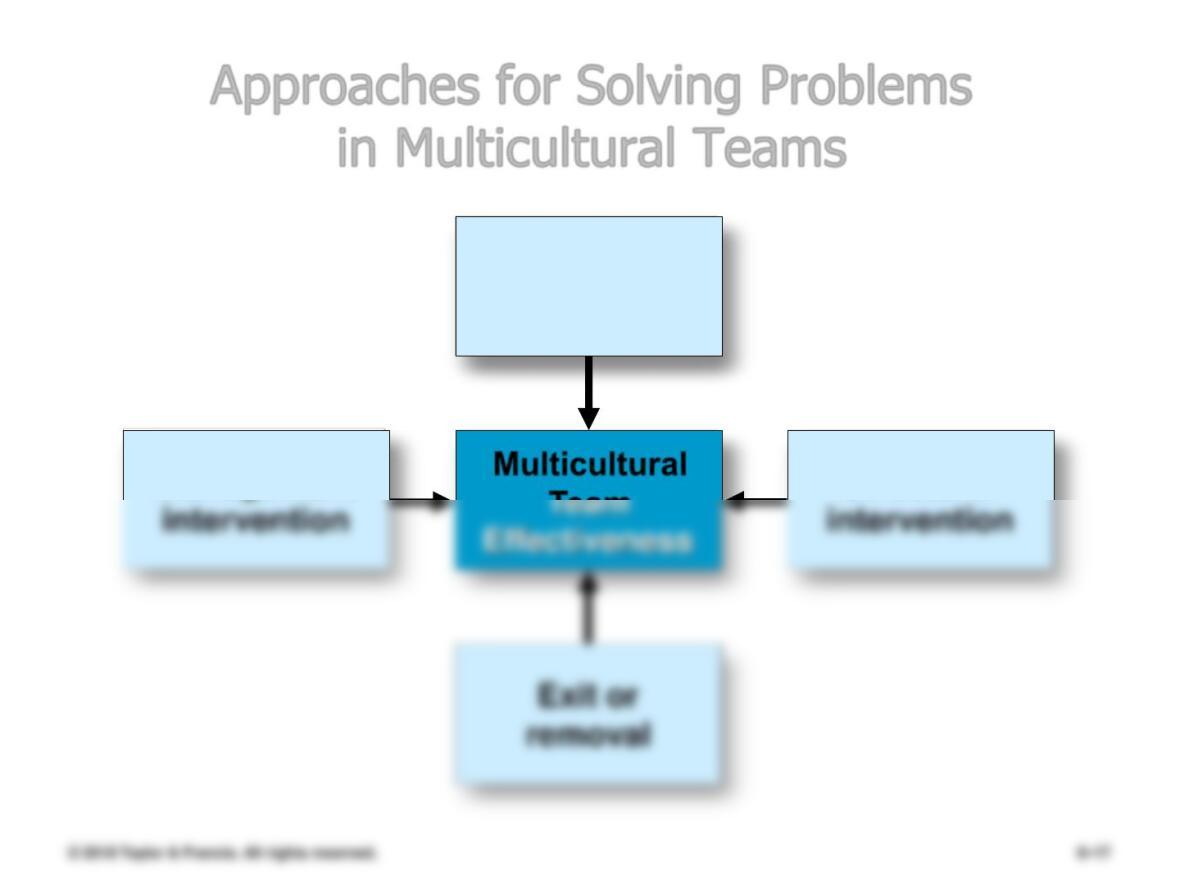
Approaches for Solving Problems
in Multicultural Teams
Multicultural
Management
Structural
Internal
adaptation
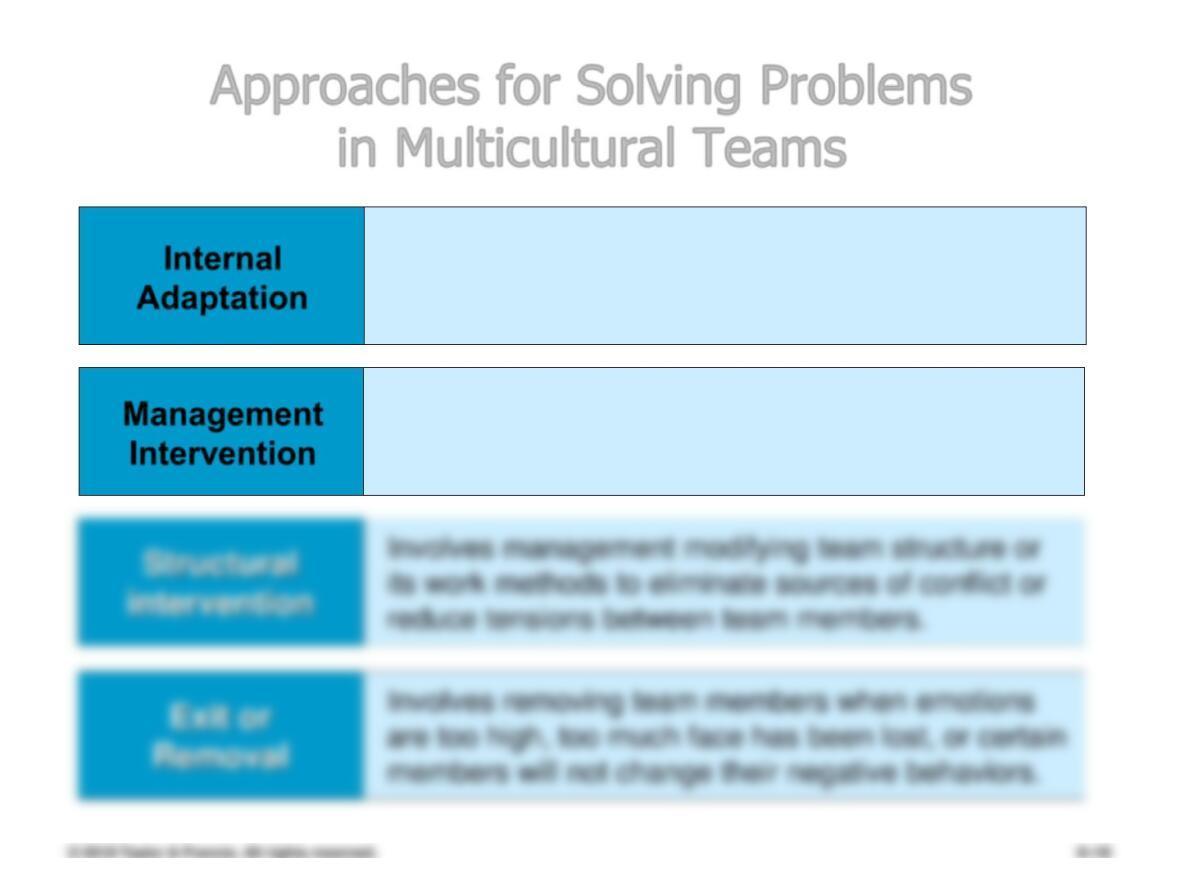
Approaches for Solving Problems
in Multicultural Teams
Internal
Adaptation
Management
Intervention
Involves modifying attitudes, processes, and
practices without disturbing the makeup of the
members or altering the assignment being tackled.
A manager steps in to solve or prevent problems
when a team reaches an impasse that has resulted
in pent-up anger and negative emotions.
Cultural Differences in Social Loafing
•Social Loafing
➢The tendency for individuals to slack off on teamwork
because they assume the team will get the job done